
This guide explains how to sharpen a Japanese kitchen knife, how to use a santoku knife, and key points for beginners when choosing a kitchen knife.
To get straight to the point for those just starting out with kitchen knives, beginners can significantly improve the ease and safety of their cooking by "choosing one santoku knife and mastering the basic sharpening techniques."
In short, the shortest route for beginners is to learn how to choose and sharpen a santoku knife together, using it as a starting point.
Today's review: 3 key points
- For your first knife, a santoku knife with a blade length of 16-18 cm will cover most home cooking tasks.
- The conclusion for sharpening techniques is that for beginners, the basic method is to "use a whetstone at an angle of 15-20 degrees and sharpen both sides evenly 10 times each."
- By choosing a reliable brand like Seki cutlery and sharpening it regularly, you can use it comfortably for a long time.
Conclusion of this article
- In conclusion, beginners can significantly reduce the burden of cooking by simply choosing an easy-to-handle santoku knife and learning the basic sharpening techniques using a whetstone.
- A santoku knife is a versatile knife that can handle meat, fish, and vegetables all in one, making it ideal for beginners.
- If you follow these three rules for sharpening—angle, number of strokes, and pressure—you can achieve a near-professional level of sharpness.
- The three most important points to consider when choosing a knife are blade length, material, and how the grip fits.
Where should I start?
In conclusion, to put it simply, the first step is to "choose a santoku knife and simultaneously prepare a whetstone."
The sharpness of a Japanese kitchen knife is paramount, and no matter how good a knife is, it cannot perform to its full potential without being sharpened.
Blades from Seki City, in particular, are characterized by their sharp cutting edge and ease of use, and can be enjoyed for a long time with regular maintenance.
Points that beginners should understand first
- The fact that one santoku knife can cover almost all everyday cooking needs.
- Sharpening knives may seem difficult, but in reality, there's a basic procedure that can be done in just 3 minutes.
- Even if you don't choose a luxury item, you can get sufficient quality by selecting a reliable origin and brand.
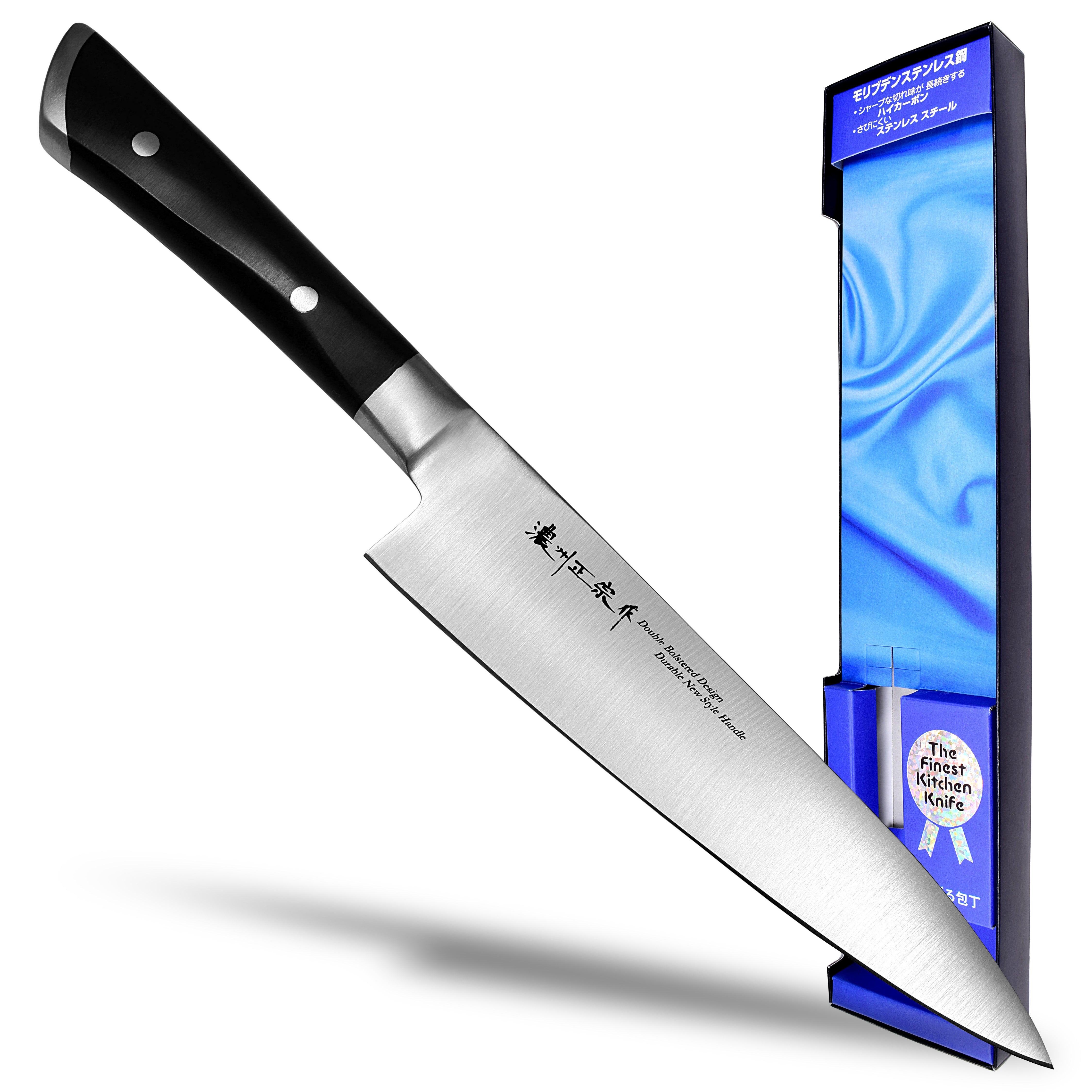
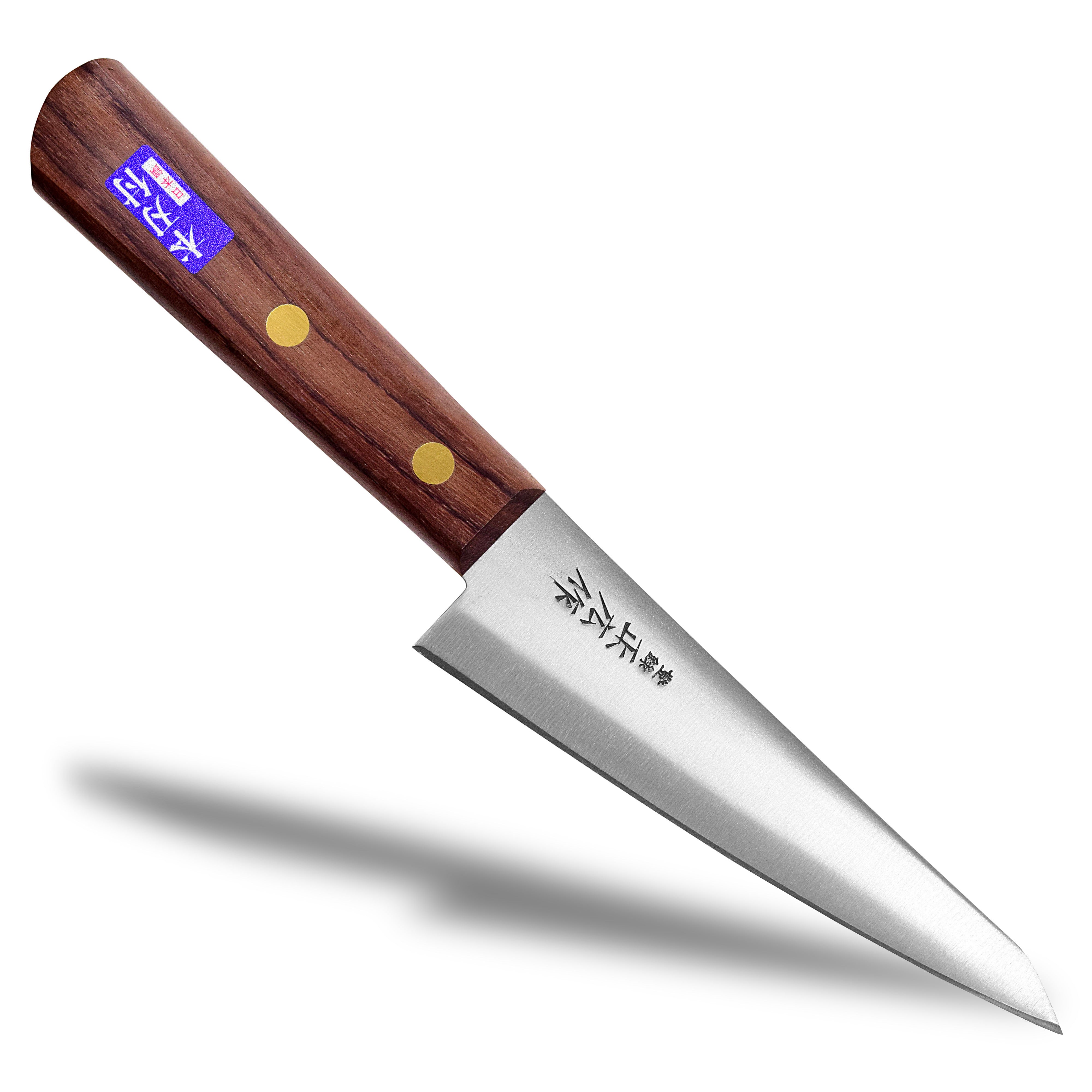
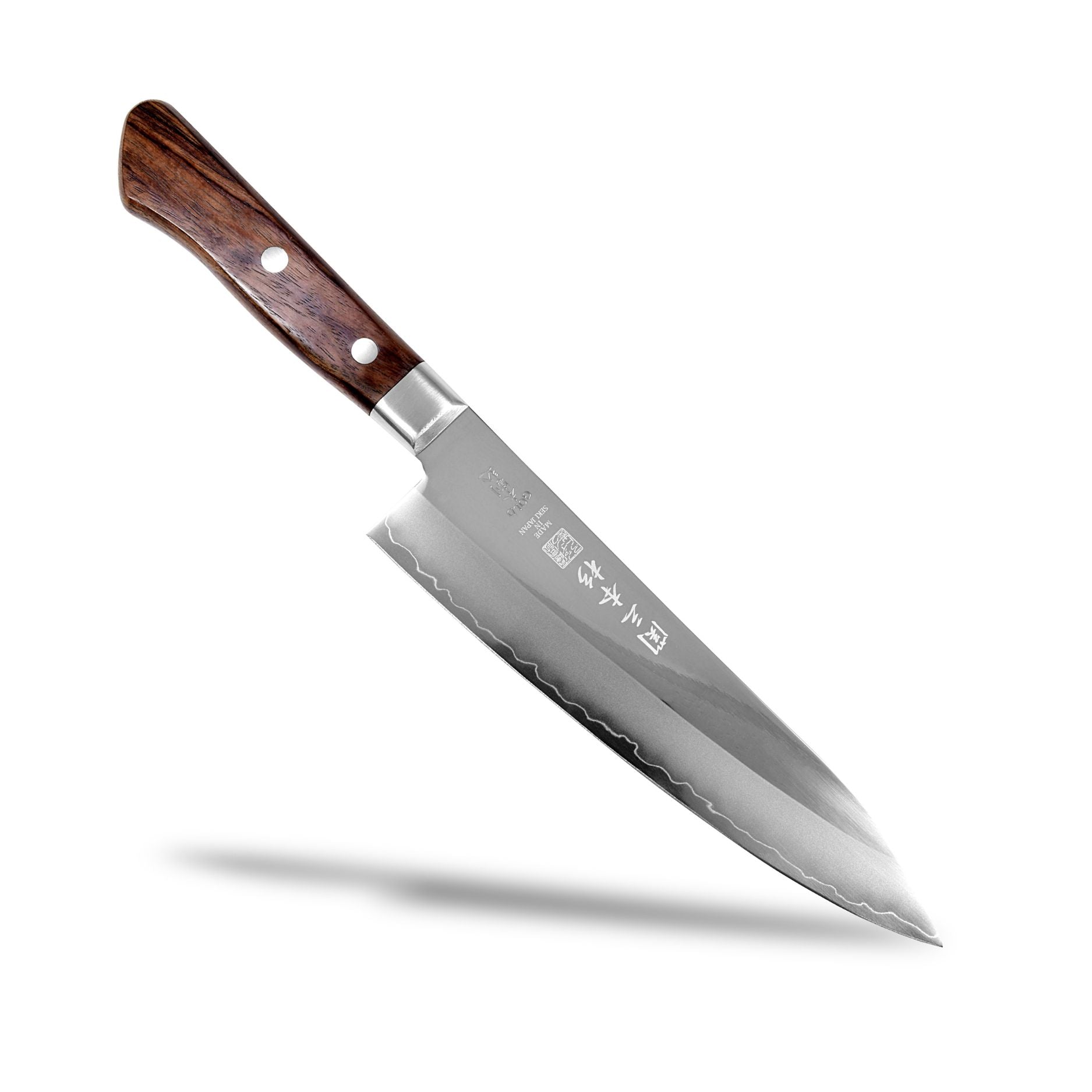
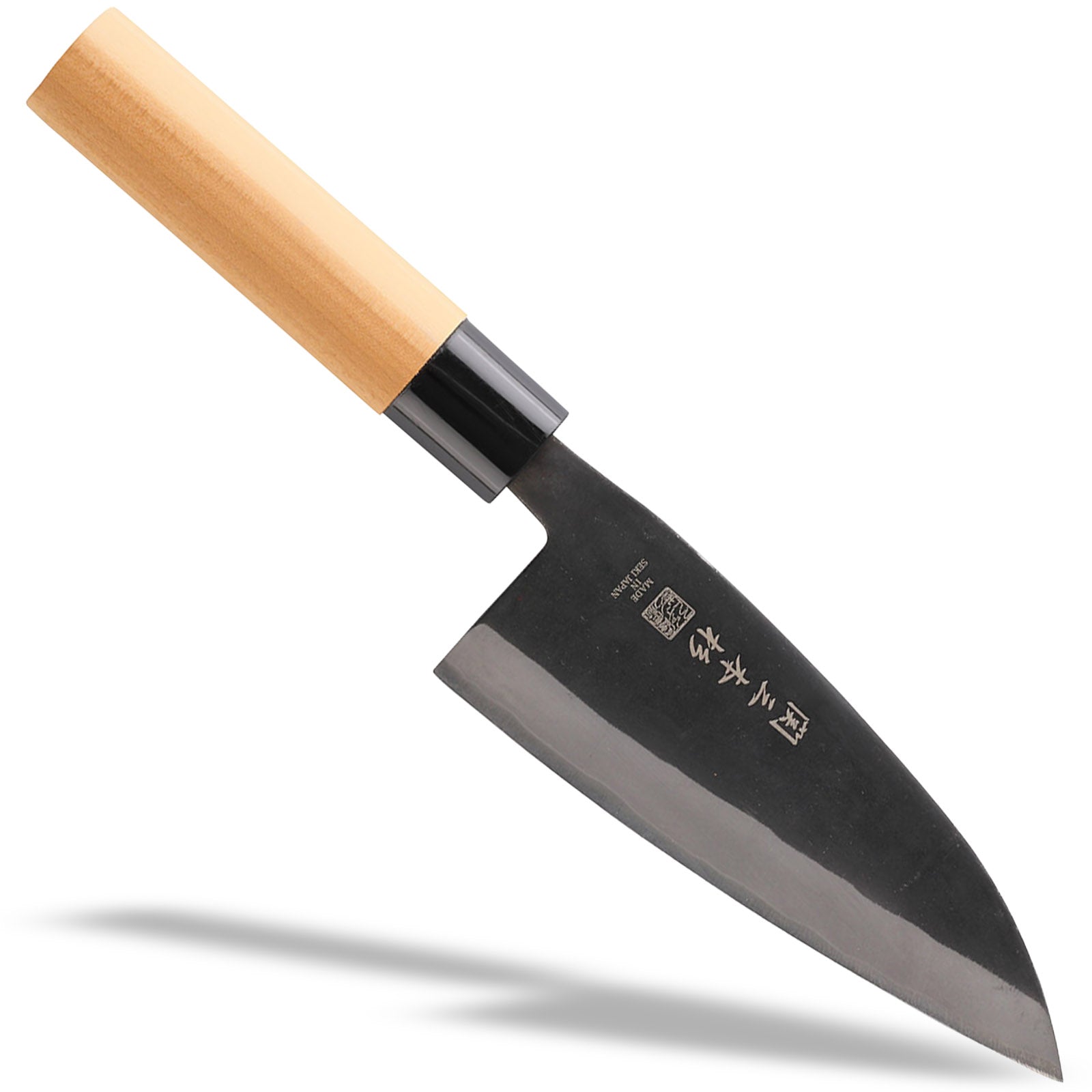
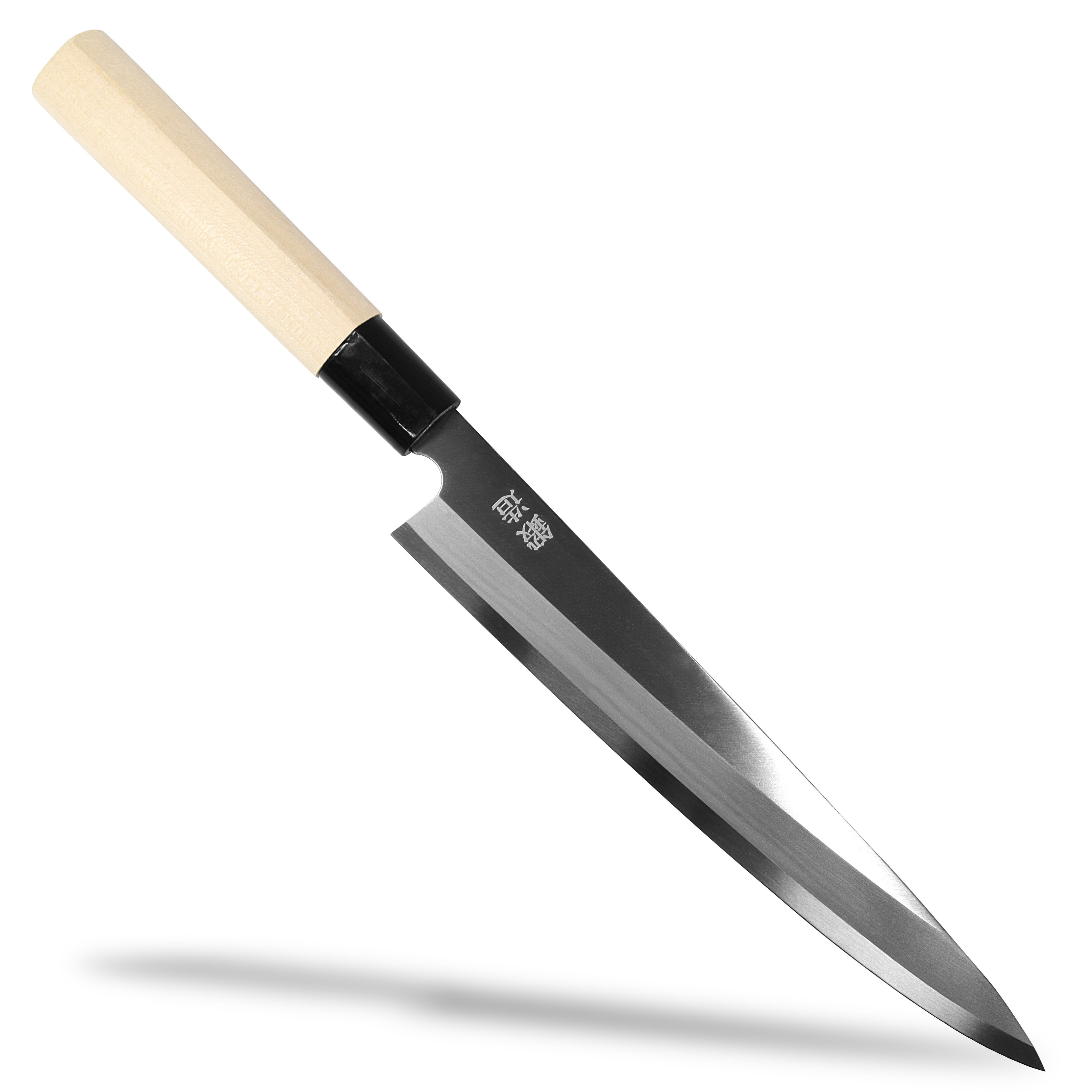
For example, Seki cutlery offers authentic sharpness at an affordable price, as evidenced by the availability of sashimi knives and small deba knives from the Seki Tsubazo series starting from around 2,000 to 3,000 yen.
Instead of thinking, "First the knife, then the whetstone," simply having the mindset of "getting the knife and whetstone at the same time" will make the first step smoother. If you buy the knife first and put off getting the whetstone, you're likely to mistakenly think, "This knife is no good anymore" when its sharpness deteriorates.
In a nutshell, what's the basic principle of sharpening a Japanese kitchen knife?
In short, it means "maintaining a consistent angle with respect to the whetstone and sharpening both sides evenly."
Basic steps for beginners (common image for single-edged and double-edged blades)
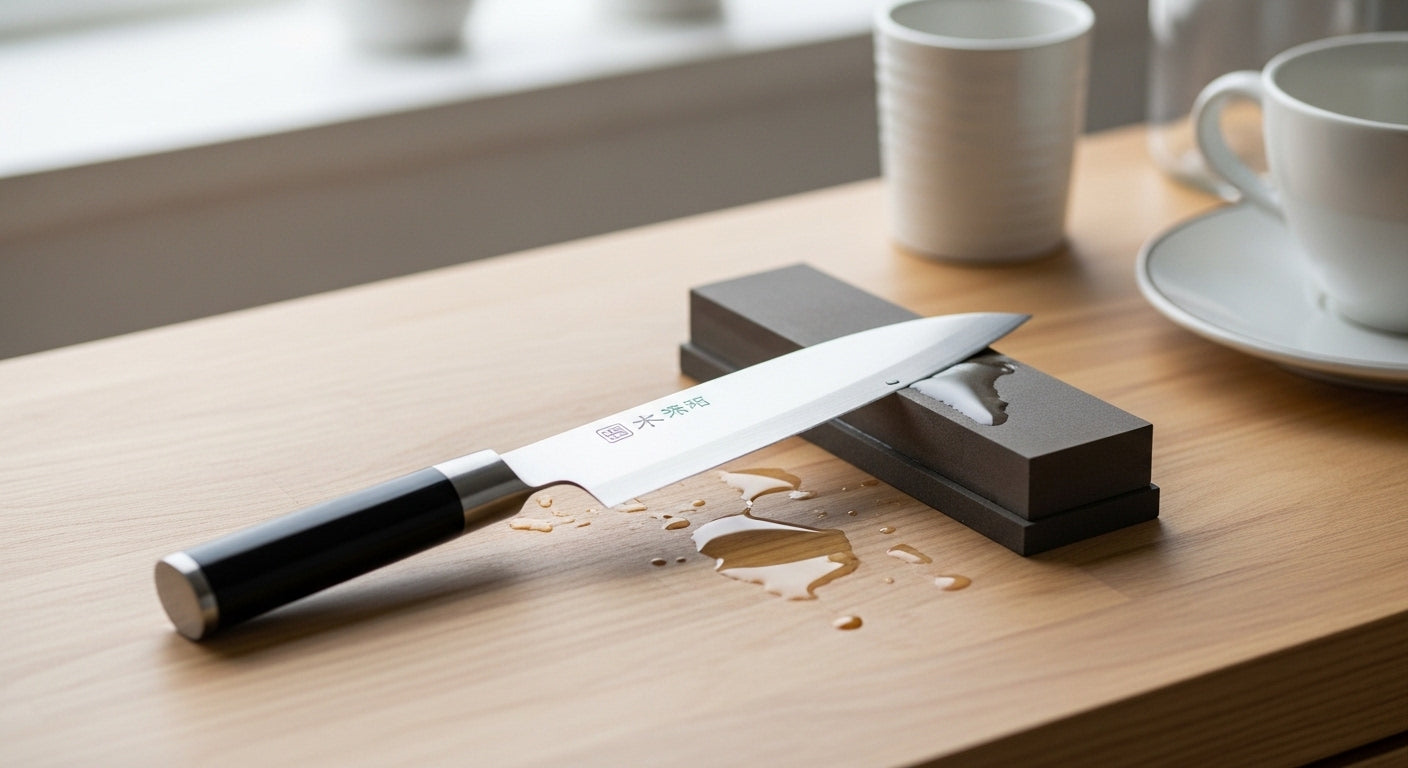
- Soak the whetstone in water for 5-10 minutes.
- Hold the knife at an angle of about 15 to 20 degrees relative to the whetstone.
- Move the tool back and forth in a consistent rhythm, from the base of the blade to the tip.
- After sharpening one side about 10 times, sharpen the other side the same number of times.
- After sharpening the entire blade evenly, wash it with water and wipe the edge with a cloth.
- Test the sharpness on paper or tomatoes.
Even this small change makes a noticeable difference in sharpness.
The two most common mistakes when sharpening are "applying too much force" and "losing the angle midway." You only need enough force to allow the knife to glide smoothly across the whetstone, and focusing on stabilizing your wrist rather than your entire arm will help you maintain the correct angle.
At our company, we've observed that customers who learn how to sharpen their knives tend to replace them less frequently and use Seki cutlery for a long time.
What kind of knife is a Santoku knife? Why is it suitable for beginners?
In conclusion, the santoku knife is a versatile knife that can handle 90% of home cooking tasks, making it a top choice for beginners.
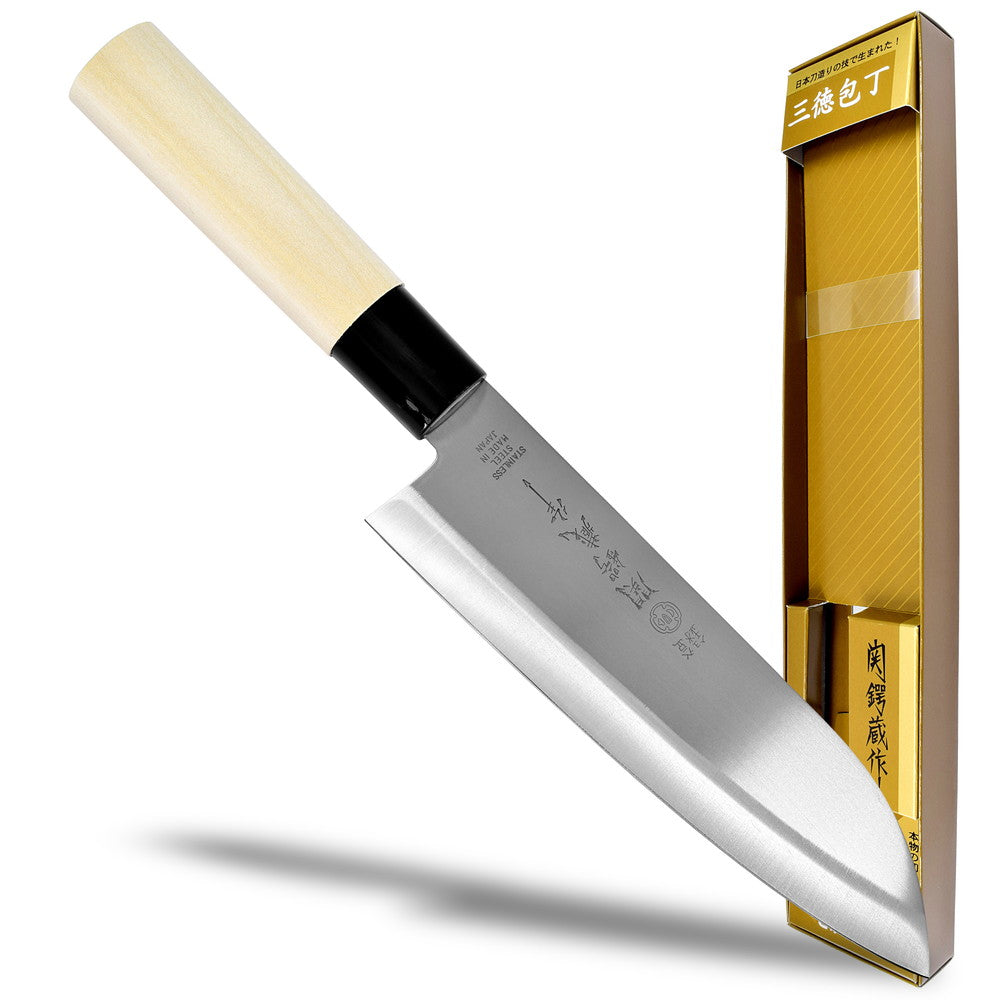
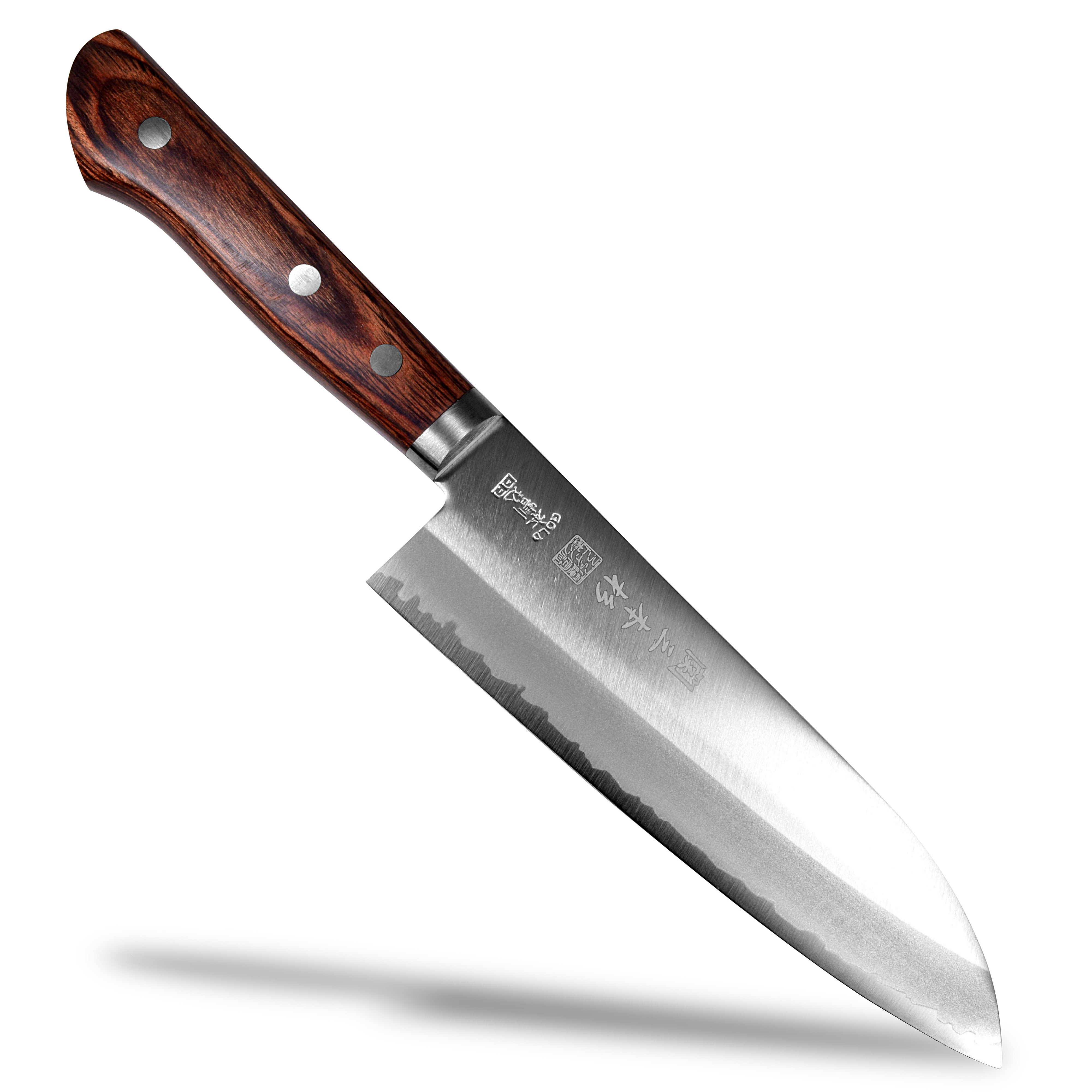
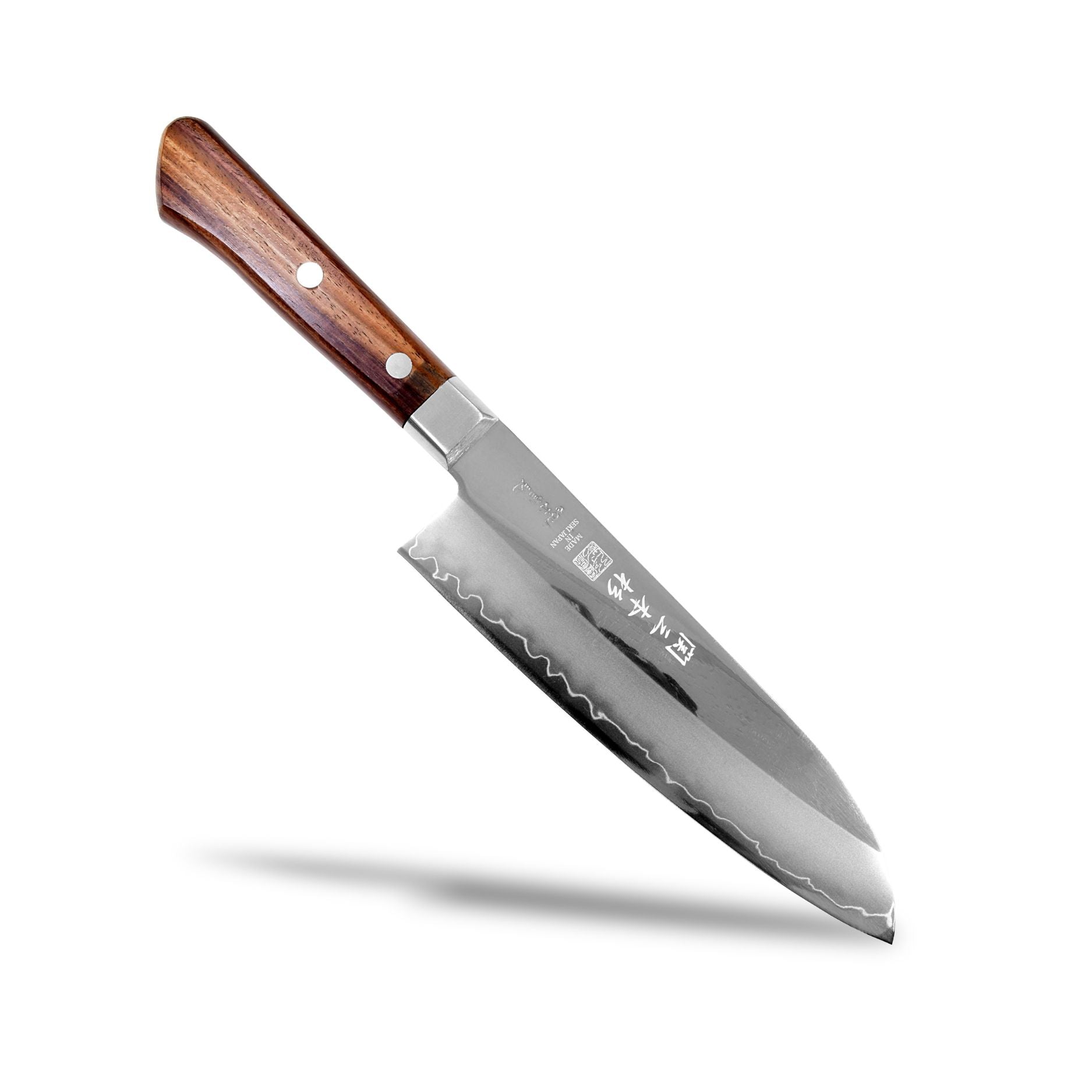
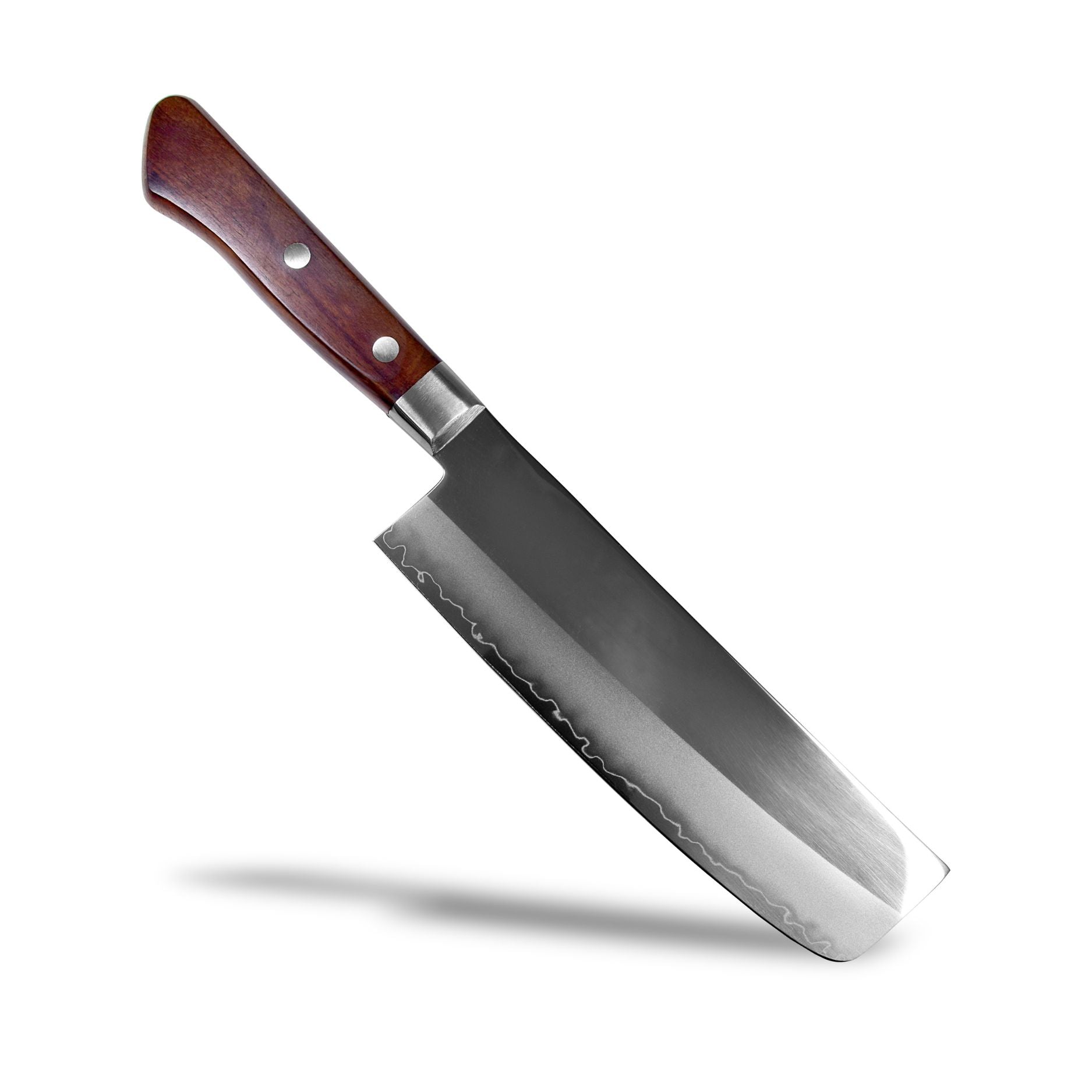
Basic Santoku Knife
- Blade length: 15-20cm, standard is 16-18cm.
- Uses: A versatile product with "three benefits" that can be used for meat, fish, and vegetables.
- Shape: The tip is slightly rounded, and the straight section is long, making it strong for cutting and slicing.
Reasons why it's suitable for beginners
- This single knife can handle almost all dishes, eliminating the need to increase the number of knives you own.
- Many models have a manageable length and weight, making them easy to handle even for people with small hands.
- Choosing a stainless steel santoku knife makes it less prone to rust and easier to maintain daily.
Santoku knives are often seen as a "jack of all trades, master of none," but in reality, they are a highly refined design that can handle most household tasks without stress. While they don't have the specialization of knives like deba or yanagiba, they have a unique advantage in that they are "comfortable to use every day."
Even among Seki cutlery, the santoku knife is the core of the household lineup, and when combined with a sashimi knife or a small deba knife, it creates a configuration that can handle more authentic Japanese cuisine.
How are "how to choose" and "how to sharpen" related?
The most important thing is to understand that "how to choose" and "how to sharpen" should be considered together.
- Even if you learn how to choose the right tool, it will become stressful if the blade loses its sharpness.
- Even if you learn how to sharpen a knife, if it's not suited to you, it will be difficult to hold and you won't stick with it.
To resolve this dilemma, our company publishes a blog that combines "How to sharpen your knives in 3 minutes, even for beginners" and "When to replace or buy a new one."
For example, more and more customers are realizing that "it's more cost-effective in the long run to choose one sturdy knife, like those made in Seki, and sharpen it regularly, rather than buying and replacing many inexpensive knives."
Looking at the numbers, if you keep buying a 1,000 yen knife and replacing it every six months, compared to using a 5,000 to 10,000 yen knife and sharpening it with a whetstone for five years, the latter will have a lower total cost, and you'll experience significantly less stress from the daily sharpness of your knife.
Tips for choosing
In conclusion, by checking these four factors—blade length, material, grip, and budget—even beginners can choose a santoku knife that suits them.
Checkpoints for beginners choosing a Santoku knife
In short, the top priority is whether the size and weight are right for your hands and kitchen.
- Blade length: The guideline is 16-18cm. For people with small hands or small cutting boards, around 16cm is suitable, while 18cm is an option for larger ingredients or for men.
-
material:
- Stainless steel: Rust-resistant, suitable for everyday use, and ideal for beginners.
- Composite materials: Models that use hard steel for the core and stainless steel for the exterior offer an excellent balance of sharpness and ease of maintenance.
-
Grip (handle):
- Wooden handle: Soft to the touch and non-slip. Becomes more comfortable with prolonged use.
- Resin handles and all-stainless steel handles: Hygienic, and some models are dishwasher safe. Ideal for those who prioritize ease of cleaning.
At our company, we often recommend a three-piece set for beginners: a stainless steel santoku knife, a wooden cutting board, and a whetstone. This combination makes a huge difference in comfort and ease of use.
What sharpening method should I use? How to choose a whetstone and sharpener.
The most important thing when it comes to sharpening is choosing the right tools.
Sharpening stones (recommended basics)
- Types: There are three types: coarse, medium, and finishing whetstones, but for beginners, one double-sided whetstone with both coarse and medium sides is sufficient.
- Cost: A double-sided whetstone typically costs around 3,000 to 5,000 yen, which can reduce the cost of replacing knives in the long run.
- Tips for use: Simply placing a wet towel or non-slip mat under the whetstone will increase stability and significantly improve sharpening accuracy.
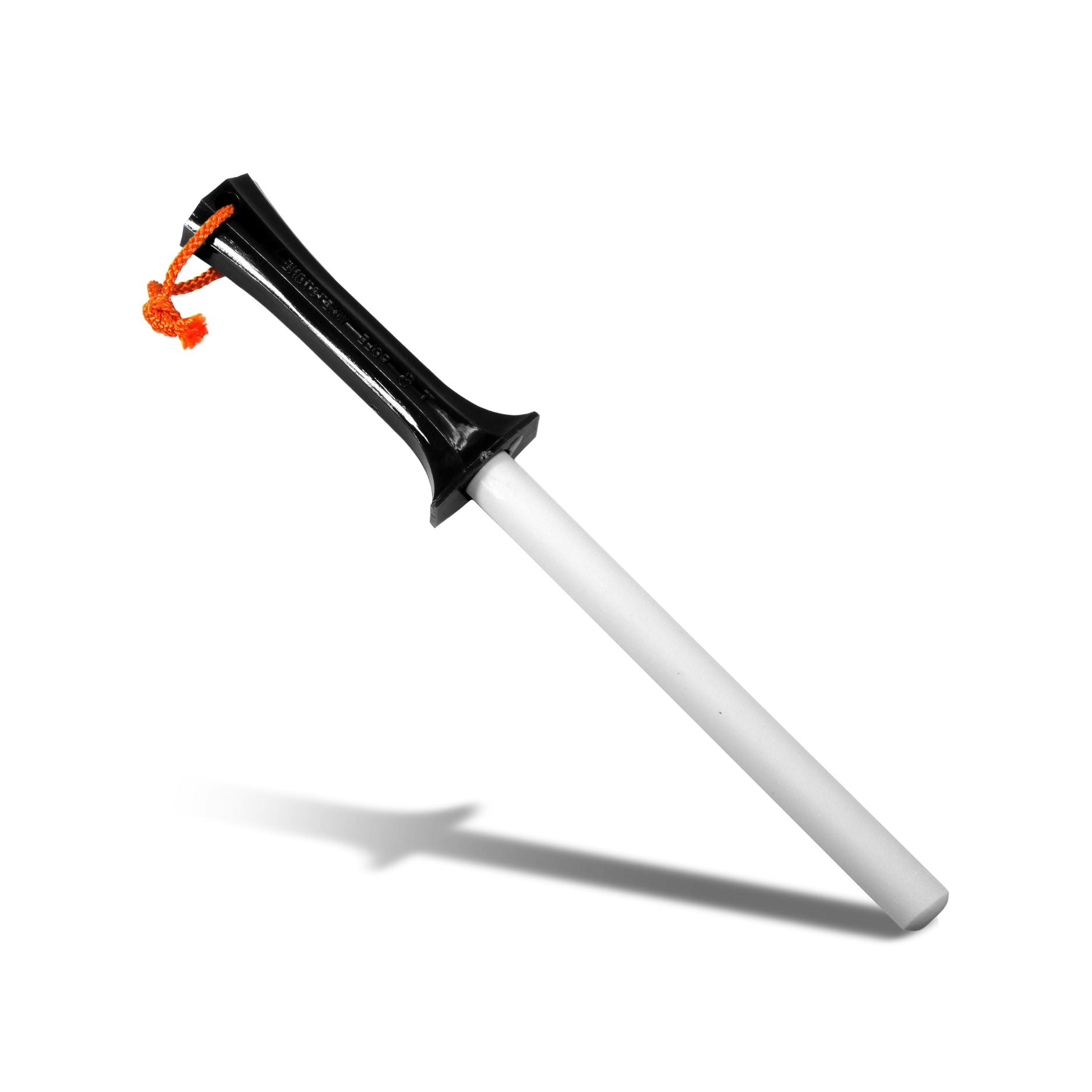
Sharpener (simple sharpening)
- There are roller-type and rod-type versions available, and they can restore sharpness in a short amount of time.
- However, since the blade angle cannot be finely adjusted, a whetstone is more advantageous if you are seriously pursuing sharpness.
- A practical option is to use a sharpener for quick fixes during busy weekdays and then sharpen thoroughly with a whetstone on the weekends.
Our company blog clearly states that "if you want to sharpen your knives properly, a stationary whetstone is the only option," and we provide videos and diagrams explaining angles and pressure for those unfamiliar with sharpening.
How should I combine a santoku knife with other Japanese knives?
In conclusion, a santoku knife, a paring knife, and one fish knife constitute the ideal minimum setup for home use.
- Santoku knife: The main all-purpose knife.
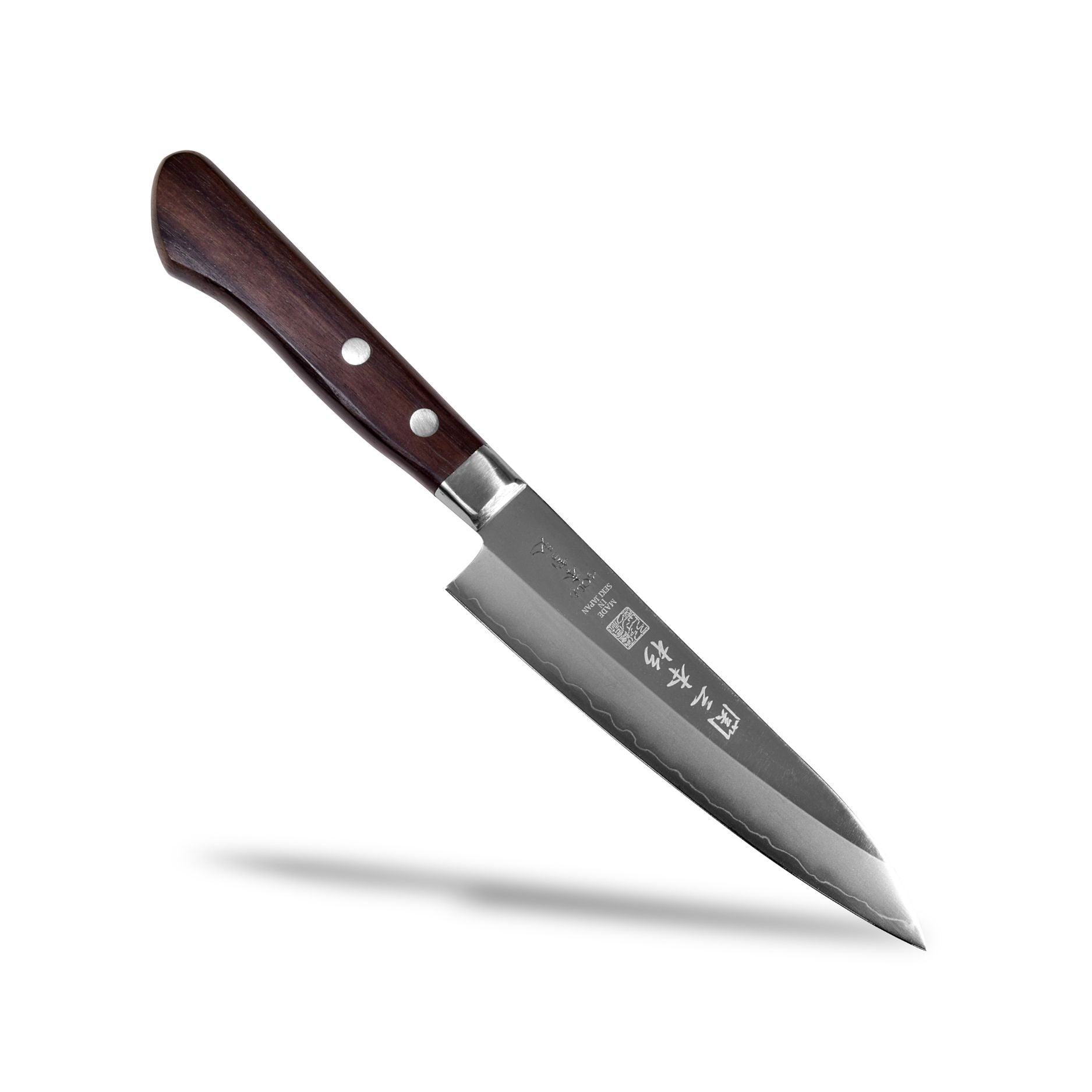
- Petty knife: Used for peeling fruit and other detailed tasks, typically with a blade length of around 12 cm.
-
For fish (sashimi knife or small deba knife):
- Sashimi knife: Ideal for beautifully slicing sashimi.
- Small deba knife: Convenient for removing the heads of small fish or for simple filleting.
These three knives will cover a wide range of cooking needs, from everyday home cooking to enjoying a more elaborate fish dish on the weekend. You don't need to buy all three at once; it's best to start with a santoku knife and add one more knife at a time as your cooking repertoire expands.
The Seki Tsubazo series also includes sashimi knives (210-300mm), small deba knives, and petty knives in the 1,000-3,000 yen range, and when combined with a santoku knife, it can adequately cover "home cooking plus a bit more authentic Japanese cuisine."
FAQ
Q1. Is a Santoku knife really suitable for beginners?
It's suitable. It's a versatile knife that can handle meat, fish, and vegetables all in one, and is considered the first knife a beginner cook should own.
Q2. What is the ideal blade length for a Santoku knife?
For most households, 16-18cm is the most convenient size; 16cm is suitable for those with small hands, while 18cm or larger is better for those who frequently use large ingredients.
Q3. Which is better for sharpening knives: a whetstone or a sharpener?
The answer is a whetstone. Sharpeners are convenient, but whetstones allow you to freely adjust the angle, resulting in sharper blades and greater durability.
Q4. Can even beginners sharpen knives with a whetstone?
Yes, you can sharpen them. If you soak the whetstone in water for 5-10 minutes and follow the basics of sharpening at an angle of 15-20 degrees, 10 strokes on each side, the sharpness will be restored in about 3 minutes.
Q5. How often should I sharpen my kitchen knives?
For households that use knives several times a week, sharpening them once every one to two months is a good guideline. Sharpening them sooner rather than later, when the cutting edge becomes dull, will extend the lifespan of your knives.
Q6. Which is better for a beginner, stainless steel or carbon steel?
Stainless steel is suitable for beginners because it is rust-resistant, easy to maintain, and retains sufficient sharpness for everyday use.
Q7. When should I buy additional Japanese kitchen knives (such as sashimi knives or deba knives)?
Whenever you feel the need to prepare a whole fish or want to create visually appealing sashimi, adding one of these knives to your santoku knife will prevent waste.
Q8. Does the ease of sharpening differ depending on the price of the knife?
That's incorrect. The better the quality of the blade material, the more stable the sharpening process will be, and the sharpness will tend to return with fewer strokes, but this is predicated on following the basics of sharpening.
Q9. What are the advantages of choosing cutlery from Seki?
Thanks to the techniques of a cutlery-making region with a history spanning over 700 years, it offers a good balance of sharpness, durability, and cost, allowing even beginners to experience a truly professional feel.
Q10. What kind of cooking can you do with just a santoku knife?
Most home cooking can be handled with just a santoku knife, and it's reasonable to buy a Japanese-style knife only if you want to specialize in fish or sashimi.
summary
- In conclusion: For those new to using kitchen knives, simply choosing a santoku knife with a blade length of 16-18 cm and learning the basic sharpening techniques using a whetstone will greatly reduce the stress of cooking.
- By starting with a santoku knife and gradually adding a paring knife, sashimi knife, and small deba knife, your home kitchen will become much more functional.
- Choosing a reliable brand like Seki cutlery and regularly sharpening it at the correct angle is the shortest route to selecting and maintaining a knife that you can use safely for a long time.