
The Complete Guide to Recommended Japanese Kitchen Knives | Finding the Perfect Knife for You
When you start researching Japanese kitchen knives because you want to buy one, you'll find tons of information like "Top X Recommendations" and "A Professional's Choice." But the more you read, the more confused you'll become, wondering, "So, which one should I actually buy?"
This hub focuses not on brand names or rankings, but on helping you choose a Japanese kitchen knife that suits your intended use, skill level, and maintenance preferences to minimize the risk of making a mistake. Rather than listing specific model names, the goal is to create a framework for choosing a knife that will help you understand what kind of knife you should select.
Why is choosing a "recommended Japanese kitchen knife" so confusing?
Choosing a Japanese kitchen knife can be difficult because "the right choice varies from person to person." The same knife can be the perfect companion for one person, while for another it can be a source of stress, being "heavy, difficult to handle, and prone to rusting."
The following factors contribute to this:
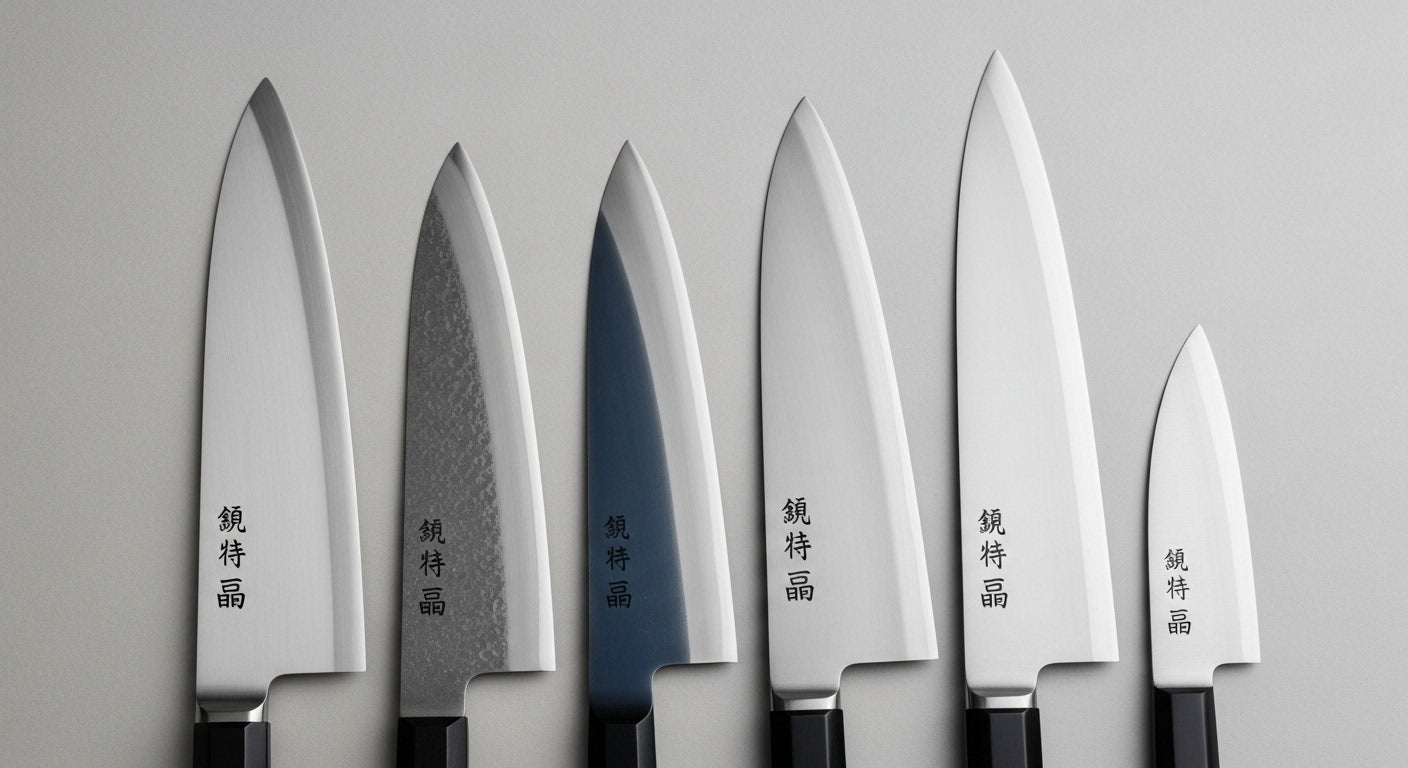
- There are many types (deba, santoku, yanagiba, usuba, nakiri, petty, etc.).
- There are differences in the type of steel used (e.g., white steel, blue steel, stainless steel, silver steel, etc.).
- The evaluation will vary depending on the user's skill, frequency of use, and maintenance habits.
Even knives highly praised by professional chefs can often be perceived as "rusting quickly," "requiring careful handling," or "too scary to use" by beginners unfamiliar with sharpening. The pitfall of choosing a Japanese knife is that "professional recommendation" doesn't necessarily mean "recommended for you."
The "only three" criteria you should decide first.
Before getting into the detailed specifications, deciding on the following three things will drastically narrow down your options.
Use: What it cuts best
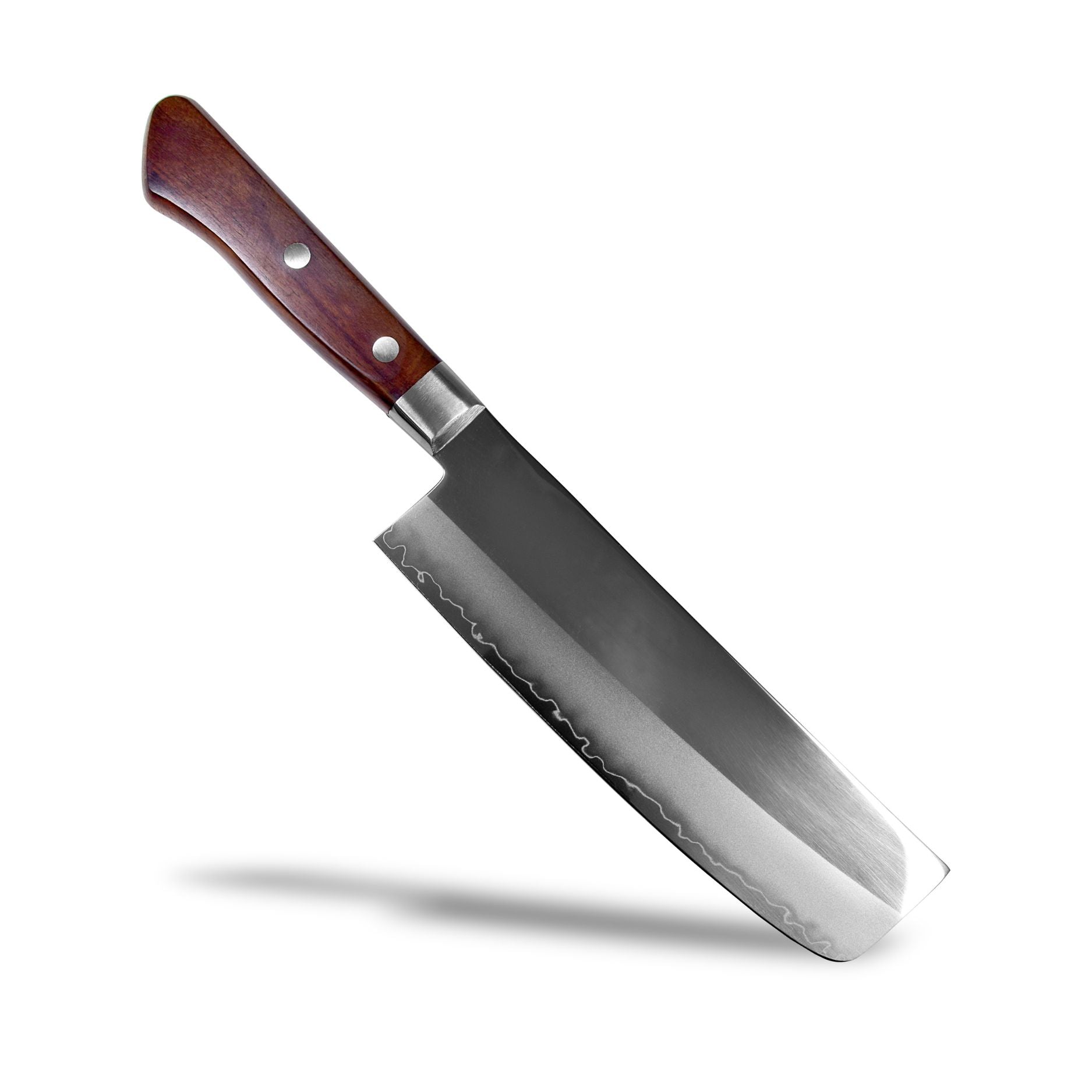
- Vegetable-focused → Santoku or Nakiri knife are the main candidates.
- Often filleting fish → Deba knife is necessary
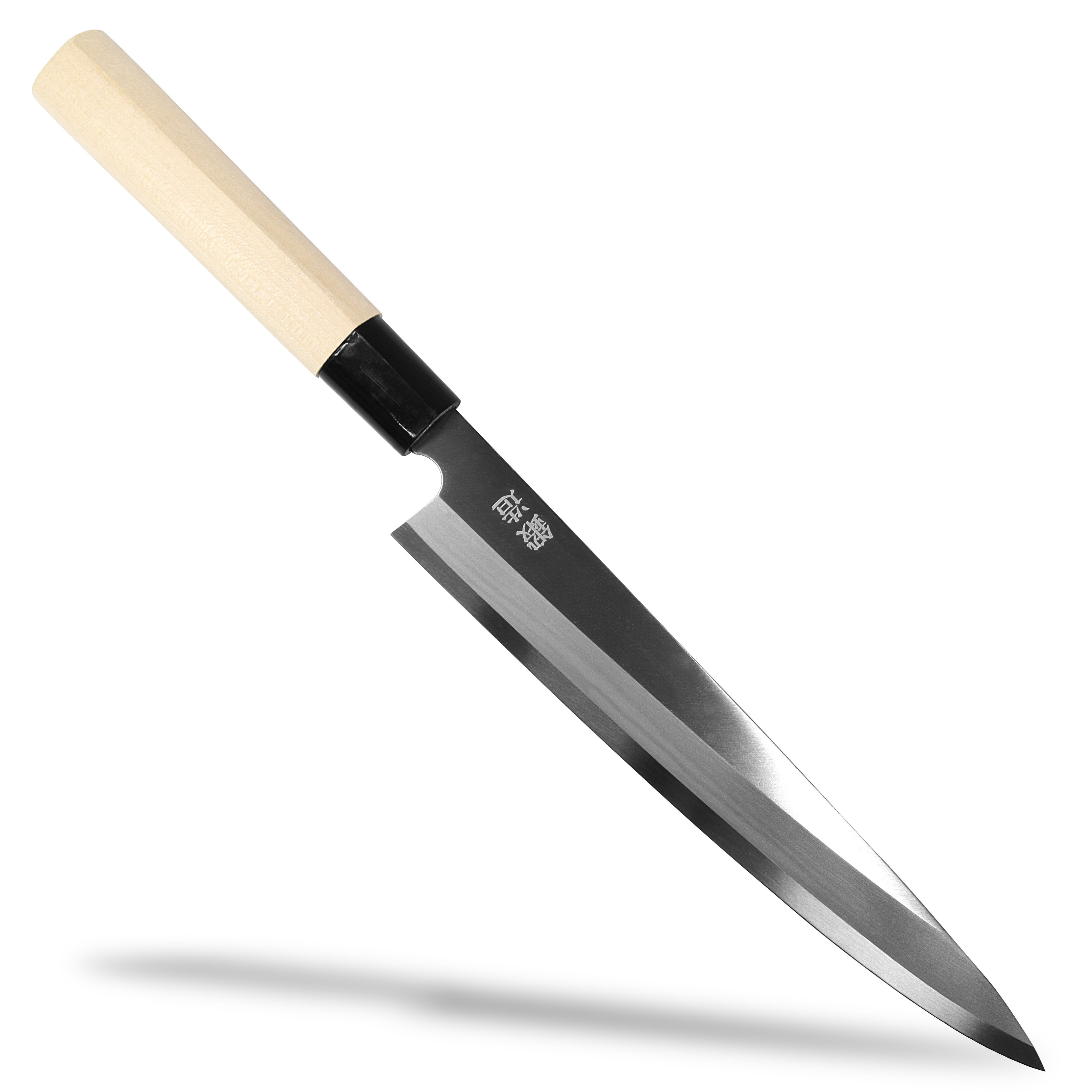
- Want to slice sashimi beautifully? → A yanagiba knife is the best choice.
Level: Who will use it?
- Beginners who are not used to using knives
- Mainly home-cooked meals that I cook every day.
- Professionals and serious users who use their products extensively for work or hobbies.
Maintenance tolerance: How much maintenance can be done?
- Don't want to sharpen it, don't want to worry about rust → Stainless steel, silver, or other rust-resistant materials
- I want to enjoy sharpening, and a little rust is acceptable → Carbon steel such as white steel or blue steel
A good Japanese kitchen knife only becomes truly easy to use when all three of these elements are in harmony. Conversely, if even one of them is out of sync, it's easy to end up with a feeling of unease, like "the specs are good, but something just doesn't feel right."
[For Beginners] Japanese kitchen knives that are perfect as your first knife
For those who are new to Japanese knives or who enjoy cooking but aren't yet ready for professional-grade equipment, the most important thing is to avoid stumbling over the first knife you use.
Conclusion: A santoku knife (stainless steel) is the best.
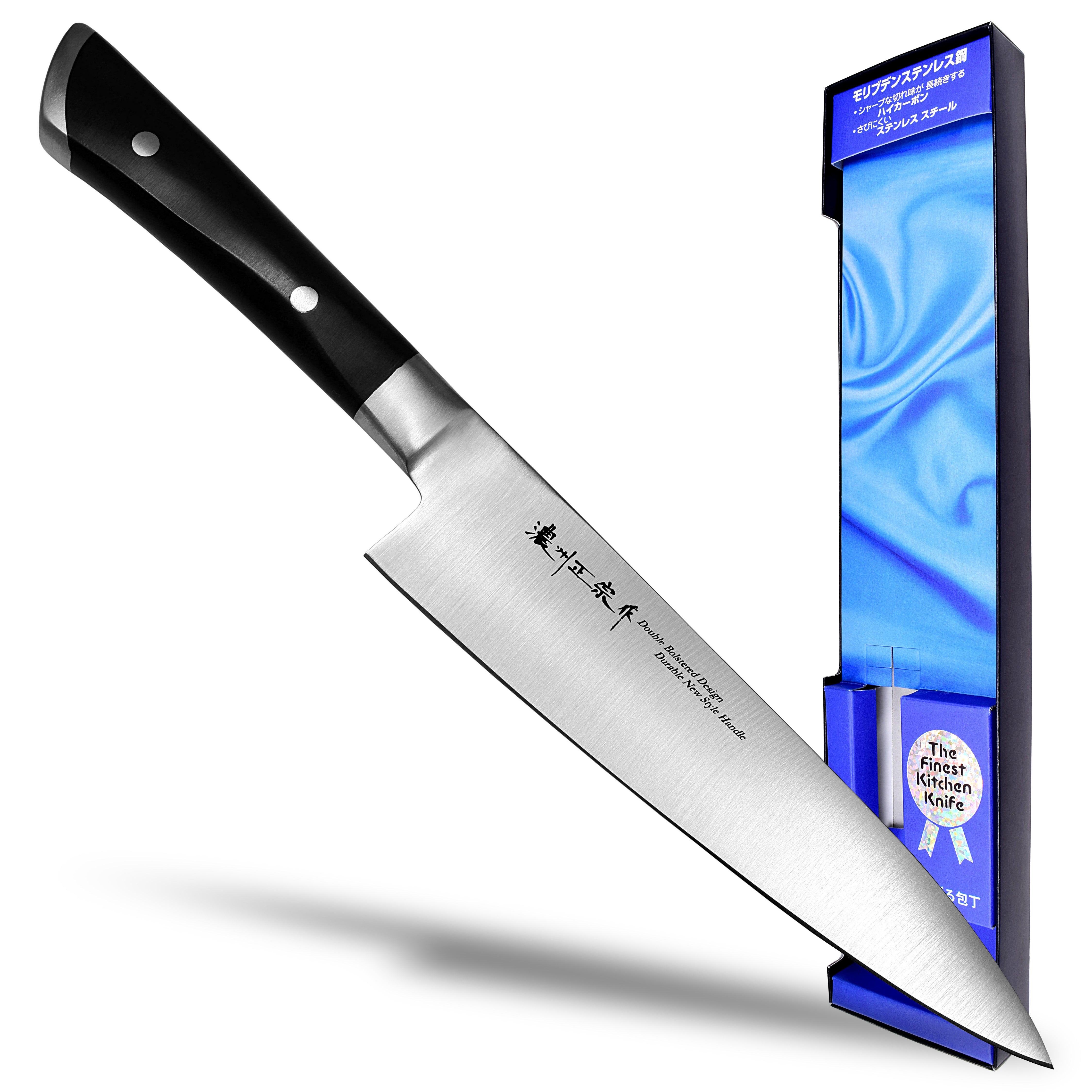
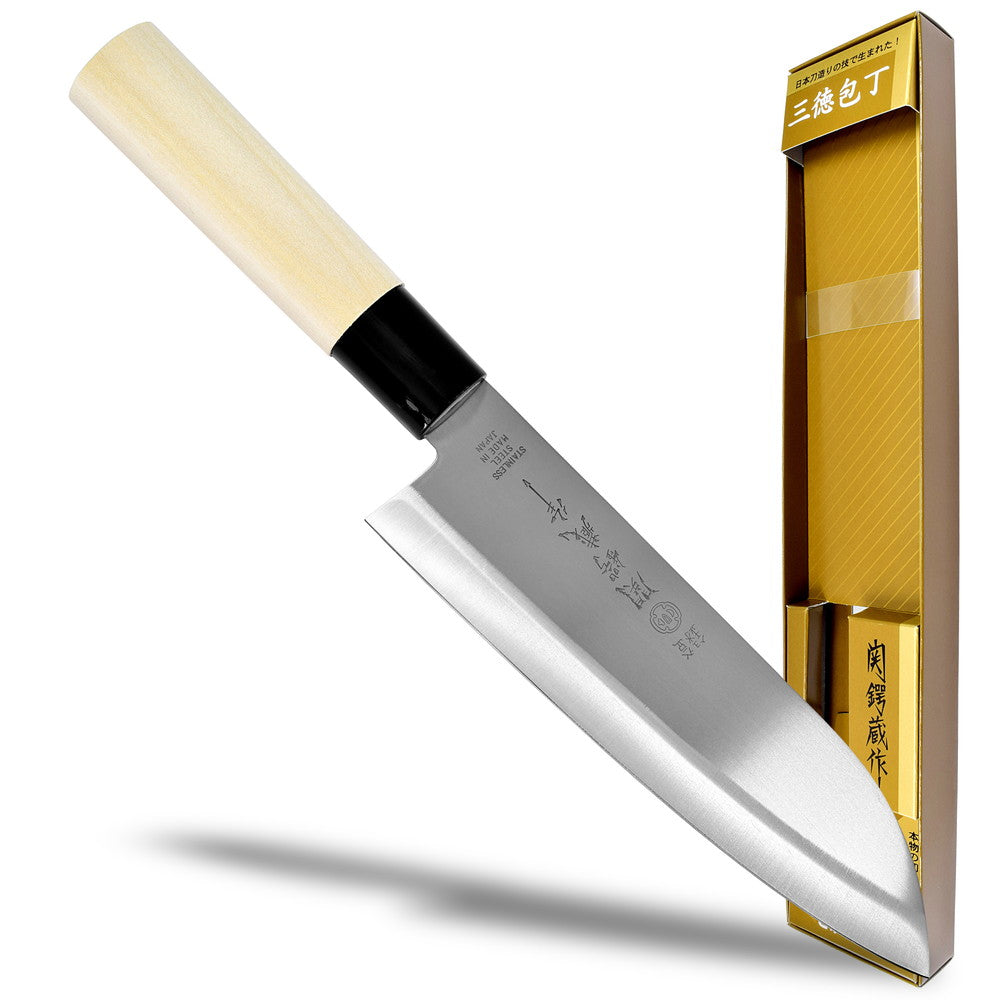
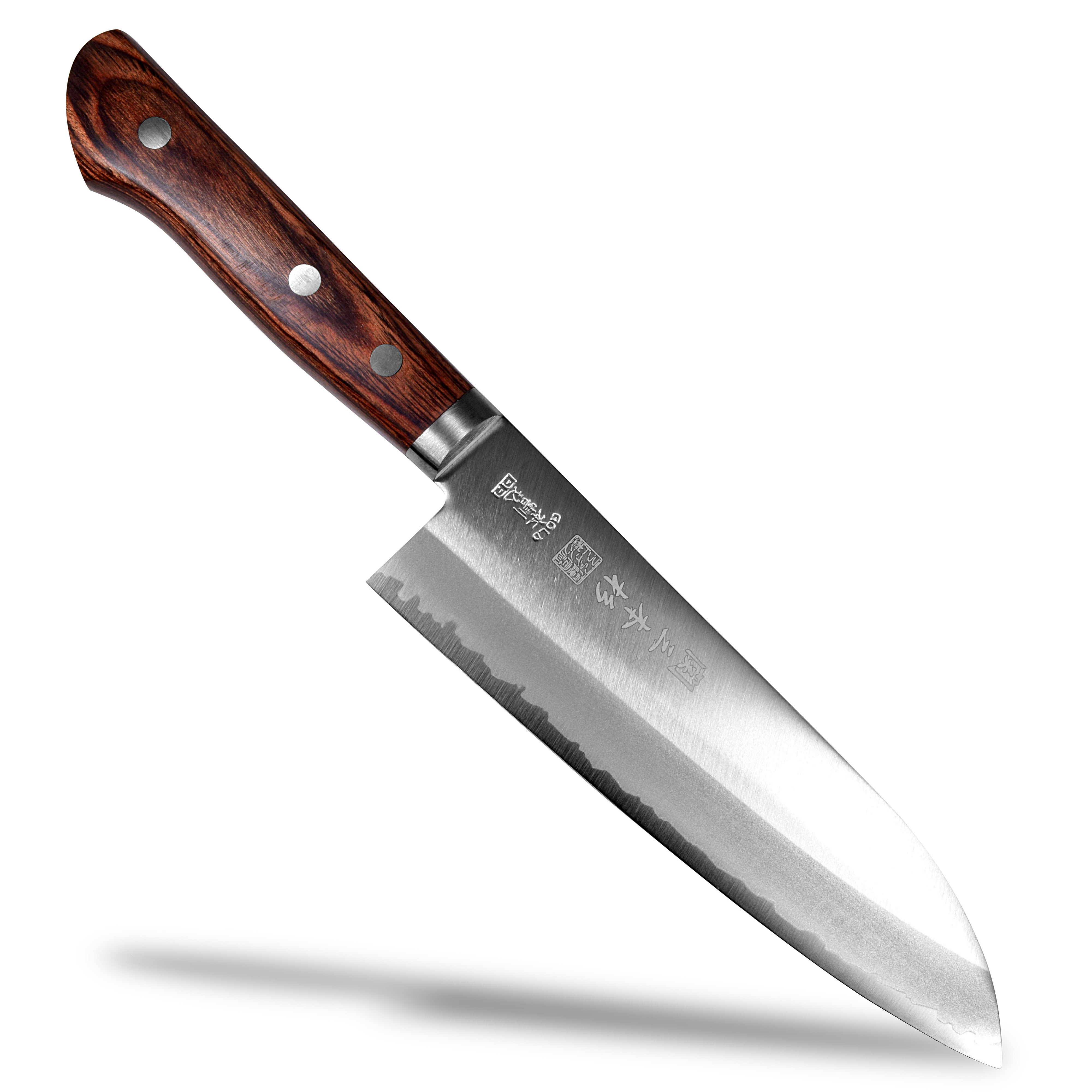
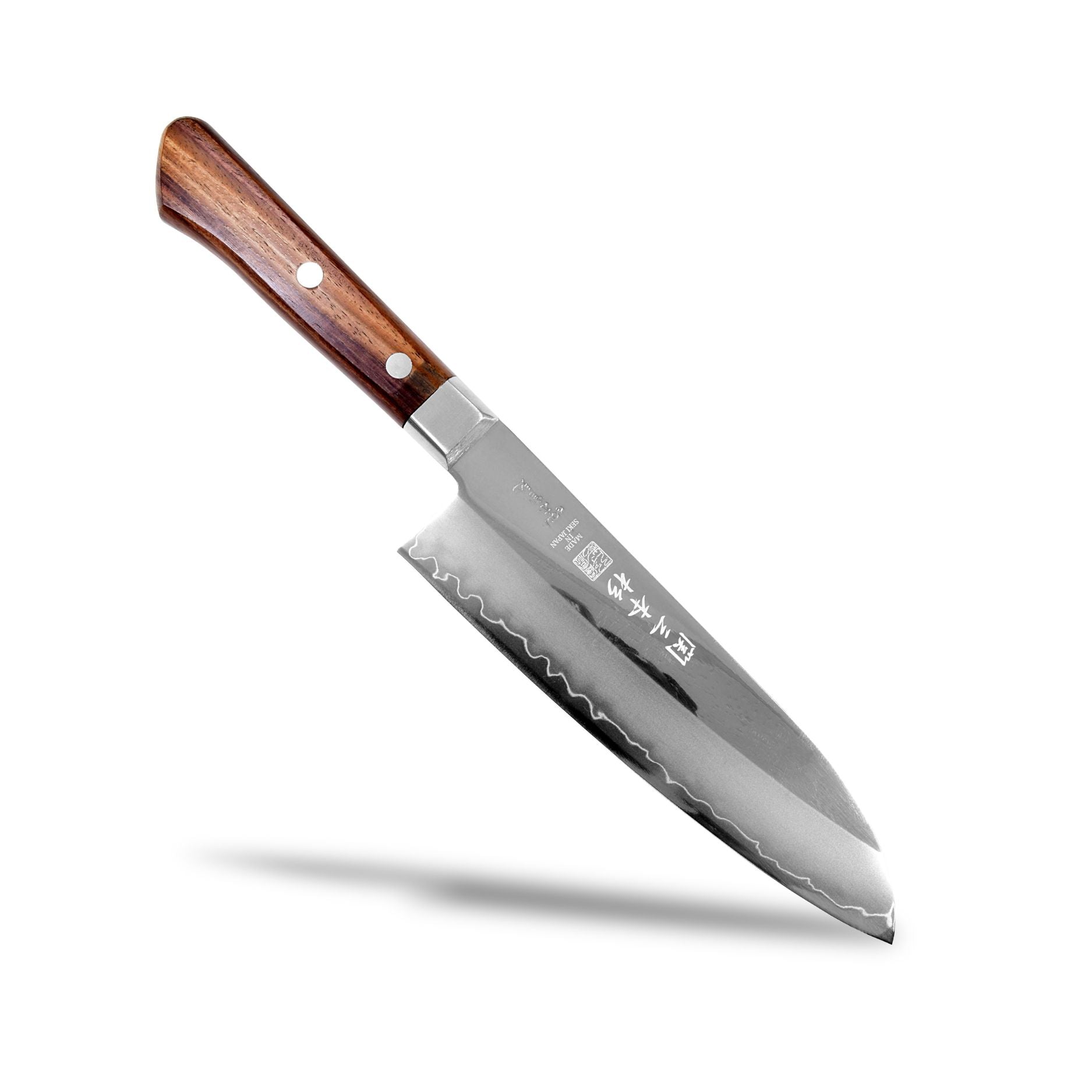
For your first knife, a stainless steel santoku knife is an excellent and well-balanced choice.
The reason is as follows:
- It's versatile enough to handle meat, fish, and vegetables.
- Because it has a double-edged, symmetrical design, it is easy to handle and relatively simple to sharpen.
- Rust-resistant and easy to maintain.
When making your selection, using the following criteria as a guideline will help you avoid making a mistake.
- Blade length: 165-180mm (a length that is easy to handle on a home cutting board)
- Steel material: Stainless steel, or composite material with Gin-san or stainless steel.
- Price range: Around 10,000 to 20,000 yen (a range where quality and durability tend to be stable for home use)
A common misconception among beginners is choosing a knife based solely on price, assuming that "the more expensive, the better." For your first knife, ease of use and a sense of security in using it casually are more important than sharpness, and if you get this right, you'll improve much faster.
[For home use] Recommended configuration for people who cook every day
For people who cook for themselves regularly, or who prepare meals for their families every day, "reduced fatigue" and "work efficiency" are important factors.
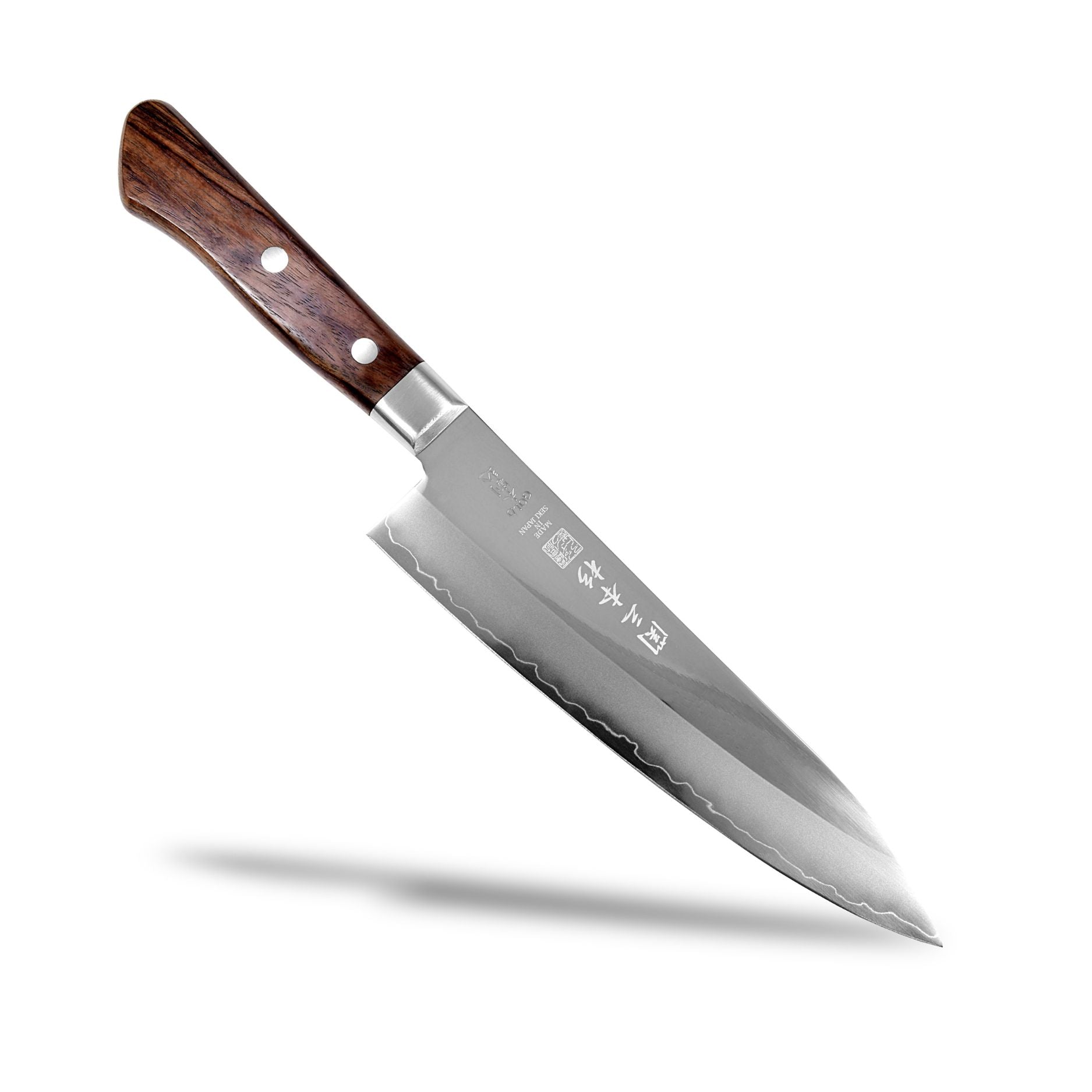
Conclusion: A santoku or nakiri knife plus a petty knife is the best combination.
The following combination is a truly user-friendly setup for home use.
- Main knife: Santoku or Nakiri
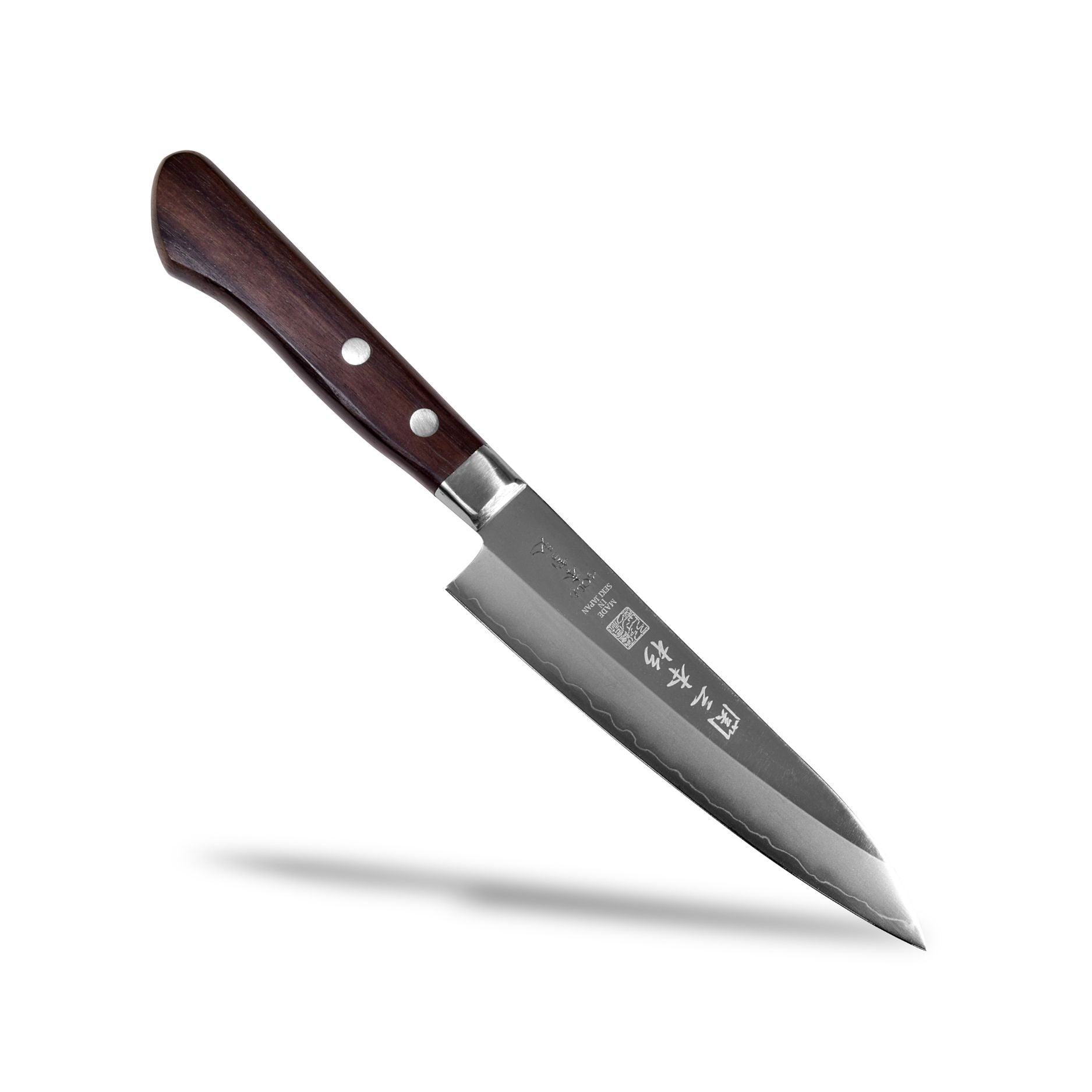
- Secondary knife: Paring knife
The rationale for this configuration lies in the high proportion of vegetables in home cooking and the reality that "trying to do everything with just one heavy bottle is tiring."
- Santoku: A versatile mainstay that can handle anything with good balance.
- Nakiri (vegetable knife): Often more convenient than a santoku knife in households that use a lot of vegetables.
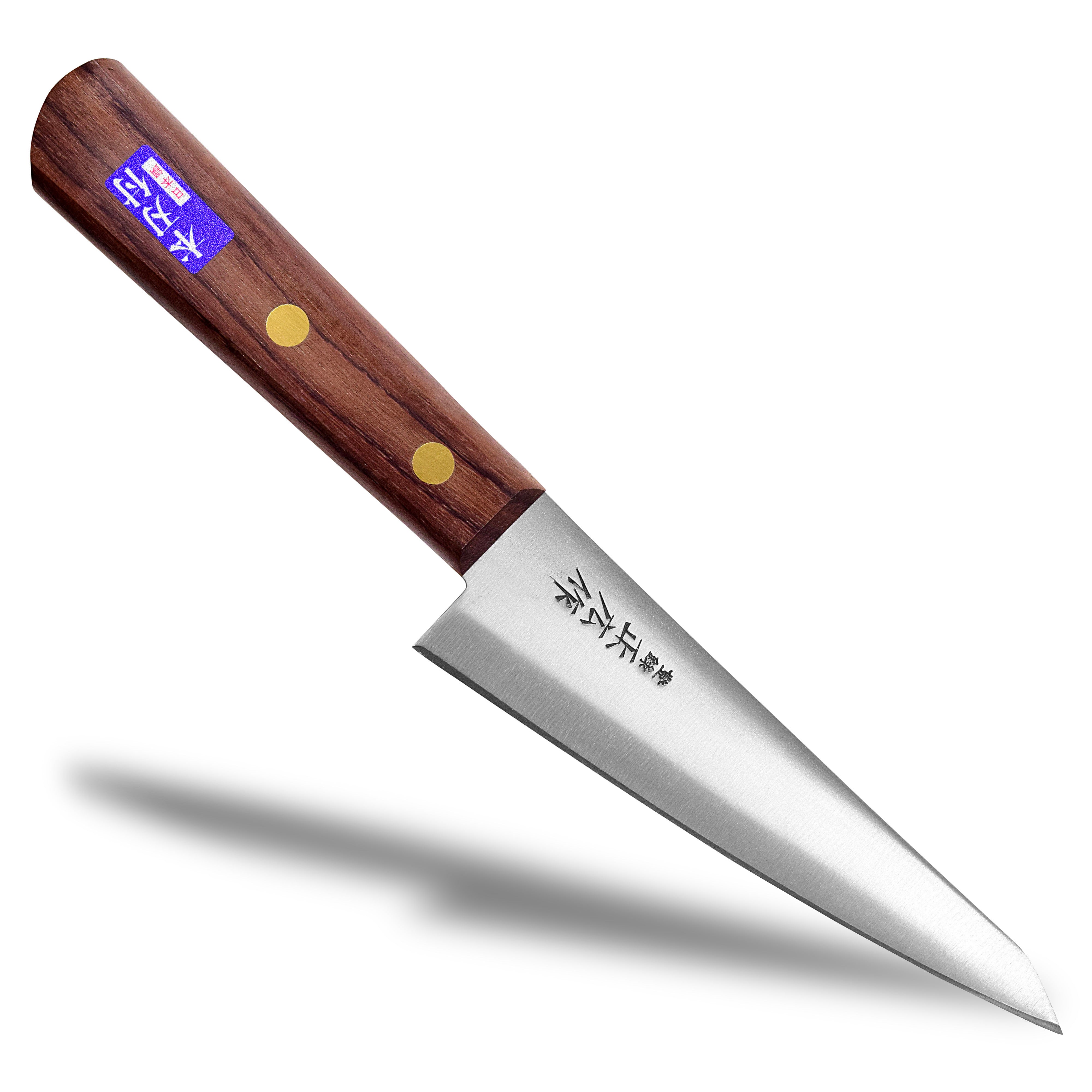
- Petty knife: Convenient for peeling fruit and small-scale preparation, and suitable for tasks that don't require a cutting board.
When it comes to steel materials, you can avoid overthinking things by simply following these steps.
- Stainless steel: It's incredibly easy. Just wash and wipe it dry.
- Carbon steel such as white paper steel: If sharpness is a priority and you plan to sharpen it, this is a viable option.
For those who "don't want to get tired from everyday housework" or "don't have much time to dedicate to maintaining their tools," a stainless steel santoku knife plus a paring knife, or a vegetable knife plus a paring knife, is a very practical and reliable combination.
Japanese kitchen knives for people who cook a lot of fish dishes.
For households that frequently prepare fish, or for people who enjoy fishing and do their own preparation, a three-purpose knife alone will inevitably have its limitations.
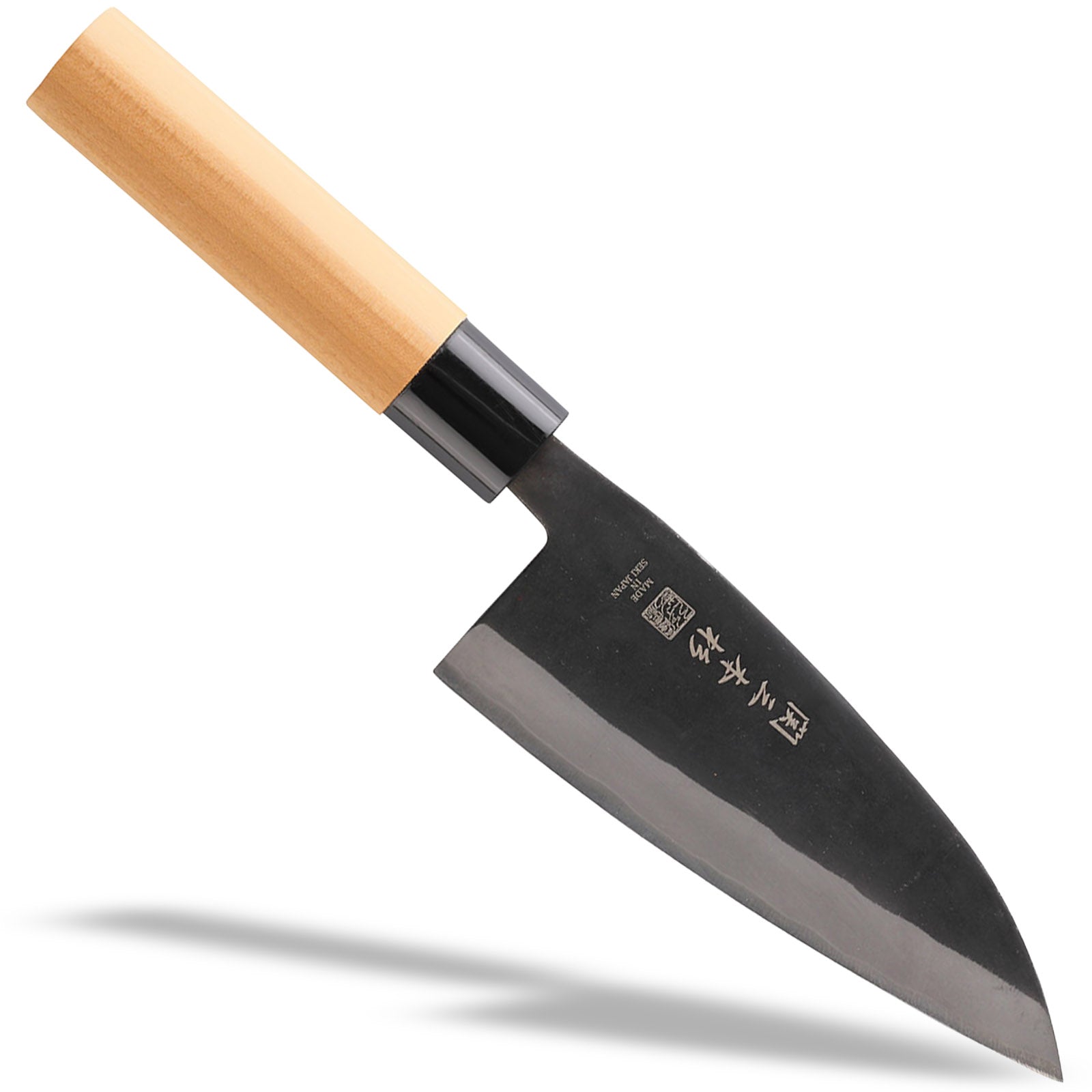
Deba knife (small deba knife): Used for preparing fish.
A deba knife is best suited for processes such as removing the fish's head and filleting it into three pieces. For home use, a small deba knife of about 120-150mm is easy to handle and can be used for small to medium-sized fish such as horse mackerel, sardines, and mackerel.
Sashimi knife (yanagiba): Improves the quality of the presentation.
If you're preparing the filleted fish as sashimi, having a yanagiba knife (a type of sashimi knife) will make a huge difference in the final result. For home use, a length of around 210mm is easy to handle and balances well with the size of your cutting board and kitchen space.
The important point here is that "deba and yanagiba knives cannot be used interchangeably." Deba knives are used for processing bones and heads, while yanagiba knives are used to beautifully slice sashimi. Their required roles and structures are completely different.
The concept of Japanese kitchen knives suitable for professionals and serious users.
For those who work in the culinary field, or those who want to pursue it seriously as a hobby, it's definitely worthwhile to assemble a "specialized set" of cooking equipment.
Conclusion: Use a dedicated knife for each purpose.
Typical combinations include the following configurations:
- Deba knife (made of carbon steel such as Aogami steel)
- Yanagiba (made from steel materials that prioritize sharp cutting edge, such as white steel).
- Thin blade (choose according to your preference for Kanto or Kansai style)
Knives in this class are clearly a cut above in terms of sharpness, consistency, and how well they take to sharpening, but they also require proper maintenance and sharpening skills.
It's not so much that "having good tools makes you a better cook," but rather that "having a good knife is meaningful precisely because you have the skill to make the most of the tools."
Thinking about different price ranges: How much should I spend?
The price range for Japanese kitchen knives varies widely, but you can roughly summarize it as follows:
| Price range | Suitable people |
|---|---|
| ~10,000 yen | For beginners who just want to try it out. |
| 10,000 to 20,000 yen | Best balance for home use |
| Over 30,000 yen | A lifelong investment, for serious enthusiasts. |
A higher price doesn't necessarily mean better quality. However, there is an aspect where "price = lifespan and effort."
- Inexpensive knives: While easy to acquire, they have limitations in terms of edge retention and finishing, making replacement likely every few years.
- Price range of 10,000 to 20,000 yen: Offers sufficient sharpness and durability for home use, and can last a long time with proper sharpening.
- Over 30,000 yen: This price range features knives that require meticulous sharpening, finishing, and use of high-quality materials, and are chosen with the intention of being used for a lifetime.
It's recommended to choose a price range while considering "how long you intend to use it and how much effort you plan to put into it."
Choosing based on origin: Seki City and Sakai City
In the world of Japanese kitchen knives, the perspective of "which production area specializes in which type of knife" cannot be ignored.
Seki City in Gifu Prefecture is one of Japan's largest cutlery production areas, supplying a wide range of Japanese knives, from household to professional use, with consistent quality. It boasts a rich lineup of practical knives, including santoku, nakiri, and deba knives, and is characterized by its excellent cost performance.
Meanwhile, Sakai City in Osaka Prefecture is highly regarded for its professional-grade Japanese knives, such as yanagiba and usuba. It is a production area supported by a division of labor and the skills of craftsmen, and is particularly trusted by professionals who seek sashimi knives and specialized vegetable knives.
Knowing which regions are known for their specialties makes it easier to choose brands from areas that are strong in the type of product you want, ultimately reducing the chances of making a bad choice.
Common failure patterns and how to avoid them
Common mistakes when choosing a Japanese kitchen knife include the following:
- I choose based solely on appearance (pattern, how it shines).
- I bought a professional-grade, hard carbon steel blade with absolutely no sharpening experience.
- "I might as well buy a deba or yanagiba knife," he thought, and ended up buying only basic knives like a santoku knife.
What these have in common is that they don't match "my intended use, skill level, and maintenance tolerance."
Recommendations are ultimately determined by "your own standards," and someone else's "best pick" may not necessarily be your best pick.
Q&A: Frequently asked questions about recommended Japanese kitchen knives
Q. If you could only choose one, which one would you pick?
A stainless steel santoku knife is ideal. It offers a good balance of versatility, ease of use, and maintenance, making it a virtually foolproof first knife.
Q. Can a knife meant to last a lifetime be used by a beginner?
It is possible to use them, but the key is whether you are willing to learn how to sharpen them. High-quality carbon steel knives are designed with maintenance in mind.
Q. Which would you choose as a gift?
If you don't know how often the recipient cooks, a standard household santoku knife is the safest choice. Stainless steel knives are rust-resistant and easy to handle, making them a reliable gift.
Q. Should I choose a domestic product?
While not an absolute requirement, considering quality control, after-sales service, and sharpening options, domestically produced knives offer a greater sense of security.
There's no single right answer when it comes to recommending a Japanese kitchen knife. However, if you clarify three things—"what you'll be cutting," "at what level you'll be using it," and "how much maintenance you're willing to do"—you'll definitely find the perfect knife for you.