
Understanding the Types of Japanese Kitchen Knives from a Practical Perspective: Deba, Yanagiba, Usuba, Santoku... Which one should you choose?
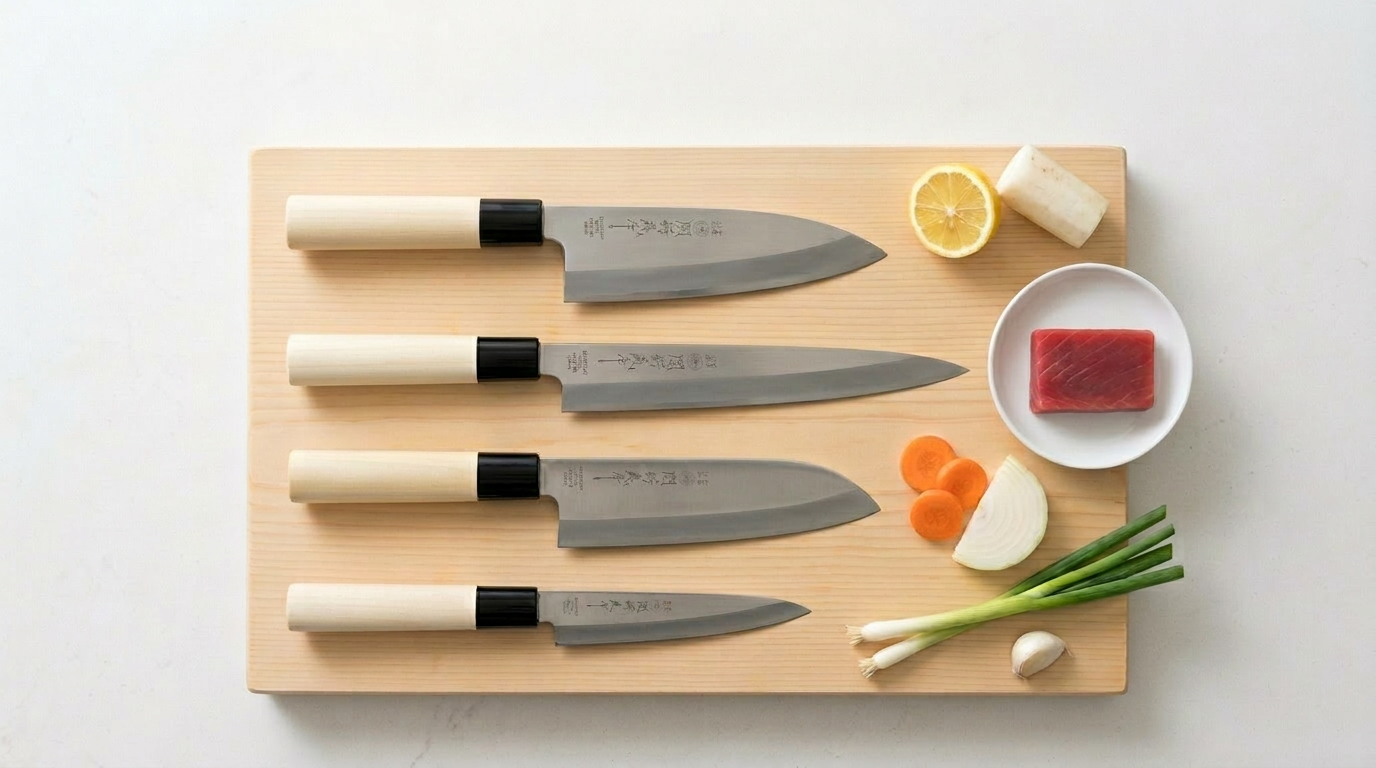
The moment you become interested in Japanese kitchen knives, you'll almost certainly encounter the obstacle of "there are too many types and I don't know where to start." Deba, yanagiba, usuba, santoku, nakiri, petty...the names just keep piling up, and many people probably feel it's hard to see which one they actually need.
This community hub aims to help you understand the different types of Japanese knives, focusing on "what to cut and how to cut it," and ultimately helping you visualize "which one is right for your kitchen."

Why are there so many types of Japanese kitchen knives?
The wide variety of Japanese kitchen knives is a result of their evolution from being "all-purpose" to "specializing in specific processes." In other words, it's easier to understand if you think of each knife not as a tool that "can do many things," but rather as a tool that is "extremely strong for a specific job."
In Japanese cuisine, the way ingredients are cut directly impacts their taste, texture, and appearance. For example, the cross-section of sashimi, the thickness of vegetables, and the amount of bone-in meat remaining are all greatly affected by the shape of the knife and the cutting technique. This led to the concept of "one knife per step."
Typical correspondences are as follows:
- To fillet a fish → use a deba knife
- Slice the filleted fish into sashimi slices → Use a yanagiba knife
- Prepare the vegetables and slice them thinly and evenly → Use a thin-bladed knife
You might feel overwhelmed by the sheer variety, but the key point is that "you can significantly narrow down your options by simply deciding on one intended use."
Mastering the Basics: The "Stars" of Japanese Kitchen Knives
Here, we'll start by looking at the basic types that best embody the essence of a traditional Japanese knife. Understanding these will make it easier to see the differences between them and the more common kitchen knives like the santoku and nakiri that will be discussed later.
Deba knife | A knife for "preparing" fish
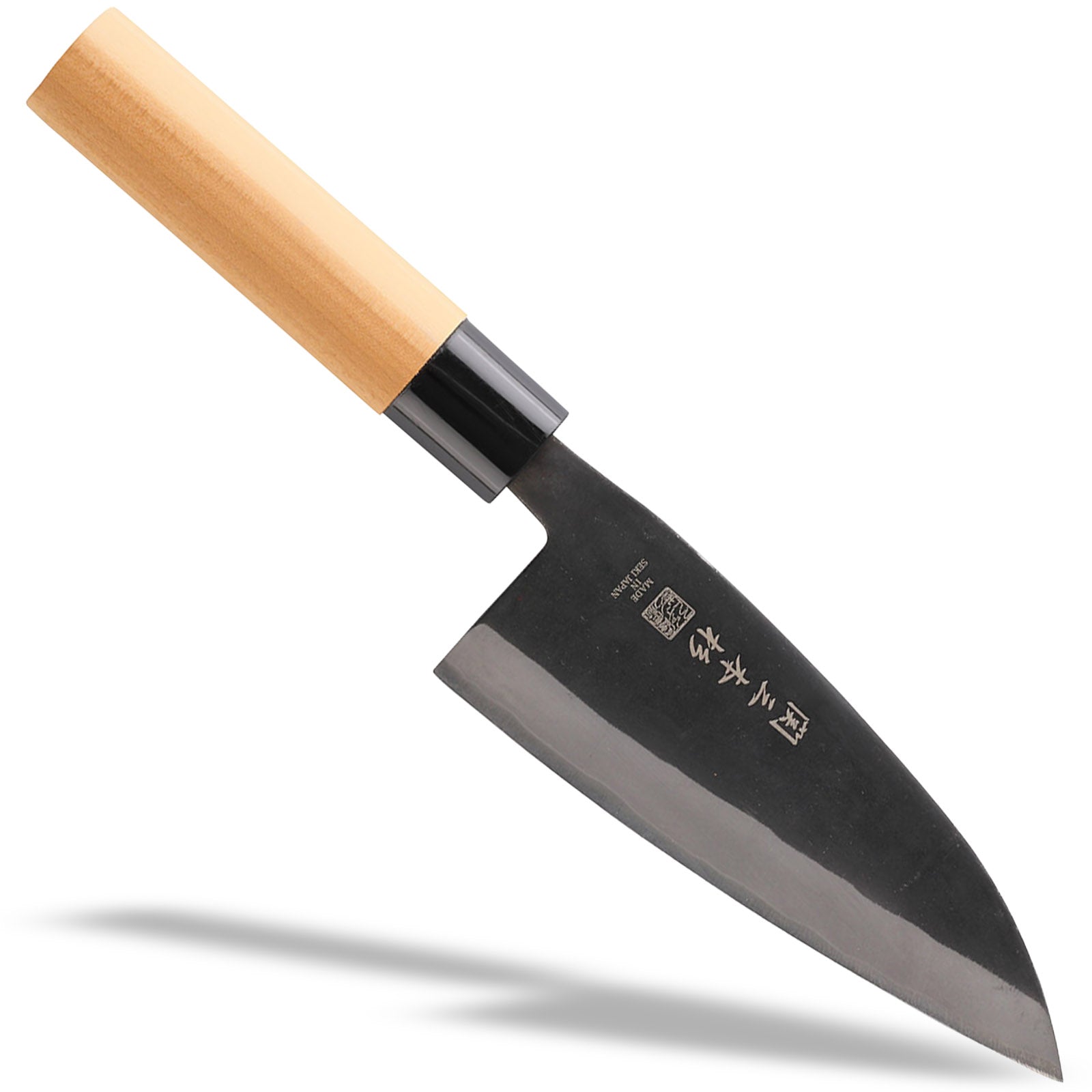
A deba knife is a basic tool for anyone who cooks fish. It's more accurate to think of it as a knife for "preparing" fish rather than simply "cutting" it.
The features are as follows:
- It has a thick blade and a solid weight, allowing for control even when hitting bone.
- It has enough strength to process bones and heads.
- With its single-edged design, it's easy to cut along the desired line.
Its main uses are for all kinds of rough fish preparation, such as filleting, removing the head, and processing the bones. For home use, a small deba knife (around 120-150mm) is easy to handle and is just the right size for small to medium-sized fish such as horse mackerel, sardines, and mackerel.
It's important to note that a deba knife is not a knife for chopping. The basic technique involves carefully cutting along the bone with the blade, and forcefully striking the bone will cause the blade to chip.

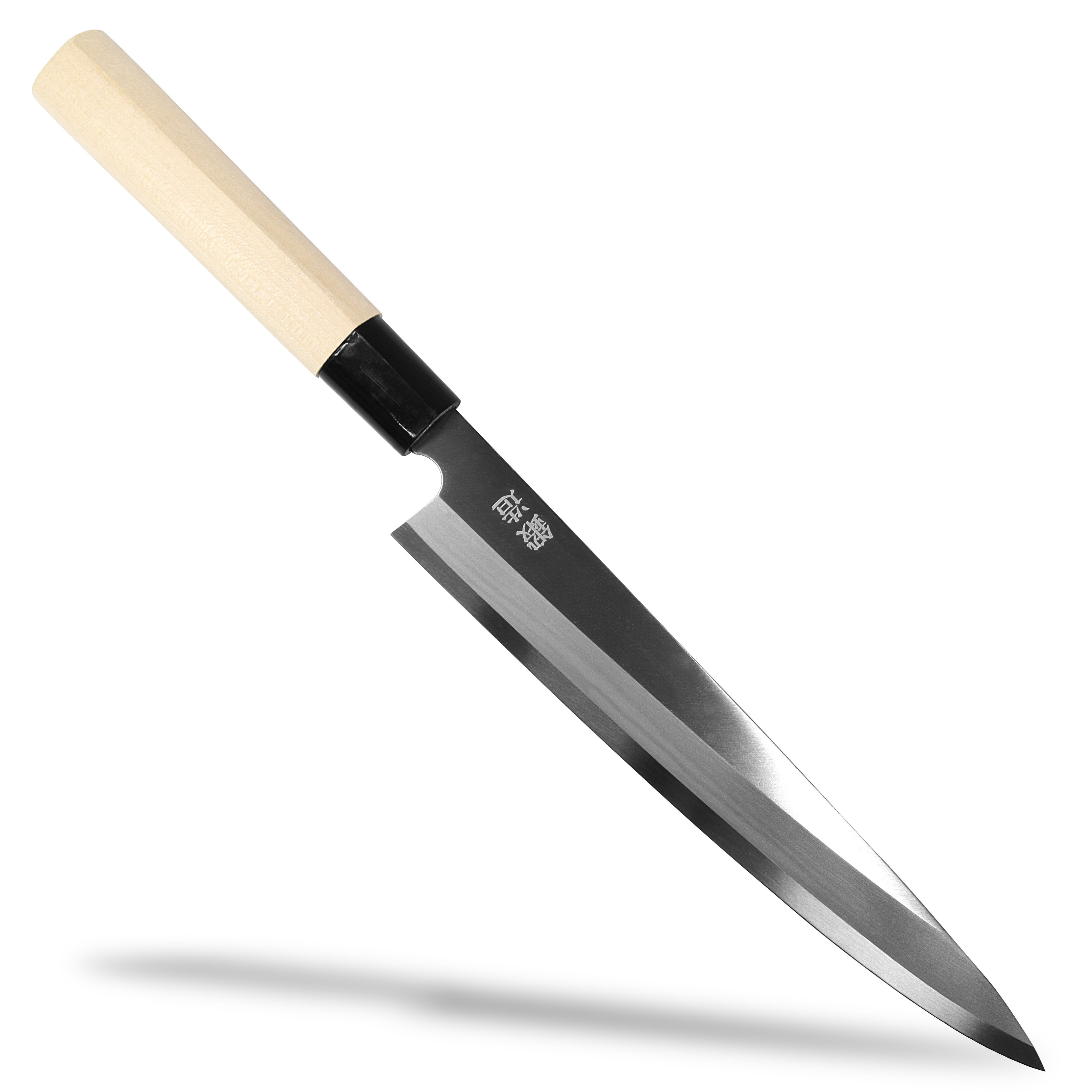
Yanagiba knife (sashimi knife) | For beautifully slicing sashimi
A yanagiba knife (sashimi knife) is a knife entrusted with the "finishing touches" after filleting fish. Its role is focused on creating the most beautiful and smooth cross-section of the sashimi.
The features are as follows:
- It has a long blade and a slender silhouette.
- The basic technique is to pull and cut in one direction.
- Specializing in cutting by pulling, it prepares the cross-section without crushing the cells.
Yanagiba is the common name in the Kansai region, while in the Kanto region, a style called Takohiki is more commonly used. For home use, a blade length of around 210-240mm is sufficient, and choosing one that fits the length of your cutting board and the space around your stove will make it easier to handle.
One thing to be careful about is choosing a blade that is significantly longer than your cutting board. If it's too long, you'll feel like you're swinging it around, and you won't be able to cut smoothly, so you won't be able to fully utilize the advantages of a yanagiba knife.

Thin-bladed knife | Improves precision in vegetable preparation
A thin-bladed knife is designed for those who want to achieve ultimate precision in vegetable preparation. It excels when you want to create beautifully finished dishes, including those with a clean appearance, such as those used for julienne peeling, beveling, and thin slicing.
The main features are as follows:
- With a straight blade, it excels at straight cuts.
- With a single-edged blade, it's easy to guide the blade along the intended line.
- It is easy to make very thin slices and cuts of uniform thickness.
There are two main types: the sickle-shaped thin blade, preferred in the Kansai region, and the Edo-style thin blade, used in the Kanto region. The shape of the blade tip differs slightly between the two. Both are commonly seen in professional Japanese restaurants and are reliable tools for handling vegetables.
However, it's true that it's somewhat difficult to handle for home use. It's not suitable for meat or fish, so it's more practical to use a double-edged vegetable knife as a substitute at home, and consider a thin-bladed knife only when you want to "dive into authentic Japanese cuisine."
Types of Japanese kitchen knives that are "practical" and easy to use at home
From here, we'll look at the types of knives that are perfect for everyday home cooking. When someone asks you to "just get one knife," the knives that come to mind are not the deba or yanagiba, but rather the knives in this category.
Santoku knife | A versatile all-rounder for home use
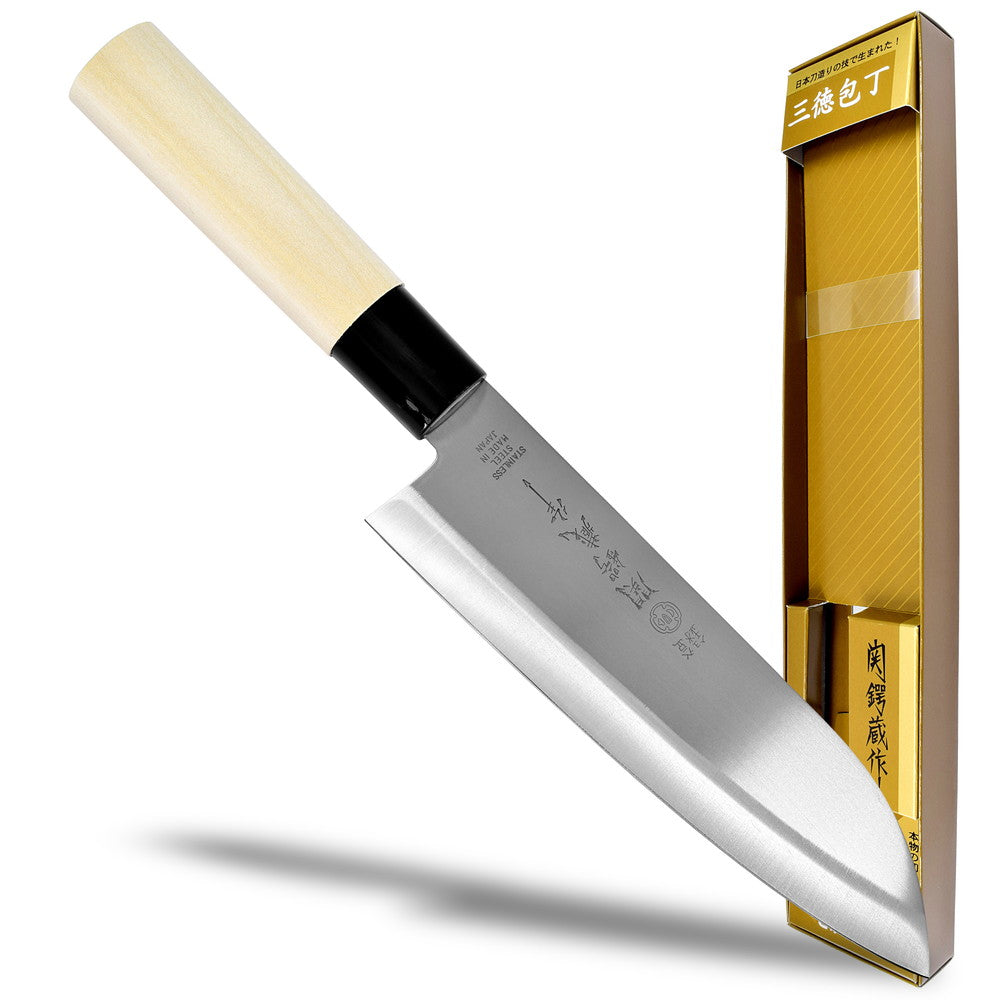
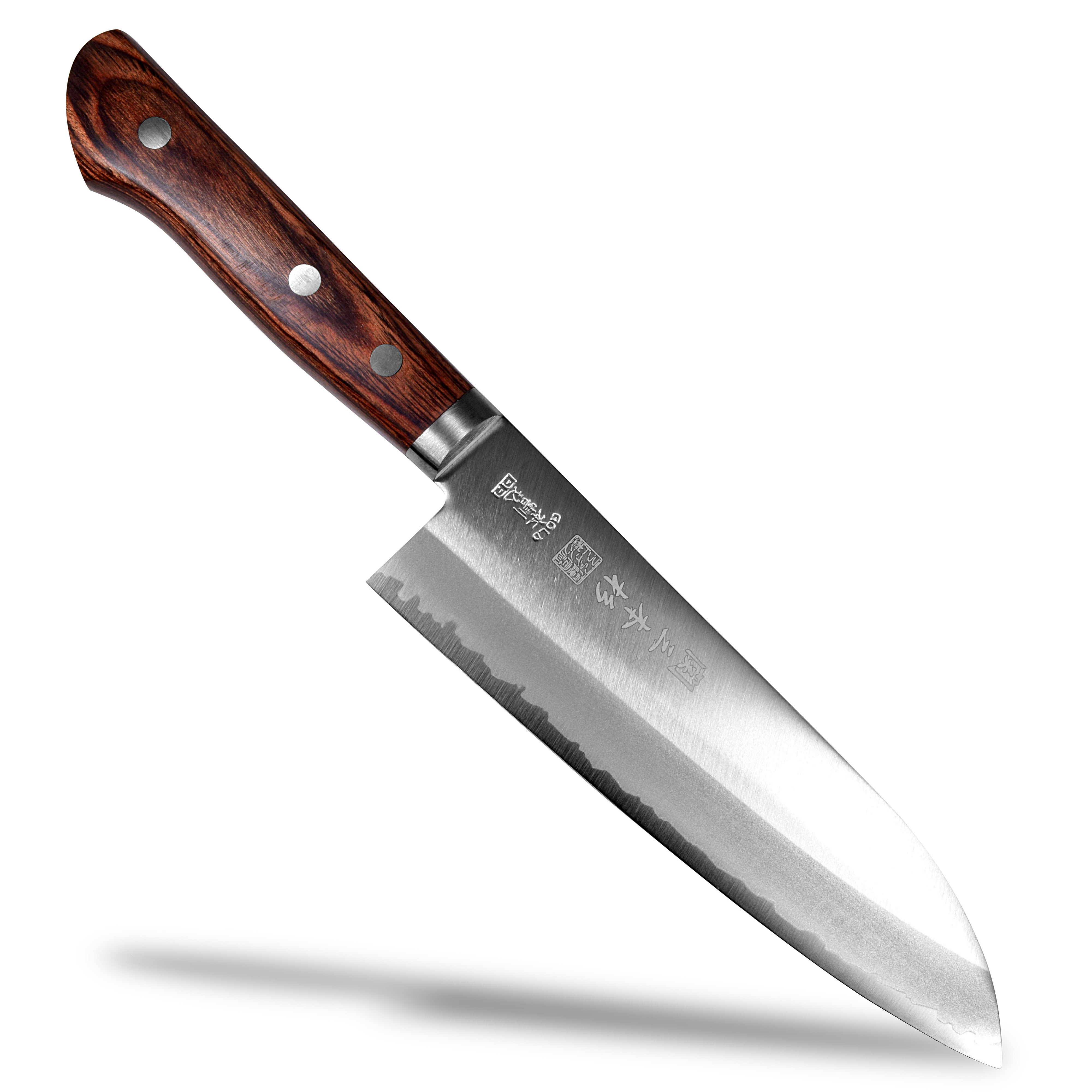
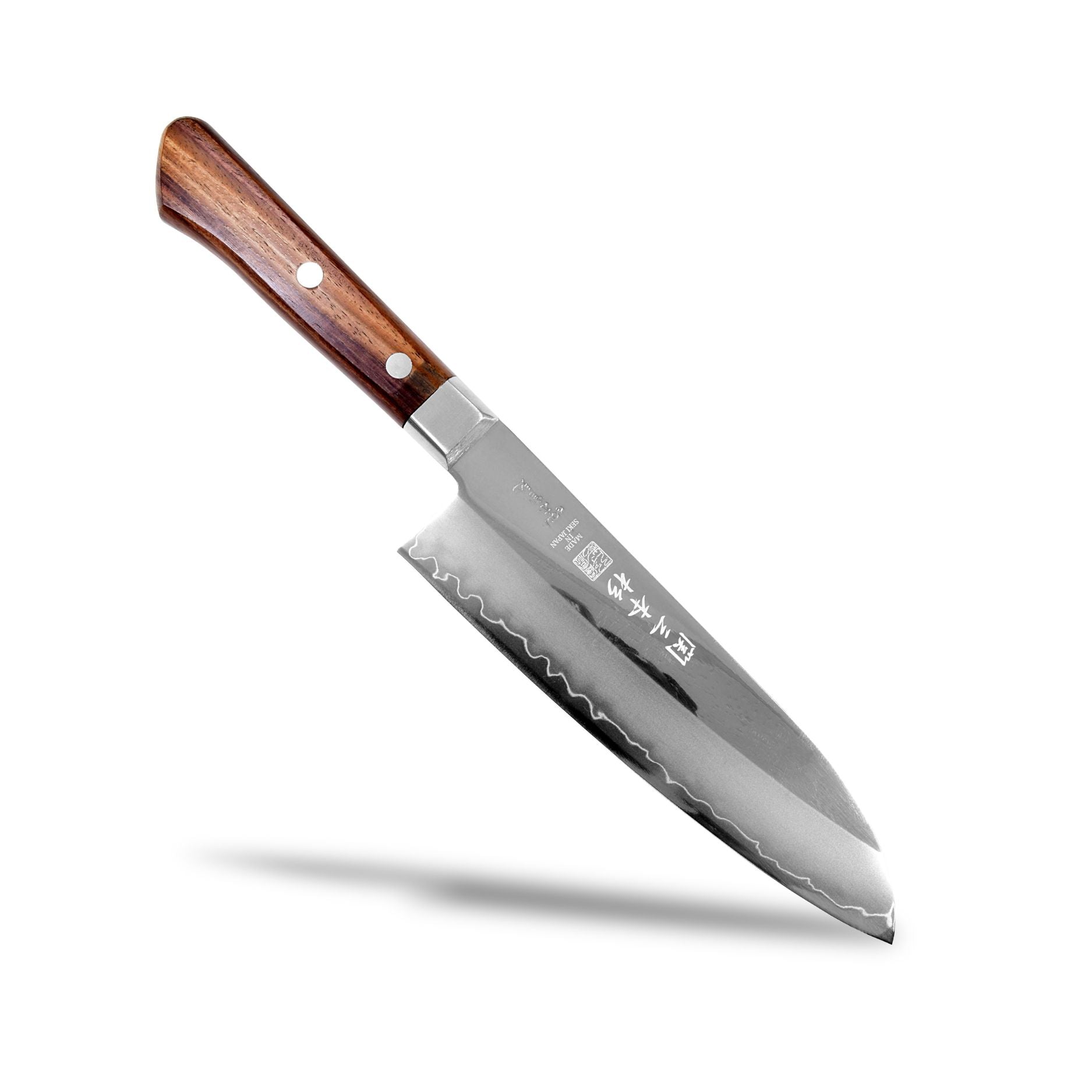
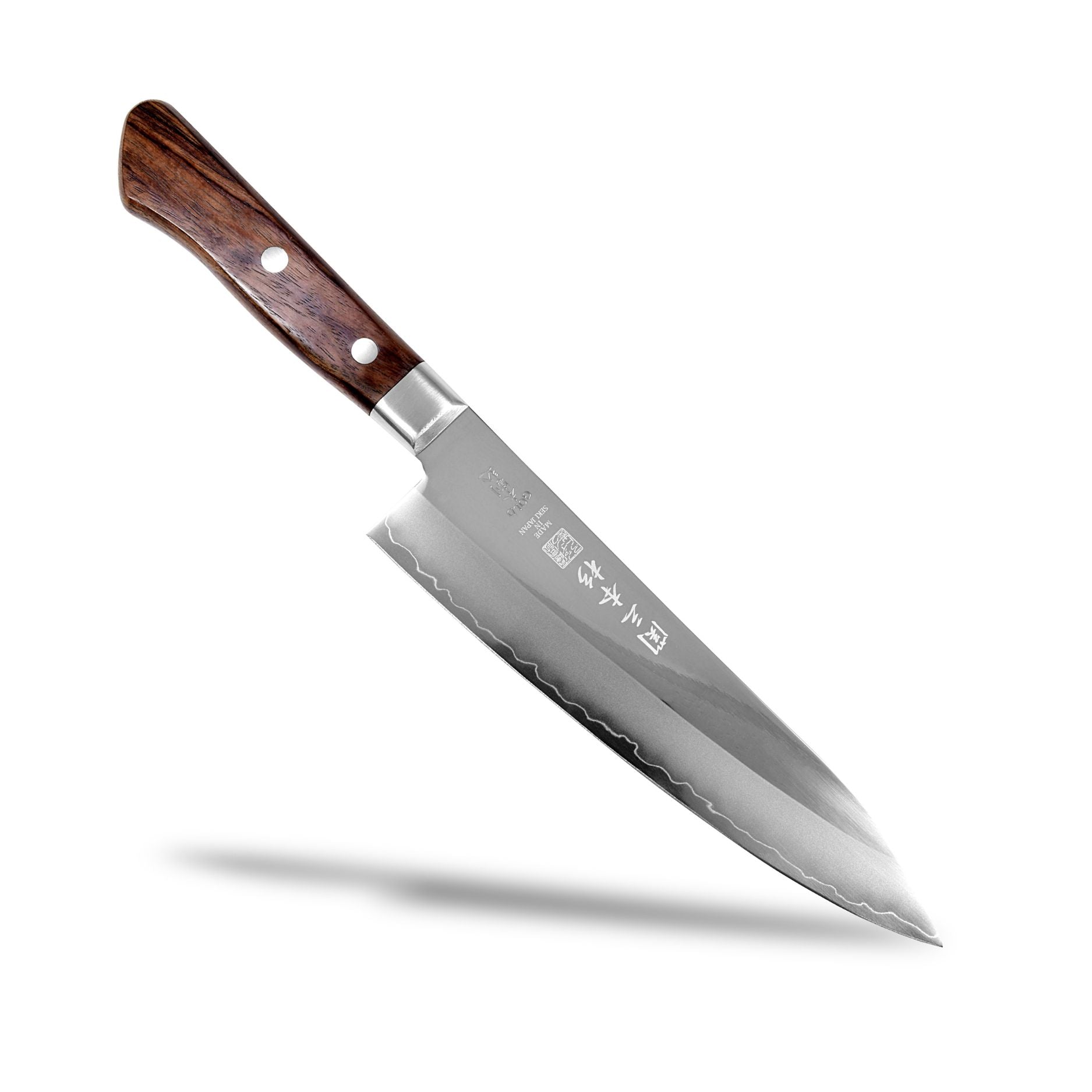
The Santoku knife is the most practical choice for those new to Japanese kitchen knives. It's called Santoku because it can handle three uses: meat, fish, and vegetables.
The features are as follows:
- Versatile enough to handle meat, fish, and vegetables.
- With its double-edged design, it's easy to use regardless of your dominant hand.
- The blade is relatively compact, making it easy to fit on a standard household cutting board.
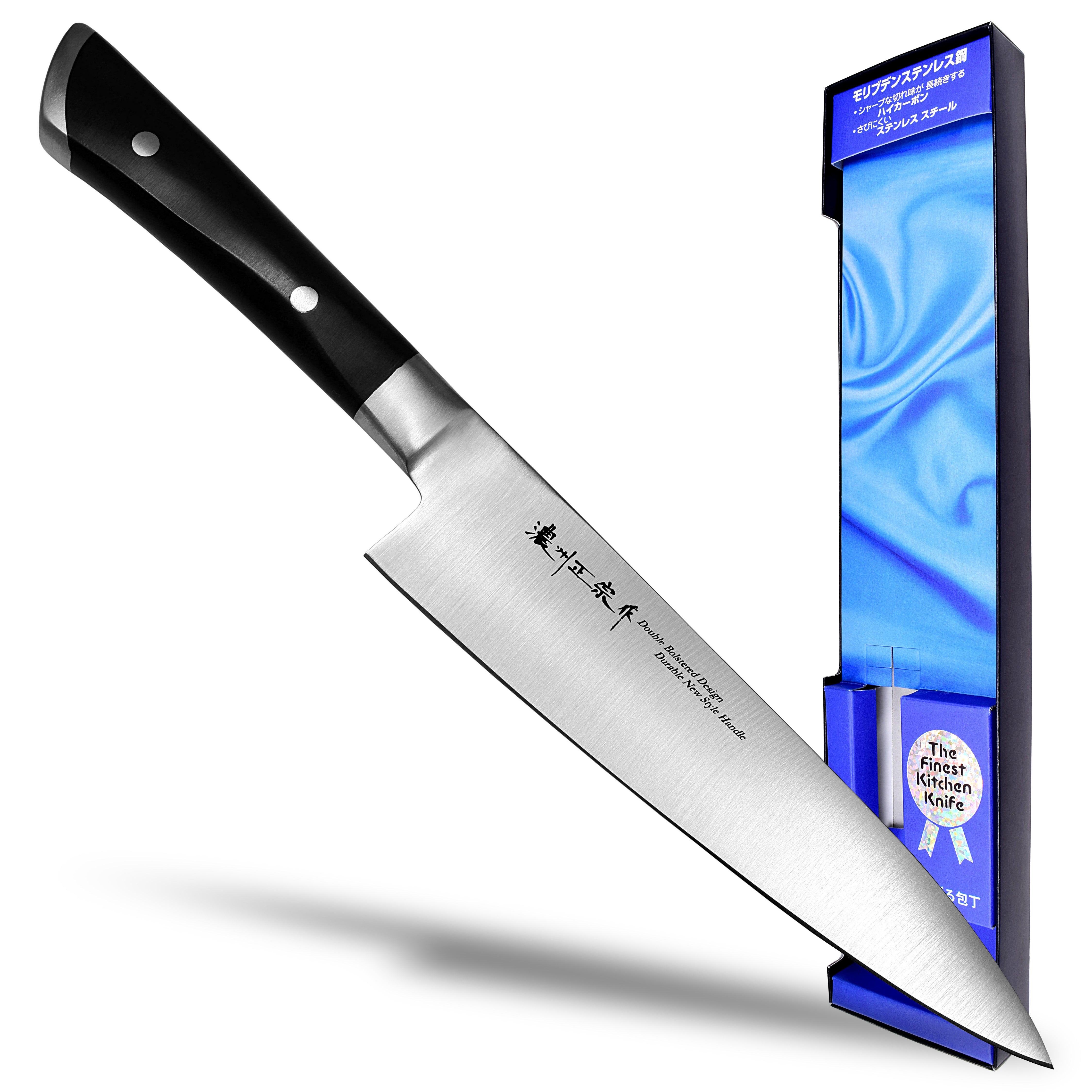
For those using a Japanese kitchen knife for the first time, or for those who want to do almost everything with just one knife, the Santoku is the perfect starting point. This type of knife is frequently used in daily cooking, and it's a very well-balanced choice if you're looking for your "first knife."
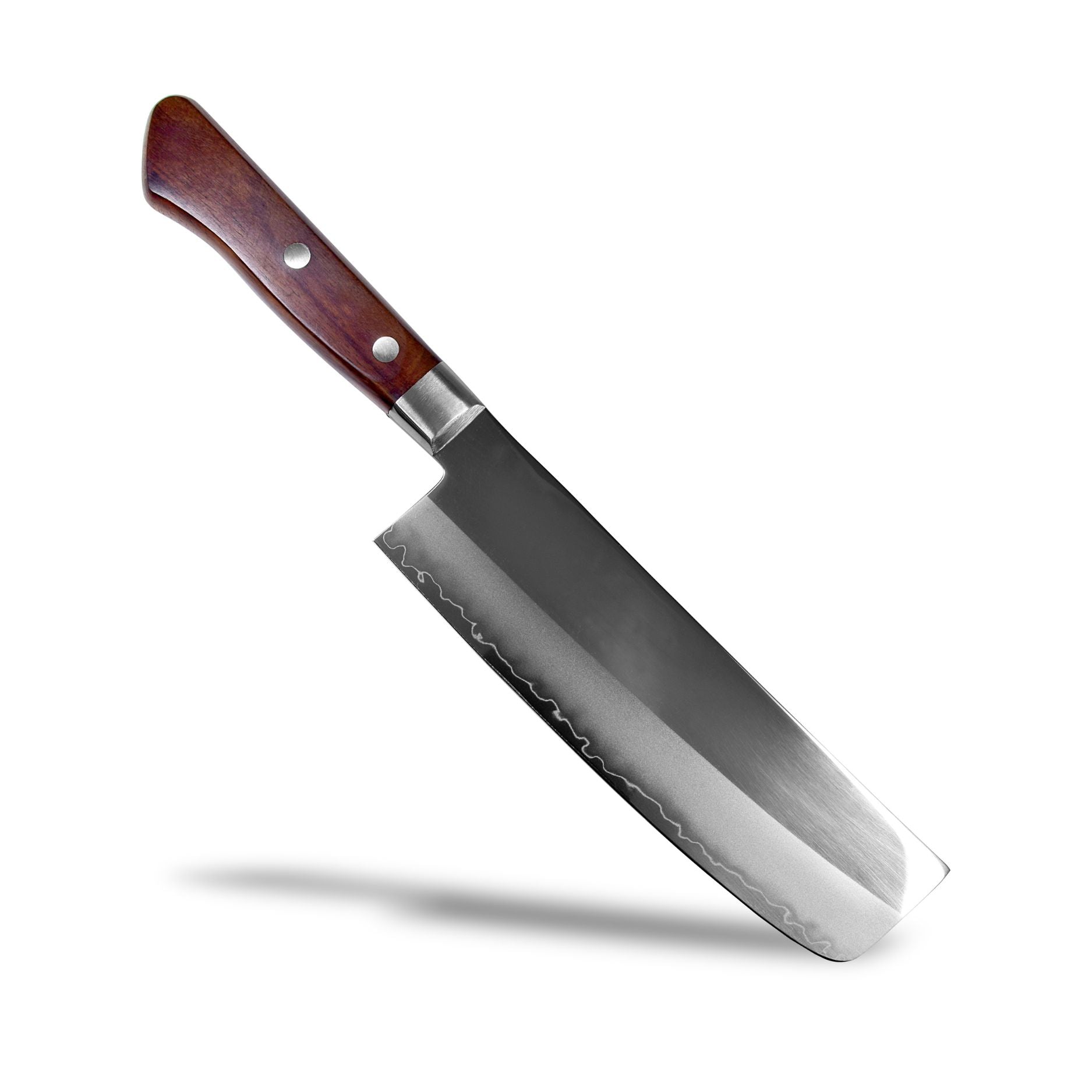
Nakiri knife | More convenient than a Santoku knife if you mainly use it for vegetables
A vegetable knife is a very reliable tool for anyone who primarily cooks vegetables. Although it's positioned as a knife specifically for vegetables, it's more convenient than a santoku knife for home use in many situations.
The main features are as follows:
- The blade is straight, and the contact surface with the cutting board is wide, allowing for effortless chopping and cutting.
- It is suitable for repetitive tasks such as finely mincing or cutting large quantities of vegetables.
If your diet is mainly vegetable-based, using a combination of a "santoku knife + nakiri knife" will significantly increase your work efficiency. However, it's not very suitable for processing meat or fish, so you need to accept that limitation.
Petty knife | A handy secondary knife
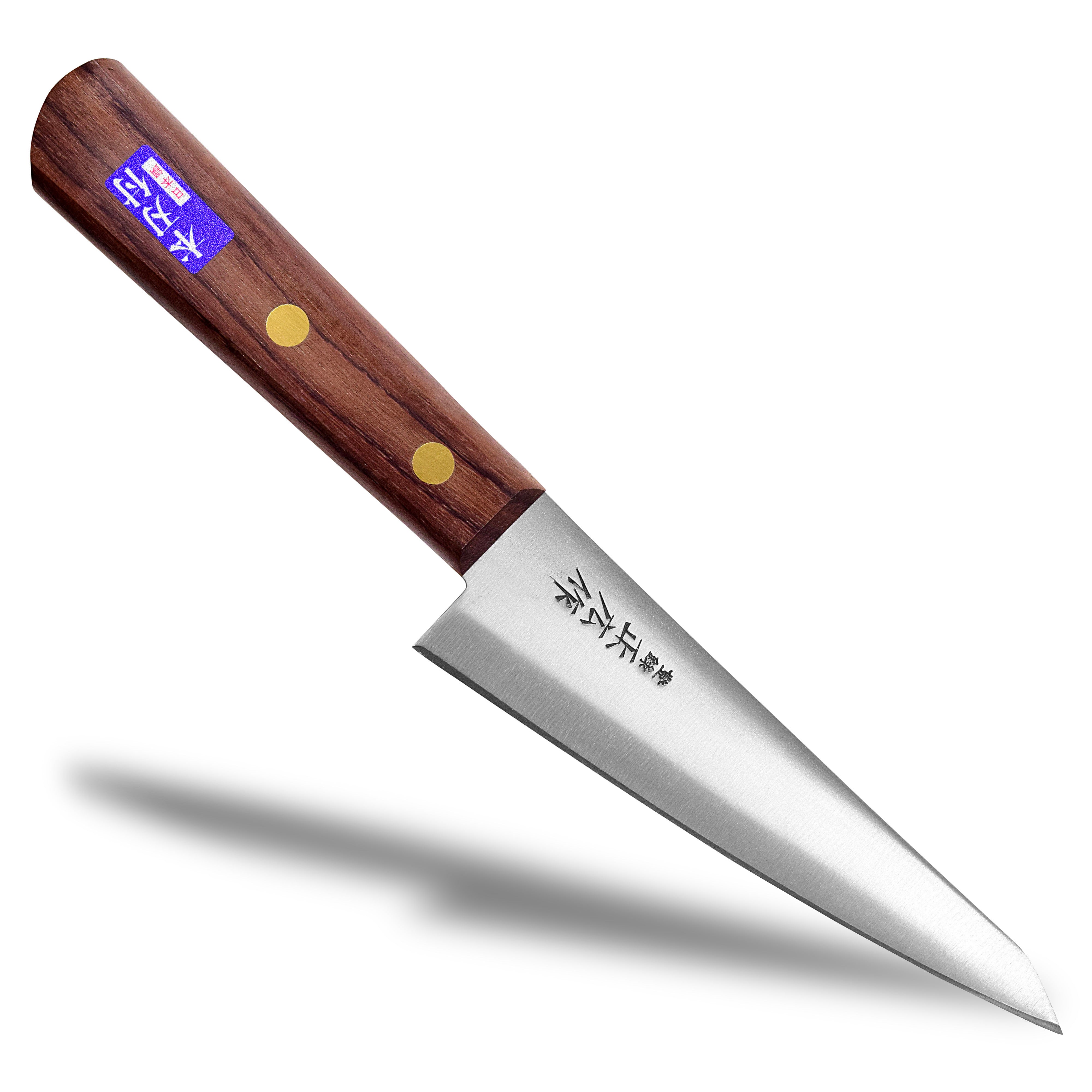
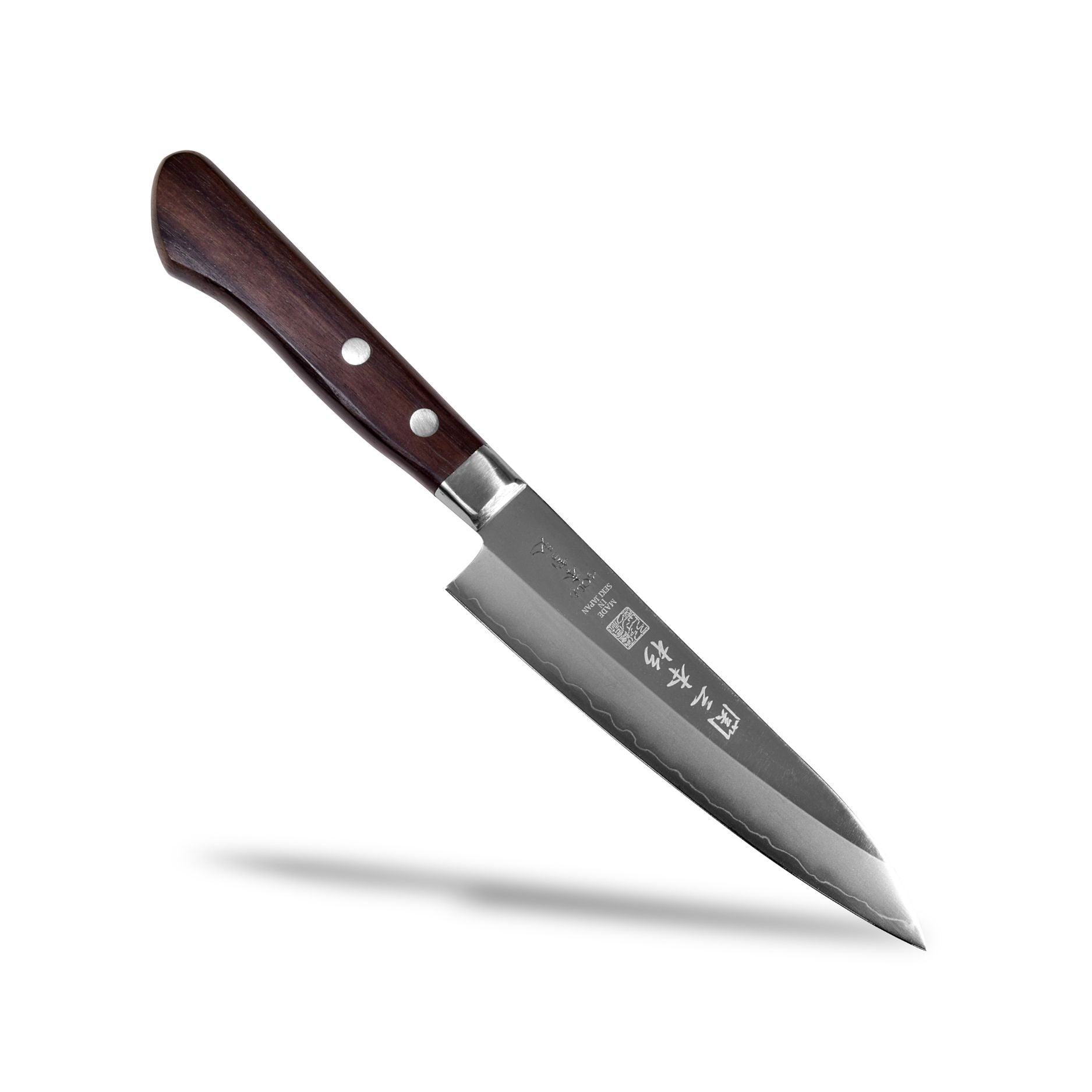
A paring knife is a small kitchen knife specifically designed for nimble tasks such as peeling fruit or light food preparation.
The main uses are as follows:
- Peeling apples and citrus fruits
- Small decorative cuts
- Small tasks such as removing the core and stem of garlic.
While it's not the type of knife that can do everything on its own, combining it with your main santoku or nakiri knife can greatly reduce the stress of your work. Having one as a "secondary knife" in your kitchen makes it feel like an extension of your hand.

The world of professional-grade, highly specialized Japanese kitchen knives.
From here on, we're entering the realm of a complete "swamp." I'll briefly introduce some highly specialized Japanese kitchen knives that are linked to professional settings and specific regional cultures.
- Filleting knife: Designed to fillet large fish with a single knife, it is a hybrid of a deba knife and a yanagiba knife.
- Boat knife: A versatile knife designed for use at sea, intended for use by fishermen and others on boats.
- Hamo-kiri knife: A knife unique to the Kansai region, used for preparing conger eel dishes that require bone cutting, and is extremely specialized.
At this point, it's entirely a world of "culture" and "professional work." While they rarely appear in everyday home cooking, it's an interesting area for understanding the "depth of Japanese knives."
Three key points to avoid making a mistake when choosing a type
No matter how many types you memorize, it's meaningless if you don't know "which one is right for me?" That's where the following three criteria come in handy.
- What you cut most often: The type of knife you should choose will depend on whether you mainly cut fish, vegetables, or frequently slice sashimi.
- How often will you use it? Whether you use it heavily every day or only occasionally for leisurely cooking on weekends will affect the versatility and specialization you require.
- How much time you're willing to dedicate to maintenance: Whether you want to sharpen your own knives or spend very little time on maintenance will influence the types and number of knives you choose.
If you organize these three points before choosing a type, you can avoid most of the disappointment of buying something that "wasn't what you expected." In other words, many people get confused because they don't consider these three points when making a purchase, rather than focusing on the type itself.
The perspective that different regions excel at producing different types of produce.
If we take a closer look at Japanese kitchen knives, we can also see the perspective of "which production areas specialize in which types of knives."
In Seki City, Gifu Prefecture, one of Japan's largest cutlery production areas, a wide variety of knives, from home-use to professional-use knives such as deba, santoku, and nakiri, are produced with a balance of mass production and quality. Meanwhile, in Sakai City, Osaka Prefecture, more specialized Japanese knives such as yanagiba and usuba are produced through a division of labor system and are highly regarded by professional chefs.
In the professional world, many people choose knives based on specific types and regions, demonstrating a strong connection between origin and type. Even when choosing knives for home use, considering "this region is known for producing this type of knife" can greatly enhance the enjoyment of the selection process.
Frequently Asked Questions: Q&A for when you're unsure which type to choose
Finally, let's briefly cover some frequently asked questions about the different types of Japanese kitchen knives, along with their answers.

Q. If you could only choose one, which would you pick?
A santoku knife is the most practical choice. It can handle meat, fish, and vegetables, so if you're choosing your "first knife," a santoku knife is a good starting point and you're less likely to go wrong.
Q. Can a deba knife and a sashimi knife (yanagiba) be used interchangeably?
No, you cannot. A deba knife is used for filleting fish, while a yanagiba knife is used for slicing sashimi. Their roles are completely different, and their shapes and uses are diametrically opposed.
Q. Is a thin-bladed knife necessary for home use?
Most households don't need one. For vegetables, a double-edged vegetable knife can be used as a substitute in most cases, and the vegetable knife is even easier to handle.
Q. Is it better to prioritize the type of steel (material) over the type of steel?
The priority should be the type of knife first, followed by the type of steel. No matter how good the steel is, if you choose a knife of a type that doesn't suit your intended use, it will inevitably be difficult to use.
While there seem to be many types of Japanese knives, if you clearly define "what you want to cut," the number of candidates will naturally narrow down. The process of gradually building up your collection to suit your cooking style may be the most enjoyable part of owning a Japanese knife.