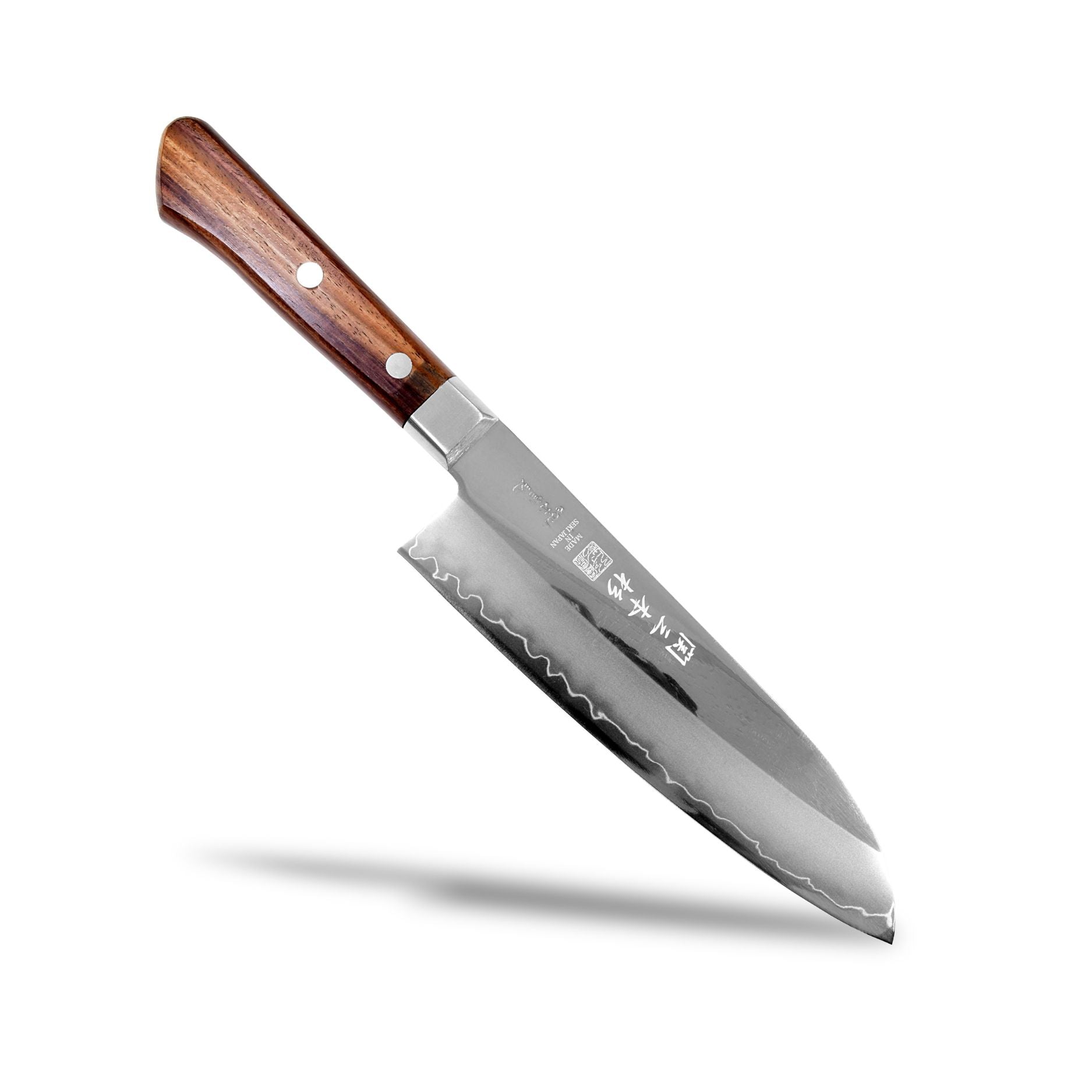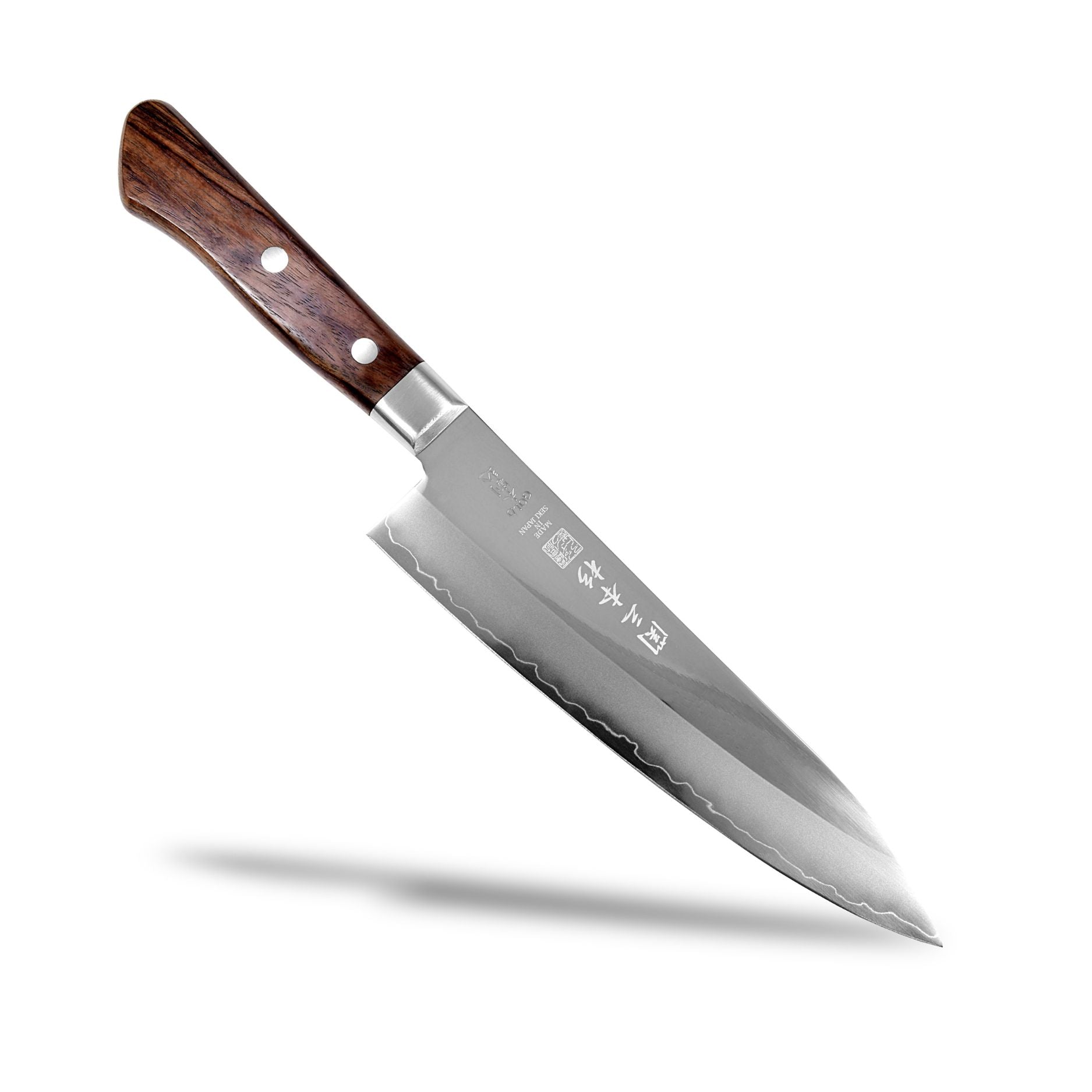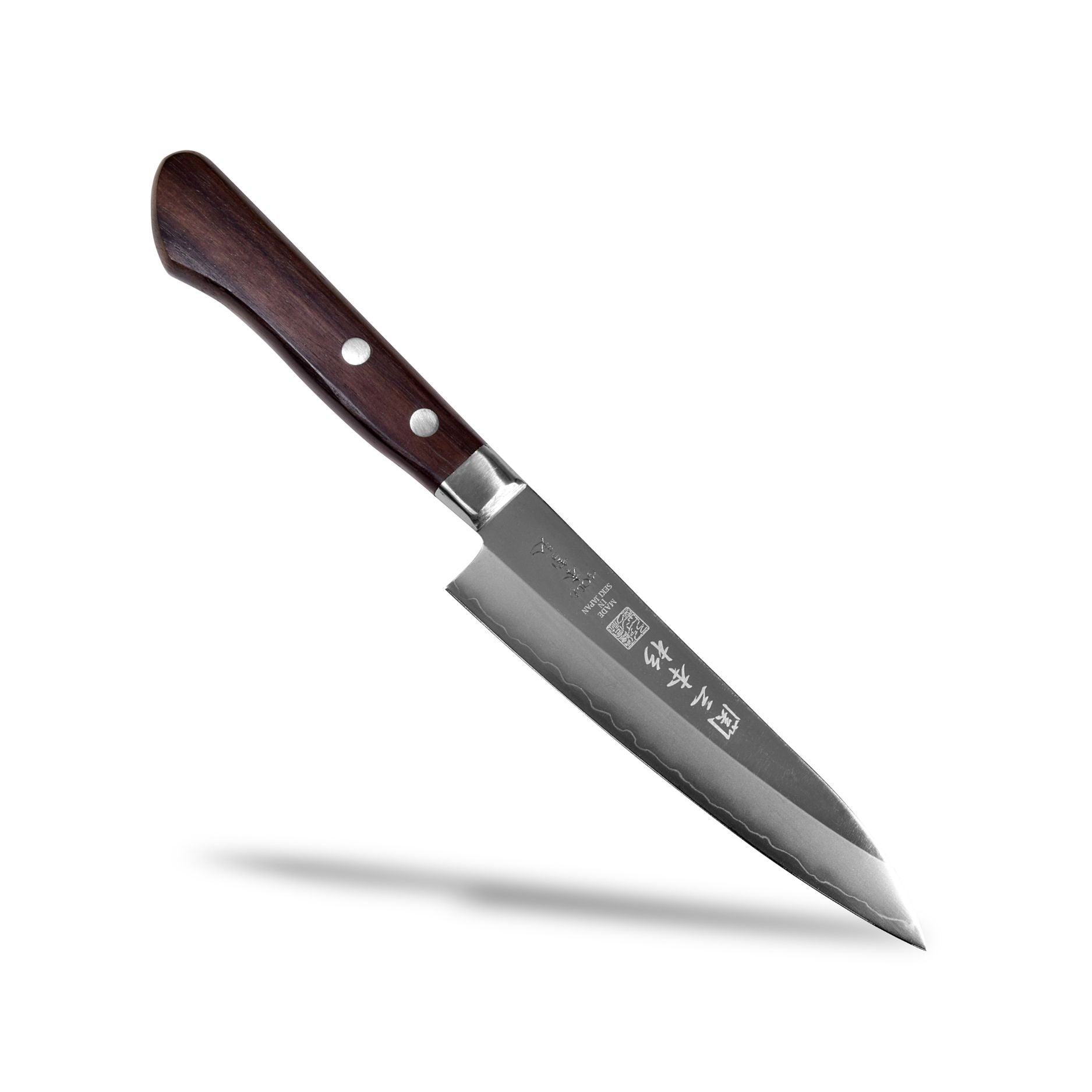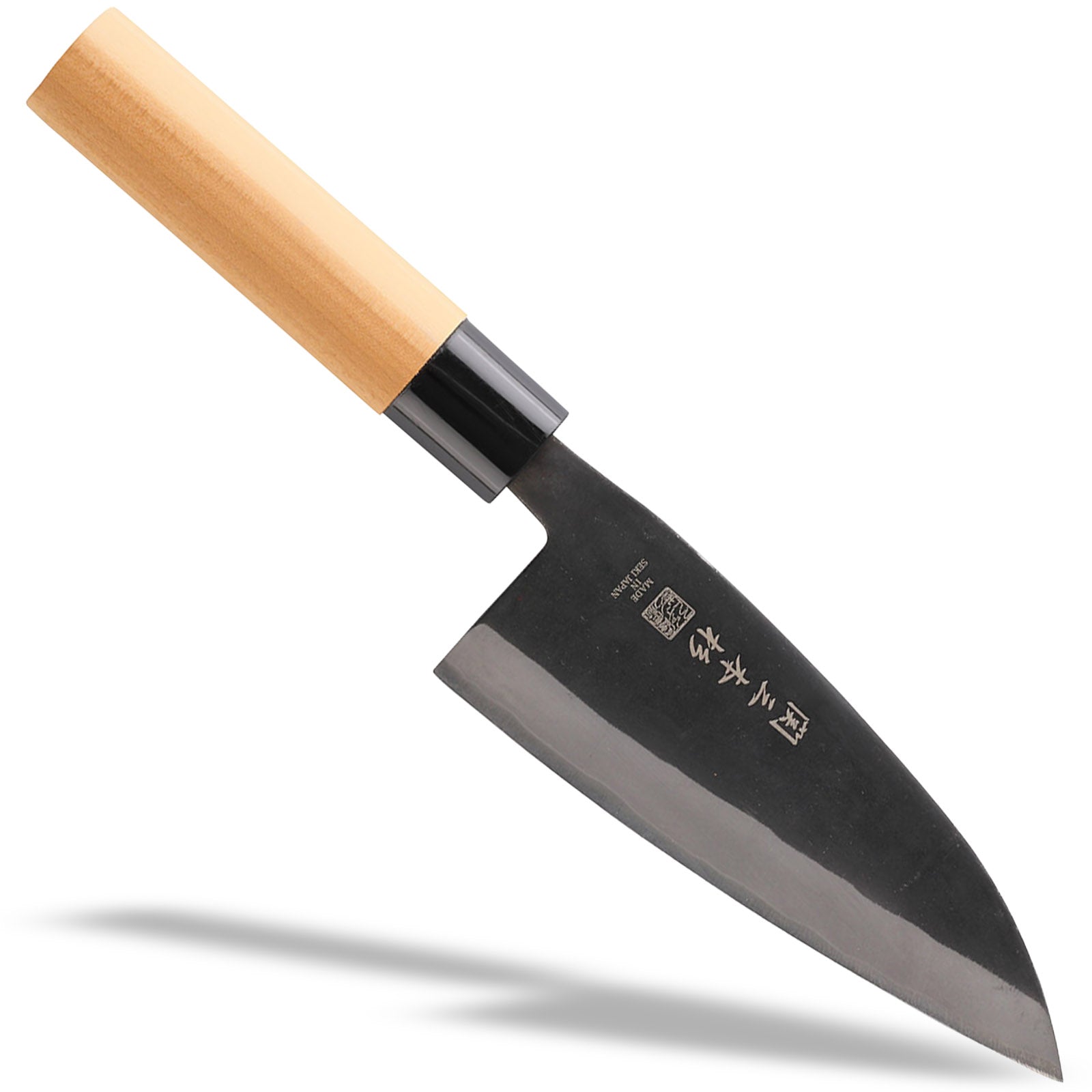

Which one is right for you? The difference between a chef's knife and a santoku knife, and how to choose the right one.
For general home cooking, a santoku knife is recommended, while a chef's knife is ideal for those who want to cut meat, fish, or larger ingredients more seriously.
Key points of this article
- When choosing Japanese kitchen knives, a good approach is to start with a santoku knife and add a chef's knife to create a two-knife setup; this is a safe bet.
- The difference between a chef's knife and a santoku knife lies in the blade length, shape, and the types of ingredients they are best suited for. It's important to choose the right knife based on your home kitchen environment and cooking level.
- Beginners can maximize the strengths of Japanese knives by combining a 16-18cm santoku knife with a 18-21cm chef's knife, while intermediate and advanced users, or those who frequently cook meat dishes, can do so by pairing it with an 18-21cm chef's knife.
Today's review: 3 key points
- For your first kitchen knife, a versatile and easy-to-use santoku knife (blade length 16-18cm) is recommended.
- If you frequently cut meat, fish, or large vegetables, adding an 18-21cm chef's knife to your collection will improve both your work efficiency and your satisfaction with the cutting performance.
- The key is to choose a knife based on your environment and preferences: a santoku knife is better if you have limited kitchen space or are a beginner, while a chef's knife is better if you have ample space or are a serious kitchen enthusiast.
Conclusion of this article
For home use, the most practical approach to Japanese kitchen knives is to consider a "santoku knife as the basic tool, with a chef's knife as an additional option."
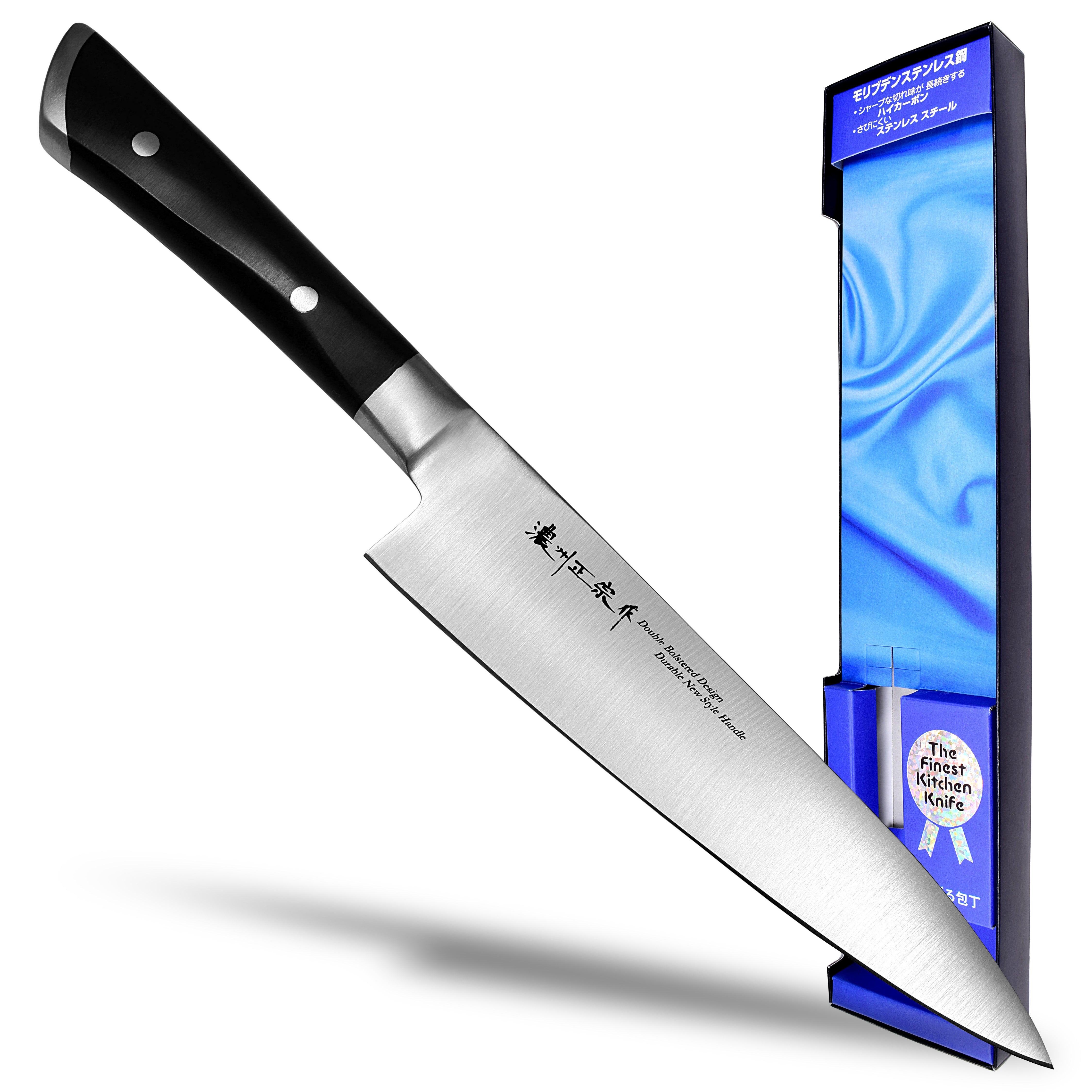
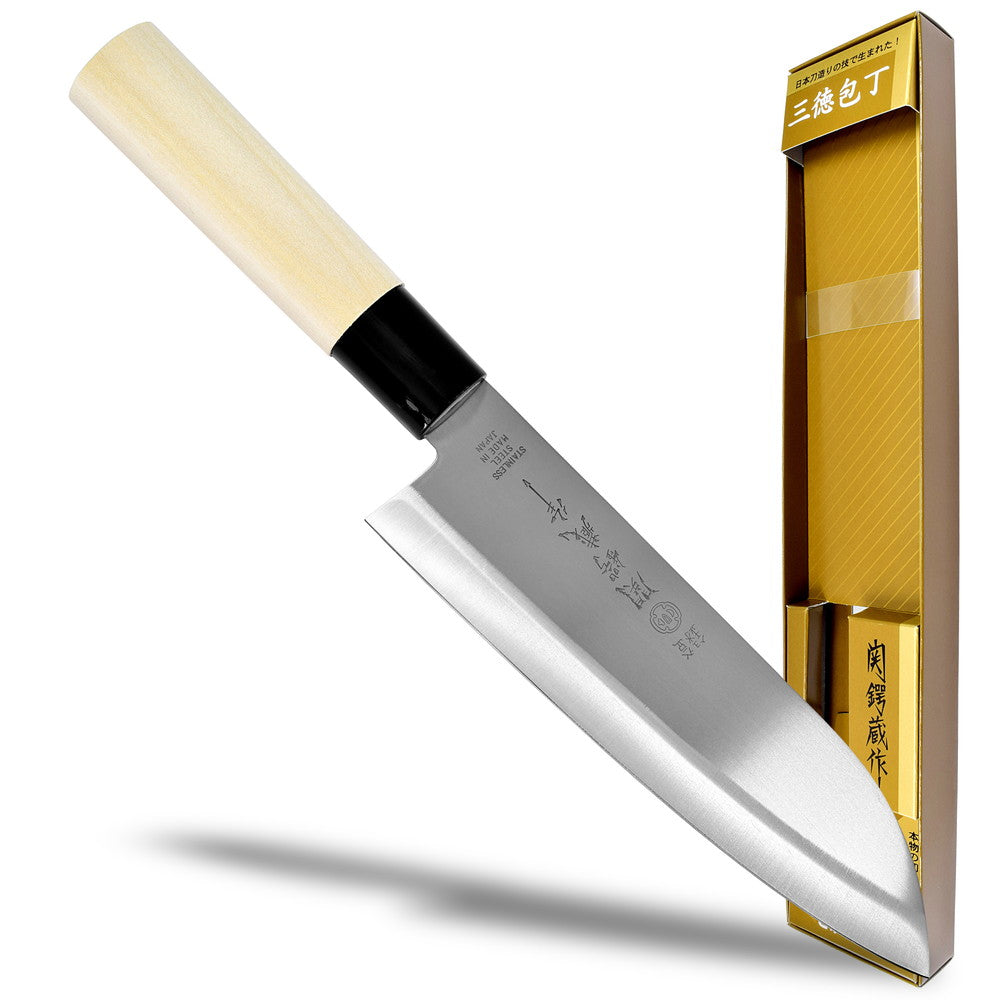
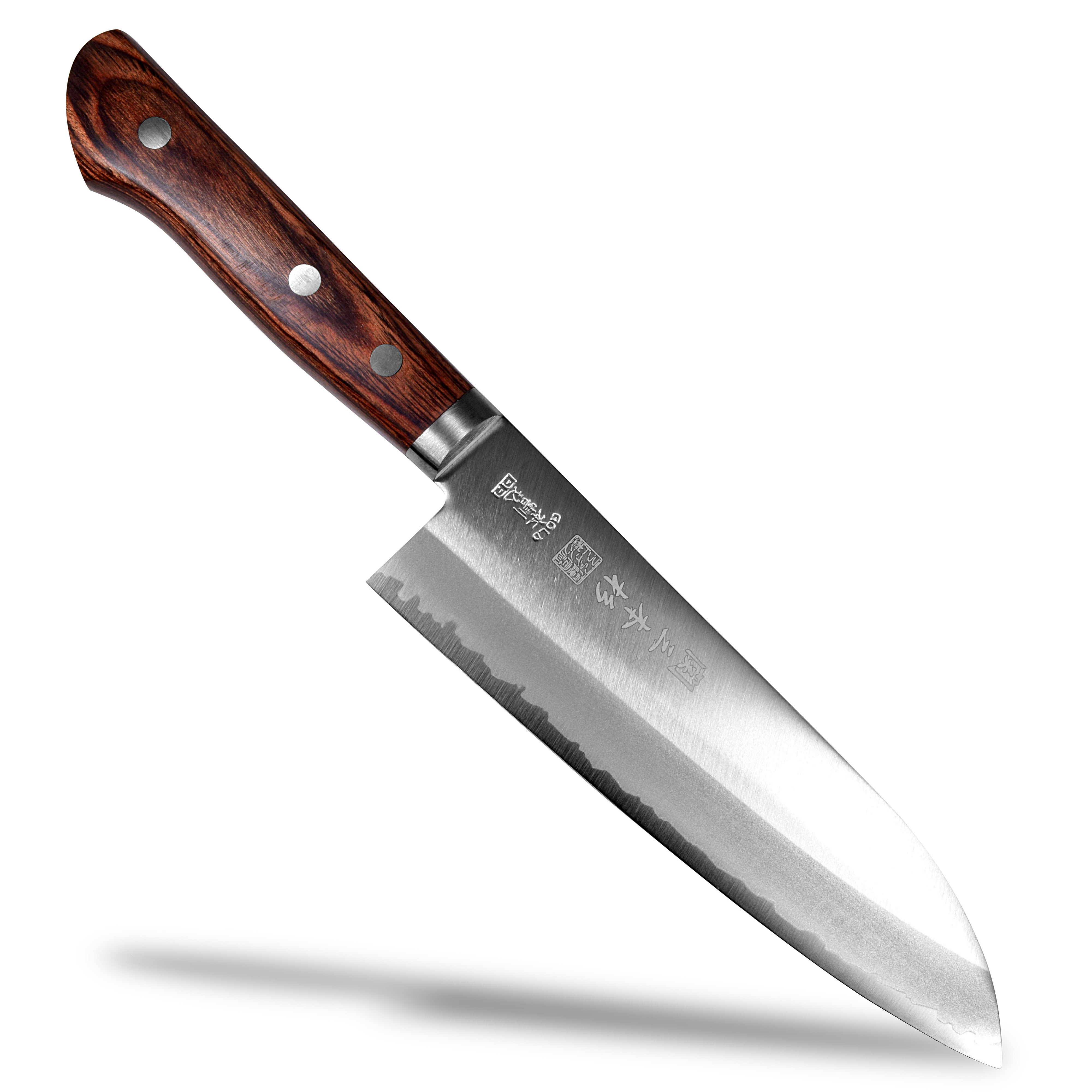
The Santoku is a versatile Japanese-made knife that can handle everyday tasks of preparing vegetables, meat, and fish, making it ideal for beginners and general households. The Gyuto is a Western-style chef's knife with a long blade and sharp tip, making it a professional-grade knife strong for cutting and slicing meat and large vegetables.
- For beginners or those with small kitchens, a 16-18cm santoku knife is recommended. For intermediate or advanced users, or those who frequently cook meat dishes, choosing a chef's knife of 18-21cm will likely lead to greater satisfaction.
- If you're unsure which to choose, aim for a three-knife set consisting of a santoku, chef's knife, and paring knife, and gradually acquire them. This will create a comfortable cooking environment that makes the most of the differences between Japanese knives.
It's worth remembering that having two skills in different areas, rather than trying to complete everything with just one, often leads to greater long-term satisfaction.
First, understand the difference between a chef's knife and a santoku knife: shape, size, and suitable ingredients.
Understanding the difference between a Santoku knife (a compact all-rounder) and a Gyuto knife (a more serious all-rounder with a longer blade and sharper tip) will help you find the right Japanese knife for you. A Santoku is suitable for everyday home cooking, while a Gyuto is better if you want to cut meat, large vegetables, or fish thoroughly.
Differentiating between "ease of use" and "sharpness" based on shape differences.
The biggest difference between a santoku knife and a chef's knife is the shape of the blade and the design of the tip.
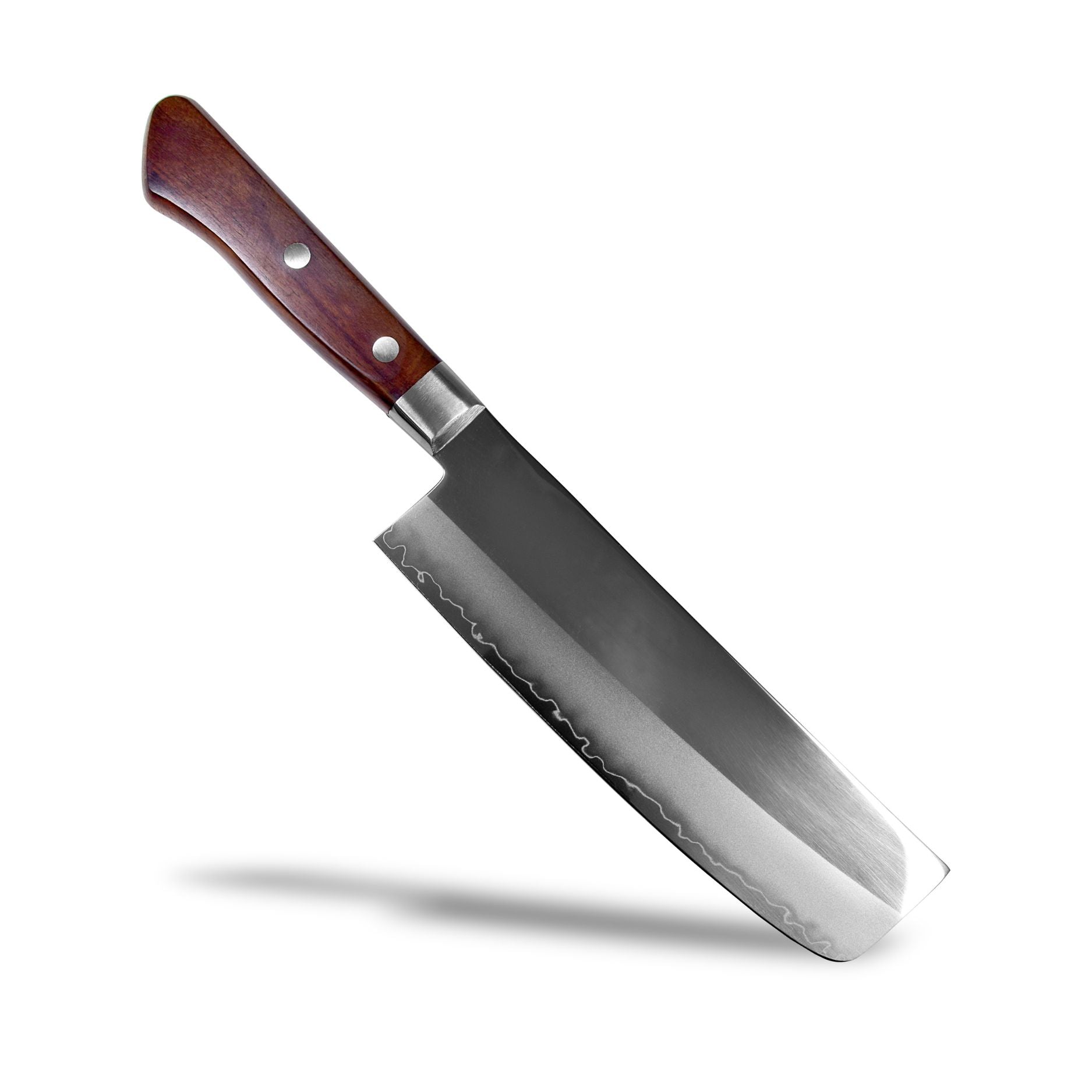
A santoku knife has a blade that is almost parallel to the cutting board, with a rounded tip and a wide blade, making it stable and suitable for chopping and slicing. The wide blade also makes it easy to scoop up ingredients, and the motion of transferring chopped vegetables from the cutting board to the frying pan is smooth.
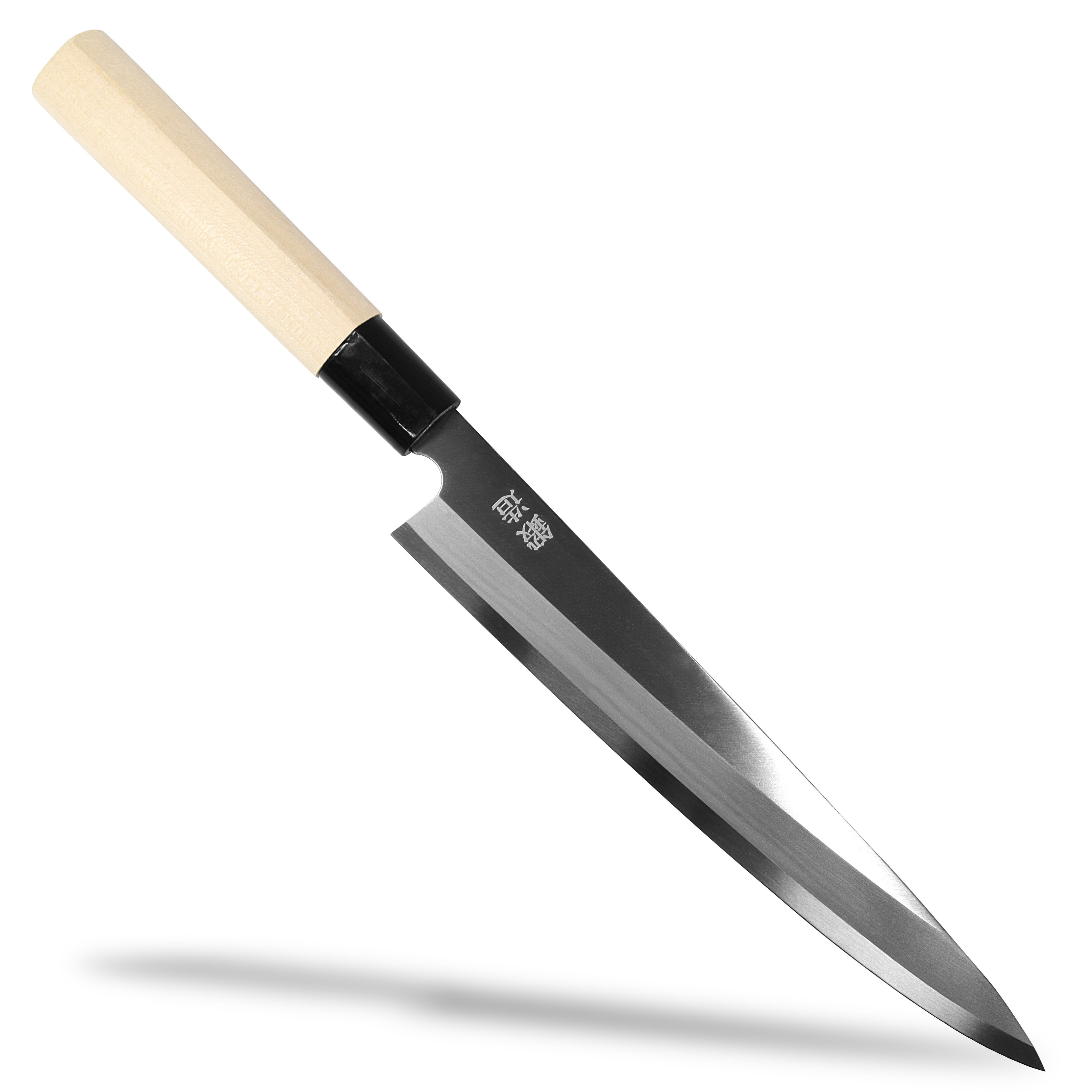
On the other hand, a chef's knife has a strong curve from the base to the tip of the blade, and its tip is sharply pointed, making it strong for pulling cuts, stabbing, and cutting meat and larger ingredients cleanly. Although it is also versatile, its characteristic is its "aggressive cutting edge." It is also well-suited for rocking motions (cutting by rocking back and forth), and is suitable for those who want to chop ingredients rhythmically.
Differences in size and weight directly impact ease of use at home.
The first thing beginners should understand is that "Santoku knives are typically 16-18cm long, while chef's knives are typically 18-24cm long; their average sizes are different."
Santoku knives typically measure around 16-18cm and weigh about 200g, making them a good match for home cutting boards. Their advantages include easy maneuverability and the ability to handle them comfortably even in small kitchens.
Chef's knives are typically 18-24cm long, and sometimes even over 30cm. While their increased weight makes them excellent for handling large ingredients, they might be a bit cumbersome in a small kitchen. Before purchasing, try to visualize how the knife will fit on your cutting board at home to avoid choosing the wrong size.
How to use a santoku knife and a chef's knife depending on the ingredients you're good with and the situation
The Santoku knife "covers a wide range of everyday home cooking," while the Gyuto knife "shows its true value when handling meat, fish, and large vegetables."
For example, the Santoku knife is perfect for vegetable-centered recipes that are common in Japanese home cooking, such as shredding cabbage, chopping carrots, cutting potatoes, and lightly preparing fish.
A chef's knife is ideal for situations where you want to slice a block of meat, prepare roast beef, cut large vegetables like melons and cabbage, or cut long ingredients like salmon fillets in a single stroke. It's a highly satisfying choice for both aspiring professionals and cooking enthusiasts.
The table below summarizes the differences between the two.
| Comparison items | Santoku knife | Gyuto |
|---|---|---|
| Blade length | 16-18cm | 18-24cm (professionals can catch fish over 27cm) |
| Blade shape | Straighter than average, with a rounded tip. | Strong curve / sharp tip |
| My favorite cutting technique | Cutting by pressing and chopping | Pull cut, slice, stab |
| Favorite ingredients | All kinds of vegetables, everyday meat and fish | Large cuts of meat, large vegetables, long fish |
| Weight trend | Light (around 200g) | Slightly heavy (proportional to size) |
| Suitable people | Beginner, living alone, small kitchen | Intermediate level and above; lots of meat dishes; spacious kitchen. |
Which is better from a family perspective? Explained by user type.
The basic guideline is: "If you don't cook often, are a beginner, or have a small kitchen, prioritize a multi-purpose knife." "If you love cooking, make a lot of meat dishes, or have a large kitchen, consider a chef's knife as well." Most importantly, choose based on your current lifestyle rather than your ideal, which reduces the risk of the knife gathering dust in the back of your cupboard after purchase.
For cooking beginners, those living alone, or those with small kitchens, a santoku knife is the best choice.
For cooking beginners, those living alone, or those with compact kitchens in rental properties, a santoku knife is the top choice.
The Santoku knife, with its 16-18cm blade length, compact size, and rounded tip, offers high safety and is easy to handle even with small sinks and cutting boards.
For example, online shopping sites and manufacturers often recommend standard models like the Kai "Santoku 165mm" as a first knife, and many reviews praise it as being "good enough for all kinds of cooking." It's a natural progression to first get used to basic actions like cutting, chopping, and peeling with a santoku knife before considering a chef's knife as the next step.
For those who love cooking and prepare meals for their family every day, a santoku knife plus a chef's knife is the perfect combination.
For those who cook meals for their family every day, or those who prepare large batches of side dishes and meat dishes on weekends, the "santoku + gyuto" dual-wielding style is the most efficient.
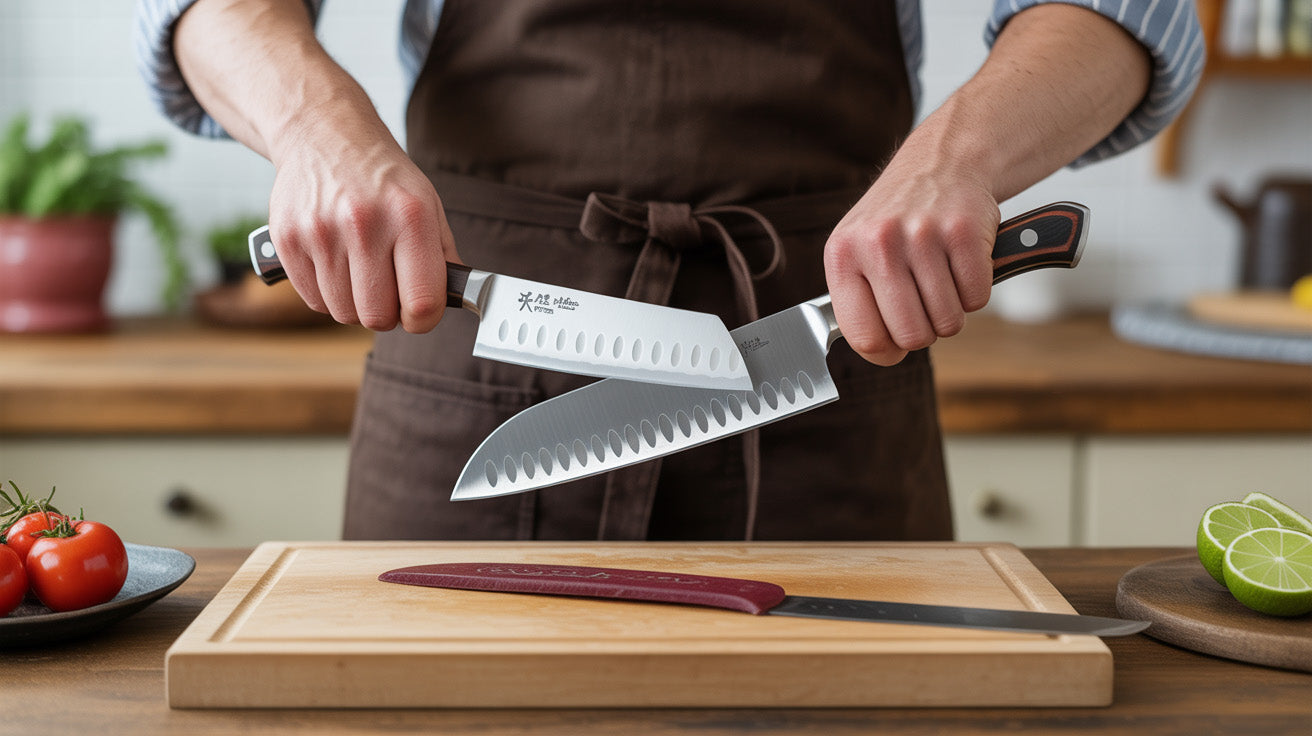
By using a santoku knife for vegetables and everyday food preparation, and a chef's knife specifically for cutting blocks of meat, fish fillets, and large vegetables, the load on each knife is reduced, resulting in longer blade life and faster work speed.
For example, by dividing the roles of each knife—such as using a 180mm santoku knife as the main knife and a 210mm chef's knife for meat and fish, or a 240mm chef's knife for large cuts of meat and a santoku knife for fine chopping—you can maximize the strengths of each knife. Using two knives also has the practical advantage of distributing the sharpening time, allowing you to continue cooking with one knife while the other is on the whetstone.
For those with a professional mindset and a passion for tools, a chef's knife as the main tool, combined with a specialized Japanese kitchen knife, would be ideal.
For those aspiring to become professionals or cooking enthusiasts who appreciate fine tools, a recommended setup is to use a chef's knife as the main tool, while enhancing your expertise with other Japanese knives (vegetable knife, thin blade knife, petty knife).
A chef's knife, with its tip and curve, can handle tasks that a santoku knife struggles with, such as slicing, slicing, and fine shaping, making it suitable for those who want to try more advanced techniques.
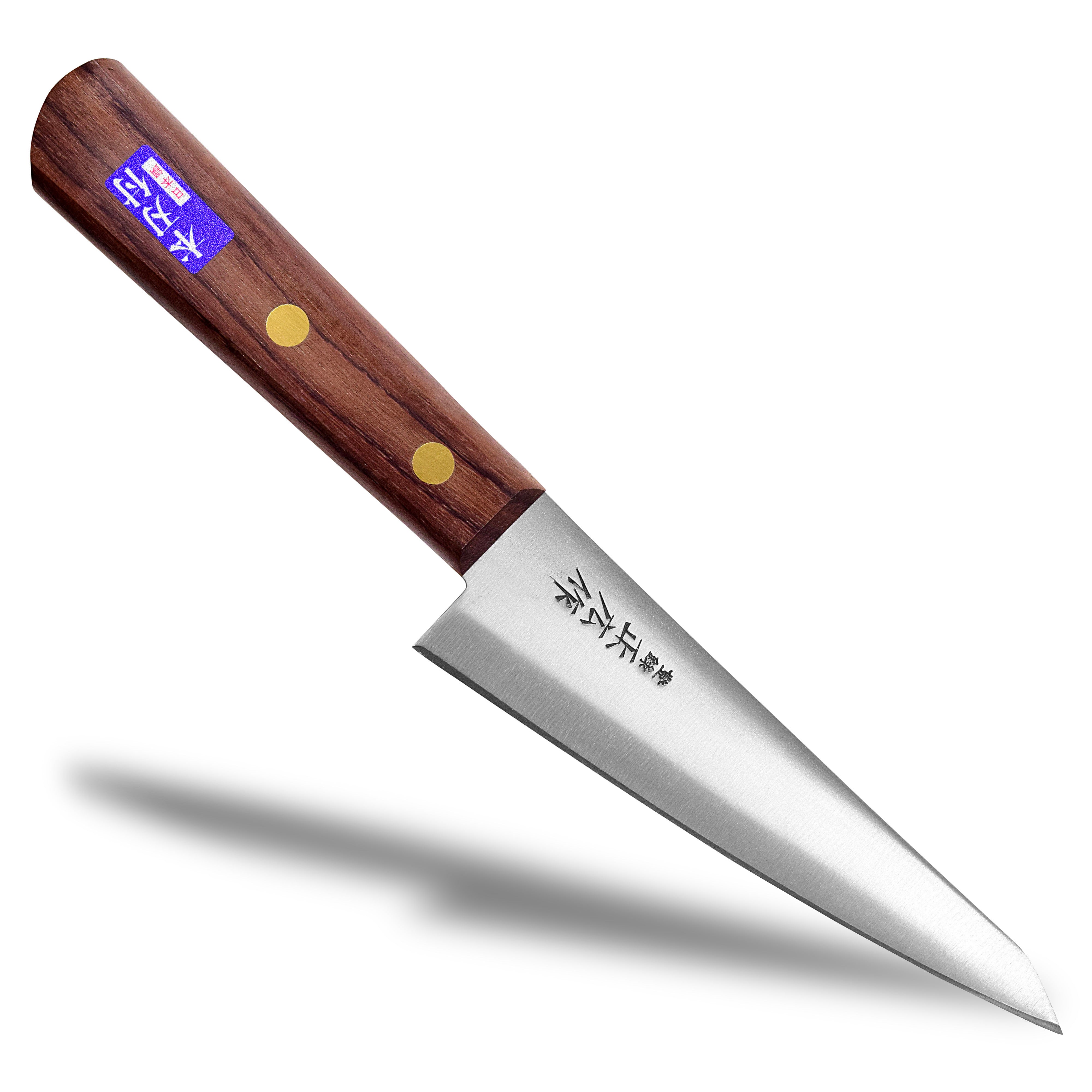
For example, if you have a 210mm chef's knife as your main knife, a vegetable knife for vegetables, a yanagiba knife for sashimi, and a petty knife for carving, you can create a setup that truly feels like a "small professional kitchen at home," and your motivation to cook will increase significantly. By having each specialized knife handle its area of expertise, the burden on the chef's knife is distributed, which ultimately helps to extend the life of the blade.
FAQ
Q1. If you could only choose one knife for home use, which would you recommend: a chef's knife or a santoku knife?
A1. If you're only going to buy one knife for home use, choosing a 16-18cm santoku knife is less likely to be a mistake, considering its ease of use, safety, and compatibility with cutting boards.
Q2. What is the biggest difference between a chef's knife and a santoku knife?
A2. The biggest difference is the shape and length of the blade. A santoku knife is flat and shorter, prioritizing stability, while a gyuto knife has a stronger curve and is longer, making it suitable for more advanced cutting techniques using the tip of the blade.
Q3. Is a chef's knife difficult for beginner cooks?
A3. For those unfamiliar with using kitchen knives, the length and weight of a chef's knife can be burdensome. It's safer and easier to improve if you start with a santoku knife to get used to the basic movements before adding a chef's knife.
Q4. Which is more suitable for a household that frequently cooks meat dishes?
A4. If you cook a lot of meat dishes, adding an 18-21cm chef's knife with a long blade and sharp tip will make slicing much easier, and handling cuts of meat like steaks will become significantly simpler.
Q5. Which knife is best if I have a small kitchen?
A5. For small kitchens or small cutting boards, a 16-18cm santoku knife is more suitable because it's easier to handle, and a chef's knife with a longer blade might be cumbersome.
Q6. I've heard that both the Santoku and Gyuto are all-purpose knives, but do I really need both?
A6. You can cook with just one of them, but the santoku knife is good for chopping and pushing cuts, while the chef's knife is good for pulling cuts and large ingredients. Having both will clearly improve your work efficiency and the final result.
Q7. Is there a guideline for when to switch from a santoku knife to a chef's knife?
A7. If you start to feel that it's difficult to cut large pieces of meat or vegetables with your regular kitchen knife, or that you can't cut them in one stroke, then it's a good time to consider adding or replacing your chef's knife with one between 18 and 21 cm.
Q8. If I were to buy both a chef's knife and a santoku knife, what size combination would you recommend?
A8. For home use, a santoku knife of 16-18cm and a chef's knife of 18-21cm are good choices. For professional use, a santoku knife of 18cm and a chef's knife of 21-24cm are good options. By varying the lengths in stages, you can easily differentiate their uses.
summary
A recommended configuration for Japanese kitchen knives is to start with a santoku knife and add a gyuto knife. Positioning the santoku as the main knife for home use and the gyuto as a serious knife for meat and large ingredients makes choosing easier.
For beginners, those living alone, or those with small kitchens, a 16-18cm santoku knife is recommended. For intermediate and advanced cooks, or those who frequently cook meat dishes or use large ingredients, it's best to gradually introduce a 18-21cm chef's knife.
Ultimately, the goal is to have three knives: a santoku, a chef's knife, and a paring knife. By staggering the lengths to suit different uses and your kitchen environment, you can create a comfortable cooking style that maximizes the differences between the chef's knife and the santoku. Start by reflecting on your current kitchen and cooking style, and consider "what blade length I'm currently missing."