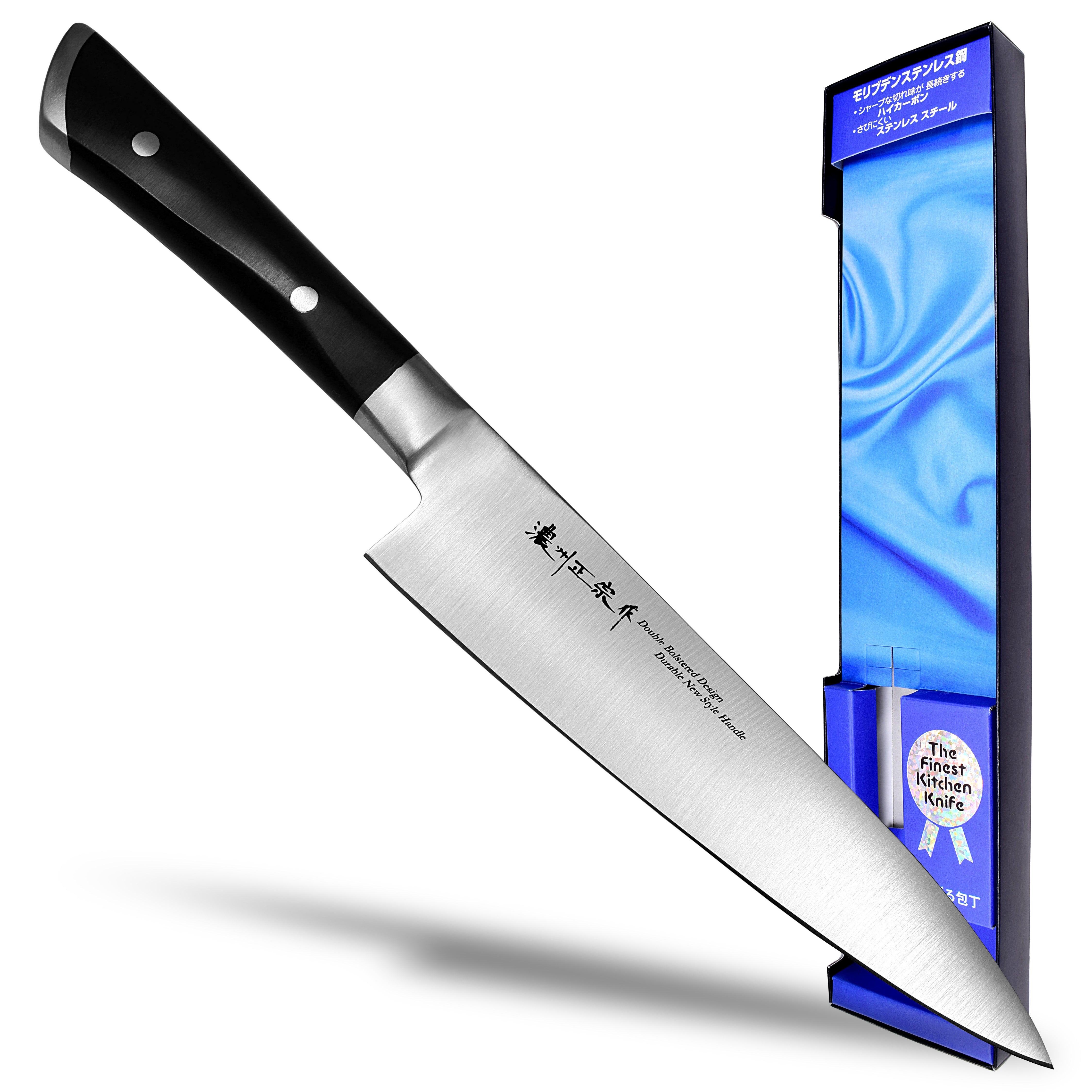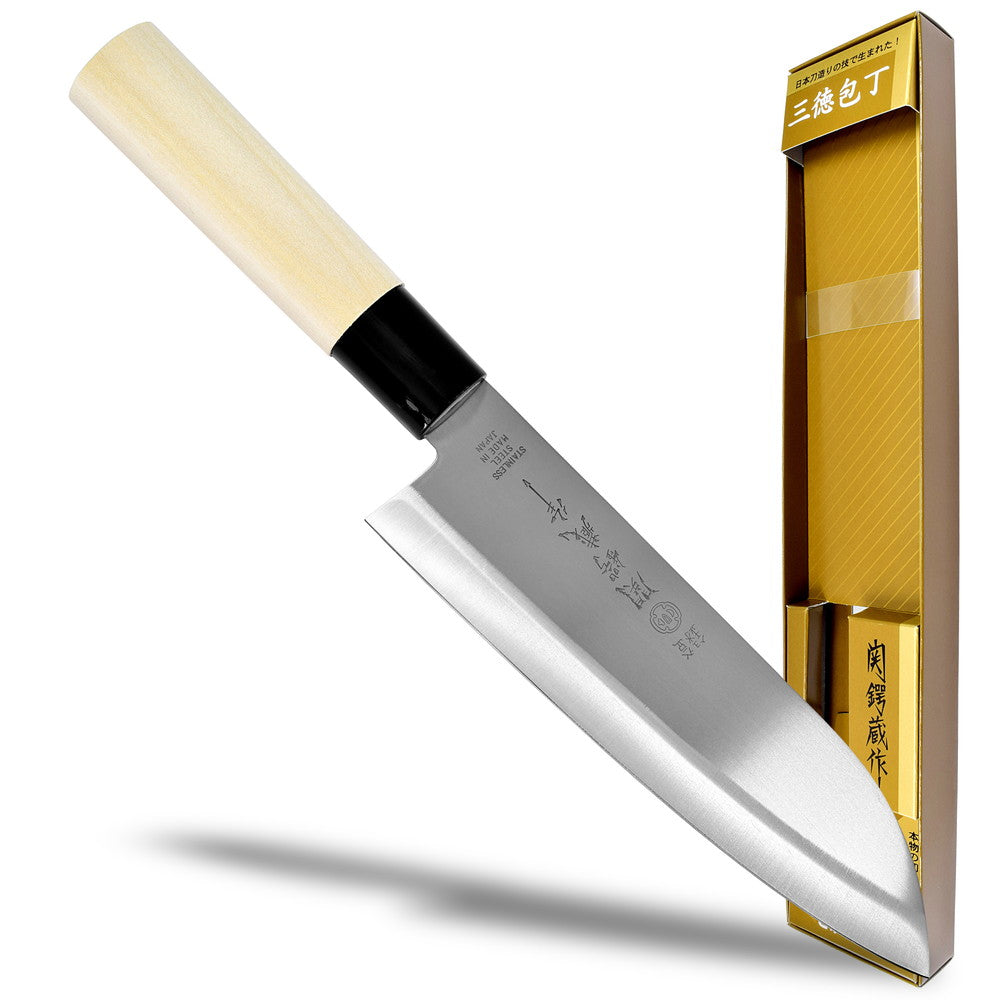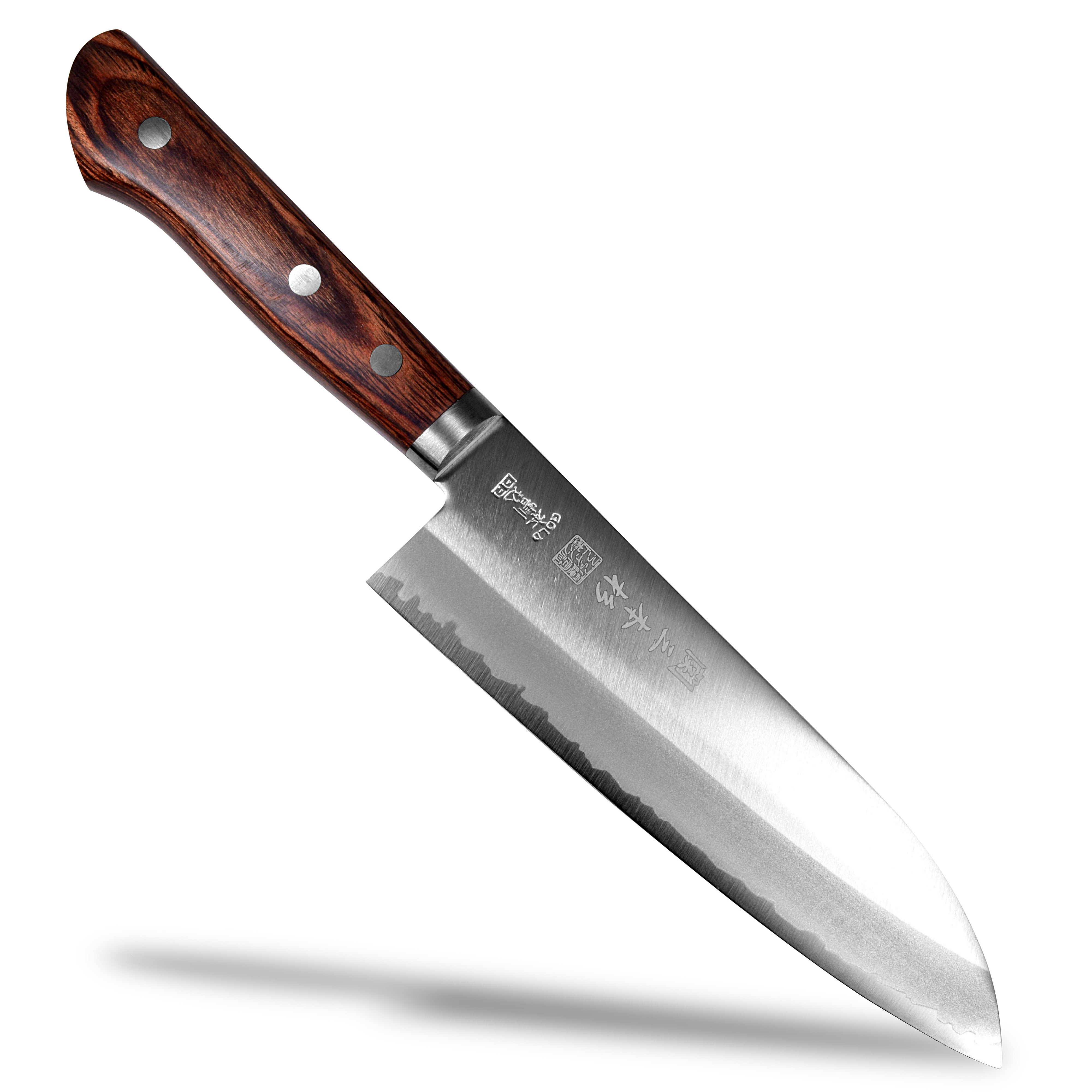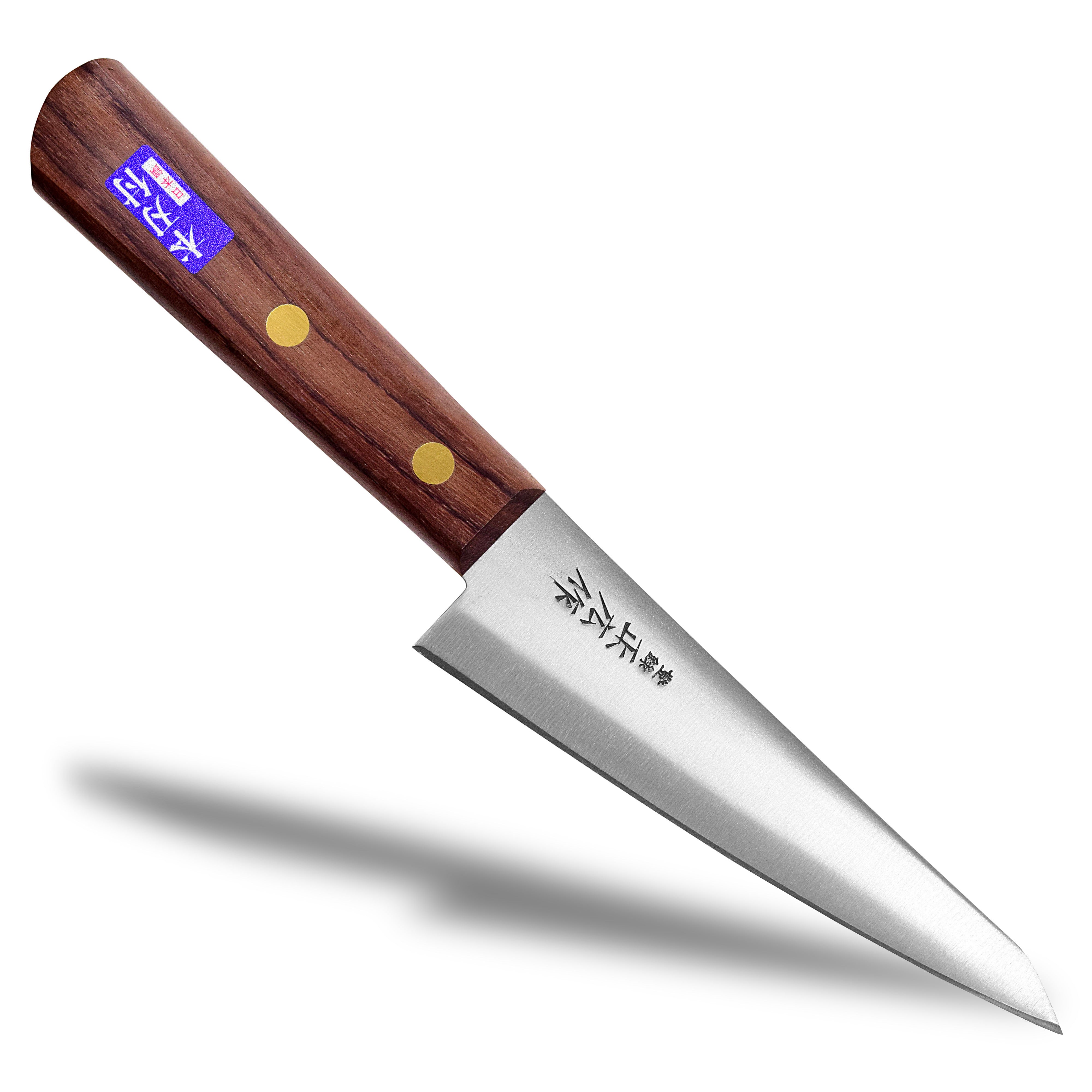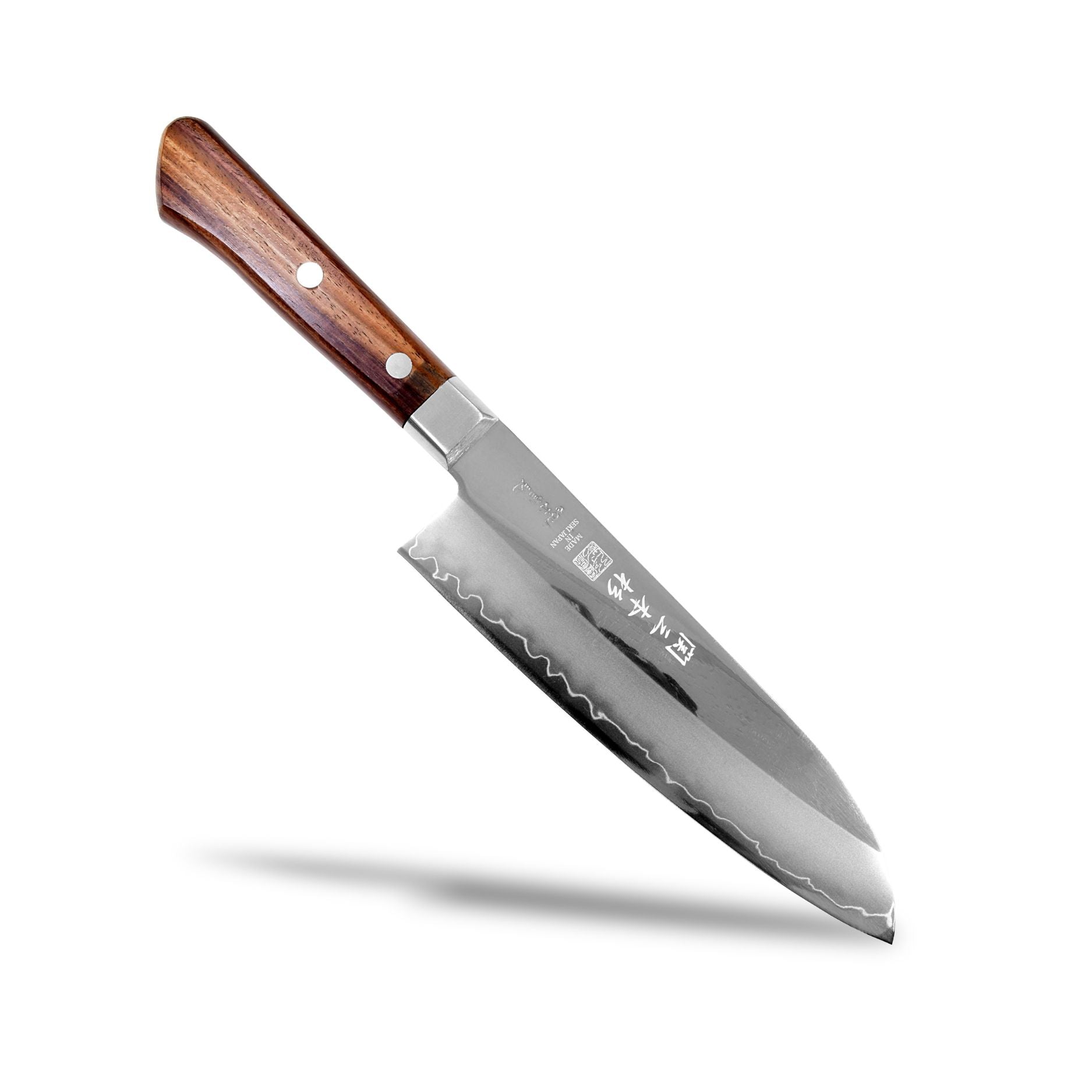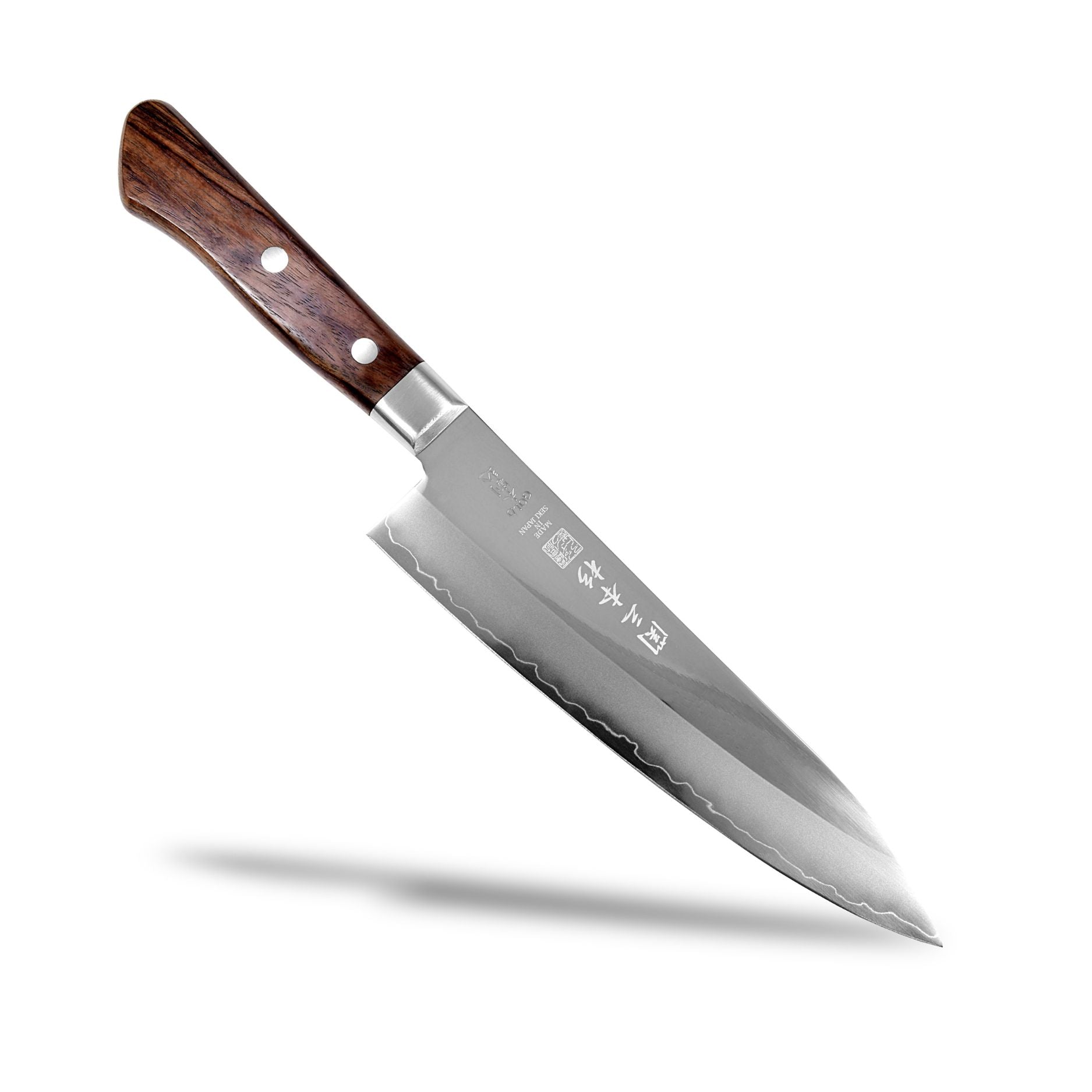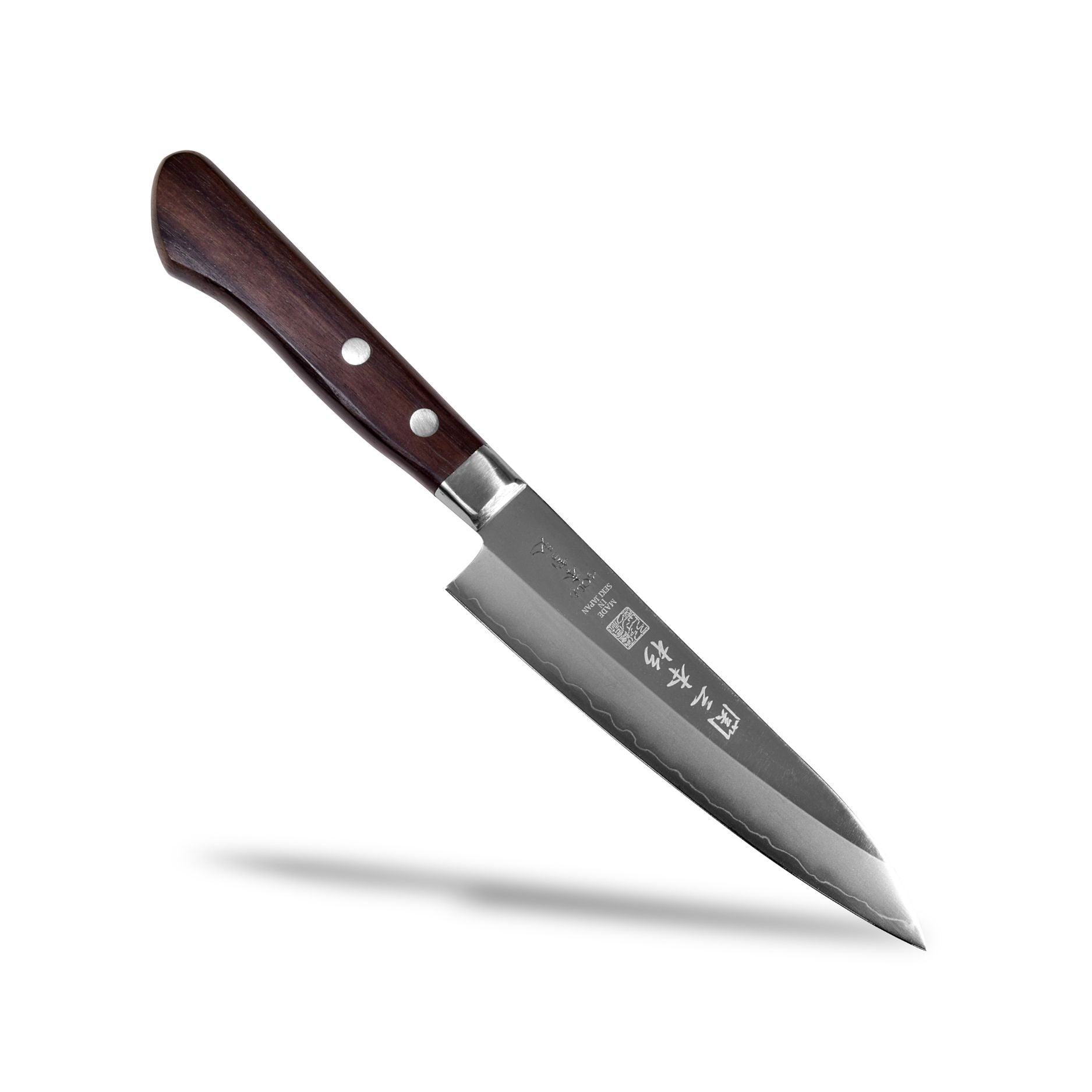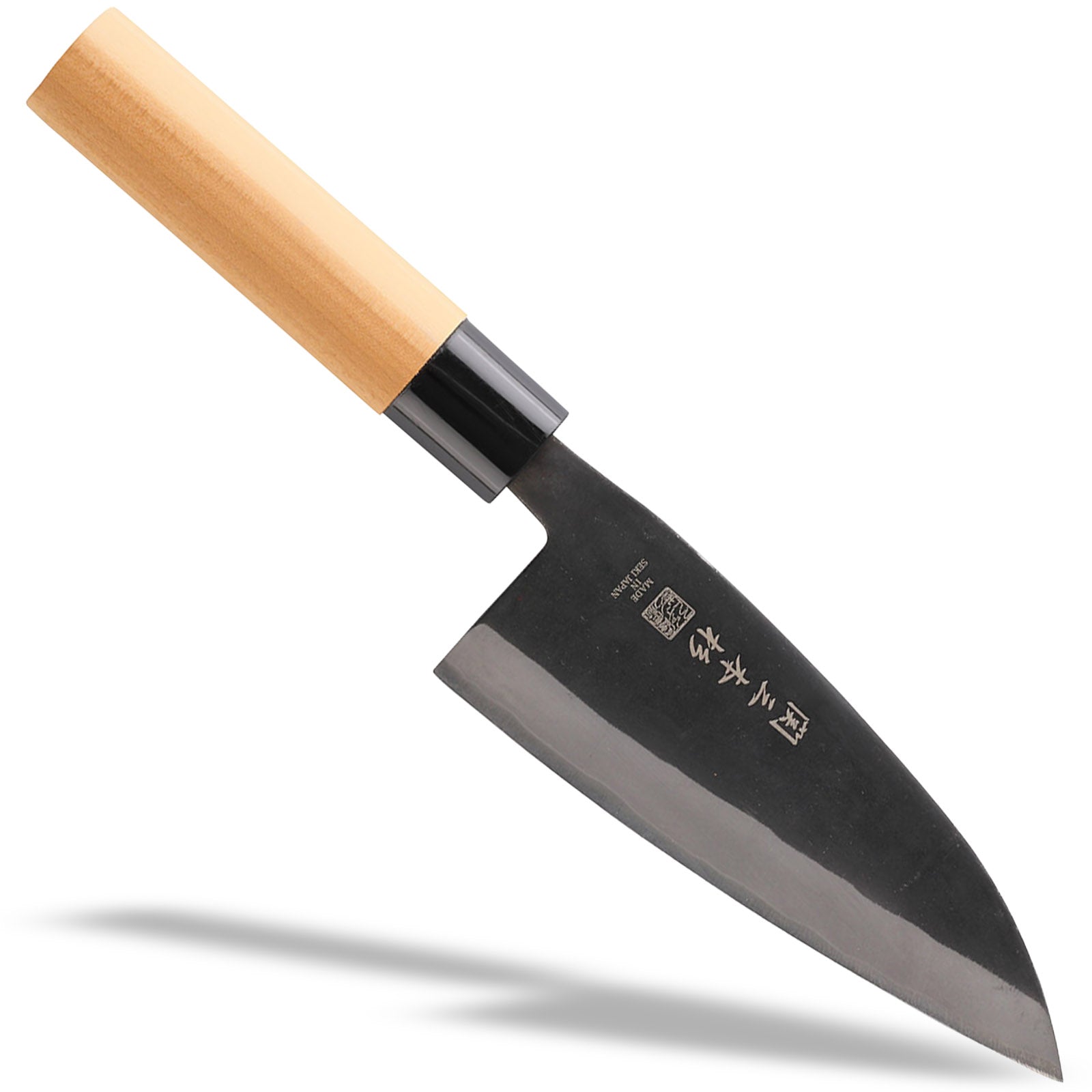

Types of Japanese knives that make julienning and mincing easier, and how to use a vegetable knife and the procedure for doing so.
A nakiri knife is a Japanese knife specifically designed for "cutting vegetables straight, quickly, and neatly." If you learn the correct way to hold it and the push-cutting technique, julienning and mincing will be easier than with a santoku knife.
Key points of this article
- A nakiri knife is a Japanese knife specifically designed for vegetables, with a straight, wide blade that allows for very efficient chopping, mincing, and julienning.
- The basic technique is to "hold it vertically, apply the blade perpendicularly, and push down to cut." It is especially effective for shredding cabbage and mincing onions.
- For home use, a recommended size for a vegetable knife is 16-18cm. It's one of the easiest types of Japanese knives to handle, and when combined with a santoku knife, it dramatically simplifies vegetable preparation.
Today's review: 3 key points
- A nakiri knife is a type of Japanese knife specifically designed for vegetables, and is best suited for chopping, mincing, and julienning.
- The basic way to use it is to hold the blade perpendicular to the cutting board and "push down from above" rather than cutting back and forth.
- For home use, choose a 16-18cm vegetable knife and use it in conjunction with a santoku knife to make vegetable preparation significantly faster and neater.
Conclusion of this article
The nakiri knife, a Japanese knife specifically designed for vegetables, offers the greatest advantage of being able to efficiently chop, mince, julienne, and peel vegetables compared to a santoku knife. In short, "the more vegetables you chop every day, the more valuable it is to own a nakiri knife."
- The basic usage is a simple procedure: apply the blade vertically, push down from top to bottom to cut, and then use the wide blade to scoop up and move the cut vegetables.
- For home use, a length of 16-18cm is recommended, as it can accommodate large vegetables like radishes and cabbage while maintaining a good balance with the cutting board space.
- By assigning specific roles to different types of Japanese knives—for example, a nakiri for vegetables and a santoku or gyuto for meat and fish—the role of each knife becomes clearer, reducing problems and chipping of the blades.
Simply switching from using just one santoku knife for everything to adding a vegetable knife to create a "division of labor" will visibly reduce the stress of your daily vegetable-related tasks.
What is a nakiri knife as a type of Japanese kitchen knife? Its features are specifically designed for use with vegetables.
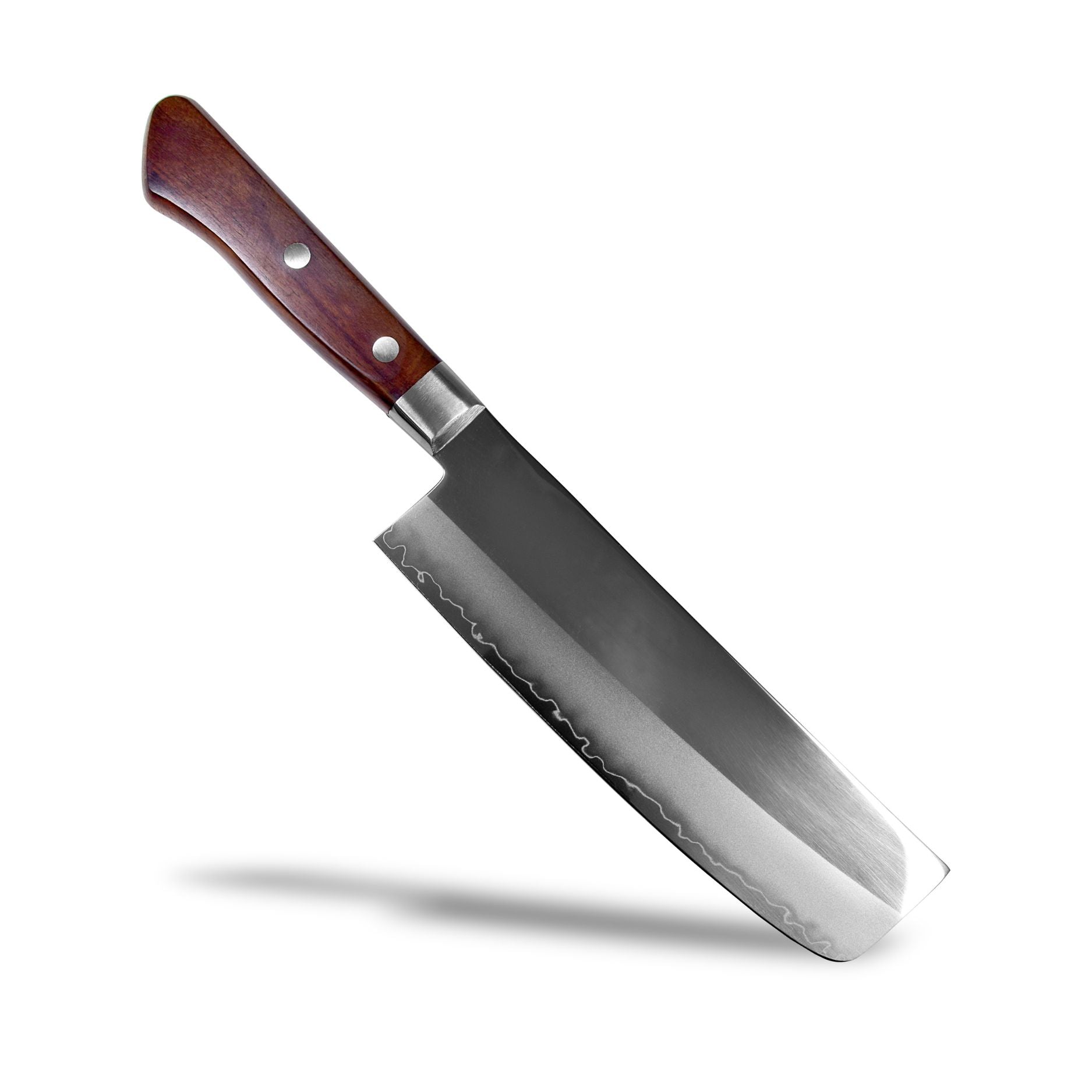
A nakiri knife is a type of Japanese knife that specializes in vegetables, featuring a thin, square blade. It's a professional-grade knife that's better suited to chopping vegetables than a santoku knife. It's the most recommended type of Japanese knife for anyone who chops a lot of vegetables, from preparing ingredients for miso soup to making preserved foods.
The shape of a vegetable knife and its position among Japanese knives
The main characteristic of a vegetable knife is its thin, wide blade with a nearly square-shaped tip. Unlike a santoku or chef's knife, the tip is not pointed, and the blade is almost flat from the base to the tip. This makes it easy for the entire blade to make contact with the cutting board at once, allowing you to chop vegetables rhythmically.
In terms of types of Japanese kitchen knives, the nakiri knife belongs to the same "vegetable specialist" category as the usuba knife and the chukaku knife. It's easiest to imagine it as a vegetable-specific knife that has been adjusted for ease of use in the home. While the usuba knife used in professional kitchens is single-edged, most nakiri knives are double-edged, making them easy to handle regardless of your dominant hand, which also makes them suitable for home use.
Vegetables that a vegetable knife is good at using and ingredients that it is not good at using
A vegetable knife is best suited for cutting root vegetables, leafy greens, and large vegetables, but it's not very good for cutting meat or fish.
For example, it excels at all kinds of vegetable preparation, from shredding cabbage, slicing daikon radish into ginkgo leaf shapes or thinly slicing it, to roughly chopping Chinese cabbage and lettuce, and from chopping carrots, cucumbers, and eggplants to mincing them. Even with hard root vegetables like pumpkins and sweet potatoes, the wide blade allows for even distribution of force, resulting in a stable cut.
On the other hand, due to the blade design, it is not well-suited for handling bone-in meat, tough fish, or finely trimming sinews. Using a deba knife or gyuto knife for these ingredients can prevent problems such as chipping or breakage of the blade.
Differences from a Santoku knife and how to use them appropriately.
"The Santoku knife is an all-rounder, while the Nakiri knife is an expert in vegetables."
While a santoku knife can handle meat, fish, and vegetables, it is not as specialized in the speed and finish of julienning or mincing as a nakiri knife, which has a thin blade and flat blade specifically designed for vegetables.
Specifically, using a santoku knife for general everyday cooking and a nakiri knife for chopping large quantities of vegetables for weekend meal prep can significantly reduce working time and hand fatigue while leveraging the strengths of each. The table below summarizes the differences between the two.
| Comparison items | vegetable knife | Santoku knife |
|---|---|---|
| Blade shape | Flat, square tip, wide | Slightly rounded, with a slightly pointed tip. |
| Favorite ingredients | All kinds of vegetables (root vegetables, leafy greens, large vegetables) | Eat a balanced diet of meat, fish, and vegetables. |
| My favorite cutting technique | Cutting by pressing, chopping, julienning, and peeling | Push cutting, pull cutting, and simple preparation. |
| Blade length guideline | 16-18cm | 16-18cm |
| Suitable people | Families who chop large quantities of vegetables / those who prepare meals in advance | Beginners to intermediate players who want to do everything with just one tool. |
How to use a vegetable knife to easily julienne and mince vegetables and the steps involved.
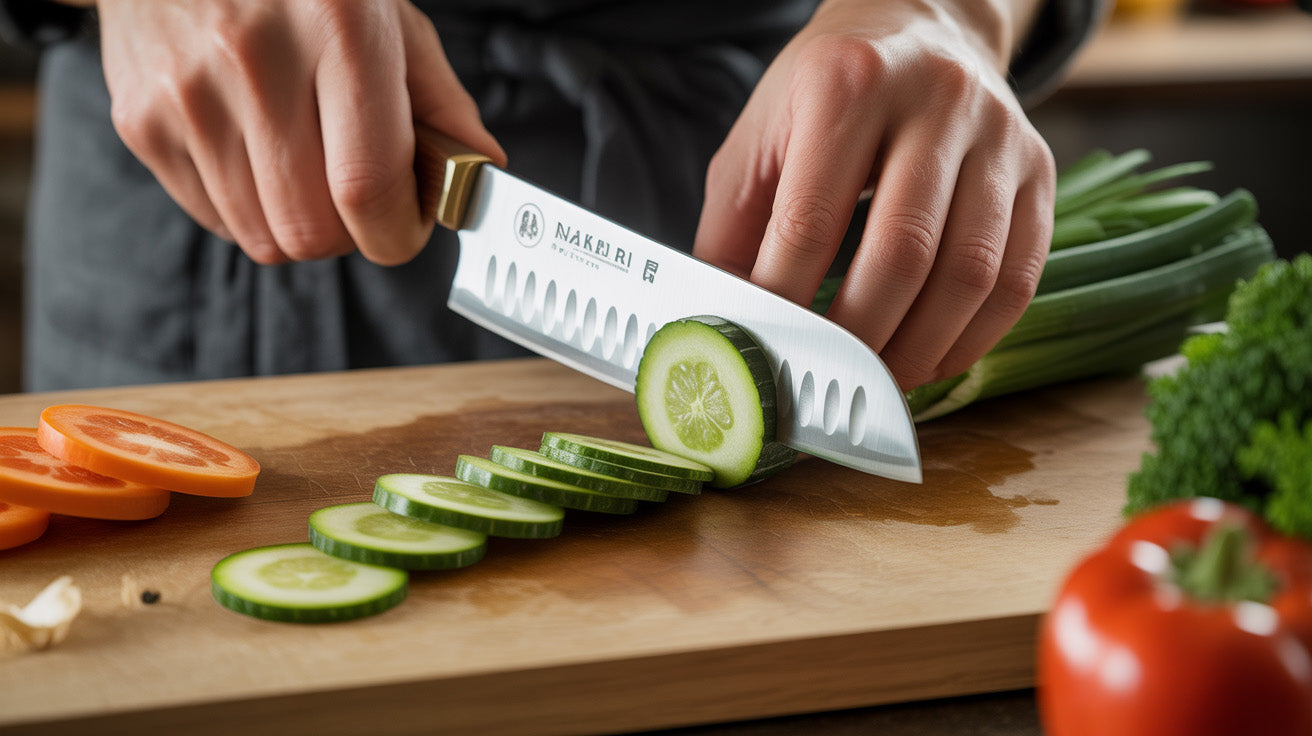
The basic operation of a vegetable knife involves following three steps: "correct grip," "stable placement of ingredients," and "applying the knife vertically and pushing down to cut." Instead of moving it back and forth like a saw, imagine bringing it straight down to create a clean cut that takes advantage of the thinness and weight of the blade.
Basic posture and procedure for julienning carrots and cucumbers
The basic technique for using a vegetable knife is to firmly grip the handle and control it with a grip similar to holding a pencil, with your index finger and thumb resting near the base of the blade.
For julienned carrots, first slice them diagonally into thin pieces, then stack them and chop them from one end at a consistent width. For cucumbers, the process of cutting them in half lengthwise, then slicing them diagonally into thin pieces, stacking them, and then julienning them will result in more consistent julienned pieces.
At this point, by placing the flat blade of the vegetable knife perpendicular to the cutting board and lightly pressing down from top to bottom, you can create julienned pieces of the same thickness, dramatically improving the texture of stir-fries and salads. Once you get the hang of it, try to maintain a consistent rhythm when applying the blade, which will increase both your speed and uniformity.
Tips for successfully mincing onions and leeks
When mincing onions or leeks, the key is to combine the stability of a vegetable knife with the procedure of "cutting → changing direction → finely chopping".
For onions, make fine vertical cuts while leaving the root intact, then make several horizontal cuts, and then chop from the end. This will naturally result in finely minced onions.
Similarly, when mincing green onions, make diagonal cuts from both sides without cutting all the way through, then chop from the end. The wide blade of the vegetable knife will firmly hold the ingredients, preventing the blade from wobbling and allowing even beginners to achieve a more uniform mince. At the end of mincing, the wide blade allows you to scoop up all the chopped vegetables at once on the cutting board, which is another convenient use of a vegetable knife.
I truly appreciated the value of the vegetable knife when shredding cabbage and peeling daikon radish in a katsura-muki style.
The most important thing to understand is that "a vegetable knife is most effective for bulky leafy vegetables and large root vegetables."
When shredding cabbage, simply stabilize a quarter-cut portion and insert the vegetable knife vertically. The wide blade allows you to capture many layers at once, making it easier to shred finely than with a santoku knife. Because the leaf layers are less likely to shift, the finished thickness is more consistent, making it easier to achieve the fluffy shredded cabbage often found in tonkatsu restaurants.
While peeling daikon radish in the katsura-muki style is a somewhat advanced technique, the flat blade and straight cut of a nakiri knife allow you to peel it thinly and lengthwise, and then finely chop it to achieve a texture close to that of "professional julienned radish," making Japanese dishes look even more appealing.
FAQ
Q1. When is it correct to use a vegetable knife?
A1. It is most efficient to use when chopping, mincing, or julienning vegetables such as cabbage, daikon radish, Chinese cabbage, and carrots, and is suitable for all kinds of vegetable preparation.
Q2. What is the difference between a nakiri knife and a santoku knife?
A2. The difference lies in their shape and intended use. A nakiri knife has a square, flat blade and is specialized for vegetables, while a santoku knife has a slightly rounded blade and is a versatile knife that can handle meat, fish, and vegetables.
Q3. What size vegetable knife is recommended for home use?
A3. For home use, a vegetable knife of about 16-18 cm is standard, as it can handle large vegetables such as radishes and cabbages, and is easy to balance with a typical cutting board.
Q4. Is it okay to cut meat or fish with a vegetable knife?
A4. While it is possible to cut meat and fish with a vegetable knife, the nakiri knife has a thin blade and is designed specifically for vegetables. Cutting bone-in meat or tough fish carries a high risk of chipping the blade, so it is safer to use a deba or gyuto knife instead.
Q5. Are there any basic tips for using a vegetable knife?
A5. The basic technique is to hold the blade perpendicular to the cutting board and cut by pushing down from top to bottom, without sawing back and forth. Using the wide blade to scoop up the cut vegetables is also a technique unique to vegetable knives.
Q6. Is it really easier to julienne or mince ingredients with a regular knife?
A6. Thanks to its flat blade and wide width, a vegetable knife makes it easier to keep ingredients stable when shredding cabbage or mincing onions and carrots, and it's easier to cut them to the same thickness, so many people find it easier to use than a regular santoku knife.
Q7. Is sharpening and maintaining a vegetable knife difficult?
A7. Most vegetable knives are double-edged and can be sharpened in the same way as a typical household knife. Their shape makes it easy to stabilize the blade surface on a whetstone, so sharpening and maintenance are relatively easy.
Q8. If I buy a vegetable knife, what kind of Japanese kitchen knife should I pair it with?
A8. My recommendation is to use a vegetable knife specifically for vegetables, and a santoku or chef's knife for both meat and fish. Adding a paring knife to this combination will create a well-balanced lineup of Japanese kitchen knives for home use.
summary
A nakiri knife is a Japanese knife specifically designed for vegetables. It makes chopping, mincing, julienning, and peeling easier than a santoku knife, and the more vegetables a household chops, the greater the benefits of owning one.
The key to using it is to hold the blade perpendicular to the cutting board and push down from top to bottom, stabilizing the food with the wide blade, which will result in neatly shredded cabbage or finely chopped onions.
For home use, choose a 16-18cm vegetable knife, and by using different types of Japanese knives—vegetable knife for vegetables and santoku/gyuto knife for meat and fish—you'll find that your daily vegetable preparation becomes incredibly smooth. Those who feel they spend too much time chopping vegetables in their daily cooking will likely appreciate the benefits of adding a vegetable knife to their collection.