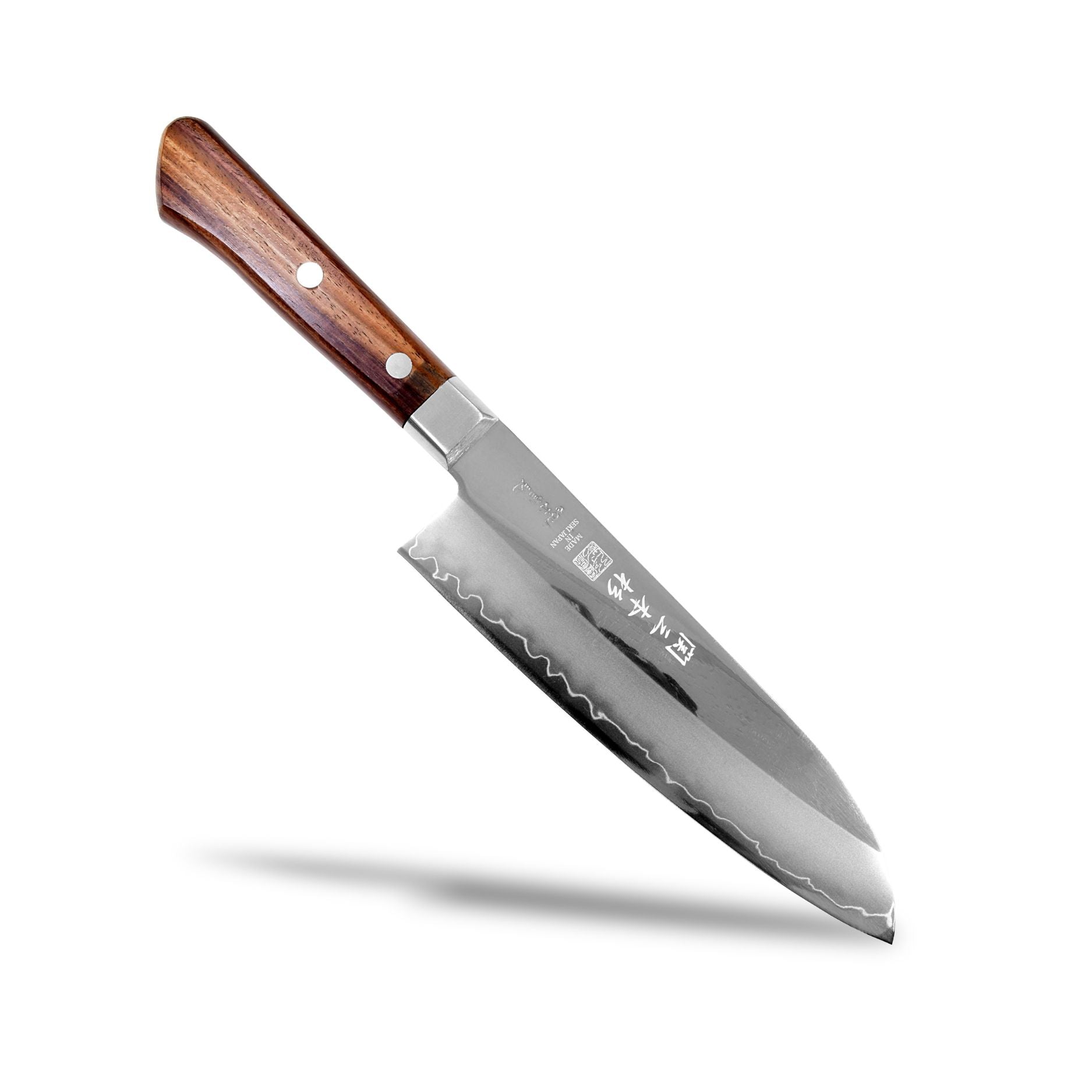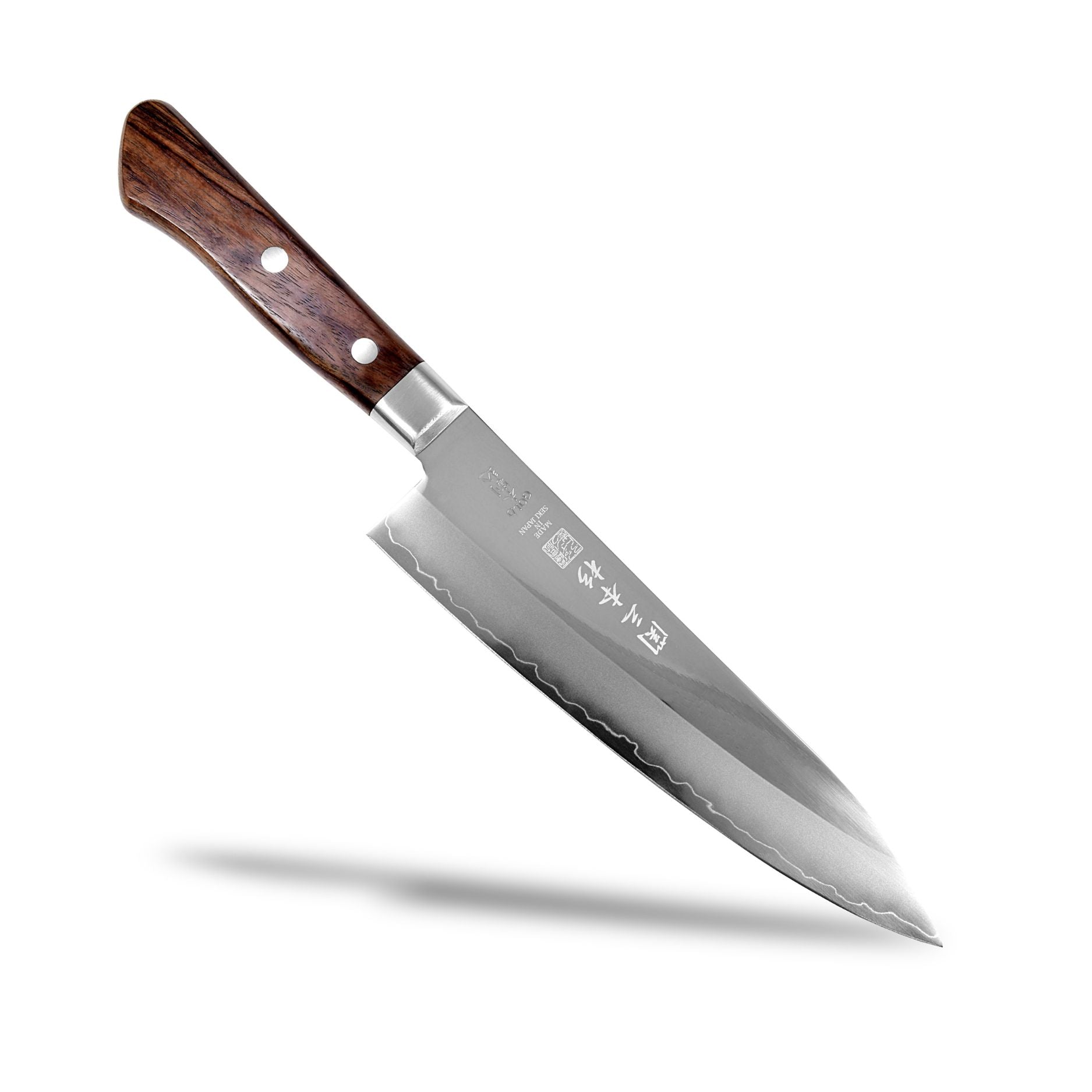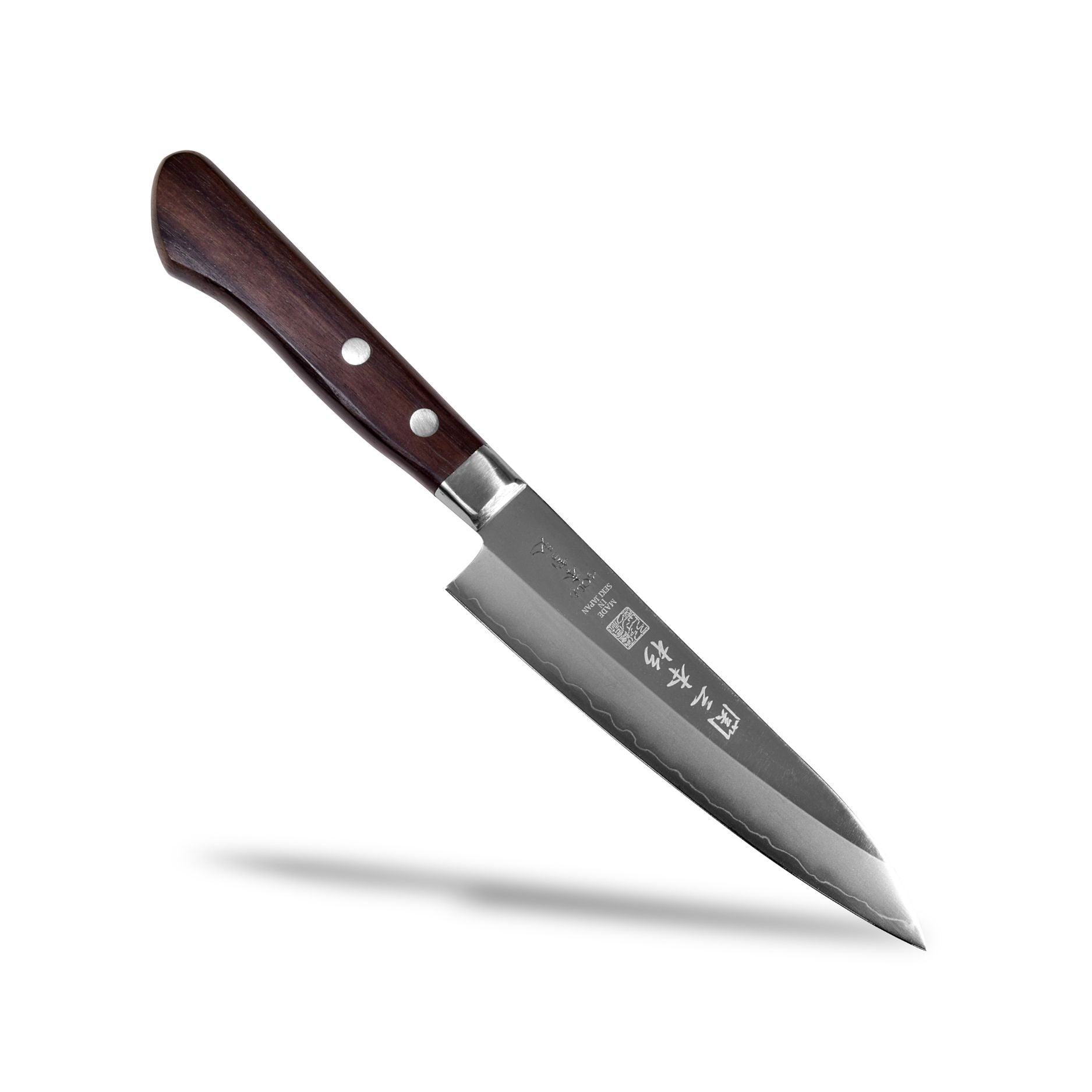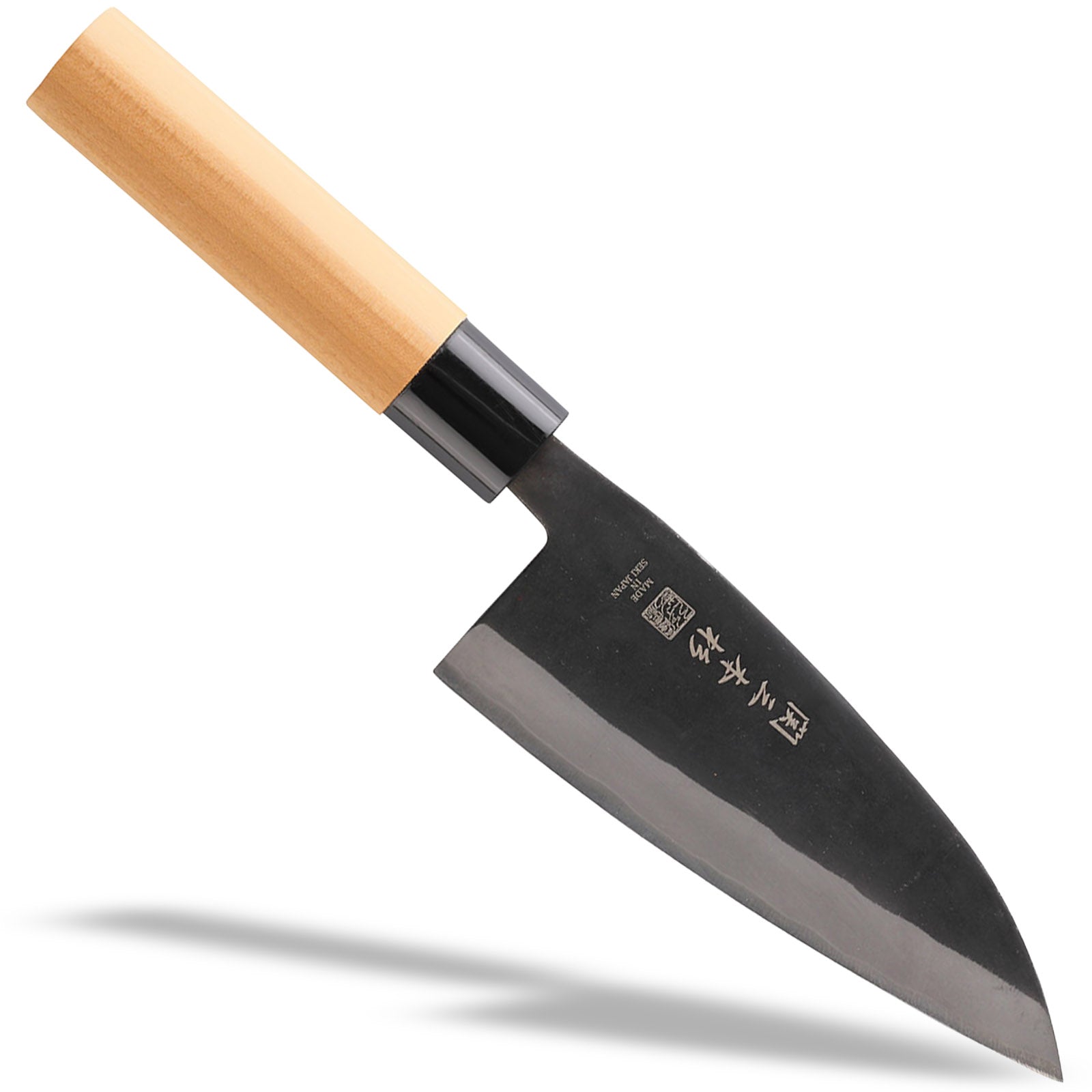

Recommended Japanese vegetable knives that are easy to use even for those unfamiliar with knives | Benefits for beginners
A nakiri knife is a Japanese knife designed for cutting vegetables straight, easily, and neatly. It is lightweight and stable, making it a user-friendly knife even for beginners who are unfamiliar with using knives.
Key points of this article
- The nakiri knife is a Japanese knife specializing in vegetables, featuring a thin, wide, straight blade that allows even beginners to easily julienne vegetables and peel them in the traditional Japanese style.
- For beginners, the recommended specifications are "double-edged, 16-18cm in length, lightweight, and with a non-slip handle," which strikes a good balance between ease of use and safety.
- When combined with a santoku knife, the nakiri knife can handle vegetables, significantly reducing the time spent on food preparation for everyday home cooking.
Today's review: 3 key points
- The biggest advantage of a nakiri knife is that it makes cutting vegetables easier, and it's a Japanese knife that makes it easy for even beginners to create uniform cuts.
- For beginners, a lightweight, thin-bladed, 16-18cm, double-edged vegetable knife is recommended.
- The recommended set of Japanese kitchen knives is a "santoku + nakiri + petty" combination. You'll likely notice the benefits more easily if you start by adding a nakiri knife specifically for vegetables.
Conclusion of this article
For beginners, a recommended vegetable knife is a thin, lightweight, double-edged type measuring 16-18 cm, which allows for stable chopping, julienning, and mincing of vegetables. In short, the safest way to choose a knife is to "switch to a vegetable knife when you start to feel you've reached the limits of your santoku knife."
- The advantage of a vegetable knife is that its thin blade and wide blade allow even beginners to cut vegetables with clean cuts without crushing the fibers.
- The reason it's suitable for beginners is that it's "double-edged and easy to sharpen" and "has a wide blade that makes it easy to protect your fingers," resulting in high safety and control.
- As a recommended lineup of Japanese kitchen knives, assigning a vegetable knife to vegetables and a santoku or chef's knife to meat and fish clarifies the role of each tool, reducing cooking stress.
For those adding a Japanese kitchen knife to their collection for the first time, a vegetable knife is the type of tool where you'll notice the difference from the very first use. The more frequently you cut vegetables, the faster you'll feel the benefits of introducing it to your kitchen.
What are the advantages of a vegetable knife for beginners?
For beginners, the biggest advantages of a vegetable knife are the "peace of mind that comes from being able to cut straight" and the "light cutting edge that allows vegetables to slide through easily." Even if you're unfamiliar with using a knife, you can chop vegetables with ease without applying much force, transforming vegetable preparation from a "scary task" to a "satisfying task."
Why are vegetable knives easy for beginners to use?
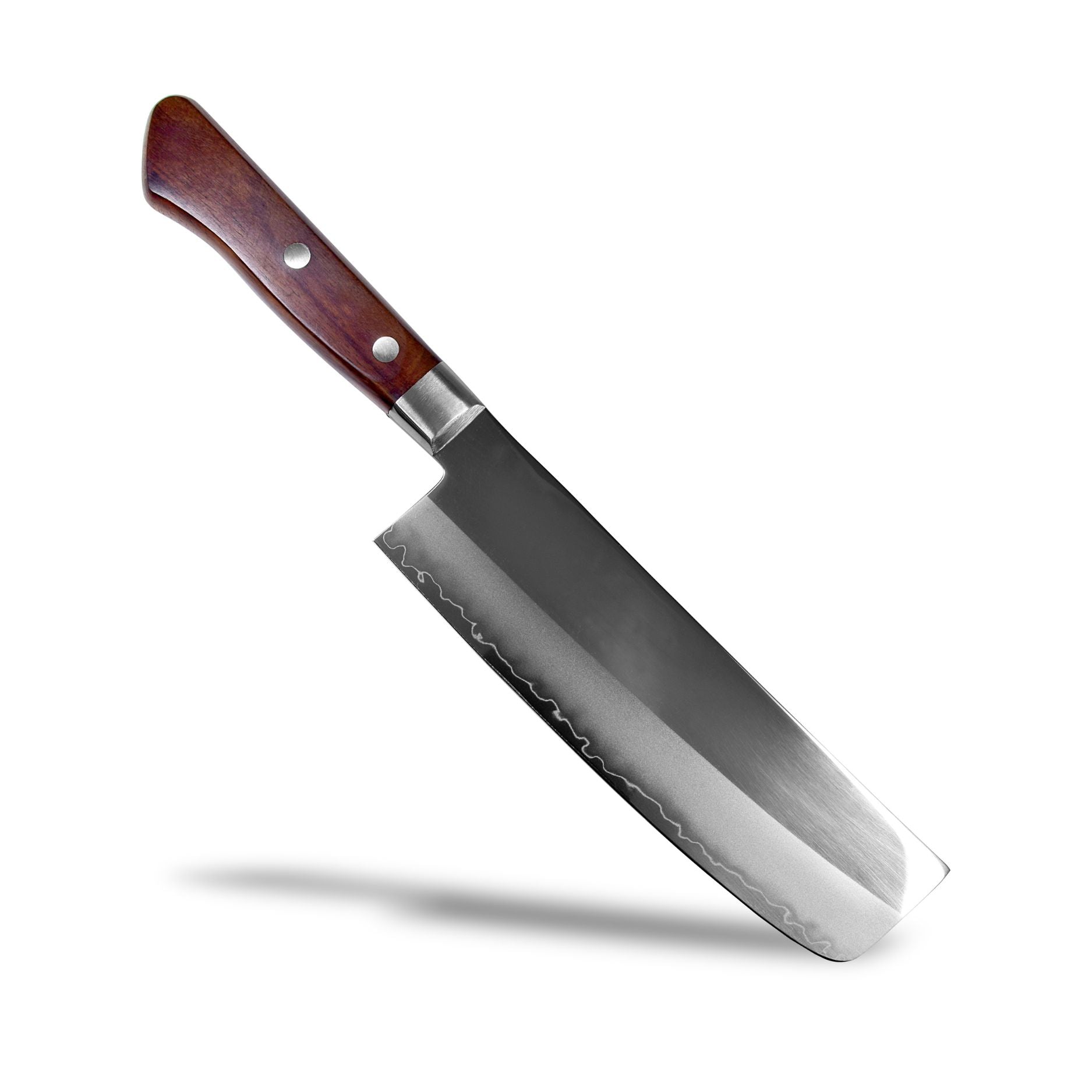
The reason why vegetable knives are considered suitable for beginners is because they have a wide, straight blade that provides excellent stability.
The wide blade acts as a guide, preventing your fingers from getting too close to the blade, which provides a sense of security even when making intricate chops. In addition, many vegetable knives are made with thin blades and are lightweight, making them less tiring on the wrist, even for those with less strength or during long hours of work. Many users have commented that they are no longer afraid of hard root vegetables.
The rounded, square shape of the tip is also reassuring for beginners. Because it doesn't have a sharp point like a chef's knife, there's less anxiety about "stabging" yourself when lowering the blade onto the cutting board, which makes it easier to concentrate on the basic pushing motion.
Three key advantages of a vegetable knife that beginners should know first
The three main benefits that beginners should be aware of are: "It makes cutting vegetables easier, the cut surface is cleaner, and it saves time."
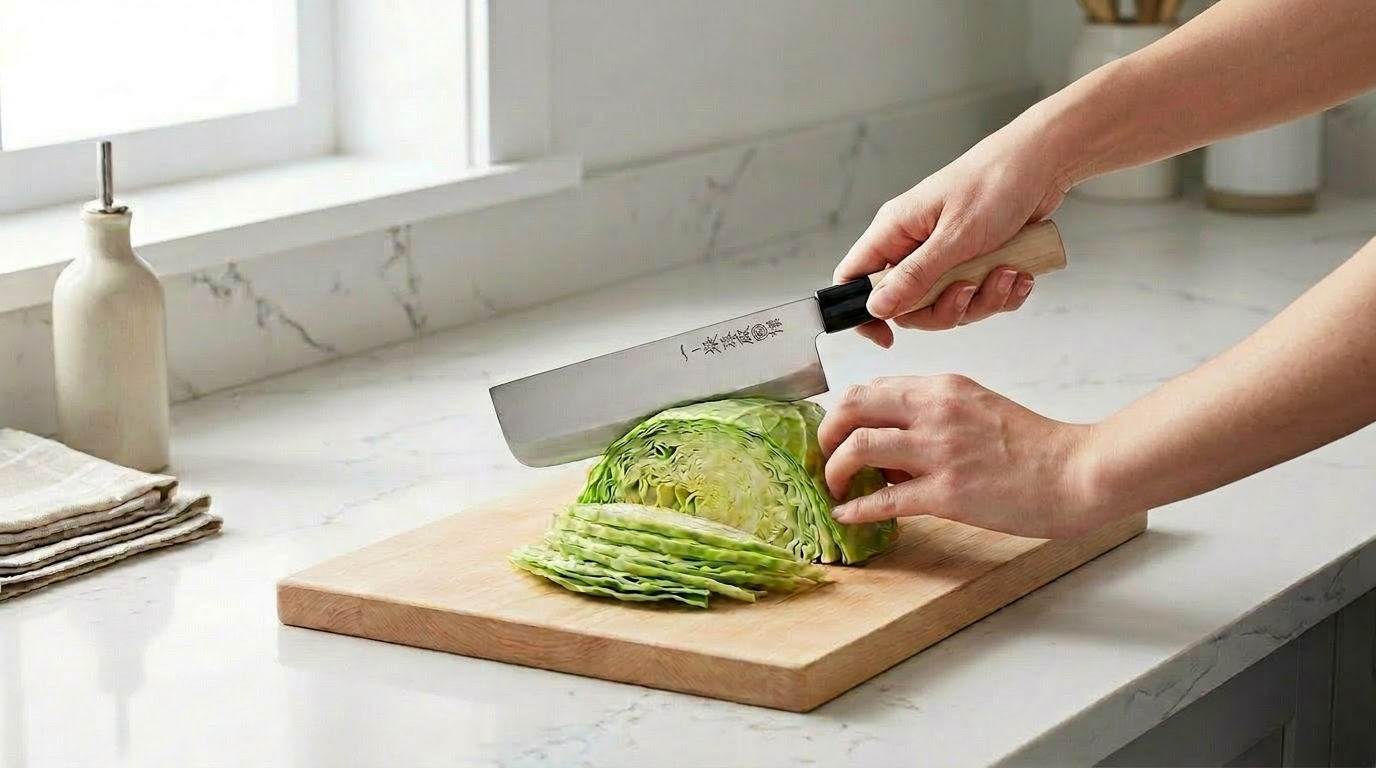
The thin, straight blade cuts through vegetables without crushing the fibers, resulting in beautifully sliced cabbage and radish, and elevating the texture of salads and pickles.
Because you can scoop up the vegetables you've cut with the wide blade and transfer them directly to a bowl or frying pan, you reduce the number of times you have to go back and forth between the cutting board and the ingredients during preparation, and many people have shared their experiences saying, "Cutting vegetables has become fun."
Below is a summary of the differences between this knife and a Santoku knife, from a beginner's perspective.
| Comparison items | vegetable knife | Santoku knife |
|---|---|---|
| Blade shape | Straight, square tip, wide | Slightly rounded, with a slightly pointed tip. |
| Beginner's peace of mind | The blade width acts as a guide, making it easier to protect your fingers. | It's highly versatile, but not very specialized for vegetables. |
| Skills | Shredded, minced, and thinly sliced. | Eat a balanced diet of meat, fish, and vegetables. |
| Moving ingredients | It can be scooped up and transferred with a blade. | The width is a bit narrow and difficult to scoop. |
| Recommended position | The next Santoku knife, "vegetable-only" | The first bottle for your home |
How does adding a santoku knife to your existing kitchen knife set change things?
Adding a vegetable knife to your santoku knife will noticeably lighten the burden of preparing vegetable dishes.
If you use a santoku knife as an all-purpose knife, the blade tends to get under a lot of strain on days when you're chopping large quantities of vegetables. However, by letting a vegetable knife handle those tasks, you can extend the lifespan of the santoku knife's sharpness.
For example, using a santoku knife for simple cooking on weekdays and a nakiri knife only on weekends for meal prepping or preparing staple dishes makes it easier to shift to a "vegetable-heavy lifestyle" without stress. Another benefit is that the santoku blade lasts longer, reducing the frequency of sharpening.
What kind of vegetable knife is suitable for beginners?
Recommended features for a beginner's vegetable knife are: double-edged, 16-18cm in length, thin blade and lightweight, easy-to-grip handle, and from a reliable manufacturer. Choosing a lightweight, straight knife that fits comfortably in your hand will make even radishes and cabbages seem easy.
Recommended blade length and weight for beginners
For beginners, the first size you should get is a standard vegetable knife with a blade length of 16-18 cm.
While shorter versions around 14cm are available, 18cm is considered the most balanced length for handling larger vegetables such as quarter-cut cabbages or radishes.
Furthermore, models with thin blades and light weight are easier to use for extended periods, even for those with small hands or less strength. Many reviews in rankings mention features like "lightweight and less tiring" and "cuts root vegetables easily." If you can actually handle the knife in a store, check whether the center of gravity is closer to the handle when you grip it; this can help you determine how easy it is to control the blade.
Key points to consider regarding material, pattern, and brand.
There are three reasons to choose this one: "It's made of stainless steel, making it easy to clean," "The handle is non-slip," and "It's from a reputable manufacturer."
For beginners, materials like stainless steel or molybdenum steel are suitable as they are less prone to rusting. Even with wooden or resin handles, choosing a shape that fits comfortably in the hand is a good idea. Wooden handles are easy to grip and less tiring to hold for extended periods, while resin handles are available in dishwasher-safe models, making them suitable for those who prioritize ease of maintenance.
Specifically, many recommendations for beginner-friendly vegetable knives include those from Kai Corporation, Sakai-based cutlery manufacturers, and highly-regarded original brands sold at mass retailers.
Price range and tips for buying your "first bottle"
For beginners, a good starting point for a vegetable knife is a basic model costing around 5,000 to 10,000 yen.
Extremely cheap products often leave customers dissatisfied with their edge retention and ease of sharpening, while overly high-end products can create psychological hurdles such as "I can't use it properly" or "It's too precious to use." Therefore, it's more practical to start with a standard model in the mid-price range.
Furthermore, by referring to the recommended three-knife set offered by specialty stores—a santoku, nakiri, and petty knife—you can gradually add other Japanese knives to your collection, allowing you to upgrade your tools without difficulty. If you realize with your first knife that "nakiri knives are so different," you'll naturally develop a better eye for choosing your next Japanese knife.
FAQ
Q1. Is a vegetable knife really recommended for beginners?
A1. I would recommend it. Thanks to its wide, straight blade, it cuts vegetables steadily and protects your hand, making it easy to use even for people who are not used to using knives.
Q2. Which should a beginner buy first: a vegetable knife or a santoku knife?
A2. For your first knife, a versatile santoku knife is a safe bet. A realistic progression would be to add a nakiri knife as your second knife when you start needing to cut large quantities of vegetables more often.
Q3. What blade length is best for a beginner's vegetable knife?
A3. The standard length is 16-18 cm, which is considered a well-balanced length that can handle large vegetables such as cabbage and radish, and is not too big for people with small hands.
Q4. Could you briefly explain the advantages of using a vegetable knife?
A4. The advantages are threefold: it makes cutting vegetables easy and results in clean cuts; you can scoop up the cut ingredients directly with the blade; and the thin blade makes it lightweight and less tiring to use.
Q5. Is a vegetable knife safe for beginners to use?
A5. Because the blade is wide, making it easier to protect your fingers, and because the primary technique is a straight downward "push cut," if you maintain the correct grip, it is psychologically safer and easier to use than a thin Western-style knife.
Q6. Can even a beginner sharpen a vegetable knife themselves?
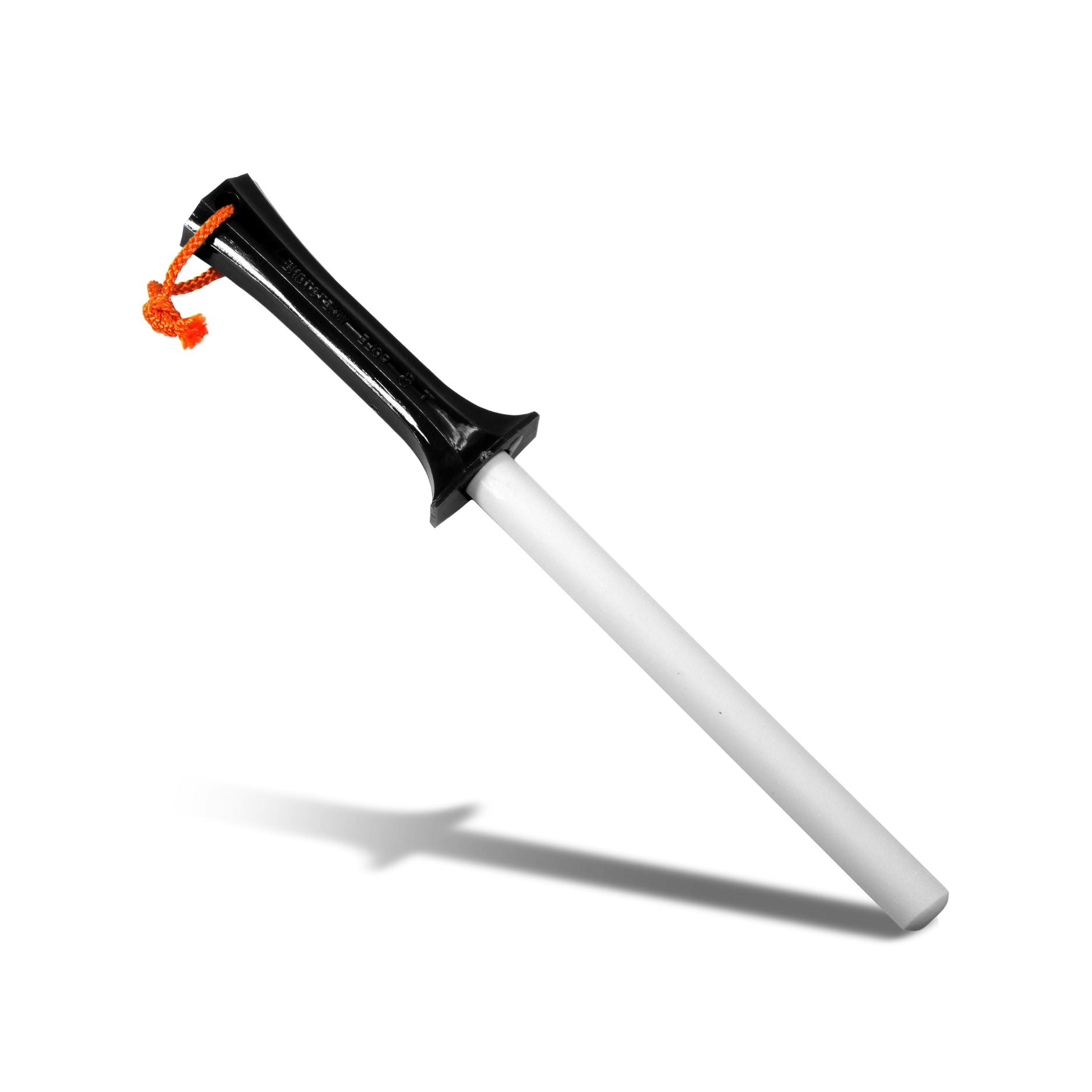
A6. For double-edged blades, you can sharpen both sides evenly with a medium-grit whetstone, keeping in mind a blade angle of 10-15 degrees. Even beginners can easily master this by referring to articles and videos explaining sharpening techniques.
Q7. What kind of household would you recommend a vegetable knife to?
A7. This product is especially recommended for families who want to eat a vegetable-centered diet, families who frequently prepare meals in advance or make staple dishes, and families who often buy large vegetables such as cabbage and daikon radish.
Q8. Are there any brands you would recommend for beginners?
A8. Many beginner-friendly vegetable knives are recommended from manufacturers like Kai Corporation and Sakai, as well as popular brands on online shopping sites. It's best to start by referring to reviews and official descriptions when making your selection.
summary
The nakiri knife, with its thin, wide, straight blade, is a "Japanese knife specifically for vegetables" that allows even beginners to cut vegetables straight, lightly, and cleanly. It's the next best knife after the santoku knife.
For beginners, a good guideline for choosing a vegetable knife is to select one that is "double-edged, 16-18cm long, lightweight, has a non-slip handle, and is in the mid-price range." This will provide a good balance between ease of use and durability.
By using a nakiri knife in conjunction with a santoku knife, you can maximize its beginner-friendly advantages: ease of cutting vegetables, beautiful cuts, and reduced preparation time. Just try switching from your usual santoku knife to a nakiri knife for the vegetables you normally cut, and you'll immediately notice the difference in how smoothly the blade cuts through the vegetables.