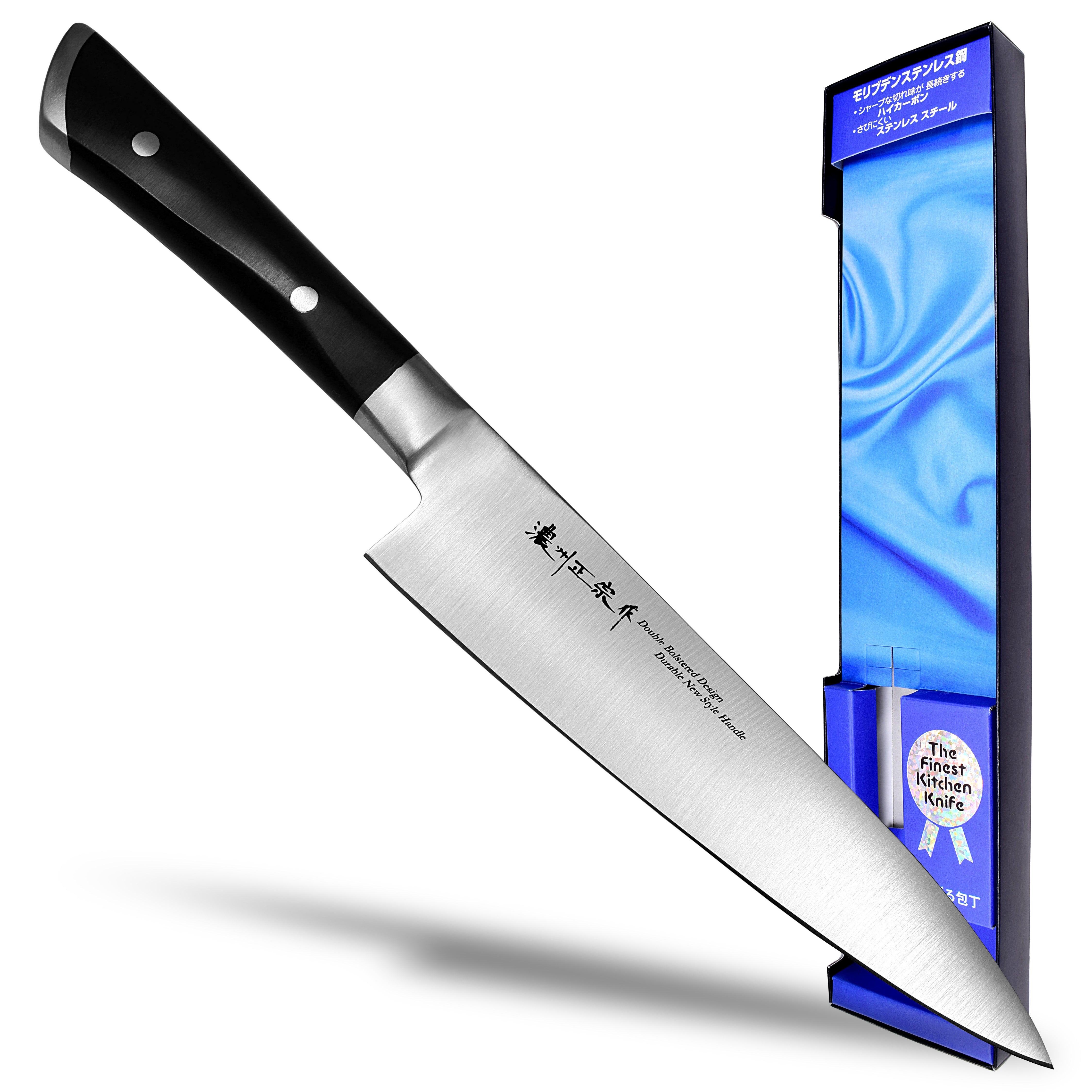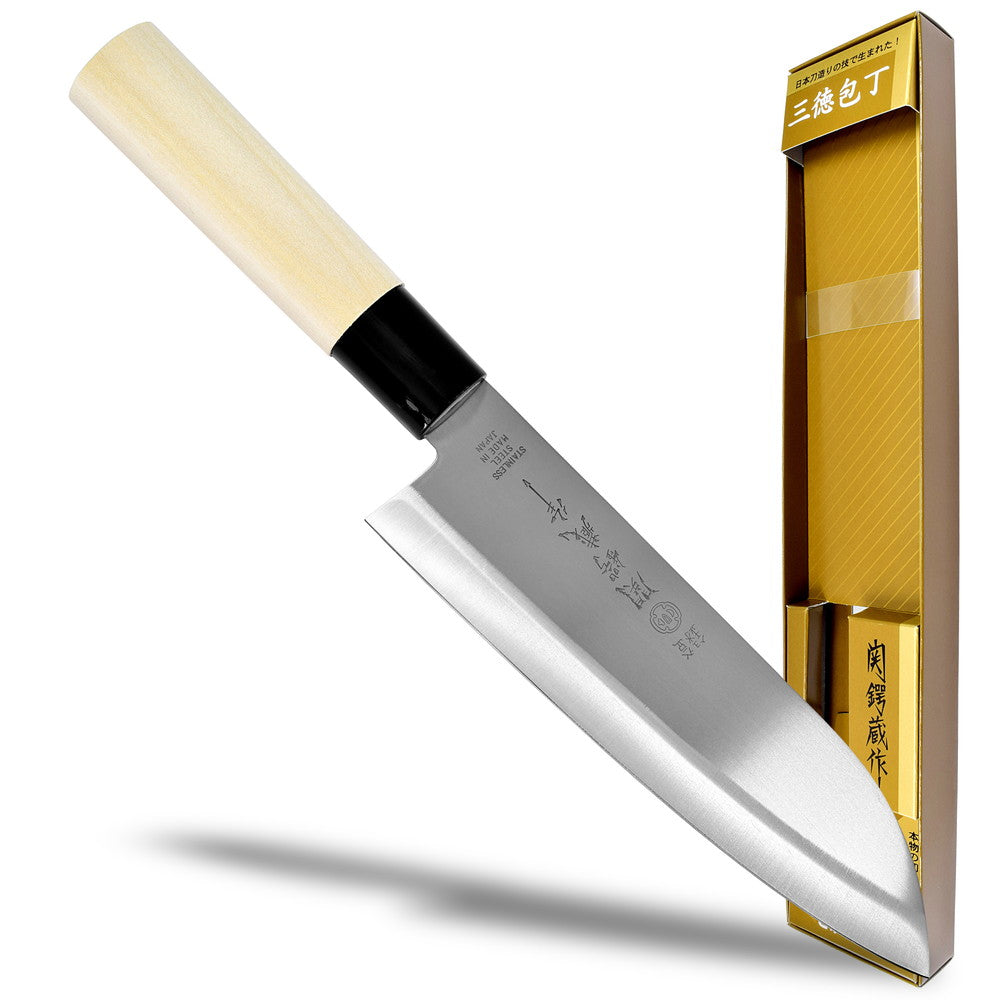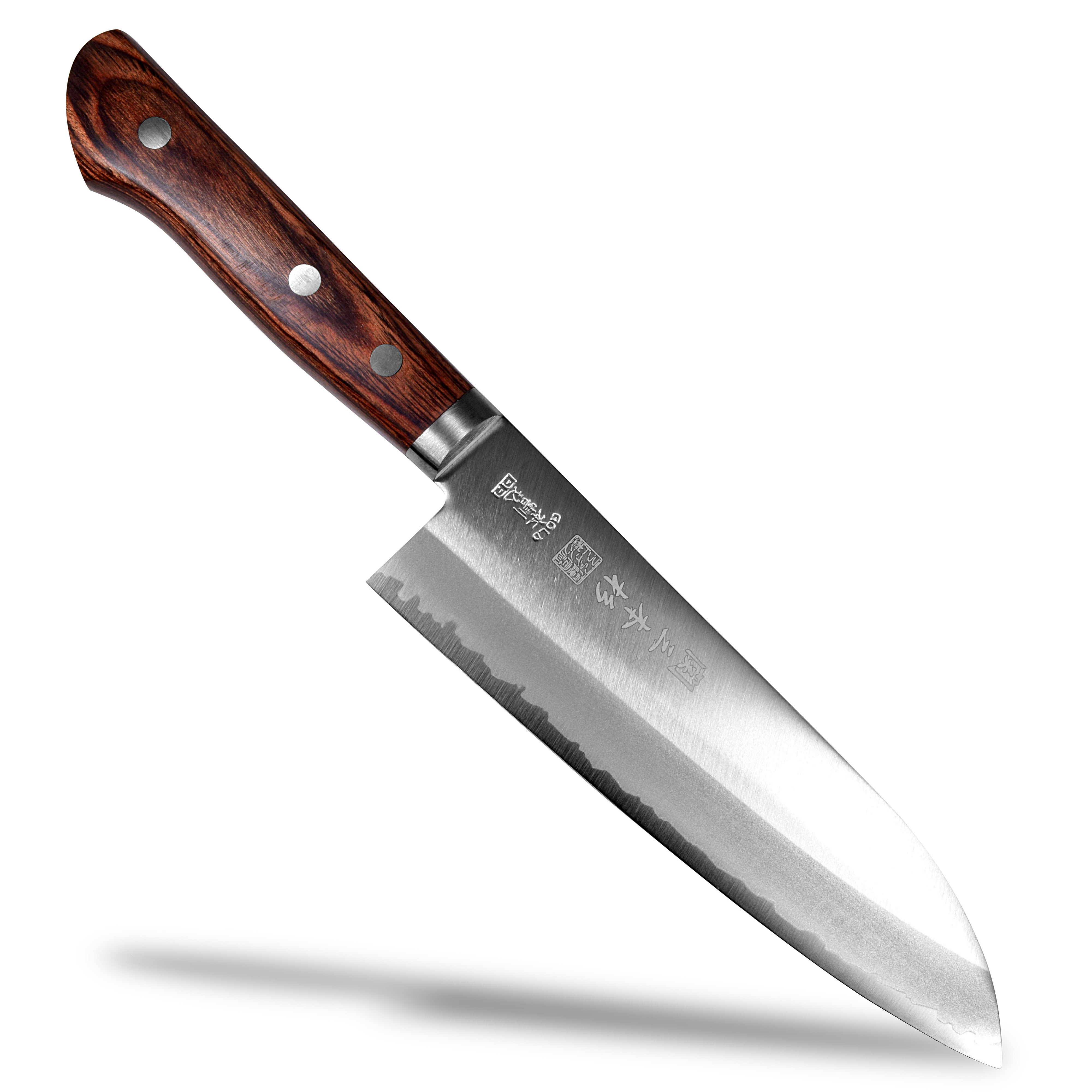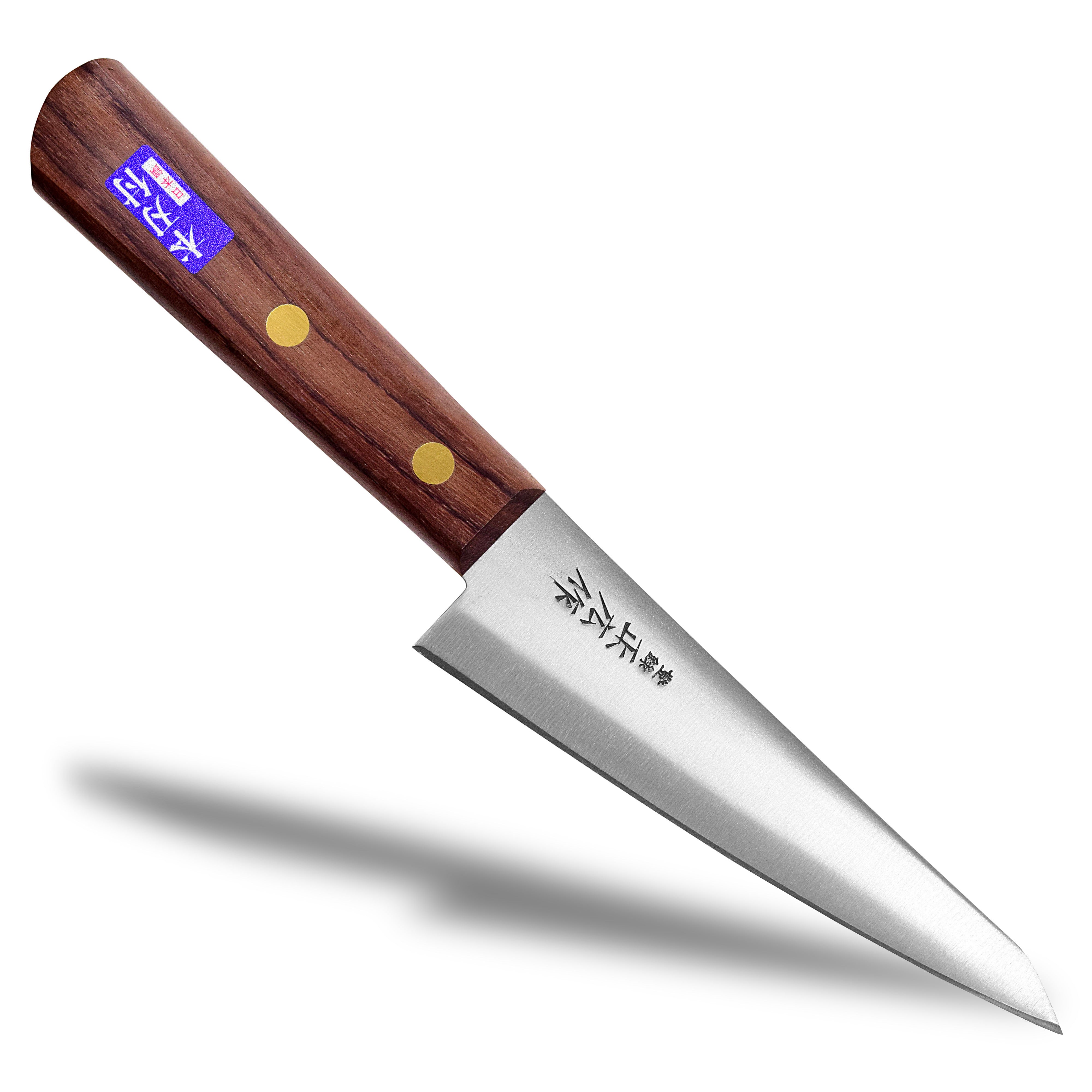

Recommended Japanese kitchen knives for those who mainly cook vegetables: Types of Nakiri knives and Santoku knives - Differences Explained
In conclusion, among the different types of Japanese kitchen knives, the nakiri knife is "specialized for vegetables," while the santoku knife is "all-purpose for vegetables, meat, and fish." Using the right knife for your cooking style can significantly improve your kitchen efficiency.
Key points of this article
Today's review: 3 key points
- Among the different types of Japanese kitchen knives, the nakiri knife is specifically for vegetables, while the santoku knife is a versatile kitchen knife suitable for meat, fish, and vegetables.
- Due to differences in blade shape and length, a vegetable knife is best suited for chopping and julienning, while a santoku knife can handle a variety of ingredients with just one tool.
- The most important thing is to determine your cooking style—whether you focus on vegetables or are an all-rounder—and then decide on the priority of which type of Japanese knife to use (nakiri or santoku).
Conclusion of this article
- In short, if you're unsure which type of Japanese kitchen knife to choose, you can't go wrong by selecting a "nakiri knife" if you mainly cook vegetables, or a "santoku knife" if you want a good balance of cooking meat and fish.
- A vegetable knife has a square, straight blade and is specialized for efficiently and beautifully cutting vegetables, such as shredding or mincing cabbage.
- A santoku knife is a versatile knife that can handle "three virtues"—meat, fish, and vegetables—all in one. Having one as a base for your home kitchen knives will broaden your culinary horizons.
- The first thing beginners should focus on is understanding the characteristics of different types of Japanese knives and clearly deciding whether to use a santoku knife as their main knife or a nakiri knife as a secondary knife.
What are the basics of the Nakiri knife and Santoku knife, as seen in the different types of Japanese kitchen knives?
In conclusion, among the different types of Japanese kitchen knives, the nakiri knife and the santoku knife have clearly defined roles: one is "dedicated to vegetables" and the other is "all-purpose for home use."
The reasoning is that nakiri knives have a square, straight blade and are specialized for vegetables, while santoku knives are developed as all-purpose knives that combine the features of nakiri and gyuto knives. For example, even on the website of a specialty store in Seki City, nakiri knives are introduced as being mainly for vegetable preparation, while santoku knives are introduced as a main knife that covers a wide range of meat, fish, and vegetables.
In short, understanding the difference between a "nakiri" (vegetable knife) for quickly and neatly cutting vegetables and a "santoku" (all-purpose knife) for completing tasks is the starting point for choosing the right type of Japanese kitchen knife.
The role and characteristics of a nakiri knife (a Japanese knife specifically designed for vegetables)
A nakiri knife is a type of Japanese knife specifically designed for efficiently cutting vegetables.
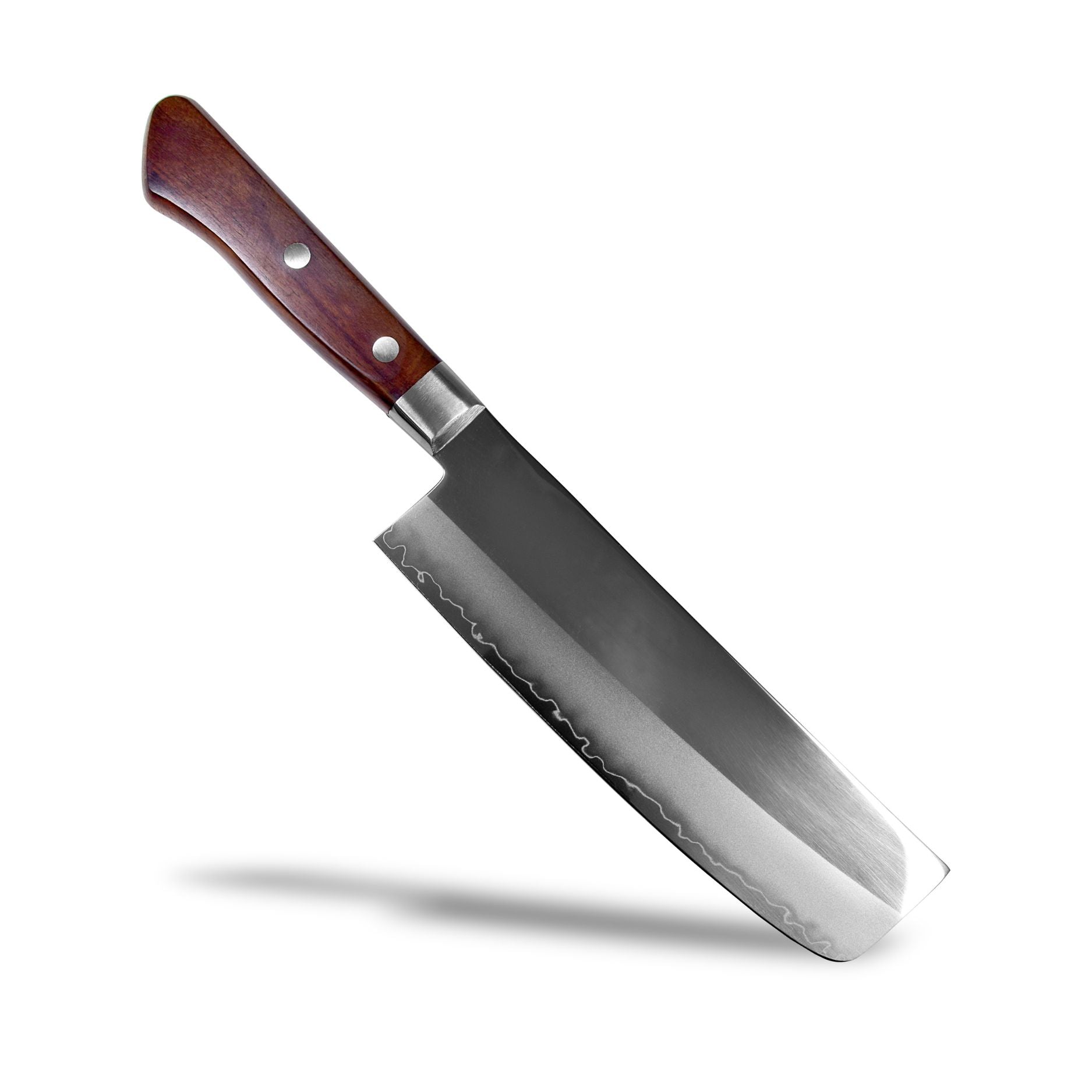
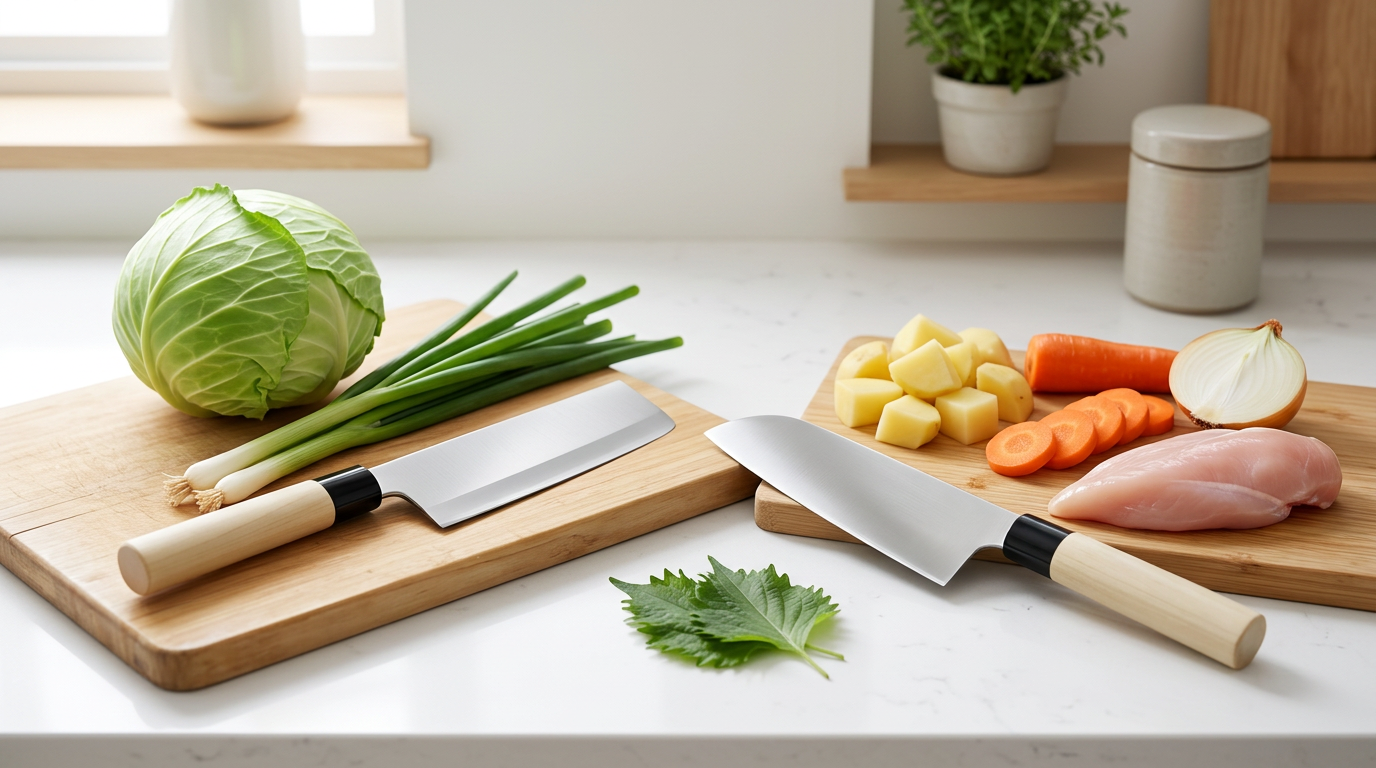
The blade is almost straight and square in shape, making it easy to hold parallel to the cutting board. This allows you to create uniformly sized julienne or chopped vegetables simply by moving the blade up and down. Therefore, it is especially suitable for households that primarily prepare vegetables, such as shredding cabbage, roughly chopping Chinese cabbage, cutting daikon radish into half-moon shapes, and mincing herbs.
On the other hand, because the blade is straight and thick, it is not very suitable for preparing meat with bones or tough fish, so the key to getting along well with a vegetable knife is to accept that it is "vegetable-only."
The role and characteristics of a Santoku knife (combining the best features of Japanese and Western knives)
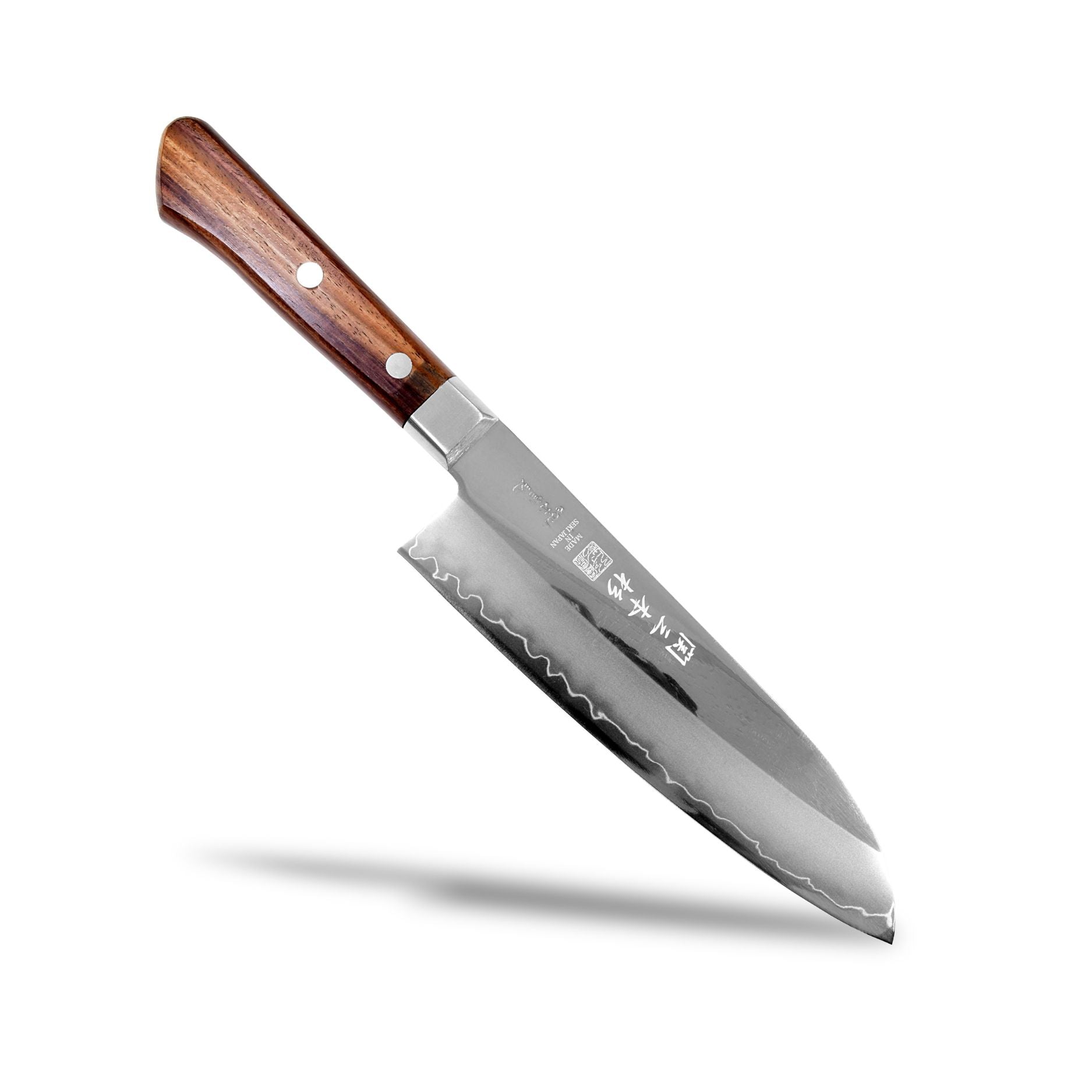
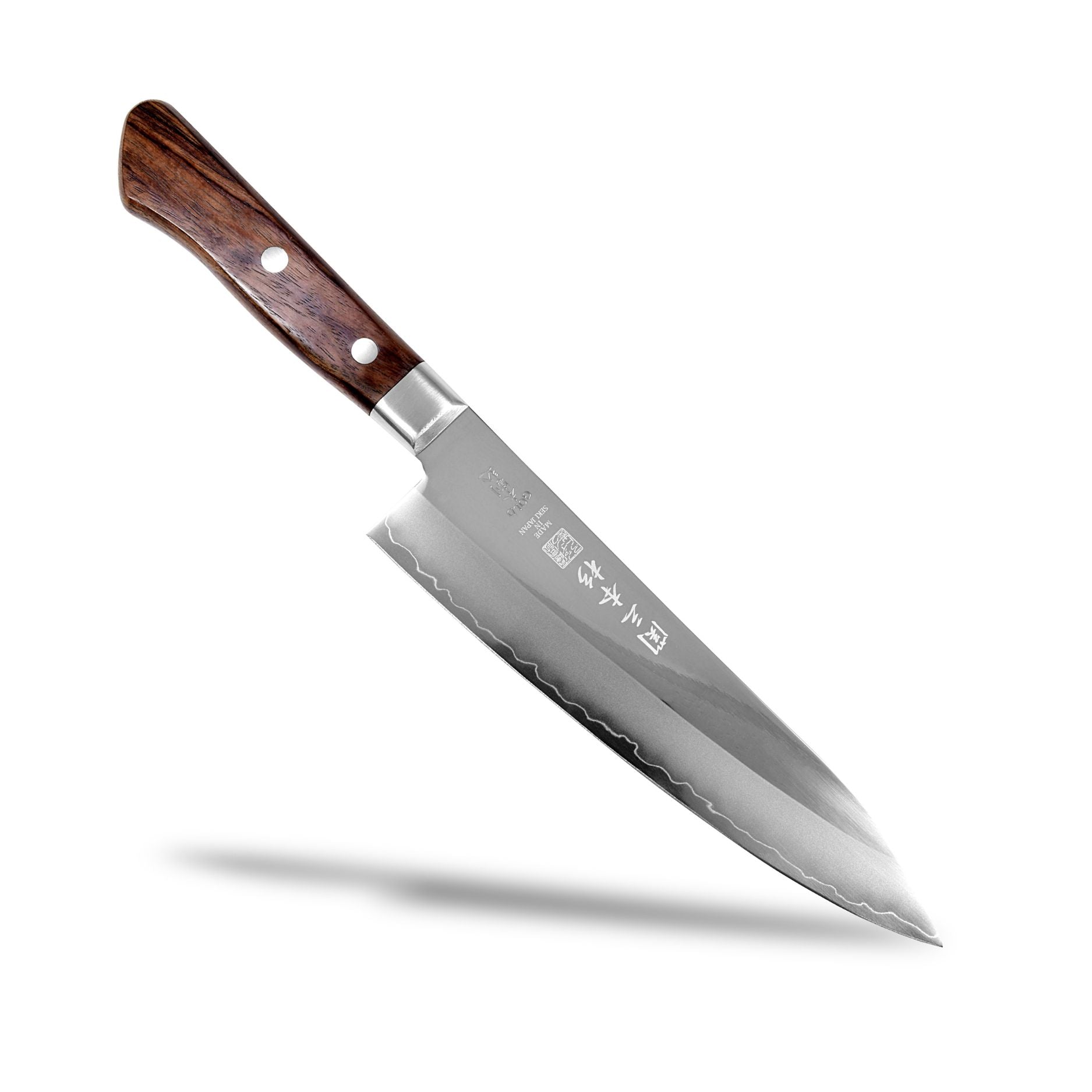
The Santoku knife is a type of knife that combines the best features of a nakiri knife (Japanese knife) and a gyuto knife (Western knife), and is positioned as a "household all-purpose knife."
The blade's line isn't as straight as a vegetable knife; it curves slightly towards the tip, making it easy to use for both pushing and pulling cuts. The name "Santoku" comes from its balanced use for three purposes: vegetables, meat, and fish, and it's a popular choice as a first knife for many households.
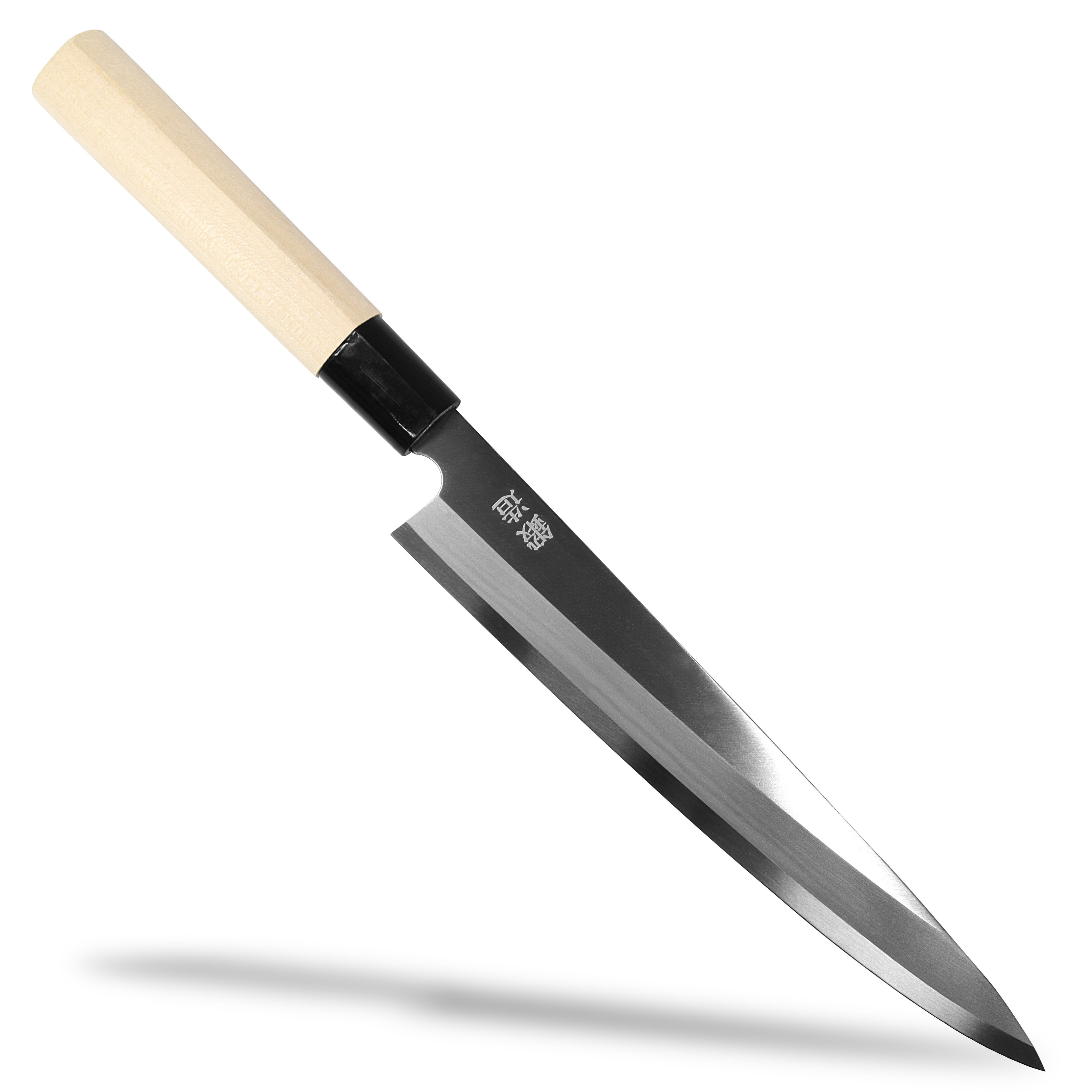
In short, the santoku knife is ideal for anyone who wants to comfortably handle a variety of tasks with just one knife, and it's a great base knife that pairs well with specialized Japanese knives such as deba knives for filleting fish and sashimi knives.
The positioning of the Nakiri and Santoku knives as types of Japanese kitchen knives
Looking at Japanese kitchen knives as a whole, the nakiri knife is positioned as a "specialized knife for home vegetable use," while the santoku knife is positioned as a "versatile knife with characteristics of both Japanese and Western styles."
The nakiri knife has long been used as a traditional Japanese kitchen knife for home use, but in recent years, the santoku knife has largely taken over its role and has become the mainstream all-purpose knife. However, for households that consume a lot of vegetables, or those with a lifestyle centered on Japanese cuisine that involves a lot of chopping, having a nakiri knife in addition to a santoku knife can significantly improve cutting feel and work speed.
The first thing beginners should keep in mind is to choose Japanese knives with the goal of owning a two-knife system: a santoku as the main knife and a nakiri specifically for vegetables.
What are the differences between a vegetable knife and a santoku knife? Tips for using them correctly.
In conclusion, the difference between a nakiri knife and a santoku knife, as types of Japanese kitchen knives, lies in their "suitable ingredients" and "blade shape and handling."
A nakiri knife has a straight, square blade with a wide surface area that makes contact with the cutting board horizontally, making it designed for fast chopping and julienning of vegetables. On the other hand, a santoku knife has a blade that curves towards the tip, making it easy to use for both pushing and pulling cuts, and it handles meat, fish, and vegetables in a balanced way.
In short, the key to wisely choosing between different types of Japanese knives is to "add a vegetable knife if you chop large quantities of vegetables every day, and use a santoku knife as a base if you want to do everything with just one knife."
Functional differences between a vegetable knife and a santoku knife.
In short, the functional difference between a nakiri knife and a santoku knife is that the nakiri is "specialized" and the santoku is "versatile."
The advantage of a nakiri knife is that its blade is tall, allowing the entire blade to smoothly touch the cutting board, making it less likely to leave any uncut pieces when mincing or chopping vegetables. The santoku knife is not as tall as the nakiri, but the front half of the blade is slightly curved, making it easy to use for slicing meat and cutting fish fillets, truly complementing the "three pillars" of home kitchen knives with just one knife.
For example, even in explanations from specialty shops and cutlery manufacturers in Seki City, the roles of the nakiri (vegetable knife) and santoku (all-purpose knife) are clearly defined.
Who should choose a vegetable knife?
In conclusion, a vegetable knife is a good choice for "people who frequently cook vegetables" and "people who are particular about the finish of their chopped and julienned vegetables."
For example, when chopping cabbage for salads every day, preparing stir-fried root vegetables or other vegetable dishes as a staple side dish, or chopping large quantities of Chinese cabbage for pickles, the straight blade of a vegetable knife reduces stress. Also, for vegetarians, vegans, or families who prepare vegetable-centered Japanese food, where meat and fish are not handled very often, choosing a vegetable knife as the main tool rather than a santoku knife is a perfectly reasonable option.
We at our company also recommend a two-knife system of "santoku + nakiri" for customers who use a large proportion of vegetables, and the Seki nakiri around 165mm is a particularly well-balanced size for home use.
Who should choose a Santoku knife?
In short, the Santoku knife is the perfect choice as your first knife or as the knife that will support your family's meals.
For typical households that use meat, fish, and vegetables in a balanced way, a single santoku knife is sufficient for most cooking tasks, and specialized Japanese knives such as deba and yanagiba can be added later. In particular, for those just starting out in cooking or those who don't want to increase the number of knives in their kitchen, the santoku is a hybrid of Japanese and Western knives that you can say, "If you're unsure, go with this one."
For example, in KIKUMATSU's black-finished Japanese kitchen knife series, the 165mm santoku knife is a versatile type that can be used for meat, fish, and vegetables, and is a popular model alongside the 165mm nakiri knife.
FAQ
Q1. What is the biggest difference between a nakiri knife and a santoku knife? A1. In conclusion, the biggest difference is their intended use: a nakiri knife is for vegetables only, while a santoku knife is a versatile knife for meat, fish, and vegetables.
Q2. Which would you recommend as your first knife, a nakiri or a santoku? A2. In short, a santoku knife is suitable for a typical household that cooks meat and fish, while a nakiri knife is suitable for a household that mainly eats vegetables.
Q3. Is it okay if the vegetable knife and santoku knife are the same size? A3. Generally, the standard size for both at home is around 165-180mm, and choosing the same blade length will reduce the feeling of discomfort when switching between them.
Q4. Which type of Japanese kitchen knife, a nakiri or a santoku, is easier to sharpen? A4. It depends on the blade length and steel, but many people find that nakiri knives, which have many straight edges, are easier to apply to a whetstone and are easier for beginners to sharpen.
Q5. Can I not use a vegetable knife for meat or fish? A5. It is possible to use it, but because the blade shape is specialized for vegetables, a santoku or deba knife is more suitable for meat tendons or fish bones.
Q6. Are there any situations where using only a santoku knife would be inconvenient? A6. For highly specialized tasks such as finely chopping large quantities of vegetables or slicing sashimi, it is more efficient to use a vegetable knife or yanagiba knife in conjunction with it.
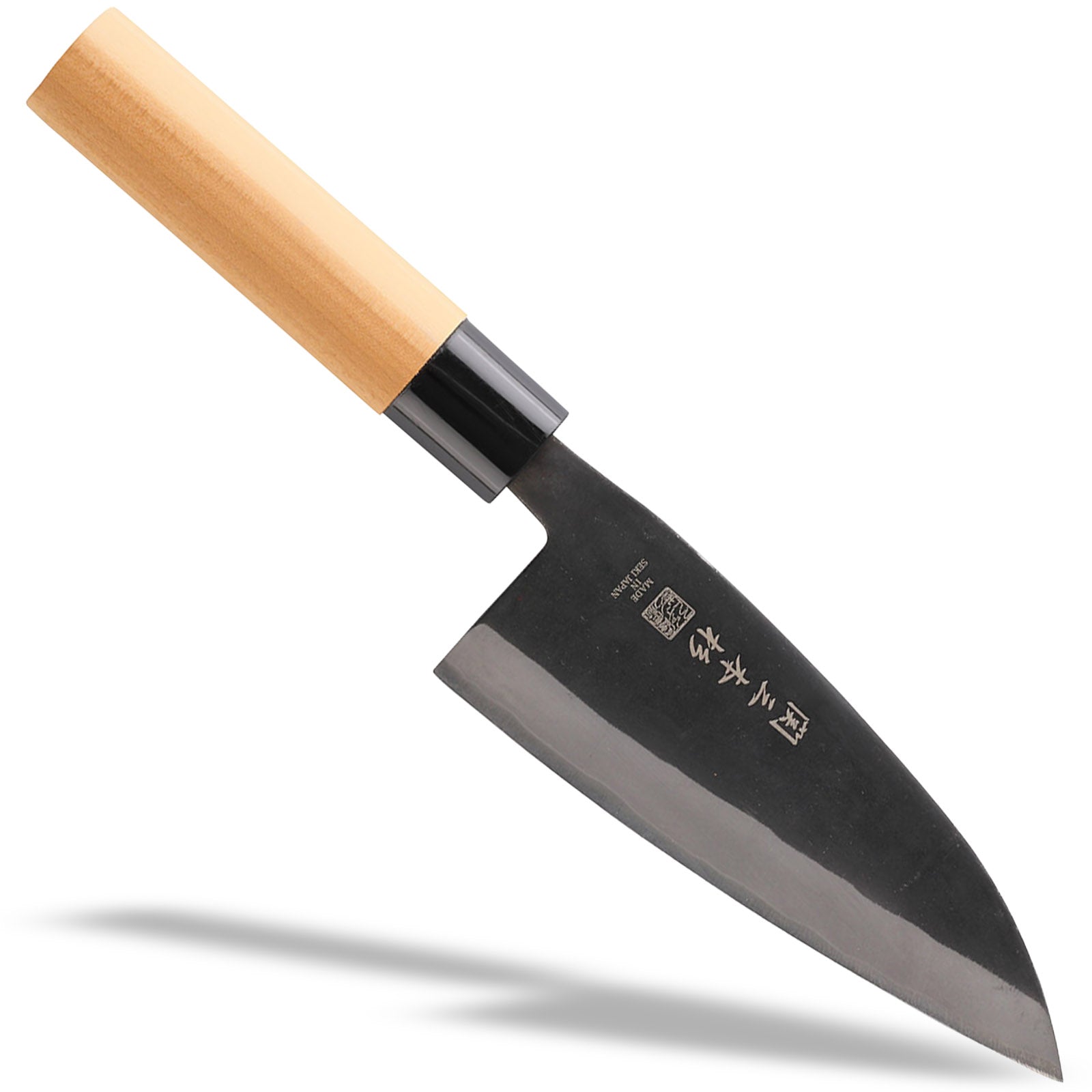
Q7. If I'm going to buy a variety of Japanese kitchen knives, in what order should I add them? A7. For home use, adding knives in the order of Santoku → Nakiri → Deba/Yanagiba will gradually expand your range of use, from everyday cooking to fish dishes.
Q8. What kind of lineup of vegetable knives and santoku knives does the Japanese kitchen knife brand in Seki City have? A8. Specialty stores in Seki City offer a lineup of sizes that are easy to use for home use, such as 165mm santoku and 165mm vegetable knives with a black finish.
Q9. Are there any advantages to buying both a vegetable knife and a santoku knife? A9. In conclusion, the biggest advantage is that you can have the peace of mind of being able to "cut anything" with a santoku knife, while improving the efficiency and finish of chopping vegetables with a vegetable knife.
Q10. Do I need to change the storage method depending on the type of knife? A10. The basic storage method is the same. After washing and wiping, simply dry them and store them on wooden blocks or magnetic racks so that the blades do not bump into each other.
summary
- In terms of the types of Japanese kitchen knives, the nakiri knife is specifically for vegetables, while the santoku knife is a versatile knife that can handle meat, fish, and vegetables in a balanced way; their roles are clearly defined.
- For households that primarily use vegetables or those that do a lot of chopping, a vegetable knife is a practical choice. For those who want to handle a wide range of ingredients with a single knife, a santoku knife is a good starting point.
- The most important thing is to decide on the priority of the types of Japanese knives you want to use, based on your cooking style, starting with a santoku knife and adding a nakiri knife as needed, and gradually building up your collection with one knife that you can use for a long time.