
How to Sharpen a Japanese Kitchen Knife to Prevent Injuries | Beginner's Guide to Sharpening a Deba Knife
In conclusion, the very sharpness of a deba knife is a safety measure, so beginners should learn the correct sharpening techniques and precautions before starting to fillet fish. In short, understanding the sharpening techniques unique to single-edged knives plus the dangerous situations specific to deba knives is the quickest way to improve while preventing injuries.
Key points of this article / Today's review: 3 essential points
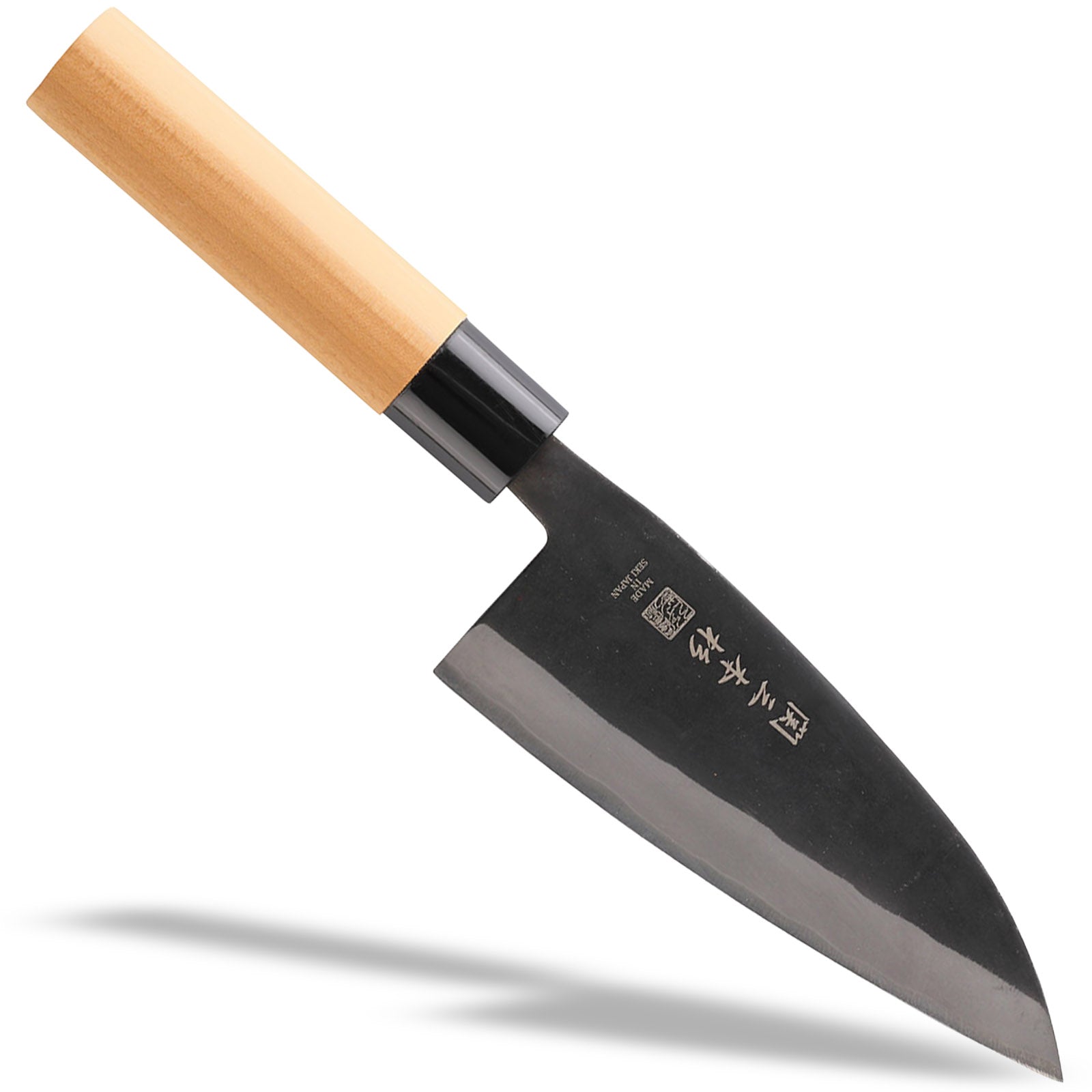
- A deba knife is a type of Japanese knife with a single-edged blade that is thick and heavy at the base. While it excels at cutting through fish heads and bones, improper sharpening and handling can increase the risk of injury.
- The basics of sharpening for beginners are: "Sharpen the front side thoroughly at a 15-20 degree angle, and only lightly remove burrs from the back side," "Keep the whetstone flat," and "Avoid creating uneven sharpening."
- Most importantly, you should follow the specific precautions for using a deba knife, such as "don't apply excessive force to a dull blade," "don't place your fingers in the direction of the blade's movement," and "bevel the edges of a chipped blade before using it."
Conclusion of this article
- In short, the safest basic way for beginners to sharpen a deba knife is to sharpen the front side of the single-edged blade thoroughly at a 15-20 degree angle, while only lightly sharpening the back side to remove any burrs.
- The three key points to remember when sharpening are: "make sure the whetstone is flat," "be mindful of the secondary bevel (double bevel)," and "check for a burr before lightly sharpening the back."
- When sharpening a Japanese kitchen knife, beginners using a deba knife should keep the following points in mind to prevent injuries: "Do not forcefully cut with a dull blade," "Cut bone with the base of the blade and flesh with the tip," and "Do not place the fingers of your non-dominant hand on the edge of the blade."
- The best way to reduce your fear is to avoid using a dull deba knife and to start by practicing with smaller fish and a deba knife around 150mm in length.
How to Sharpen a Japanese Kitchen Knife | What Should Beginners Pay Attention to When Sharpening a Deba Knife?
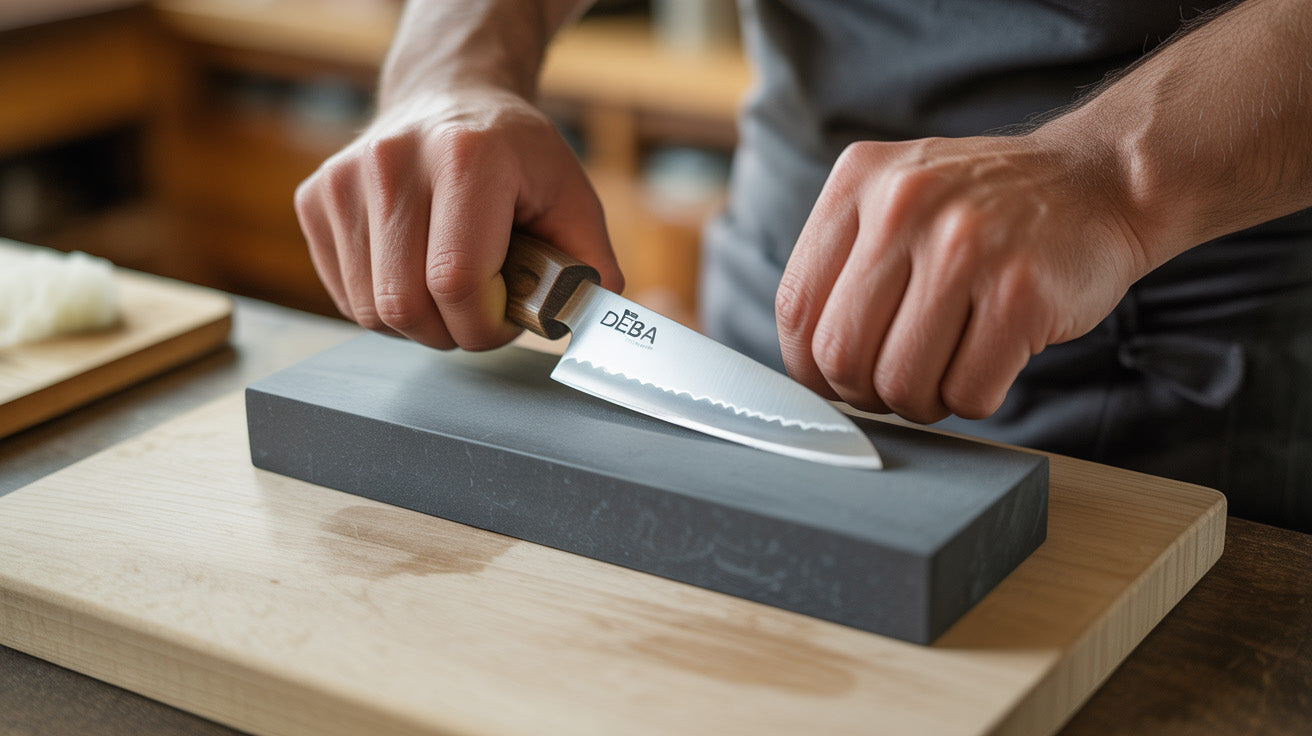
In conclusion, the first thing beginners should focus on is a simple sharpening method: "Understand the single-edged structure, sharpen the front side, and deburr the back side." Most deba knives are single-edged, and it is said that you only need to sharpen the entire cutting edge on the front side by holding it against the whetstone at an angle of about 15 to 20 degrees, and lightly touch the back side with the whetstone at a shallow angle.
This allows you to achieve sharpness without significantly altering the unique shape of a single-edged blade, making it easier for beginners to maintain a safe state. In short, the first thing to keep in mind when starting out with a deba knife is to stick to the idea that "the front is for main cutting and the back is for finishing."
Basic angles that beginners should know when sharpening a deba knife
In conclusion, you can avoid major mistakes by maintaining the correct angle for deba knives: 15-20 degrees on the front side and almost flat on the back side when deburring.
According to Jikko Cutlery and various guides, when sharpening a single-edged deba knife, the front side should be held against the whetstone at an angle of 15 to 20 degrees, while the back side should be finished by lightly touching it without a steep angle. It is explained that there is no need to reproduce a perfect angle numerically, and that it is more important to check with your fingertips that the entire blade is evenly touching the whetstone while maintaining a gap of about one finger's width.
The first thing to keep in mind is to prioritize "uniformity of the contact surface" over "angle," and to imagine applying the blade with a surface rather than a single point.
Points to note when using whetstones, flattening the surface, and small bevels (double-edged blades)
In short, the foundation of safe sharpening is to "sharpen on a flat whetstone while being mindful of the secondary bevel."
If the whetstone is warped, it will only make contact with a portion of the single-edged cutting edge, causing excessive grinding of only the pointed part and easily distorting the blade's shape. Therefore, the recommended procedure for both coarse and medium whetstones is to flatten the surface, then sharpen the front side until the secondary bevel (double bevel) disappears evenly, and then re-create a very fine secondary bevel at an angle of about 30-40 degrees.
Adding a secondary bevel prevents the blade from becoming too thin and makes it less prone to chipping, which is a particularly important step for knives used to cut bone, such as a deba knife.
Common sharpening mistakes beginners should avoid.
The most important thing is to avoid typical mistakes such as "shaving only the tip of the blade by making the angle too steep" or "sharpening the back too much and losing the flat back surface."
If you sharpen only the tip of the blade at an angle of 40 degrees or more, the blade will quickly become dull, resulting in a state where both sharpness and durability are mediocre. Also, if you continue to sharpen the back side as strongly as the front side, the "back bevel" unique to single-edged blades will disappear, which may make it difficult to follow the bones when filleting fish.
The first important point to remember is to divide the tasks: "Sharpen the front side thoroughly / Deburr only the back side," and avoid sanding the back side more than necessary.
How to Sharpen a Japanese Kitchen Knife | Beginner's Tips for Sharpening a Deba Knife (From an Injury Prevention Perspective)
In conclusion, the most important point to avoid injury when using a deba knife is to "not force the knife to cut fish when it's not sharp enough."
It has been warned that trying to cut a head or bone with a dull deba knife can easily lead to using too much force, increasing the risk of cutting your hand as the blade slips off the bone. On the other hand, a properly sharpened deba knife will cut straight into the bone due to the weight and sharpness of the blade, making it easier to work safely with less force.
In short, it's important to understand that "the danger isn't in a sharp knife, but in trying to use a dull deba knife."
Precautions regarding hand positioning and holding when preparing fish
In conclusion, the general rule is to "never place the fingers of your non-dominant hand in the direction of the blade's movement."
When filleting a fish with a deba knife, the left hand (for right-handed people) holds the fish down, but there have been reports of deep cuts occurring when the fingertips are placed in line with the extension of the blade, causing them to slip off the bone. Expert websites recommend that even when holding down the back or belly of the fish, the fingers should always be positioned to the outside (above or to the side) of the blade's curve, so that they will not hit the fingers even if they slip.
Furthermore, when cutting heads or bones, using the weight of the deba knife to bring it down vertically and avoiding applying lateral force helps prevent slippage due to sudden twisting.
Common situations and countermeasures for beginners using a deba knife.
In short, the key points to pay attention to are "when cutting off the head," "when removing scales around the dorsal fin," and "when turning the fish over on the cutting board."
When removing the head, it is recommended to insert the blade behind the gills, press it against the bone, and cut through using the weight of the blade while keeping it nearly perpendicular to the cutting board, emphasizing that you should not force it.
When removing scales around the dorsal fin or at the base of the fins, it is easy to injure your hand on the fins when scraping with the back of a deba knife, so it is recommended to take precautions such as holding down the fins with a dishcloth or work glove, or firmly securing the fish.
Furthermore, when flipping a fish, if the blade is lifted off the cutting board, it could tip over unexpectedly and cut your fingers. Therefore, it's important to separate the actions: "Place the knife on the cutting board first → Turn only the fish over."
Mindset for safely using a freshly sharpened deba knife
The most important thing is to always be mindful of the fact that a sharpened blade should cut with minimal effort.
Immediately after sharpening a deba knife, it becomes so sharp that it can easily cut through paper or skin with just a light touch of your fingertips. Therefore, it is strictly forbidden to chop through hard frozen foods or roughly rub the knife over bones immediately after sharpening. When handling fish heads or bones, it is recommended to use only enough force to "apply the knife vertically using its weight."
The first important point to keep in mind is to treat a freshly sharpened deba knife as something to be wary of, and to avoid using it improperly.
FAQ
Q1. What is a good guideline for the sharpening angle of a deba knife?
A1. The basic way to sharpen a single-edged deba knife is to hold the front side against the whetstone at an angle of around 15-20 degrees, and lightly sharpen the back side by laying it flat to remove burrs.
Q2. When a beginner sharpens a deba knife, what grit whetstone should they get first?
A2. If there are no chips in the blade, a medium-grit whetstone of around 1000 grit is sufficient, and it is common practice to add a coarse whetstone (up to 400 grit) only when there are large chips.
Q3. Should the back of a single-edged knife be sharpened just as thoroughly as the front?
A3. No, the basic rule for single-edged blades is to sharpen the front side mainly, and lightly sharpen the back side just enough to remove the burr. If you sharpen the back side too much, it will easily lose its shape.
Q4. How can I check the sharpness of a deba knife after sharpening it?
A4. Lightly cut newspaper or copy paper diagonally. If it cuts smoothly without snagging, it's working well. If it snags, check the condition of the small blade or burrs.
Q5. Are beginners most likely to get injured when using a very sharp deba knife?
A5. In reality, using a dull deba knife and applying excessive force can cause it to slip and cut your hand, so it's safer to sharpen it properly and hold it correctly.
Q6. What should I do if I cut my finger with a deba knife?
A6. Wash the wound with running water, apply firm pressure with clean gauze to stop the bleeding, and if the wound is deep, difficult to stop, or throbbing, it is recommended to seek medical attention.
Q7. Can a sharpener be used alone to sharpen a deba knife?
A7. Using a double-edged sharpener makes it difficult to properly sharpen a single-edged blade, and may cause it to lose its shape. It is safer to use a whetstone or choose a tool designed for single-edged blades.
Q8. What should you NOT do with a freshly sharpened deba knife?
A8. Avoid using the knife in ways that could cause the blade to chip, such as chopping frozen food, forcefully prying bones, or slamming it hard against the cutting board.
Q9. Which type of deba knife should a beginner start with: steel or stainless steel?
A9. If you prioritize rust resistance and ease of maintenance, stainless steel is suitable. If you prioritize sharpness and also want to practice sharpening, carbon steel is a better choice.
Q10. How often should I flatten my whetstone?
A10. When sharpening a single-edged knife like a deba knife, it is recommended to flatten the blade with a whetstone at least once every few sharpening sessions.
summary
- For beginners learning to sharpen a Japanese kitchen knife, especially a deba knife, the most important thing is to understand the unique sharpening technique for single-edged knives: "Sharpen the front of the single-edged blade thoroughly at a 15-20 degree angle, and only lightly deburr the back."
- Because deba knives are made with a thick, heavy blade base for cutting fish heads and bones, applying excessive force when the blade is dull increases the danger. It is safer to sharpen it well and use it with light force.
- In conclusion, the shortest route to successfully using a deba knife for the first time while preventing injuries is to follow the basics of "sharpening the deba knife on a flat whetstone at the correct angle and in the correct order, cutting bone with the base of the blade and flesh with the tip," as well as precautions such as "not placing your fingers on the edge of the blade" and "not hitting frozen food."