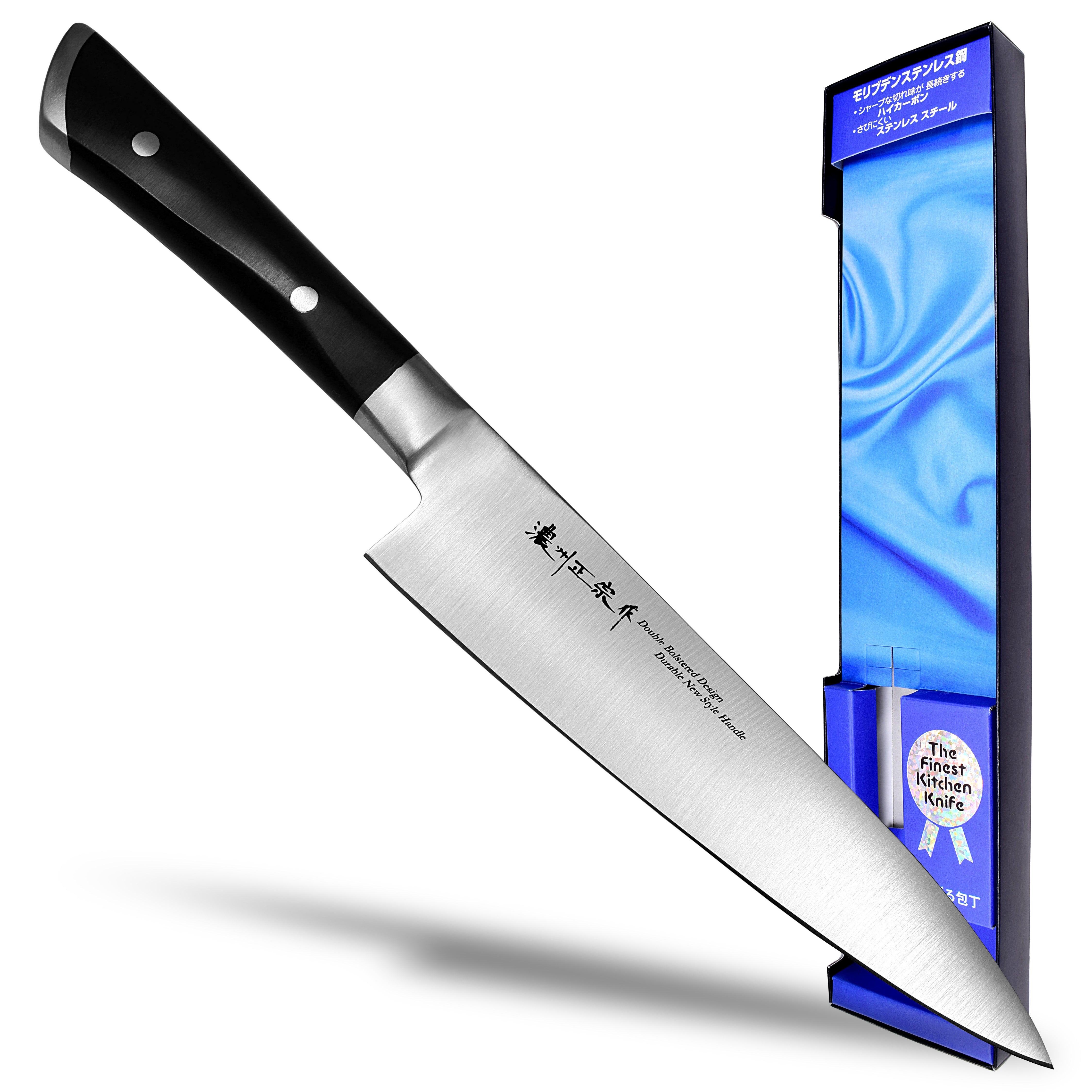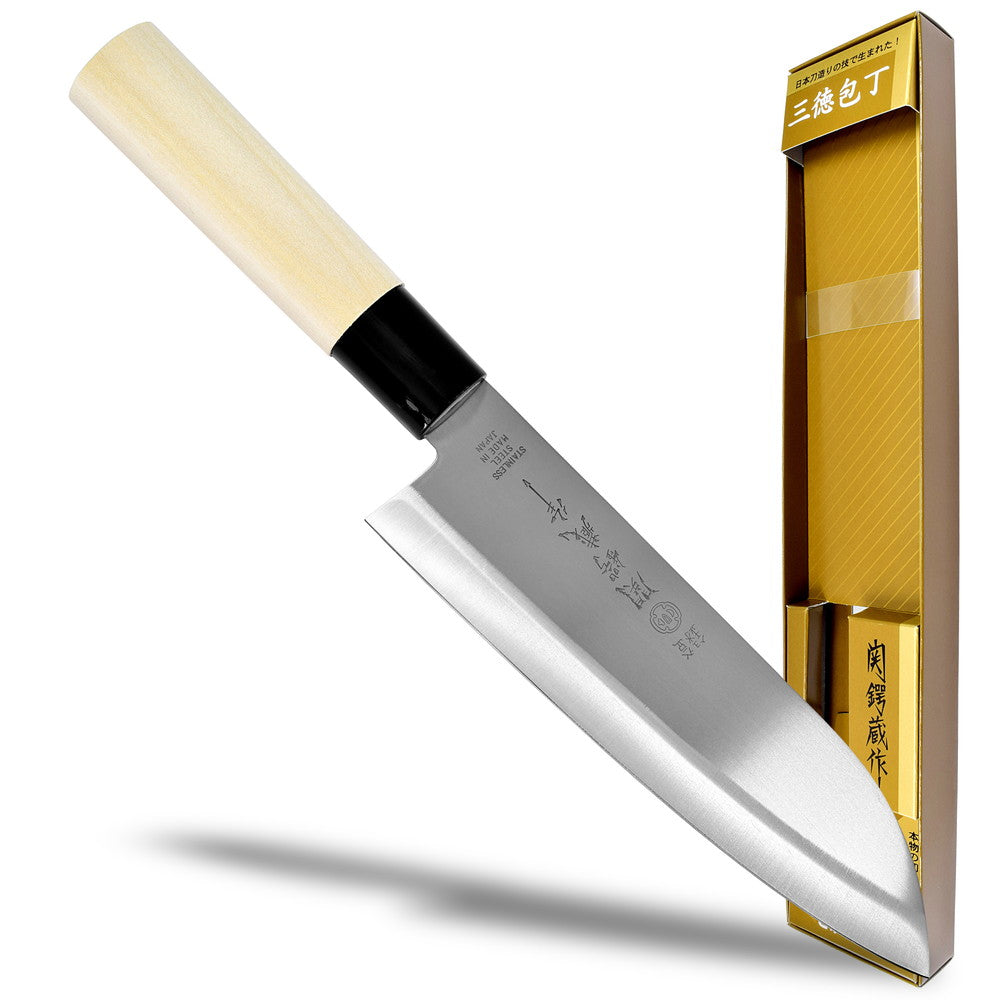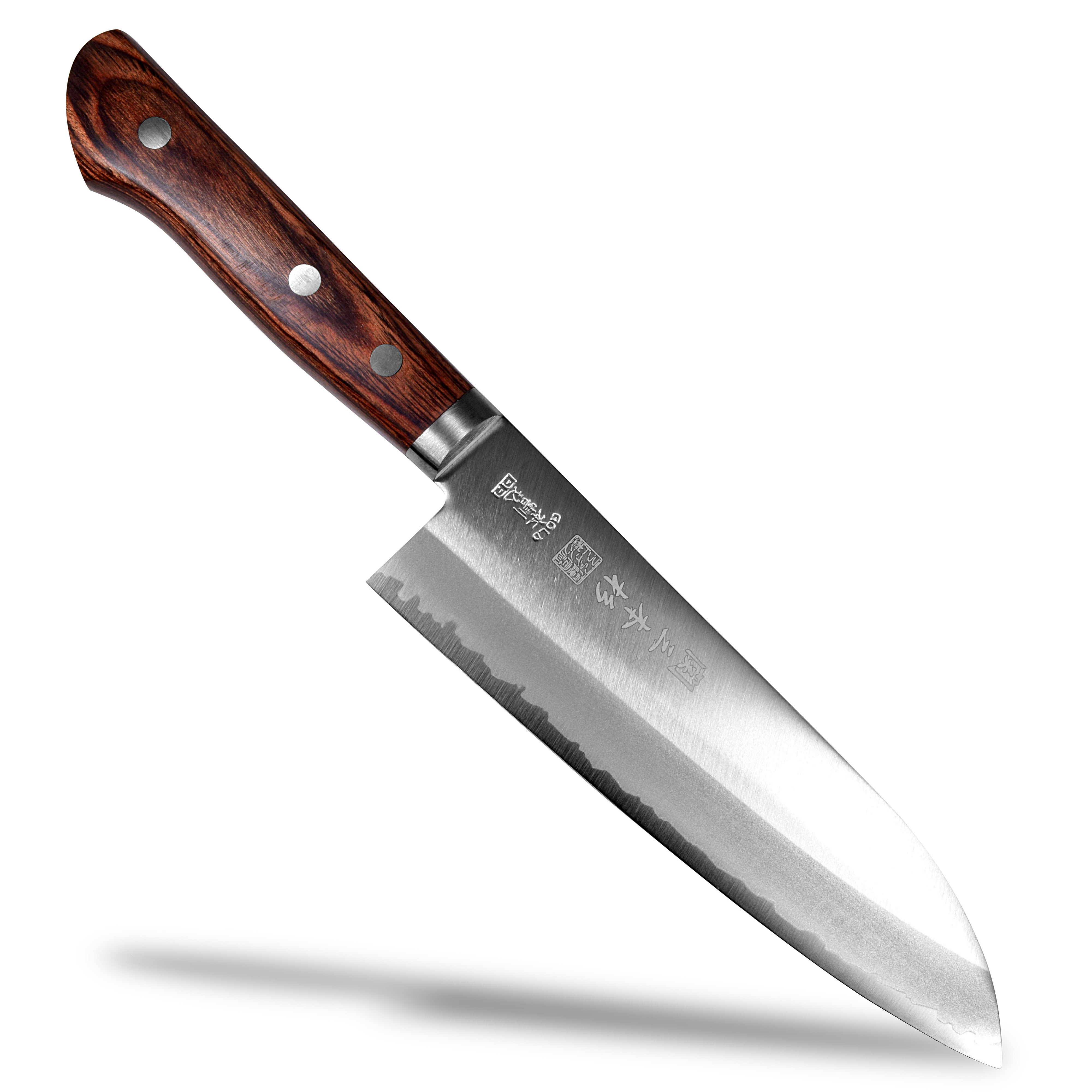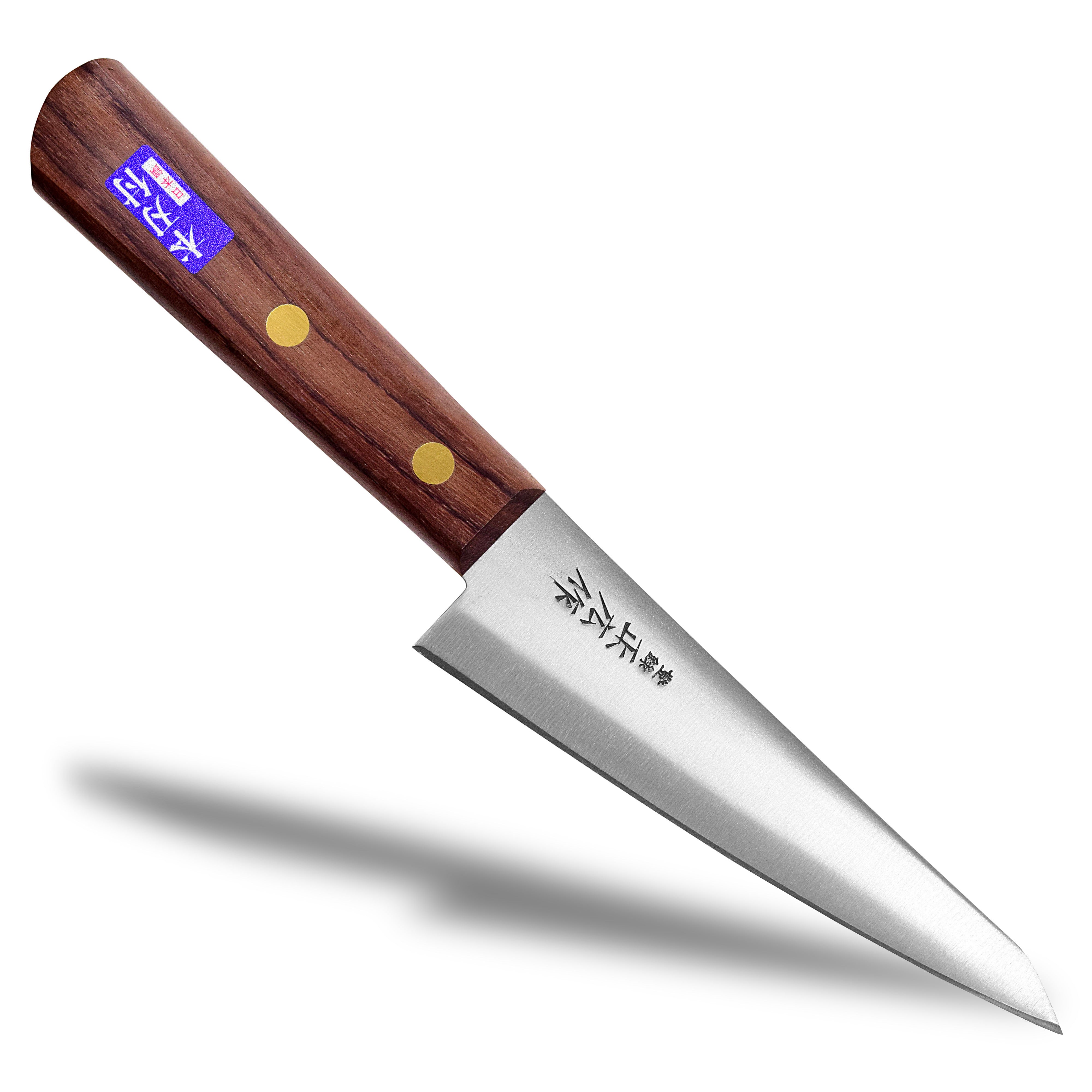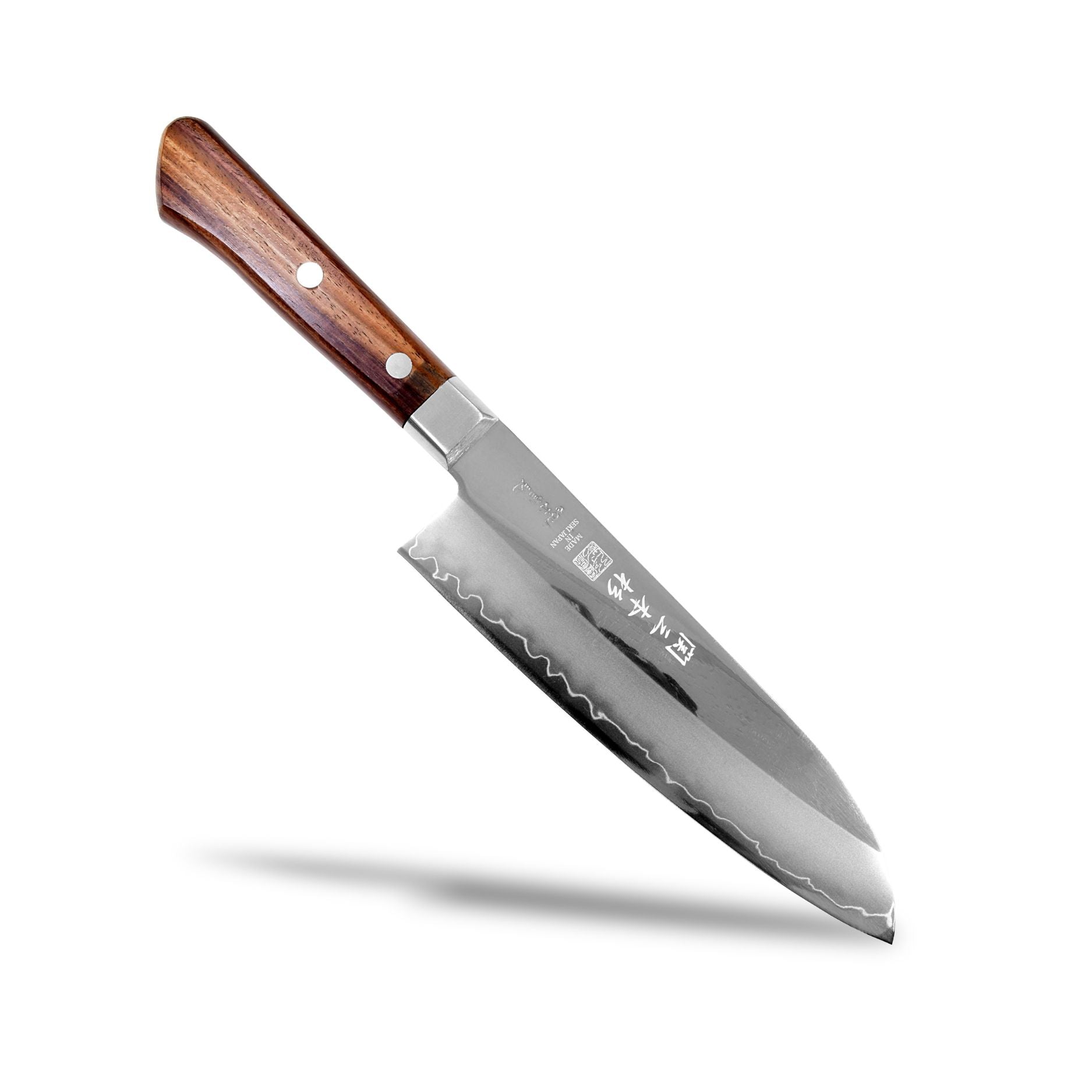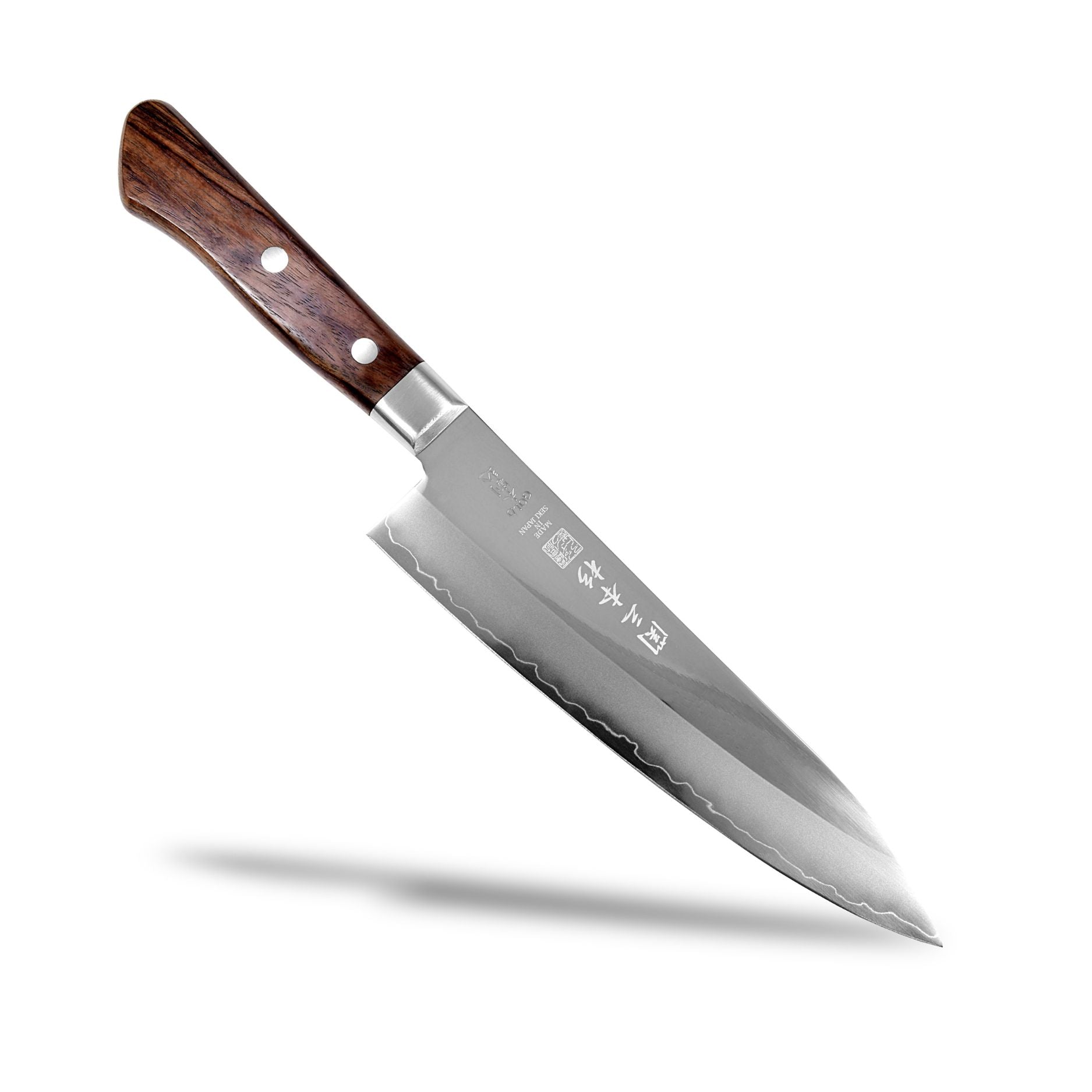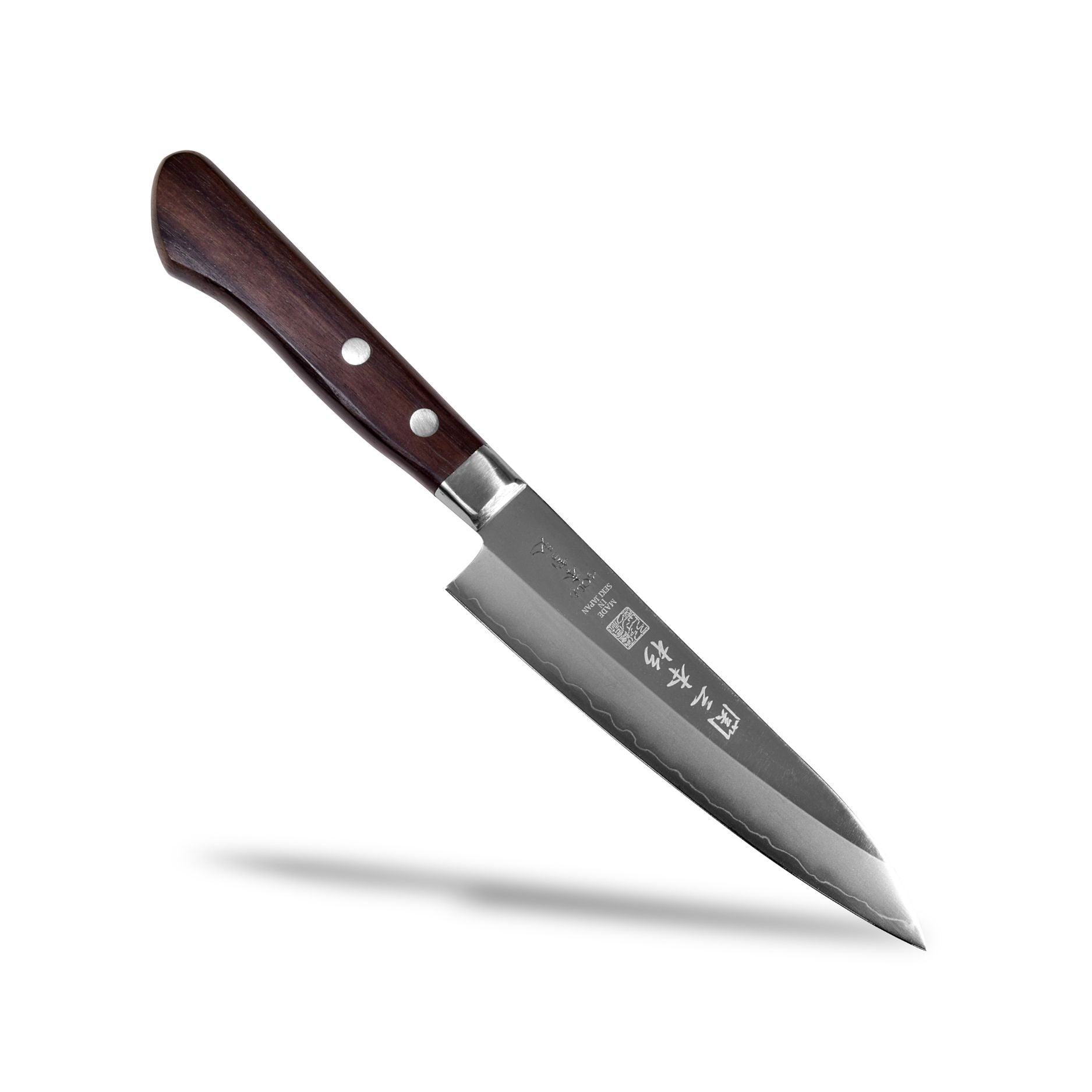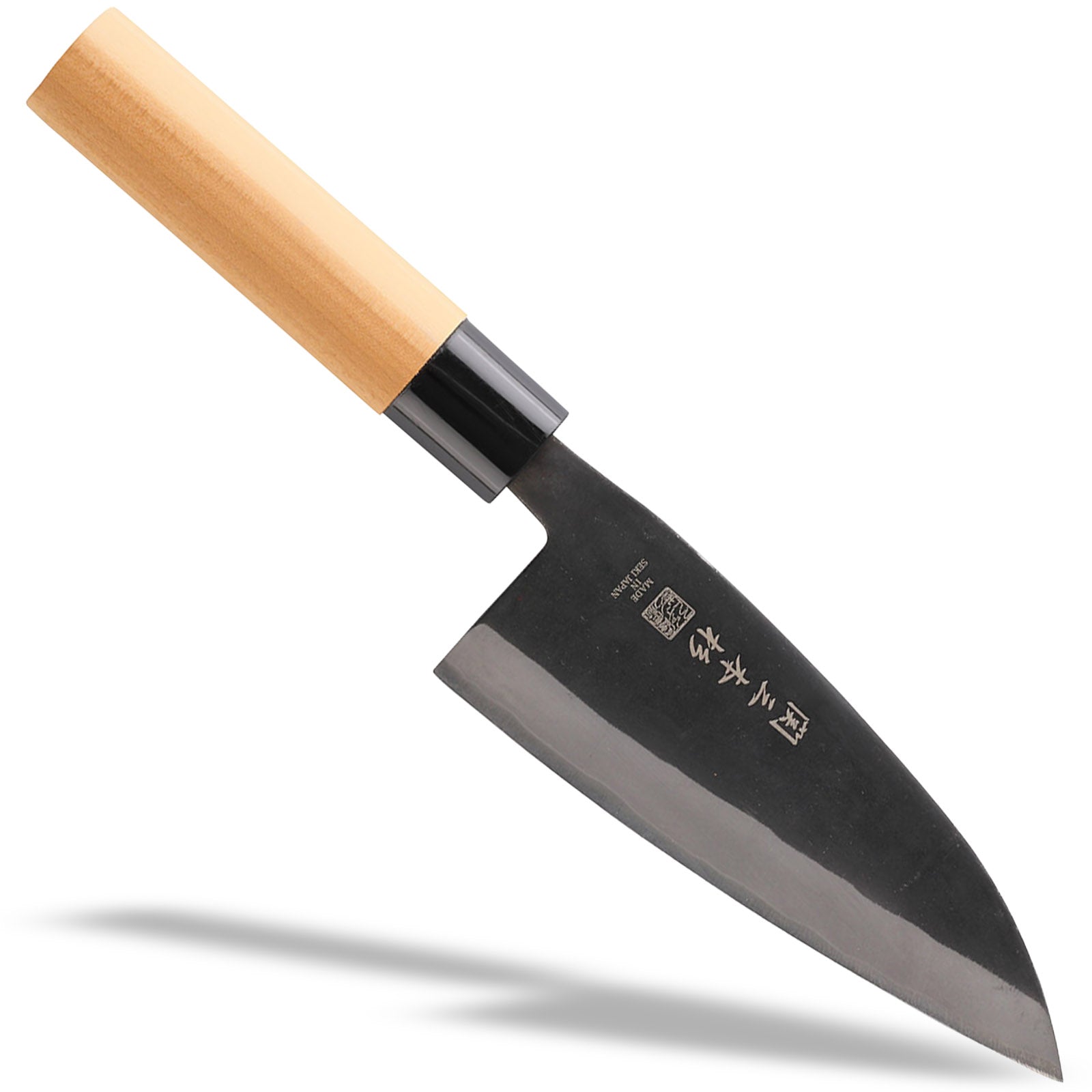

The right size for a chef's knife is determined by the size of your hand, the size of your kitchen, and the type of food you'll be cutting.
For home use, the basic guideline is "small hands = around 180mm" and "standard to large hands = 210mm." Professionals and those who do a lot of preparation should consider 240mm or longer.
When choosing a chef's knife, the most important point to avoid making a mistake is to "select a blade length that suits your hand and work environment."
Key points of this article
- This article explains the criteria for choosing the right size of Japanese chef's knife (gyuto) in millimeters, based on hand size and grip comfort.
- This guide organizes the approximate sizes of chef's knives for each type of Japanese kitchen knife, categorized by type such as "for home use" and "for professional use," and by gender and hand size.
- This guide will show you how to choose the right size chef's knife for you, taking into account factors such as cutting board size, kitchen space, and ease of maintenance, in a step-by-step manner.
Today's review: 3 key points
- For Japanese chef's knives (gyuto), the basic size to choose is 180-210mm for home use and 210-270mm for professional use.
- If you consider the size of your hands, the size of your kitchen, and the ingredients you'll be cutting together, you'll almost never regret your size choice.
- If you're unsure, it's recommended to use a 210mm chef's knife as a baseline and optimize its role by combining it with other types of Japanese knives (such as santoku and petty knives).
Conclusion of this article
- The general guideline for the length of a chef's knife is 180-210mm for home use and 240-270mm for professional use or preparation.
- For those with small hands or beginners, a 180mm chef's knife is easier to handle, while a 210mm chef's knife is easier for those with average-sized hands.
- As a type of Japanese kitchen knife, the chef's knife, which is longer and thinner than the santoku knife, is suitable for people who want to easily cut larger pieces of meat and vegetables.
- A chef's knife longer than the cutting board is difficult to handle, so you should always check the size of your cutting board and the storage space you have available.
- For your first knife, it's best to choose one around 210mm in length, comparing it to the lengths of other knives you already own, to avoid making a mistake.
How should I choose the right size chef's knife for each type of Japanese kitchen knife?
Among Japanese kitchen knives, the chef's knife is positioned as "longer than a santoku knife and more versatile than a deba or yanagiba knife," so you should choose its size based on how it will be used in relation to other knives.
Each type of knife, such as the santoku, gyuto, petty, and yanagiba, has a standard blade length, and having a well-balanced set of knives makes a big difference in how easy cooking is.
For example, a combination of a 170mm santoku knife, a 210mm chef's knife, and a 130mm paring knife would comfortably cover most household cooking needs.
Representative types of Japanese kitchen knives and the positioning of the chef's knife.
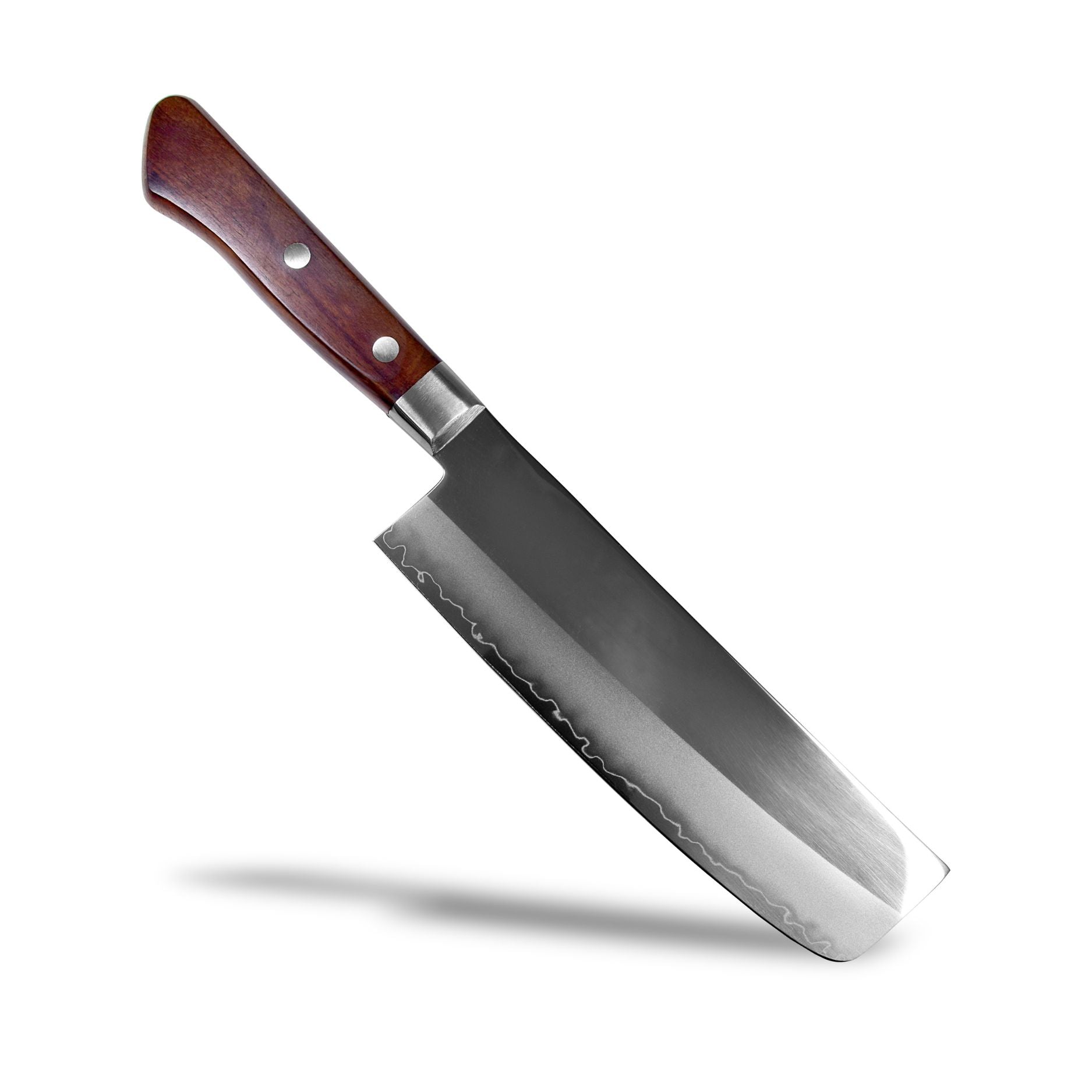
Japanese kitchen knives are divided into "all-purpose" and "specialized" types, and within that category, the chef's knife (gyuto) is positioned as a Western-style knife that leans towards all-purpose.
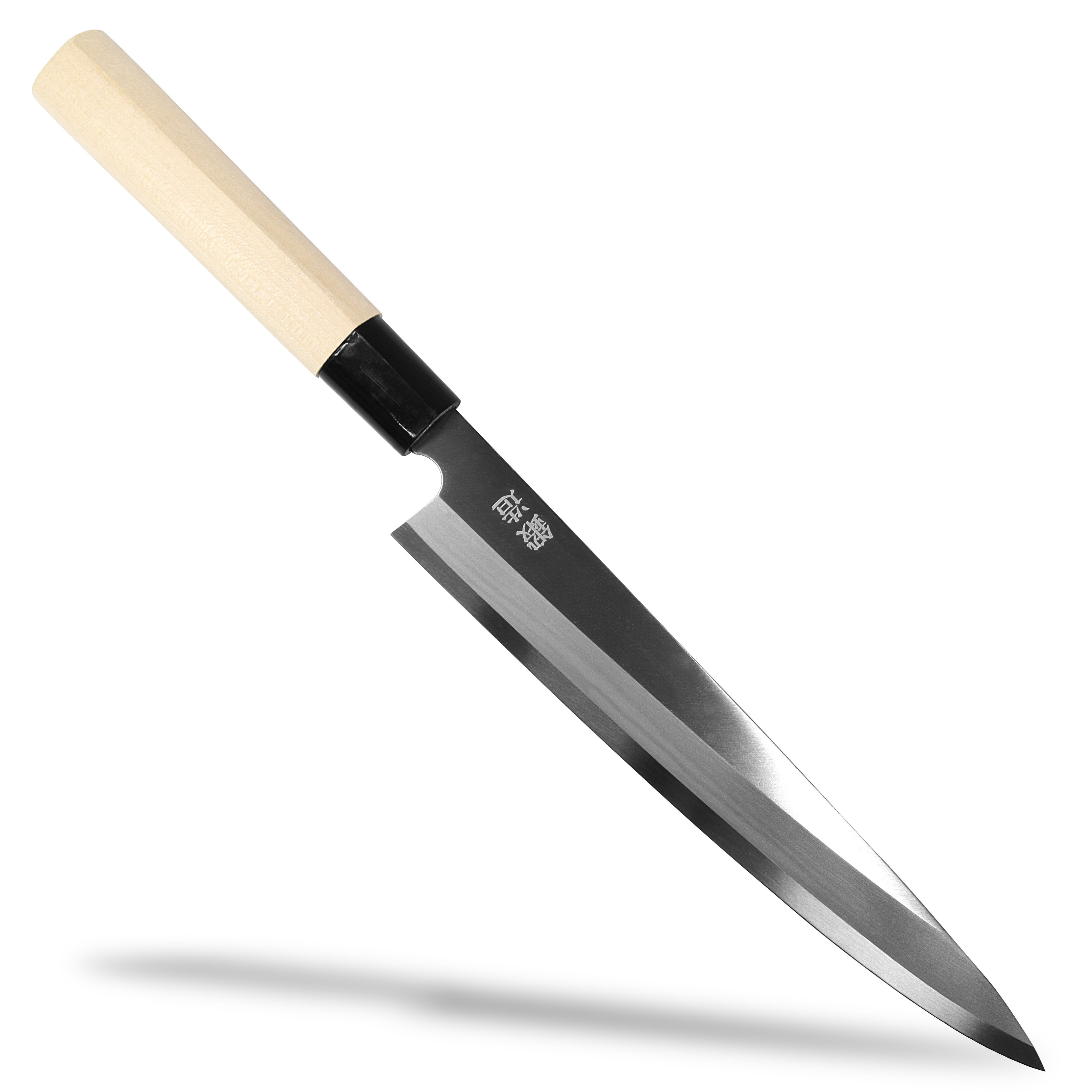
Specifically, the Santoku knife (165-180mm) is a versatile knife for home use, the Gyuto knife (180-240mm) is a versatile knife that allows for longer, more rhythmic cutting, the Yanagiba knife is specifically for sashimi, and the Deba knife is for preparing fish.
Understanding the differences between a "long, slender chef's knife," a "wide santoku knife," and a "single-edged yanagiba or deba knife" will make it easier to choose the right chef's knife size.
Basic range of chef's knife sizes (including Japanese chef's knives)
The typical size range for a chef's knife is around 180-330mm, but for home use, 180-210mm is the recommended range.
For home use, a santoku knife is typically 165-180mm long, and a chef's knife is 180-210mm long. The 210mm size, in particular, is often recommended as the go-to choice if you're unsure which to choose.
The most important thing is to be aware of the trade-off: "The longer it is, the greater the reach and efficiency, but the less maneuverable it is."
The division of roles between a santoku knife and a chef's knife.
The meaning of choosing a chef's knife size changes depending on whether you intend to use a santoku knife or a chef's knife as your main tool.
If you use a santoku knife as your main knife and a chef's knife as a secondary knife, a chef's knife around 180mm in length will be easier to handle as a "slightly longer all-purpose blade than the santoku." Conversely, if you use a chef's knife as your main knife, it's recommended to choose one between 210 and 240mm in length to prioritize "handling larger ingredients."
For example, if you frequently cook meat dishes or often handle large ingredients like whole cabbages or watermelons, having a chef's knife that is 210mm or longer will significantly improve your cooking efficiency.
Choosing the Right Chef's Knife Size Based on Hand Size
Choosing the right size chef's knife should be carefully considered based on the size of your hands and how you grip it (whether you hold the handle deeply or lightly).
Even though both are 210mm in length, they can feel long to someone with small hands and just right for someone with large hands, so the actual feel is quite different.
The first thing beginners should focus on is whether they can comfortably control the distance to the tip of the blade in relation to the size of their hand.
Guide to Chef's Knife Sizes for Women with Small Hands
For people with small hands or women, a chef's knife around 180mm in length is a more manageable size.
Because its length is close to the standard size of a Santoku knife (165-180mm), there is little difference in feel when switching from a Santoku knife, and the weight is also kept relatively light.
For example, if you normally use a 170mm santoku knife and want a slightly longer blade, choosing a "180mm chef's knife" will extend your reach without increasing the strain on your wrist.
For standard to large hands, or hand sizes common in men.
For those with average to larger hands, the "210mm chef's knife" is the most well-balanced size.
210mm is a popular length for both home and professional use, and is considered a versatile size that can handle a wide range of items, from blocks of meat to large vegetables.
If you frequently cook meat dishes or are comfortable handling knives, a 240mm knife might be a good option, but in that case, it's crucial to check the size of your cutting board and sink.
Hand size and chef's knife size correspondence chart (approximate)
Choosing a size based on hand size and usage environment, as outlined below, will help you avoid regrets.
| Hand size and environment | Recommended Chef's Knife Size Guide | comment |
|---|---|---|
| Families with small hands or a large number of women | Around 180mm | Perfect for those looking to upgrade from a Santoku knife. |
| Standard to large hands / general household | 210mm | If you're unsure, this versatile length is always a good choice. |
| Professionals in the restaurant industry, lots of food preparation involved. | 240-270mm | Suitable length for preparing large pieces of meat and vegetables. |
By focusing not only on specifications but also on "how it feels when you actually swing it," you can choose a club that suits your rhythm.
Guide to Chef's Knife Length and Choosing the Right Size Based on Your Kitchen Environment
To avoid making a mistake when choosing a chef's knife size, consider three factors: the size of your hand, the size of your kitchen, and the size of your cutting board.
While longer blades increase work efficiency, they also make the tool harder to swing, wash, and store in confined spaces.
"Be careful, as a chef's knife longer than the cutting board is difficult to handle."
Specific uses of 180mm, 210mm, and 240mm chef's knives.
To summarize the characteristics of each size of chef's knife, 180mm is a versatile mini chef's knife for home use, 210mm is a standard all-purpose knife, and 240mm and above are long knives suitable for preparation work.
Specifically, 180mm is easy to handle even with smaller cutting boards and sinks, 210mm is the most versatile length, positioned between home and professional use, and 240mm and above are suitable for large-scale food preparation in restaurants and tonkatsu (pork cutlet) shops.
There are three reasons why you should use 210mm as your standard if you're unsure: "210mm is the most standard size on the market," "there is a lot of information and reviews available," and "it's easy to balance with other types of Japanese knives."
Checkpoints for cutting boards, sinks, and storage space
Before buying a chef's knife, you should measure the length of your cutting board, the size of your sink, and the storage space with a measuring tape.
For example, with a typical household cutting board (approximately 30-35 cm in length), a 240 mm chef's knife would be close to the diagonal of the board, making it easy for the blade to extend beyond the edge. However, a 210 mm knife would fit comfortably on most cutting boards.
Also, in kitchens with small sinks, longer chef's knives are more difficult to wash, and if you're storing them in a drawer-type knife holder, be aware that knives longer than 210mm may not fit.
6 steps to determine the right size chef's knife for you
The most logical approach is to "use the current knife length as a baseline and then adjust it based on hand size and kitchen environment."
- Measure the blade length of the kitchen knife you are currently using (e.g., 170mm for a santoku knife).
- Instead, visualize "how much longer you want it to be" (+1-3cm).
- Compare it to the width of your palm and the length of your fingers to make sure it's not too long.
- Measure the size of the cutting board and sink to determine the maximum length.
- Consider whether it's for home or professional use (depending on the amount of meat and vegetables), and narrow down your choices from 180mm, 210mm, and 240mm.
- If possible, try holding the club in person at the store to check the center of gravity balance and how it feels to swing.
By following this procedure, you can reflect not only the numbers but also your own "personal experience," bringing you closer to finding a product you can use comfortably and without stress in the long term.
FAQ
Q1. What is the standard length for a Japanese chef's knife (gyuto)?
A1. The standard length for a chef's knife is approximately 180-210mm for home use and 210-240mm for professional use.
Q2. How should I determine the appropriate length for a chef's knife?
A2. As a guideline, use the length of the santoku knife plus 1-3 cm, and make your decision based on the size of your hand and the size of your cutting board.
Q3. What size chef's knife is recommended for beginners?
A3. For beginners, a good balance of weight and length makes it easy to handle, with 180-210mm being the easiest size to work with and 210mm being the least prone to mistakes.
Q4. Is there a chef's knife size that is suitable for women?
A4. For people with small hands or those who lack strength, a lighter chef's knife around 180mm in length is considered less tiring and easier to handle.
Q5. Are chef's knives longer than 240mm suitable for home use?
A5. Dishes 240mm or larger are suitable for preparing large pieces of meat and vegetables, but they are often too large for home kitchens, so they are more suitable for professionals or those cooking in large quantities.
Q6. Which should I buy first, a chef's knife or a santoku knife?
A6. If you mainly cook Japanese home-style meals, a santoku knife is recommended. If you often cook meat dishes or use larger ingredients, a gyuto knife is recommended first, and the other knife should be acquired as a secondary tool.
Q7. Is there a difference in size between a Japanese chef's knife (gyuto) and a Western chef's knife (gyuto)?
A7. The size range is almost the same for both, around 180-300mm, but the Japanese chef's knife tends to have a slightly thinner blade and prioritizes sharpness, so you can choose according to your preference.
Q8. What are some common mistakes to make when choosing the right size chef's knife?
A8. The main causes of failure are choosing a blade longer than the cutting board, not considering storage space, and suddenly switching to a size that is extremely long compared to your current knife.
summary
- For Japanese chef's knives, the basic size for home use is 180-210mm, while for professional use or preparation, it's generally 240-270mm.
- For those with small hands or women, a length of around 180mm is the best option, while for those with average to large hands, 210mm offers the best balance of ease of use and sharpness.
- By considering the division of roles between santoku and petty knives, as well as the space available for cutting boards, sinks, and storage, you can choose the optimal chef's knife size for each type of Japanese knife.
- If you're unsure, using the guidelines of "the length of your current knife + 1-3cm" or "210mm as a baseline" and then making your final decision based on how it feels in your hand will help minimize regrets.