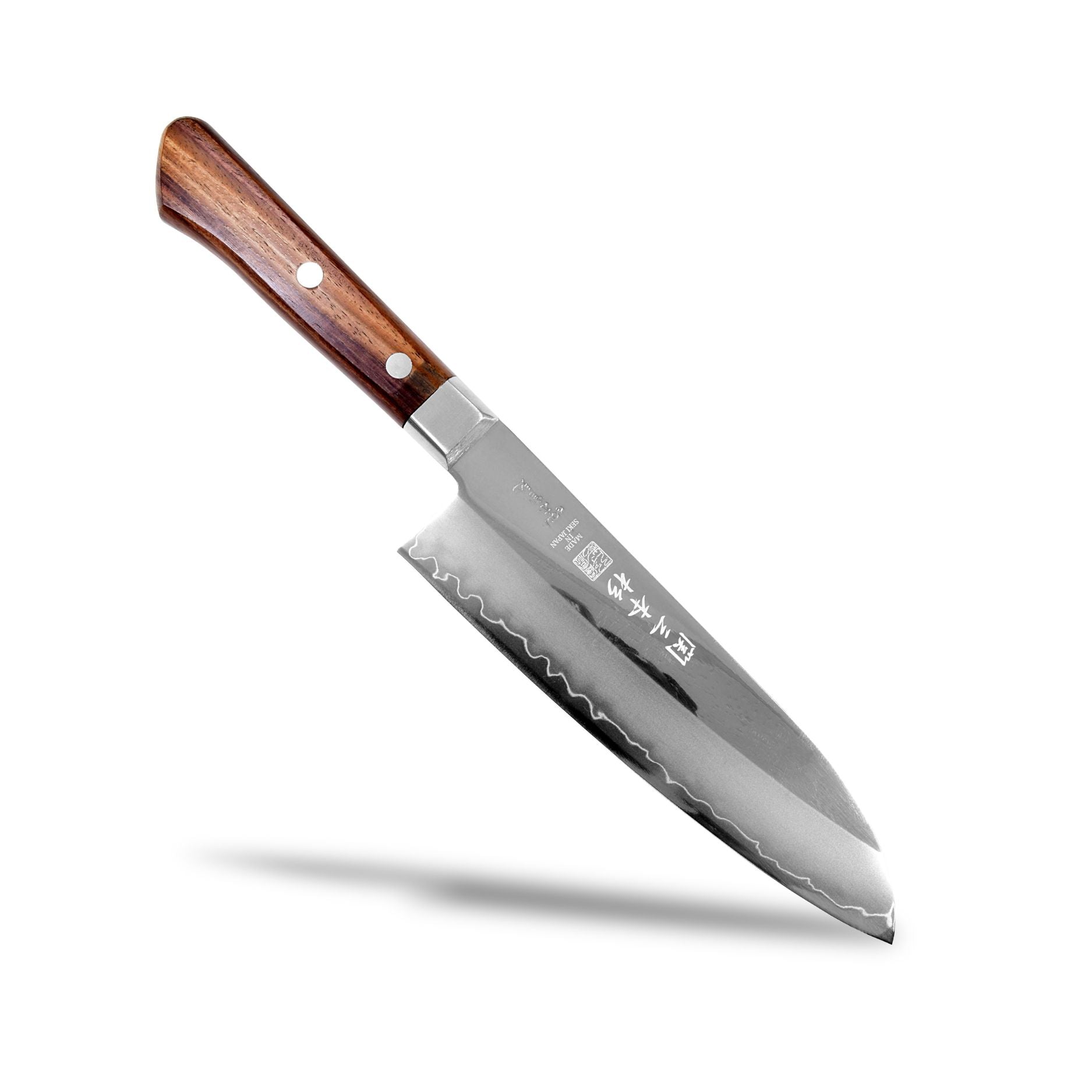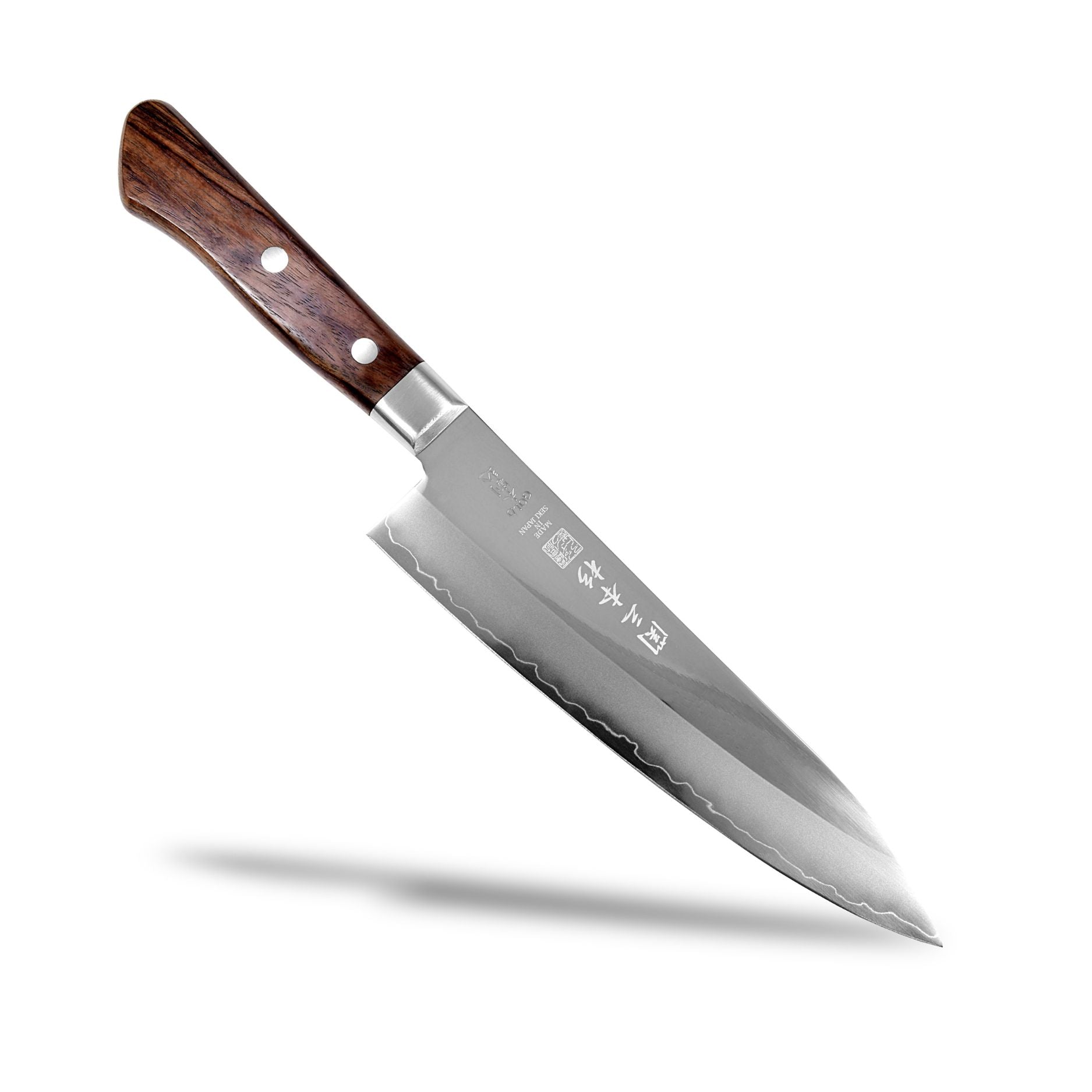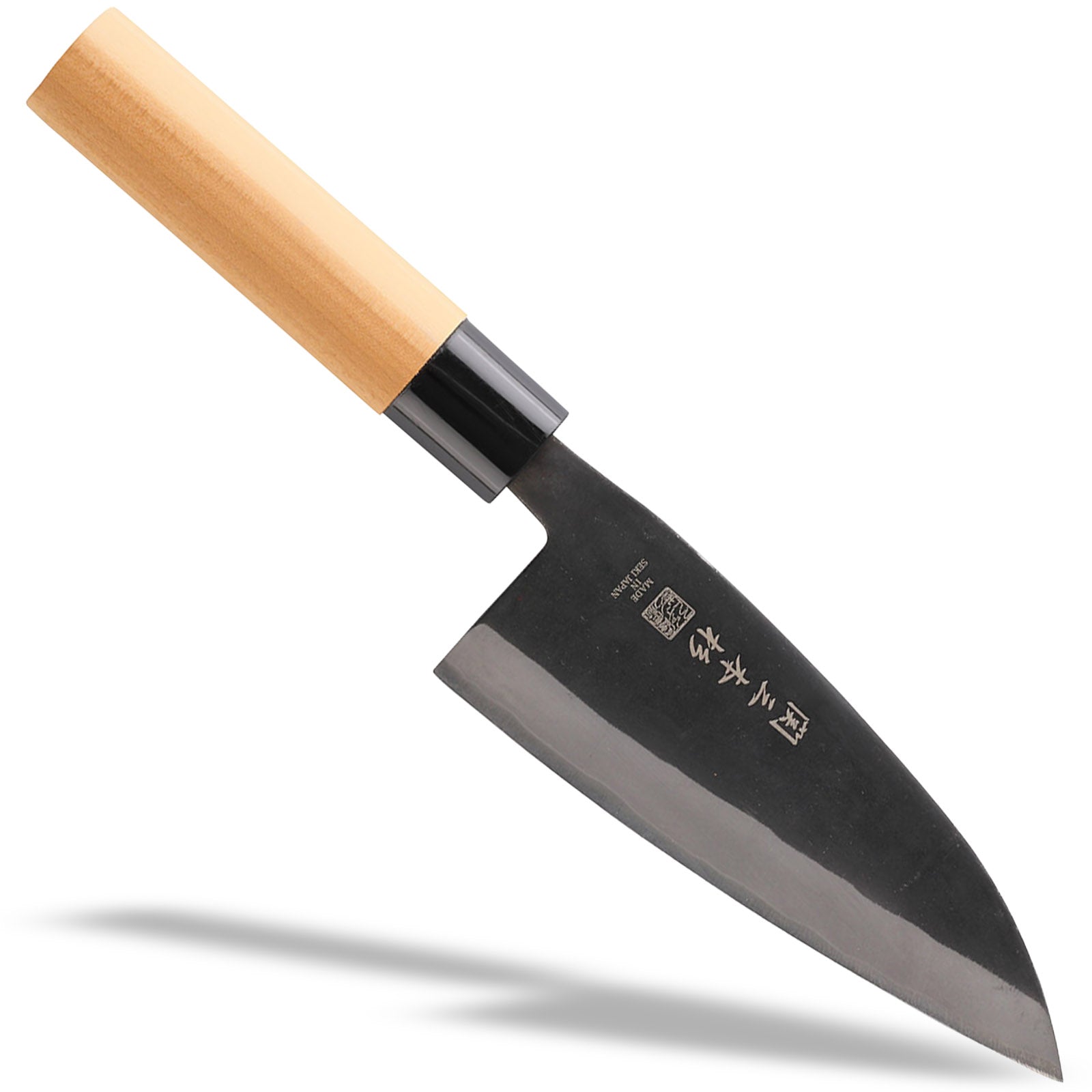

For everyday home cooking, a santoku knife is recommended, while a chef's knife is better if you want to expand your culinary repertoire.
If ease of use is your priority, choose a santoku knife; if you're looking for meat, large ingredients, or a more serious cooking style, choose a chef's knife. This approach will help you avoid regretting your first knife purchase.
For your first kitchen knife, a santoku knife is ideal. If you already own a santoku knife and want to upgrade, a chef's knife is the perfect choice.
Key points of this article
- As a recommendation for Japanese kitchen knives, we will clearly explain the differences between "gyuto" (chef's knife) and "santoku" (general-purpose knife) (shape, suitable ingredients, and ease of use) based on practical household usage scenarios.
- This article provides a detailed explanation of which knife—a chef's knife or a general-purpose knife—is recommended for different types of cooking styles, such as home cooking, living alone, cooking enthusiasts, and households that frequently prepare meat dishes.
- We offer suggestions on how to acquire a Japanese kitchen knife set that you won't regret, including not only how to choose the right knife, but also its size (blade length), ease of maintenance, and points to consider when replacing it.
Today's review: 3 key points
- As a general-purpose Japanese kitchen knife, the "Santoku" is a staple for home use, while the "Gyuto" is a chef's knife-type all-purpose knife that is strong for meat and large vegetables.
- If you're only choosing one knife for home use, a santoku knife is a good choice. If you want a second knife or want to expand your cooking repertoire, adding a chef's knife is recommended.
- A good guideline for blade length is 15-18cm for a santoku knife and 18-24cm for a chef's knife. The key to avoiding mistakes is choosing a knife that matches the size of your hands and the size of your kitchen.
Conclusion of this article
- For home use, the best order to acquire Japanese kitchen knives is to start with a santoku knife, and then a gyuto knife. This is the safest way to avoid making a mistake.
- The Santoku knife is a versatile kitchen knife suitable for home use, capable of handling vegetables, meat, and fish in a balanced way, and has a blade length of 15-18 cm, making it easy to handle.
- A chef's knife has a long, slender blade and is a versatile knife that excels at cutting large ingredients such as meat and cabbage with long strokes.
- The difference between a chef's knife and a santoku knife lies in the blade length, width, curvature, and the type of cutting they are best suited for. The key is to choose based on the ingredients you want to cut and your cooking style.
- For quick and easy everyday use, a santoku knife is the go-to knife, while for those who want to enjoy cooking and master meat dishes, a chef's knife is the go-to.
What are the differences between a chef's knife and a santoku knife? Let's start with the basic characteristics.
When deciding between a chef's knife (gyuto) and a santoku knife (santoku), the first step is to understand the differences in their shapes and the types of ingredients they are best suited for.
Both are "all-purpose knives," but the differences in blade length, width, and curvature significantly affect the types of dishes they are suited for and how they feel to use.
For example, a santoku knife is ideal for households that frequently chop vegetables, while a chef's knife is more suitable for those who often handle large cuts of meat or other large ingredients. Choosing a knife based on how you'll use it is the best way to avoid regrets.
Features of a Santoku knife and its advantages for home use
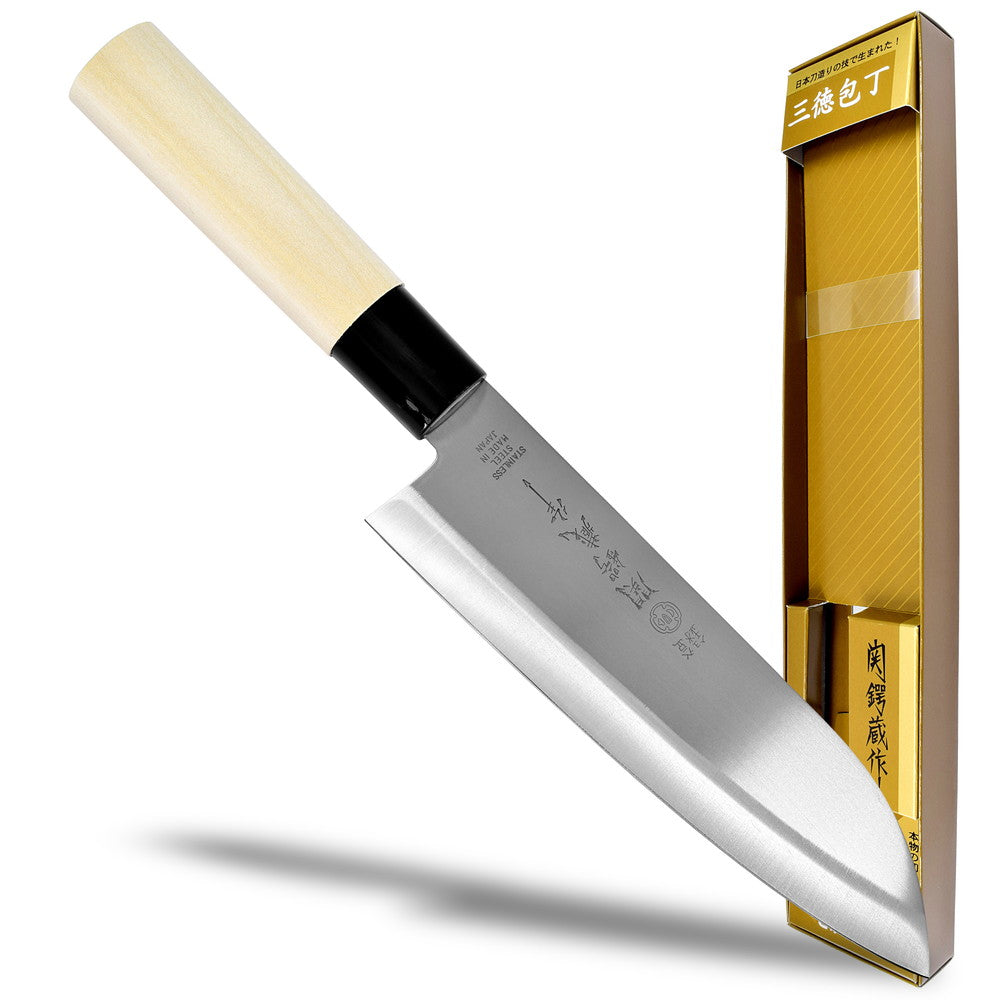
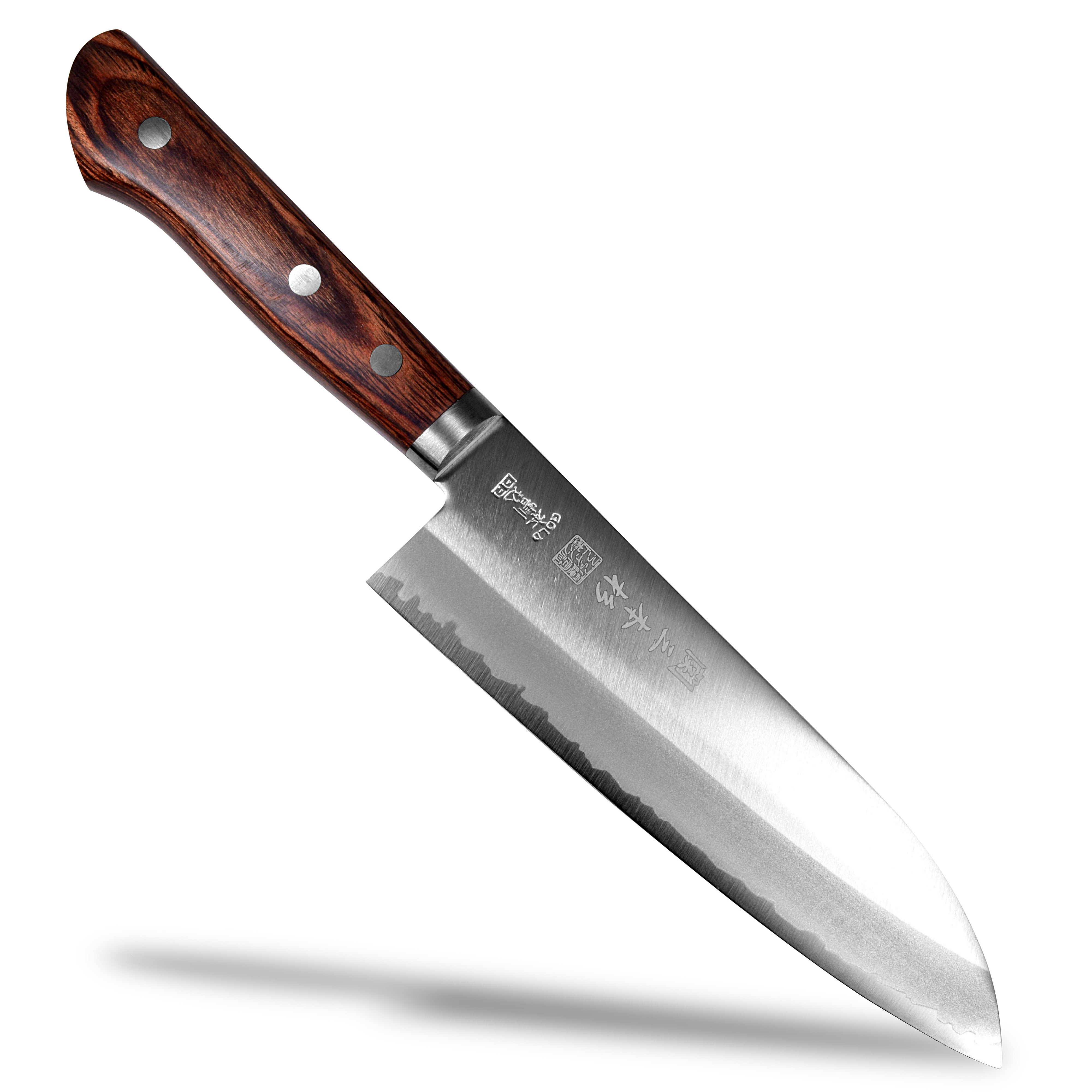
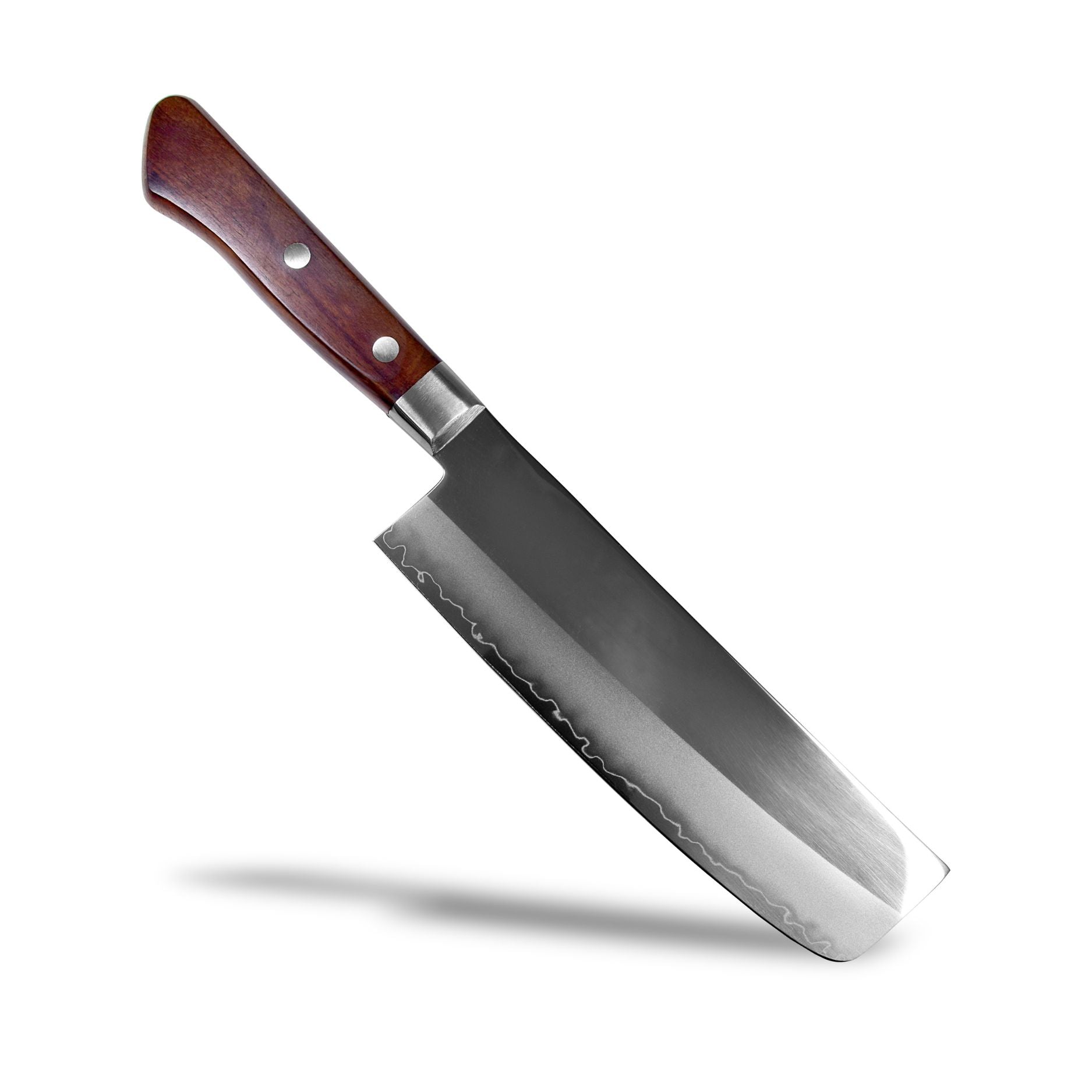
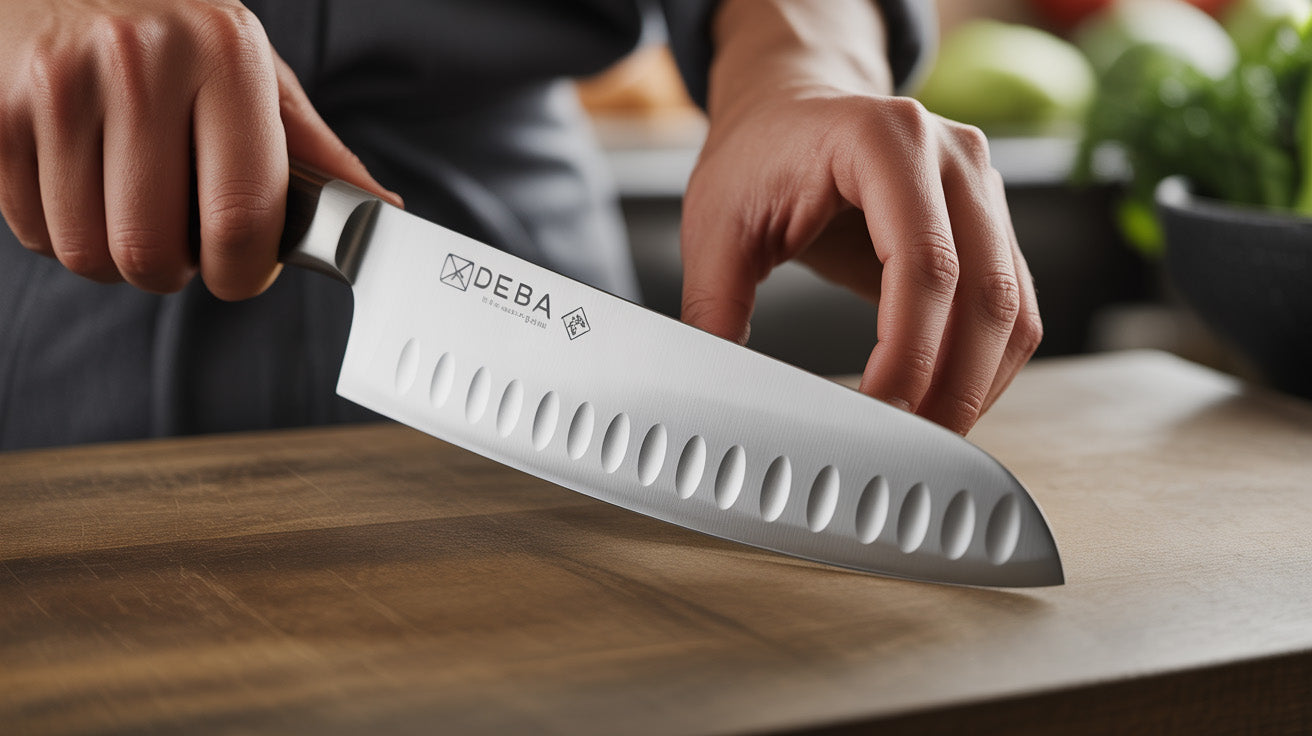
The Santoku knife is the most recommended Japanese knife for home cooking, as it's an all-rounder.
The Santoku knife combines the best features of a vegetable knife and a chef's knife, with a wide blade and a slightly rounded tip, designed to cut vegetables, meat, and fish in a balanced way.
With a blade length of around 15-18cm, it's relatively short, making it easy to maneuver and a good fit for chopping and standard household cutting board sizes, which is a big advantage for beginners and everyday cooking.
Characteristics of a chef's knife and suitable dishes
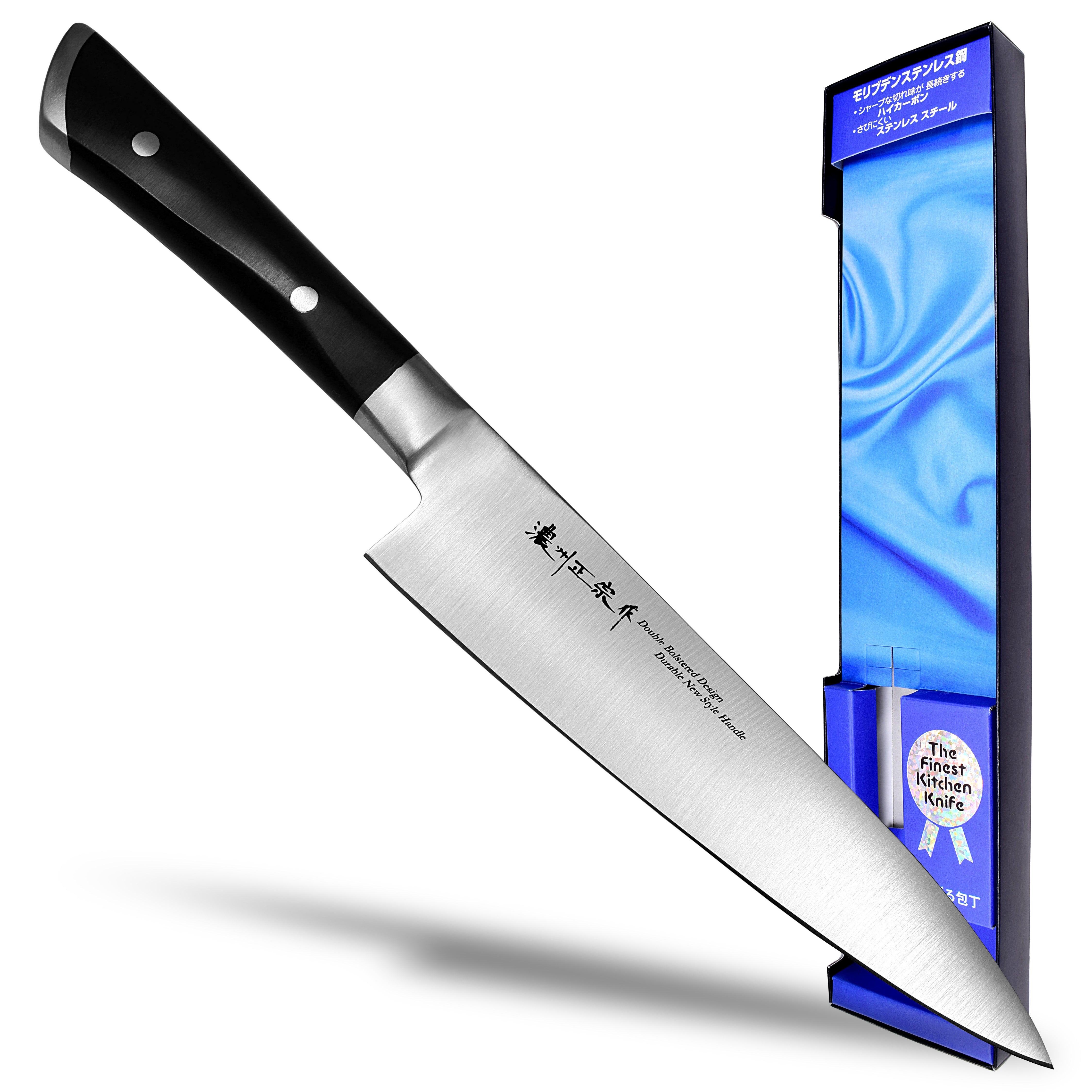
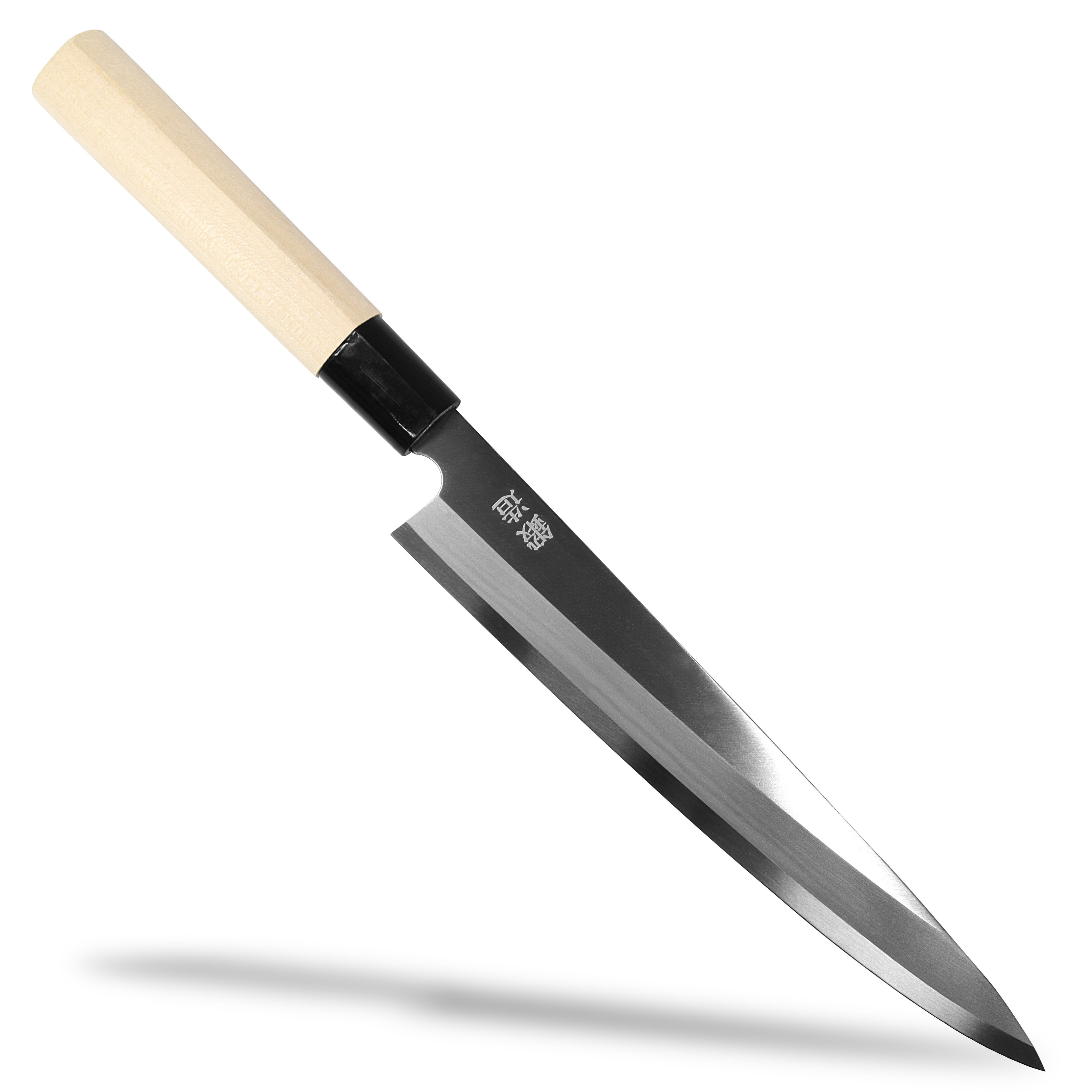
A chef's knife is a versatile knife, similar to a chef's knife, that is strong for meat and large ingredients.
It features a sharp point and a long blade that curves from the base to the tip. With a blade length of 18 to 27 cm, it excels at quickly slicing large pieces of meat or cabbage.
Often used as the main all-purpose knife in professional kitchens, this Japanese knife is especially recommended for households that frequently cook meat dishes, or for cooking enthusiasts who seek a satisfying cutting experience.
A table comparing the differences between a Santoku knife and a Gyuto knife.
The difference between a santoku knife and a chef's knife can be summarized in their length, width, and preferred cutting style.
| item | Santoku knife | Gyuto |
|---|---|---|
| Blade length guideline | Approximately 15-18cm | Approximately 18-24cm (~27cm) |
| Blade shape | Wide, with a slightly rounded tip. | Long and slender, with a sharp tip |
| Favorite ingredients | Vegetables in general / household ingredients | Meat, large vegetables, and large quantities of food |
| My favorite cutting technique | Cutting and choking straight down | Slicing by pulling back and forth |
| Recommended for home use | Perfect for your first bottle | Second attempt / Suitable for stepping up |
Understanding these differences and choosing a Japanese kitchen knife that suits your cooking style is key to long-term satisfaction and continued use.
Which is better for home cooking: a chef's knife or a santoku knife? How to choose based on type.
If your priority is "a knife that is easy to use at home," a santoku knife is recommended. If your priority is "versatility in cooking and cutting feel," then a chef's knife is recommended.
A santoku knife is short and maneuverable, making it easy for anyone to use, while a chef's knife requires a little more practice, but its long strokes allow you to cleanly cut even large ingredients.
The first thing beginners should keep in mind is to imagine "how often they cook, what dishes they are good at, and the size of their kitchen," and then choose a "realistic one" that suits their lifestyle.
What's recommended for average households and beginner cooks?
For the average home cook and beginners, a Santoku knife is the top recommendation.
The Santoku knife is designed to handle vegetables, meat, and fish all in one, and its shorter blade makes it easy to handle even in a small kitchen or on a small cutting board, making it less prone to mistakes.
For example, for those living alone or in a dual-income household who want to "quickly prepare meals every day," a santoku knife around 16-18 cm in length offers a good balance of cost-effectiveness and ease of use.
What are some recommendations for meat dishes, especially for those seeking a truly authentic experience?
For families that frequently cook meat dishes, or for those who enjoy cooking as a hobby, a chef's knife is recommended.
A chef's knife is a knife that allows you to easily and cleanly slice through blocks of meat, chunks of meat, and large vegetables such as cabbage and Chinese cabbage with long strokes, making it a knife that offers a more satisfying "cutting experience" than a santoku knife.
For example, for households that frequently handle meat for roast beef or steaks on weekends, or for cooking enthusiasts who prepare large quantities of meat, adding a 21cm class chef's knife to your collection can significantly improve work efficiency.
How to choose a chef's knife and a santoku knife? Recommended combinations
If you're going to buy two all-purpose knives, the best balance is a combination of a "santoku" knife and a "gyuto" knife.
- Santoku knife (16-18cm) + Gyuto knife (18-21cm): For general home cooking + meat dishes and large vegetables
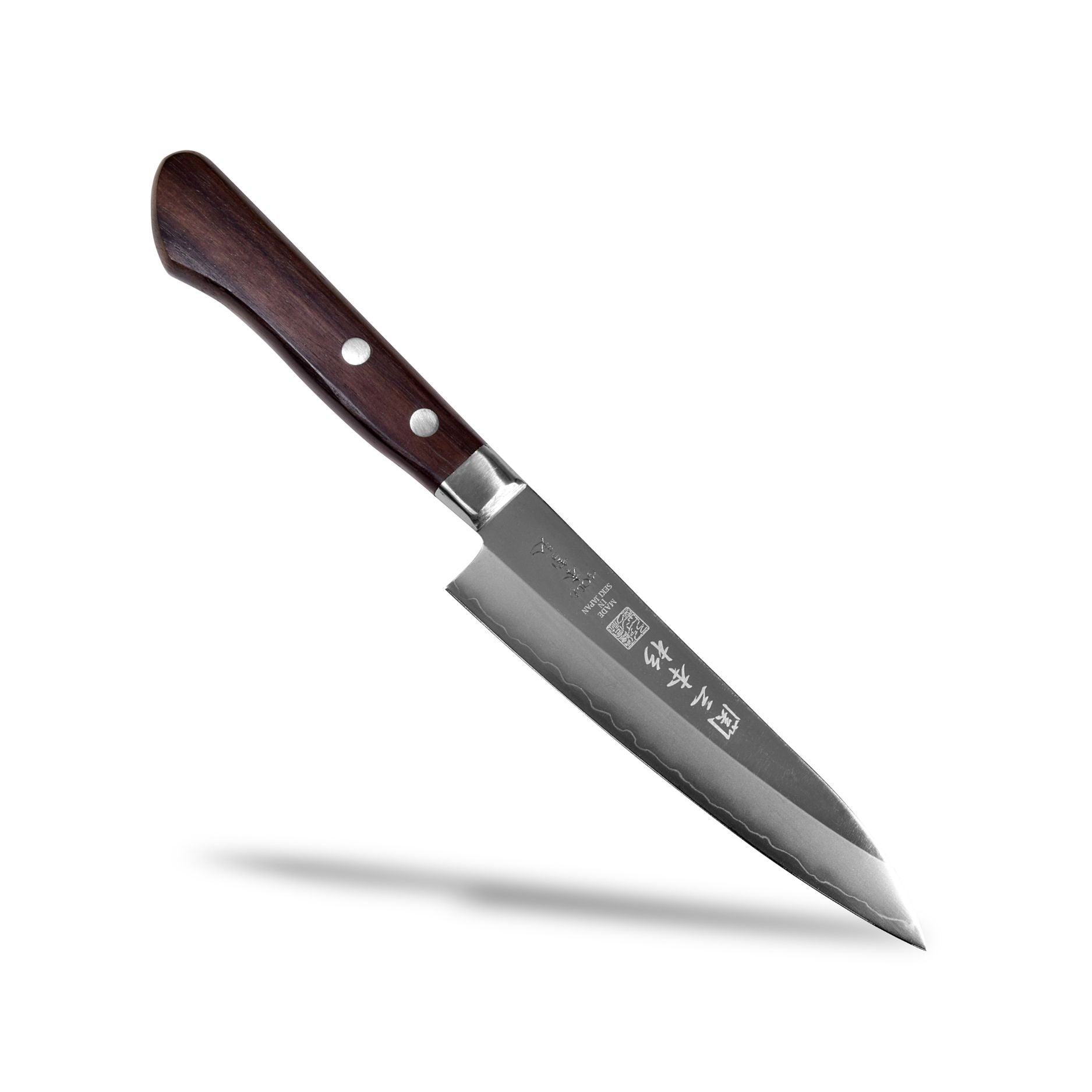
- Santoku + Petty (12-13cm) + Chef's Knife: Fully covers everything from everyday use and crafting to large-scale projects.
By dividing the roles in this way—"Santoku = for everyday use" and "Gyuto = for large quantities of food and special menus"—a recommended set of Japanese knives becomes a well-rounded and efficient combination.
FAQ
Q1. Which is better to buy as a first Japanese kitchen knife: a chef's knife or a santoku knife?
A1. For your first knife, we recommend a santoku knife, which is easy to handle. Its short, wide blade is compatible with home cutting boards, making it less likely for beginners to make mistakes.
Q2. What is the biggest difference between a chef's knife and a santoku knife?
A2. The biggest difference is the length and shape of the blade. A santoku knife is short and wide, while a gyuto knife is long, thin, and curved, making it ideal for cutting large ingredients and meat.
Q3. Is a chef's knife easy to use for home use?
A3. Even for home use, a chef's knife between 18 and 21 cm is easy to use and is especially suitable for households that frequently use large ingredients such as meat and cabbage.
Q4. Who would you recommend a Santoku knife to?
A4. The Santoku knife is ideal for those who want to handle all their daily home cooking with just one knife. It's a classic all-purpose knife that can handle vegetables, meat, and fish in a balanced way.
Q5. How do I choose the right size knife?
A5. As a general guideline, a santoku knife should be 15-18cm long, and a chef's knife 18-24cm long. The basic rule is to choose one that suits the size of your hand, the length of your cutting board, and the size of your kitchen.
Q6. Is there any advantage to buying both a chef's knife and a santoku knife?
A6. Having both knives allows you to use the santoku knife for everyday chopping and the chef's knife for larger ingredients and meat, increasing work efficiency and giving you more freedom in the finished product.
Q7. Which would you recommend for someone who loves cooking: a chef's knife or a santoku knife?
A7. For cooking enthusiasts, we recommend owning both a santoku knife and a chef's knife. The santoku knife is for everyday use, while the chef's knife allows you to enjoy the "fun of cutting" and expand your repertoire.
Q8. Can a chef's knife be used in a small kitchen?
A8. A chef's knife between 18 and 21 cm can be used even in a small kitchen, but be careful not to choose a size that is significantly longer than your cutting board, as it will be difficult to handle.
summary
- The recommended way to acquire Japanese kitchen knives is to start with a santoku knife as your first knife for home cooking, and then move on to a chef's knife as your second knife once you've become more comfortable with cooking.
- The difference between a santoku knife and a chef's knife is that a santoku knife is shorter, around 15-18 cm, and is a general-purpose kitchen knife, while a gyuto knife is 18-24 cm long and is a chef's knife type of general-purpose knife that is strong for meat and large vegetables.
- To choose a kitchen knife that's easy to use at home, the key to avoiding mistakes is to consider how often you cook, the types of dishes you specialize in, and the size of your kitchen. Then, choose based on the following criteria: "If ease of use is your priority, go for a santoku knife," or "If the enjoyment of cutting and meat dishes are your priority, go for a chef's knife."