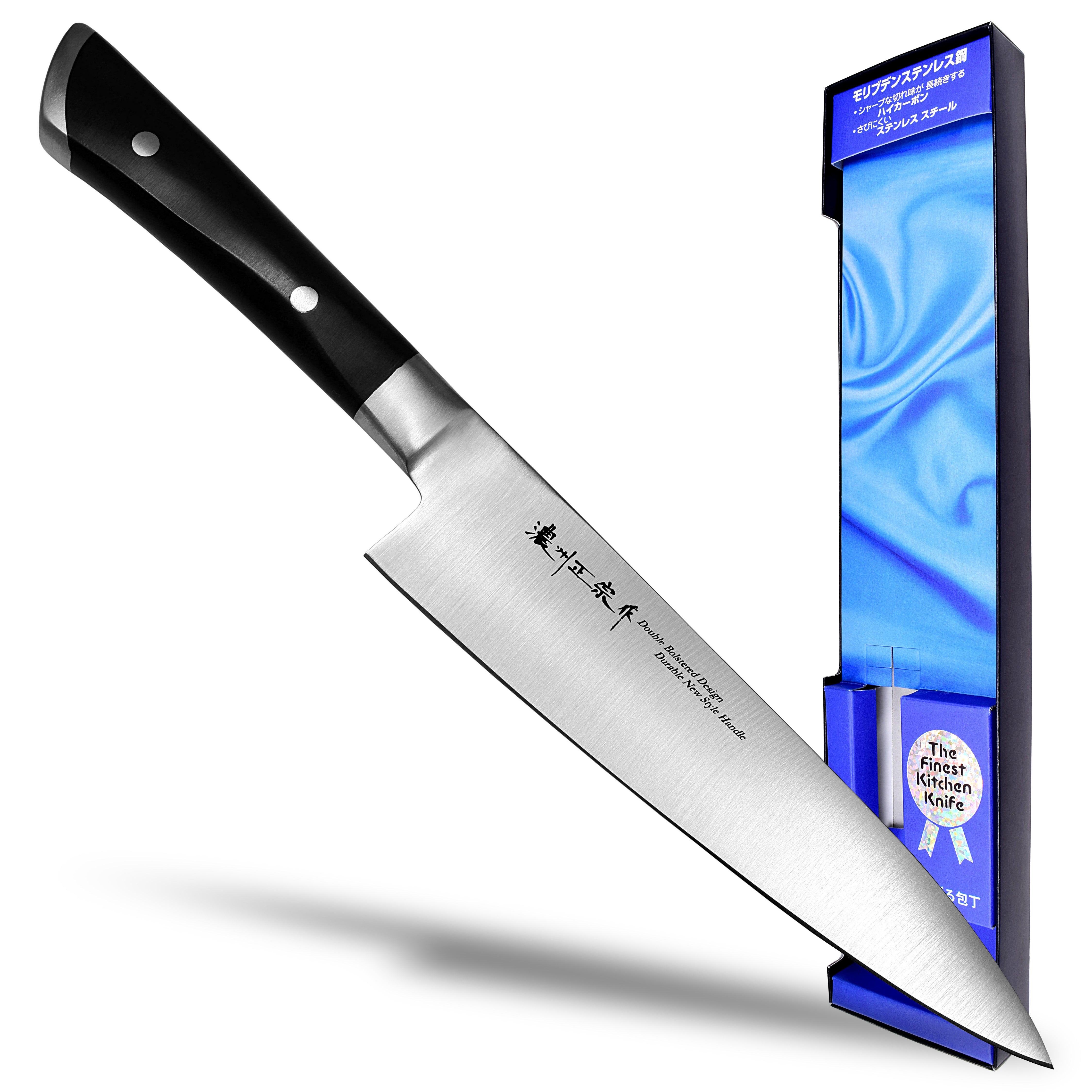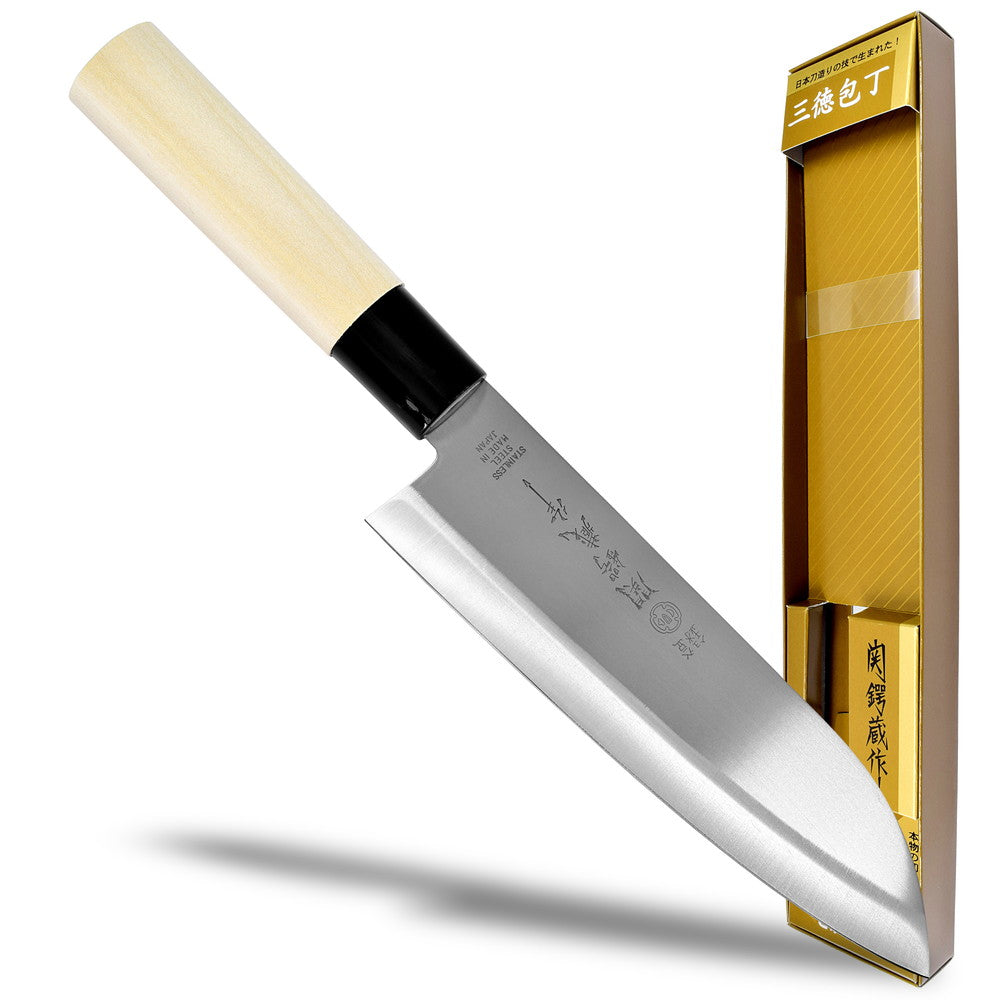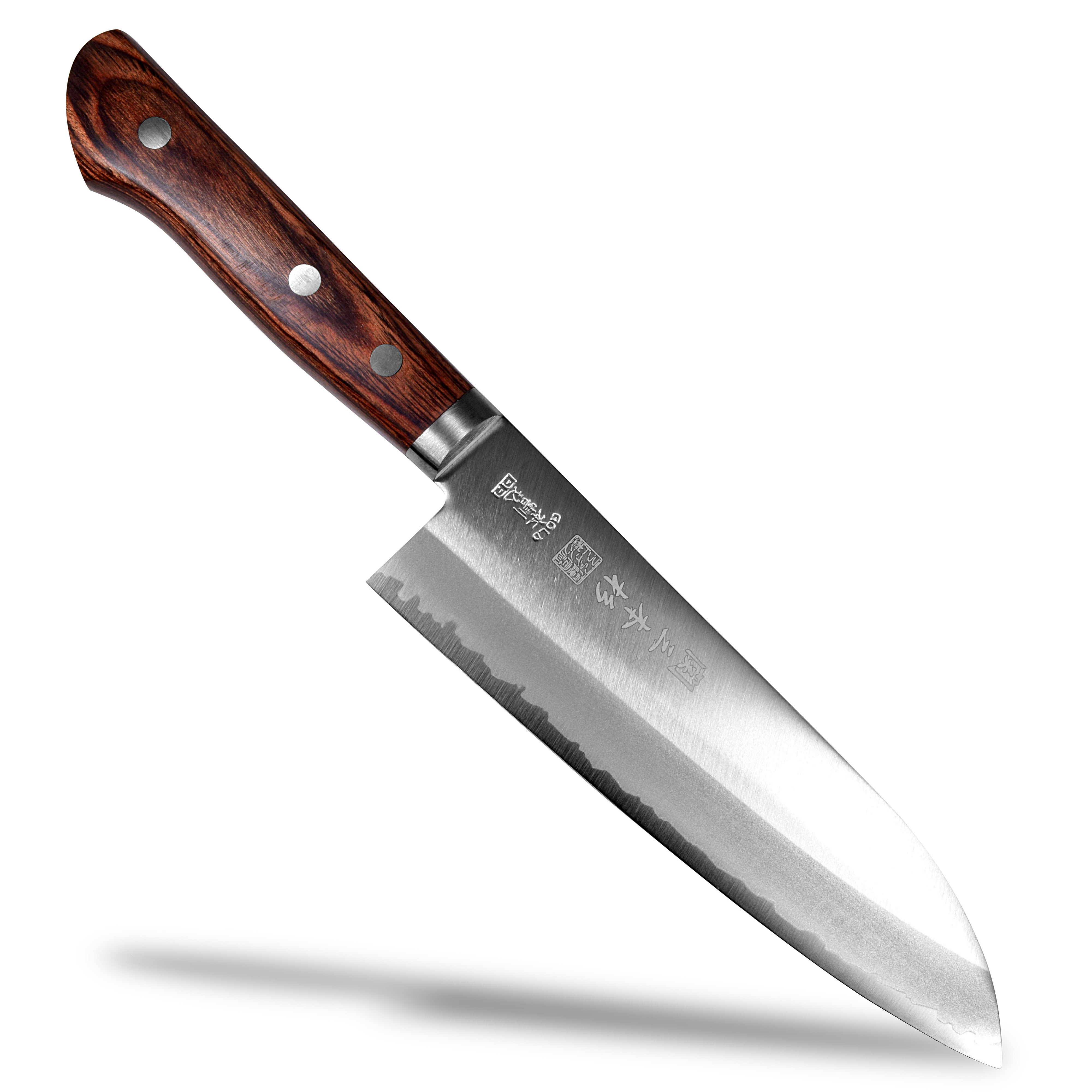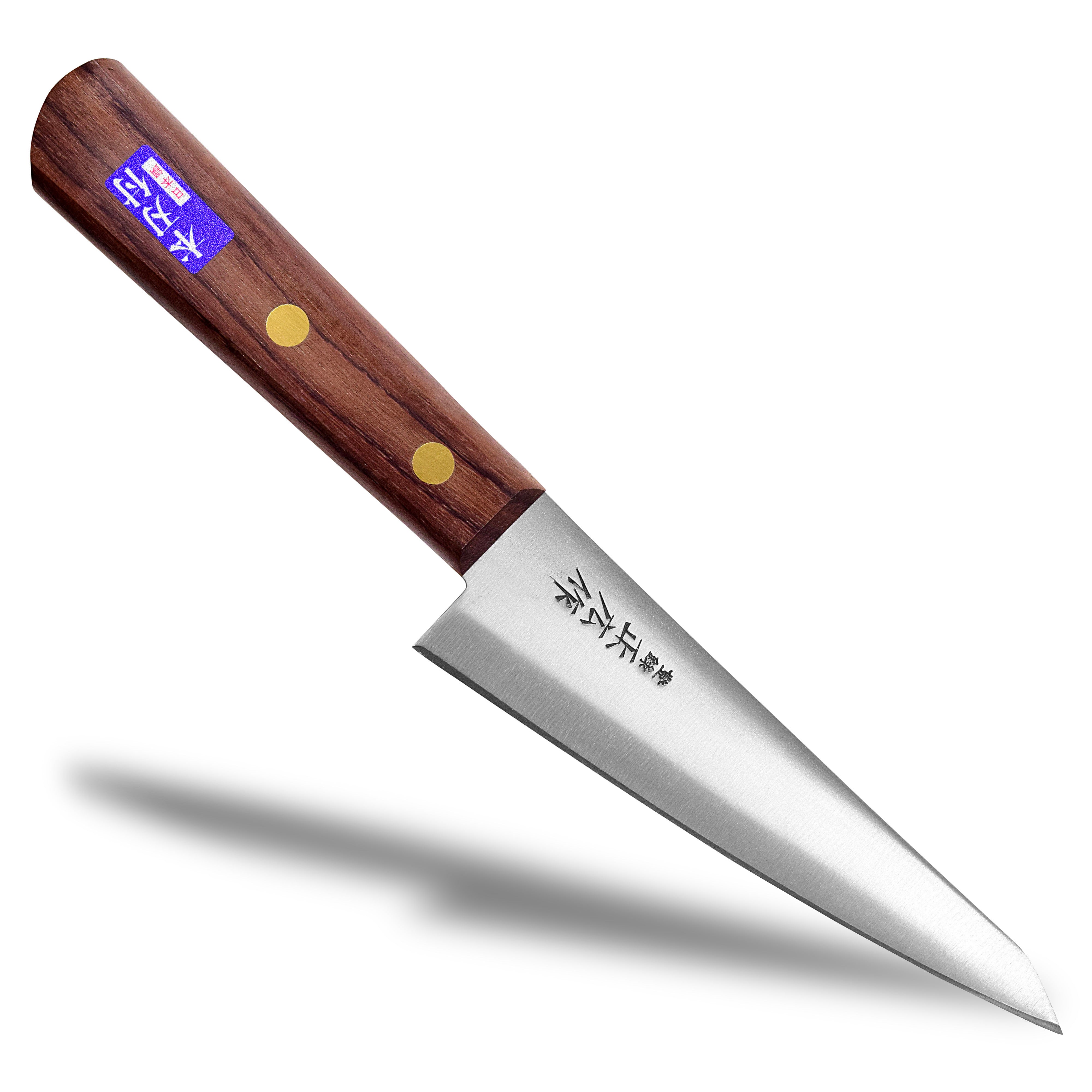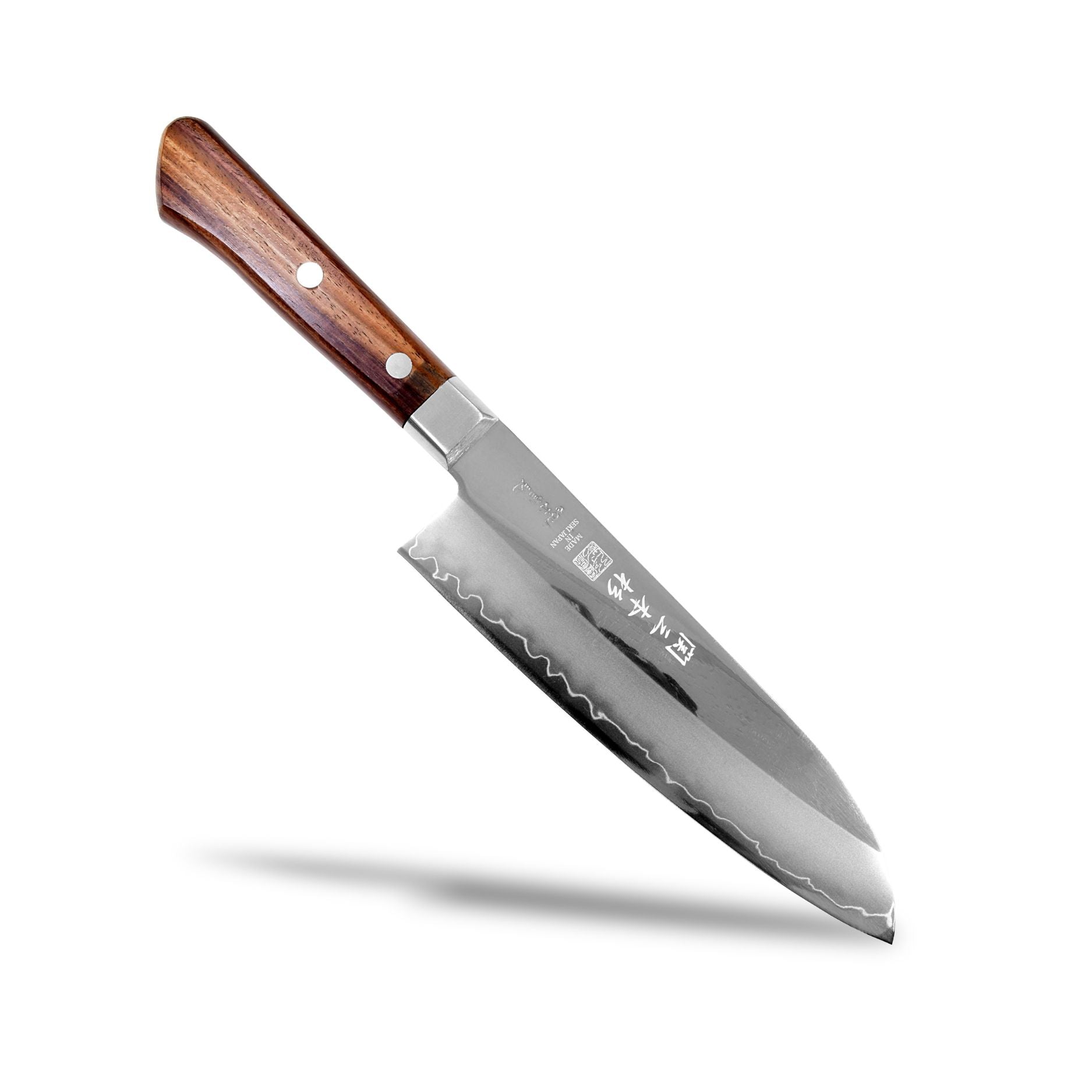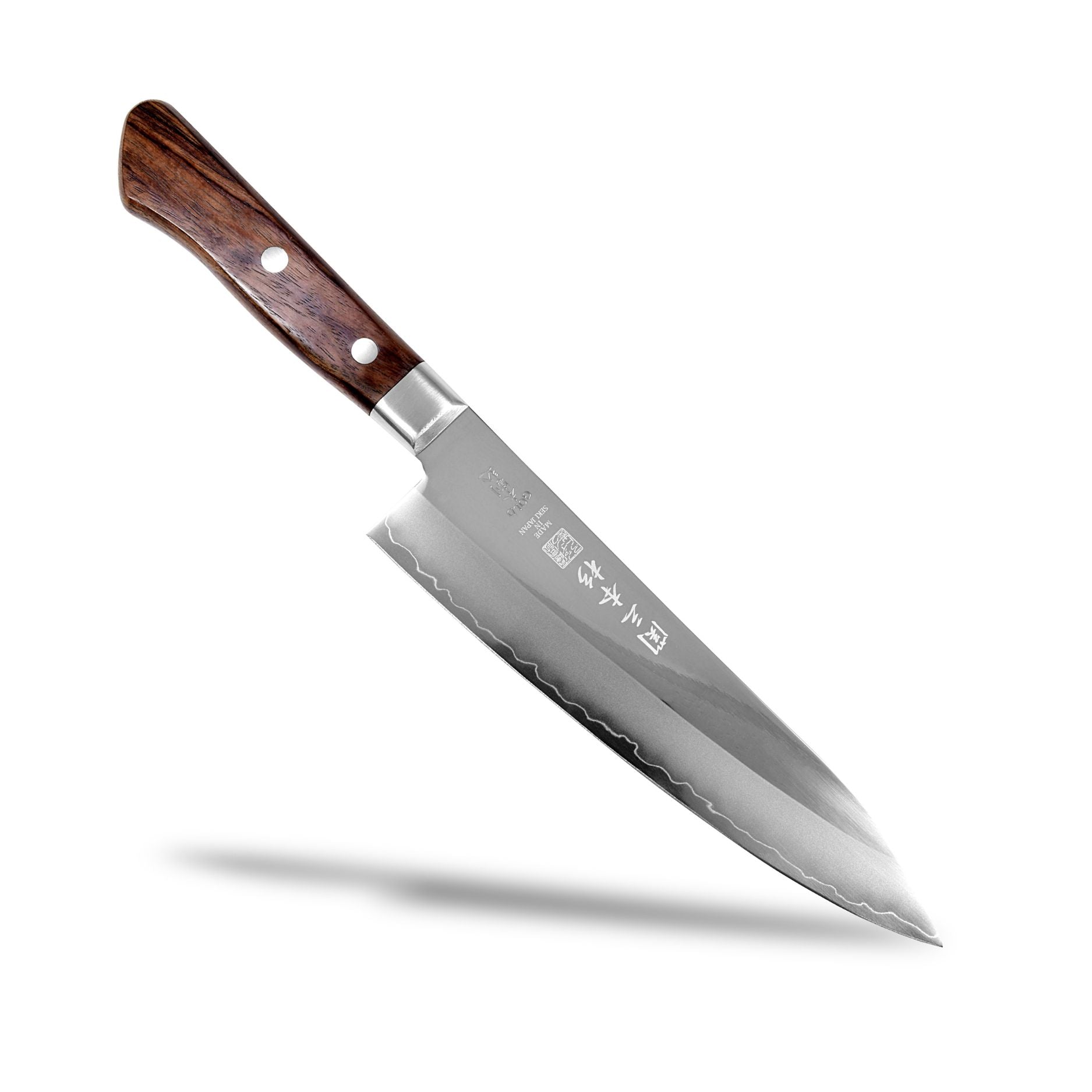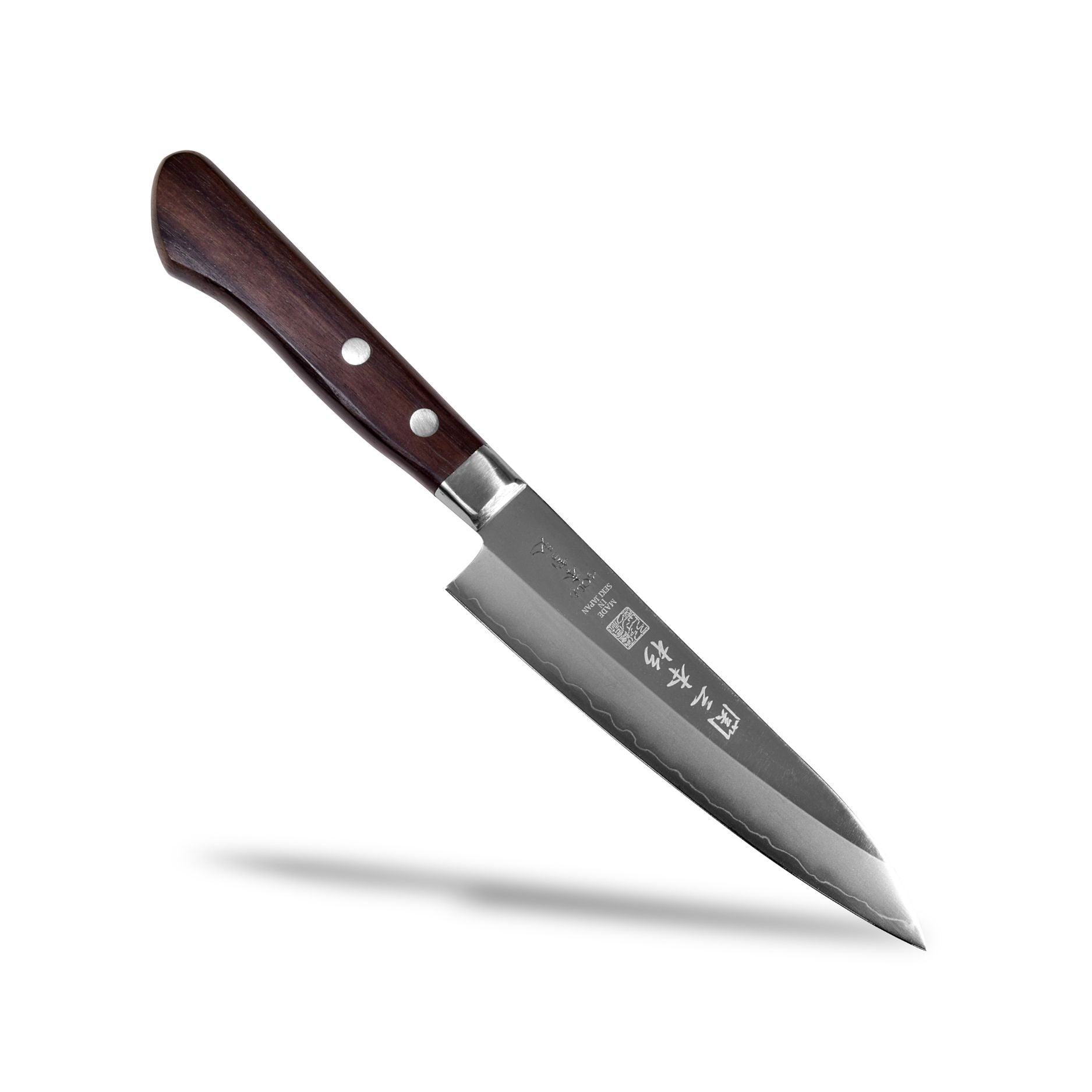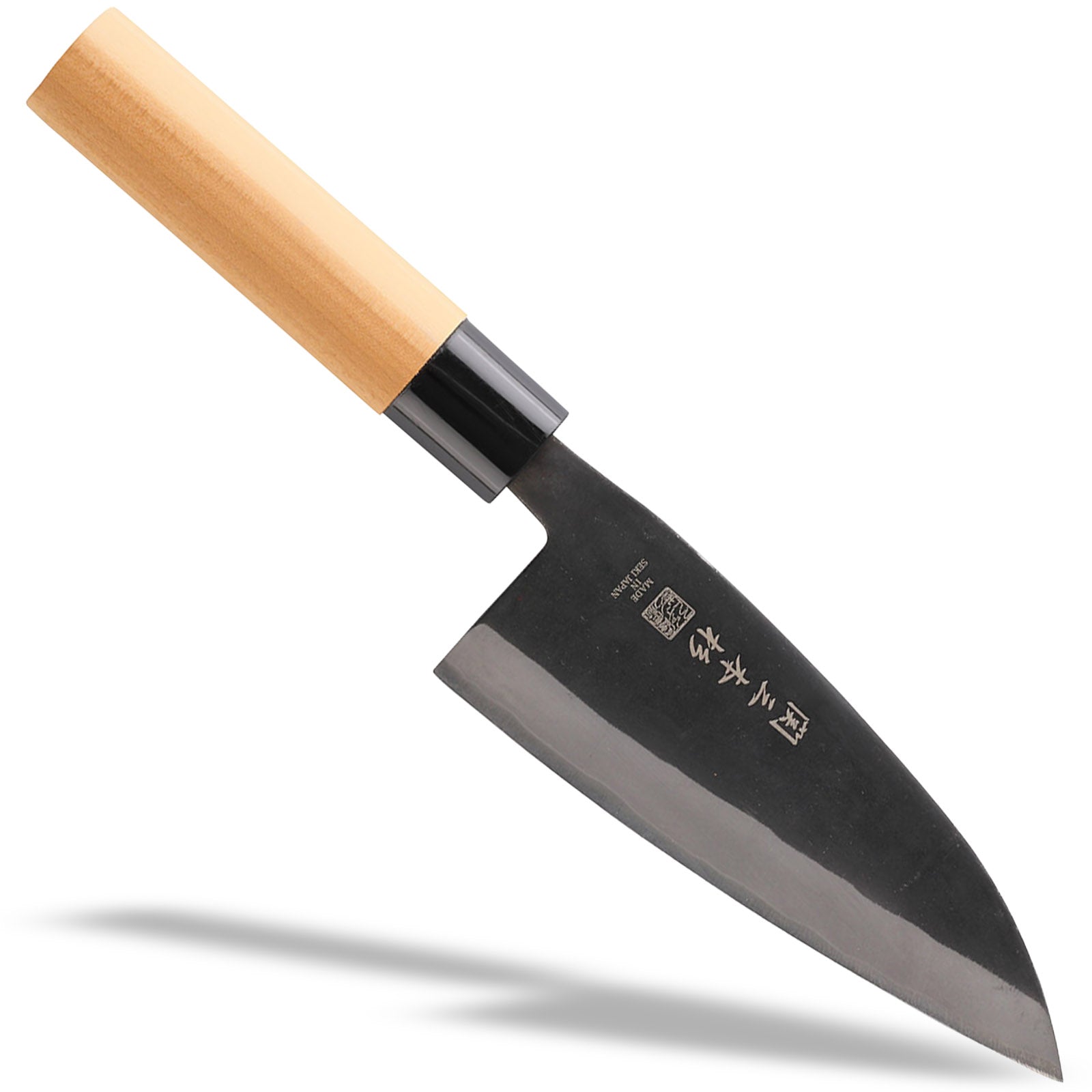

Japanese kitchen knives that make julienning and mincing easy: Types of vegetable knives, how to use them and instructions.
In conclusion, if you want to cut vegetables neatly and quickly, the quickest way is to choose a "nakiri knife" among the types of Japanese knives and master the basic usage and procedures that make the most of its straight blade. Just by understanding and using the "straight, thin blade x wide shape," julienning and mincing will be much easier than with a santoku knife.
[Key points of this article]
Today's review: 3 key points
- A nakiri knife is a Japanese knife specifically designed for vegetables, with a flat, square blade that is thin and wide, and is specialized for chopping, mincing, and julienning.
- Japanese kitchen knives, specifically vegetable knives, involve two basic movements: "up and down motions with the blade parallel to the cutting board" and "scooping and carrying with the wide blade."
- Most importantly, choose a vegetable knife with the right length and weight to suit your preferred vegetable cutting method (whether you mostly julienne or mince), and use it to its fullest potential as your daily vegetable chef.
Conclusion of this article
Conclusion of this article
- A nakiri knife is a Japanese knife specifically designed for vegetables, featuring a straight, wide blade that allows you to quickly and reliably slice cabbage or peel daikon radish.
- Japanese kitchen knives, specifically vegetable knives, involve simple movements: "placing the straight blade flat against the cutting board and tapping it up and down," and "using the wide blade to scoop up the chopped vegetables."
- The first things beginners should keep in mind are: "A vegetable knife is only for vegetables," "Don't try to force pumpkins or frozen foods into it," and "Be aware that it is longer and taller than a santoku knife."
- If you're only going to own one knife, choose a vegetable knife with a blade length of 165-180mm, a thin blade, and double-edged edges. This one knife will allow you to complete almost all of your home vegetable preparation tasks.
What kind of knife is a Japanese vegetable knife? How well does it work with vegetables?
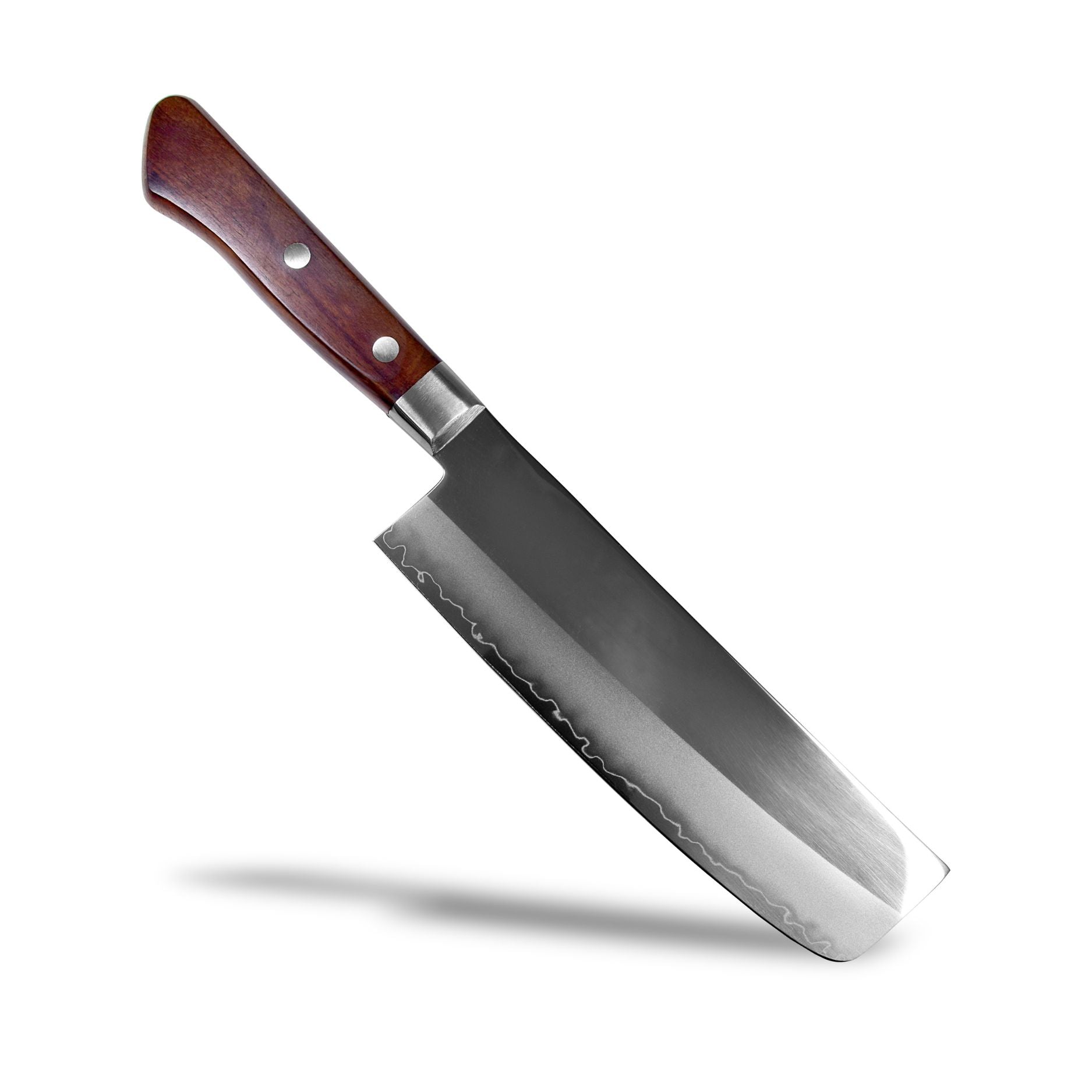
In conclusion, the nakiri knife is a type of Japanese knife "designed to cut vegetables straight, evenly, and with ease." Its thin, wide blade and flat, square tip allow the entire blade to easily make contact with the cutting board at once, making it ideally suited for chopping, mincing, and julienning vegetables. While the santoku knife is a "versatile knife for meat, fish, and vegetables," the nakiri knife, being specialized for vegetables, has a significant advantage in cutting feel and work speed. The nakiri knife is "a dedicated tool for vegetables."
Shape and structural features of a vegetable knife
In conclusion, the key features of a vegetable knife are a flat blade, a thin blade, and a wide blade. The straight blade makes it easy to hold parallel to the cutting board and allows for clean cuts to the end, preventing "connections" when slicing carrots and cucumbers into rounds or half-moons. The thin and wide blade makes it easy to cut large quantities of bulky vegetables like cabbage and Chinese cabbage at once, and a major feature is that it makes it easy to scoop up the cut vegetables with the blade and transfer them to a pot or bowl. In addition, the thin blade design is said to be less likely to crush vegetable cells, resulting in a cleaner cut surface.
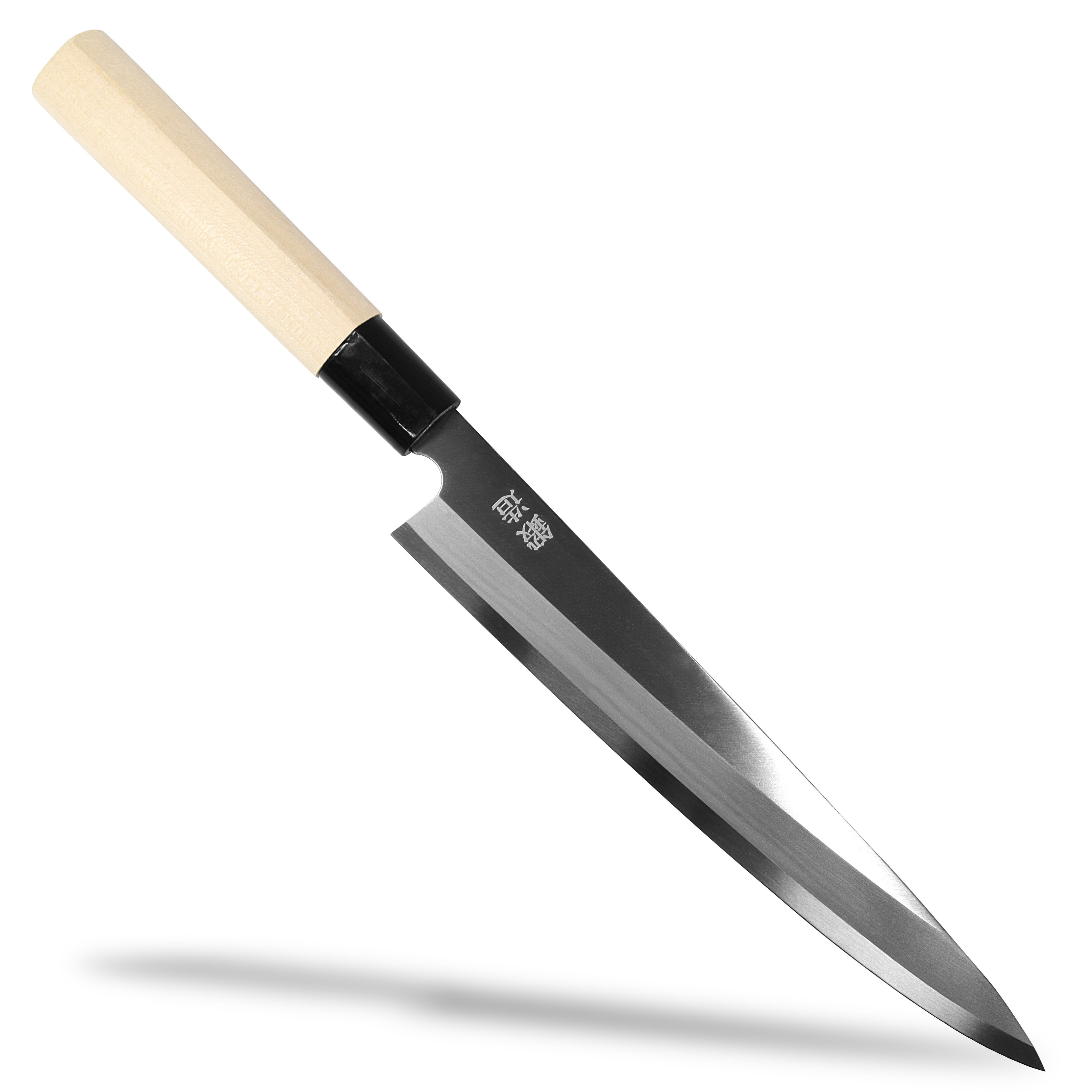
What are the differences between a Santoku knife and a regular knife, and who is it suitable for?
"Santoku = good at everything, Nakiri = specializes in vegetables." A santoku knife has a slightly rounded blade and is a versatile knife that can handle a wide range of meat, fish, and vegetables. However, when julienning or peeling vegetables, the curved blade reduces the contact area with the cutting board. A nakiri knife has a flat blade, making it easier to perform tasks that require "keeping the blade in contact with the cutting board," such as julienning cabbage, peeling daikon radish, or making accordion cuts on cucumbers. It is therefore more suitable for households that handle a lot of vegetables. A nakiri knife is especially recommended for those who cook vegetable-centered meals, those who prepare large quantities of food, and those who want to reduce the number of times they swing their knife.
The advantages and disadvantages of a vegetable knife that beginners should be aware of.
The most important thing to understand is that "it's incredibly strong for vegetables, but it's not an all-rounder." Its advantages include uniform cuts thanks to its straight blade, stability and ease of scooping due to its wide blade, and a light cutting feel due to its thin blade. On the other hand, it's not suitable for tasks like cutting bones in meat or removing fish heads, and excessive prying or chopping can cause chipping of the blade, so it needs to be used in conjunction with other knives such as a santoku knife or deba knife. The first thing beginners should understand is the distinction between "nakiri = vegetables only" and "leave hard things to other knives."
What are the basics of using a Japanese vegetable knife (nakiri knife) for various types of knives?
In conclusion, the basics of using a vegetable knife are to remember to "hold the blade parallel to the cutting board and move it up and down" and "use the wide blade to chop and scoop." Vegetable knives are ideal for chopping, mincing, and julienning, and it is recommended to hold the blade at an angle close to parallel to the cutting board, rather than perpendicular, and move it up and down in a tapping motion. You can efficiently chop most vegetables, from leafy vegetables such as cabbage, Chinese cabbage, and spinach, to root vegetables such as radishes and carrots, and even herbs such as green onions and chives, with a "straight drop" motion. "Dropping cuts" are more important than "pushing cuts" when it comes to using a vegetable knife.
Basic chopping procedure (cucumber, radish, etc.)
In conclusion, chopping simply involves "keeping the blade stable and moving it straight up and down." The procedure is as follows:
- Trim the edges of the vegetables slightly to create a flat surface and prevent them from rolling around.
- Place that side down on the cutting board, and hold it down with your left hand in a "cat's paw" position.
- Lightly place the entire length of the vegetable knife blade, from tip to base, on the cutting board, and drop it straight down from top to bottom.
At this time, there is no need to pull or push the blade back and forth in large motions; the key is to use the entire straight blade to cut in a steady "tap-tap" rhythm. For cylindrical vegetables such as cucumbers, carrots, and radishes, first cut them in half lengthwise to create a flat surface, which prevents them from rolling and allows you to safely chop them into chunks.
Tips for making julienning and mincing smoother
The key to using a vegetable knife is to thoroughly slice the vegetables thinly and then chop them evenly. For shredded cabbage, follow these steps:
- Cut off the core to create a flat surface.
- Stack the leaves and thinly slice them from the end with a vegetable knife.
- Keep the blade in place on the cutting board and chop it finely in a rhythmic manner.
To finely chop an onion, cut it in half, leaving the root intact, then make several cuts along the fibers, then several horizontal cuts, and finally chop it from above, using the straight blade of the knife. The wide blade of a vegetable knife is also convenient for scooping up and moving the chopped vegetables, reducing the need to go back and forth on the cutting board multiple times.
Points to note when cutting hard vegetables and ingredients
The most important thing is to "avoid forcing or hitting" the vegetable. When cutting hard vegetables like pumpkins, avoid the hardest parts such as the stem, lightly insert the blade near the base into the food, place a cloth on the spine, and press down with your palm to cut. This distributes the load across the entire blade, allowing for safe cutting. However, if it's still difficult, it may be necessary to use a santoku knife or deba knife instead. Avoid using a vegetable knife on frozen foods or meat with bones, as forcing it can cause chipping or breakage.
FAQ
Q1. When is a vegetable knife used?
A1. This is a Japanese-style knife specifically designed for vegetables, allowing you to efficiently cut root vegetables and leafy greens, including dicing, chopping, and julienning.
Q2. What is the biggest difference between a santoku knife and a nakiri knife?
A2. The difference is that a Santoku knife has a rounded blade and is versatile for meat, fish, and vegetables, while a Nakiri knife has a flat blade and is specialized for vegetables, especially for julienning and thinly slicing.
Q3. Is it okay to use only a vegetable knife to cut meat and fish as well?
A3. It's possible to slice thinly, but it's not suitable for hard parts like bone-in meat or fish heads. Using a deba or santoku knife is gentler on the blade and safer.
Q4. What is the standard blade length for a vegetable knife?
A4. For home use, 165-180mm is common, and a size that is the same as or slightly longer than a santoku knife is considered easy to handle.
Q5. What are some tips for successfully shredding cabbage with a vegetable knife?
A5. Remove the core to create a flat surface, stack the leaves and thinly slice them from the edge, then hold the blade parallel to the cutting board and chop them with a steady, rhythmic tapping motion.
Q6. Which is better for beginners: a single-edged or double-edged vegetable knife?
A6. A double-edged vegetable knife, which makes it easy to cut straight with either hand, is recommended for beginners and is considered easy to handle for home use.
Q7. What are the advantages and disadvantages of a vegetable knife?
A7. The advantages are that it makes cutting vegetables easier and increases work efficiency, while the disadvantages are that it's not suitable for meat or ingredients with bones, and it adds to the number of knives for those who don't want to increase the number of knives they own.
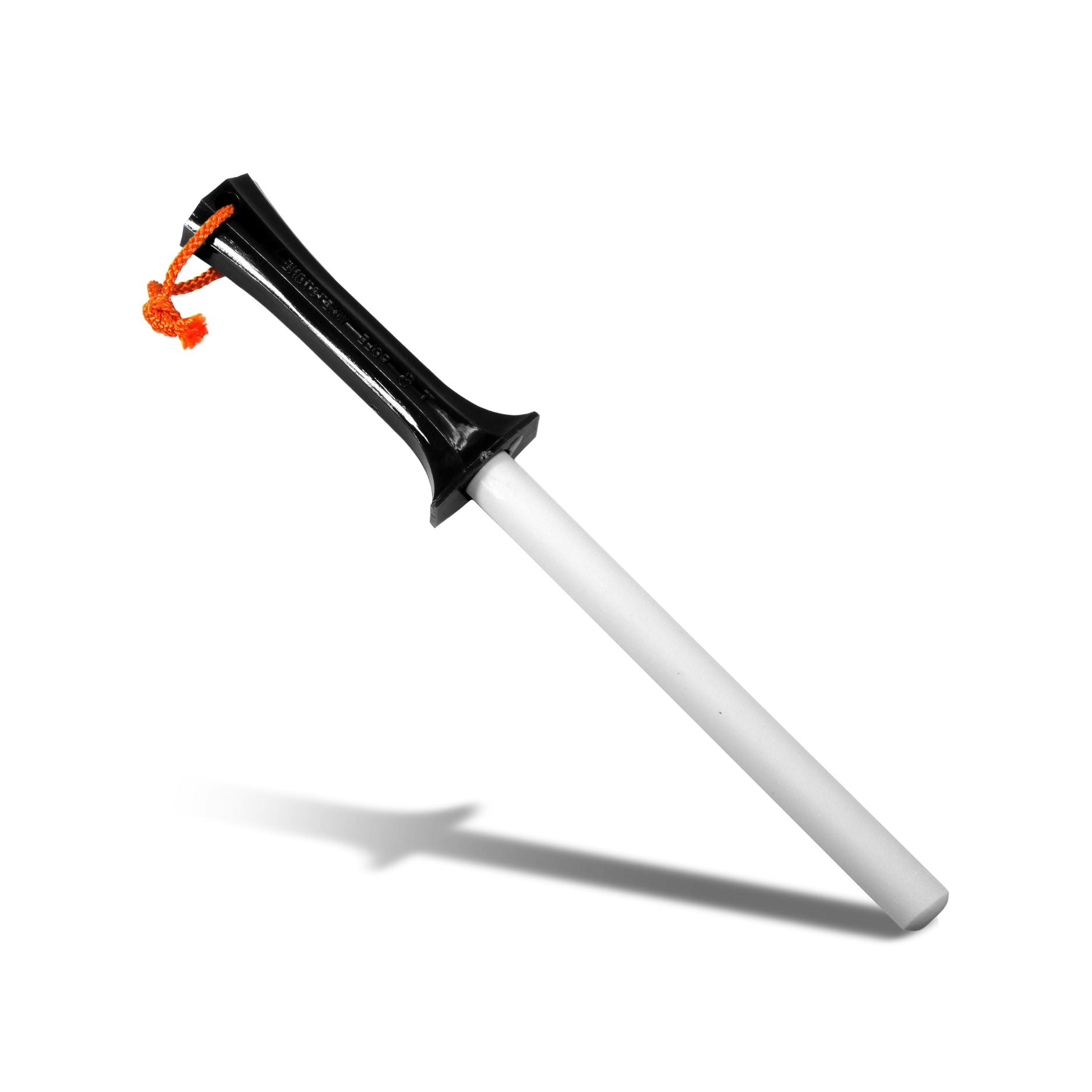
Q8. How do you care for and sharpen a vegetable knife compared to a regular kitchen knife?
A8. The basic principle is the same: sharpen the entire blade evenly with a medium grit whetstone (around 1000 grit), paying attention to the angle and contact surface so that the cutting edge is straight.
Q9. When choosing a vegetable knife, what should be the most important factor in terms of material (steel)?
A9. If rust resistance is your priority, stainless steel is suitable; if sharpness and ease of sharpening are your priorities, carbon steel is better; and if you cut a lot of vegetables every day, the durability of the sharpness is also important.
Q10. If I have a vegetable knife, will I no longer need a general-purpose knife?
A10. If you mainly use vegetables, a vegetable knife will be your main tool, but if you also handle meat and fish, using a santoku or chef's knife in conjunction with it is more practical, and a two-knife setup is the most convenient configuration.
summary
- Among the various types of Japanese kitchen knives, the nakiri knife is a "vegetable-specialized" knife with a thin, wide, flat blade, designed for efficiently and beautifully cutting all kinds of vegetables, including chopping, mincing, julienning, and peeling.
- The key to using a Japanese vegetable knife (nakiri knife) for vegetables is to combine the basic motion of holding the blade parallel to the cutting board and moving it up and down with the technique of scooping and carrying vegetables using the wide blade.
- In conclusion, if you want to make vegetable preparation more comfortable, the most practical approach is to have a 165-180mm vegetable knife specifically for vegetables, using other knives for harder ingredients, and mastering both julienning and mincing with this one knife.