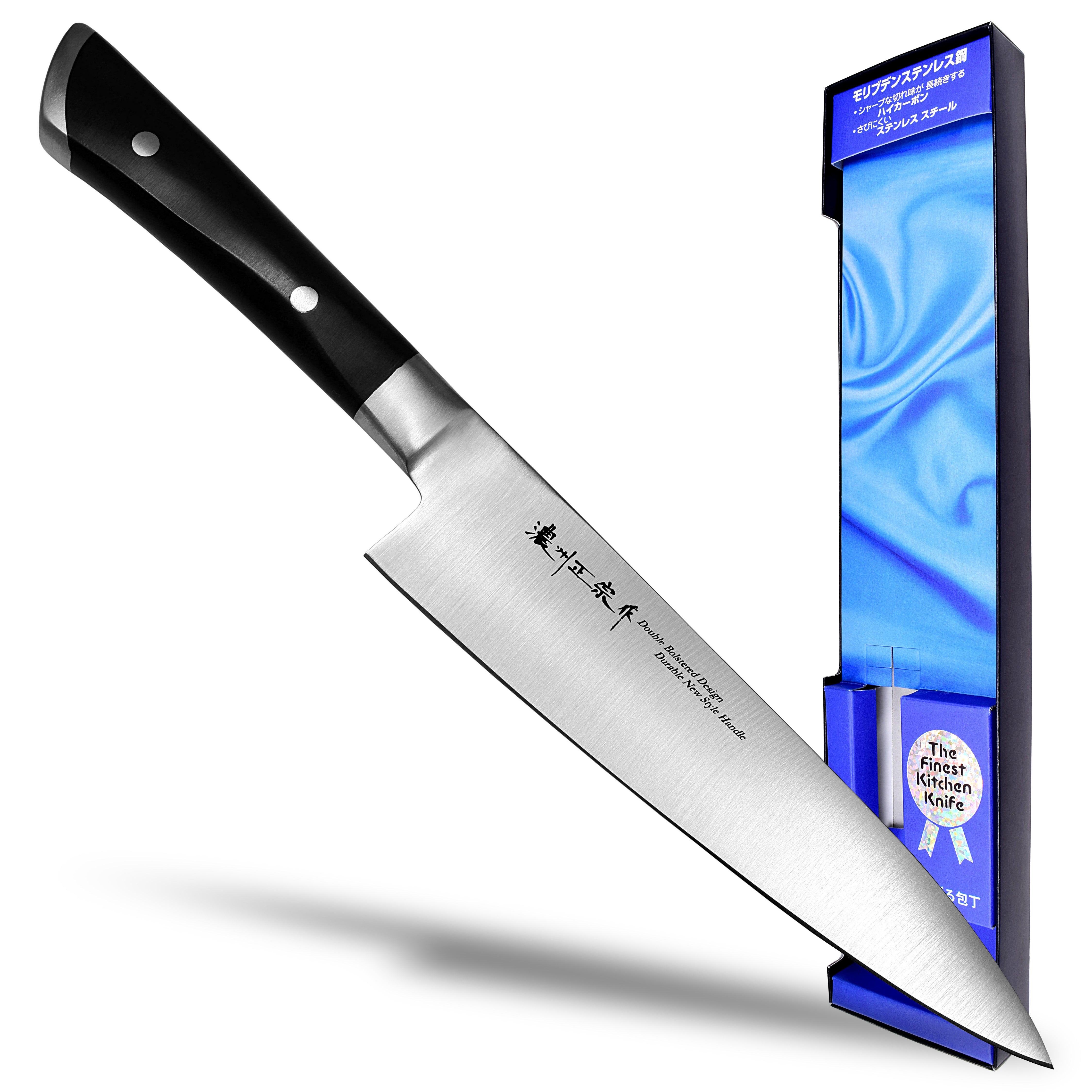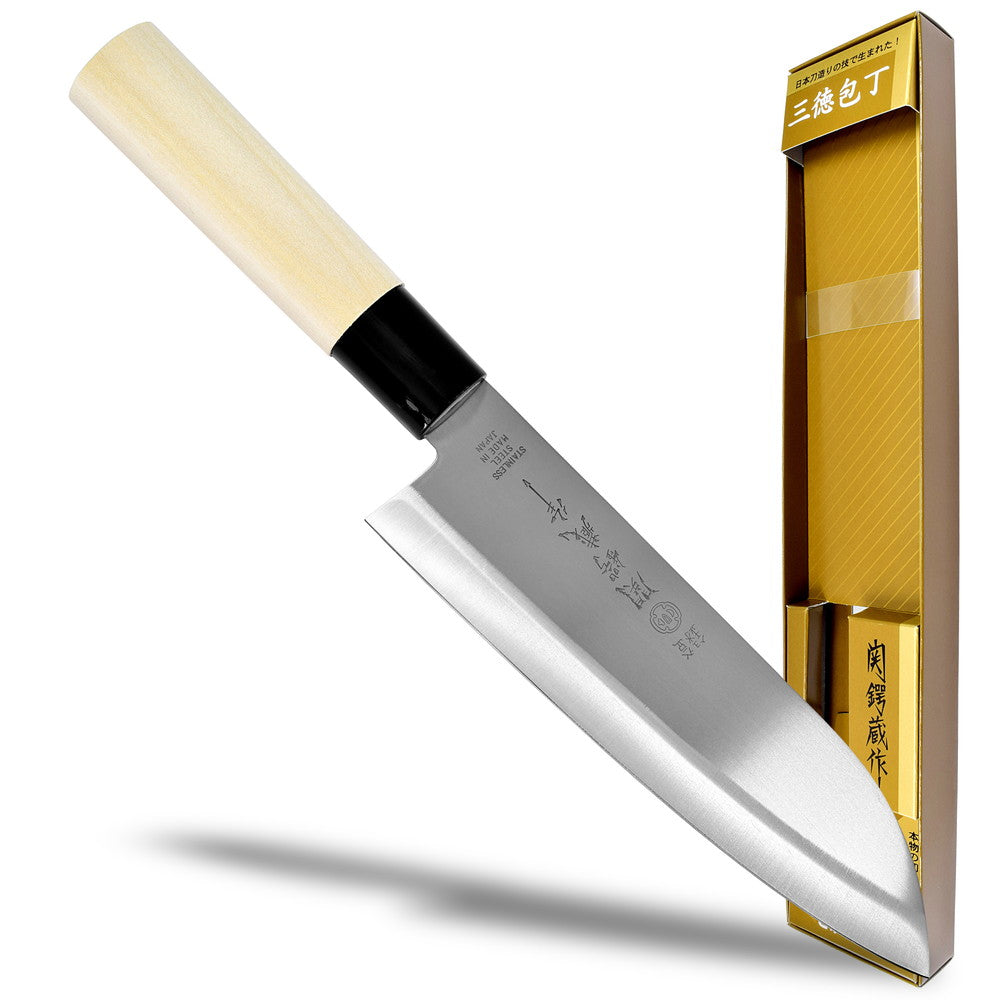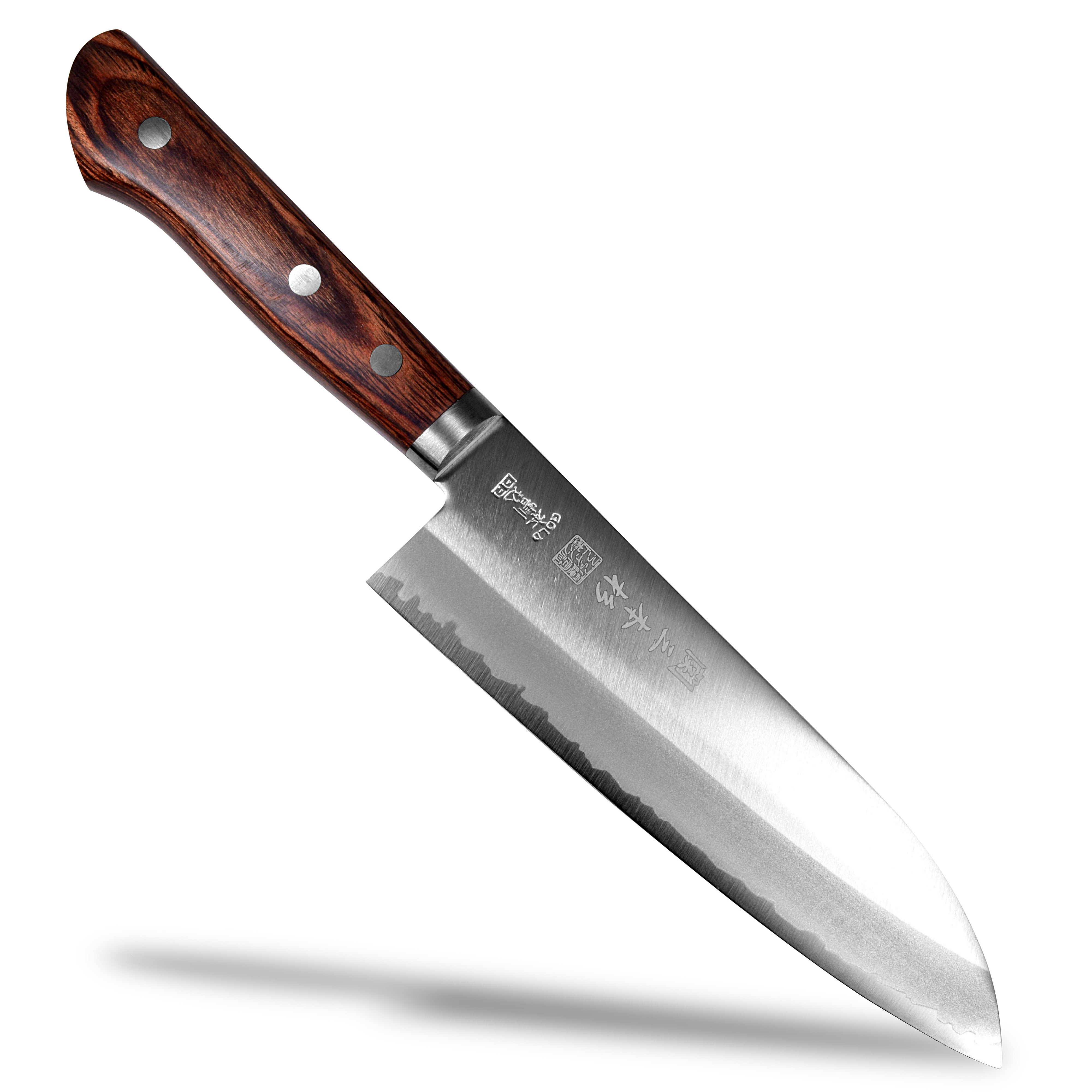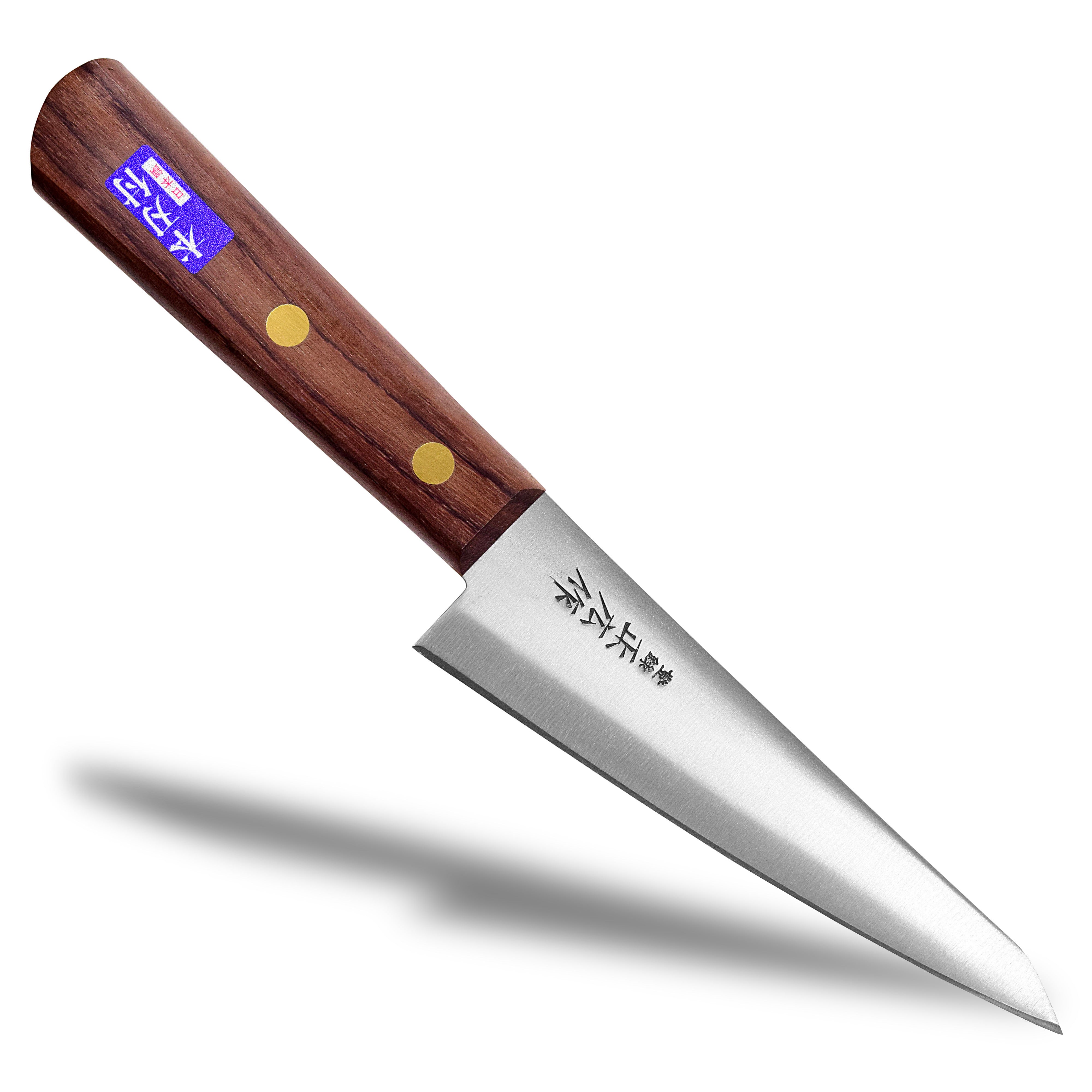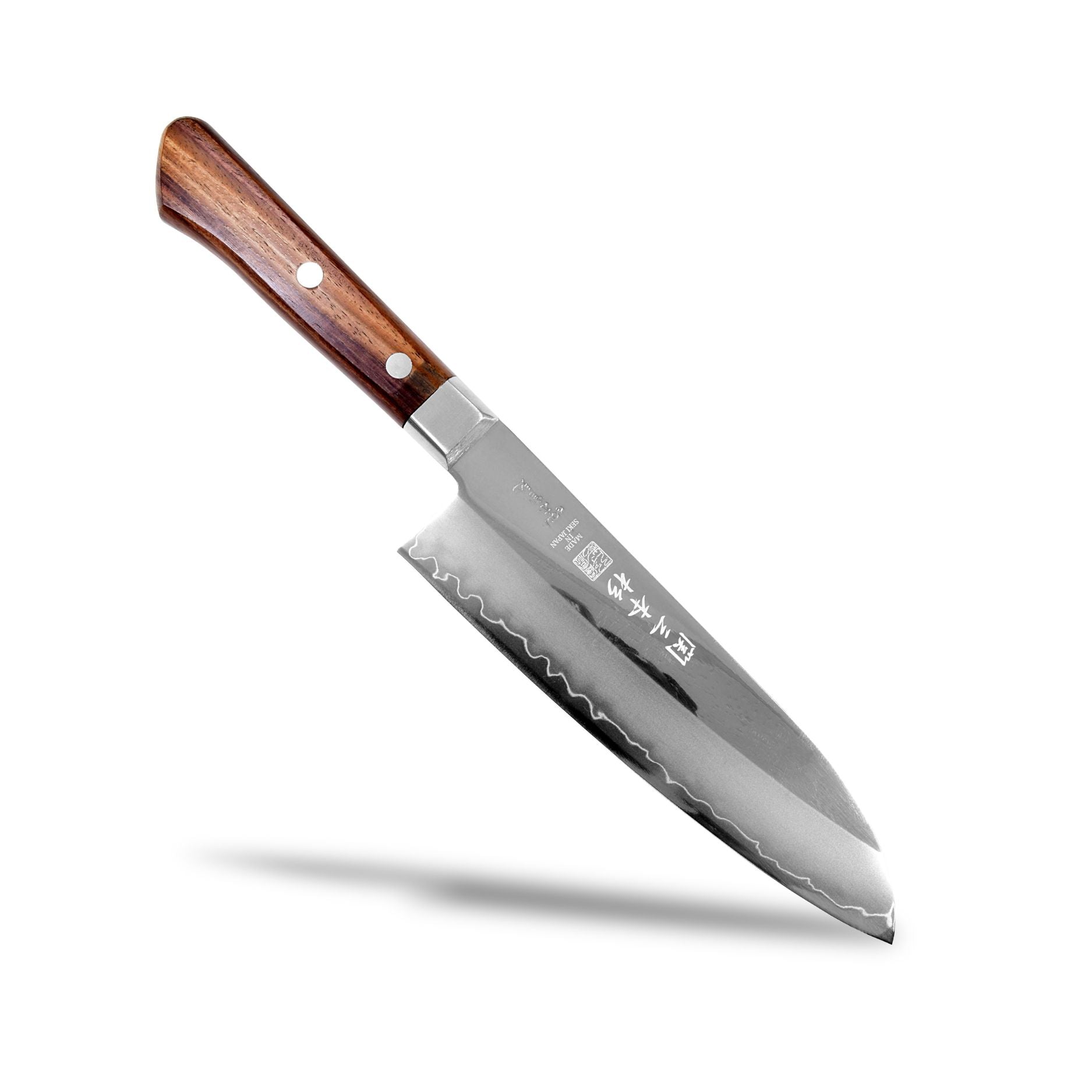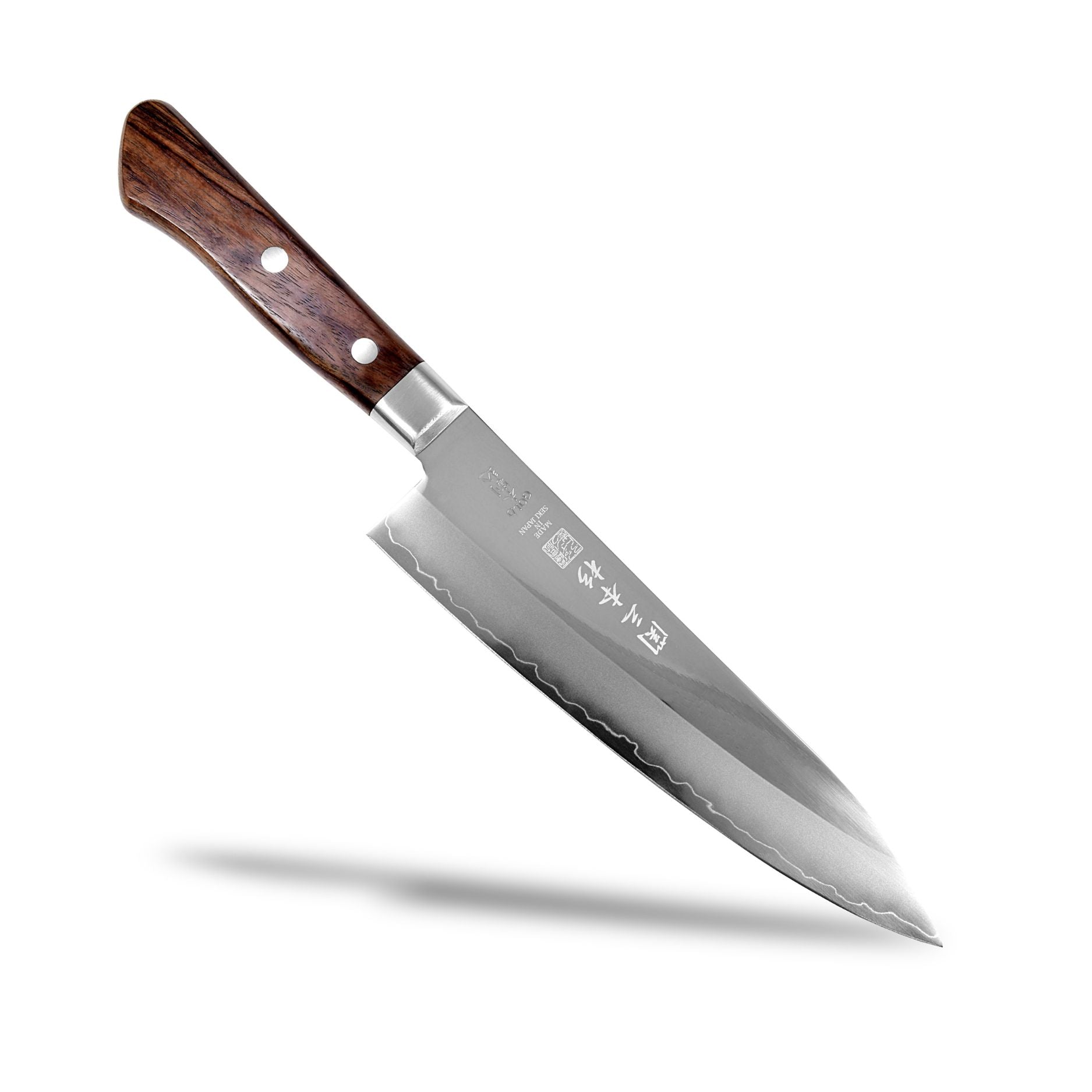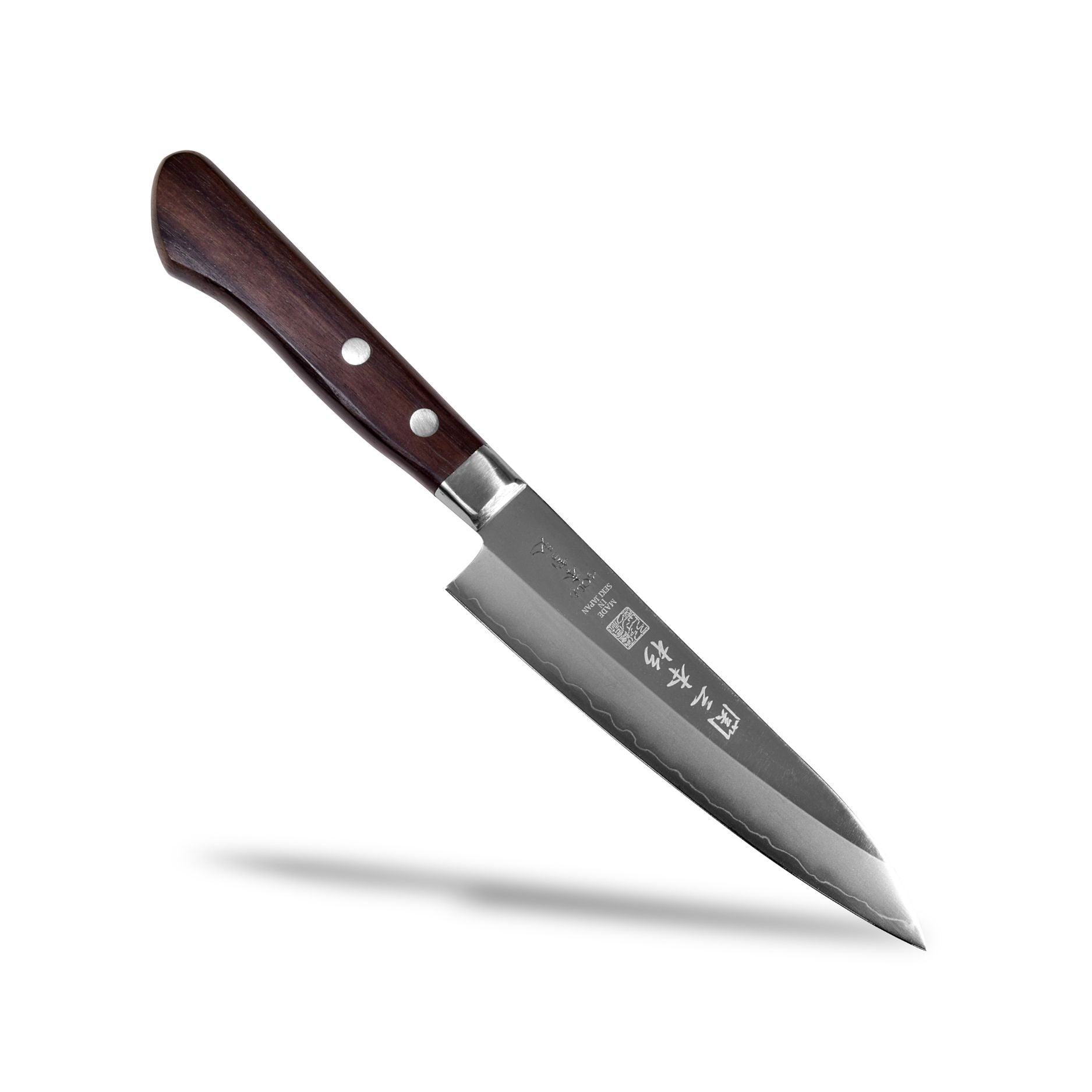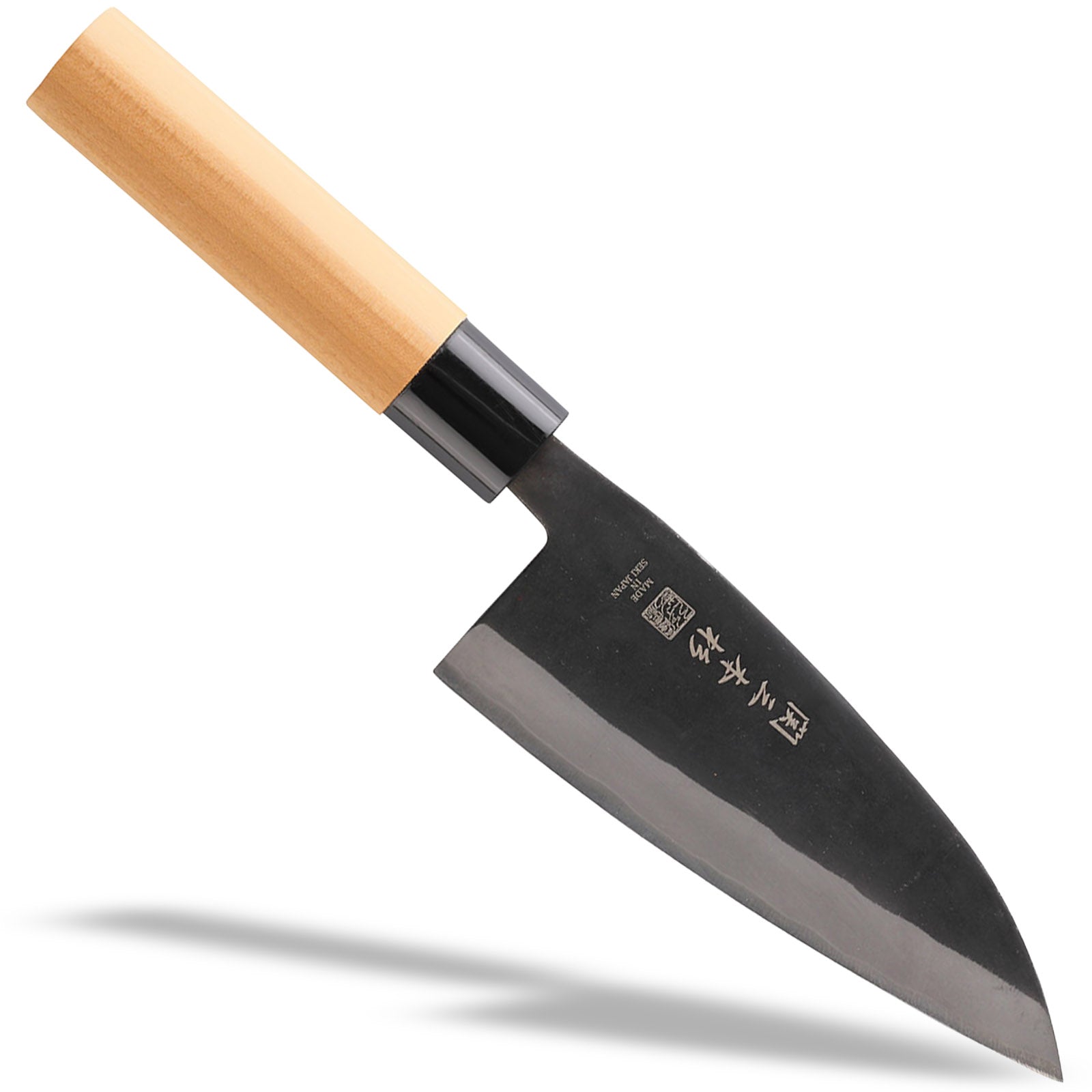

Recommended Japanese kitchen knives that are easy to use even for those unfamiliar with knives: Nakiri knives for beginners - Benefits
In conclusion, for beginners unfamiliar with knives, a nakiri knife is an excellent choice for adding a Japanese knife to their collection. Its ability to cut straight lines provides a sense of security and makes cutting vegetables much easier, significantly reducing daily cooking stress. For beginners who frequently cut vegetables, a nakiri knife is the perfect second Japanese knife to complement a santoku knife.
[Key points of this article]
Today's review: 3 key points
- The nakiri knife is characterized by its square, straight blade and wide edge, making it easy for beginners to cut vegetables straight and stably, resulting in a consistent finish.
- For beginners, the biggest advantages are the "peace of mind of being able to cut straight," the "smooth cutting action that allows vegetables to be easily sliced with minimal effort," and the "convenience of being able to scoop up the cut vegetables directly."
- For beginners looking to use a Japanese kitchen knife, the key to maximizing its benefits is to choose one that prioritizes ease of use, such as a double-edged knife with a blade length of 165-180mm and made of stainless steel.
Conclusion of this article
Conclusion of this article
- For beginners, a good recommendation for Japanese kitchen knives is a two-knife system: a santoku knife and a nakiri knife. The nakiri knife functions as a gentle support tool specifically for vegetables.
- The advantage of a vegetable knife is that its straight, wide blade makes it easy to cut vegetables to a uniform thickness, allowing even those unfamiliar with using a knife to easily experience the satisfaction of "cutting straight."
- For beginners, the first thing to keep in mind is to choose a knife that meets these three criteria: "It's mainly for vegetables," "The blade length should be around 16-18cm," and "It should be made of stainless steel for easy maintenance."
- Recommended Japanese kitchen knives, especially vegetable knives for beginners, offer several advantages in terms of safety, such as their "intimidating shape (not a sharp point)" and "wide blade width that easily protects your fingers."
Why are Japanese kitchen knives, especially vegetable knives, recommended for beginners?
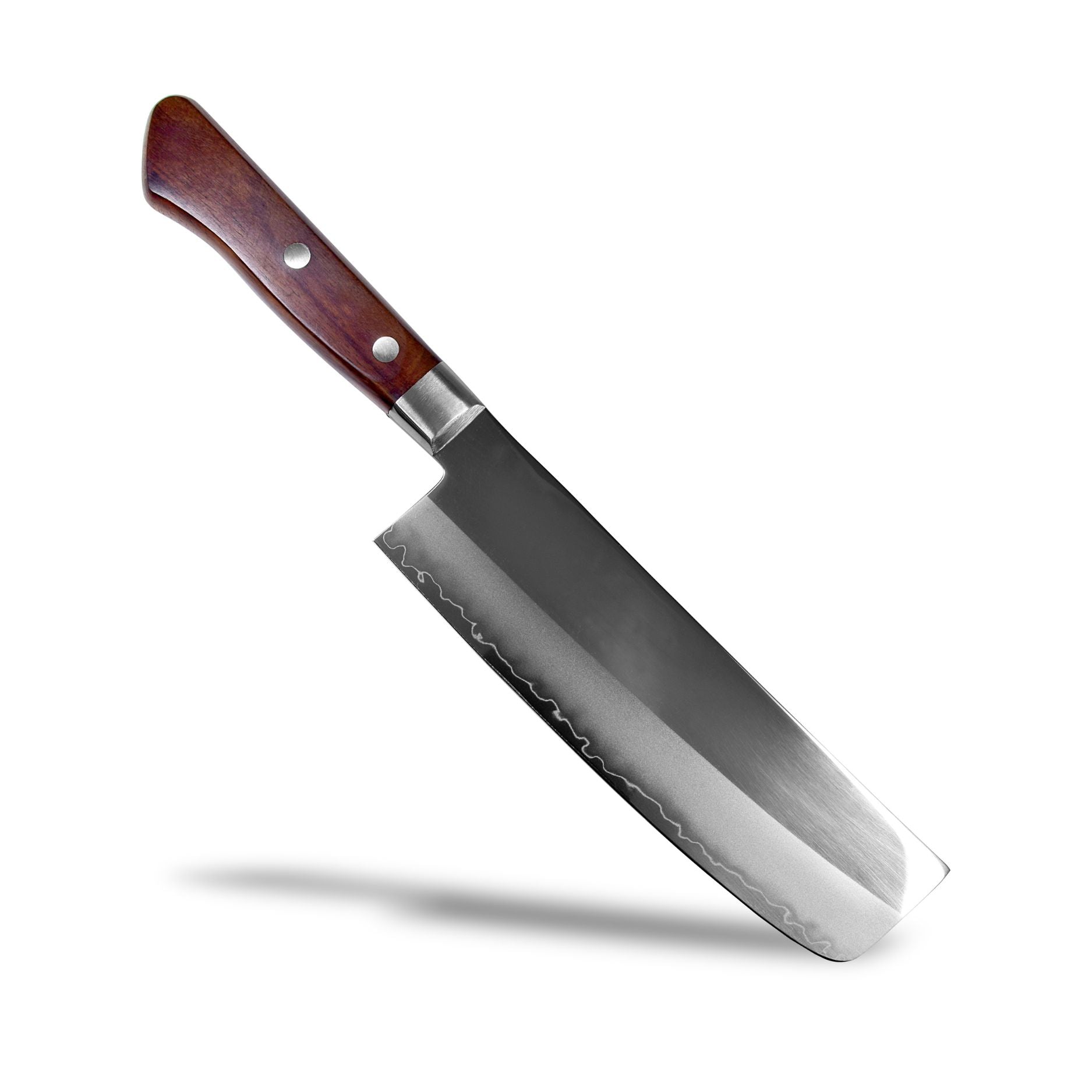
In conclusion, the three main reasons why a nakiri knife is recommended as a beginner-friendly Japanese knife are that it "cuts straight," "is easy to use for cutting vegetables," and "provides a sense of security in terms of safety." The wide, flat blade of a nakiri knife makes it easy to cut vegetables stably, making julienne and katsura-muki (thinly peeled vegetables) simple, and resulting in beautifully even cut surfaces. Furthermore, it is said that "the biggest advantage of a nakiri knife for beginners is the 'sense of security from being able to cut straight' and the 'light cutting feel that allows vegetables to go through smoothly'," emphasizing that it is easy to chop and cut even for those unfamiliar with knives. Its "gentle, straight-cutting structure" is its greatest asset for beginners.
The peace of mind of being able to cut straight (advantage of a straight blade)
In conclusion, the biggest advantage for beginners is the "blade that falls straight in the intended direction." Because the tip of a vegetable knife is flat, the entire blade easily makes solid contact with the cutting board, and unlike a santoku knife, the tip doesn't lift up, resulting in fewer "uncut pieces." As a result, it's easier to get clean, evenly sliced cross-sections of carrots, cucumbers, and radishes, and you'll have a more satisfying experience of "I was able to cut it nicely myself." The first thing beginners should focus on is getting into the habit of the simple movement of "applying the straight blade parallel to the cutting board."
The light cutting edge allows vegetables to be easily sliced through (the advantage of a thin blade and wide blade).
The ease of use of a nakiri knife lies in its thin blade that doesn't crush the fibers and its wide, stable design. Many nakiri knives have thinner blades than santoku knives, allowing the blade to glide smoothly through vegetables without crushing the fibers, making it easy to julienne or mince with minimal effort. The wide blade also helps to firmly hold the cutting board and ingredients while cutting, reducing the anxiety of beginners who worry about the blade wobbling. The ability to scoop up the chopped vegetables in one go, like a scraper, is another benefit that shortens cooking time.
Beginner-friendly safety features (no sharp points, finger guards)
Most importantly, a "non-intimidating shape" lowers the psychological barrier for beginners. Because the tip of a nakiri knife is not pointed but has a square, tapered shape, it is considered easy to handle even for those who are afraid of "stabbing their fingers with the tip of the blade." Also, because the blade is wide, the fingers of the hand held on the other side of the food naturally tend to be above the blade, and some say that "there is a sense of security as if your fingers are being protected." Opinions such as "I chose a nakiri because I'm afraid of pointed knives" and "It's an easy-to-use knife that's popular with women" have also been seen, and it is highly rated as a beginner-friendly knife in terms of safety.
Recommended Japanese kitchen knives: How to choose a vegetable knife as a beginner? Size, material, and balance.
In conclusion, there are three key points for beginners to consider when choosing a vegetable knife: "blade length," "weight and balance," and "material (stainless steel or carbon steel)." For home use, a standard vegetable knife is around 16-18cm, but a smaller 14cm knife is easier to handle for those with smaller hands or limited storage space. Regarding materials, stainless steel is recommended for beginners and busy households due to its rust resistance, while carbon steel or multi-layered steel models are recommended for those who prioritize sharpness and cutting ability. Choosing a knife that is "16-18cm, relatively lightweight, and stainless steel" will provide a user-friendly option for most beginners.
Recommended blade length and size for beginners
In conclusion, a good guideline is 14-16cm for those with smaller hands, and 16-18cm for those with average to larger hands. Many standard vegetable knives for general household use have blades around 18cm, and this size is recommended for those who want to easily chop large cabbages and Chinese cabbages. On the other hand, for those who want to do detailed work or are afraid of long blades due to small hands, a compact vegetable knife in the 14cm class is easier to handle and less tiring for long periods of use. The first thing beginners should keep in mind is to choose a length while imagining the size of their hands and the size of vegetables they frequently cut.
How to choose the material (steel) and weight
The basic rule is, "If you prioritize ease of maintenance, choose stainless steel; if you prioritize sharpness and ease of sharpening, choose carbon steel." Stainless steel vegetable knives are rust-resistant, easy to care for daily, and some models are dishwasher-safe, making them ideal for beginners and busy households. On the other hand, traditional Japanese knives made of carbon steel and soft iron are appealing for their sharp cutting edge and ease of sharpening, and are said to provide the satisfying feeling of slicing vegetables cleanly without crushing the fibers. It has also been pointed out that "thin-bladed, lightweight vegetable knives are less tiring on the hand," so beginners should choose a model that is not too heavy from the start to make it easier to handle.
Recommended sets to consider when combining with a santoku knife.
The most important thing is to decide "what role the vegetable knife will play" in relation to your main knife. Some suggest a four-knife setup: santoku knife, chef's knife, vegetable knife, and paring knife, and it is especially recommended that vegetable lovers always add a vegetable knife. In reality, even just having a santoku as your main knife and a vegetable knife will make cooking at home much more comfortable, and you will naturally get used to using the vegetable knife when cutting vegetables. Recommended Japanese knives, vegetable knives for beginners To make the most of the benefits, it is realistic to aim for a two-knife system of "santoku + vegetable knife" as your first goal.
FAQ
Q1. What is the biggest advantage of a vegetable knife for beginners?
A1. The "sense of security from being able to cut straight" and the "smooth cutting action that allows vegetables to be easily cut with minimal effort" make it easy to achieve a consistent finish even for those unfamiliar with using a knife.
Q2. For a beginner buying their first knife, which would you recommend: a santoku knife or a nakiri knife?
A2. A santoku knife is recommended as your first knife, and it's practical to add a nakiri knife as your second knife once you start cutting vegetables frequently.
Q3. Isn't a vegetable knife difficult for beginners to handle?
A3. On the contrary, thanks to its straight blade and wide blade width, it's easy to cut with and its blunt tip makes it a popular choice for beginners as a "cheap knife that's not scary."
Q4. What blade length is best for a vegetable knife for beginners?
A4. For home use, 16-18cm is standard, but 14-16cm is suitable for people with small hands or those who are anxious about their hands, and around 18cm is suitable for people who chop a lot of vegetables.
Q5. Can you do all the cooking, including meat and fish, with just one vegetable knife?
A5. It's possible to use it for thinly sliced meat or fish, but it's not suitable for meat with bones or fish heads. It's better for the blade and safer to use a santoku or deba knife for those purposes.
Q6. For a beginner choosing a vegetable knife, which is better: stainless steel or carbon steel?
A6. If you prioritize rust resistance and ease of handling, stainless steel is suitable. If you also want to enjoy sharpening and prioritize sharpness above all else, a vegetable knife made of steel is more appropriate.
Q7. Is it okay to cut hard vegetables like radishes and pumpkins with a vegetable knife?
A7. Hard vegetables like radishes are fine, but be careful not to force pumpkins or frozen foods, as this can cause the blade to chip.
Q8. Is the sharpening method for a vegetable knife different from that of a regular knife?
A8. The basic principle is the same: sharpen the entire blade evenly with a medium-grit whetstone, paying attention to the angle and contact surface so that the straight edge is perfectly straight.
Q9. Can someone who is not used to using a knife improve their julienne cutting skills with a vegetable knife?
A9. Thanks to the straight blade, you can cut cleanly all the way through, so the more you practice, the easier it becomes to make the julienne strips the same thickness, and you can easily feel your skills improving.
Q10. Buying a vegetable knife will increase the number of knives I own, but is it still worth it?
A10. If you frequently chop vegetables, it's definitely worth having as a separate tool to complement your santoku knife, as it significantly improves both your work speed and the final result.
summary
- Recommended Japanese kitchen knives, especially vegetable knives for beginners, have several advantages, including a straight blade that cuts straight, a thin blade that allows vegetables to be easily sliced with minimal effort, and a square shape that isn't intimidating. Even those unfamiliar with knives will find it easier to cut vegetables neatly.
- For beginners, it's practical to choose a knife that is easy to handle and maintain, such as one with a blade length of around 16-18cm, double-edged, and made of stainless steel. It can also be used in combination with a santoku knife as a "vegetable-focused knife."
- In conclusion, for beginners who frequently chop vegetables, setting up a two-knife system with a "santoku knife + nakiri knife" and entrusting the nakiri knife with daily julienning and chopping is the shortest route to reducing cooking stress and gaining confidence in knife skills.