
Recommended Japanese kitchen knives for those who mainly cook vegetables: Types of Nakiri knives and Santoku knives - Differences Explained
In conclusion, among the different types of Japanese kitchen knives, the "nakiri knife" is specialized for vegetables, while the "santoku knife" is a versatile knife that handles meat, fish, and vegetables well. If you mainly cook vegetables, add a nakiri knife, and make the santoku knife your main knife to avoid making a mistake. "Use the nakiri knife for vegetables, and the santoku knife for everything else" is the basic way to differentiate the use of Japanese kitchen knives in the home.
[Key points of this article]
Today's review: 3 key points
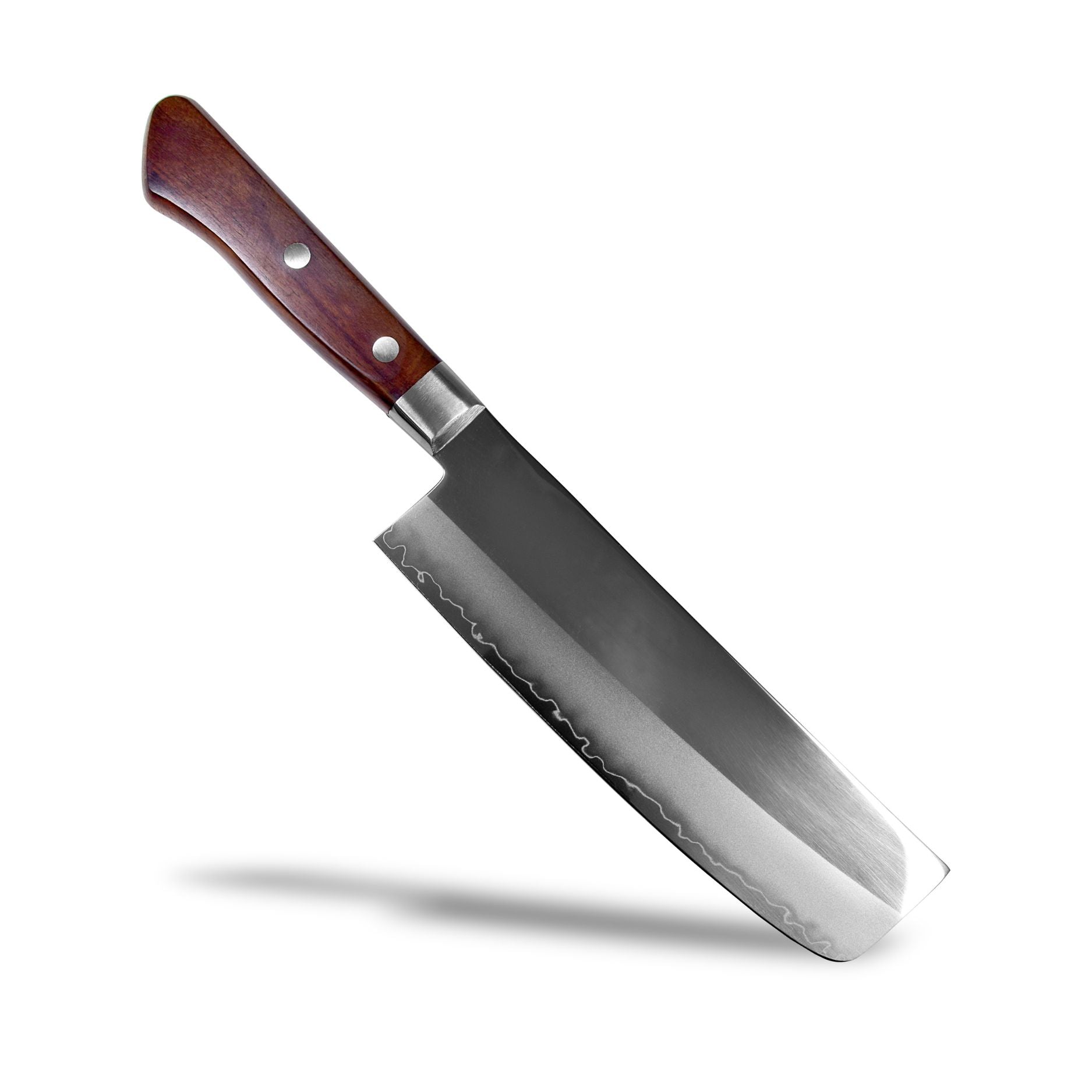
- A nakiri knife is a "vegetable-specific knife" characterized by its square, straight, wide, and thin blade, making it ideal for tasks such as julienning and mincing.
- A santoku knife is a versatile knife that combines the features of a vegetable knife and a chef's knife, making it a main kitchen knife that can be used for the "three virtues" of meat, fish, and vegetables.
- Considering the differences between Japanese kitchen knives, such as the nakiri knife and the santoku knife, the most practical approach is to have a santoku knife as your first knife, and then add a nakiri knife as your second knife if you frequently cut vegetables.
Conclusion of this article
Conclusion of this article
- The difference between a nakiri knife and a santoku knife lies in their roles: a nakiri knife is "dedicated to vegetables," while a santoku knife is "an all-purpose knife that can handle meat, fish, and vegetables."
- The advantage of a vegetable knife is that, thanks to its straight and wide blade, it can quickly and straightly perform continuous cuts of vegetables, such as shredding cabbage or peeling daikon radish.
- The Santoku knife combines the best features of both a vegetable knife and a chef's knife. With a rounded blade, it cuts vegetables, meat, and fish with a reasonable degree of ease.
- To make the most of the differences between Japanese kitchen knives, specifically the nakiri knife and the santoku knife, the best approach is to use both: a santoku knife as the main knife and a nakiri knife as a secondary knife for vegetables.
What are the differences between different types of Japanese kitchen knives, such as a vegetable knife and a santoku knife?
In conclusion, the difference between a nakiri knife and a santoku knife can be summarized in three points: "blade shape," "specialized ingredients," and "role." A nakiri knife has a flat, square blade and a wide, thin blade shape, and is a Japanese knife specialized for cutting vegetables straight and evenly, such as shredding cabbage or roughly chopping lettuce. On the other hand, a santoku knife is a multi-purpose knife based on the nakiri and gyuto, and with its slightly curved blade and wide blade, it is positioned as the "mainstay of the household," capable of handling meat, fish, and vegetables in a balanced way. The difference is "nakiri = exclusively for vegetables" and "santoku = moderately good at everything."
The shape of a vegetable knife and why it's good for cutting vegetables
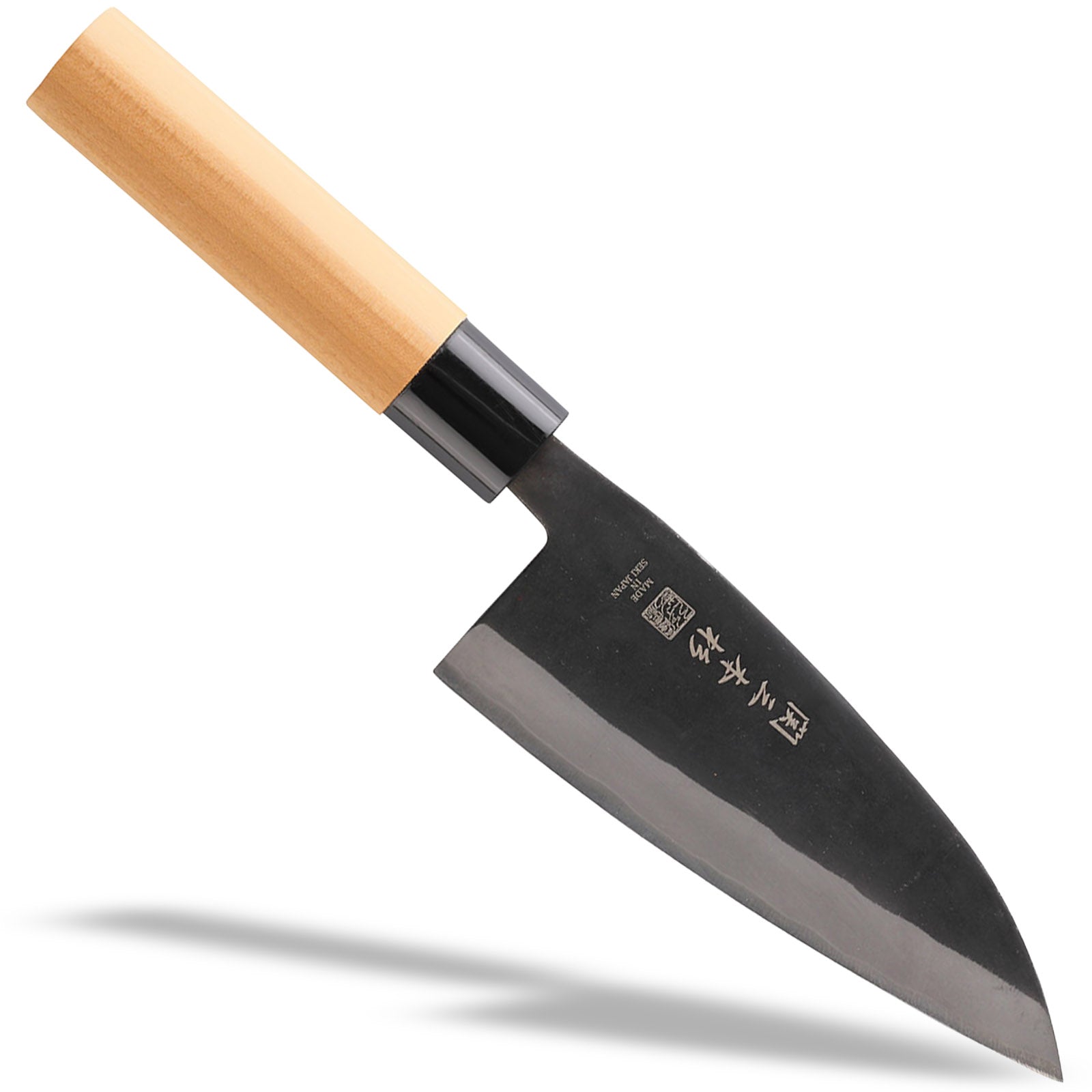
In conclusion, the reason why the nakiri knife is so good at cutting vegetables is due to its combination of a straight blade, wide width, and thin blade. Because the tip of the blade is almost horizontal to the cutting board, it is easy to apply the entire blade at once, reducing the chances of accidentally leaving connected pieces when shredding cabbage or slicing carrots. The height of the blade allows for stable "push cutting," where you firmly hold the food and move it up and down, and it is also good at scooping up cut vegetables like a scraper and transferring them to a pot or bowl. In addition, the blade is made thinner than that of a santoku knife, which is said to make it less likely to crush vegetable fibers and result in a cleaner cut.
The shape and versatility of the Santoku knife
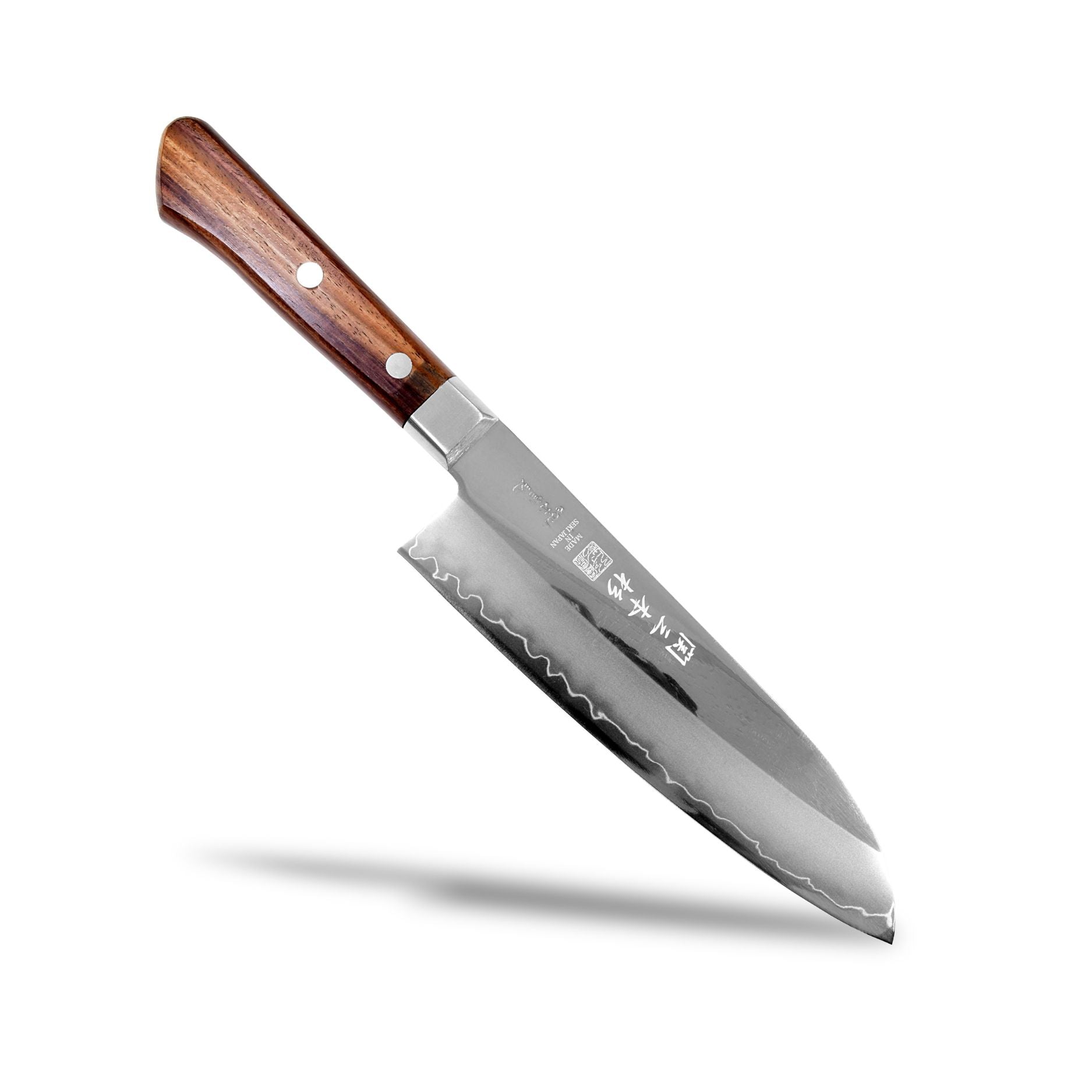
The Santoku knife is a versatile knife that combines the best features of both a vegetable knife and a chef's knife. The majority of the blade is straight relative to the cutting board, while the tip has a slightly rounded shape, making it suitable for chopping vegetables as well as pushing and pulling cuts on meat and fish. The name "Santoku" comes from its ability to be used for three ingredients: vegetables, meat, and fish, and it is often recommended as a first knife for home use. Although the blade width is not as wide as a vegetable knife, it has the thickness and strength to cut root vegetables, and its strength lies in being able to handle most everyday cooking tasks with just one knife.
Differences in Use and Role (Which one should you choose, and who should choose which?)
The most important thing is to differentiate the roles of the knives based on "what and how much you cut." Many explanations describe the nakiri knife as "a vegetable-only knife that smoothly handles mincing and julienning vegetables," and the santoku knife as "an all-purpose knife that handles various ingredients such as meat, fish, and vegetables." A nakiri knife is suitable for households that mainly cook Japanese food and prepare large quantities of vegetables, or for those who want to be particular about julienning cabbage or peeling daikon radish. A santoku knife is suitable for households that "want to do everything with one knife" or "often cut meat and fish." Many people also say that "if you have a santoku knife, the only option to add is a nakiri knife," and a santoku + nakiri combination is considered a practical compromise.
Japanese kitchen knives: Types - Nakiri knife, Santoku knife - How to choose between them?
In conclusion, the basic principle of using them differently is a simple division of roles: "Santoku = Main tool" and "Nakiri = Vegetables." Most sources explaining different types of knives position the Santoku knife as the main kitchen knife, recommending the Nakiri knife as a secondary tool for those who chop large quantities of vegetables. Specifically, it's practical to use the Santoku for everyday tasks like cutting meat, fish, root vegetables, and fruit, and then bring out the Nakiri when you want to neatly cut vegetables, such as shredding cabbage, roughly chopping Chinese cabbage, or thinly peeling daikon radish. The idea is to "use the Santoku normally, and only bring out the Nakiri on days when you're chopping a lot of vegetables."
Which is better for someone who primarily eats vegetables?
In conclusion, a santoku knife is suitable if you mainly cut vegetables plus some other ingredients, while a nakiri knife is better if you mainly cut vegetables and are particularly particular about the finished look and quantity. While it is said that a santoku knife is recommended for households that mainly cook Japanese food, many people recommend a nakiri knife or usuba knife for those who cook large quantities of vegetables or who do a lot of decorative cutting and shaping. The advice "vegetable dishes → santoku knife" is only for choosing your first knife, and if you already own a santoku, it is said that adding a nakiri knife to your santoku knife will greatly improve your efficiency when cutting vegetables. The idea is to start with a santoku knife and add a nakiri knife when you want to cut vegetables more comfortably.
Points to note when using only a santoku or nakiri knife.
"If you want to do everything with just one knife, go for a santoku; if you're only using it for vegetables, go for a nakiri." A santoku knife is designed to handle meat, fish, and vegetables, making it practical if you want to use just one knife. It also has the advantage of being shorter and easier to handle than a chef's knife. It's possible to get by with just a nakiri knife if your household mainly cooks vegetables, but it's not suitable for meat or fish, especially bone-in cuts or tough ingredients, so in that case you'll need to use it in conjunction with a santoku, chef's knife, or deba knife. The first thing beginners should understand is that "nakiri = for vegetables only" and "santoku = all-purpose," and then consider their own cooking style.
Specific examples of how to use them differently (by household scenario)
The most important thing is to visualize how the knives will be used in everyday situations. For example, for a typical weekday dinner like "meat and potato stew or a stir-fry," a single santoku knife is sufficient for cutting potatoes, onions, carrots, and meat. On the other hand, when doing preparation work on the weekend, such as "shredding a week's worth of cabbage for salads" or "chopping a large amount of Chinese cabbage for a hot pot," the straight and wide blade of a nakiri knife proves its worth, significantly reducing work time and fatigue. Some people have even said, "Adding a nakiri knife to my santoku knife made cutting vegetables more enjoyable," which supports the effectiveness of this division of labor.
FAQ
Q1. What is the biggest difference between a vegetable knife and a santoku knife?
A1. A nakiri knife has a straight, square blade and is specifically for vegetables, while a santoku knife has a slightly rounded blade and is a versatile knife that can handle meat, fish, and vegetables.
Q2. If I were choosing my first knife, which would you recommend, a vegetable knife or a santoku knife?
A2. A santoku knife is recommended as your first knife, and it's more practical to add a nakiri knife as a second knife once you start using a lot of vegetables.
Q3. If I already have a santoku knife, is there any point in adding a nakiri knife?
A3. Yes. It makes julienning and mincing vegetables much easier, and greatly improves the speed and quality of the chopped vegetables when cutting large quantities.
Q4. Is it okay to use only a vegetable knife to cut meat and fish as well?
A4. It's possible to use it for thin slices of meat or fish fillets, but it's not suitable for hard parts like meat with bones or fish heads, and it's not recommended due to the high risk of chipping the blade.
Q5. Is a santoku knife necessary even in a household that primarily eats vegetables?
A5. If you're only using vegetables, a vegetable knife will suffice, but since few households don't use meat or fish at all, it's reassuring to have a santoku knife on hand.
Q6. What is the standard blade length for a vegetable knife and a santoku knife?
A6. For home use, the standard blade length for both vegetable knives and santoku knives is around 16-18 cm, and this range is considered the easiest to handle.
Q7. Is a nakiri knife the same as a usuba knife?
A7. Strictly speaking, they are different, but both are for vegetables. The single-edged thin-bladed knife is more suitable for delicate techniques like katsura-muki (thinly slicing vegetables) and decorative cutting, while the nakiri is positioned as a double-edged vegetable knife for home use.
Q8. Is it okay to use a santoku knife to shred cabbage?
A8. There is no problem, but because the tip of the blade is rounded, it does not make flat contact all the way through as well as a vegetable knife, so it is slightly inferior to a vegetable knife in terms of how easily it can cut julienned vegetables.
Q9. If I own both a vegetable knife and a santoku knife, how should I use them differently?
A9. It's helpful to remember that the "Santoku" knife is for meat, fish, and small amounts of vegetables, while the "Nakiri" knife is for large quantities of vegetables like cabbage and Chinese cabbage, or for finely chopped vegetables.
Q10. Which is easier for a beginner to use, a vegetable knife or a santoku knife?
A10. The Santoku knife is versatile and easy to use with a wide range of ingredients, while the Nakiri knife, although limited to vegetables, offers the reassuring feeling of cutting straight. Therefore, a Santoku knife is a good choice as your first knife, and a Nakiri knife as your second.
summary
- The difference between Japanese kitchen knives, specifically the nakiri and santoku knives, lies in their roles: the nakiri has a straight blade and is designed specifically for vegetables, while the santoku has a slightly rounded blade and is a versatile knife that can handle meat, fish, and vegetables.
- If you're chopping large quantities of vegetables or are particular about the finished product, a vegetable knife is advantageous. If you want to use just one knife for most of your everyday cooking, a santoku knife is the best choice as your main knife.
- In conclusion, the shortest route to maximizing the performance of Japanese knives at home is to "first choose a santoku knife, and if your lifestyle is centered around vegetables, add a nakiri knife as a second knife to use interchangeably."