
Recommended Japanese kitchen knives: Beginner-friendly vegetable knives
Japanese kitchen knives/vegetable knives that are easy to use even for people unfamiliar with knives - beginner-friendly - advantages
In short, for beginners, choosing a double-edged, lightweight vegetable knife (around 16-17cm) will make vegetable cooking much easier, protect your fingers, and allow you to improve with peace of mind.
[Key points of this article]
- This article summarizes the features and advantages of a Japanese vegetable knife (nakiri knife) that is easy for beginners to use.
- This article explains the differences between a Santoku knife and a Chinese cleaver, from a beginner's perspective.
- From the perspective of a craftsman at Kikumatsu Cutlery Shop, we offer suggestions on how to choose and use a vegetable knife without making mistakes.
Today's review: 3 key points
For beginners, a double-edged, 16-17cm, lightweight vegetable knife is less likely to cause problems.
A vegetable knife is specifically designed for vegetables, making julienning and thinning easier, and its shape also helps protect your fingers.
For meat and fish, use a separate knife; the most efficient setup at home is a two-knife system consisting of a "santoku" knife and a "nakiri" knife.
Conclusion of this article
- In conclusion, the best Japanese kitchen knife for beginners is a double-edged vegetable knife (with a blade length of around 16-17 cm and a lighter weight).
- The most important thing is to prioritize ease of cutting and safety by designing it specifically for vegetables, with a straight blade and a wide blade width.
- Having both a santoku knife and a nakiri knife, rather than just a santoku knife alone, can significantly reduce the stress and risk of injury associated with daily vegetable preparation.
- Choosing a stainless steel material that is resistant to rust will make it easy to clean, even for first-time users, and ensure it lasts a long time.
- A good guideline for the price range is around 5,000 to 15,000 yen. Choosing a Japanese kitchen knife from a reliable cutlery shop will give you good value for money and help you avoid disappointment.
What are the advantages of using a Japanese kitchen knife, specifically a vegetable knife, for beginners?
In short, a nakiri knife is a Japanese knife specifically designed for vegetables, and its biggest advantage is that even beginners can easily cut straight and steadily with it.
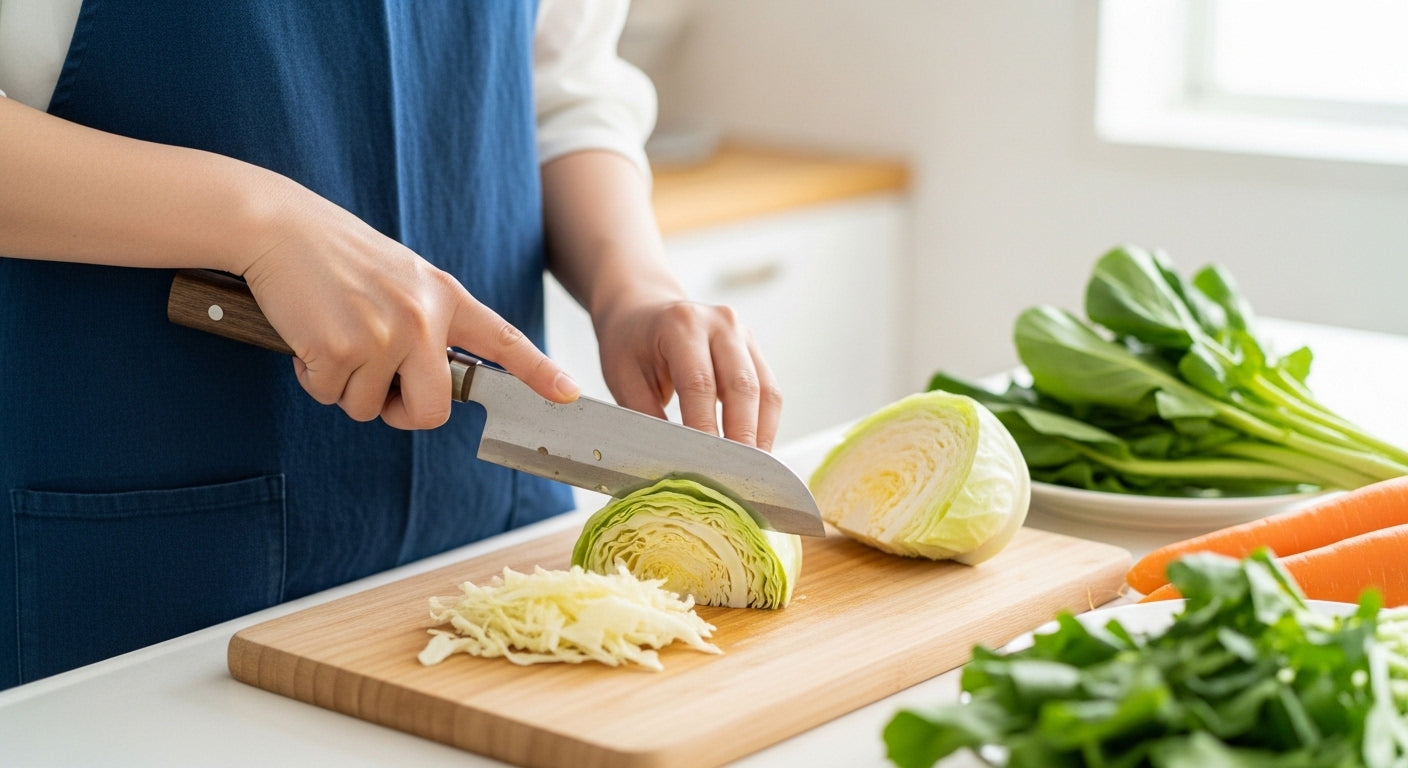
Because the blade is thin and wide, and the tip is straight, it makes it easy to julienne or thinly slice vegetables by simply pressing it perpendicularly against the cutting board with a "tap-tap" motion.
For example, this single tool can smoothly handle over 80% of household vegetable-related tasks, such as slicing radishes, shredding cabbage, and mincing green onions.
Another feature that beginners will appreciate is that the wide blade makes it easier to protect your fingers.
Compared to a santoku knife, which has a rounded, curved tip, a nakiri knife has a larger blade surface area, making it easier to hold by concealing your fingertips with the side of the knife.
This makes it easier for beginners to try fine mincing and decorative cutting, and also has the psychological benefit of making them feel less intimidated.
Three specific benefits for beginners
In short, the advantages for beginners are threefold: "You can cut straight, it's not scary, and the vegetables look delicious."
The first advantage is that the straight blade allows you to cut vegetables straight and stably simply by moving the knife up and down.
The second reason is that the blade is wide, and by placing your fingers on the side of the knife, the tip of the blade is not too visible, which reduces the feeling of fear.
The third advantage is that it cuts vegetables without crushing the fibers, resulting in a clean cross-section and making salads and side dishes look more appealing.
For example, julienned carrots and thinly sliced cucumbers will have a crisp texture, making the dish feel a notch more refined even when using the same recipe.
The first thing beginners should understand is that a vegetable knife is not a general-purpose knife but one specifically for vegetables. However, it can be seen as a knife that allows you to aim for professional-level ease when it comes to cooking vegetables.
What is the difference between a nakiri (vegetable knife) and a santoku knife (Japanese multi-purpose knife)?
In conclusion, a santoku knife is a versatile all-rounder that can handle a fair amount of tasks, while a nakiri knife is a specialized knife designed specifically for vegetables, with superior sharpness and ease of use.
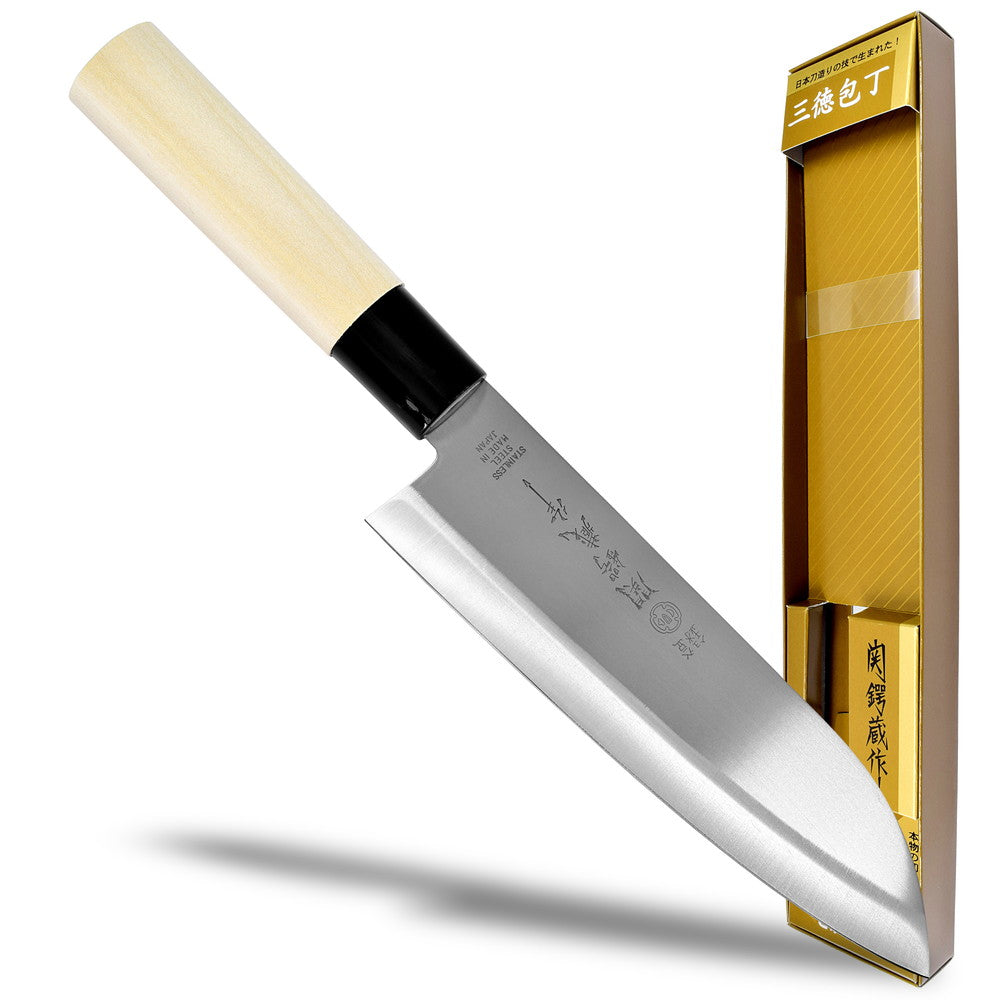
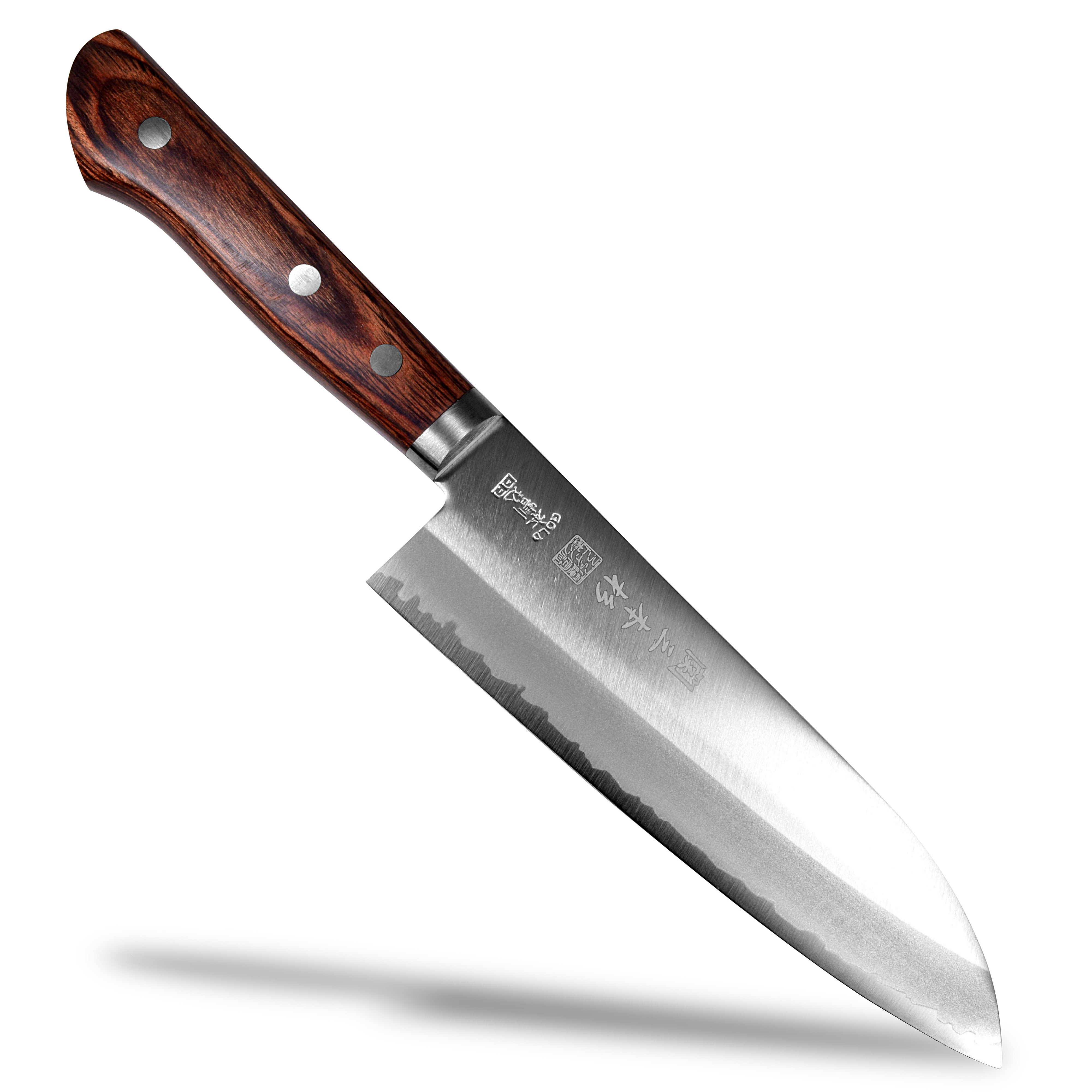
The santoku knife has a rounded blade tip and can handle meat, fish, and vegetables well, but it falls short of the nakiri knife in terms of precision and speed when it comes to julienning or thinly slicing vegetables.
Because vegetable knives have a straight, wide blade, they are particularly well-suited for quickly chopping large quantities of cabbage, Chinese cabbage, radishes, and other root vegetables to a consistent thickness.
For example, a santoku knife would be the main knife used in households that frequently cook meat or fish dishes, while a nakiri knife would be more useful in households that often prepare salads and vegetable dishes.
For beginners, the most practical setup is to "start with one santoku knife and add a nakiri knife when you want to cut vegetables more easily."
This two-knife system clarifies how to use each knife in the kitchen, improving both work efficiency and safety at the same time.
Is a vegetable knife really suitable for beginners?
In short, a santoku knife is ideal for beginners who frequently chop vegetables, while a santoku knife is better suited for beginners who want to use just one knife for everything.
A vegetable knife is easy to use; you simply press down and cut from above. The blade movement is simple, making it easy for even those unfamiliar with knife handling to get the hang of it.
However, since it's not suitable for cutting bone-in meat or filleting fish, the safest option is to introduce it as a "second knife specifically for vegetables," assuming you'll use a different knife for those purposes.
As a concrete example, beginners who usually buy ready-made meals may, after learning to use a vegetable knife, naturally begin to try their hand at vegetable-centered dishes such as shredding cabbage, stir-frying vegetables, and making ratatouille.
Furthermore, many households with elderly family members report that switching to a lighter vegetable knife reduces the strain on their wrists during long food preparation sessions.
The most important thing is to choose a size and weight that is truly easy to use, taking into account your own eating habits and the size and strength of your hands.
How to Choose a Japanese Kitchen Knife/Vegetable Knife for Beginners: Advantages and Benefits
What blade length and weight are recommended for beginners?
In conclusion, beginners should choose a vegetable knife with a blade length of around 16-17 cm and a weight of around 150-170 g.
A blade length of around 16cm is considered to be a good match for household cutting boards, and is a size that can handle large heads of cabbage or Chinese cabbage while also being easy to handle smaller ingredients.
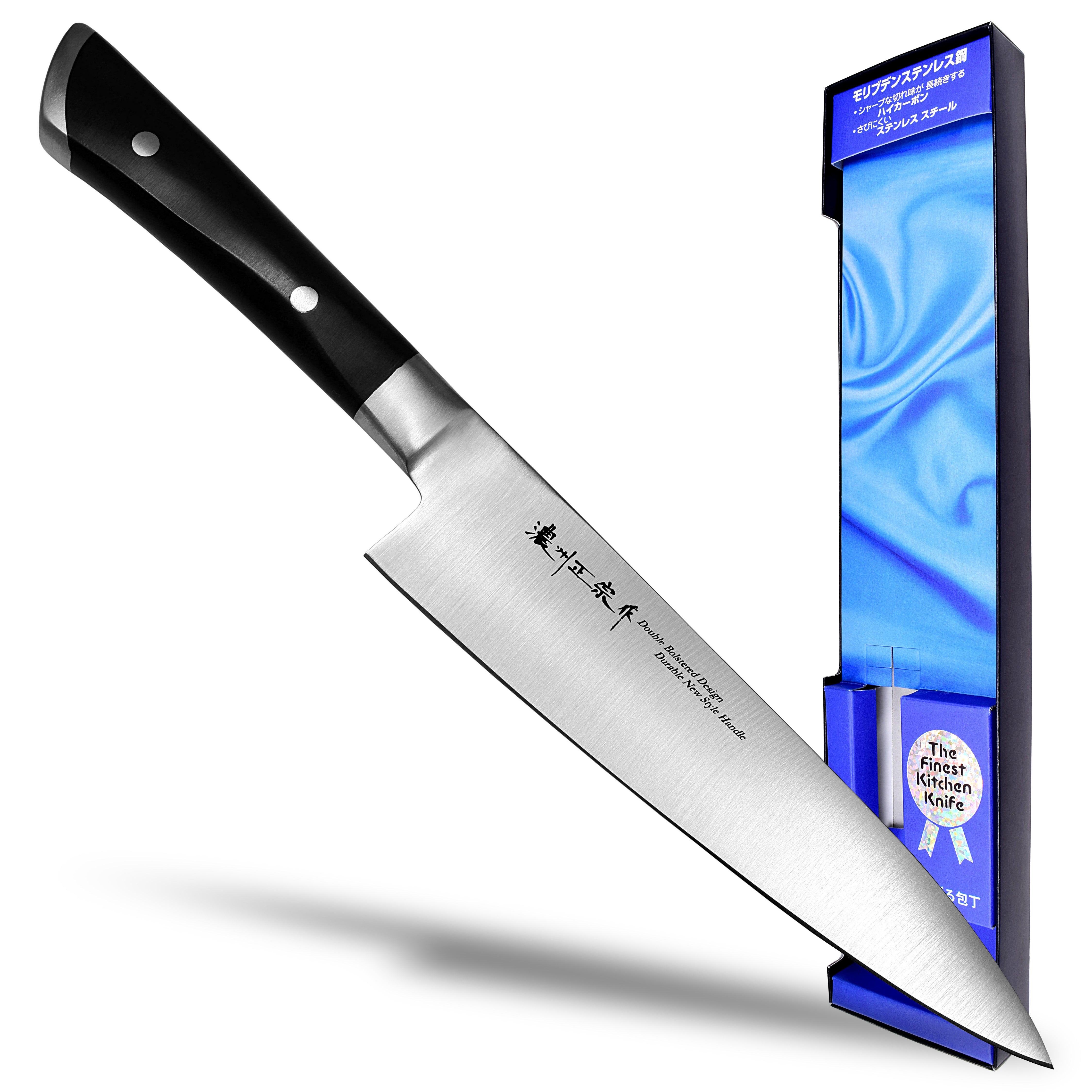
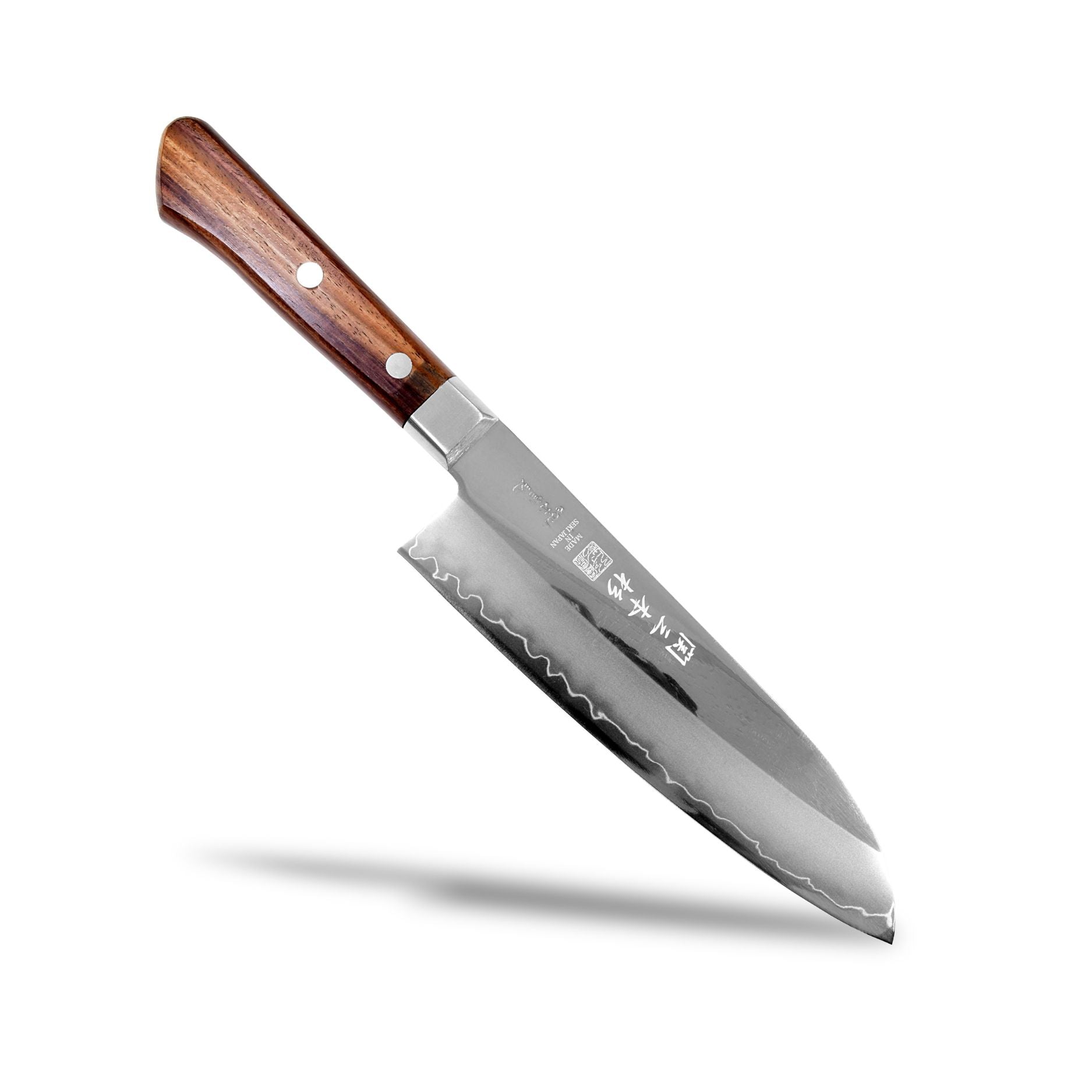
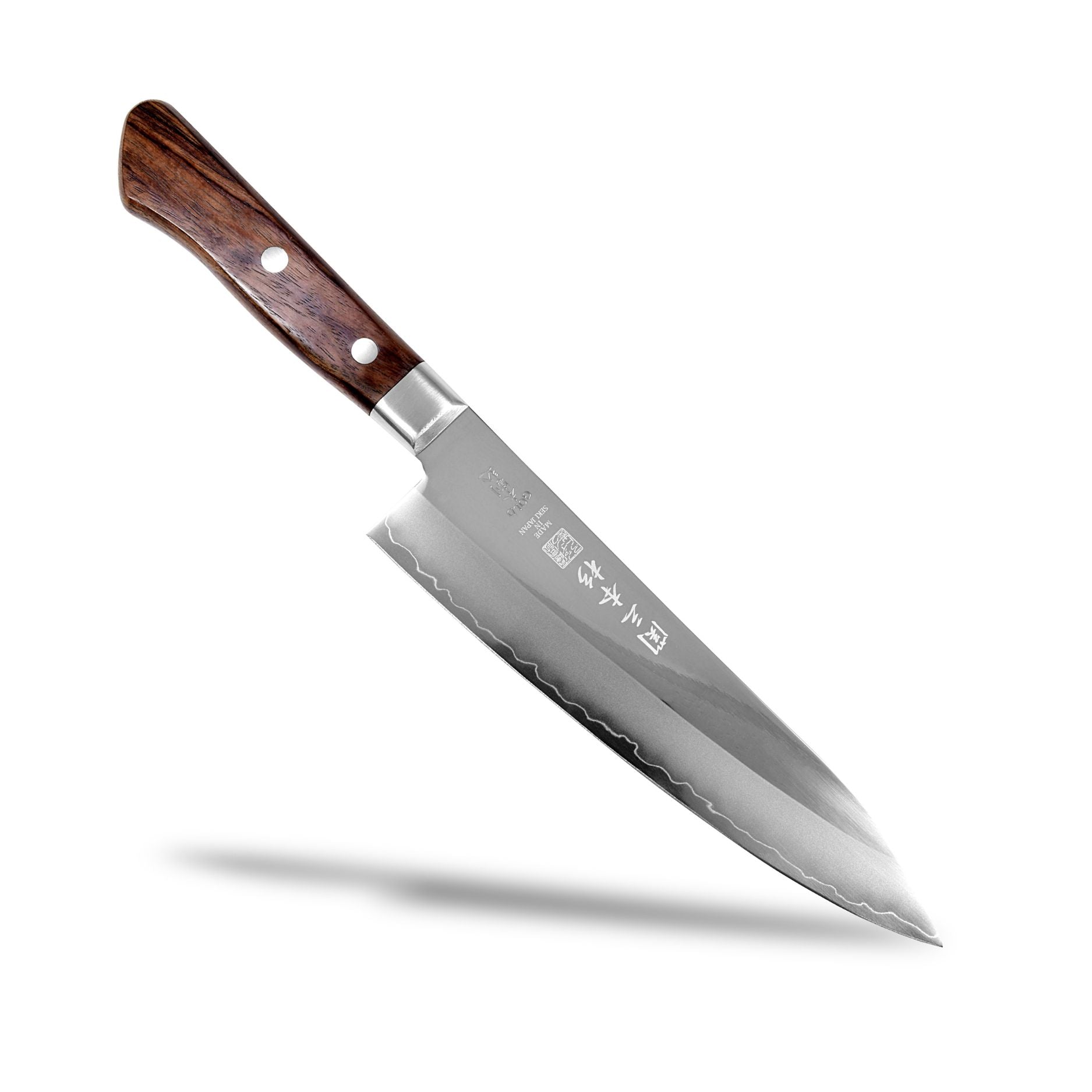
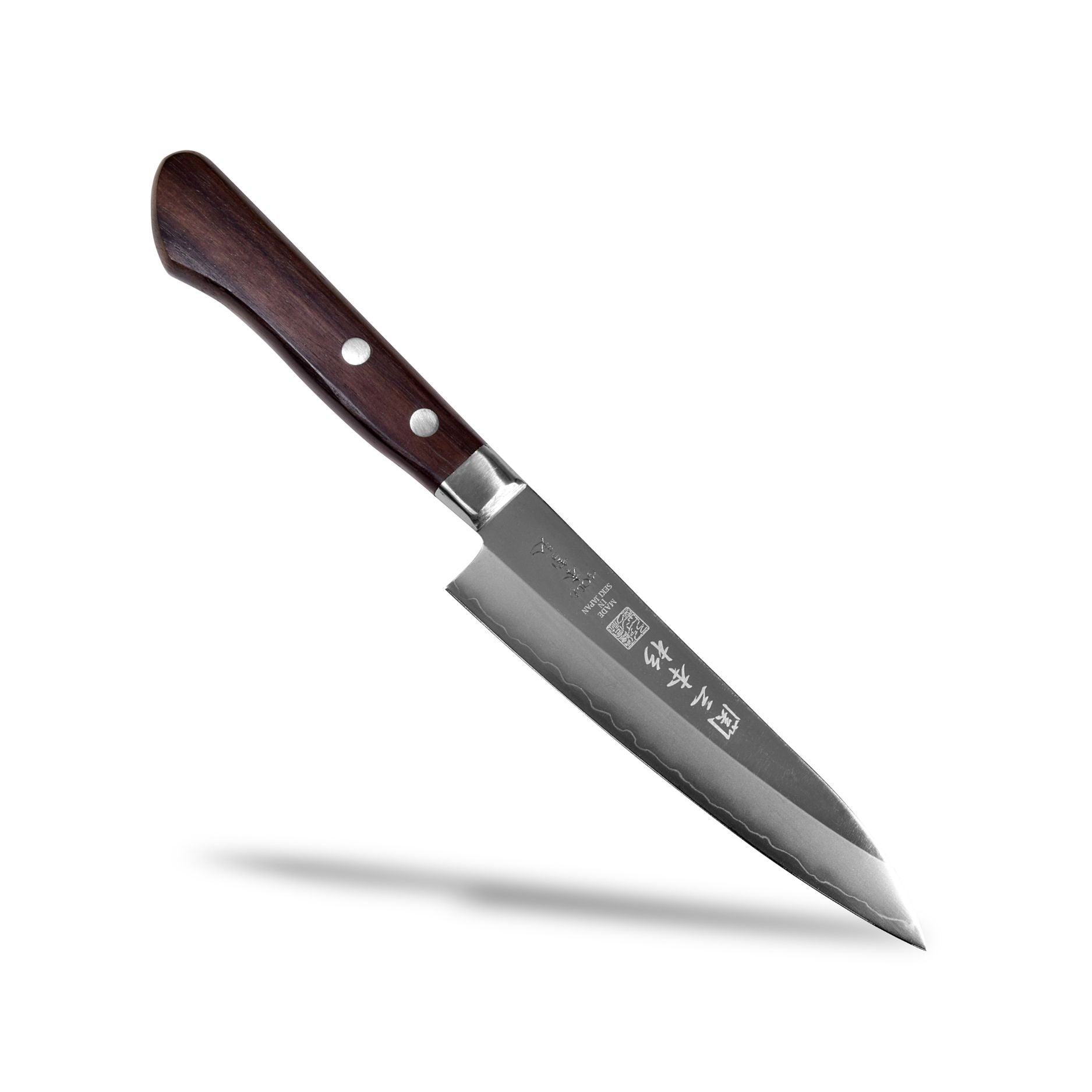
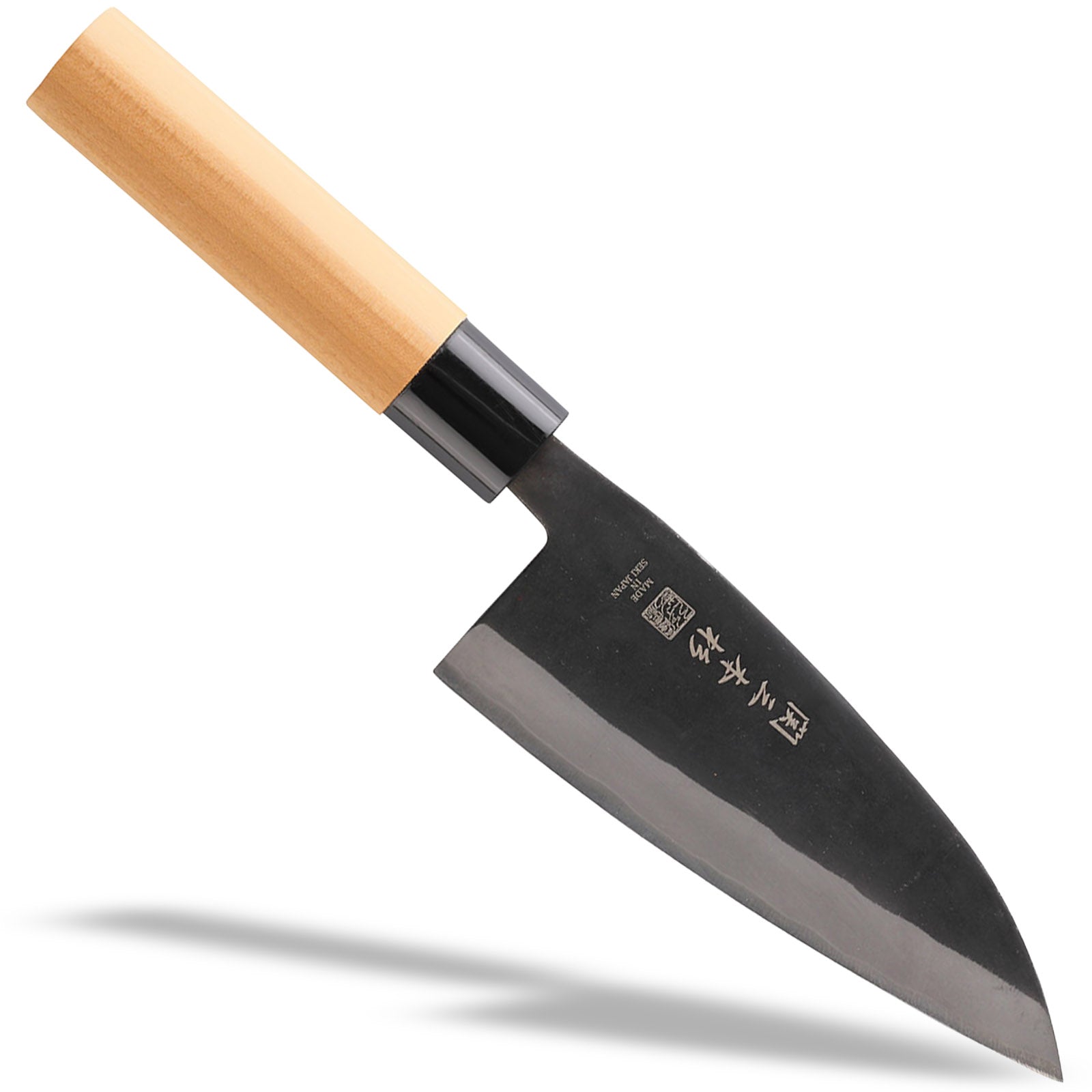
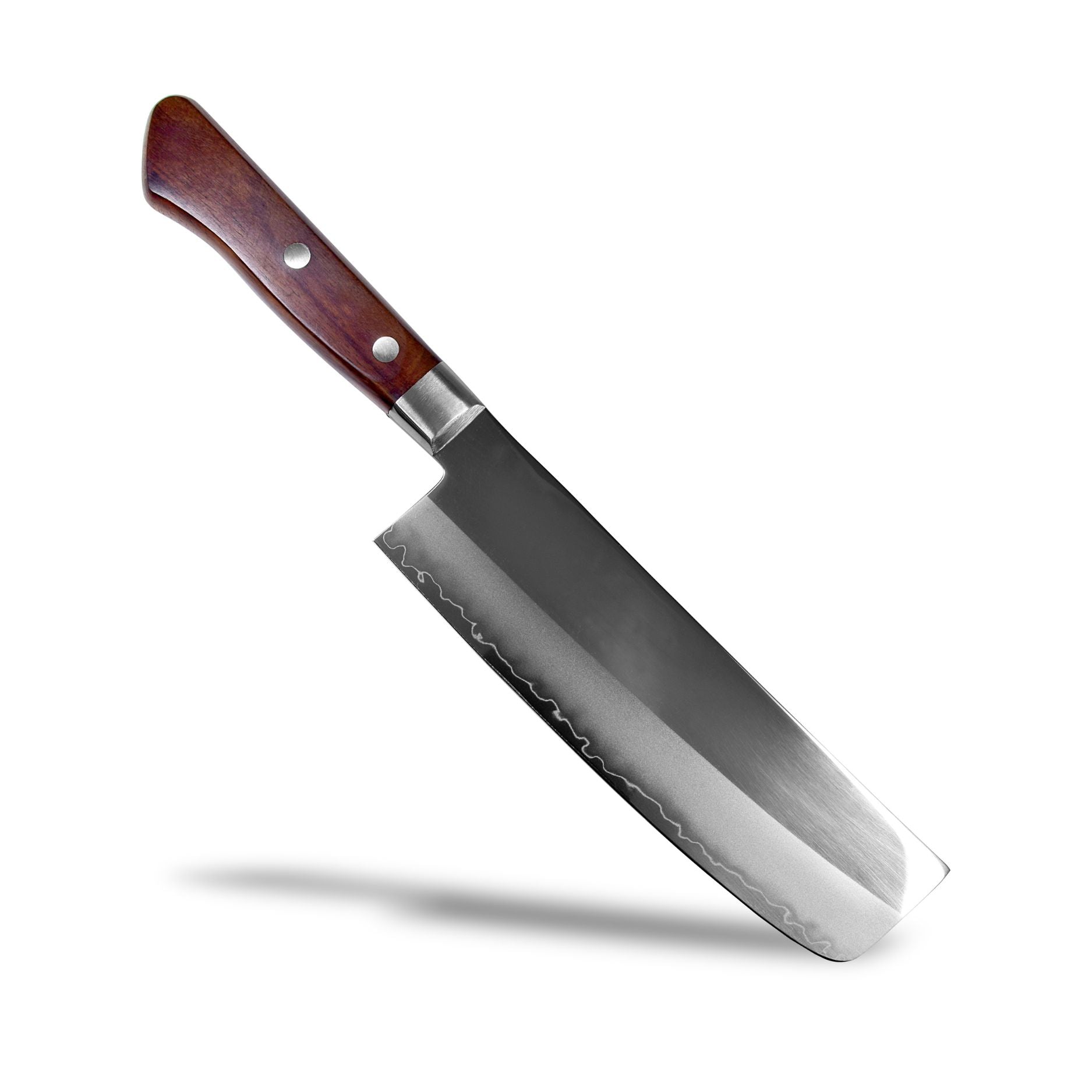
As a specific example, the Noshu Masamune-made Koryu Nashiji Nakiri knife (double-edged) has a blade length of approximately 165mm and weighs approximately 158g, making it a well-balanced specification that is easy for even beginners to handle.
Regarding weight, the lighter the knife, the less strain it puts on your wrist. However, if it's too light, you'll need more force to cut through hard vegetables, so a weight of around 150-170g—neither too light nor too heavy—is the most practical.
For those with small hands or less strength, we recommend a slightly lighter model. For men with strong grip strength or those who handle large quantities of vegetables, we recommend a slightly heavier vegetable knife.
The first thing beginners should keep in mind is to "not just decide based on numbers, but to prioritize the balance when you actually hold it and how easily it tires you out when you swing it."
What type and material of blade should a beginner choose?
In short, beginners should choose a vegetable knife made of a double-edged, stainless steel material.
A double-edged blade is one that is sharpened at an even angle from both the left and right sides. This makes it easier to create a straight cut and is easy to use for both right-handed and left-handed individuals.
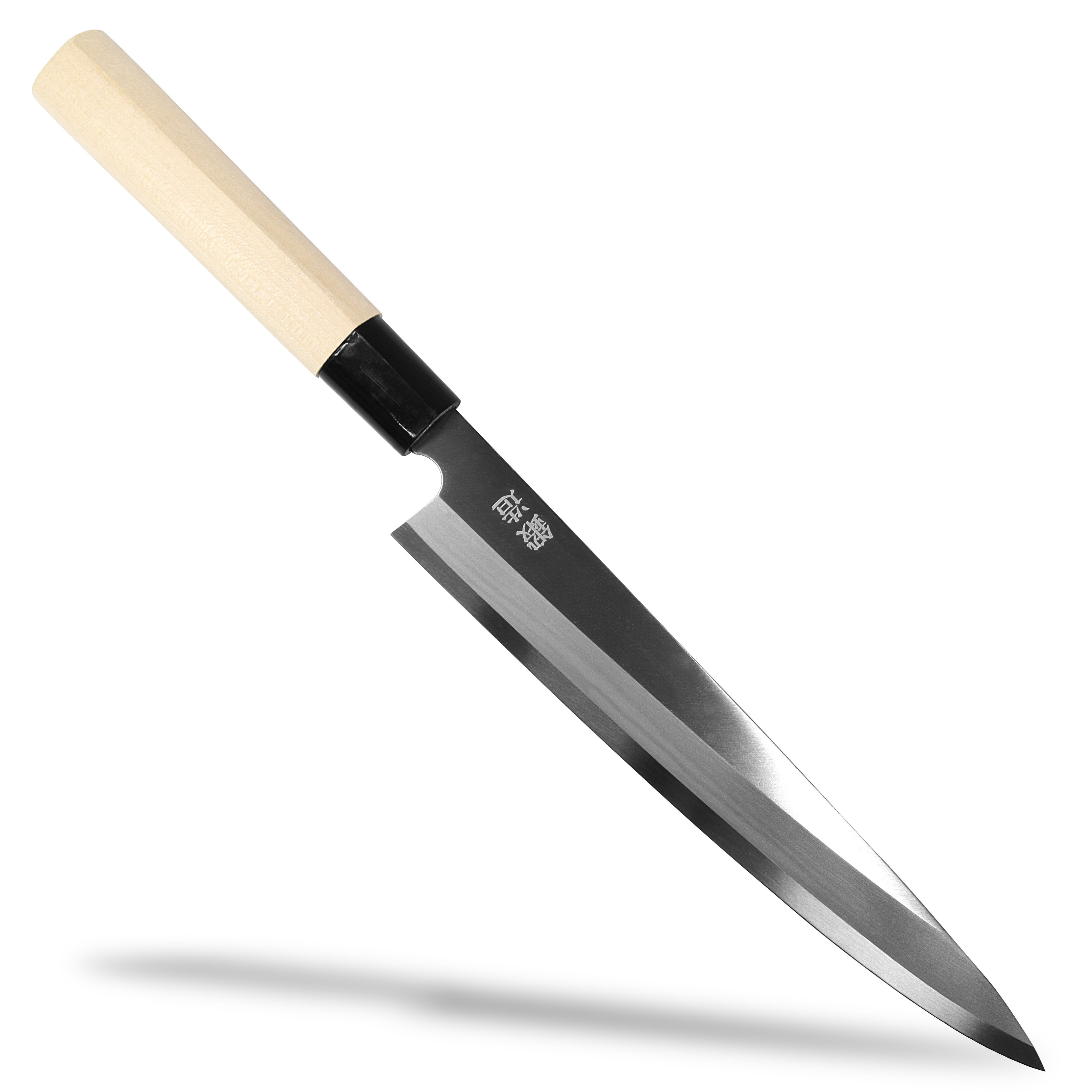
In contrast, single-edged knives have an angle on only one side and are common in specialized Japanese knives (such as yanagiba and deba). Cutting straight with them requires practice.
Materials are broadly divided into "steel," "stainless steel," and "composite materials," but for beginners, stainless steel is ideal because it is rust-resistant and easy to maintain.
For example, materials such as Gin-san steel and stainless steel clad steel are widely used in household knives because they combine the sharpness of steel with the rust resistance of stainless steel.
The most important thing is to choose a material that can be used for a long time if you sharpen it, and to be able to continue using it without difficulty, including maintenance.
Kikumatsu Cutlery Shop's Guide to "How to Avoid Making Mistakes"
In conclusion, the best way to avoid making a mistake when buying a knife is to decide on four key factors: intended use, size, material, and budget, and then consult with a trustworthy knife shop.
First, decide on the intended use: "Will it be used exclusively for vegetables?" or "Will it be used in conjunction with a santoku knife?" Then, based on the size of your home cutting board and hand, consider a size of around 16-17 cm as a guideline.
The material is primarily stainless steel, but composite materials with steel are also considered if a sharper cutting edge is desired.
As a budget guideline, choosing items mainly in the 5,000 to 15,000 yen range will strike a good balance between being too cheap and leaning too heavily towards high-end professional lines.
For example, models like the Noshu Masamune-made Koryu Nashiji Nakiri Knife (double-edged) feature a stainless steel blade and a laminated reinforced wood handle, combining traditional Japanese aesthetics with modern design while offering sufficient quality and durability for home use.
For beginners, the first things to consider are prioritizing "ease of grip and suitability for the intended use over design" and "a shop where you can consult about after-sales care (sharpening)."
FAQ
Q1. Is a vegetable knife necessary for beginners?
A1. If you frequently chop vegetables, it's highly necessary because it makes julienning and peeling easier than using only a santoku knife, and the finished product looks neater.
Q2. What blade length is recommended for a vegetable knife for beginners?
A2. A standard size is around 16-17 cm, which fits well on a home cutting board and allows for a good balance of cutting large vegetables and small ingredients.
Q3. Should a beginner choose a double-edged or single-edged knife?
A3. A double-edged blade is suitable because it produces a straight cut, making it easy to handle for both right-handed and left-handed users, and it helps you get the hang of cutting straight.
Q4. Which should I buy first, a vegetable knife or a santoku knife?
A4. A more realistic approach would be to first acquire a santoku knife, and then add a nakiri knife later when you want to cut vegetables more comfortably.
Q5. What are the advantages and disadvantages of a vegetable knife?
A5. The advantages are its sharpness and ease of use, specializing in vegetables, and the disadvantage is that it is not suitable for meat or fish, requiring a different knife.
Q6. What materials are good for beginners?
A6. Stainless steel is preferable because it is rust-resistant and easy to maintain, requiring less daily maintenance and easier to handle compared to steel.
Q7. What price range should I choose to avoid making a mistake?
A7. A price range of around 5,000 to 15,000 yen makes it easier to choose a vegetable knife that is of sufficient quality for home use and has better edge retention than those that are too cheap.
Q8. Is it difficult to maintain a vegetable knife?
A8. For stainless steel tools, basic care such as washing with a neutral detergent and wiping off the moisture is sufficient, and they can be used for a long time with just occasional sharpening, so it's not difficult.
Q9. Can I use a vegetable knife instead of a Chinese cleaver?
A9. It is not suitable for meat with bones or hard ingredients, and it does not have the thickness and weight of a Chinese cleaver, so it is safer to use it exclusively for vegetables.
Q10. Can left-handed people use a vegetable knife?
A10. A double-edged vegetable knife has blades that are symmetrical, so it can be used without any problems by left-handed people as well, and it is easy for family members to share regardless of their dominant hand.
summary
- In conclusion, for beginners, a stainless steel vegetable knife with a double-edged blade, a blade length of around 16-17 cm, and a weight of around 150-170 g is the easiest to handle and offers an excellent balance of safety and workability.
- A nakiri knife is a Japanese knife specifically designed for vegetables, making it ideal for julienning, peeling, and mincing. Its wide blade also offers the advantage of protecting your fingers, making it suitable for beginners.
- Having a santoku knife and a nakiri knife in a two-knife system will improve your daily cooking efficiency and make your dishes look better, so I highly recommend the "santoku + nakiri" combination to anyone who is just starting to buy knives.