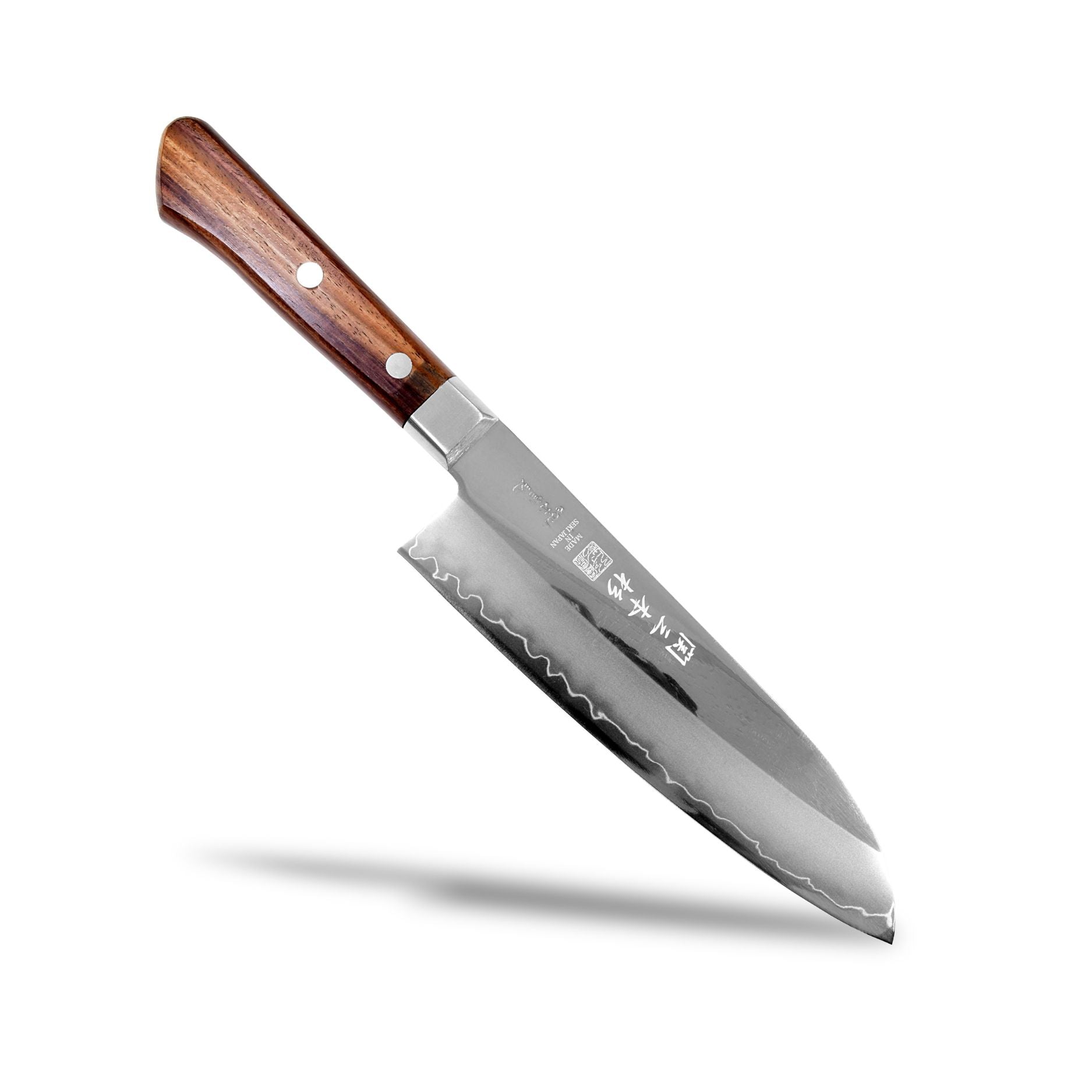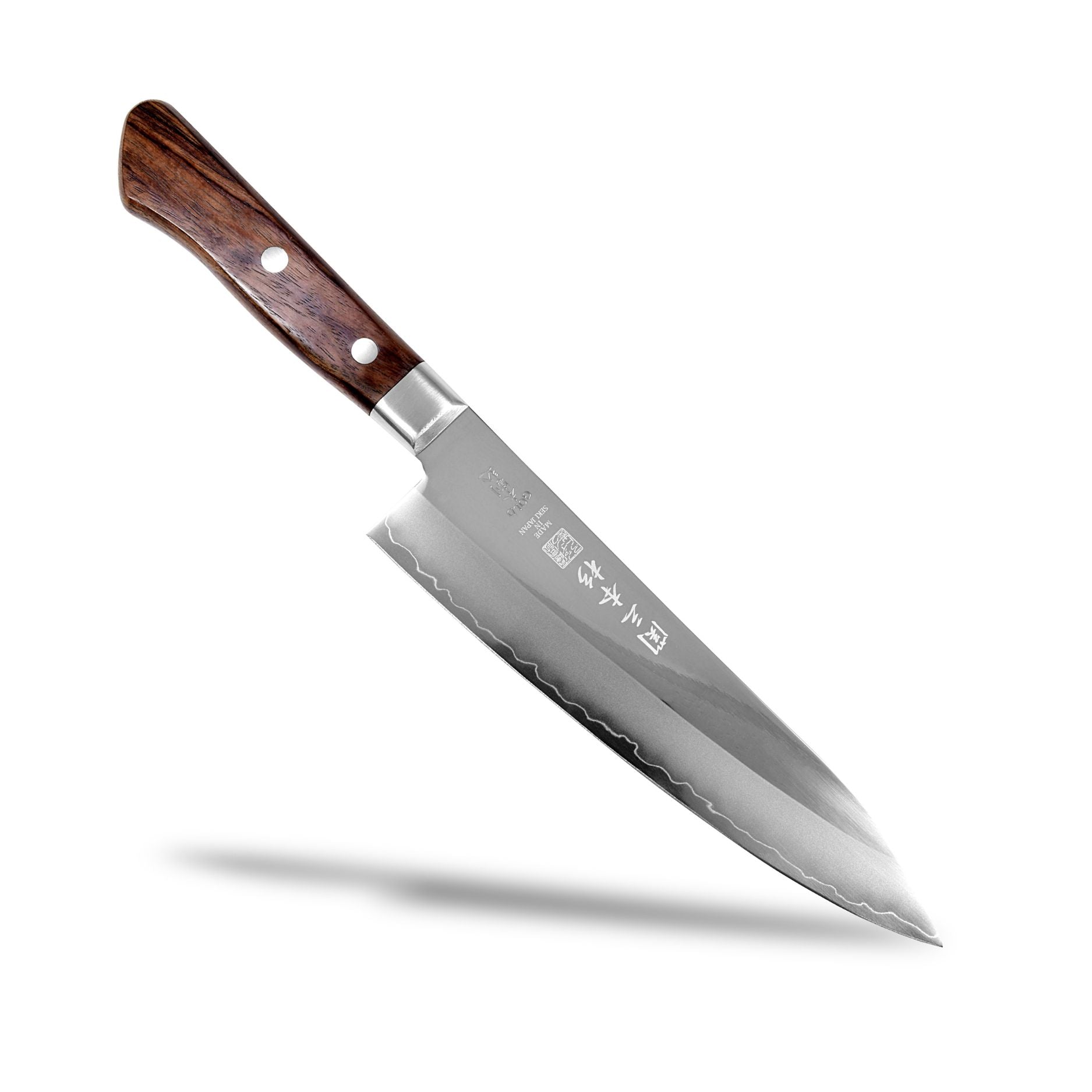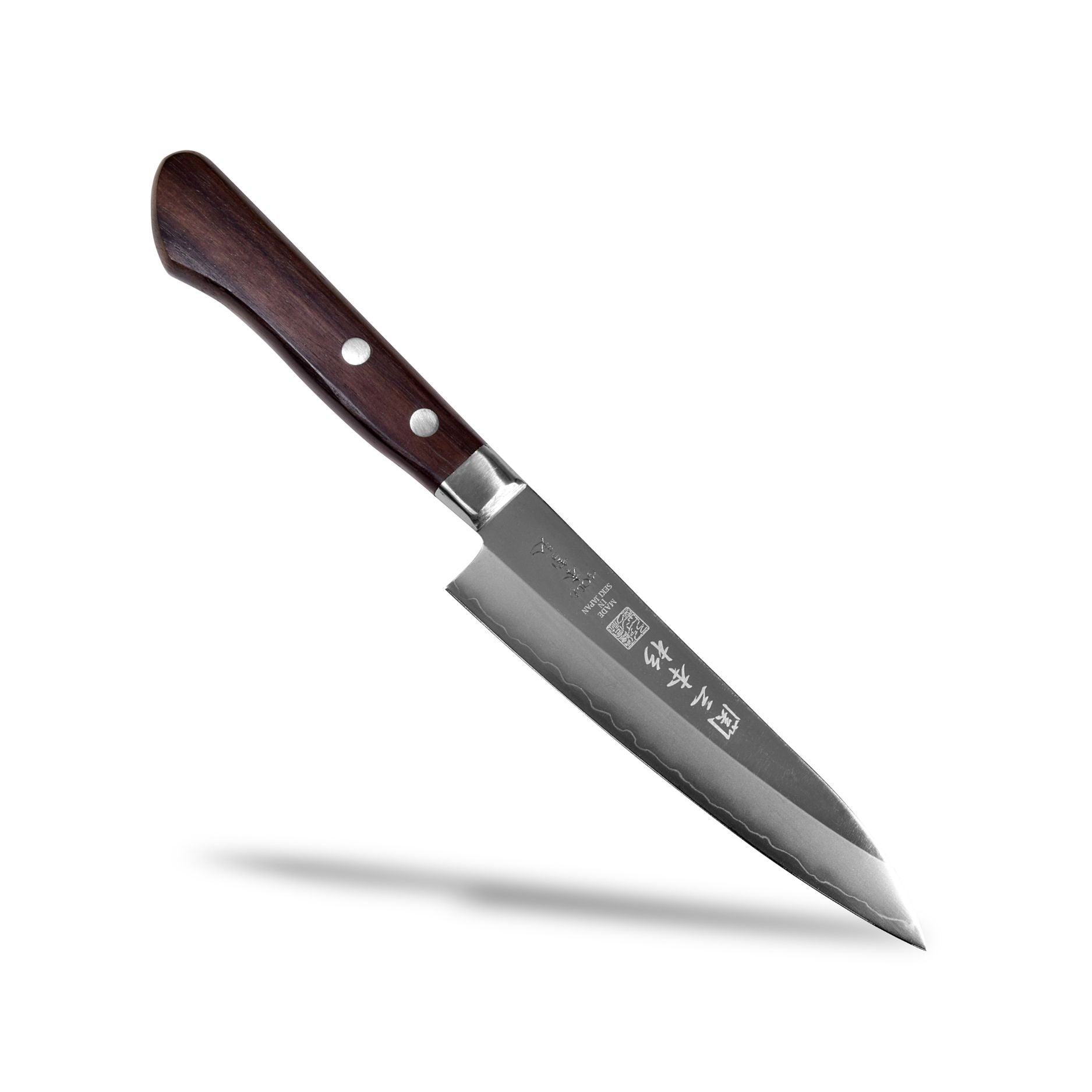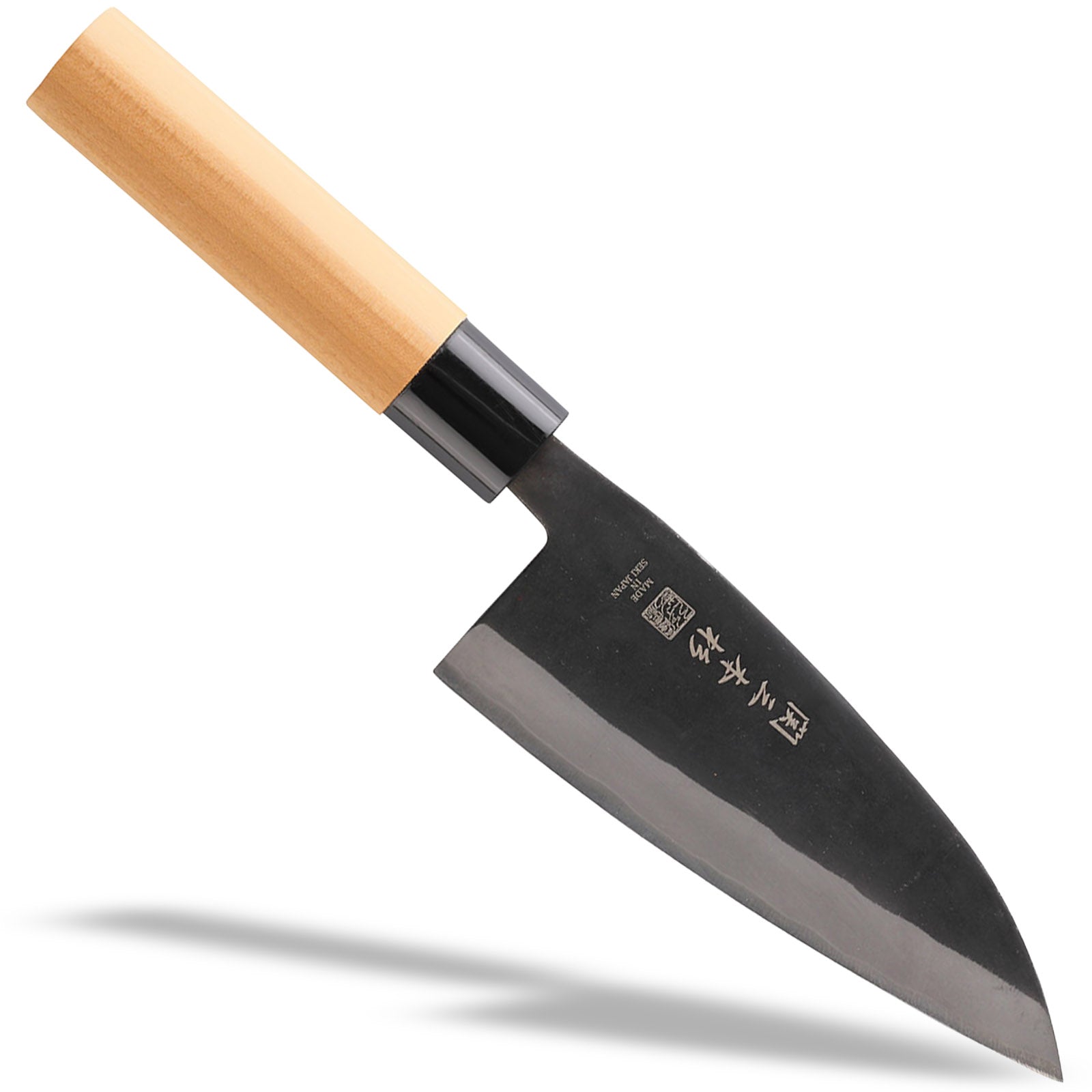

Learn the difference between a nakiri and a santoku knife in Japanese kitchen knives.
Recommended Japanese kitchen knives for those who primarily cook vegetables: Types, vegetable knives, santoku knives, and their differences explained.
In conclusion, for vegetable-centered home cooking, a two-knife system—a santoku knife as the base and a nakiri knife—is the easiest, safest, and least likely to result in mistakes.
[Key points of this article]
- From among the most representative types of Japanese kitchen knives, we'll focus on the "nakiri knife" and the "santoku knife," which are easy to use at home, and explain the differences between them.
- This article explains the recommended balance between a vegetable knife and a santoku knife, depending on whether you primarily cook vegetables or frequently handle meat and fish.
- From the perspective of a cutlery shop owner, this article provides a detailed guide on how beginners can choose, buy, and use Japanese kitchen knives without making mistakes.
Today's review: 3 key points
The Santoku knife is a versatile knife that can handle "three uses"—meat, fish, and vegetables—making it ideal as a first knife for the home.
A nakiri knife is a Japanese knife specifically designed for vegetables, making vegetable-related tasks such as julienning, mincing, and peeling vegetables much easier.
In conclusion, if you're mainly cooking vegetables, having both a "santoku" (general-purpose) and a "nakiri" (vegetable knife) will dramatically improve both your cooking efficiency and the final result.
Conclusion of this article
- In conclusion, among the various types of Japanese kitchen knives, the most practical approach for home use is to "use a santoku knife as the base and supplement it with a nakiri knife for vegetable work."
- In short, a santoku knife is a versatile all-purpose knife that can handle anything, while a nakiri knife is a specialized knife specifically for vegetables.
- The most important thing is to decide which ingredient (meat, fish, or vegetables) will be the main ingredient and which will be a supporting ingredient, based on the ingredients you commonly use at home and the amount you plan to cook.
- The first thing beginners should understand is the basic structure: a santoku knife is a double-edged all-purpose knife that combines the characteristics of a nakiri knife and a gyuto knife, while a nakiri knife is a traditional Japanese knife specifically designed for vegetables.
- If you're unsure which Japanese kitchen knife to choose, the safest bet is to start with a santoku knife and then add a nakiri knife when you want to cut vegetables more easily.
What are the basic differences between a nakiri knife and a santoku knife, both types of Japanese kitchen knives?
In short, a nakiri knife is a square-shaped Japanese knife specifically for vegetables, while a santoku knife is a versatile knife that can handle meat, fish, and vegetables.
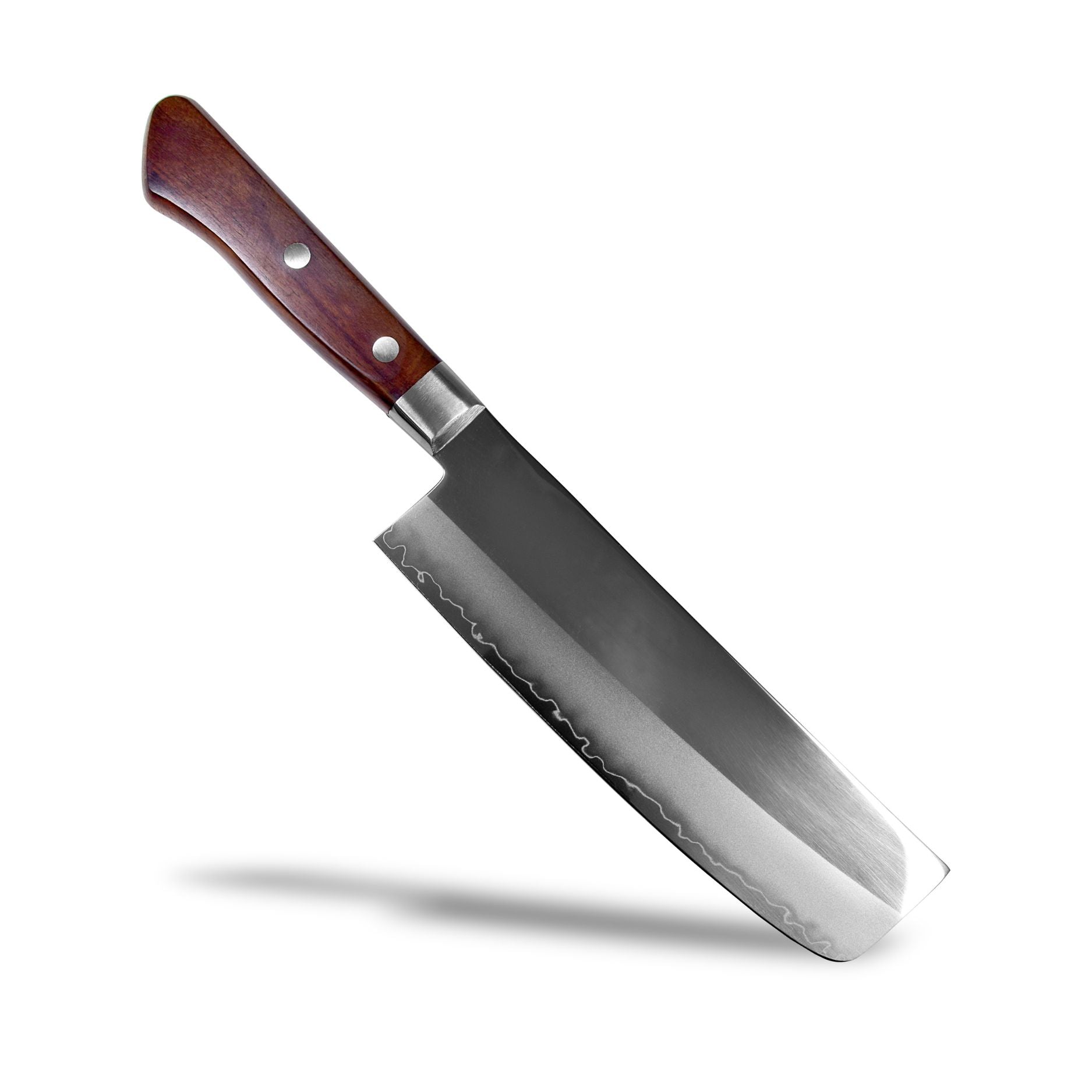
The nakiri knife is a traditional Japanese kitchen knife that has been used in households for a long time. Its straight blade and wide blade width make it ideal for efficiently slicing and mincing vegetables.
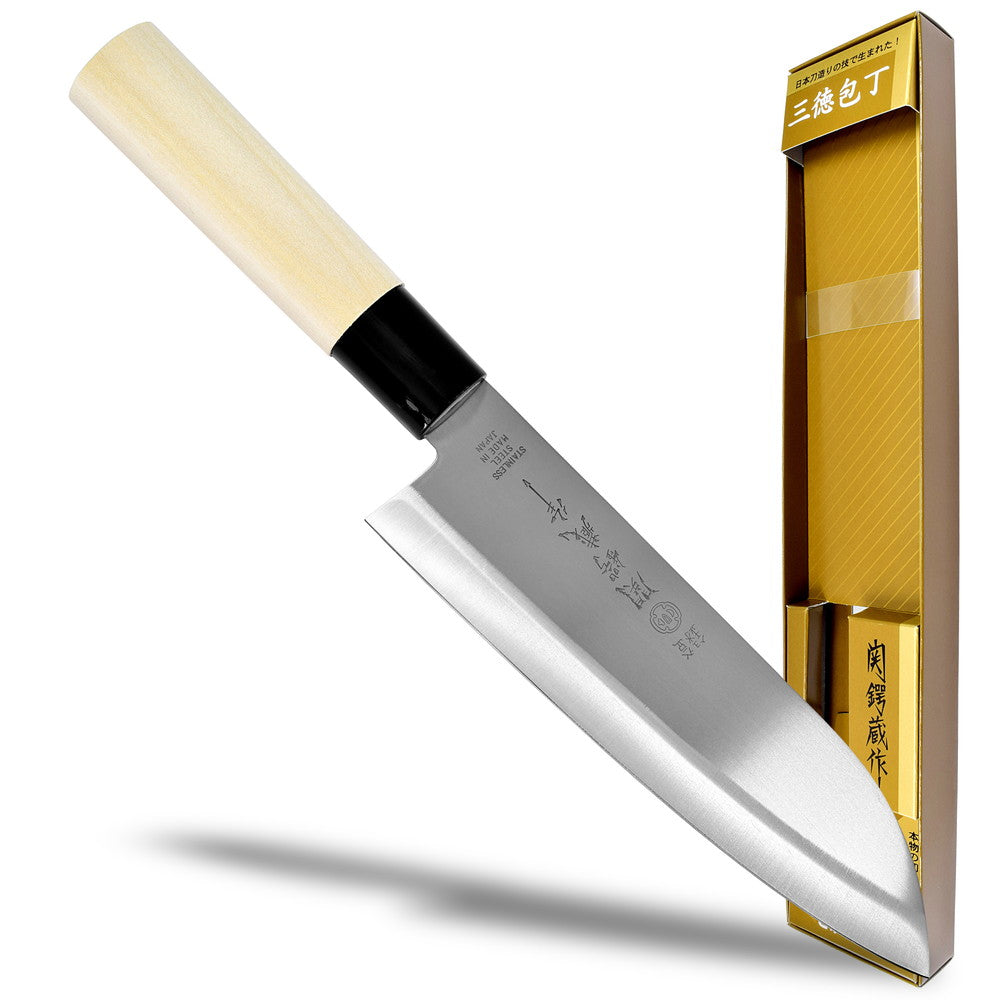
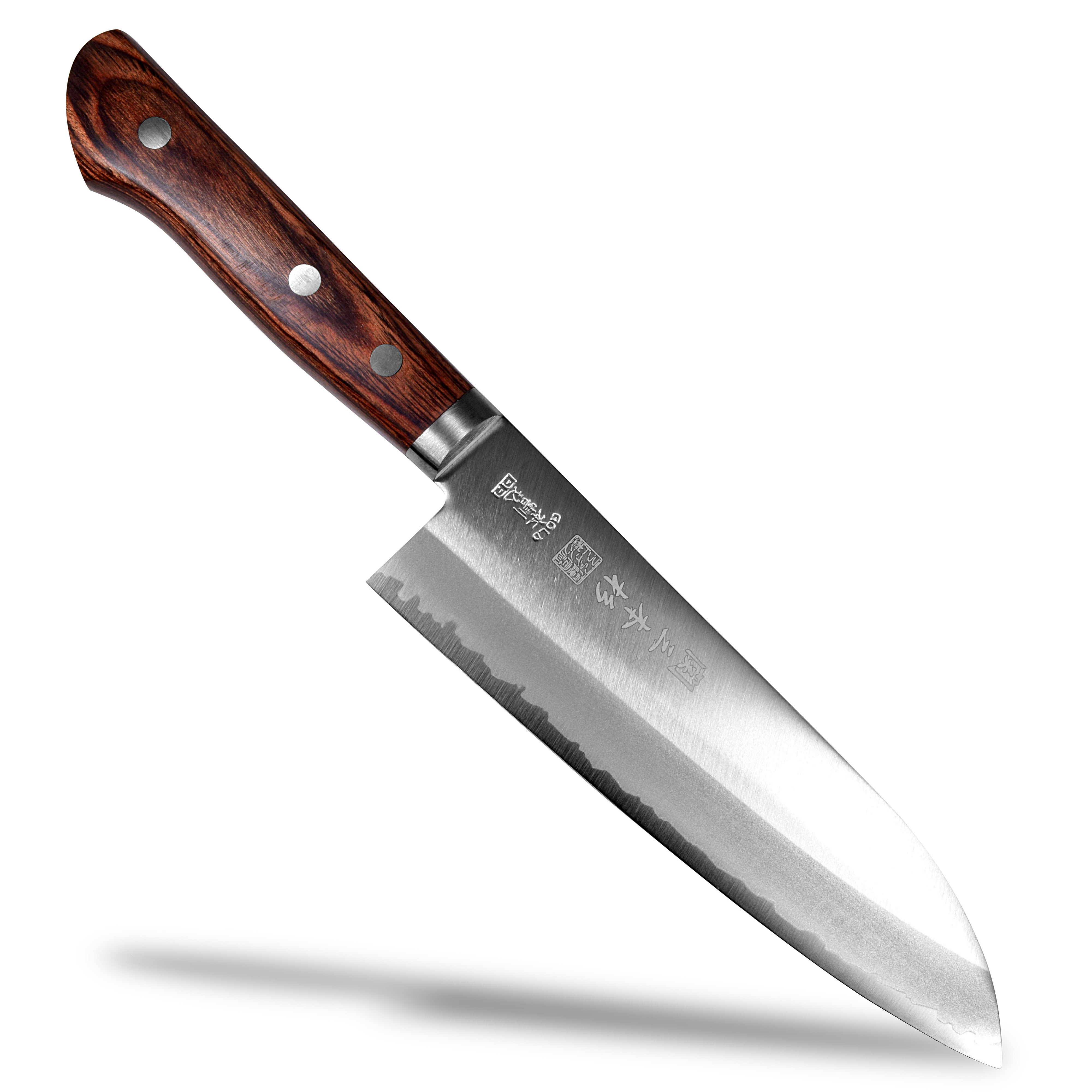
On the other hand, the Santoku knife is a type of kitchen knife that combines elements of a vegetable knife and a chef's knife. It features a nearly straight blade with a gentle curve, making it suitable for handling meat, fish, and vegetables.
For example, in households that regularly prepare dishes like nikujaga (meat and potato stew), ginger pork, or fillets of fish, a single santoku knife can cover most of the tasks.
On the other hand, for households that frequently prepare vegetable dishes such as salads, blanched vegetables, stir-fries, and preserved foods, adding a vegetable knife to your collection will make shredding cabbage and peeling daikon radish much easier.
The first thing beginners should understand is the division of roles between a "versatile santoku knife" and a "vegetable-specific nakiri knife," and then prioritize them according to their own eating habits.
Nakiri knife shapes, specialties, and advantages
In conclusion, a vegetable knife has a straight blade and a wide blade width, making it specialized for cutting, chopping, and slicing vegetables.
The vegetable knife has a nearly rectangular shape with a pointed tip and a blade that is almost straight, making it easy to chop rhythmically with a "tap-tap" motion while holding it stably against the cutting board.
Therefore, it truly shines when preparing vegetables that are frequently prepared repeatedly, such as shredding cabbage, roughly chopping Chinese cabbage, slicing daikon radish and carrots into ginkgo leaf shapes, and slicing cucumbers into rounds.
Furthermore, the wide blade makes it easier to guard against the knife by placing your fingertips against the side, which has the advantage of making it less intimidating for beginners.
Because it makes it easy to separate vegetables without crushing the cut surface, the finished product looks neater, and the texture and appearance of salads and other mixed dishes are improved.
On the other hand, it's not suitable for preparing meat or fish with bones, so the key to avoiding problems is to use it exclusively for vegetables.
Santoku knife: shape, specialties, and advantages
In short, the biggest advantage of a santoku knife is that it can handle anything as the main knife in the home.
The Santoku knife combines the straight blade of a vegetable knife with the curve of a chef's knife, making it suitable for both cutting vegetables and slicing meat and fish.
Because it is easy to cut meat, fish, and vegetables in a balanced way, it is called a "santoku" (three-purpose) knife and is often chosen as the first knife for home use as a standard.
For example, you can do most of your daily cooking with just one santoku knife, from cutting chicken thighs into bite-sized pieces, slicing pork loin, preparing fish fillets, and even chopping tomatoes and onions.
While it's not as specialized for vegetables as a vegetable knife, it's a very well-balanced choice for those who prioritize "how much one knife can handle."
The first thing beginners should understand is the idea of "establishing the overall base of the dish with a santoku knife, and then supplementing any areas that need improvement with a nakiri knife or similar."
The positioning of Japanese knives as a type of Japanese kitchen knife
In conclusion, it's easiest to understand the types of Japanese kitchen knives used in households by broadly dividing them into "all-purpose knives (e.g., santoku and gyuto)" and "specialized knives (e.g., nakiri, deba, and yanagiba)."
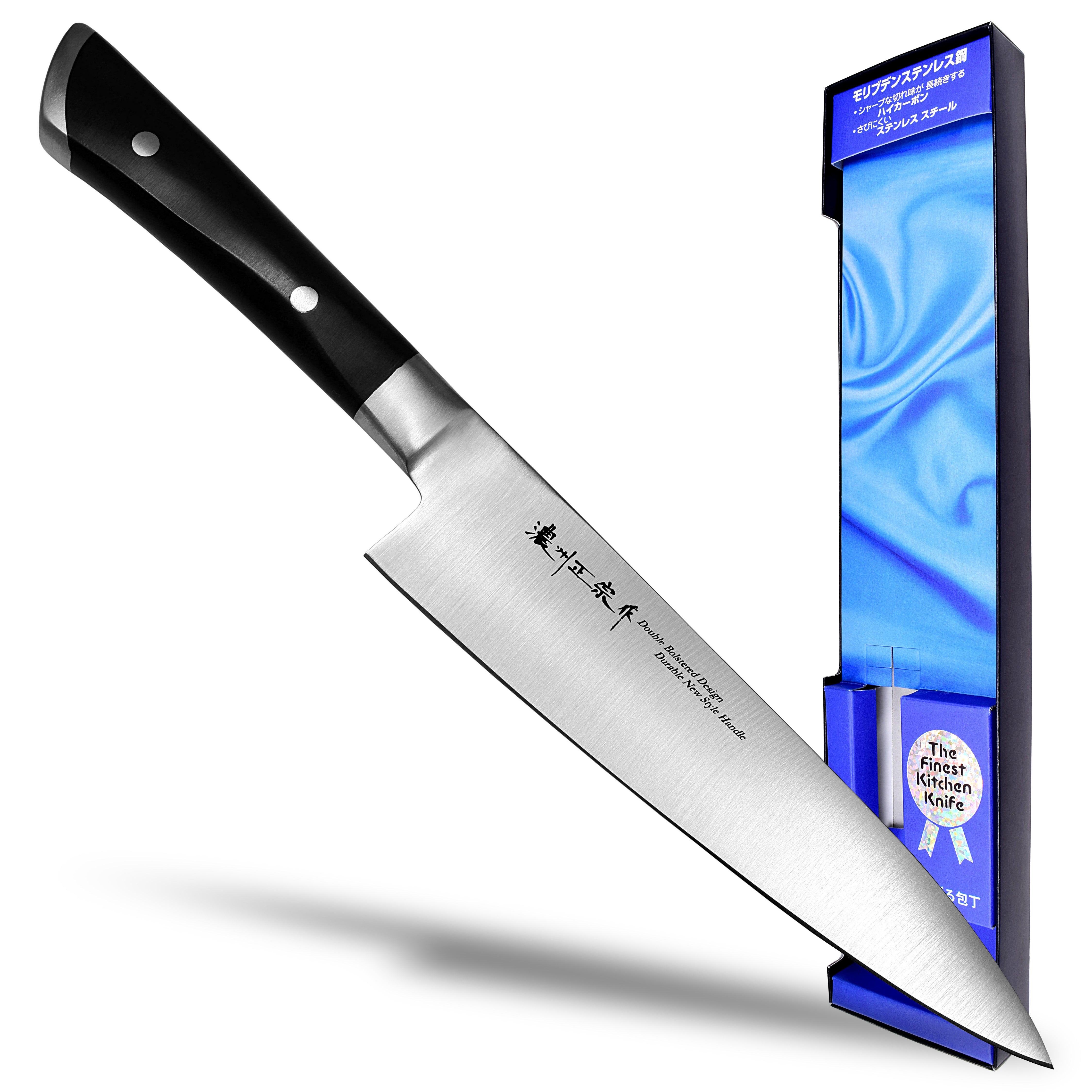
Santoku knives and chef's knives are "all-purpose" knives that have become established in Japanese households, drawing on the tradition of Western knives, and are considered the mainstays of everyday cooking.
The nakiri knife is a type of Japanese kitchen knife that has been used in households for a long time. In modern times, it is chosen as a "specialized tool for vegetables" by those who are particular about their cooking or by households that handle a lot of vegetables.
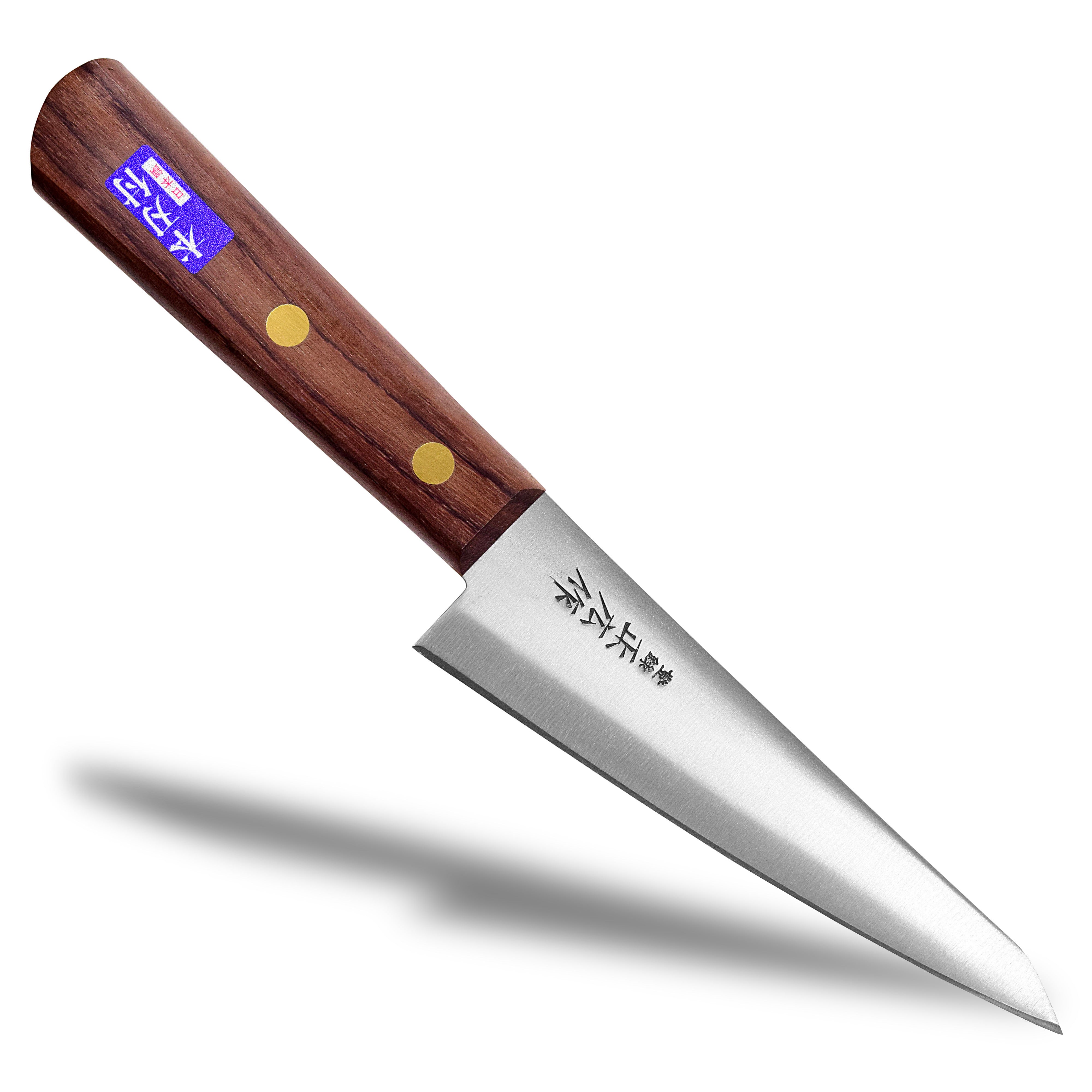
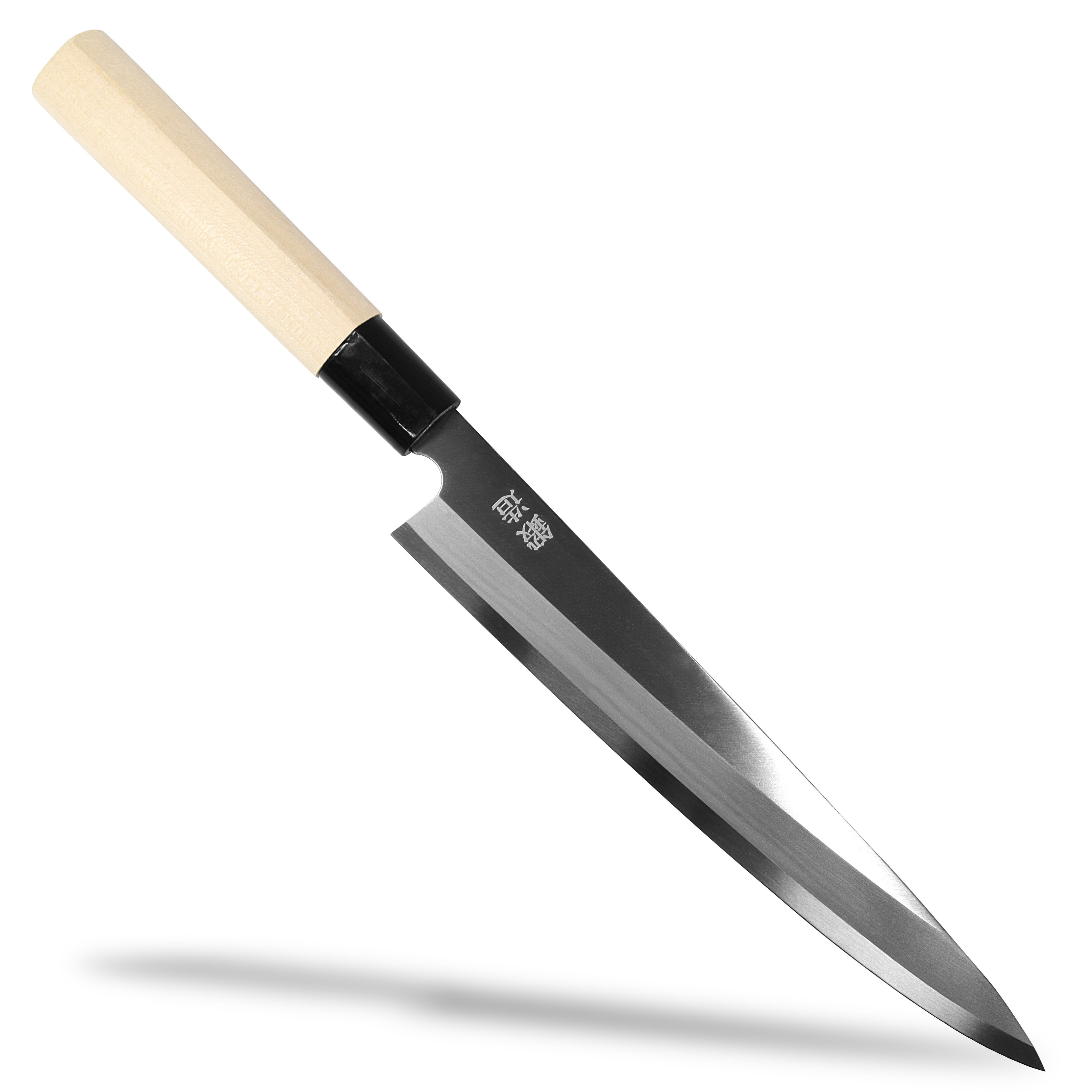
In addition to the above, there are other types of Japanese knives suited to different purposes, such as the deba knife, which is specialized for preparing fish, and the yanagiba knife, which is used to slice sashimi in one swift motion. However, for beginners, it is more practical to start with a santoku knife and a nakiri knife.
For example, if you want to seriously learn Japanese cuisine in the future, considering the steps of acquiring a deba and yanagiba knife in addition to a santoku and nakiri knife will greatly expand your culinary repertoire.
The most important thing is to choose a type of knife that suits your current eating habits, and gradually add specialized knives as you use them more.
Japanese kitchen knives: Types, vegetable knives, santoku knives - what are the differences and how should you use them?
Should I get a Santoku or a Nakiri knife for my first purchase?
In conclusion, for most households, I recommend starting with a santoku knife.
A santoku knife is ideal because it can cut meat, fish, and vegetables well, and when you're just starting to build your knife collection, the most important thing is that it can cover a wide range of cooking needs.
In particular, the versatility of a santoku knife provides great peace of mind for those who frequently cook main dishes using meat or fish, or for beginners who haven't yet made cooking a regular habit.
On the other hand, for those who have already moved on from commercially available pre-cut vegetables and prepared foods and have a clear need to "try their hand at cooking with vegetables at home," choosing a vegetable knife as their first knife is also a possibility.
For example, vegetarians, those on a low-carb diet who want to increase their vegetable intake, and those who mainly make prepared dishes can often find increased motivation by focusing on a vegetable knife.
The first thing beginners should keep in mind is the idea of "not aiming for perfection with the first one, but choosing while keeping a second option in mind."
What's the best combination for someone who prefers a vegetable-centered diet?
In short, for those who primarily eat vegetables, a two-knife system of a "santoku" (general-purpose) knife and a "nakiri" (vegetable knife) is best.
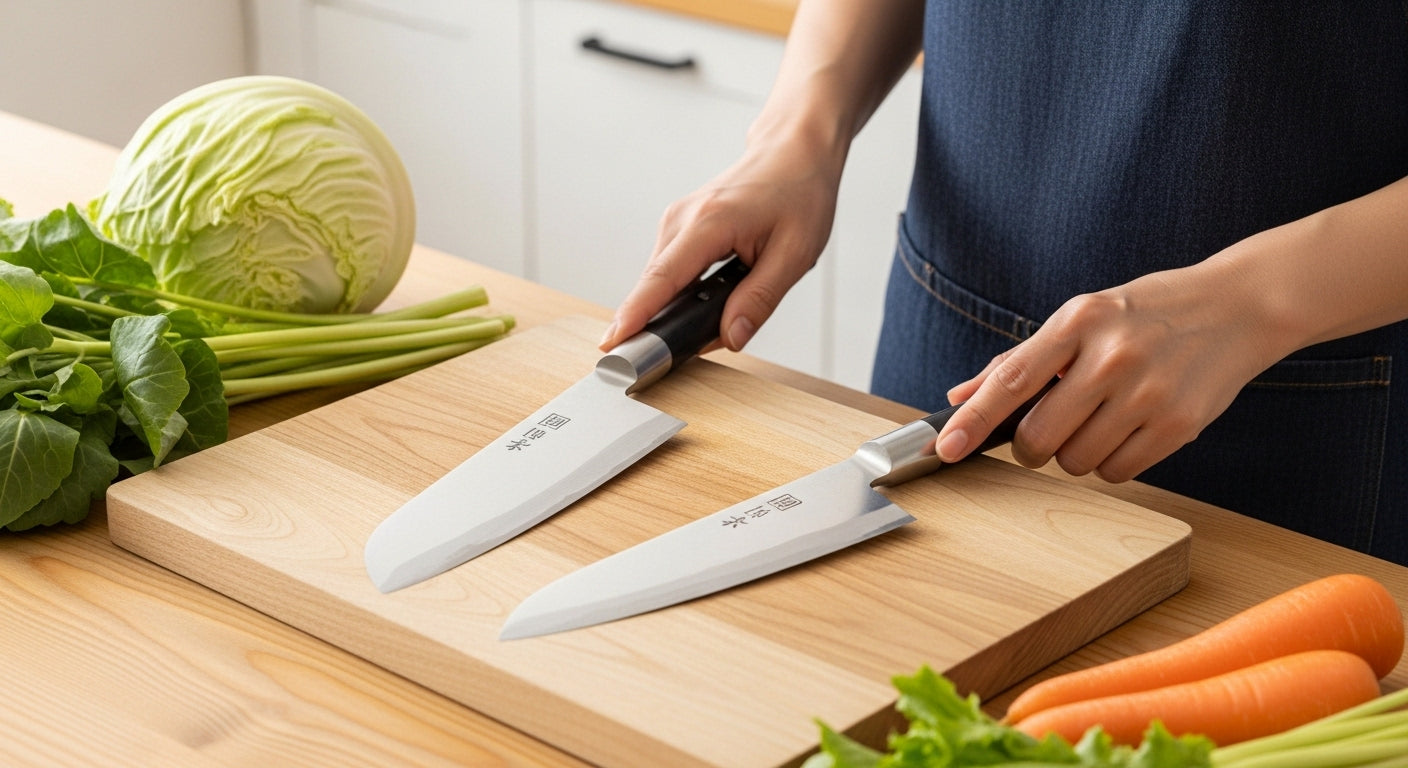
The santoku knife supports the overall cooking process, while the nakiri knife handles tasks such as "processing large quantities of vegetables," "fine chopping," and "uniform thin slicing," allowing each knife to utilize its strengths.
In fact, even specialty knife shops recommend a household setup with four types of knives—santoku, gyuto, nakiri, and petty—to be used according to their purpose, with the santoku and nakiri being the most frequently used combinations.
Specifically, assigning roles to different knives—for example, using a santoku knife for cutting meat and fish, and a nakiri knife for vegetable tasks like shredding cabbage, peeling daikon radish, and mincing green onions—will reduce confusion.
For those who prepare meals in advance on weekends, a vegetable knife functions as a "work efficiency-enhancing tool" that shortens preparation time and reduces strain on the wrist.
The most important thing is to identify the parts of your daily cooking that you find stressful and then add a type of knife that suits those challenges.
Steps for beginners to buy and choose a Japanese kitchen knife without making mistakes
In conclusion, the best way to avoid making a mistake when buying a knife is to consider the "purpose → size → material → budget" in that order, and finally consult with a trustworthy knife shop.
In terms of usage, you should organize which type of knife you cut most often in your daily cooking—meat, fish, or vegetables—and whether you prepare meals in advance or cook large quantities, then decide whether to use a santoku knife or a nakiri knife as your main knife.
The size should be chosen based on the blade length of around 165-180mm, which is commonly used in home kitchens, and also on the size of your hand and cutting board.
The material can be stainless steel, which is rust-resistant and easy to maintain; steel, which offers superior sharpness and ease of sharpening; or a composite material of these two.
As a budget guideline, for home use, choosing something in the 5,000 to 15,000 yen range will strike a good balance between being too cheap and too professional.
The first thing beginners should keep in mind is to "not decide based solely on design or price, but to prioritize the feel, weight, and balance when actually holding the knife," and to choose a shop where they can consult about after-sales service (sharpening).
FAQ
Q1. What is the biggest difference between a vegetable knife and a santoku knife?
A1. The biggest difference between a vegetable knife and a santoku knife is that a vegetable knife has a straight blade and a wide blade width, making it strong for chopping, while a santoku knife is a versatile knife that can handle meat, fish, and vegetables.
Q2. For beginners, which should they buy first: a vegetable knife or a santoku knife?
A2. For most households, it's practical to start with a versatile santoku knife and then add a nakiri knife as the amount of vegetables you're using increases.
Q3. If my diet is mainly vegetables, is a santoku knife unnecessary?
A3. Even in vegetable-centered dishes, it's rare to completely avoid meat and fish, so a two-knife system using a santoku knife as the base and a nakiri knife in conjunction is efficient.
Q4. Is it okay to cut meat or fish with a vegetable knife?
A4. It's possible to use it for light cuts of meat or fish, but it's not suitable for bone-in or tough parts of the fish, as it can cause the blade to chip. It's safer to use it in conjunction with a santoku or deba knife.
Q5. What is the standard blade length for a Santoku knife?
A5. For home use, 165mm and 180mm are standard lengths, considered to be well-balanced lengths that can easily accommodate a wide range of ingredients and cutting board sizes.
Q6. Is a nakiri knife a Japanese knife, and a santoku knife a Western knife?
A6. The nakiri knife is classified as a traditional Japanese knife, while the santoku knife is a "cultural knife" that combines the features of both a nakiri and a gyuto (chef's knife), thus possessing characteristics of both types of knives.
Q7. Which is better for a kitchen knife, stainless steel or carbon steel?
A7. If you prioritize ease of maintenance, stainless steel is suitable; if you prioritize sharpness and ease of sharpening, carbon steel is suitable; and stainless steel is easier for beginners to handle.
Q8. What types of kitchen knives should I have for home use?
A8. It is generally recommended to start with two knives: a santoku (or chef's knife) and a paring knife. For households that handle a lot of vegetables, adding a vegetable knife makes for a convenient three-knife setup.
Q9. What is the difference between a santoku knife and a chef's knife?
A9. The Santoku is a shorter, easy-to-handle all-purpose knife optimized for home use, while the Gyuto is a longer, more versatile knife capable of a wider range of cutting techniques, and is also favored by professionals.
Q10. When should I acquire a Japanese kitchen knife such as a deba or yanagiba?
A10. Once you start frequently preparing fish and making sashimi, adding a deba and yanagiba knife to your collection, in addition to your santoku and nakiri knives, will significantly improve the quality of your work.
summary
- In conclusion, among the types of Japanese kitchen knives, the "santoku knife" is essential for home use, and the more you cook vegetables, the greater the benefit of having a two-knife system including a "nakiri knife."
- The nakiri knife, with its straight blade and wide blade width, is specialized for vegetables, while the santoku knife is a versatile all-rounder that can cut meat, fish, and vegetables in a balanced way. They support daily cooking by fulfilling different roles.
- If you're unsure which knife to choose, consider these four points: intended use, size, material, and budget. Then, start with a santoku knife, followed by a nakiri knife. This will ensure a successful and enjoyable introduction to Japanese kitchen knives.