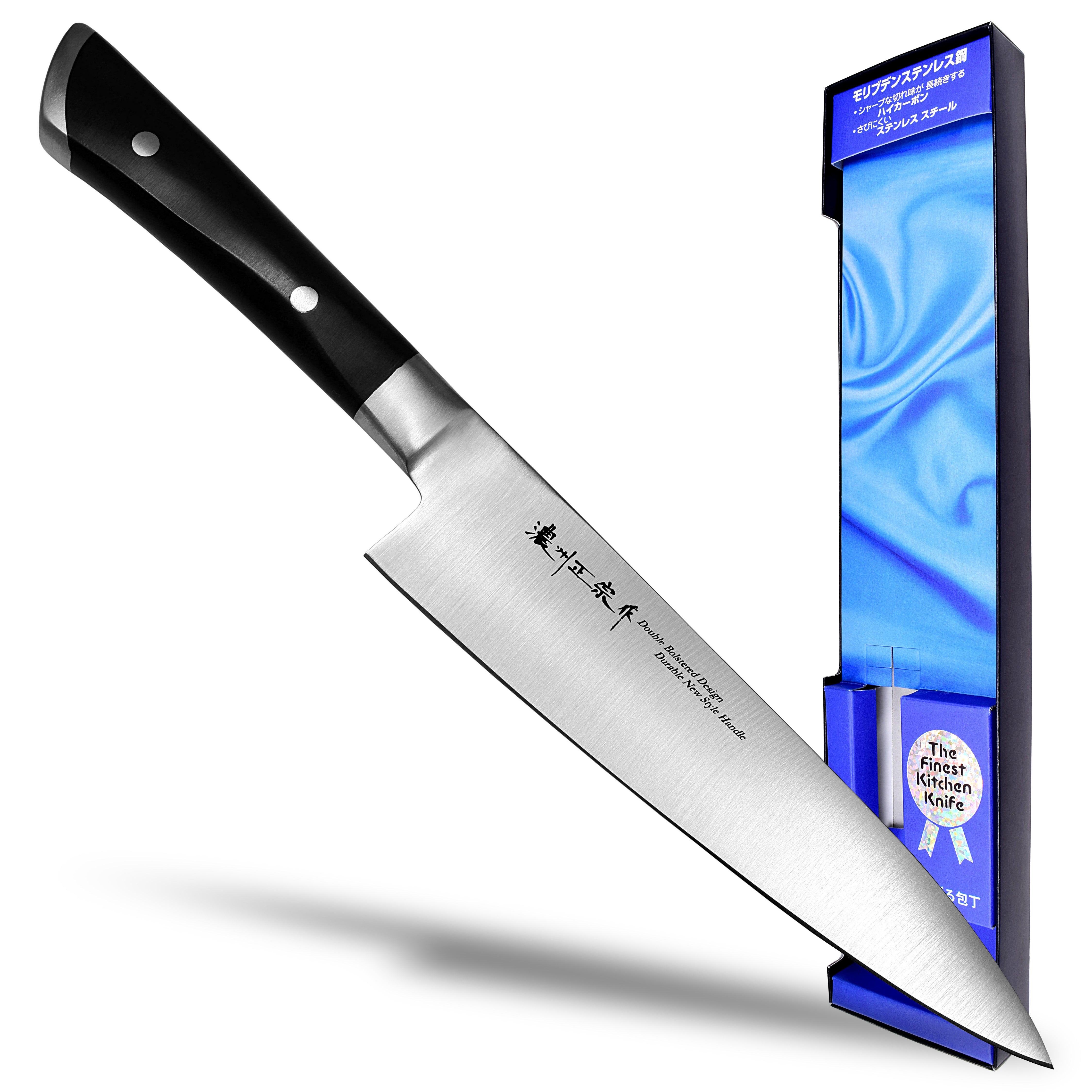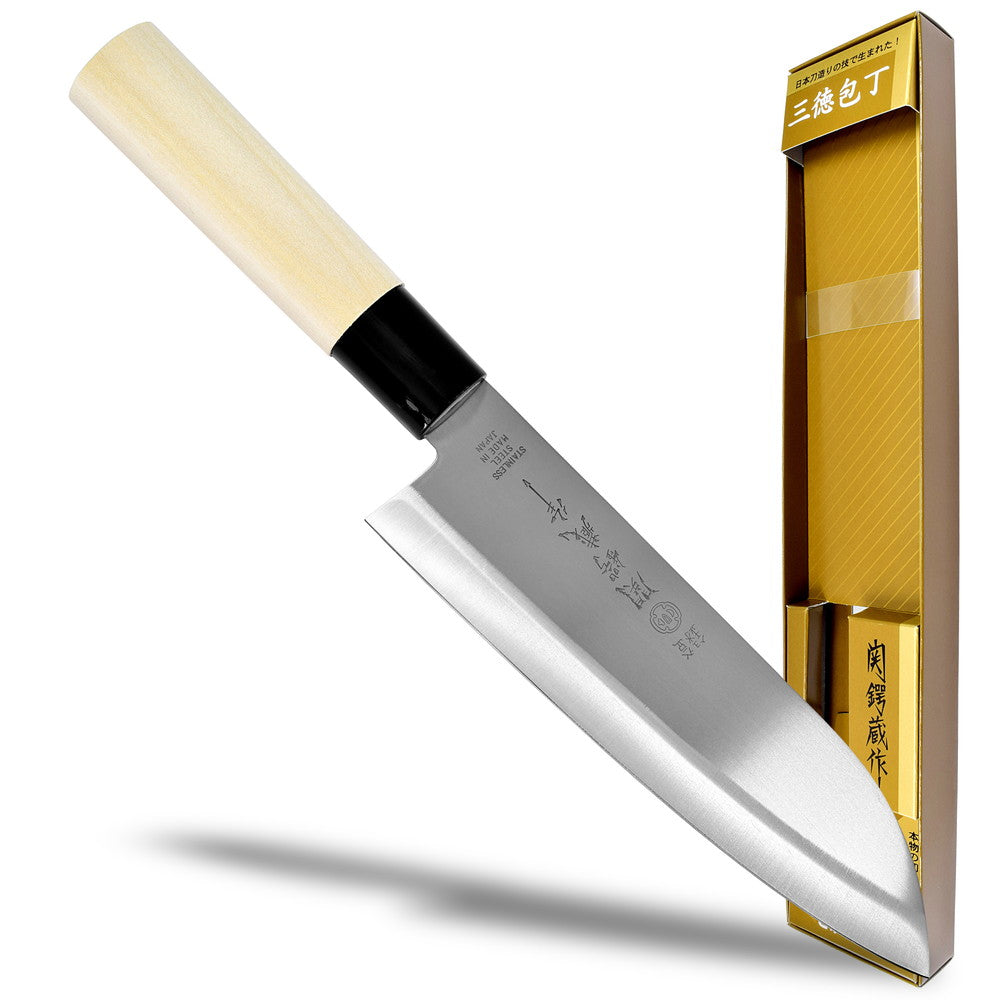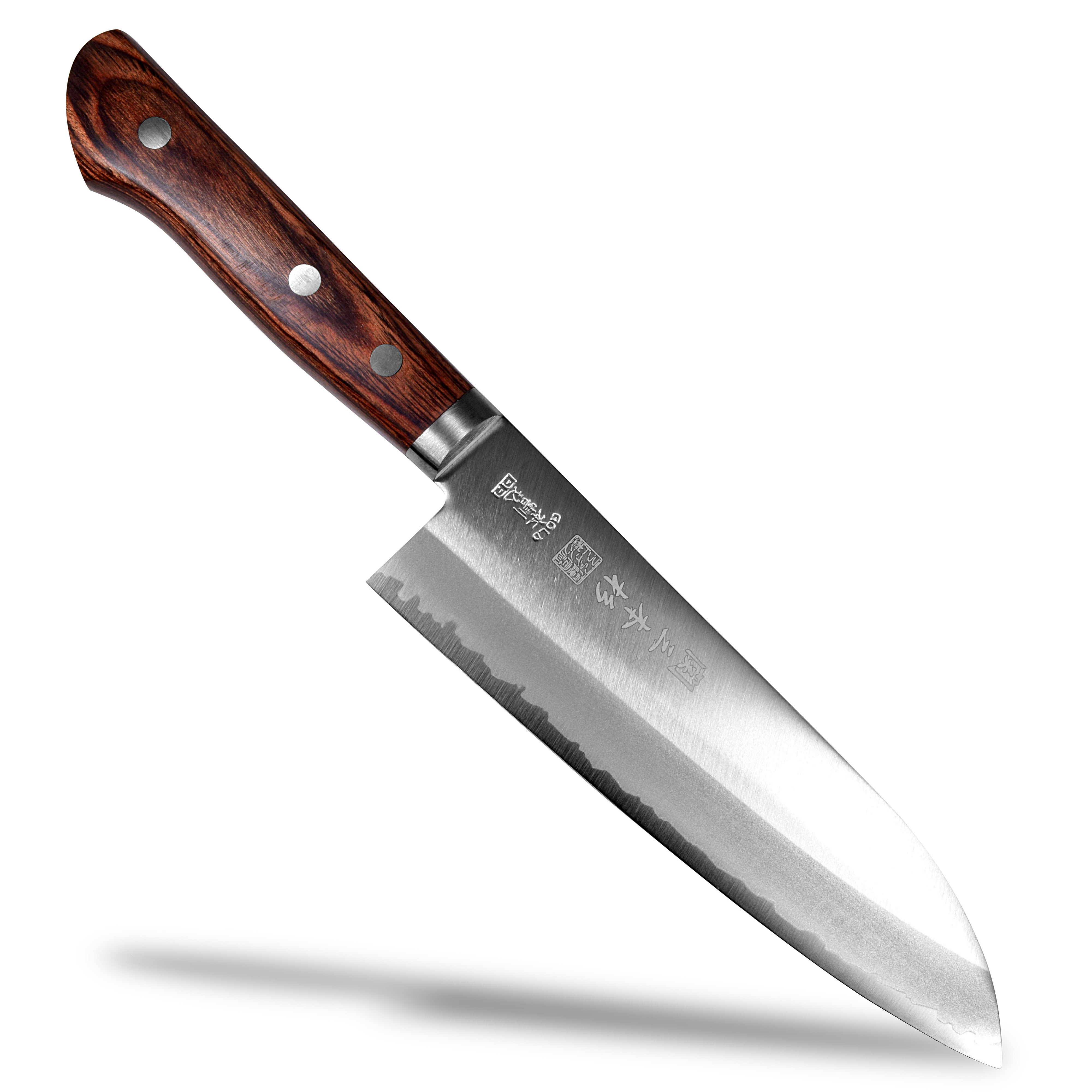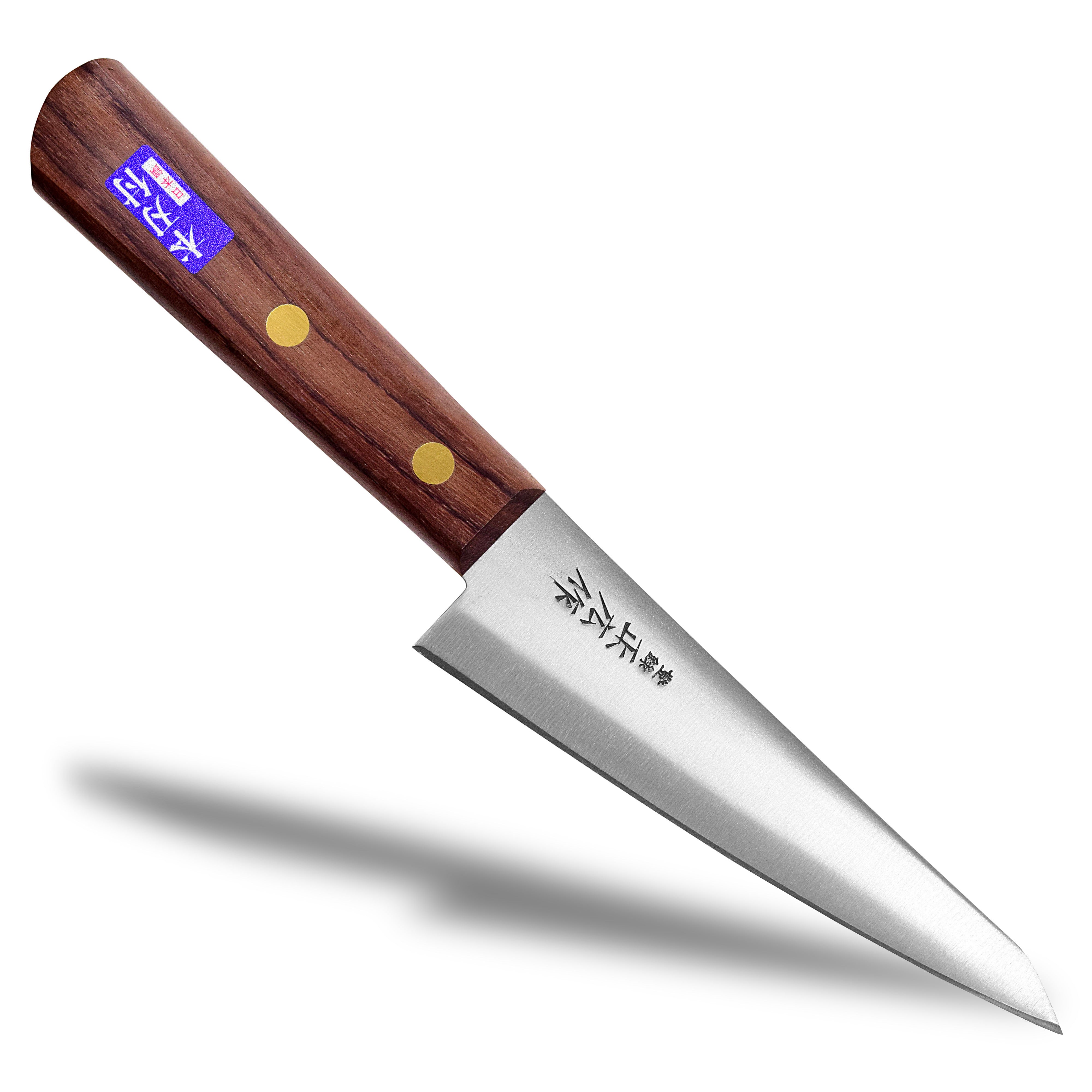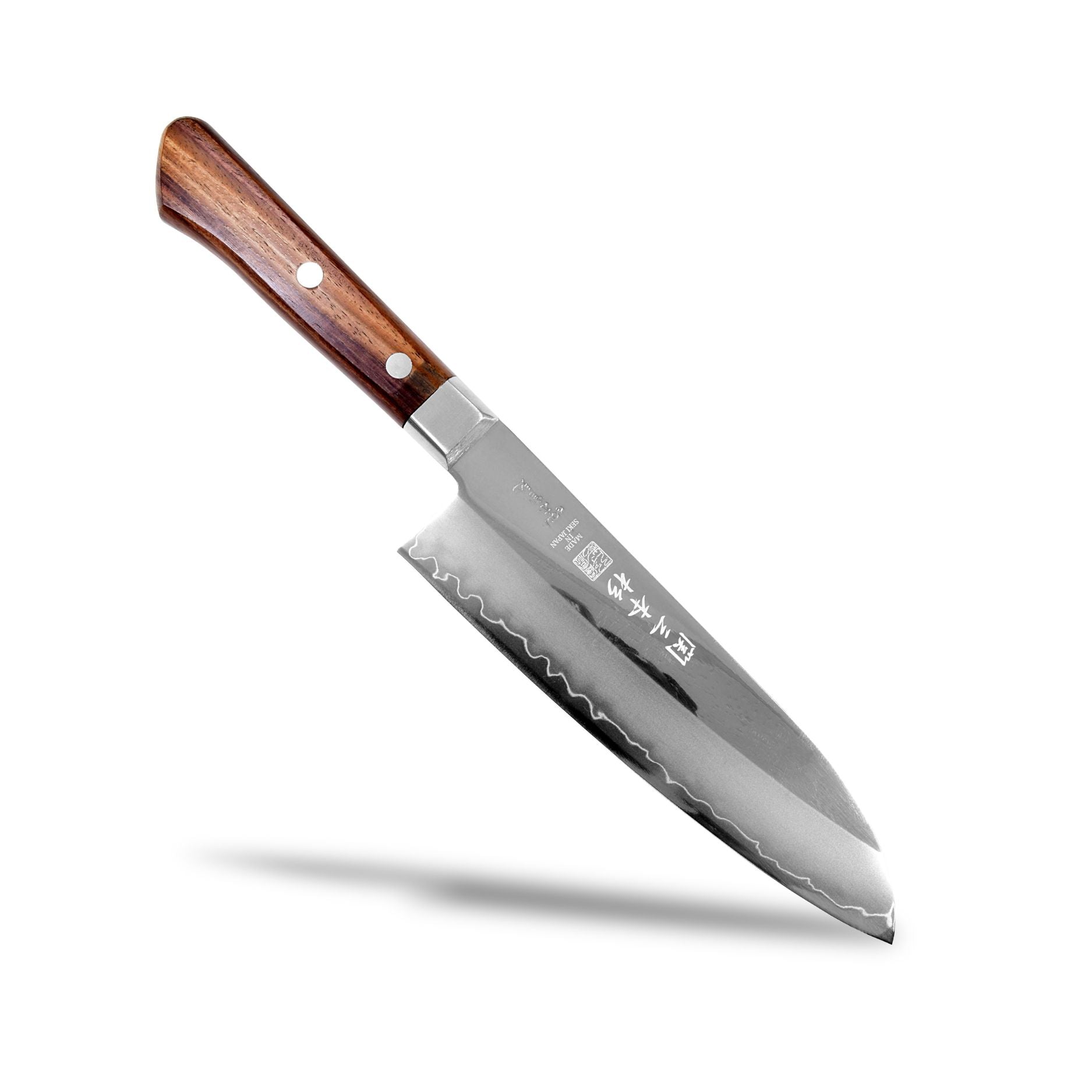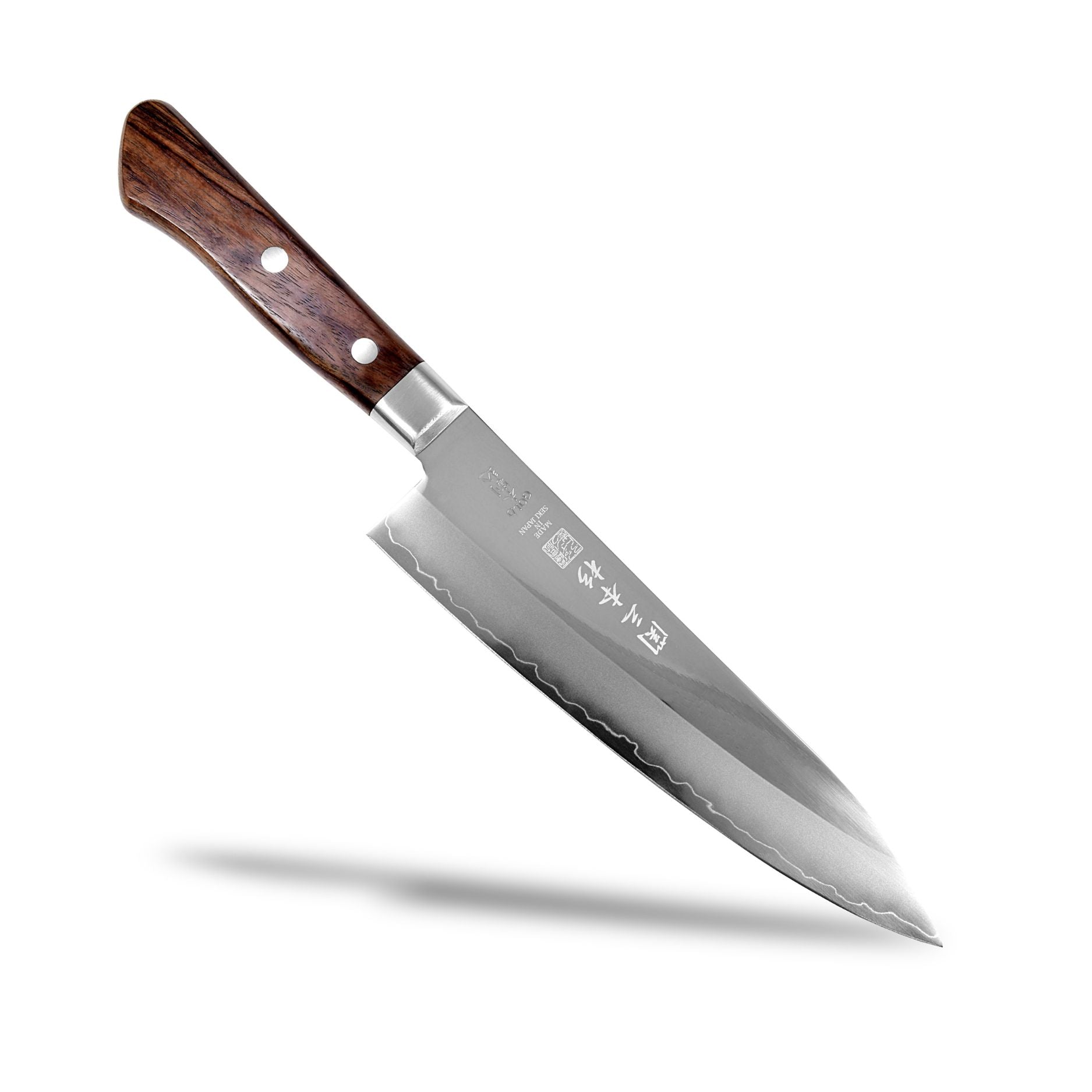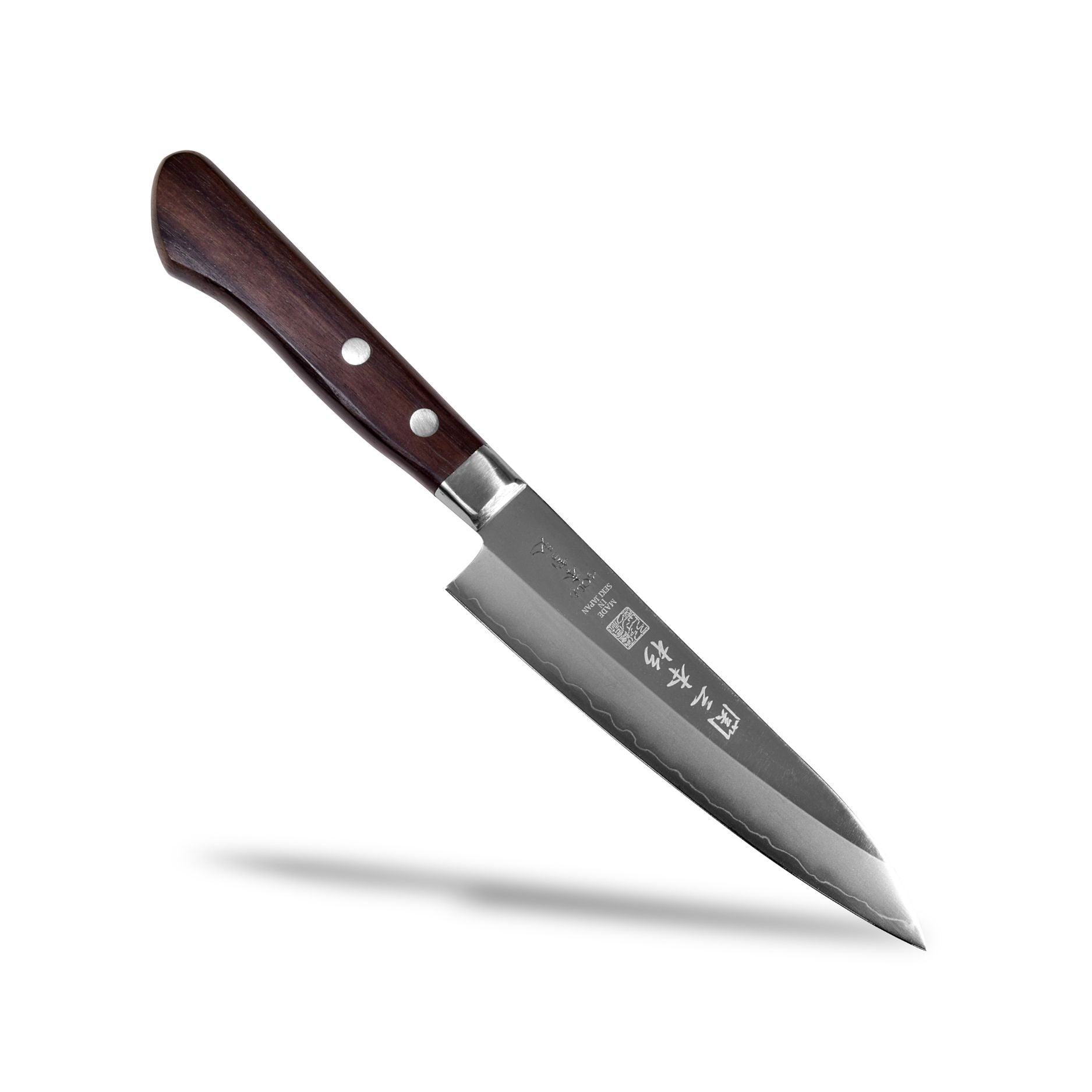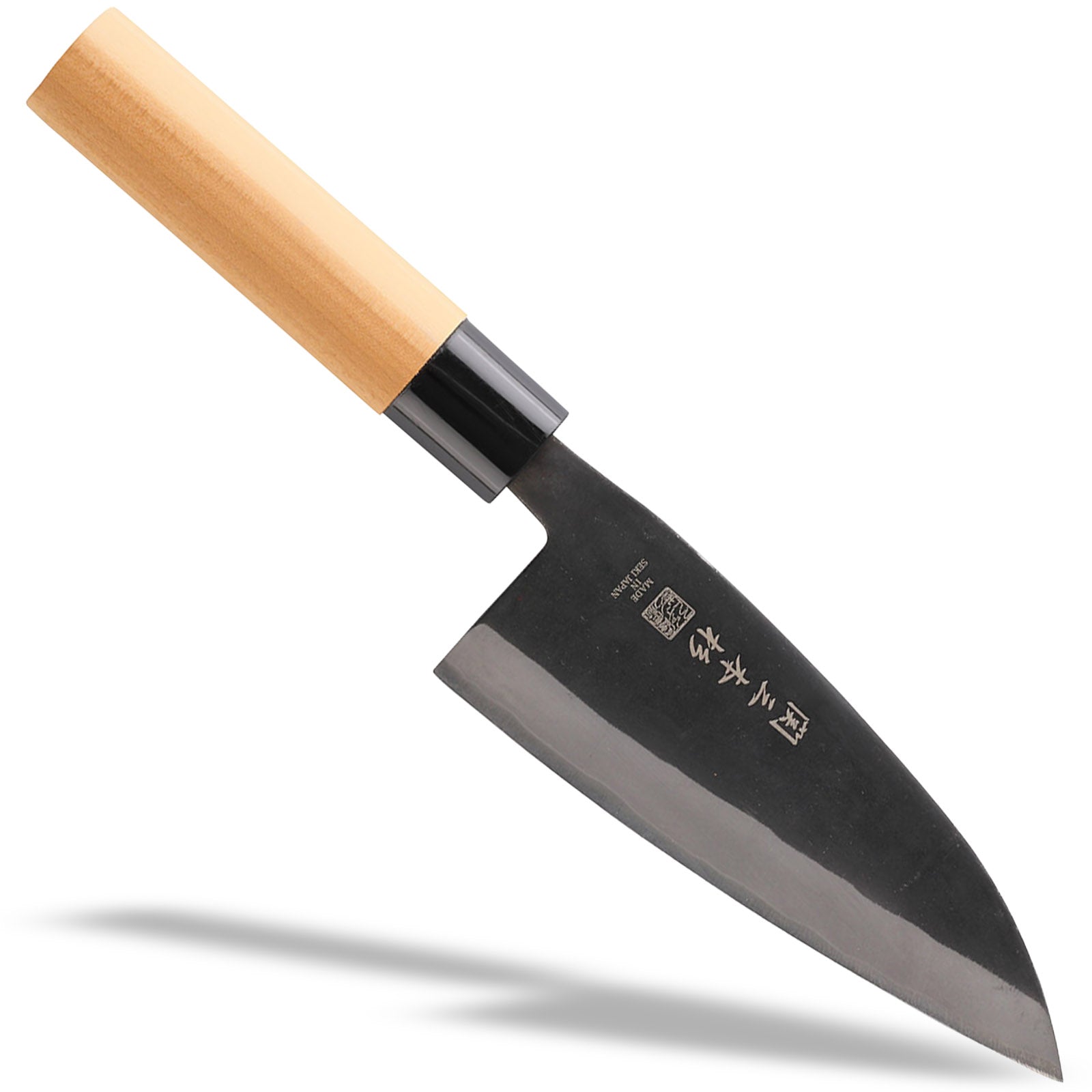


Choosing a secondary knife from our recommended Japanese kitchen knives
Japanese kitchen knives that are convenient to carry in pairs: Recommended, Petty knife, Secondary knife, Benefits
In conclusion, having a small paring knife with a blade length of around 13cm as a secondary knife, in addition to a santoku or nakiri knife, will make detailed food preparation significantly easier and greatly improve cooking efficiency and safety.
[Key points of this article]
- This article summarizes the role and advantages of the "petty knife," a recommended secondary knife among Japanese kitchen knives.
- This article explains the recommended size, material, and shape of a paring knife, as well as tips for choosing one specifically as a secondary kitchen knife.
- This article introduces specific usage patterns for carrying two or three knives, such as a santoku knife or a nakiri knife.
Today's review: 3 key points
A petty knife is a small kitchen knife with a blade length of about 9 to 15 cm, and is a secondary knife specifically designed for detailed work such as preparing fruits, small vegetables, and herbs.
In short, the advantages of a secondary knife are its maneuverability, lightness, and ease of viewing, which make tasks that are difficult to do with only a santoku knife much smoother.
In conclusion, the most practical setup for home kitchens is a two-knife system consisting of a santoku or nakiri knife plus a paring knife, which increases work efficiency without taking up valuable kitchen space.
Conclusion of this article
- In conclusion, if you're looking to add a secondary knife to your collection of Japanese kitchen knives, I recommend getting a paring knife with a blade length of around 13cm.
- In short, a petty knife is a small, all-purpose knife that excels at "cutting fruits, small vegetables, herbs, and decorative cuts," complementing the santoku and nakiri knives.
- The most important thing is to define the purpose of your secondary knife as "a tool for detailed work that is difficult to do with a santoku knife," and choose it accordingly.
- The first things beginners should keep in mind are the standard size of the paring knife (approximately 120-150mm) and the fact that choosing a stainless steel material that is resistant to rust will help prevent mistakes.
- Whether Japanese or Western style, a two-knife set consisting of a main knife and a paring knife is a standard choice even in professional kitchens, and it's a cost-effective investment for home use.
What are the advantages of Japanese kitchen knives, including recommended petty knives and secondary knives?
In short, a paring knife is a "small, maneuverable secondary knife," and its biggest advantage is that it allows you to perform small daily cutting tasks without stress.
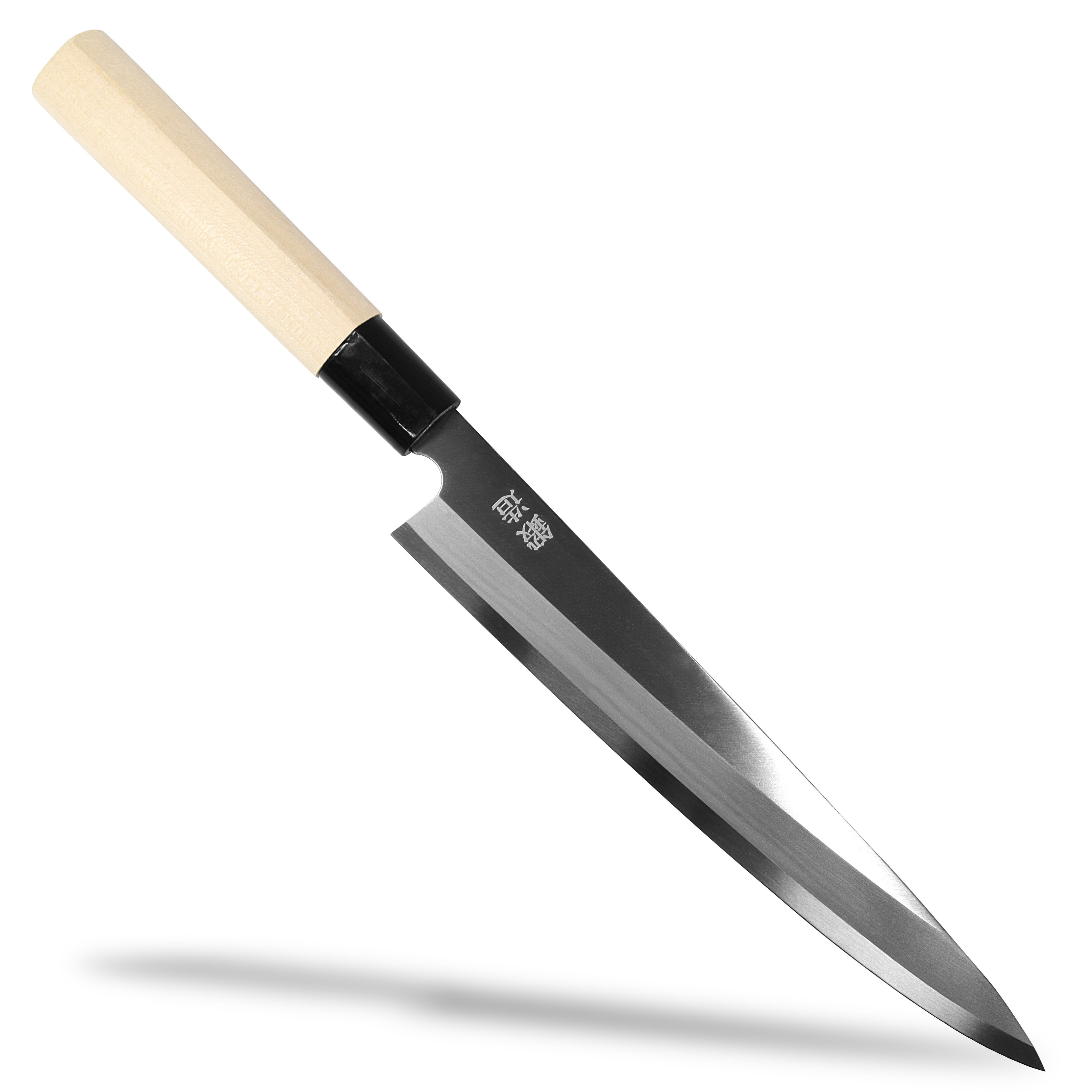
A petty knife is a type of Western-style kitchen knife, specifically a small knife with a blade length of about 9 to 15 cm, and its name originates from the French word "petit" (small).
The tip is sharp like a chef's knife, making it ideal for tasks requiring precise control, such as peeling fruit, cutting small vegetables, and chopping herbs and spices.
The advantages of using it as a secondary knife become apparent in the following everyday situations:
- Peel and cut apples and citrus fruits for breakfast.
- Quickly chop some condiments like garlic, ginger, and green onions while preparing dinner.
- Divide cherry tomatoes, sausages, and broccoli into smaller portions for lunch boxes.
In both cases, it's quicker and safer to grab a paring knife than to bother taking out a large santoku knife.
Three specific advantages of using it as a secondary knife
In conclusion, the advantages of using a paring knife as a secondary kitchen knife can be summarized in three points: "maneuverability," "lightness," and "ease of cleaning."
The first advantage is its maneuverability. The short blade makes it easy to control even in tight spaces or while holding ingredients, making it ideal for detailed tasks such as removing sprouts and stems.
The second benefit is reduced fatigue due to its lightness. Because it is lightweight, it is praised for reducing strain on the wrists even during prolonged decorative cutting or fruit cutting.
The third advantage is that it's easy to clean and put away. Because the blade is small, it's easy to wash quickly even with a small sink or sponge, and it doesn't take up much storage space, making it easy to use on a daily basis.
For example, if you want to cut some extra fruit after dinner, even if the sink is a bit crowded, a paring knife can be washed and used in a small space, which lowers the psychological barrier of thinking, "It's too much trouble, I'll just skip it."
The first thing beginners should understand is that a secondary knife is not a replacement for a larger knife, but rather a dedicated tool for when you just need to "cut a little bit."
What's the difference between this and a main kitchen knife?
In short, a santoku knife or nakiri knife is "a knife for heavy-duty chopping on a cutting board," while a petty knife is "a knife for fine work at hand."
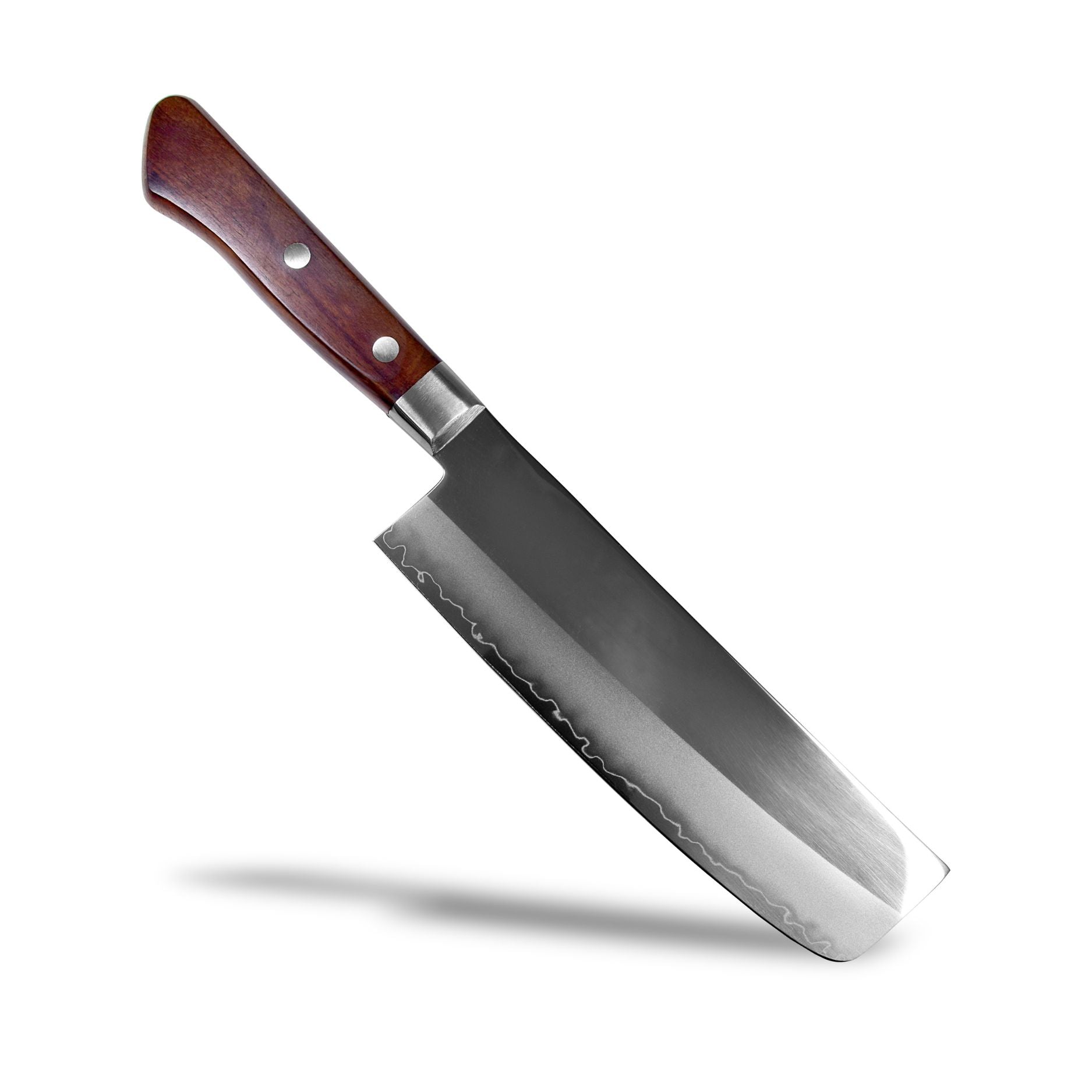
A santoku knife has a blade length of about 16-18 cm and is a versatile knife that can handle a wide range of meat, fish, and vegetables. A nakiri knife is a Japanese knife with a straight blade and a wide blade width that is specialized for vegetables.
In contrast, a paring knife, with its shorter blade, is unsuitable for large or hard ingredients, but is ideal for handling food in confined spaces or while holding it in your hand.
For example, while a vegetable knife or a santoku knife is suitable for shredding cabbage or peeling daikon radish, a paring knife is overwhelmingly easier for tasks like removing the stems from strawberries, decorative cutting of apples, or removing avocado pits.
Furthermore, many people find that using a petty knife with a shorter blade makes it easier to see the position of the blade tip, resulting in greater precision in fine chopping compared to using a santoku knife.
The most important thing is to be aware of the division of roles: "large knives are for 'quantity and power,' while paring knives are for 'delicacy and speed.'"
Who should use a paring knife as a secondary kitchen knife?
In conclusion, a paring knife should be used as a secondary kitchen knife if you regularly prepare fruits and salads, frequently use herbs and spices, or have a small kitchen.
If peeling fruit, cutting small vegetables, or preparing lunchbox side dishes are part of your daily routine, simply adding a paring knife to your kitchen can significantly improve your satisfaction with your cooking routine.
Furthermore, in single-person households or with compact kitchens, there are many situations where a small cutting board and a paring knife are sufficient, eliminating the need to bring out a large cutting board. In such cases, a small cutting board is used not as a secondary tool, but as a "mini main tool."
As a concrete example, in households where both parents work and have limited time, many people report that they have reduced the amount of washing up and preparation work by using the santoku (three-purpose) knife for main cooking and the petty knife for breakfast fruit or late-night snacks.
Conversely, for those who primarily handle meat and fish and rarely work with fruits or small vegetables, acquiring a chef's knife or a deba knife might be a higher priority than acquiring a paring knife.
One of the first things beginners should keep in mind is whether they can immediately think of at least three situations in their own kitchen where a petty knife would be useful.
How to choose a Japanese kitchen knife, including a recommended paring knife and a secondary knife.
What is the recommended size and blade length for a paring knife?
In conclusion, the best choice for a first secondary kitchen knife is a "petty knife with a blade length of around 130-150mm."
This size is versatile enough to handle everything from peeling fruit and cutting small vegetables to lightly preparing meat and fish. Its well-balanced length—neither too short nor too long—makes it popular with both professionals and home users.
On the other hand, short petty knives under 120mm are specialized for more detailed work, but they may feel a little inadequate for larger vegetables or ingredients.
For example, a 135mm paring knife is long enough to cover a wide range of everyday tasks, such as peeling apples and citrus fruits, chopping green onions and chives, and preparing chicken breast.
Conversely, for those who want to focus on fruit and enjoy extremely thin decorative cuts, there is also the option of adding shorter sizes of 100-120mm as supplementary pieces.
The most important thing is to choose a length that feels comfortable and secure when you actually hold it, based on the size of your hand and the size of the ingredients you frequently chop.
How do you choose the material and blade type?
In short, for a petty knife used as a secondary kitchen knife, the basic choice is "stainless steel, which is rust-resistant and easy to maintain." If sharpness is your priority, it's recommended to choose high-grade stainless steel or composite material.
Since petty knives are not used as heavily as santoku knives, it is considered wise to prioritize ease of use, such as being "quick to sharpen" and "rust-resistant," rather than extreme sharpness retention.
Specific steel materials such as molybdenum vanadium steel, VG10, and Gin-san steel are often chosen because they offer a good balance of sharpness, durability, and ease of sharpening.
Most knives have a double-edged blade, making them easy to use for both right-handed and left-handed people, and offering the advantage of easily cutting straight through the center of food.
Many petty knives with a Japanese kitchen knife aesthetic feature handles with traditional Japanese patterns or octagonal handles, offering both a comfortable grip and stylish design. They are popular among those who prioritize consistency with their main kitchen knife.
The first thing beginners should keep in mind is that, because it's a secondary knife, ease of maintenance and a comfortable grip should be the top priorities.
What is a recommended configuration and price range for a secondary kitchen knife set?
In conclusion, for home use, a two-knife set ("santoku or nakiri + petty") is the most practical and offers the best return on investment. If you have the budget, a three-knife set ("santoku + nakiri + petty") is ideal.
The santoku (or gyuto) is the main knife used for meat, fish, and vegetables in general, the nakiri is for processing large quantities of vegetables, and the paring knife is for detailed work such as preparing fruits and herbs.
For a petty knife used as a secondary kitchen knife, a good price range for home use is around 3,000 to 10,000 yen. Within this price range, you can find many reliable models in terms of materials and finish.
For example, a stainless steel paring knife costing around 5,000 yen offers sufficient sharpness and durability as a first secondary kitchen knife, while remaining affordable enough for everyday use.
On the other hand, high-grade models costing over 10,000 yen feature professional-grade steel and meticulously crafted handles, making them suitable for those who want to use their knives thoroughly every day or those seeking a long-term companion.
The most important thing is to add a secondary knife within a reasonable range that fits your overall budget, while keeping in mind the "balance with your main knife."
FAQ
Q1. What kind of knife is a paring knife?
A1. A paring knife is a small kitchen knife with a blade length of about 9-15 cm, and is a secondary knife suitable for detailed work such as cutting fruits, small vegetables, and herbs.
Q2. If I have a santoku knife, do I not need a paring knife?
A2. While it's possible to cook with just a santoku knife, having a paring knife makes detailed work safer and faster, significantly improving your daily food preparation.
Q3. What is the recommended size for a paring knife?
A3. For beginners, a knife around 130-150mm is easy to use and provides a good balance for various tasks, from preparing fruit to preparing small pieces of meat and fish, making it a suitable secondary knife.
Q4. What is the best use for a paring knife?
A4. It is ideal for detailed tasks such as peeling fruit, cutting small vegetables, garnishing and decorative cutting, removing potato sprouts, and removing avocado pits.
Q5. What material should I choose for a paring knife?
A5. Stainless steel is easy to handle as it is rust-resistant and easy to maintain, while high-quality stainless steels such as molybdenum steel and VG10 are popular if sharpness is a priority.
Q6. Is it okay to cut large ingredients with a paring knife?
A6. It is not suitable for large or hard ingredients, and forcing its use can reduce work efficiency and be dangerous, so it should be used in conjunction with a santoku or chef's knife.
Q7. What is the ideal number of kitchen knives to have at home?
A7. It is generally recommended to start with two knives, such as a santoku (or chef's knife) and a paring knife, and then add a vegetable knife if you frequently use vegetables, making a total of three knives.
Q8. Can a paring knife be used by left-handed people?
A8. Many paring knives are double-edged, making them suitable for both right-handed and left-handed users, and a convenient secondary knife to share with family members.
Q9. Which should I choose as a secondary kitchen knife: a paring knife or a fruit knife?
A9. If you prioritize versatility, a paring knife is more suitable. It can be used for a wider variety of ingredients than a fruit knife, making it ideal as your first secondary knife.
Q10. Is it difficult to maintain a paring knife?
A10. If it's stainless steel, you only need to wash it with a neutral detergent, wipe off the moisture, and lightly sharpen it occasionally, making it easier to handle than your main kitchen knife.
summary
- In conclusion, if you're looking to choose a secondary knife to complement your Japanese kitchenware, the most practical and safest option is to get a stainless steel paring knife with a blade length of around 13cm.
- A petty knife is a small, maneuverable knife that makes it easy to perform detailed tasks that are difficult to do with just a santoku or nakiri knife, such as cutting fruits, small vegetables, herbs, and decorative cuts.
- By using a two-knife system consisting of a "santoku or nakiri knife + paring knife," you can improve cooking efficiency and safety without increasing kitchen space. Therefore, I highly recommend it as a secondary knife for those who are just starting to build up their knife collection.