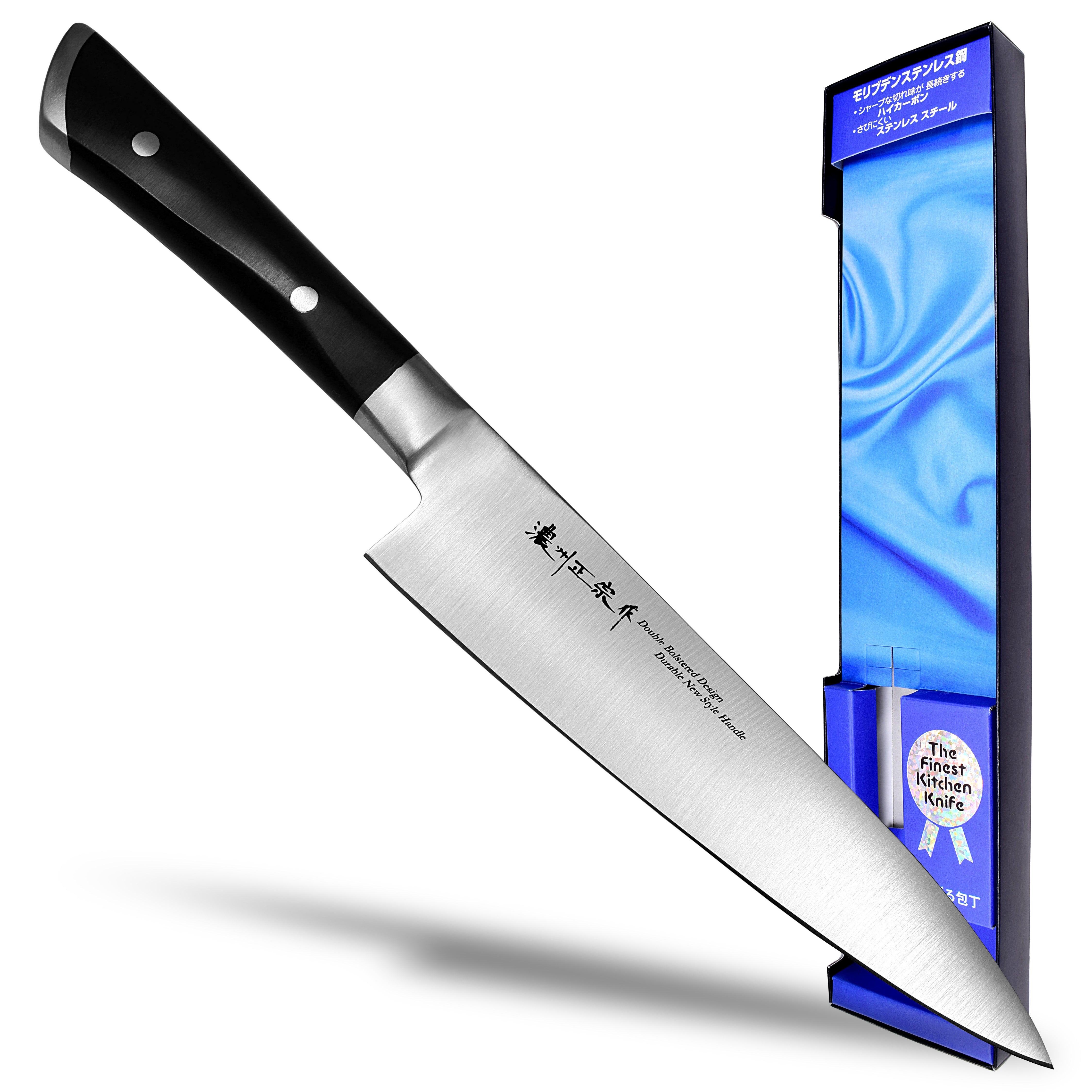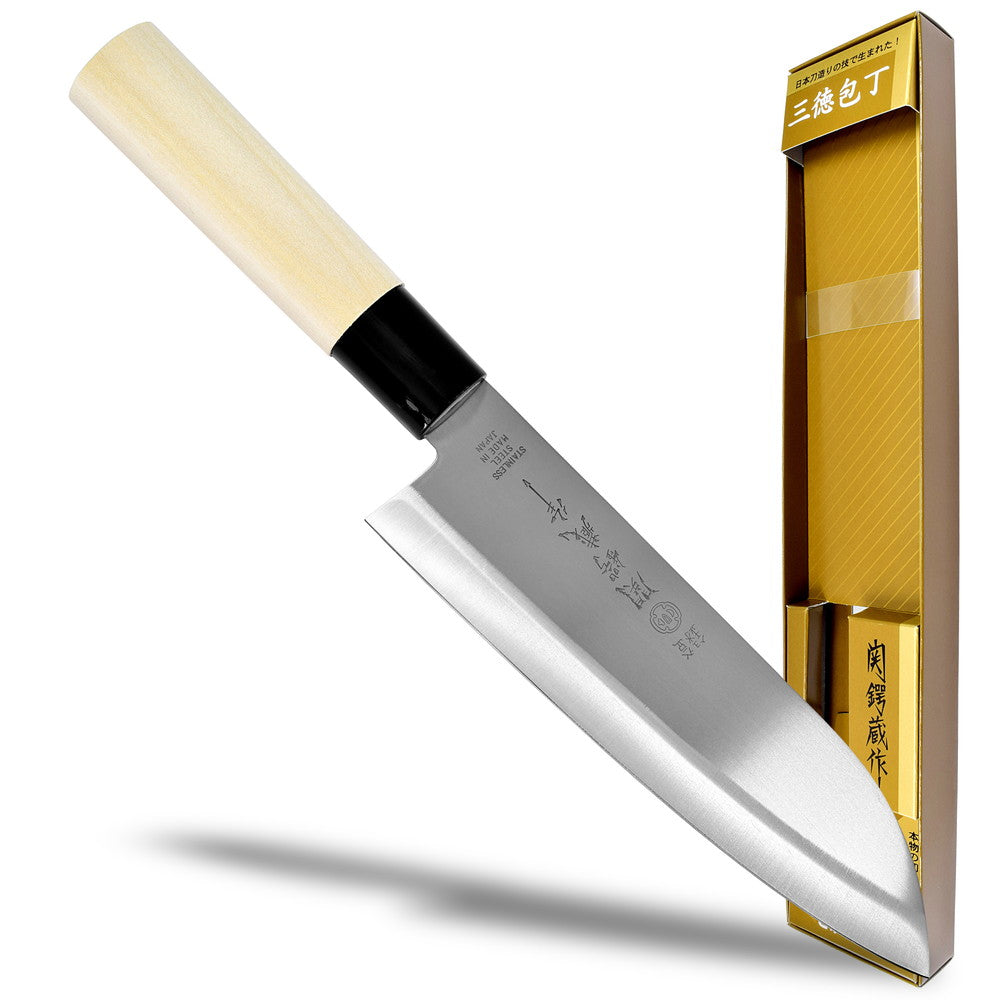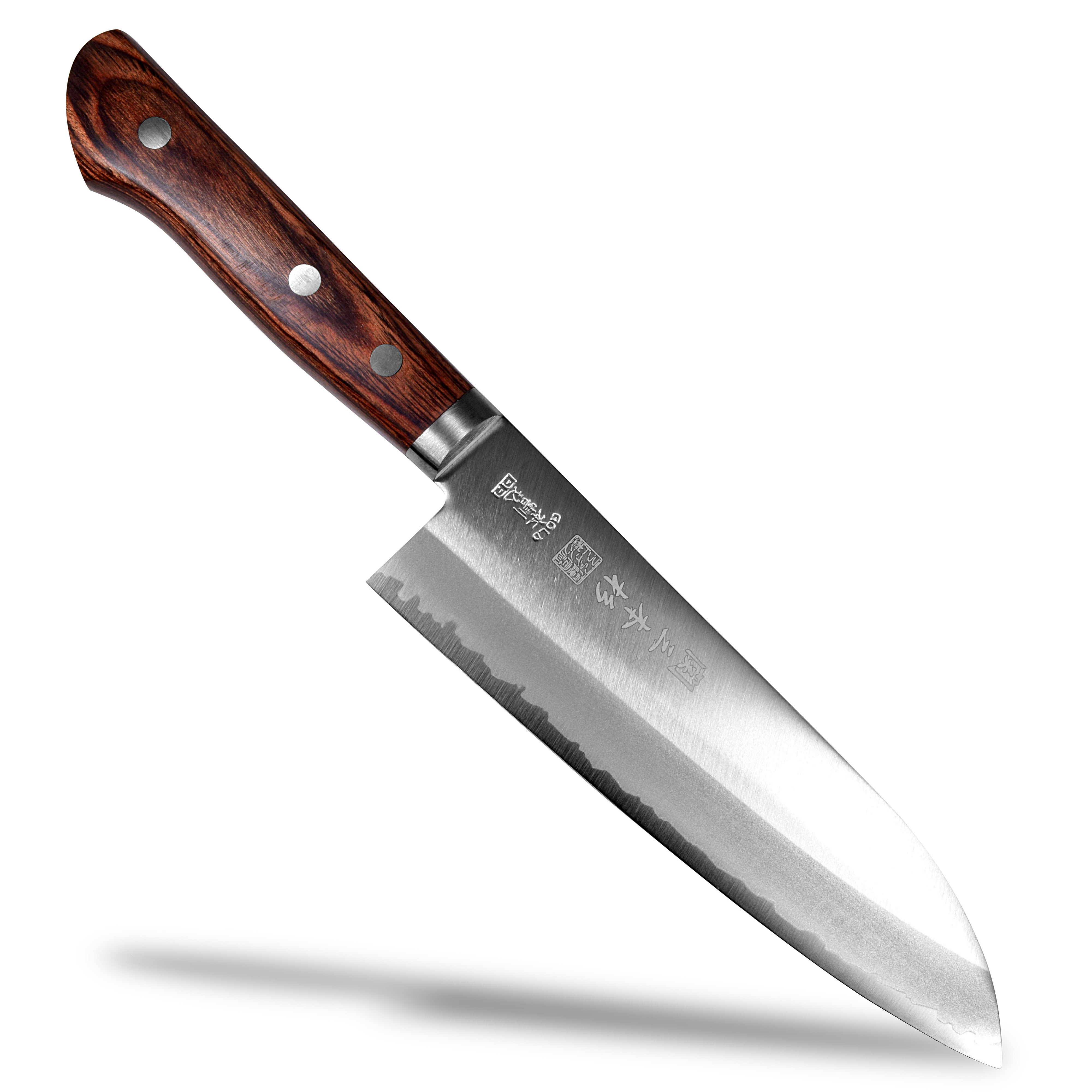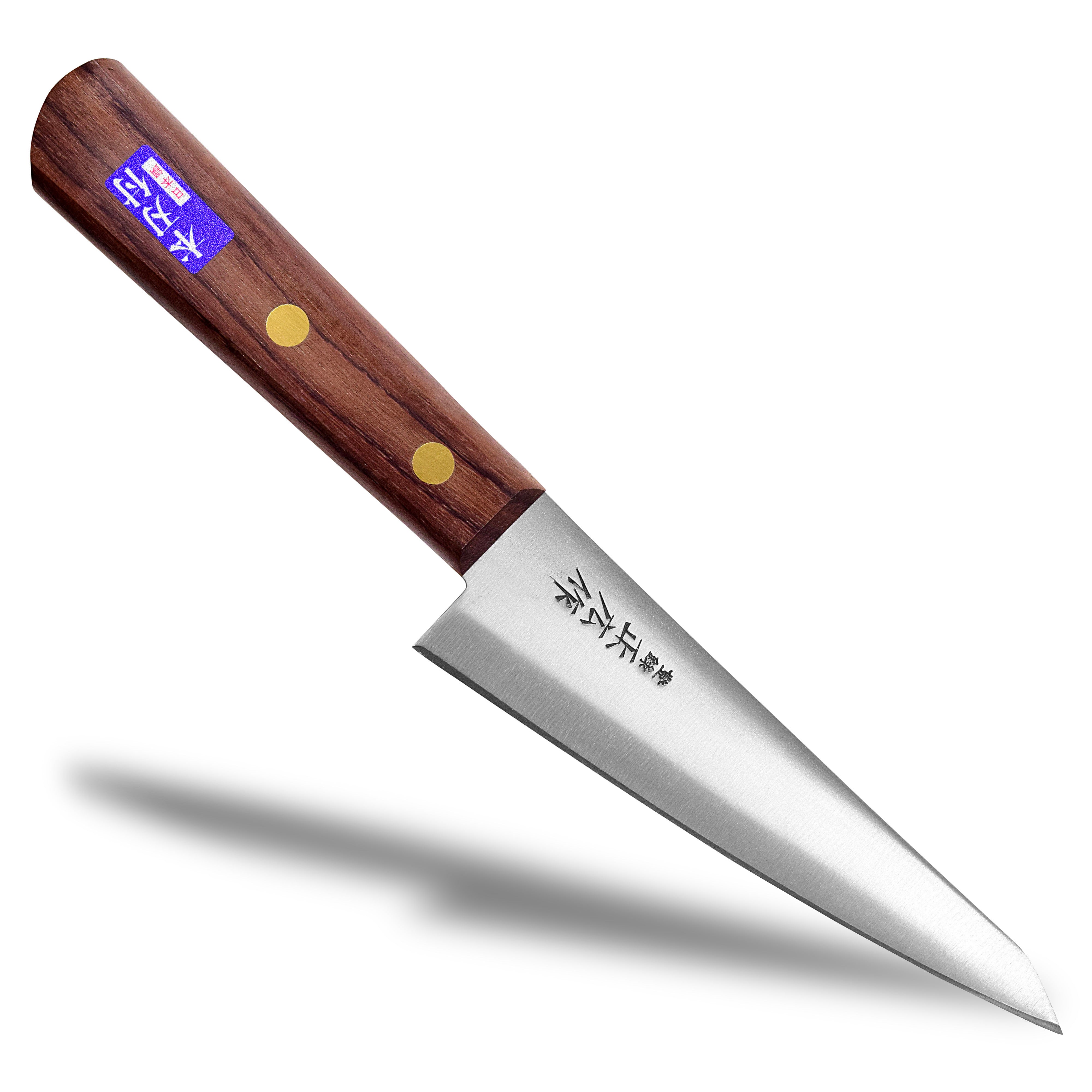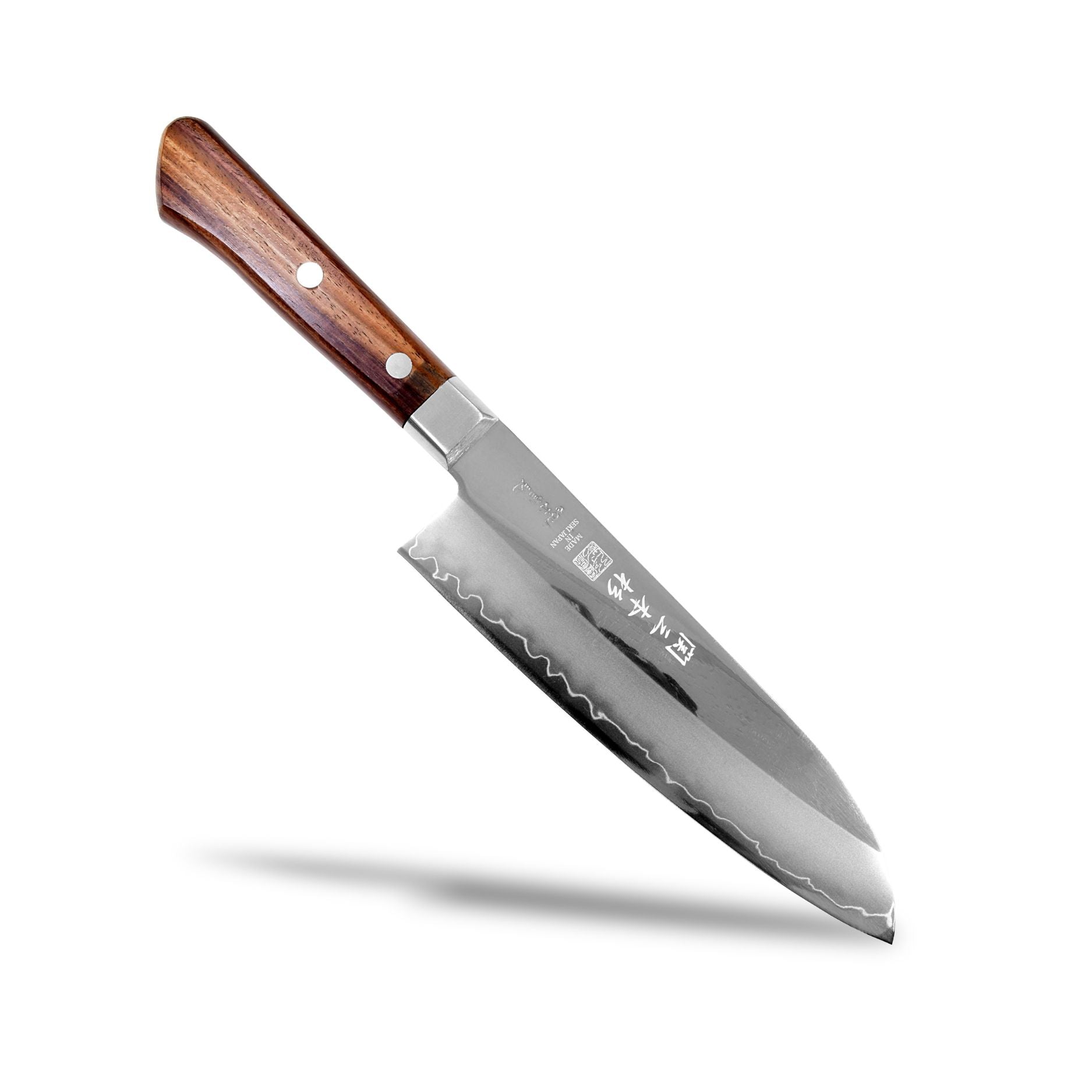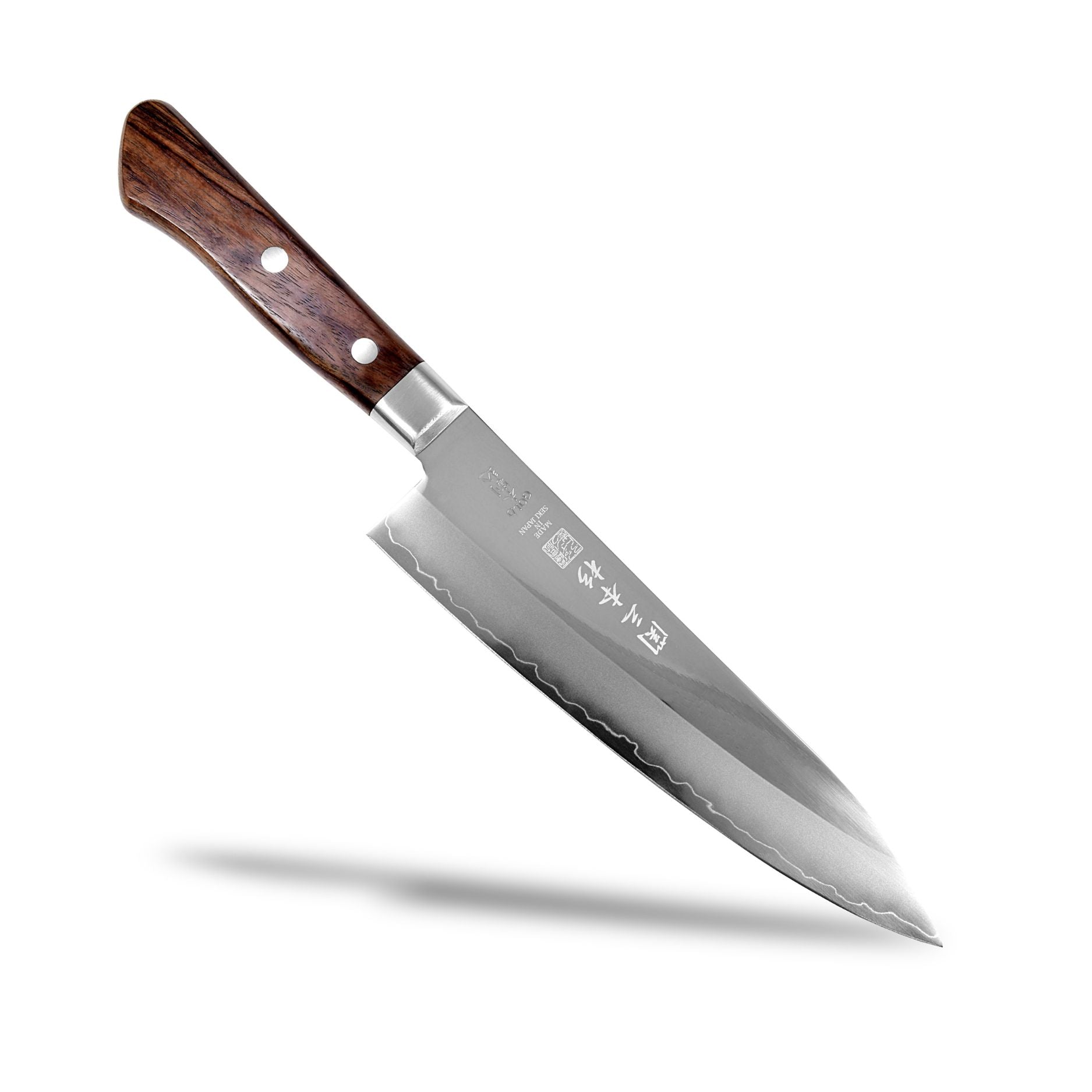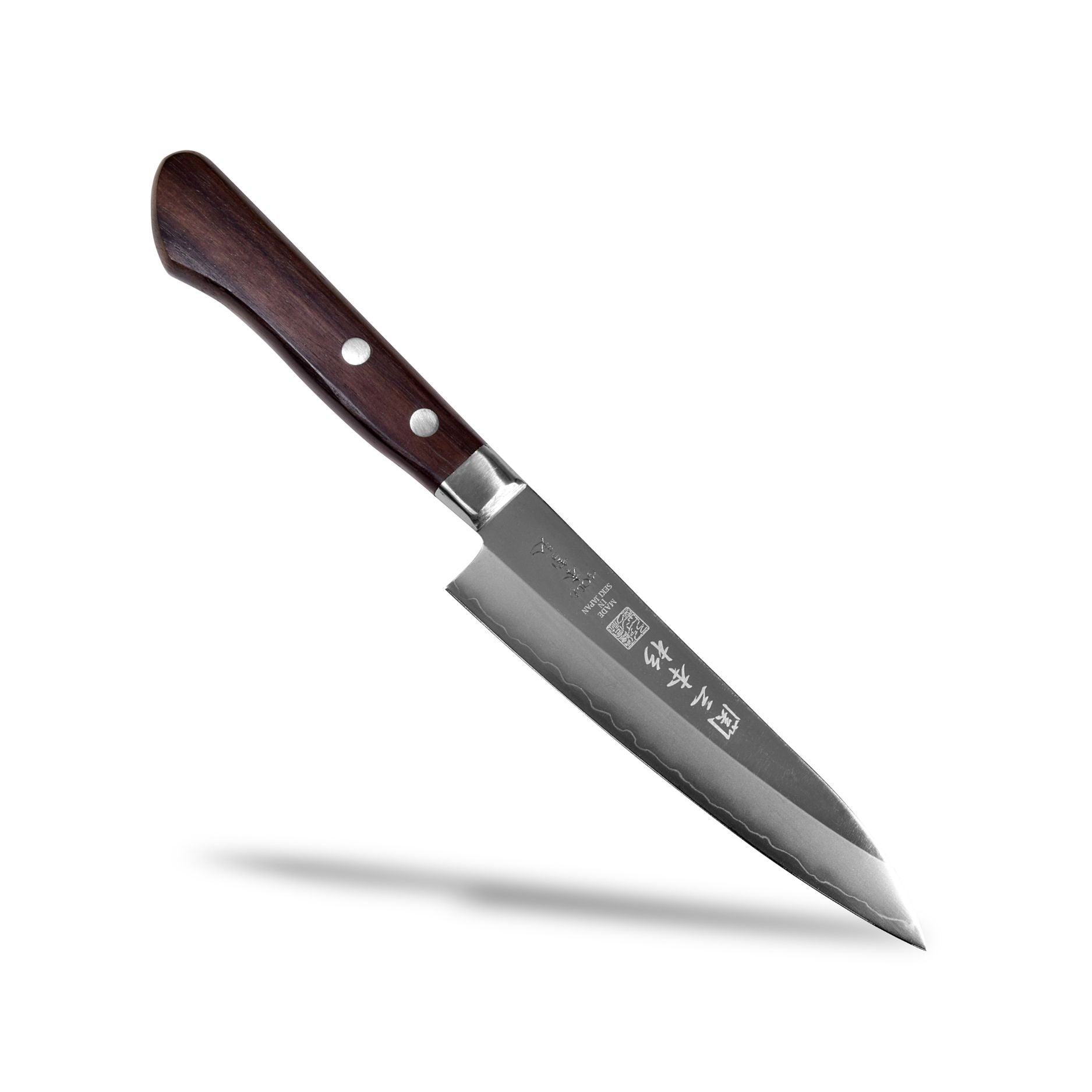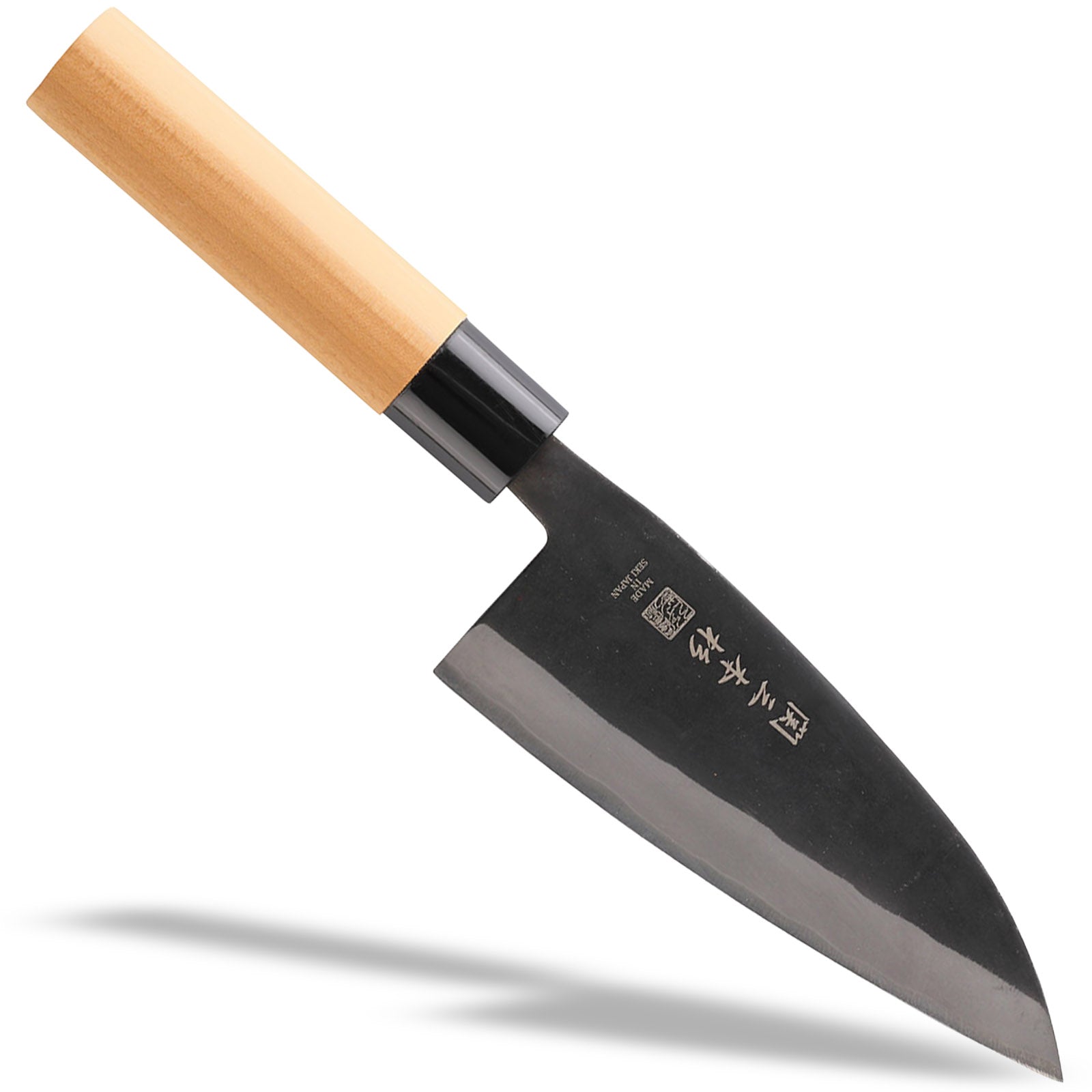

Choosing a Japanese kitchen knife for home use:
Recommended Japanese kitchen knives for those who want to prepare fish at home: Deba knives (for home use) - Features
In conclusion, for home use, a deba knife with a blade length of around 150-180mm and a medium deba size will be easy to use for filleting a wide range of fish, from horse mackerel to sea bream, and will be a good choice even for beginners.
[Key points of this article]
- This article summarizes the features (size, weight, and material) of Japanese deba knives that are recommended for home use.
- This article explains in detail how to choose a household deba knife for different types of fish, and how it differs from a santoku knife in terms of their respective roles.
- This article introduces the advantages and typical specifications of a 150mm class household deba knife, which is less likely to cause problems even for beginners.
Today's review: 3 key points
For home use, a medium-sized "deba" knife with a blade length of 150-180mm is standard and suitable for handling a wide variety of fish.
In short, a deba knife has a thick, heavy blade that makes it easy to cut through fish heads and bones, improving both the safety and the quality of fish preparation at home.
In conclusion, if you prioritize sharpness, choose a steel knife; if you prioritize ease of use, choose a stainless steel deba knife. This will allow you to use it for home use and be satisfied with it for a long time.
Conclusion of this article
- In conclusion, for home use, a medium-sized deba knife with a blade length of around 150mm is the most user-friendly and recommended size for most households.
- In short, if you want to prepare fish at home, a two-knife system of a santoku knife and a household deba knife is practical and will greatly expand the range of fish dishes you can make.
- The most important thing is to decide on the size and type of steel based on the size and frequency of the fish you usually handle, and how much maintenance you are able to do yourself.
- The first thing beginners should keep in mind is that a 150mm class deba knife offers a good balance of weight, handling, and the types of fish it can handle, making it a recommended choice for a "first knife."
- Among Japanese kitchen knives, the deba knife is considered a "highly worthwhile investment" for those who want to seriously prepare fish dishes at home.
What are the features of recommended Japanese kitchen knives, such as deba knives for home use?
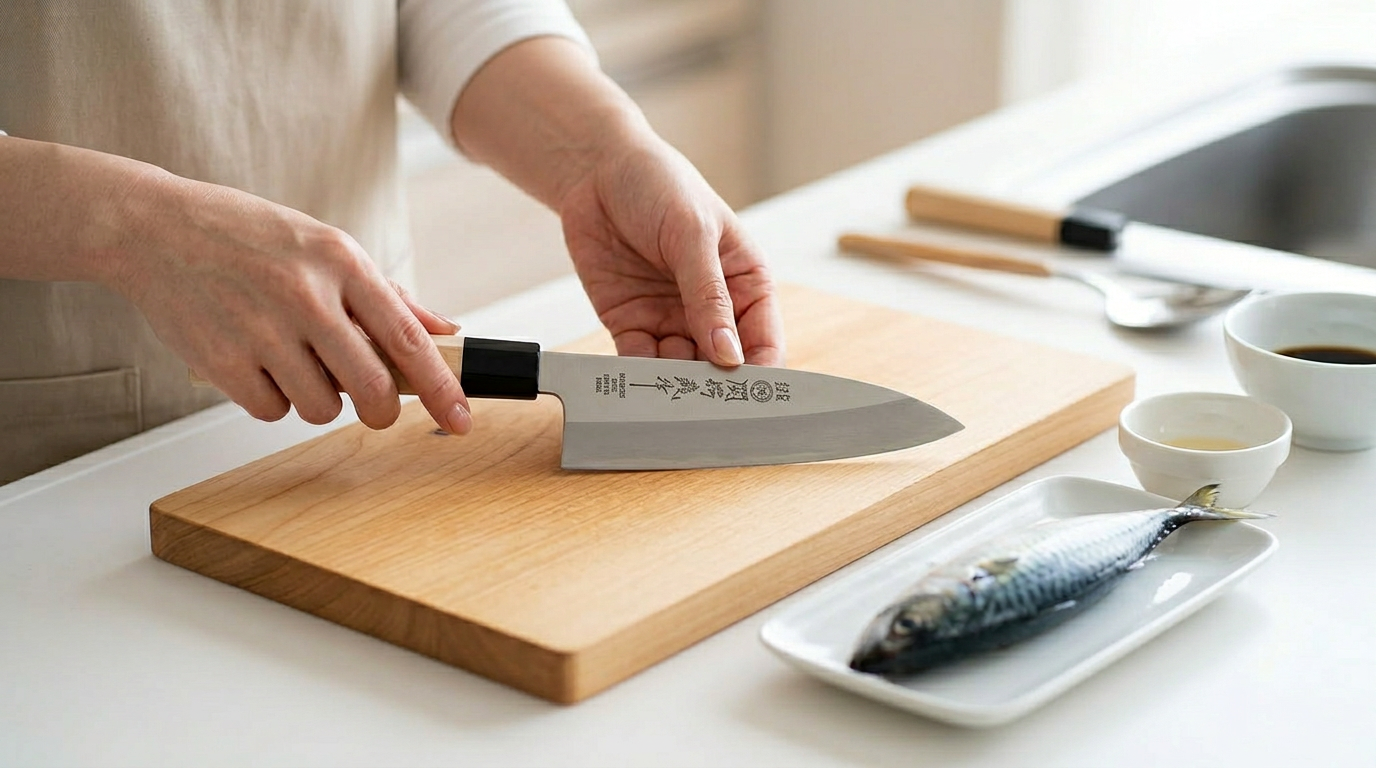
In short, a typical household deba knife is a Japanese knife called a "nakadeba," measuring around 150-180mm in length, optimized for removing the heads of fish, cutting through bones, and filleting them into three pieces.
Deba knives are characterized by their thick base and slightly thinner blade towards the tip, and their single-edged construction (a blade angled on only one side), which makes it easy to cut straight along the bones of fish.
For home use, deba knives with blades ranging from 120 to 180 mm are commonly available, with the "medium deba" size of around 150 mm being considered the most convenient standard size for the average household.
The key features of a household deba knife can be summarized as follows:
- With its thick, heavy blade, it can reliably cut through the head, backbone, and spine of fish.
- With a single-edged blade, the knife can be advanced to trace the space between the flesh and the bone.
- Compared to a santoku knife, it has a lower risk of chipping the blade when cutting bone.
The first thing beginners should understand is that a "household deba knife" is a specialized tool for safely filleting medium-sized fish.
Why are 150-180mm deba knives recommended for home use?
In conclusion, for home use, a medium-sized deba knife with a blade length of 150-180mm is the most recommended.
Even in Sakai-style cutlery shops, while deba knives come in sizes ranging from 120 to 300 mm, the standard for home use is said to be a medium deba knife of 150 to 180 mm, and the 150 mm size in particular is considered "the easiest to handle for beginners."
The reason is that this single deba knife of this size is sufficient to handle many of the medium-sized fish commonly found in supermarkets, such as horse mackerel, mackerel, grunt, and small sea bream.
Small deba knives, around 120mm in length, are suitable for small fish like horse mackerel and sardines, but they are not ideal for larger fish, and their uses are limited if you only own one.
Conversely, large deba knives or salmon fillets exceeding 210mm are intended for professional use, such as for yellowtail or large salmon, and their increased weight often makes them overkill for home use.
In short, if you can't decide what to prepare, the safest option is to start with a 150mm medium-sized deba knife.
Typical specifications of a deba knife used at home
In short, the typical specifications for a household deba knife are: blade length of around 150mm, weight of 200-250g, single-edged blade, and a Japanese-style handle.
For example, a certain deba knife has weight settings of approximately 205g for 135mm, approximately 300g for 165mm, and approximately 350g for 180mm, with the weight increasing in proportion to the size.
Furthermore, among the 150mm class deba knives, there are models with specifications of approximately 50mm blade width, 8mm thickness, and a weight of approximately 240g, and are introduced as a knife that achieves both sharpness and durability through the use of White Steel No. 2 + laminated base metal.
For home use, a weight of "around 200-250g" is considered not too heavy and provides sufficient stability when cutting fish heads and bones.
The patterns are often traditional Japanese designs such as octagons or circles, and natural wood or laminated reinforced wood is frequently chosen because it is non-slip and water-resistant.
The first thing beginners should focus on is checking not only the specifications, but also the weight and balance when actually holding the pen.
What type of steel or material is suitable for a home-use deba knife?
In conclusion, when choosing a steel for a household deba knife, the choice should be based on either "steel (high-performance steel) for superior sharpness" or "stainless steel for easier maintenance."
Many specialty knife shops recommend high-quality steel materials for deba knives, such as Shirogami No. 2 and Aogami No. 2, because fish are delicate ingredients and therefore have a sharp edge.
On the other hand, guides for home cooks suggest that stainless steel deba knives are a good starting point for beginners because they are rust-resistant and easy to maintain.
The characteristics of steel are as follows:
- It has a sharp edge and can be easily restored by resharpening.
- However, it rusts easily, so wiping off any moisture immediately after use is essential.
The characteristics of stainless steel are as follows:
- Rust-resistant and durable for household use.
- While they may not always achieve the same "smooth cutting edge" as steel, an increasing number of models offer more than enough performance for home use.
The most important thing is to choose the steel based on "how much time you can dedicate to maintenance."
Japanese kitchen knives: Recommended, Deba knives, Home use, How to choose
What are the key points to consider when choosing a kitchen knife for home use?
In conclusion, the best way to choose a kitchen deba knife is to consider the following in order: "size of the fish → blade length → steel type → weight → dominant hand."
When it comes to fish size, the first thing to decide is whether you usually handle medium-sized fish like horse mackerel and mackerel, or if you also want to consider larger fish like sea bream and yellowtail.
Furthermore, the range of 120-180mm is commonly used for home use. If you're unsure, a 150mm medium-sized deba knife is a good standard, while if you're handling slightly larger fish, consider a 165-180mm knife.
For the steel material, choose steel such as white steel or blue steel if sharpness is the priority, stainless steel if ease of maintenance is the priority, or a combination of steel core and stainless steel base if you want to achieve both.
The weight should be around 200-250g. The criterion is whether you can hold it comfortably. If you often work for long periods, choose a slightly lighter one, and if you frequently prepare fish with many bones, you might want to choose a slightly heavier one.
The first thing beginners should keep in mind is to prioritize whether the rod is suitable for the type of fish they are catching and whether it feels comfortable in their hands, rather than judging solely on the specifications.
What is the difference in roles between a santoku knife and a household deba knife?
In short, a santoku knife is for "all everyday cooking," while a deba knife is "specifically for filleting fish."
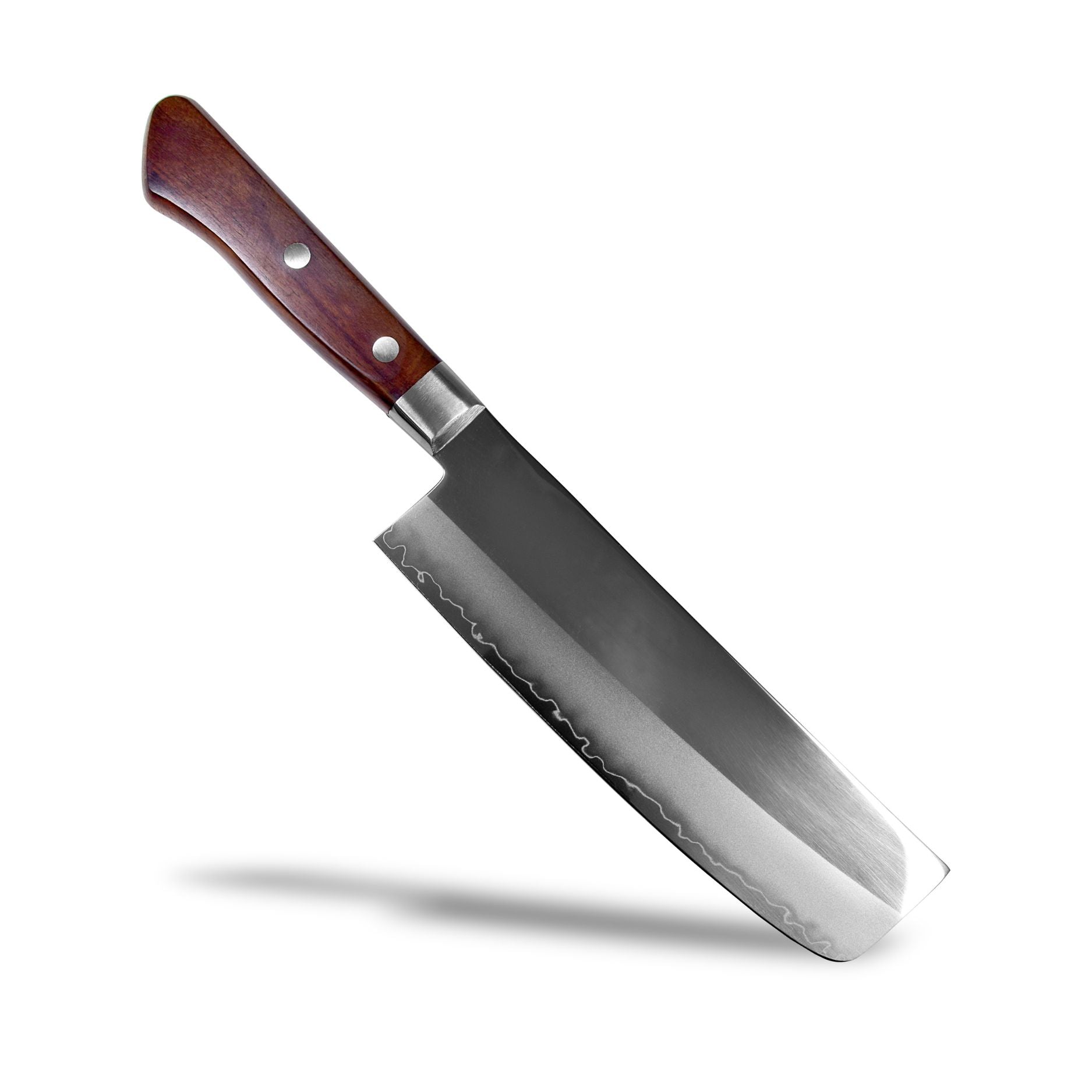
A santoku knife is a versatile knife that can handle vegetables, meat, and fish well. Its thin blade makes it suitable for cutting vegetables, but it may not be strong enough to cut fish heads or hard bones.
In contrast, the deba knife is specialized for cutting through bones with its thickness and weight, and for separating the flesh along the backbone, making it an indispensable "fish knife" for households that handle a lot of fish.
The specific differences in usage are as follows:
- If you buy a whole fish for sashimi or grilling, use a deba knife to remove the head and bones.
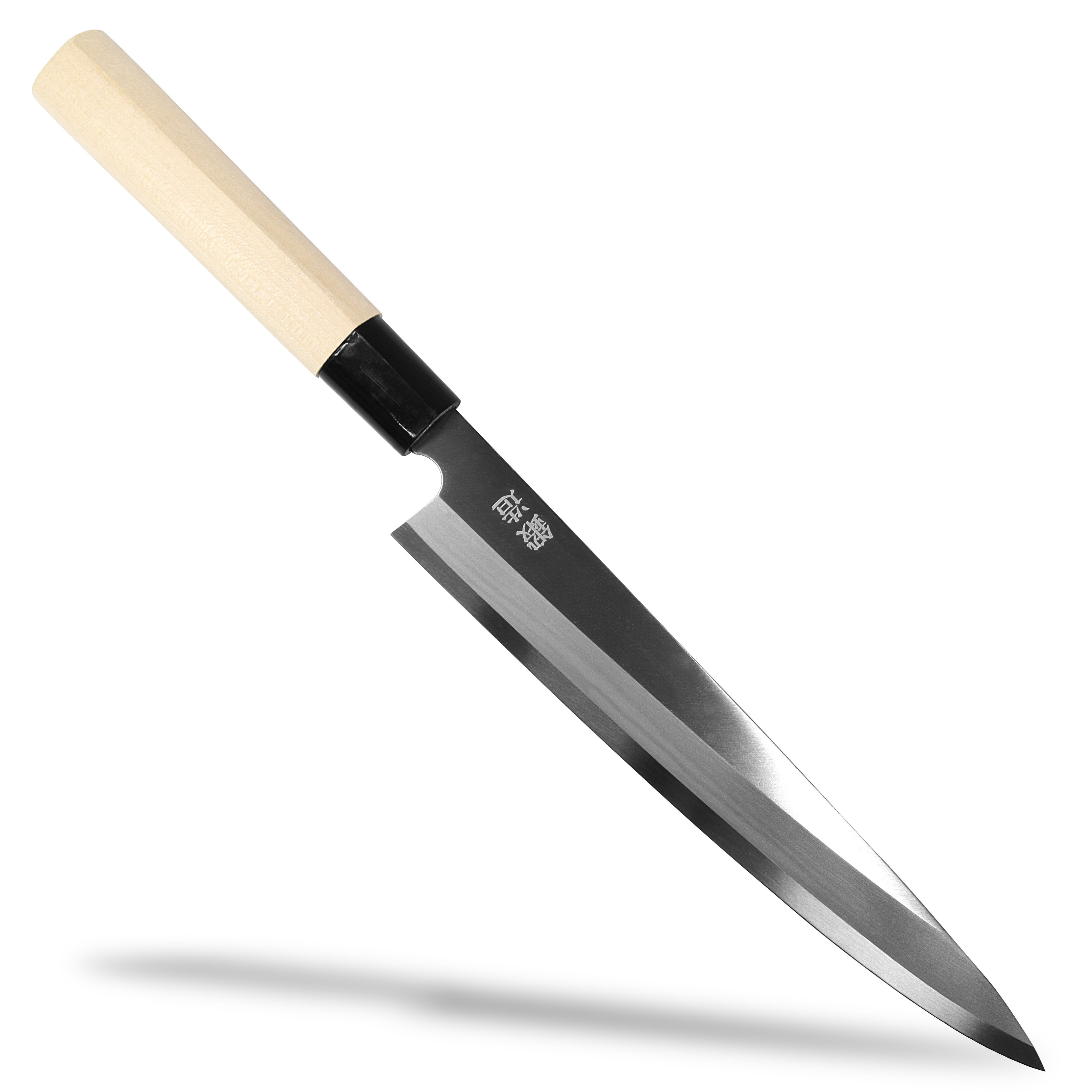
- For removing the skin after cutting the fish into fillets and for slicing sashimi, use a yanagiba or santoku knife.
- Prepare vegetables and meat with a santoku knife.
For home use, a two-knife system consisting of a "santoku" knife and a "deba" knife provides a configuration that can cover a wide range of situations, from everyday cooking to fish dishes.
The most important thing is to remember "don't overwork the santoku knife, and use a deba knife only for processing the fish head and bones."
What are the recommended specifications and price range for a home-use deba knife?
In conclusion, when choosing a kitchen knife for home use, a good balance of quality and cost-effectiveness can be found by selecting one that is "around 150mm long, made of steel or stainless steel, and priced between 5,000 and 15,000 yen."
According to a guide from a specialty knife shop, a deba knife measuring 120-180mm is recommended for home use, with 150mm being particularly recommended as an easy-to-handle size for beginners.
Comparison articles aimed at home cooks also explain that there is a wide range of options available for home-use deba knives in the price range of around 5,000 to 15,000 yen, from full-fledged steel models to entry-level stainless steel models.
Specifically, there are two types:
- This deba knife, with its layered structure of steel (White Steel No. 2 and Blue Steel No. 2) and iron base metal, is a lifelong investment for those who prioritize sharpness.
- These stainless steel, one-piece molded deba knives are rust-resistant, and some models are dishwasher-safe, making them easy to use at home.
The first thing beginners should keep in mind is that, rather than aiming for an overly expensive pen right from the start, it's better to find your own style with a pen in a price range you can use extensively.
FAQ
Q1. What size deba knife would you recommend for home use?
A1. For home use, a medium-sized deba knife with a blade length of 150-180mm is standard, and 150mm in particular is an easy size for beginners to handle.
Q2. What is the difference between a deba knife and a santoku knife?
A2. A santoku knife has a thin blade and is a versatile all-purpose knife that can handle a wide range of vegetables, meat, and fish, while a deba knife has a thick, heavy blade and is a specialized knife for cutting fish heads and bones.
Q3. Which is better for a home-use deba knife: steel or stainless steel?
A3. If sharpness is your priority, steel (such as white steel or blue steel) is recommended, but if ease of maintenance is your priority, stainless steel deba knives are recommended for home use.
Q4. What price range should I expect to pay for a deba knife?
A4. If it's your first time, a good guideline is to aim for a kitchen knife in the 5,000 to 15,000 yen range, which will make it easier to choose a kitchen knife with good sharpness and durability.
Q5. If you frequently use horse mackerel or mackerel at home, what size is best?
A5. If you mainly fish for medium-sized fish such as horse mackerel and mackerel, a 150mm class deba knife offers good balance and can handle a wide range of tasks with just one knife.
Q6. What if I want to prepare yellowtail or large sea bream?
A6. If you plan to handle large fish, it's a good idea to consider a deba knife that is 165-180mm or longer, and you'll need to get used to the weight and length.
Q7. Is a deba knife (Japanese kitchen knife) essential for home use?
A7. It's not essential if you only handle fillets, but for households that occasionally prepare whole fish, it's reassuring to have one for safety and to ensure a good result.
Q8. Is it difficult to maintain a deba knife?
A8. Steel tools are prone to rusting and require wiping off moisture and regular sharpening, while stainless steel tools are relatively easier to maintain.
Q9. Are there any left-handed kitchen deba knives available?
A9. Single-edged deba knives are mostly designed for dominant hands, but specialty stores also carry left-handed versions, so you need to choose one that suits your dominant hand.
Q10. For home use, which should I get first: a deba knife or a yanagiba knife?
A10. When filleting a whole fish, it's practical to prioritize using a deba knife first, and then add a yanagiba knife when you want to slice sashimi neatly.
summary
- In conclusion, the best deba knife for home use is a medium-sized deba knife with a blade length of 150-180mm. The 150mm size, in particular, is easy for beginners to handle and is suitable for a wide variety of fish.
- Deba knives, with their thick, heavy blades and single-edged construction, offer advantages unique to home use, such as safely and reliably cutting through fish heads and bones, and easily separating the flesh along the backbone.
- By combining a santoku knife with a household deba knife, you can divide the tasks of everyday cooking and fish preparation, creating an environment where you can handle whole fish with confidence even at home.