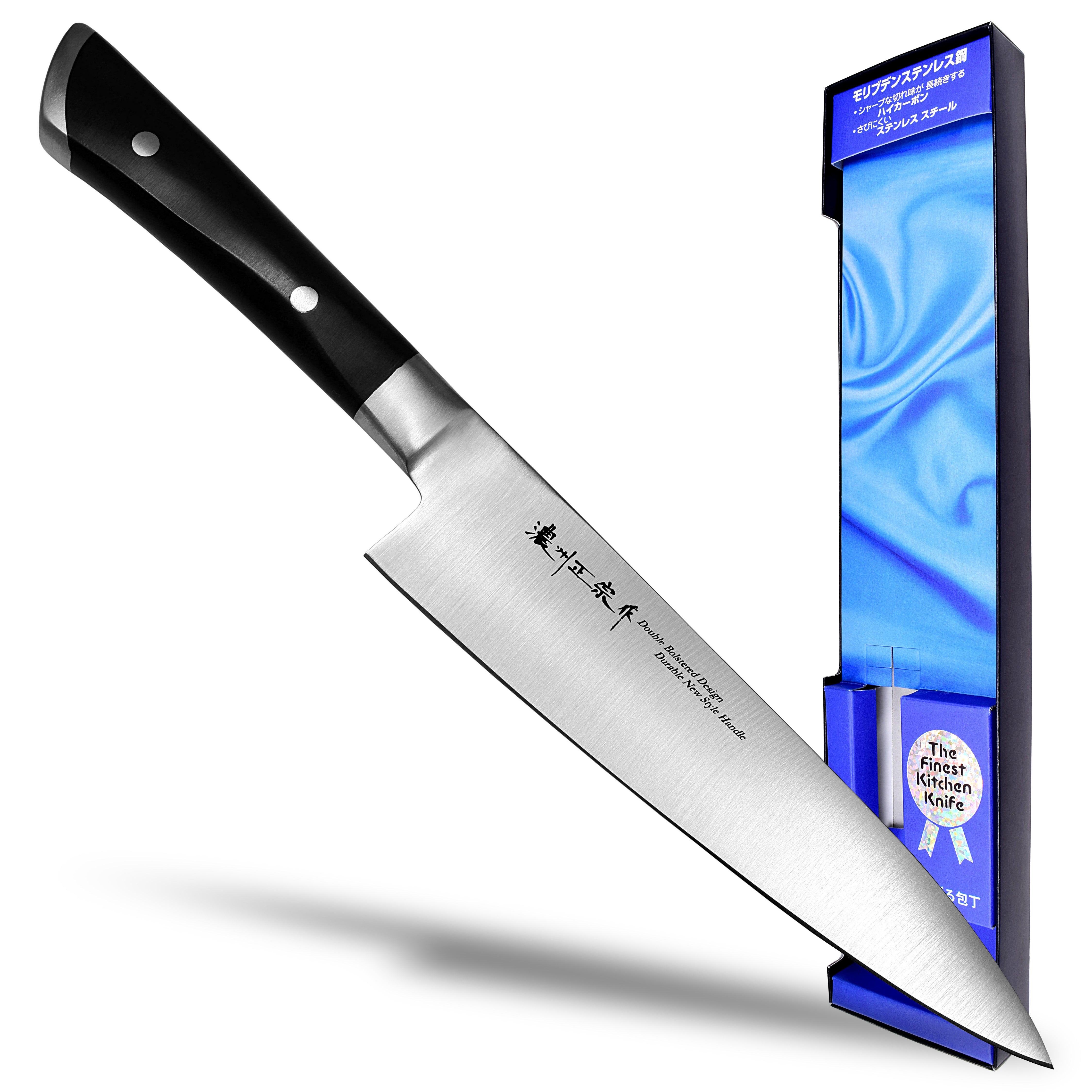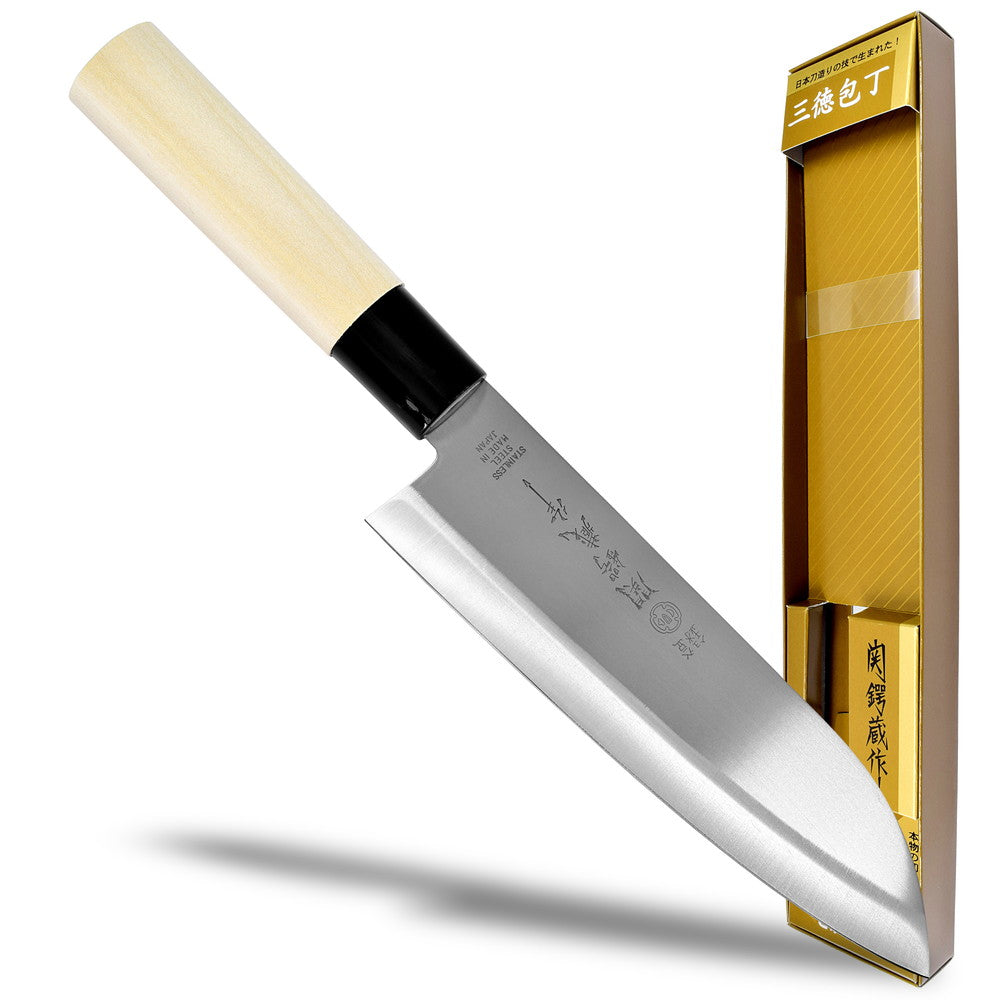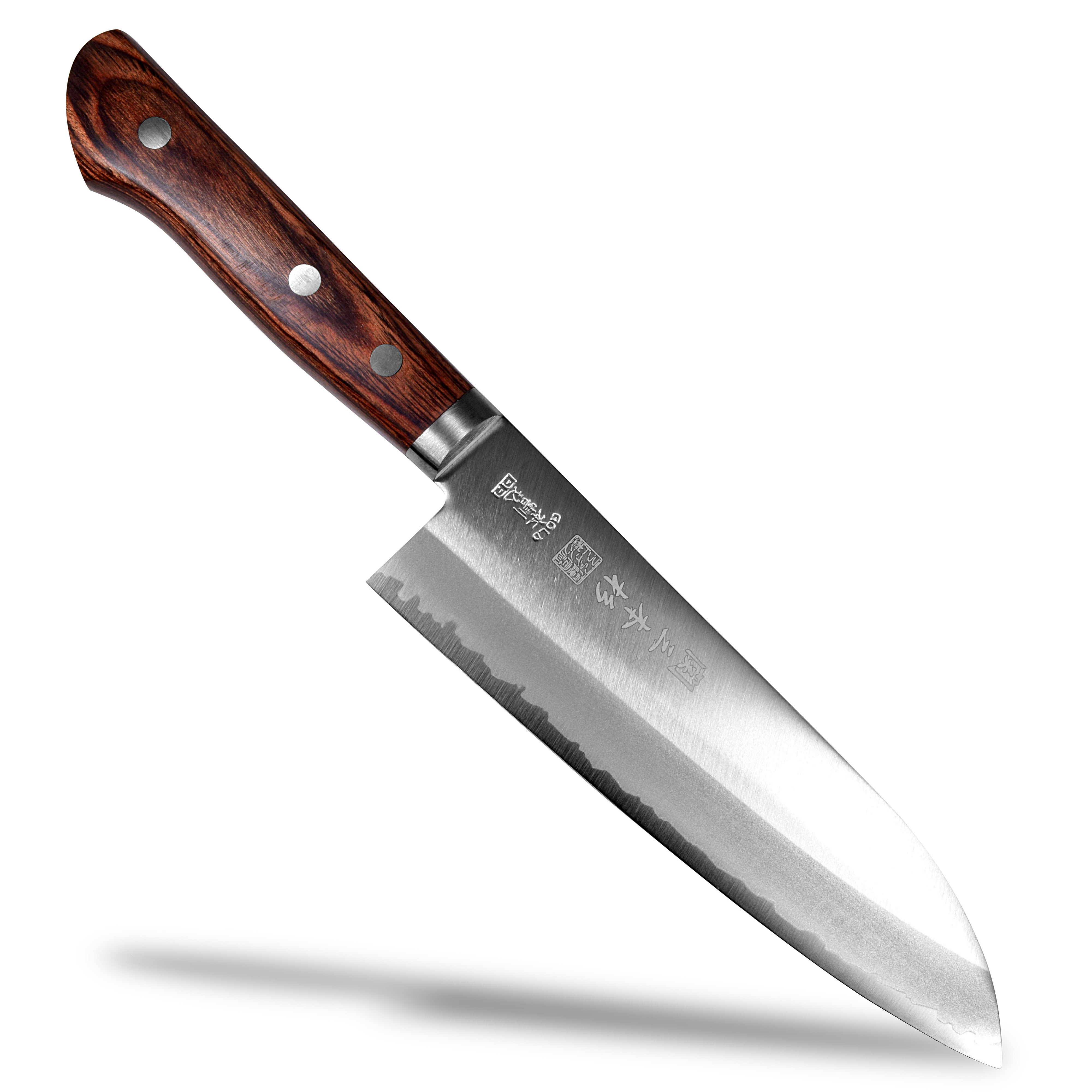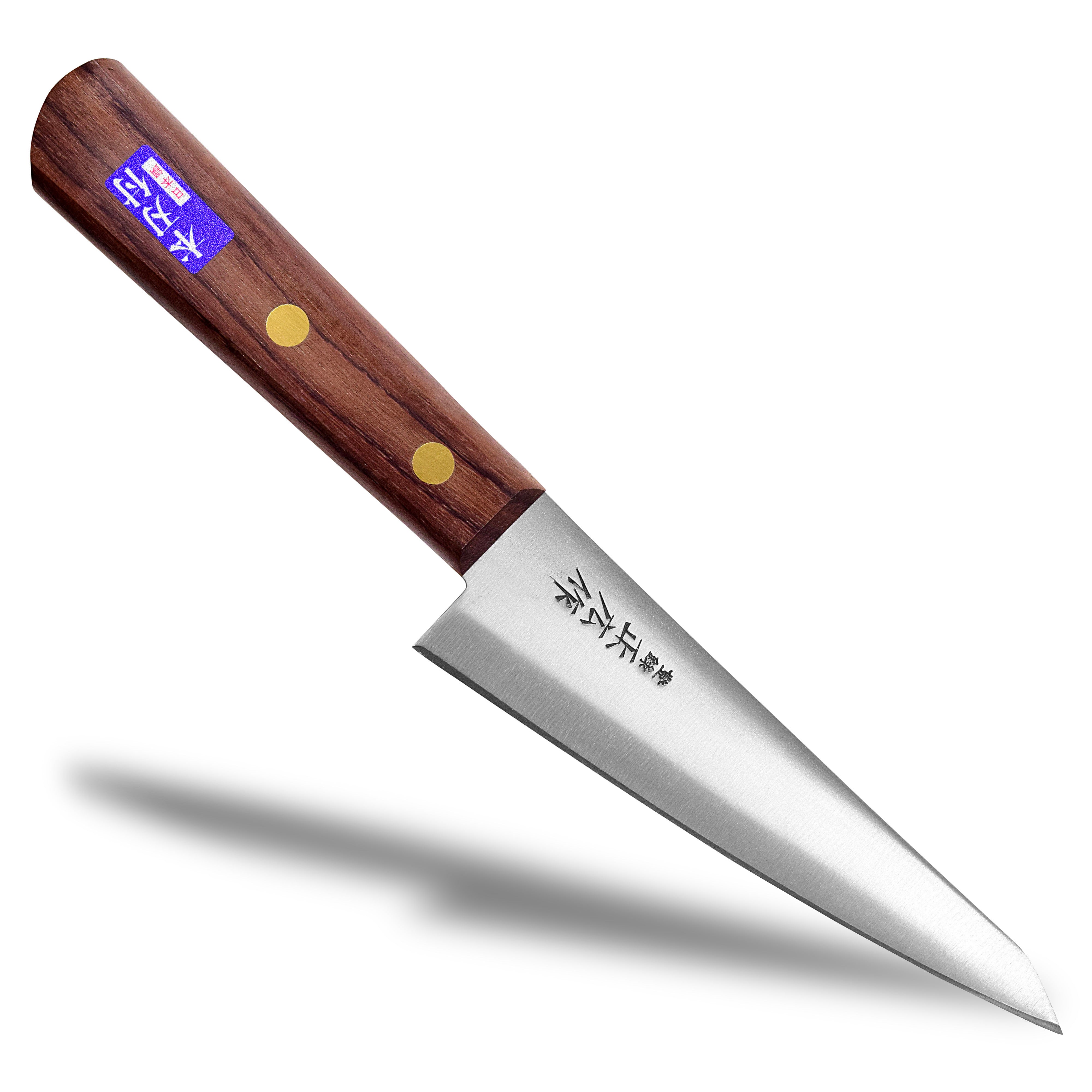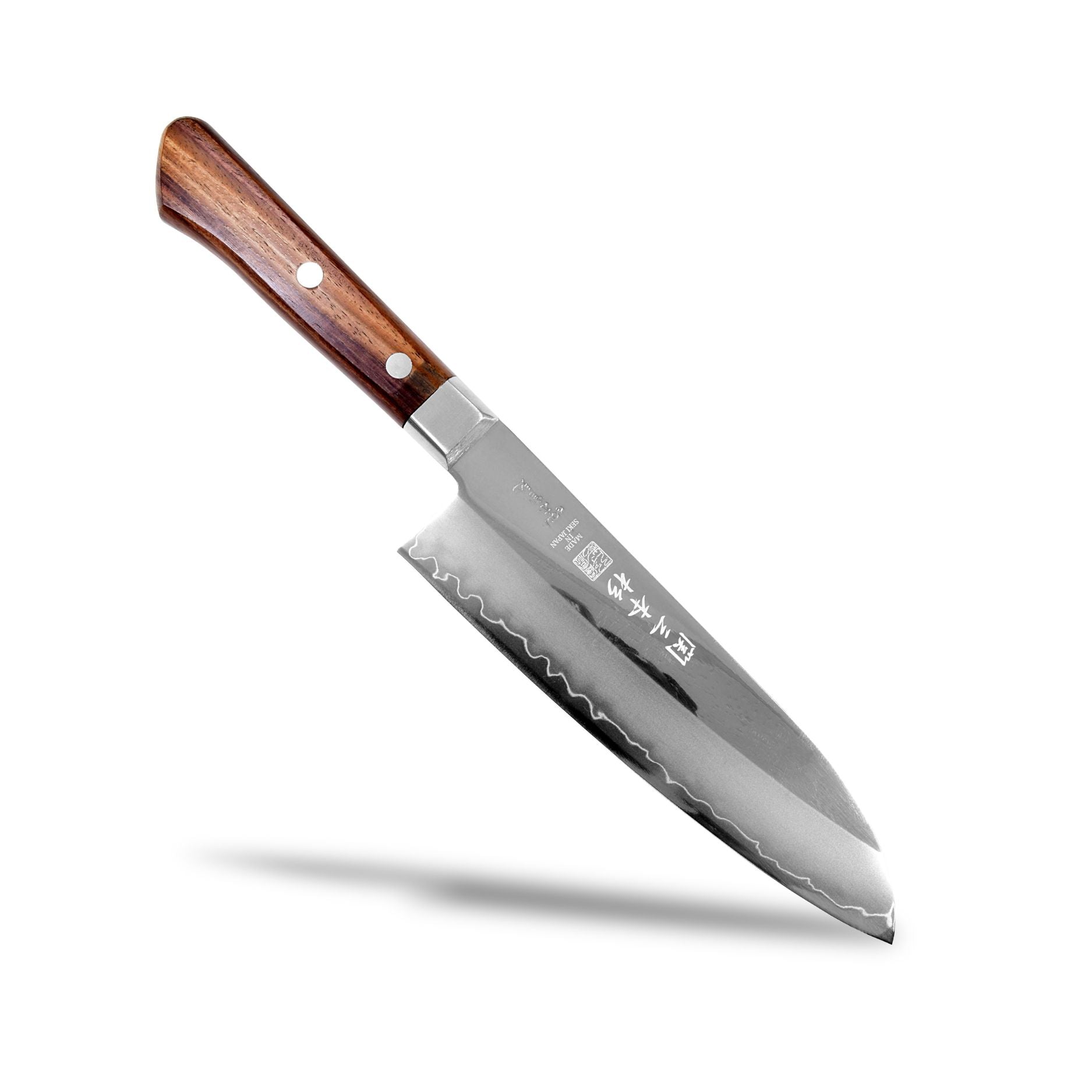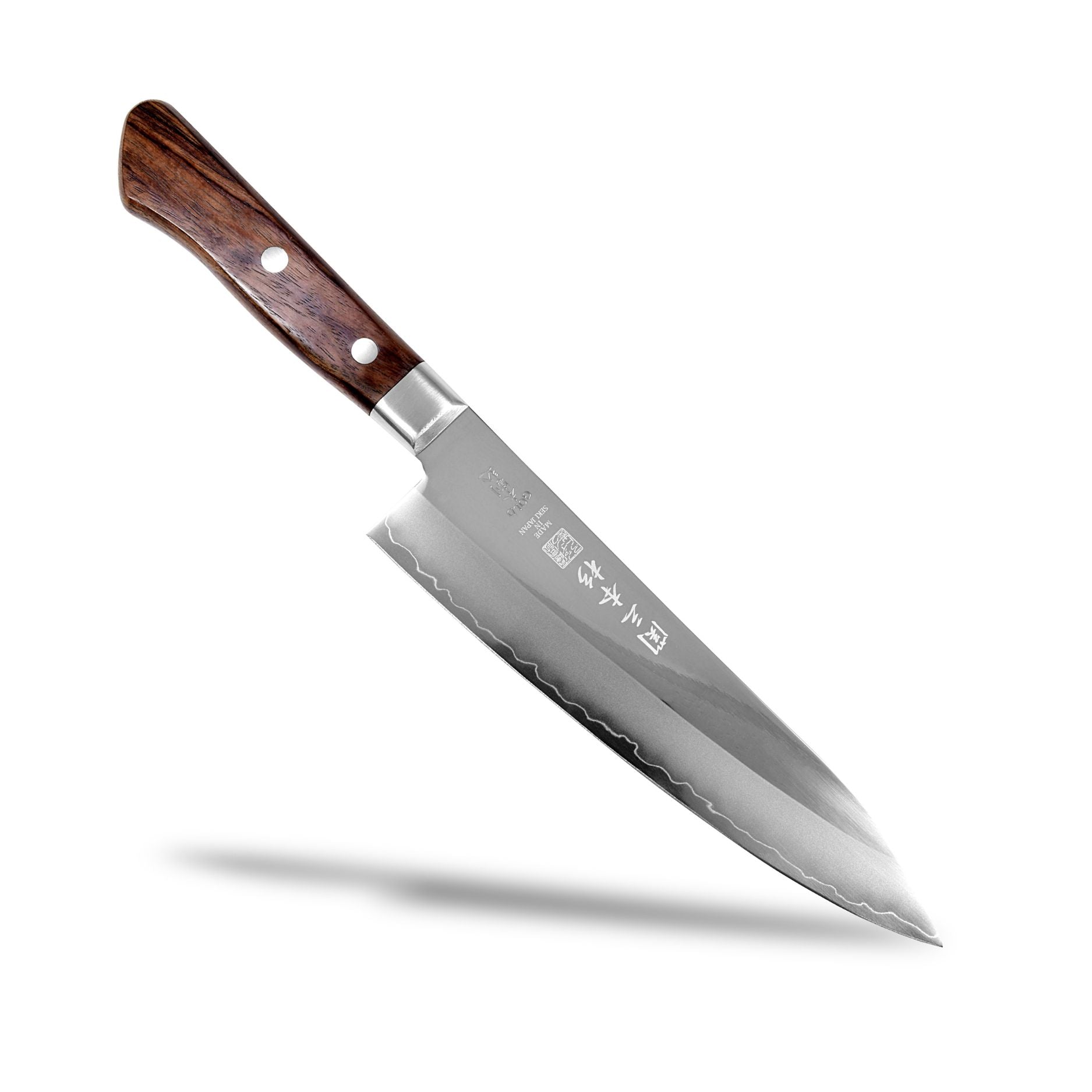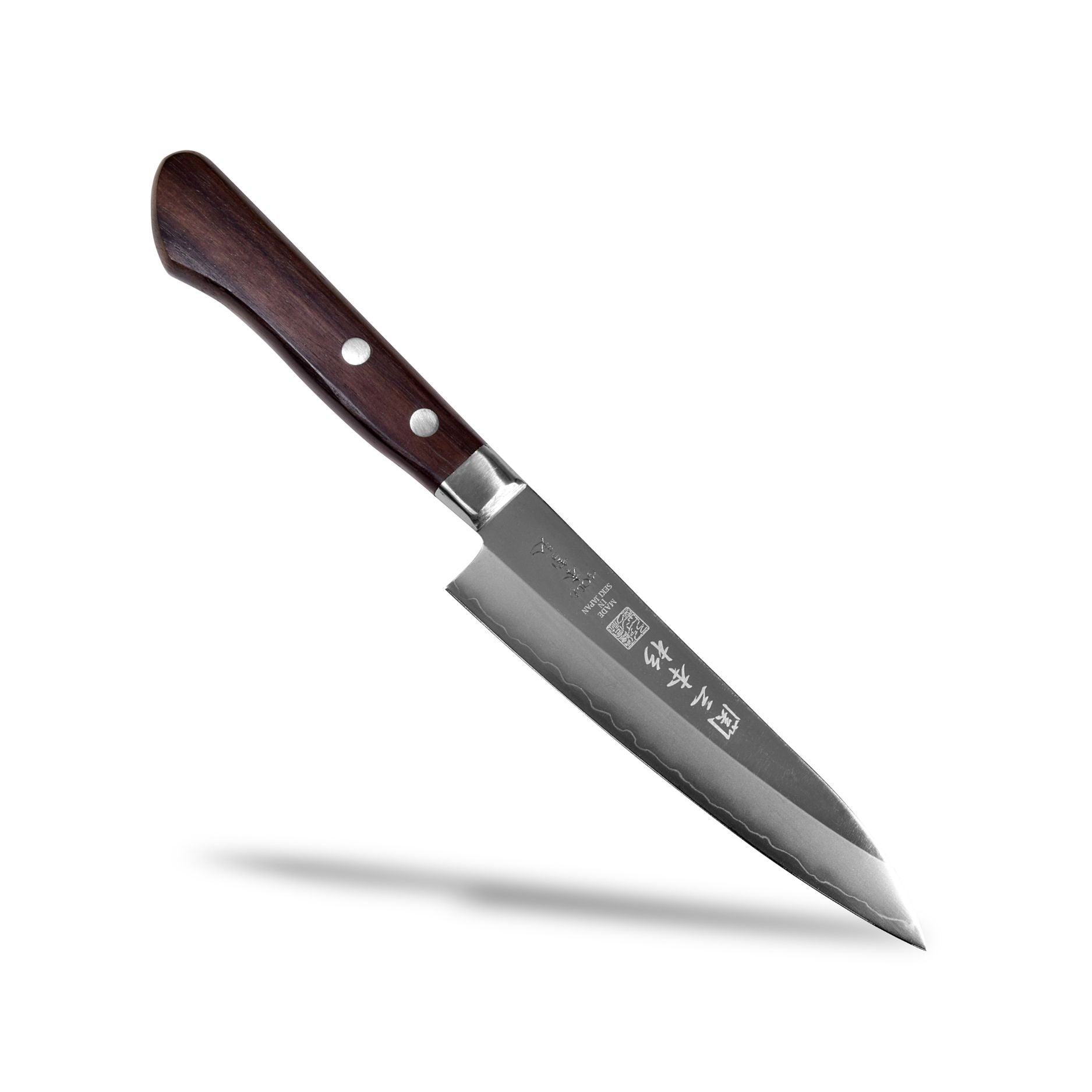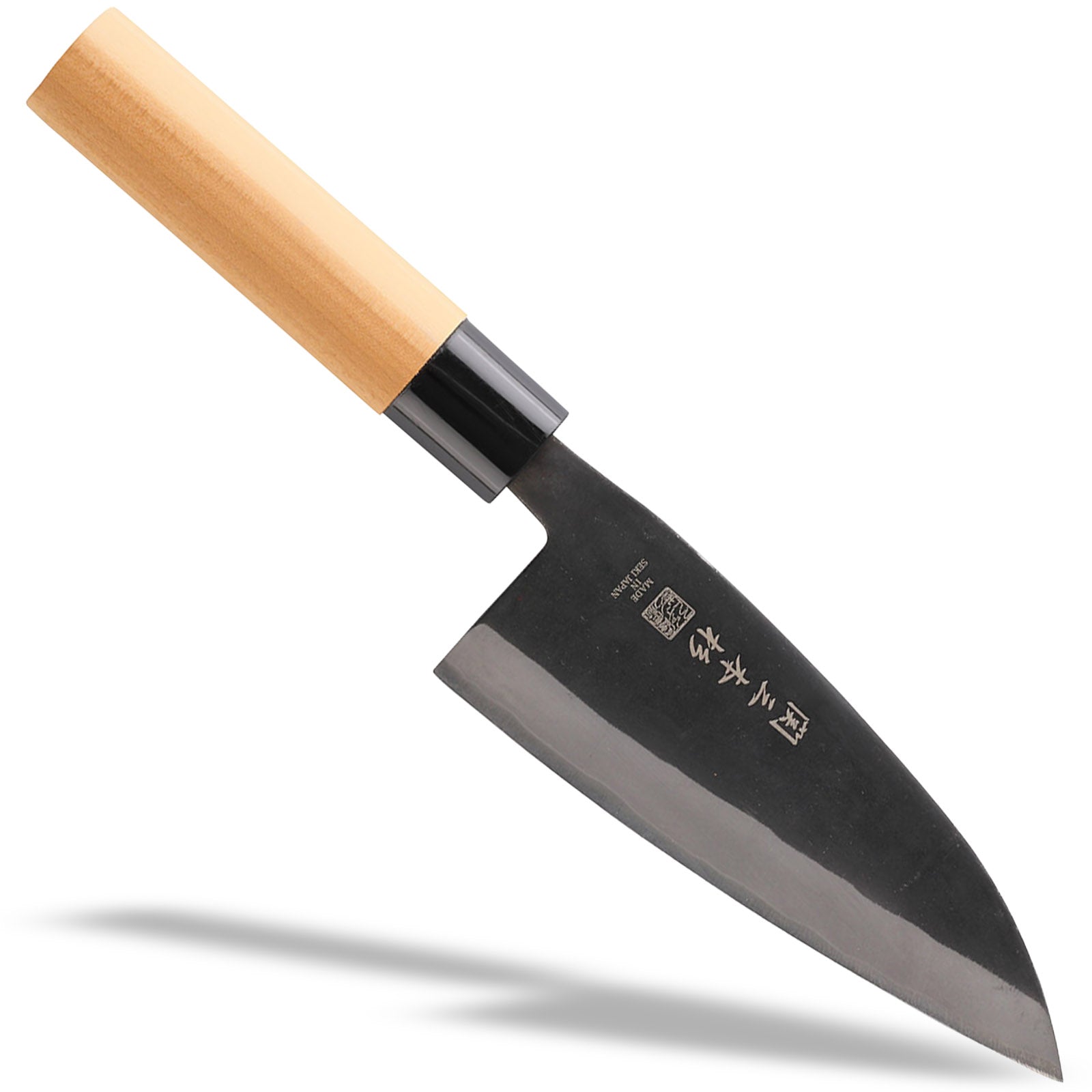

Comparing Japanese kitchen knives: Sashimi knife and Yanagiba knife
Choosing a Japanese kitchen knife based on grip and cutting feel: Types, sashimi knives, yanagiba knives, and comparisons.
In conclusion, a yanagiba knife is a type of sashimi knife, and if you're choosing just one Japanese knife for sashimi at home, a single-edged yanagiba knife with a blade length of around 210-240mm offers the best balance of ease of handling and cutting performance.
[Key points of this article]
- This document clarifies the position of the yanagiba knife within the broad category of sashimi knives and the differences between it and other sashimi knives (takohiki and kiritsuke).
- This article compares yanagiba knives from the perspectives of "length, thickness, weight, steel type, and handle," and explains the specifications suitable for both home and professional use.
- For those buying a sashimi knife for the first time, we offer a step-by-step guide to choosing the right one, covering "Japanese knives, types, sashimi knives, yanagiba (sashimi knife), and comparisons."
Today's review: 3 key points
The term "sashimi knife" is a category that includes knives such as yanagiba and takohiki, with the yanagiba being the most common.
In short, for home use, a single-edged yanagiba knife with a blade length of 210-240mm is standard, as it is easy to handle and the length makes it easy to beautifully slice sashimi.
In conclusion, beginners should start with a stainless steel or white steel yanagiba knife, and as they gain experience, they can upgrade the blade length and steel type to suit their intended use.
Conclusion of this article
- In conclusion, "sashimi knife" is a type of knife, and the yanagiba knife is a prime example of this type, so it's perfectly acceptable to think of "Japanese knife for sashimi" as "yanagiba knife."
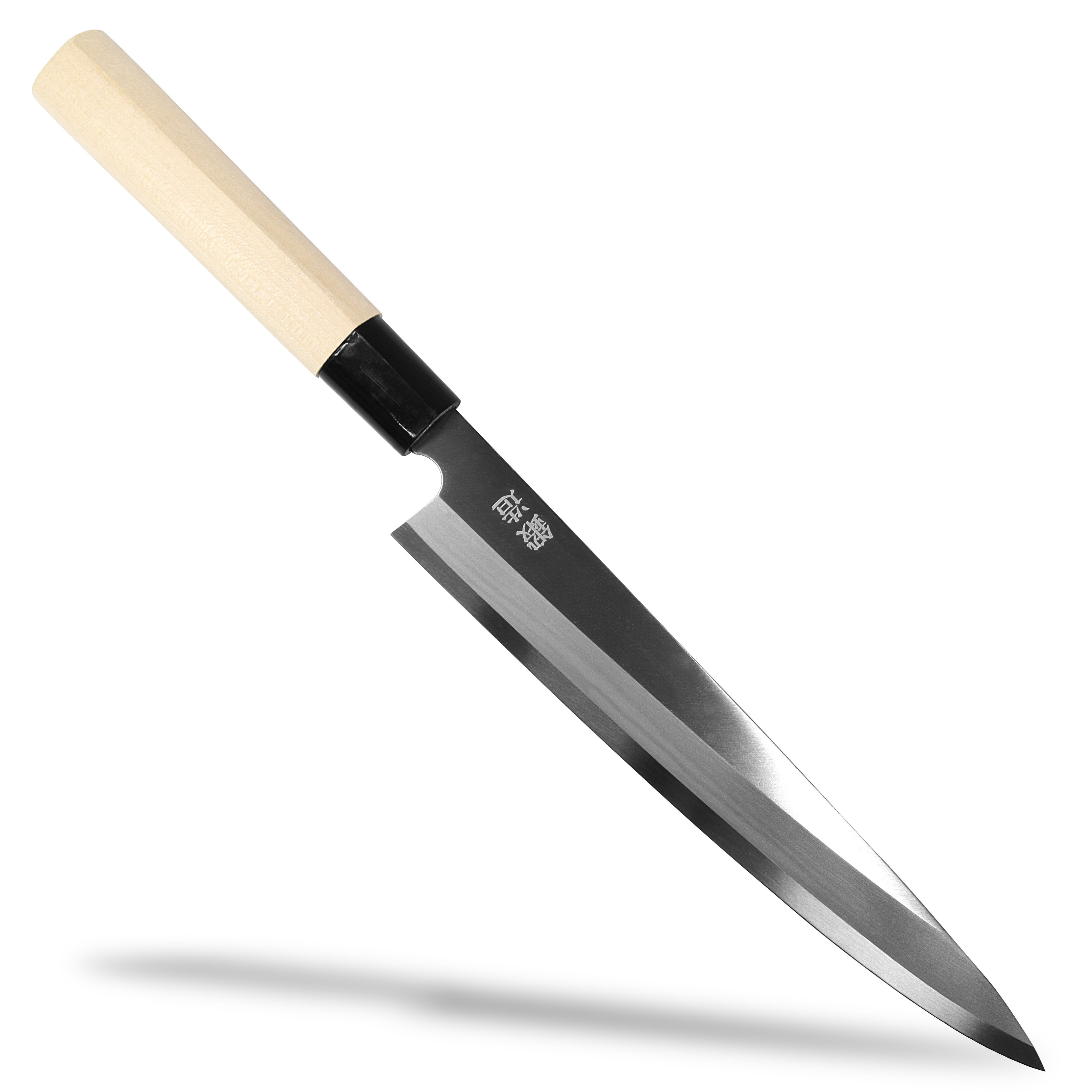
- In short, a yanagiba knife is a long, slender, single-edged sashimi knife designed to create a beautifully finished cross-section of sashimi with a single, sweeping cut.
- The most important thing is to choose the blade length according to "how many servings you're cutting and what size cutting board you're using," with 210-240mm being the standard for home use.
- The first thing beginners should understand is that single-edged yanagiba knives are often designed for one hand only, so it's important to choose the correct one for right-handed or left-handed users.
- In the world of Japanese kitchen knives, the yanagiba (sashimi knife) is so well-established as the standard that "slicing sashimi with a yanagiba" can be considered the original and intended use of a sashimi knife.
What are the basics of Japanese kitchen knives, including different types, sashimi knives, yanagiba knives, and how can you compare them?
In short, "sashimi knife" is a general term, while "yanagiba knife" is one representative type within that category.
A yanagiba knife is defined as "a type of sashimi knife used for thinly slicing fish for sashimi."
In addition to the yanagiba knife, there are several other types of sashimi knives, including the takohiki knife with a square blade commonly used in the Kanto region, the sashimi kiritsuke knife with a pointed tip, the sakimaru sashimi knife, and the fuguhiki knife used to slice pufferfish extremely thinly.
The defining characteristic of a yanagiba knife is its slender, long, straight blade, resembling a willow leaf. Its shape is designed to beautifully separate fish fillets in a single, sweeping motion.
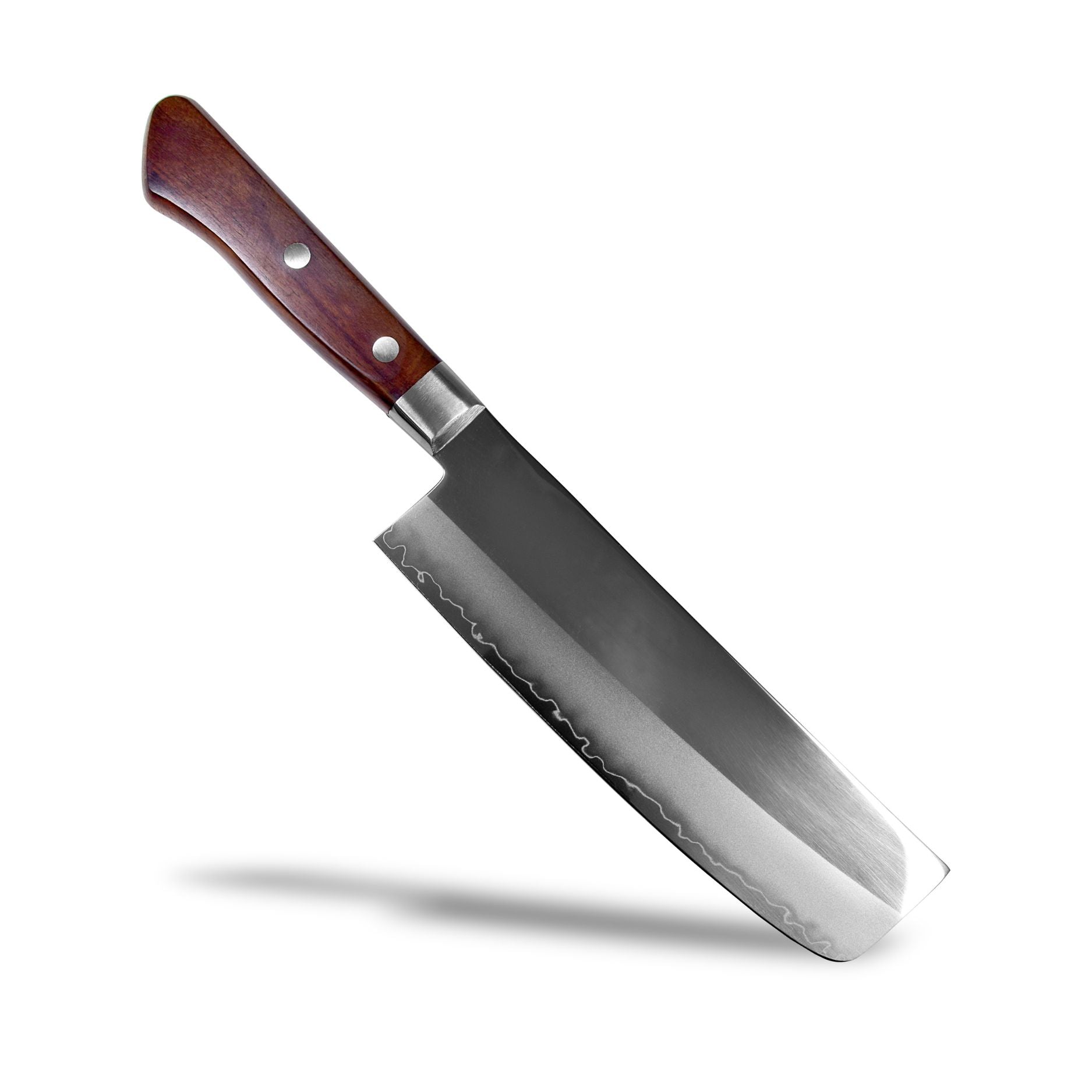
On the other hand, the takohiki is a square-shaped sashimi knife that was popular in the Kanto region. Compared to the yanagiba, it has a rounded tip and is characterized by its ease of handling on a cutting board.
The first thing beginners should understand is that the starting point for comparing different types of sashimi knives is the yanagiba (sashimi knife).
What is the relationship between a sashimi knife and a yanagiba knife?
In conclusion, "sashimi knife" is a category name, and "yanagiba knife" is a representative shape within that category.
It is explained that "a sashimi knife is a general term for knives used to slice sashimi, and a yanagiba knife is one type of this knife."
It is also stated that "sashimi knives are broadly divided into yanagiba knives and takohiki knives, and currently yanagiba knives are the mainstream," thus positioning the yanagiba as the representative of sashimi knives.
In other words, in response to the need for a sashimi knife, many modern specialty stores will suggest a yanagiba knife.
The Yanagiba knife is described as "a knife for making sashimi" and "Yanagiba knife = sashimi knife," indicating that it is the standard knife for slicing sashimi.
In short, it's similar to comparing sashimi knives, but with variations of yanagiba knives.
What are the differences between the types and shapes of yanagiba knives?
In short, the differences between yanagiba knives lie in the "shape of the blade tip (yanagiba, sakimaru, kiritsuke)", "blade length", and "steel material".
In addition to the standard yanagiba knife, variations of sashimi knives include the "sashimi kiritsuke knife" with a sharp, angled tip, and the "sashimi sakimaru knife" with a rounded tip similar to a Japanese sword.
Furthermore, among yanagiba knives, there are subtle differences depending on the craftsman and brand, such as those with a thin, pointed tip, those with a softer, almost rounded shape, and those with a slightly rounded shape similar to a clam-shaped blade.
The descriptions include phrases like "a yanagiba knife, where the blade length is measured from the tip of the blade to the handle," "a long and slender shape like a willow leaf," and "mainly used for slicing sashimi," indicating that the intended use is the same.
The main difference is that the yanagiba (sashimi knife) has a sharp tip that easily penetrates ingredients, making it suitable for detailed work, while the marusaki (rounded tip) is often chosen for applications where safety and a softer appearance are prioritized.
The first thing beginners should keep in mind is that it's safest to choose a standard yanagiba-shaped knife (a standard type with a thin, pointed tip) as their first knife.
What points should you consider when comparing sashimi knives and yanagiba knives?
In conclusion, when comparing Japanese sashimi knives and yanagiba knives, the following five points are important:
- Blade length
- Blade thickness and weight
- Steel material (stainless steel or carbon steel)
- Blade sharpening (single-edged or double-edged)
- Pattern shape and material
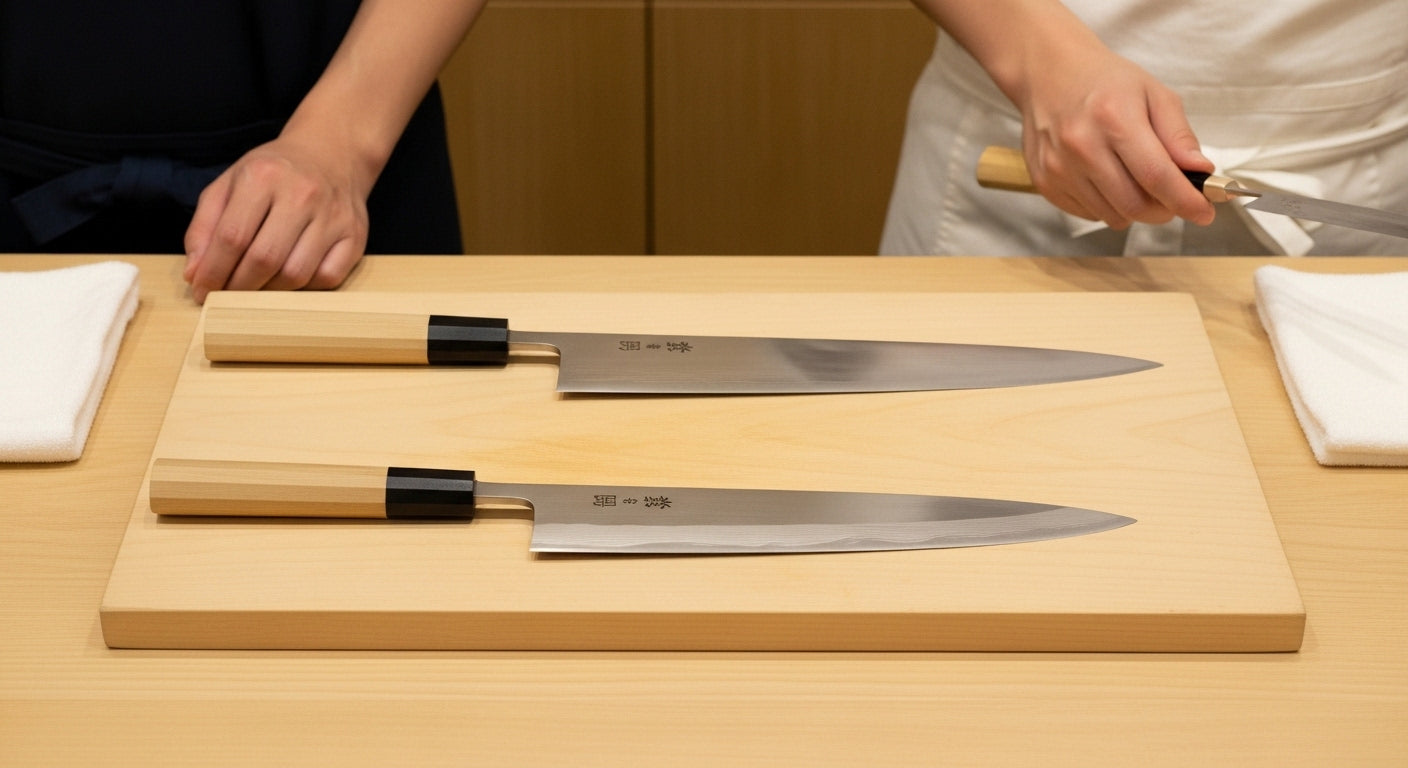
Yanagiba knives have blades ranging from 180mm to 360mm in length, and it is explained that "professionals use knives around 300mm, while 210-270mm is easier to use for home use."
Blade lengths of 180-240mm are generally considered suitable for home use, while those 270mm or longer are for professional use. It is recommended to choose a blade that is longer than the shorter side of your cutting board.
Regarding steel materials, while steels such as white steel and blue steel excel in sharpness and ease of sharpening, they are prone to rusting. Therefore, for home use, stainless steel sashimi knives, which are easier to maintain, are sometimes recommended.
The blade is typically single-edged, and there are separate models for right-handed and left-handed users, so it's important to choose a model that suits your dominant hand.
The most important thing is to compare them based on "the length and material that suits your home cutting board, kitchen space, and frequency of use."
How to choose the perfect Japanese kitchen knife by comparing different types, including sashimi knives and yanagiba knives?
What kind of yanagiba knife should I choose for home use?
In conclusion, the most practical choice for a first knife for home use is a single-edged yanagiba knife with a blade length of 210-240mm, made of white steel or stainless steel.
For home use, a "sashimi knife made of white steel that is inexpensive and has good sharpness" is considered ideal, and it is explained that a blade length in the range of 210 to 270 mm is easy to use.
Furthermore, while yanagiba knives with blades of 180-240mm are generally considered suitable for home use, for first-time buyers, a blade length of around 210mm is said to be easier to handle for tasks such as slicing sashimi into strips.
Even beginner-friendly guides to sashimi knives summarize key points such as, "There are two types of sashimi knives: yanagiba and takohiki," "For home use, stainless steel is recommended because it's easy to maintain," and "Since most knives are single-edged, it's important to choose one for your dominant hand."
As an example of a yanagiba knife for home use, some models with a blade length of around 210mm and a weight of about 75g are introduced as being "easy to grip and comfortable in the hand."
The three key features that beginners should focus on are: "210-240mm, single-edged, and suitable for home use."
How do you compare professional and high-end models?
In short, for professional and high-end models, the specifications to compare are typically "blade length of 270mm or more, White Steel No. 1 or White Steel No. 2, buffalo horn handle, and fully forged or fully tempered."
It is clearly stated that "professional chefs use longer yanagiba knives, mainly around 300mm, while 210-270mm is easier to use for home cooking."
Yanagiba knives made from various types of steel, including Shiroichi, Shironi, Aogami, and Ginsan, are available in blade lengths ranging from 210 to 330 mm, and it is recommended to choose a style that suits your intended use and skill level.
Professionals often compare knives based on criteria such as: "Blade length should be determined by the size of the fish being filleted and the length of the cutting board," "Steel material should be chosen based on how often sharpening is needed and personal preference for sharpness," and "Buffalo horn handles are standard because they are less likely to slip even with wet hands."
Furthermore, there is advice such as, "While double-edged sashimi knives exist, you can't go wrong choosing a single-edged one to start with," emphasizing that the traditional single-edged yanagiba knife is the standard.
The most important thing is to use a professional perspective as a comparison criterion: "Choose the blade length and steel type according to the workload and sharpening style on site."
Comparing sashimi knives and yanagiba knives, which shape is best suited for whom?
In conclusion, the key to comparing a sashimi knife with a yanagiba knife is determining whether a standard yanagiba knife is sufficient or if you need a special shape such as a takohiki or kiritsuke knife.
The Takohiki is a square-shaped sashimi knife often used by sushi chefs in the Kanto region. It has characteristics such as "the flesh is less likely to stick to the knife when slicing compared to a Yanagiba" and "it is suitable for slicing long, thin sashimi."
Sashimi knives are described as having a sharp, pointed tip that cuts easily into ingredients, and their sharp appearance makes them suitable for Western-style plating as well.
On the other hand, in home use and in typical Japanese restaurants, the yanagiba knife is overwhelmingly used as a sashimi knife, and unless there is a special reason, it is considered rational to choose a standard yanagiba shape.
For home cooks who make sashimi from supermarket blocks, or for beginner Japanese cooks, a single yanagiba knife can cover almost all sashimi-making needs.
The first thing beginners should understand is that, unless you have a particular preference, it's perfectly fine to think of "sashimi knife" as a yanagiba (sashimi knife).
FAQ
Q1. What is the difference between a sashimi knife and a yanagiba knife?
A1. Sashimi knife is a category name, and the most representative shape is the yanagiba knife; therefore, "a yanagiba knife is a type of sashimi knife."
Q2. What other types of sashimi knives are there besides the yanagiba knife?
A2. Variations of sashimi knives include the octopus-slicing knife that was mainstream in the Kanto region, the sashimi-cutting knife with a pointed tip, the rounded-tip sashimi knife, and the fugu-slicing knife.
Q3. Which should I choose for home use, a sashimi knife or a yanagiba knife?
A3. Currently, the yanagiba knife is the mainstream sashimi knife, so even for home use, choosing a yanagiba type (single-edged, 210-240mm) is perfectly fine.
Q4. What is the standard blade length for a yanagiba knife?
A4 paper comes in sizes from 180 to 360 mm, but 210 to 270 mm is generally considered more convenient for home use, while 270 mm or larger is recommended for professional use.
Q5. Which is better for a sashimi knife, a single-edged or double-edged one?
A5. Sashimi knives are typically single-edged, as this is more suitable for beautifully slicing sashimi in a single stroke.
Q6. What kind of steel should I choose for a yanagiba knife?
A6. For household use, if sharpness is your priority, white steel or blue steel is recommended, while if ease of maintenance is your priority, stainless steel is a good choice.
Q7. Is it necessary to have both a sashimi knife and a yanagiba knife?
A7. Since the yanagiba knife itself is a sashimi knife, one yanagiba knife is usually sufficient, and other knives like takohiki (octopus slicing) are added depending on your style and preference.
Q8. What are some important points to consider when choosing a yanagiba knife?
A8. It is important that the blade length does not exceed the shorter side of the cutting board, that you choose a single-edged knife for your dominant hand, and that you choose a steel that can be easily maintained.
Q9. What is the price range for a sashimi knife suitable for beginners?
A9. For home use, a yanagiba knife made of stainless steel or white steel is considered to offer good value for money, with a price range of around 5,000 to 15,000 yen.
Q10. Can a yanagiba knife be used for anything other than sashimi?
A10. It can be used for all kinds of slicing, such as thinly slicing roast beef or ham, where a long blade allows for a single, sweeping cut.
summary
- In conclusion, "sashimi knife" is a category name, and the core of this category is the yanagiba knife. Therefore, if you are choosing one Japanese knife for sashimi, it is generally correct to consider the yanagiba type as your standard.
- Yanagiba knives are long, slender, single-edged knives designed to beautifully slice sashimi in a single stroke. For home use, models with a blade length of 210-240mm, a single edge, and made of easy-to-maintain steel are the most user-friendly.
- When comparing different types of Japanese knives, the best way to choose a sashimi knife without making a mistake is to start with the standard yanagiba knife and then consider variations such as takohiki and kiritsuke depending on your intended use and preferences.