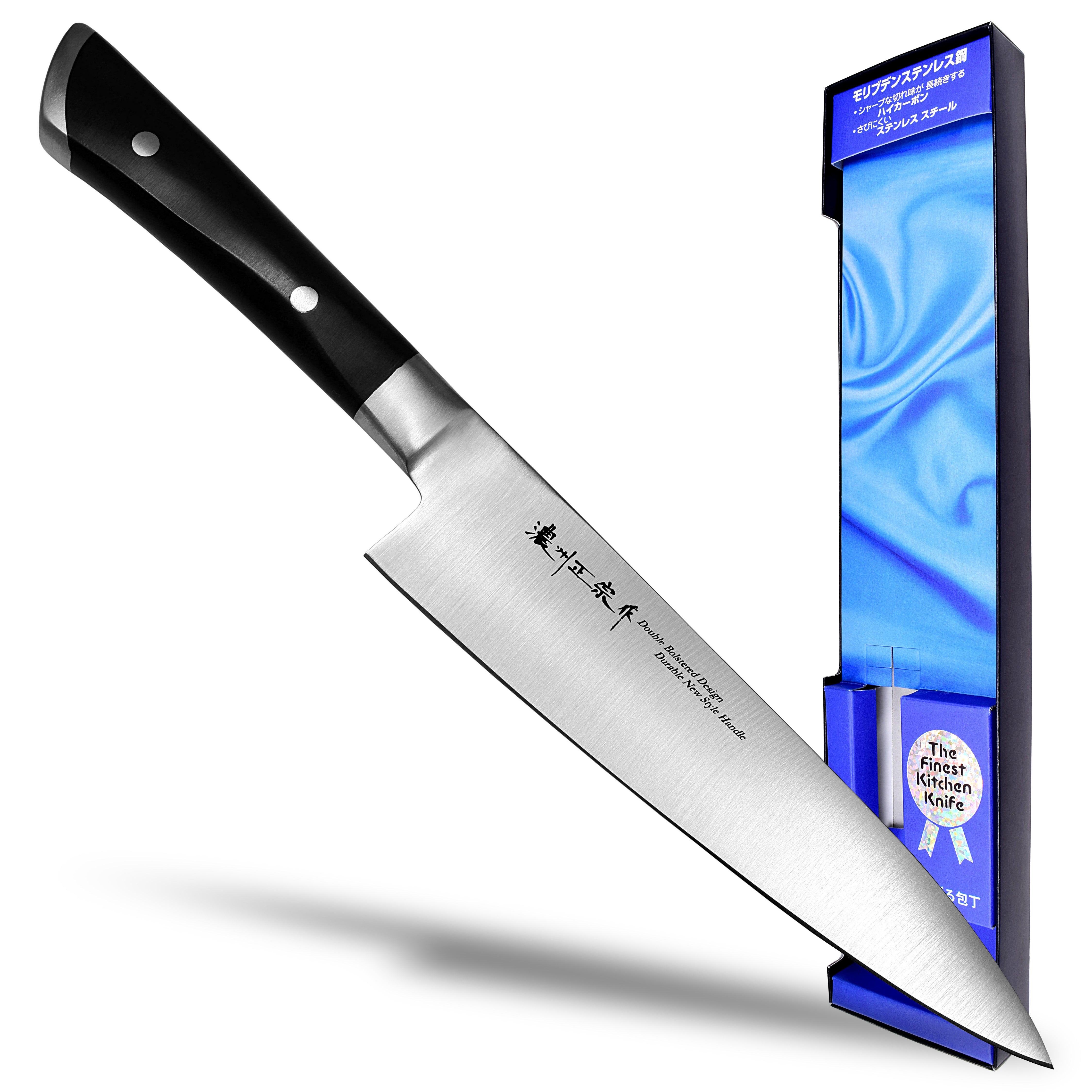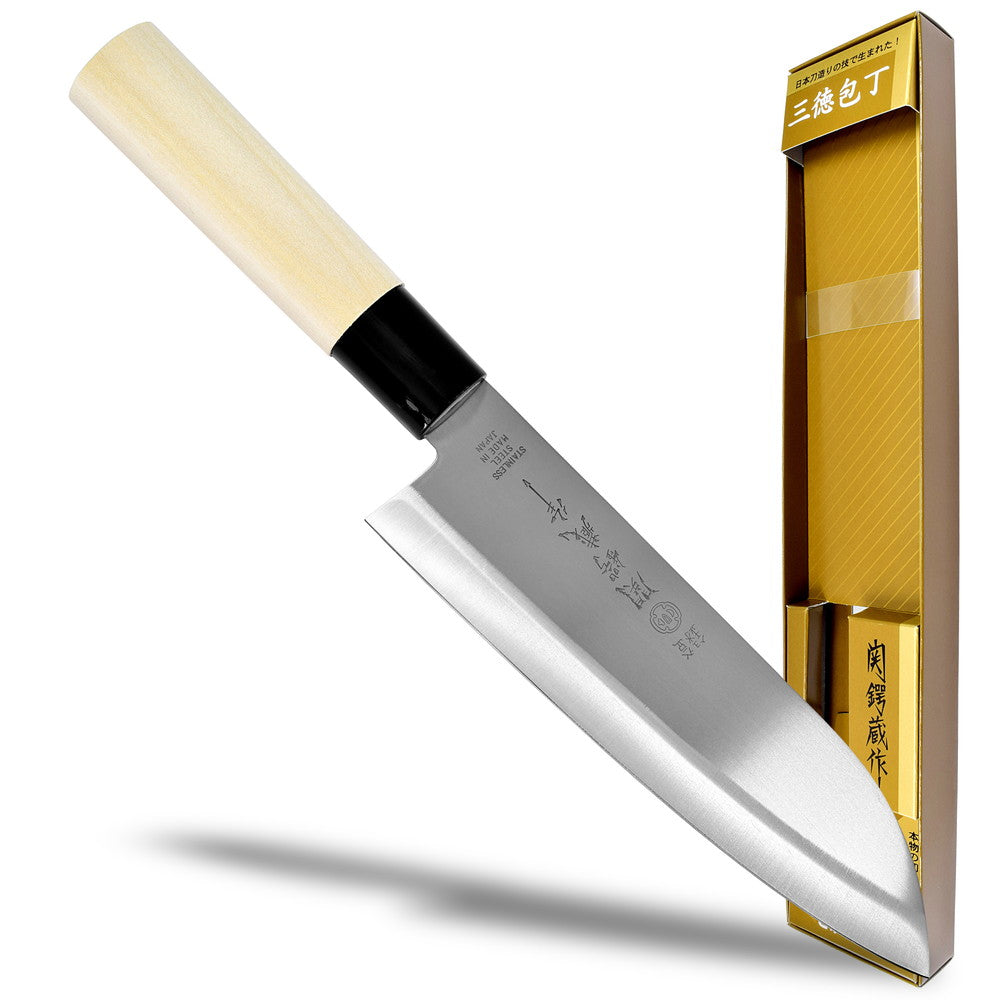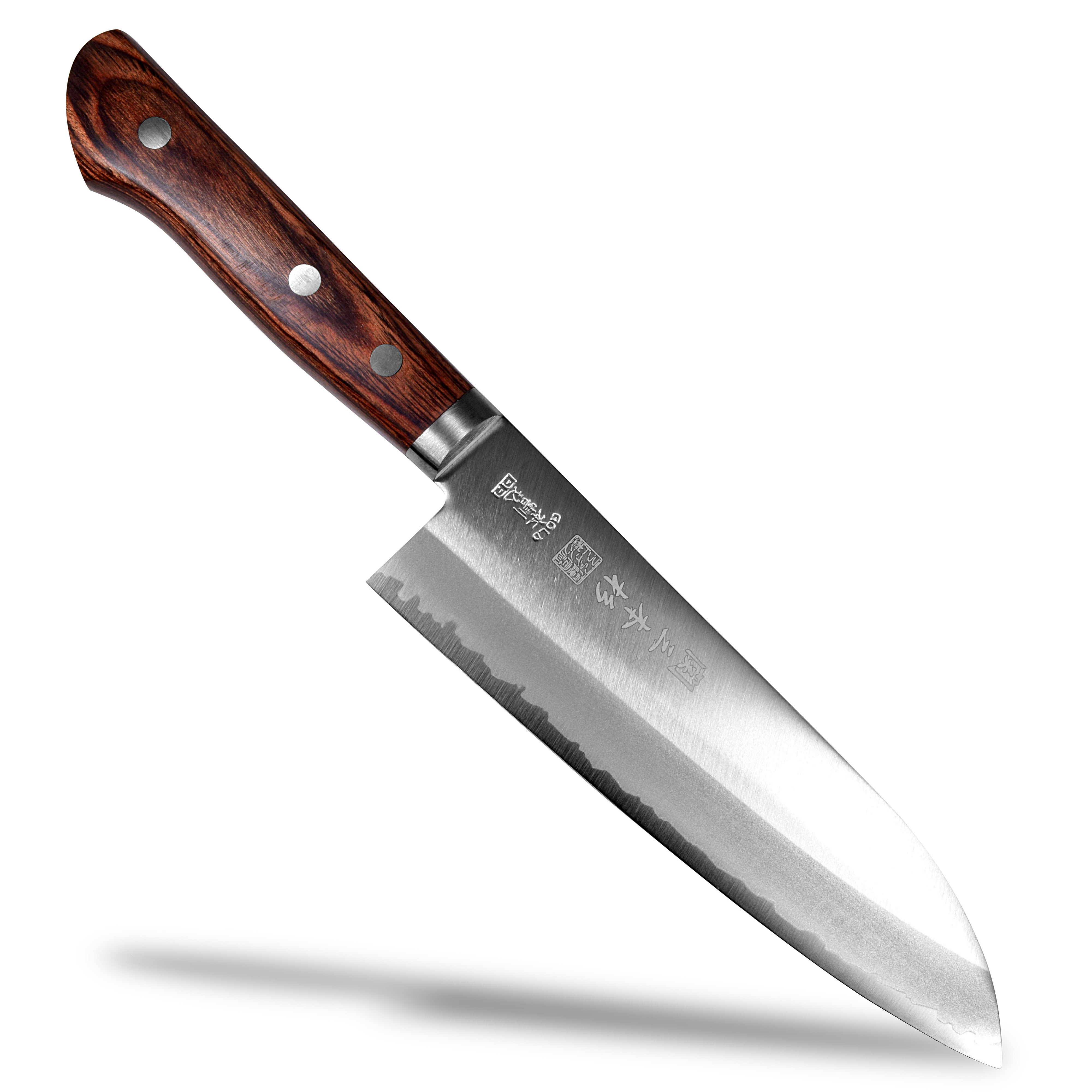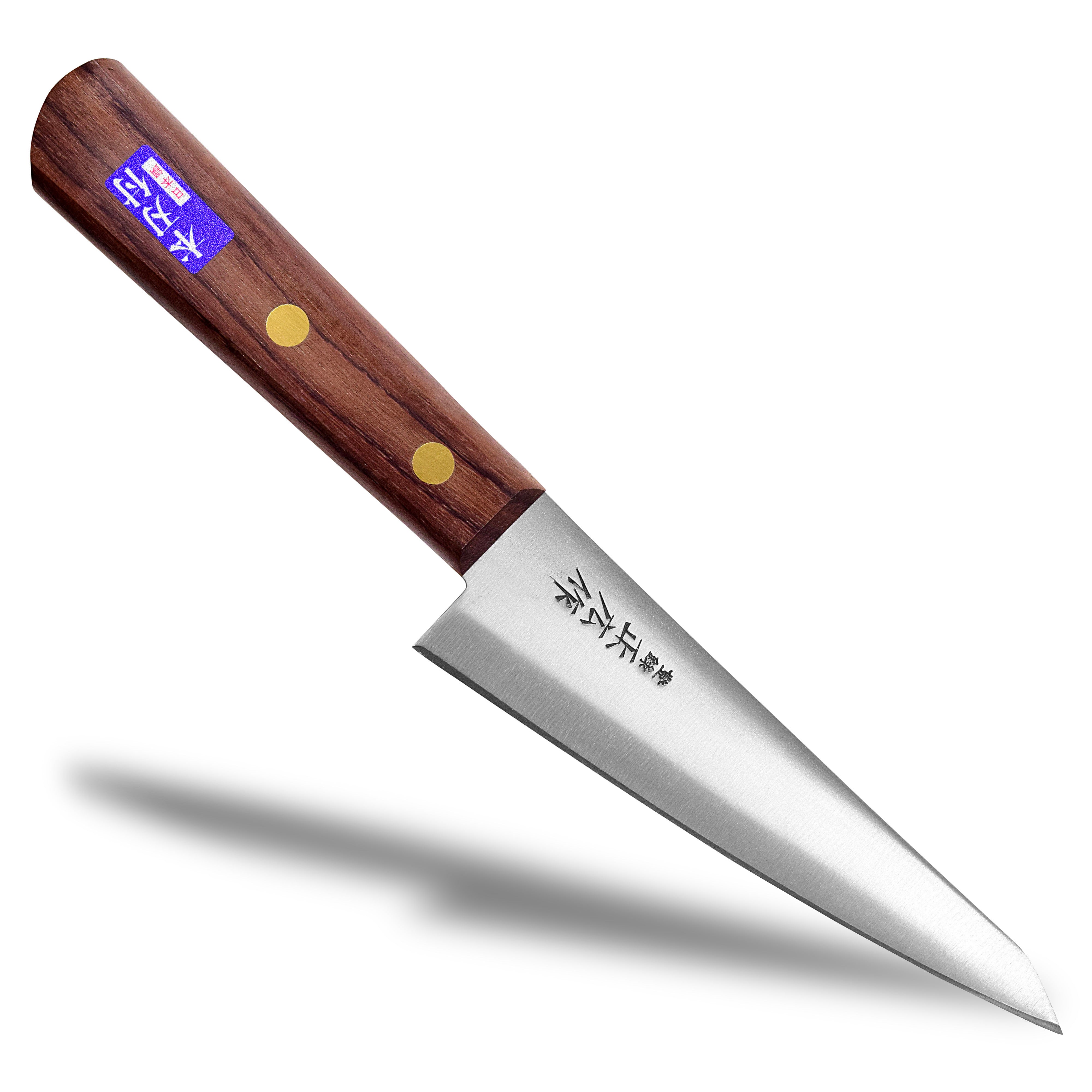

Selecting a Japanese kitchen knife for home use
Recommended Japanese sashimi knives for home use, perfect for those who want to enjoy sashimi at home. Features and recommendations.
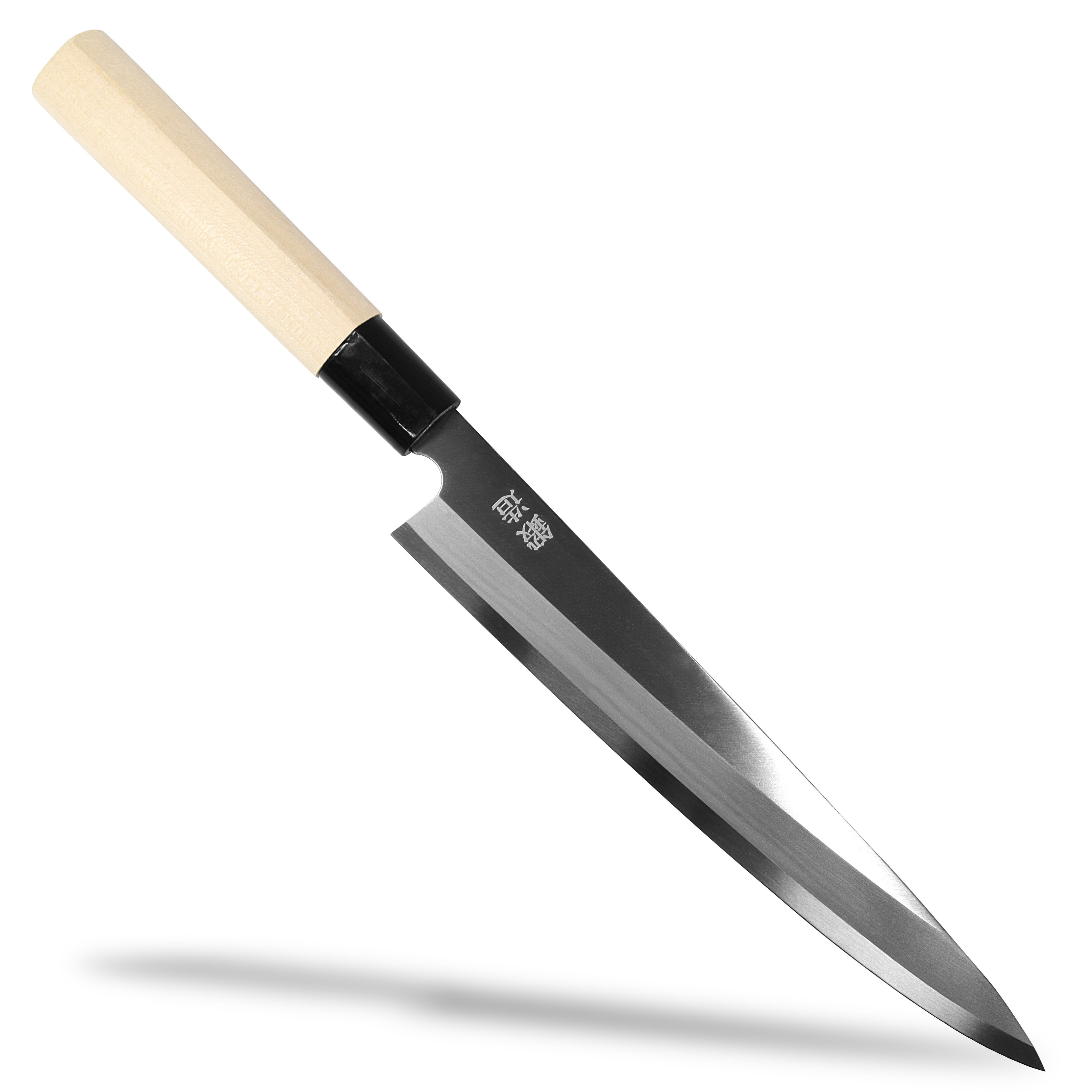
In conclusion, for those who want to enjoy sashimi at home, a sashimi knife with a blade length of around 21 cm, made of stainless steel, and with a single-edged (yanagiba-type) blade is the easiest to handle and offers an excellent balance of rust resistance and sharpness, making it the ideal choice for home use.
[Key points of this article]
- This article summarizes the length, material, weight, and other features of sashimi knives (yanagiba knives) suitable for home use.
- This article introduces how to choose a stainless steel sashimi knife that is easy for beginners to use, along with specific specifications and examples.
- This article explains how to significantly elevate your home drinking or weekend sashimi experience by using a two-knife system: a santoku knife and a sashimi knife.
Today's review: 3 key points
For home use, a sashimi knife should be a "yanagiba-type" with a blade length of 180-240mm, and among those, a standard size of around 21cm is the easiest to handle.
In short, for your first sashimi knife, we recommend a stainless steel one (such as a molybdenum or VG10 series) that is rust-resistant and easy to maintain.
In conclusion, by using a santoku knife for everyday cuts and a sashimi knife for sashimi and roast beef, you can enjoy a cutting technique and texture close to that of a professional chef, even at home.
Conclusion of this article
- Conclusion: The best choice for a home-use sashimi knife is a "yanagiba-type knife with a blade length of around 210mm, made of stainless steel, and single-edged."
- In short, if you choose a stainless steel yanagiba knife that is rust-resistant and easy to maintain, even beginners can confidently and beautifully slice sashimi for home drinking.
- The most important thing is to choose a cutting board and a blade length that fits your kitchen space (18-24cm for home use).
- The first thing beginners should keep in mind is that multiple expert articles consistently recommend choosing a pipe around 210mm in length and made of stainless steel, as this is a safe bet.
- To easily enter the world of Japanese kitchen knives, starting with a two-knife system of a "santoku knife + a household sashimi knife" is recommended in terms of both cost-effectiveness and satisfaction.
What are the features of recommended Japanese kitchen knives, sashimi knives, and home-use knives?
In short, a household sashimi knife is a yanagiba knife that has been adjusted to be the perfect length and weight for a home cutting board and fish fillets.
They clearly distinguish between blades with a length of 180-240mm for home use and those with a length of 270mm or more for professional use, and explain that "the blade length should be chosen based on the type of food being prepared and the size of the cutting board."
"Sufficient specifications for use as a sashimi knife at home," and "A lightweight, easy-to-handle yanagiba knife around 21cm in length" are widely recommended for home use.
In terms of materials, stainless steel is often recommended for beginners and home use because "it doesn't rust like steel and is easy to maintain, making it ideal for beginners."
On the other hand, carbon steels such as white steel and blue steel offer superior sharpness, but they rust easily and are difficult to maintain, making them more suitable for professionals and users seeking high-quality blades.
The first thing beginners should keep in mind is the baseline: "Household use = stainless steel + around 210mm."
The ideal length and size for a home-use sashimi knife.
In conclusion, the ideal blade length for a household sashimi knife is between 18 and 24 cm, with around 21 cm being considered the most well-balanced.
The knives are categorized as "180-240mm: for home use" and "270mm and above: for professional use." For those buying a yanagiba knife for home use for the first time, a 210mm knife is considered easy to handle for slicing sashimi into strips.
As the review article states, "For general household use, 18-27cm is recommended" and "We tested it with 205-240mm," indicating that this range offers high usability and versatility.
In articles about sashimi knives for beginners, it is clearly stated that "a 210mm stainless steel knife is the best choice for beginners," and that a length of around 210mm is recommended as a length that is less likely to result in mistakes.
Many home-use models, such as the sashimi knives in Kai's "Seki Magoroku" series, use a length of around 210mm, which has become the standard for entry-level models.
In short, the general rule for home-use sashimi knives is, "If in doubt, go for 210mm."
What materials and types of steel are recommended for home use?
In short, stainless steel is the most recommended material for a sashimi knife for home use.
Common explanations include statements such as, "When choosing a sashimi knife for home use, stainless steel is recommended," and "Stainless steel is rust-resistant, easy to maintain, and suitable for busy households."
Among stainless steels, molybdenum vanadium steel, VG10, and Gin-san (Ginshi No. 3) are highly regarded as materials that offer sharpness and wear resistance comparable to steel, providing more than sufficient performance for household use.
On the other hand, carbon steels such as white steel and blue steel offer superior sharpness and performance close to professional specifications, but they are prone to rusting, cannot be left wet, and require regular sharpening, which has led to the criticism that they are "difficult to use for home use."
The first thing beginners should keep in mind is the idea of "starting with stainless steel, and then moving up to carbon steel once you've gained some experience."
Weight and grip characteristics of household sashimi knives
In conclusion, household sashimi knives that are "lightweight and easy to hold" are the easiest to use, and many models weigh around 100-150g are available.
Some yanagiba knives for home use are praised for their lightweight design, weighing only 75g, making them feel lighter and more comfortable to hold. Lightweight design is one of the key features of home-use knives.
Meanwhile, in knife comparison sessions, models with diverse weights, such as 210mm in length, 340-354mm in overall length, and 85-205g in weight, are compared, and weight preferences are also presented as evaluation criteria, with comments such as "it's generally heavier and more stable" and "the moderate weight prevents the blade from wobbling."
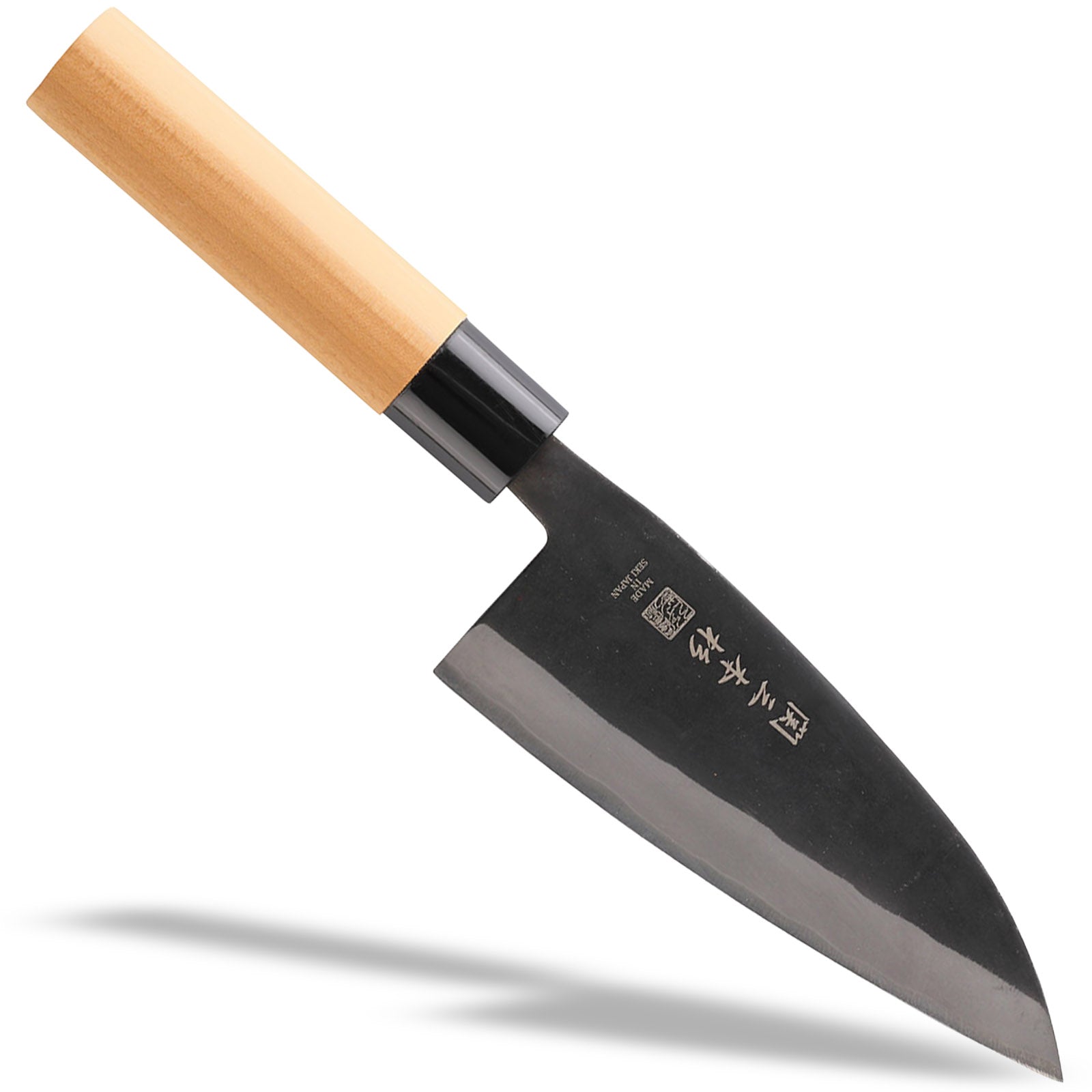
Regarding handles, in addition to traditional magnolia wood handles, models with integrated stainless steel or resin handles, which prioritize ease of grip and hygiene, are also popular.
Models featuring all-stainless steel or metal-and-resin handles are praised for their comfortable grip and smooth cutting action, thanks to their center of gravity being closer to the blade.
The most important thing is to choose a pen with a weight and handle shape that feels comfortable when you actually hold it.
Japanese kitchen knives: Recommended, Sashimi knives, Home use, How to choose based on features
What are the ideal features of a sashimi knife for beginners and home use?
In conclusion, the following four conditions are recommended for a sashimi knife for beginners and home use:
- Yanagiba type (standard shape for sashimi)
- Blade length approximately 210mm
- Stainless steel materials (molybdenum, VG10, etc.)
- Choose a single-edged blade for right-handed (or left-handed) use.
It is clearly recommended that "a stainless steel blade is best for home use as a sashimi knife" and "if you are choosing a sashimi knife for the first time, go for a stainless steel one."
Many people offer advice such as, "For beginners, choosing a 210mm stainless steel model is a sure bet," or "Start with around 210mm and stainless steel," emphasizing that the combination of length and material is key to choosing the right one.
In actual recommendation lists, 210mm stainless steel yanagiba knives and yanagiba knives made from stainless steel are frequently listed as "easy-to-use home knives for beginners."
The first thing beginners should keep in mind is, "Don't try to make a home-use appliance unnecessarily long, heavy, or high-end."
How do you differentiate between using a santoku knife and a sashimi knife?
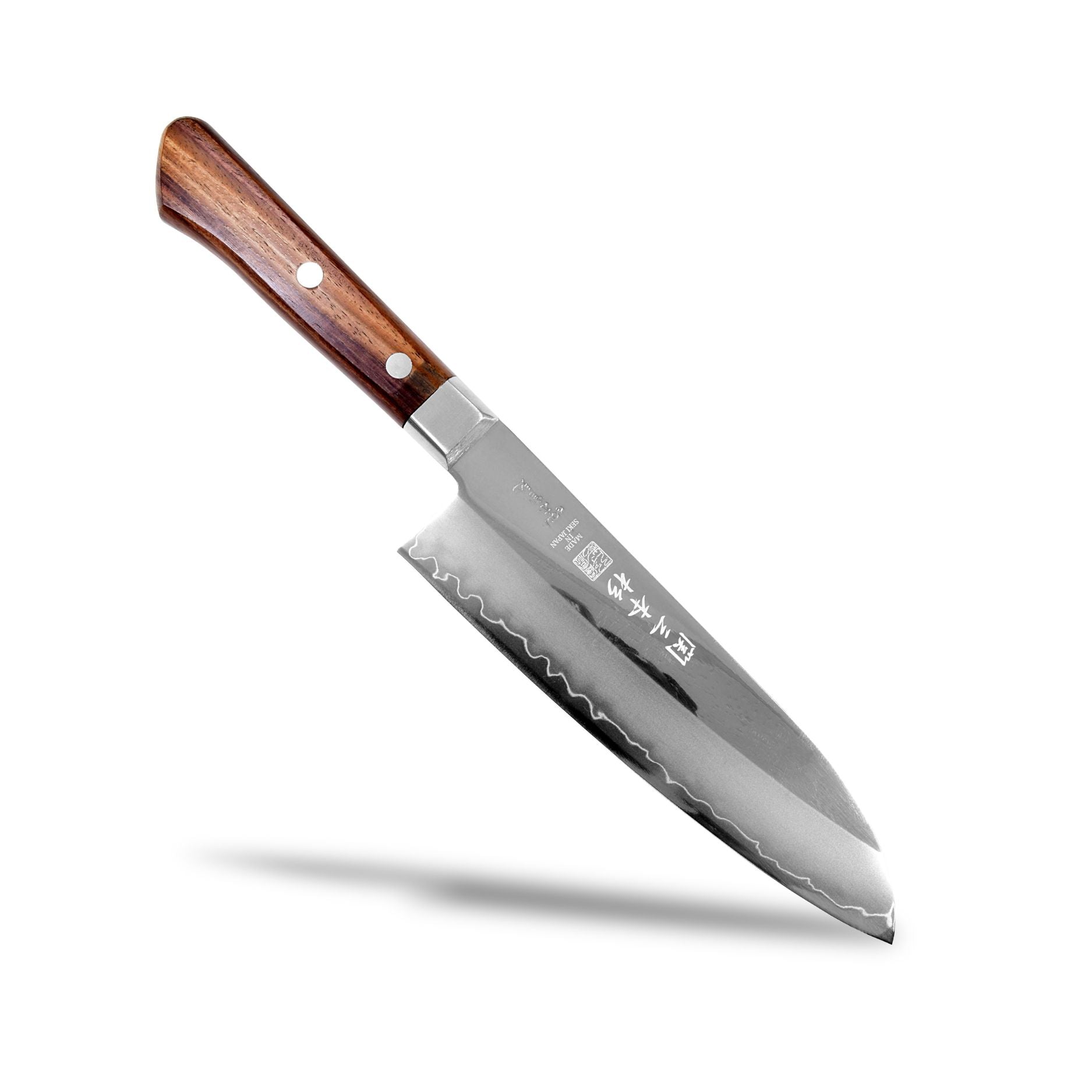
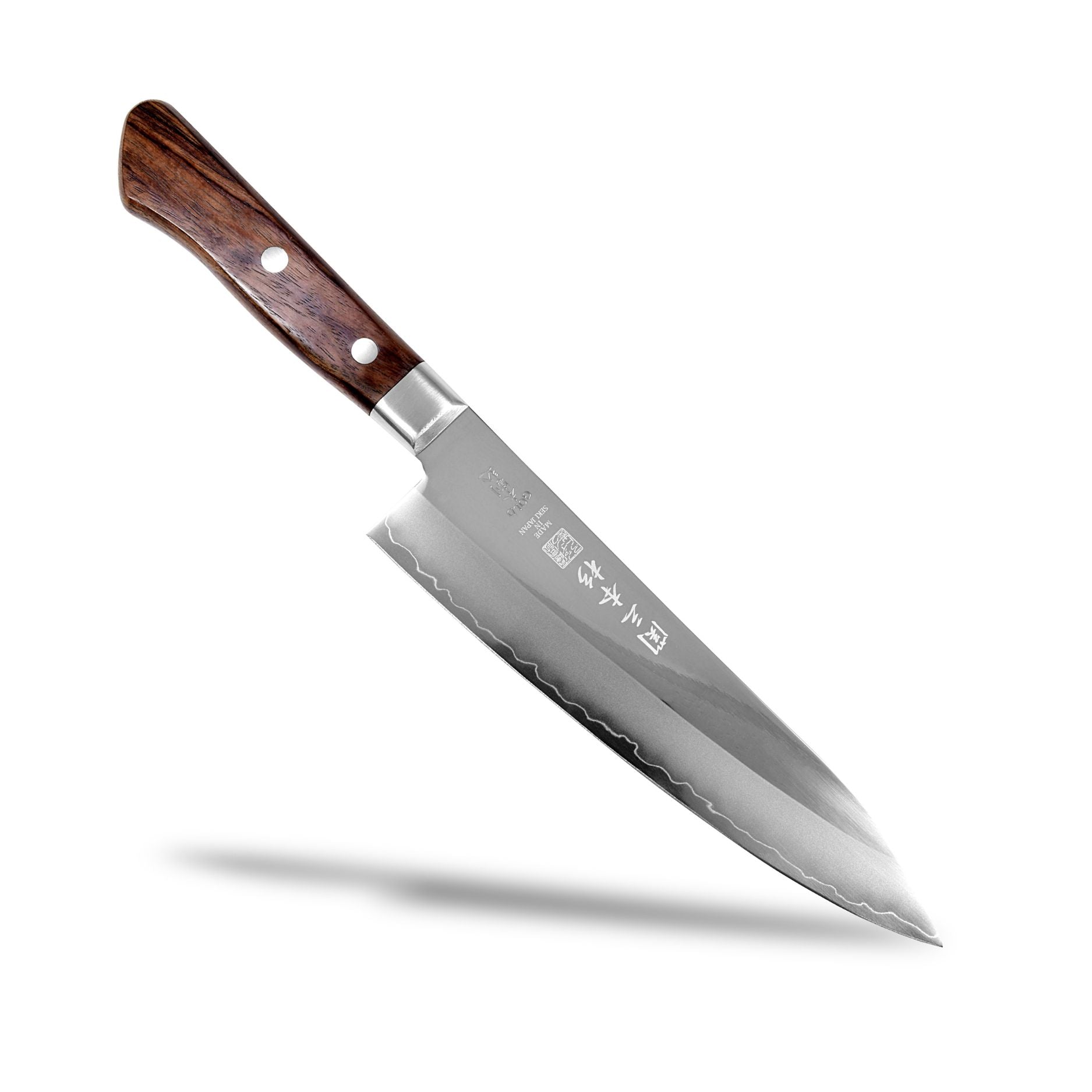
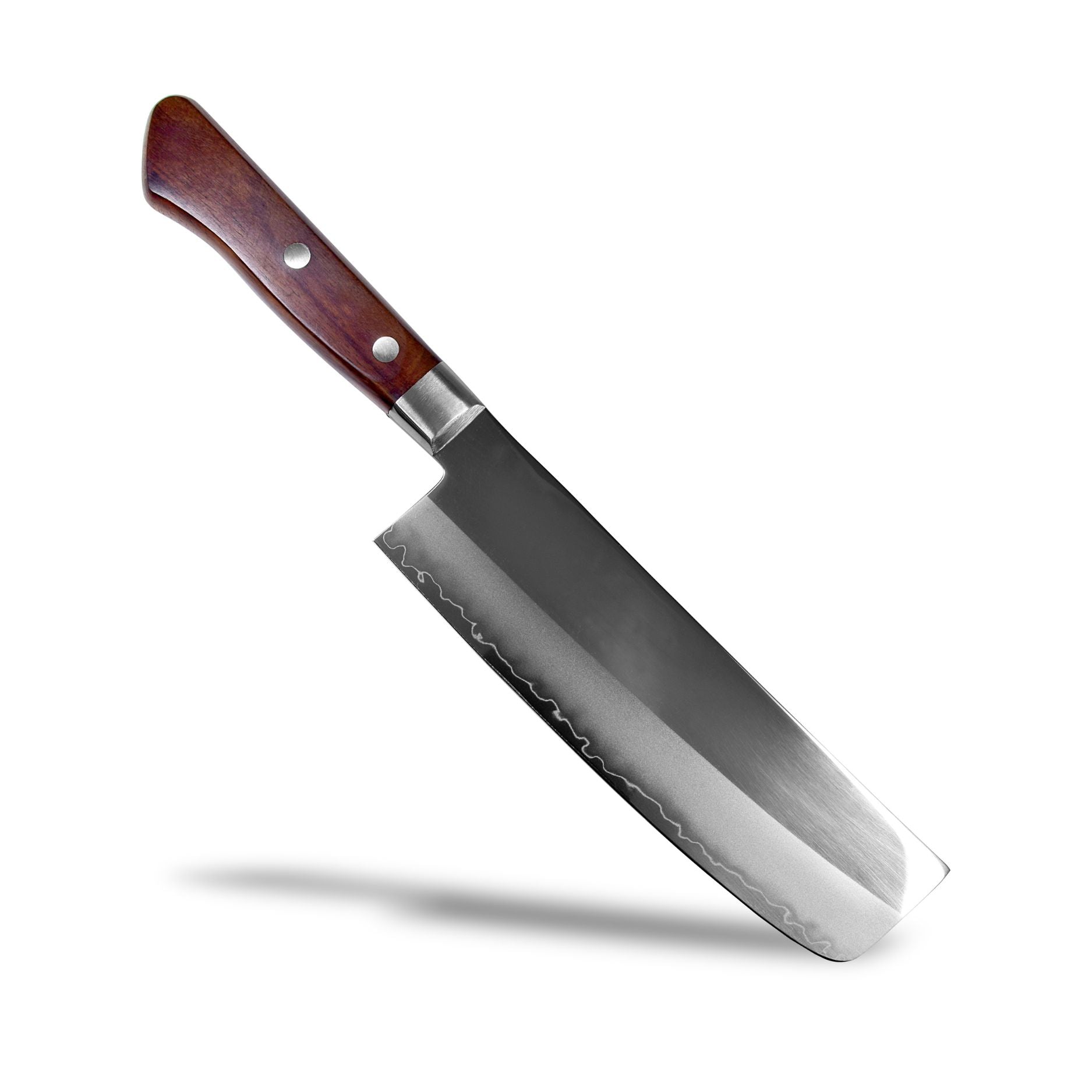
In short, the basic rule for using knives is to use a santoku knife for everyday cooking, and a sashimi knife for dishes where appearance and texture are important, such as sashimi and thinly sliced dishes.
Comments such as "Considering how often it's used at home, stainless steel offers sufficient performance" and "For home use, it's more practical to use a santoku knife and a sashimi knife separately" can be seen.
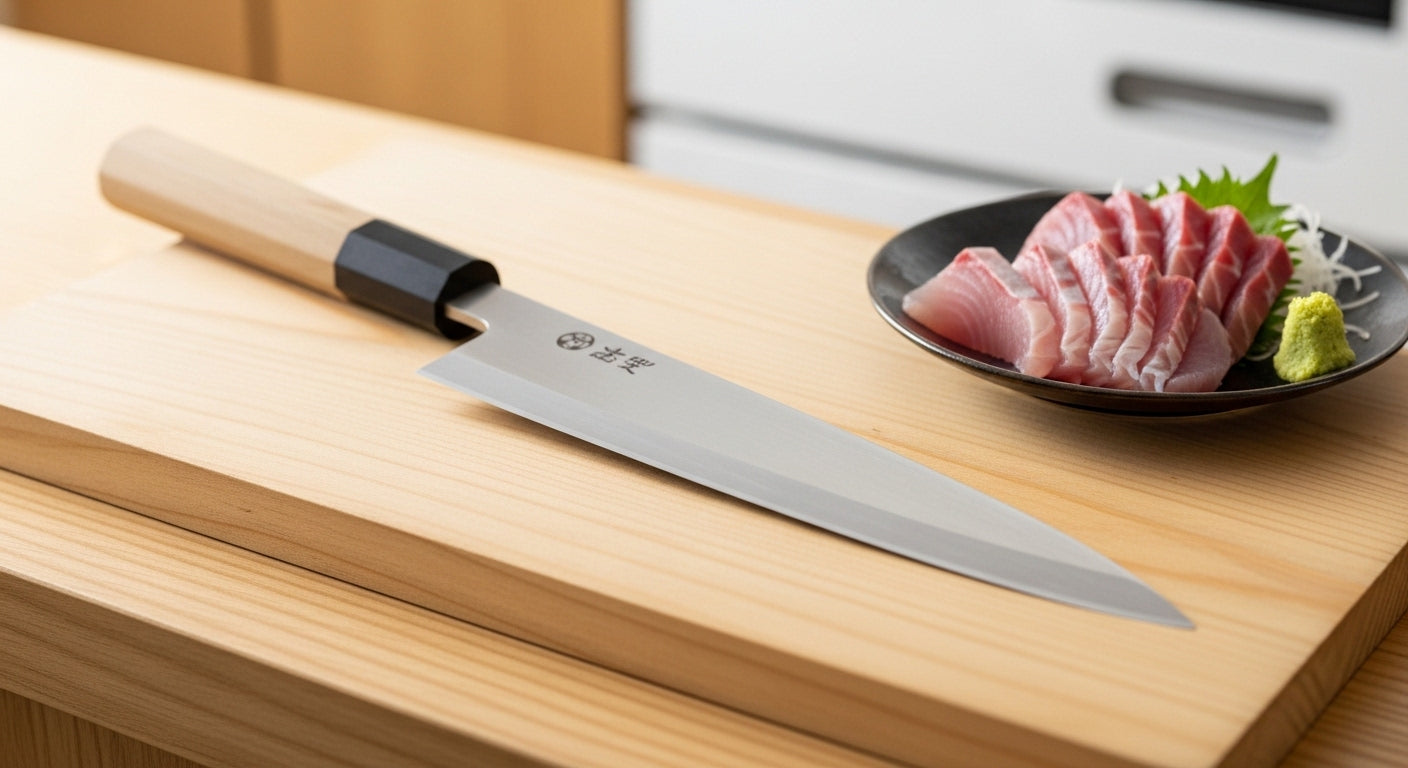
Sashimi knives are often described as being "convenient to have when cutting sashimi or roast beef" and "can cut soft meat cleanly without crushing it," thus establishing their position as a specialized slicing tool.
The specific differences in usage are as follows:
- Preparing vegetables, meat, and fish → Santoku knife
- Slicing sashimi from a block of meat, thinly slicing roast beef and ham → Sashimi knife (yanagiba)
In short, the simplest division of labor at home is "prepare with a santoku knife, and finish with a sashimi knife."
What are some recommended specifications and price ranges for a home-use sashimi knife?
In conclusion, the price range for home-use sashimi knives is roughly "5,000 to 15,000 yen," and many user-friendly models for home use are available in this price range.
Japanese-made sashimi knives with stainless steel blades and wooden handles are often recommended for home use because they are "well-regarded for their sharpness, ease of use, and aesthetic appeal."
The professional model using White Steel No. 2 is described as "using White Steel No. 2, which is favored by chefs, and is characterized by its excellent sharpness and durability," but this one is slightly more geared towards serious professionals.
A combination of "stainless steel x 210mm x around 10,000 yen" is recommended as a "sashimi knife that even beginners can't mess up," and a "210mm stainless steel" knife is considered the go-to choice for beginners.
There are many 210mm class yanagiba knives available starting from around 5,000 yen, making them a realistic starting point for home use.
The first thing beginners should keep in mind is to "choose a price range and material that is easy for you to maintain, rather than opting for high-grade carbon steel."
FAQ
Q1. What is the ideal length for a sashimi knife for home use?
A1. For general household use, 18-24cm is suitable, and around 210mm is particularly easy to handle and less prone to mistakes.
Q2. Which is better for beginners: a stainless steel or carbon steel sashimi knife?
A2. Stainless steel knives are rust-resistant and easy to maintain, making them ideal for beginners. They offer sufficient sharpness and cost-effectiveness for home use.
Q3. Should I choose a sashimi knife that says "yanagiba" (sashimi knife)?
A3. The yanagiba knife is a representative style of sashimi knife, and if you choose a yanagiba knife for home use, it will cover most sashimi preparation needs.
Q4. What is the difference between a sashimi knife and a santoku knife?
A4. A Santoku knife is a versatile everyday knife, while a sashimi knife (yanagiba) has a long, single-edged blade and is specialized for single-stroke slicing, making it ideal for beautifully thinly slicing sashimi, roast beef, and other similar dishes.
Q5. What price range should I expect to pay for a home-use sashimi knife?
A5. If you aim for a price range of around 5,000 to 15,000 yen, you'll find a wide variety of options, from easy-to-use stainless steel sashimi knives to high-end models made of white steel.
Q6. Which is better for a sashimi knife, a single-edged or double-edged one?
A6. To beautifully slice sashimi in a single stroke, a single-edged blade is essential, and most yanagiba knives are single-edged.
Q7. Is it okay to put a household sashimi knife in the dishwasher?
A7. Some stainless steel models are compatible, but hand washing is recommended to prevent chipping of the blade and deterioration of the handle.
Q8. What are some tips to avoid making a mistake when buying a sashimi knife for the first time?
A8. Choosing a stainless steel yanagiba knife around 210mm in length, and selecting a single-edged knife that suits your dominant hand, is a safe bet.
Q9. Can a sashimi knife be used for anything other than sashimi?
A9. Yanagiba knives are suitable for all types of slicing that involve pulling the blade along, such as thinly slicing roast beef or ham.
Q10. Do I need a special knife for sashimi even if I only make it occasionally at home?
A10. While not essential, having a dedicated sashimi knife will improve the cut and texture, significantly increasing satisfaction when drinking at home or when entertaining guests.
summary
- In conclusion, for those who want to enjoy sashimi at home, a sashimi knife with a "yanagiba-type blade, approximately 210mm in length, made of stainless steel, and single-edged" is the most recommended in terms of ease of use, rust resistance, and price balance.
- The features of a home-use sashimi knife include a blade length that fits the size of a home cutting board and a stainless steel material that is easy to maintain daily. By using it in conjunction with a santoku knife, you can greatly improve the quality of your fish dishes and home drinking.
- If you choose a knife that meets the criteria of "around 210mm x stainless steel x yanagiba type," you're less likely to make mistakes even with your first sashimi knife, and you can confidently start enjoying the pleasures of using Japanese knives.