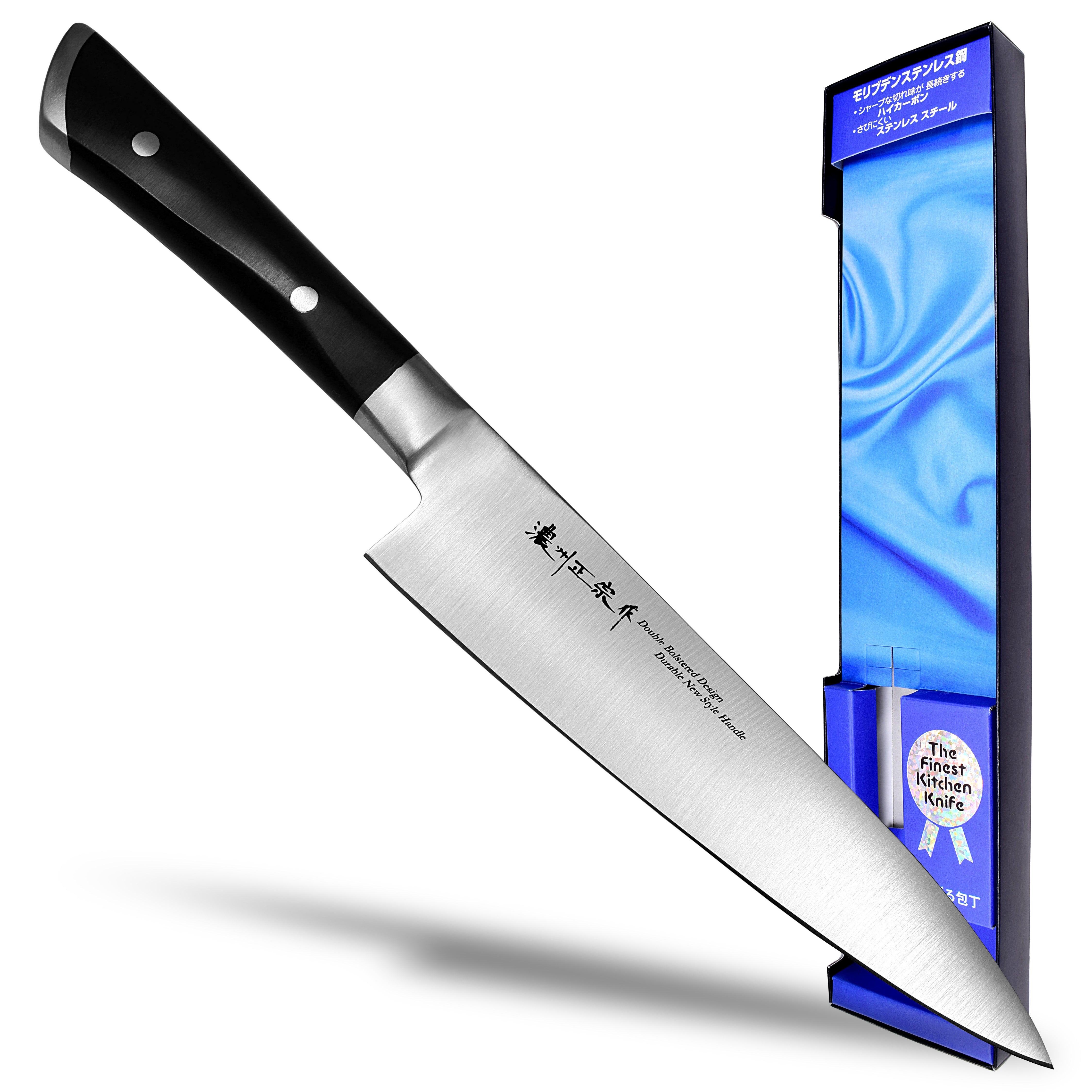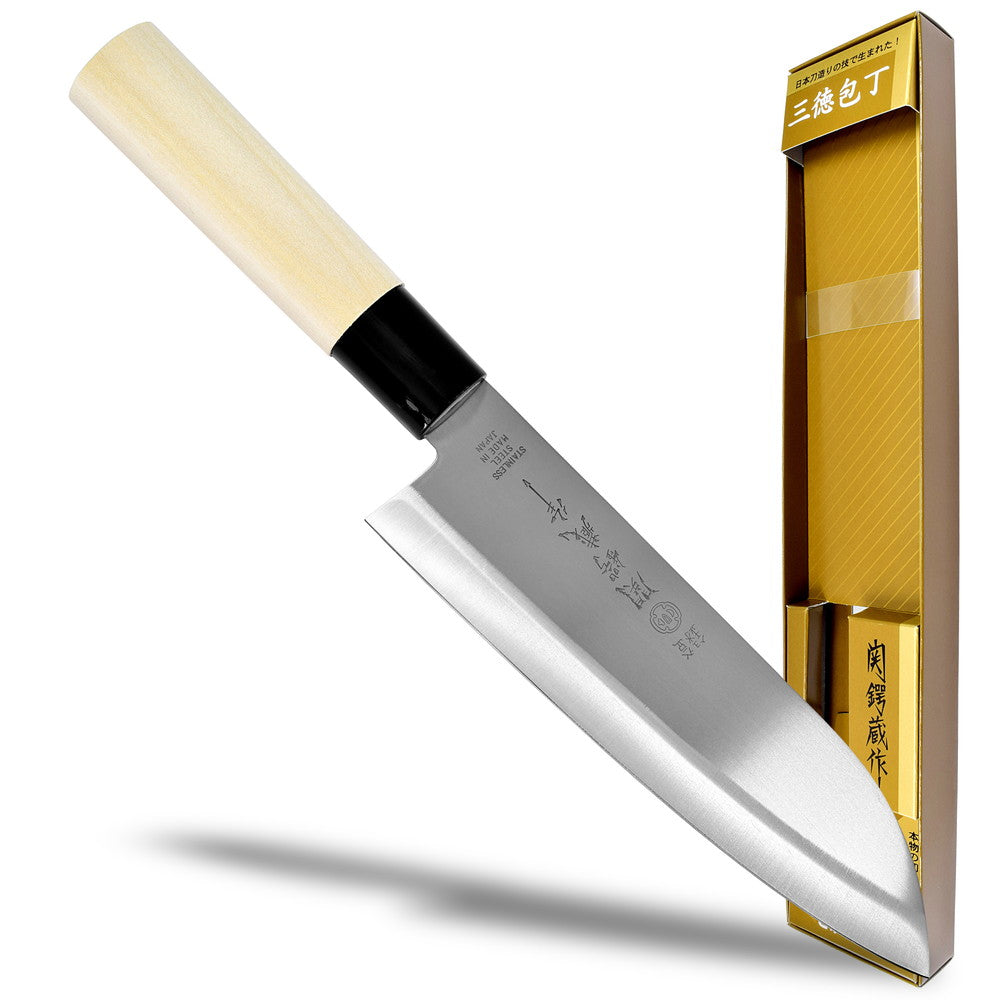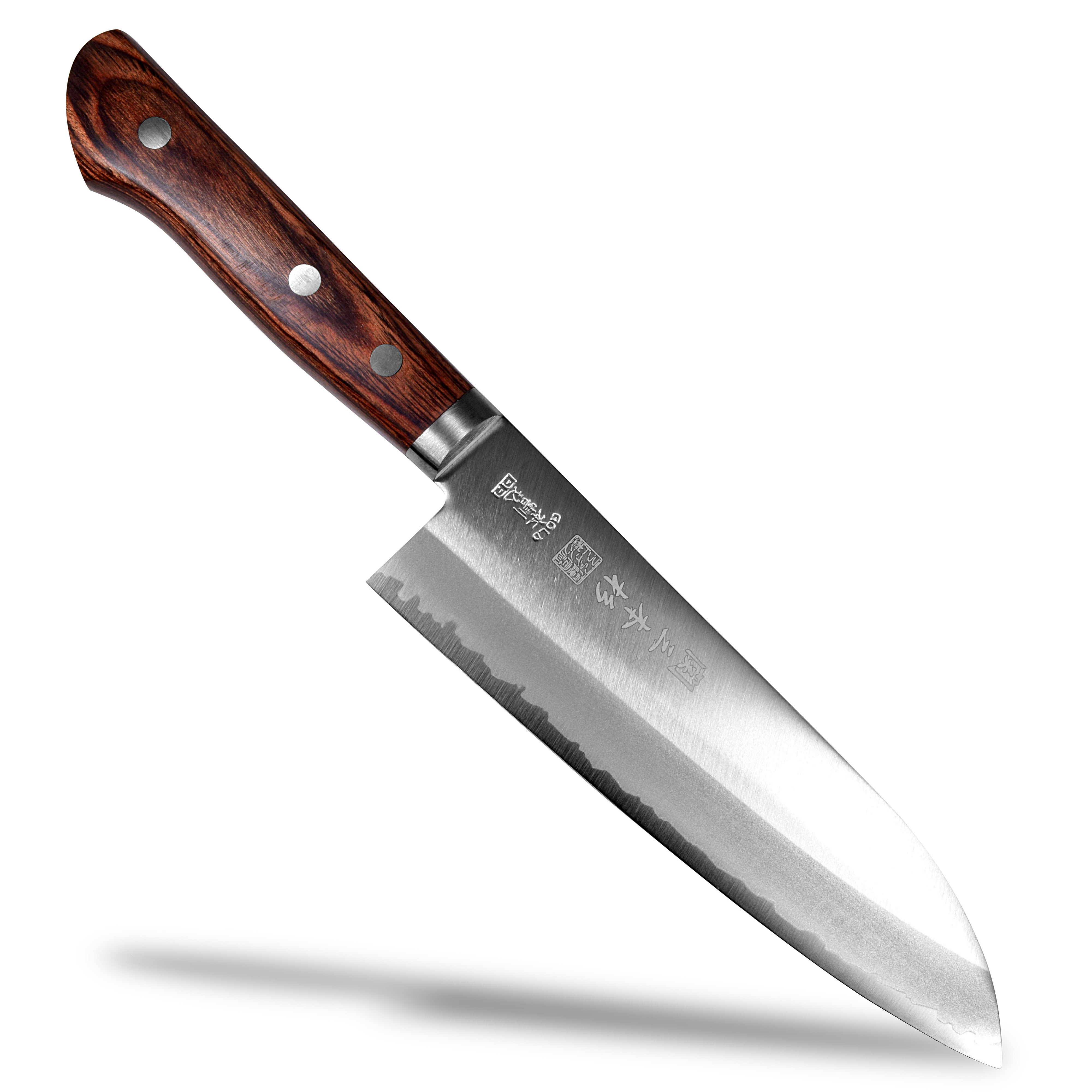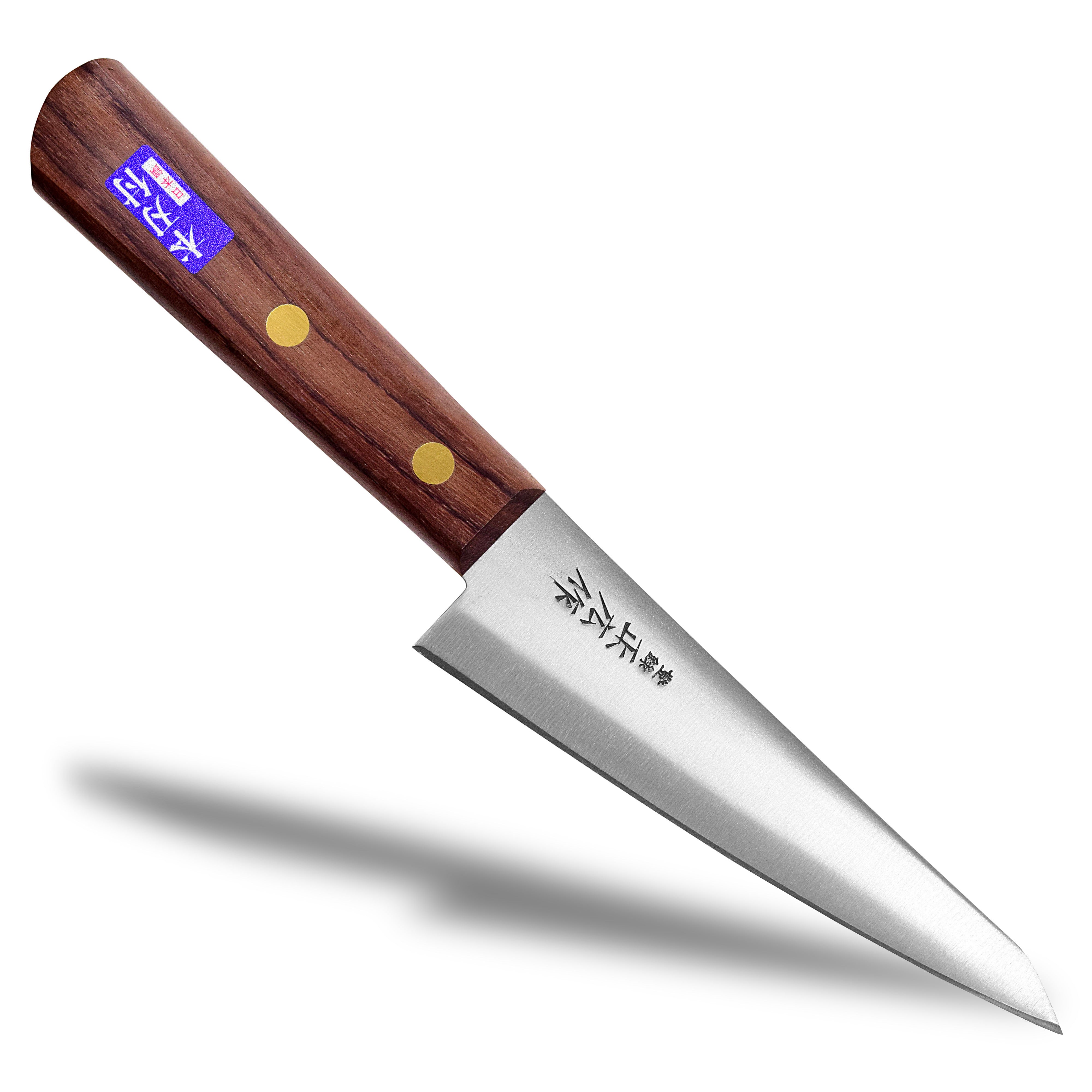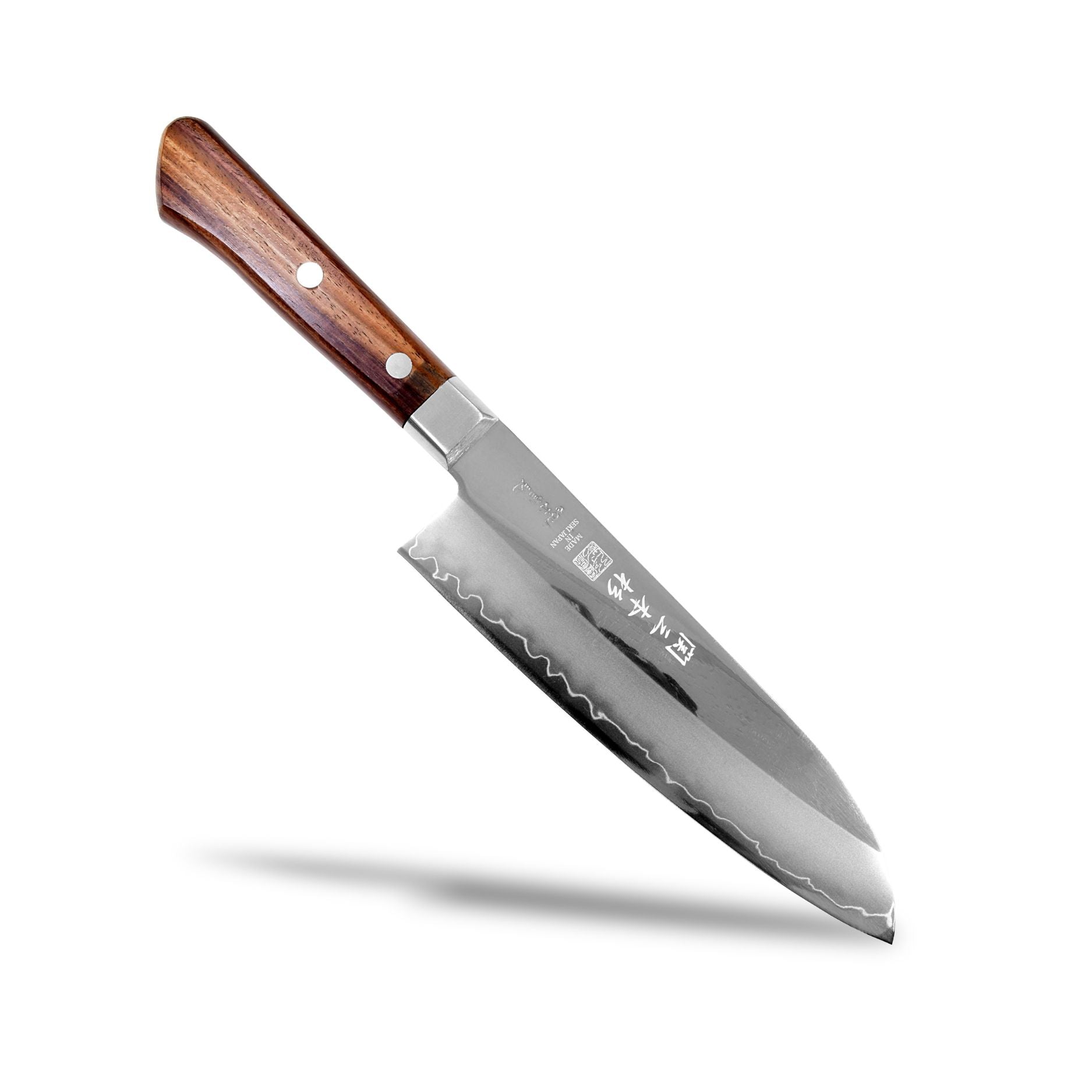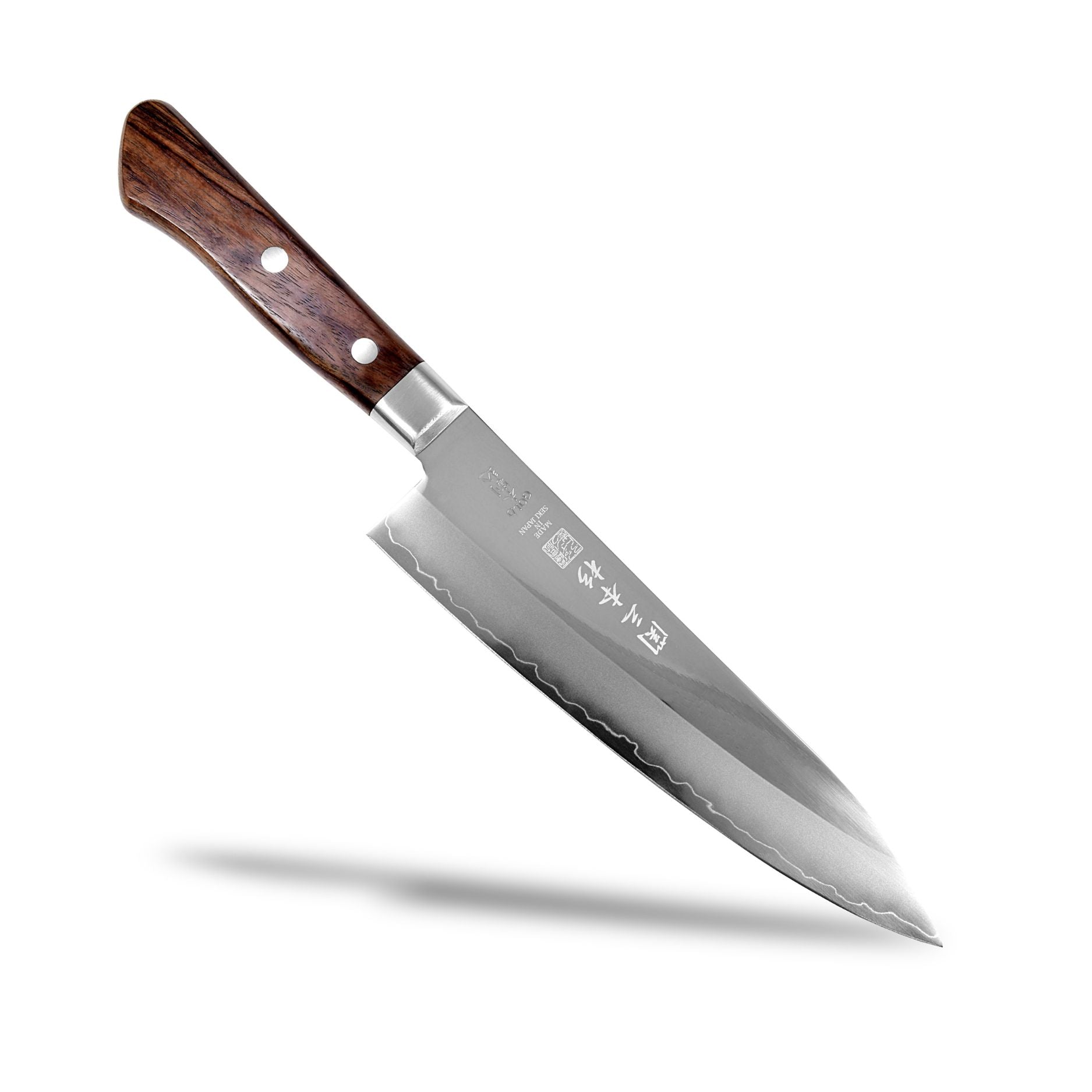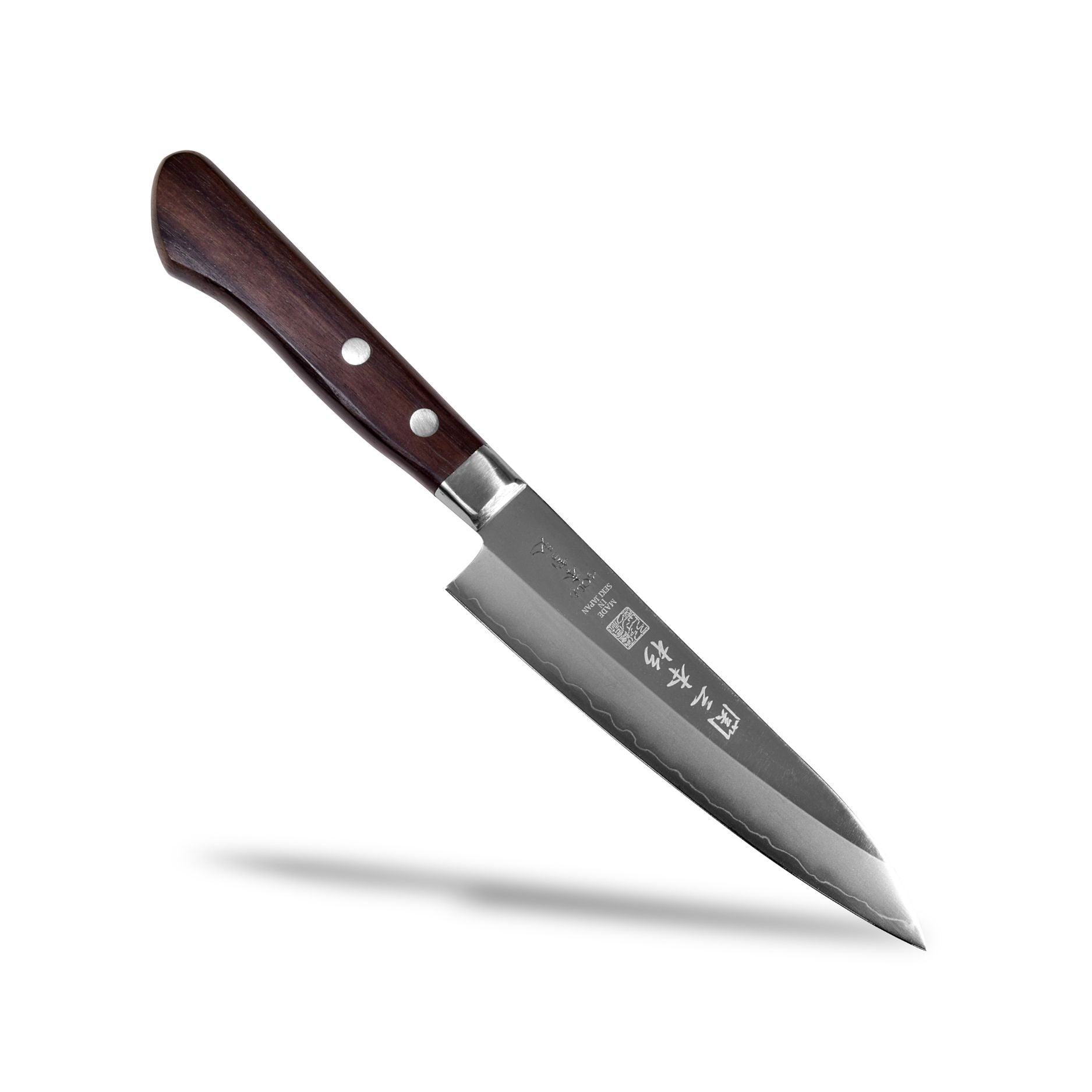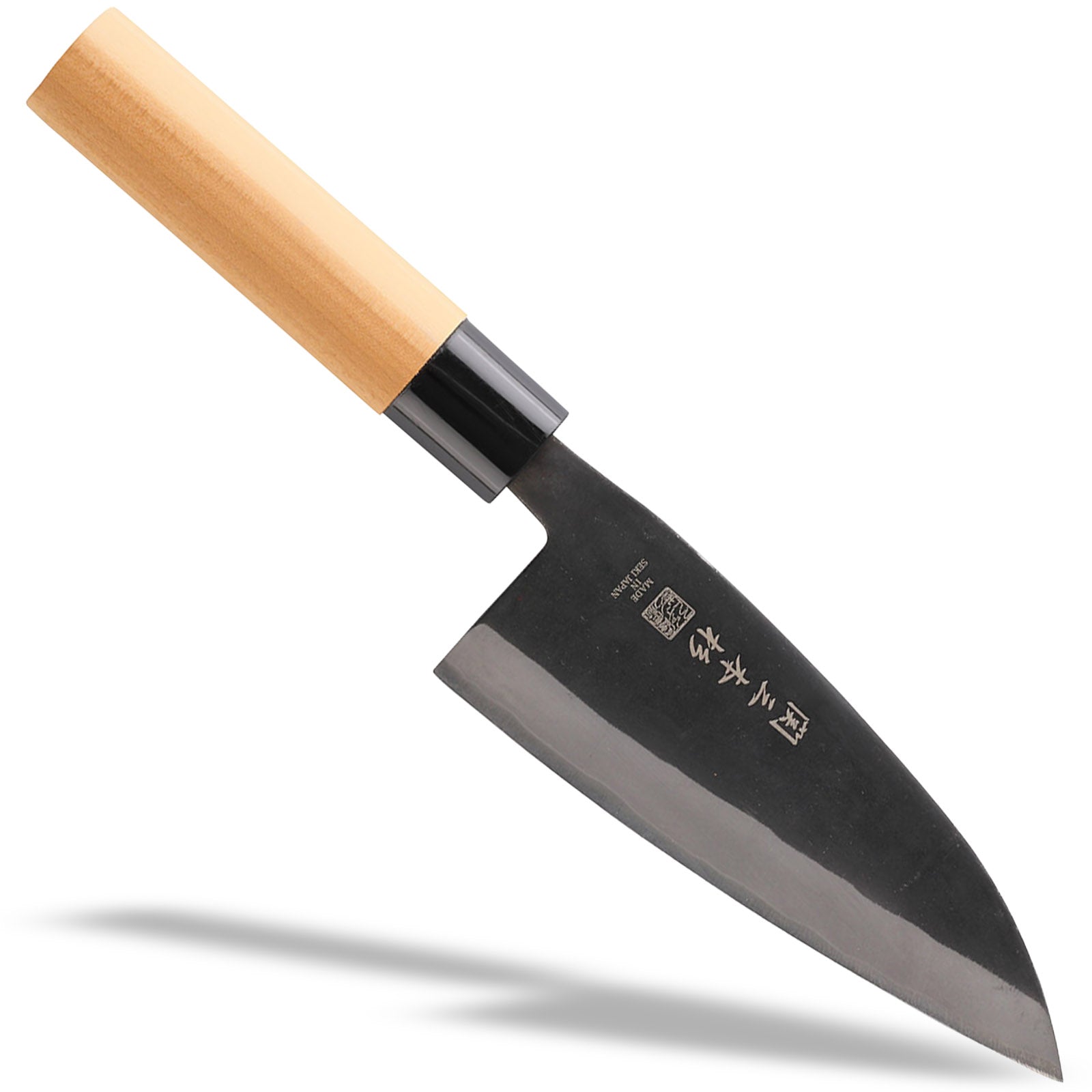

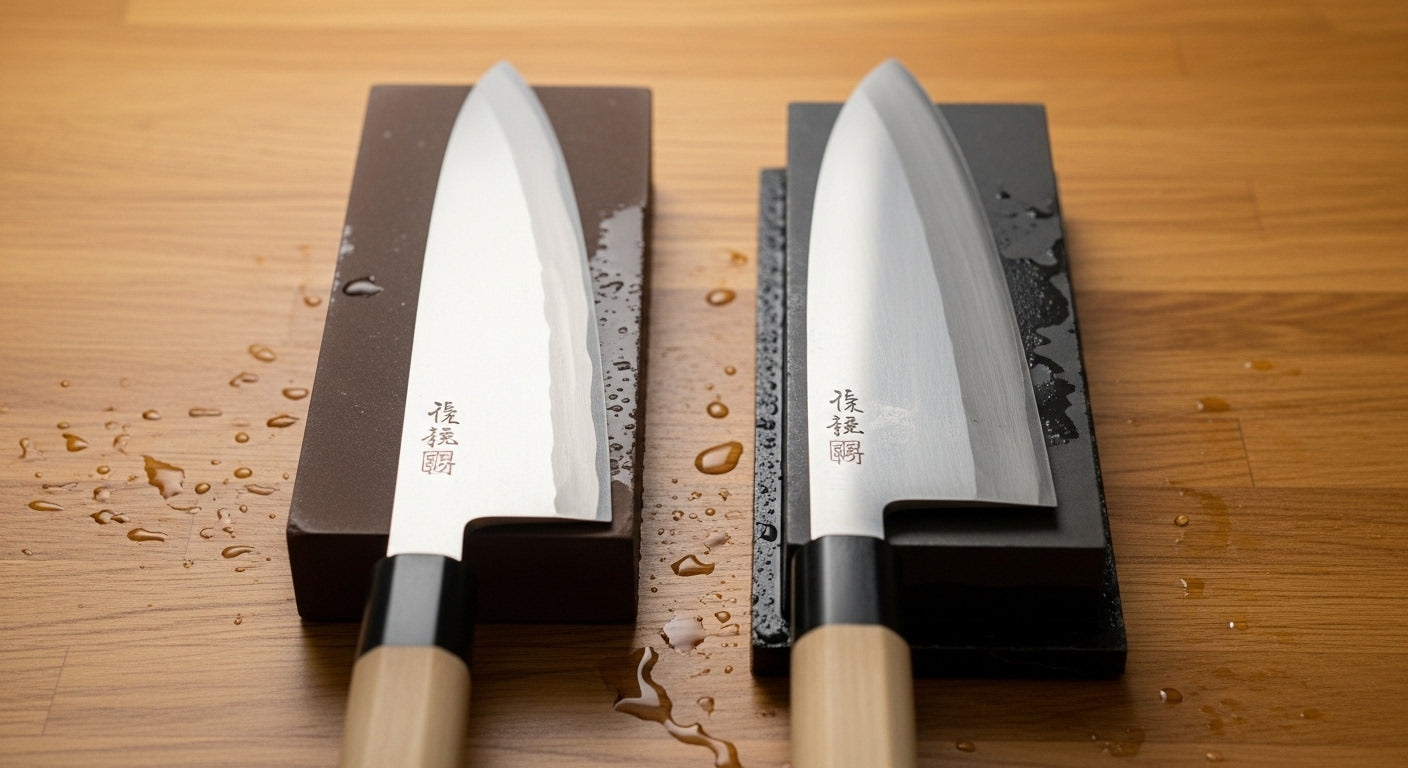
Experience the difference between a sashimi knife and a deba knife through the sharpening techniques of Japanese knives.
Japanese knives for enjoying fish dishes even more: sharpening techniques, sashimi knives, deba knives, and differences between them.
In conclusion, while sashimi knives (yanagiba) should be sharpened thinly and straight with sharpness as the top priority, deba knives need to be sharpened with durability as the top priority, resulting in a thick, clam-shaped edge (rounded cross-section). Even though they are both single-edged Japanese knives, the goals of their sharpening are completely different.
[Key points of this article]
- This guide will cover the basics of sharpening Japanese knives, and clarify what differences should be made between sharpening a sashimi knife and a deba knife.
- Comparing the sharpening techniques and procedures for yanagiba knives (which prioritize sharpness) and deba knives (which prioritize blade strength), this comparison focuses on the differences between the two.
- This article introduces steps to improve the quality of your fish dishes using just two or three whetstones and two Japanese knives, making it easy to implement at home.
Today's review: 3 key points
The basic way to sharpen a sashimi knife is to "sharpen the entire cutting edge thinly and evenly, and then lightly press the back to remove any burrs."
In short, to give strength to a deba knife (a type of Japanese kitchen knife), the blade needs to be sharpened with a slightly angled edge and increased thickness.
In conclusion, even though both are single-edged, sashimi knives and deba knives differ fundamentally in "how thin/thick the slices are made," and being aware of this difference and sharpening them accordingly will lead to an improvement in the level of your fish dishes.
Conclusion of this article
- In conclusion, the sharpening method for Japanese knives differs depending on whether it's a sashimi knife or a deba knife. The key to sharpening a sashimi knife is to make it "thin and sharp," while sharpening a deba knife is to make it "thick and strong."
- In short, with a yanagiba knife, sharpness is the top priority, so the entire cutting edge is pressed against the whetstone, while with a deba knife, the edge is left thicker, with a clam-shaped bevel to prevent chipping even when hitting bone.
- The most important thing is not to use the same sharpening method for all single-edged knives, but to change the blade shape according to the function of the knife.
- The first thing beginners should understand is the difference in approach: with sashimi knives, the double bevel is eliminated to make the blade thin, while with deba knives, the small bevel or clam-shaped bevel is intentionally left intact.
- If you enjoy cooking fish with a two-knife system (yanagiba and deba), simply being mindful of "sharpening them to different goals using the same whetstone" will make a huge difference in the finished product and how well they feel to use.
What are the basics of Japanese kitchen knives, sharpening techniques, sashimi knives, deba knives, and their differences?
In short, "Sashimi knives are sharpened for sharpness, while deba knives are sharpened for toughness."
"Since a yanagiba knife requires sharpness, when sharpening it with a medium-grit whetstone, you shouldn't focus too much on creating a clam-shaped edge. Instead, apply the whetstone evenly to the entire cutting edge and sharpen it thinly."
On the other hand, when discussing how to sharpen a deba knife, it is explained that "because a deba knife requires blade durability rather than sharpness, the base of the blade should be made thicker, with a clam-shaped edge in mind, compared to other Japanese knives."
Since a deba knife is used to cut the heads and bones of fish, it is said that "if it is made too thin, it will chip easily" and "a clam-shaped edge with a rounded tip is ideal," and advanced sharpening techniques that vary the thickness of the blade from the tip to the base are also recommended.
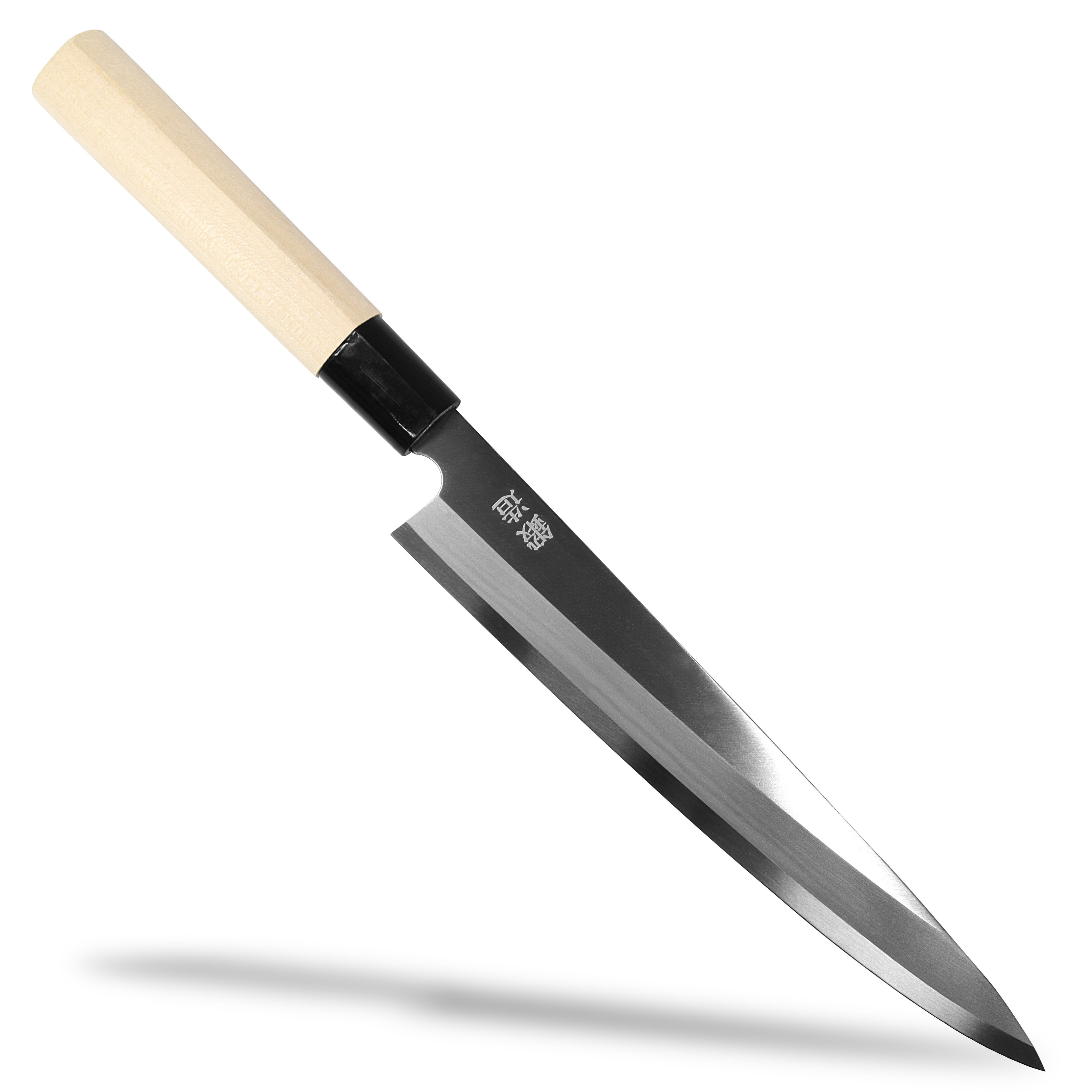
Sashimi knives are designed to beautifully slice filleted fish in a single, sweeping motion. Therefore, it's important that "a thick, double-edged blade won't provide a sharp edge" and that "the double-edged edge should be removed to thin the entire cutting edge."
The first thing beginners should understand is that even though they are both single-edged knives, the goal is different: a deba knife is thick and strong, while a yanagiba knife is thin and sharp.
The basics and characteristics of sharpening a sashimi knife (yanagiba).
In conclusion, the basic method for sharpening a sashimi knife (yanagiba knife) is to "sharpen the entire cutting edge thinly and evenly by keeping it in close contact with the whetstone, and finally lightly create a clam-shaped edge as a finishing touch."
The following is considered the basic procedure for sharpening a yanagiba knife.
- Use a coarse whetstone to remove the double bevel, then apply pressure to the entire cutting edge.
- When sharpening a blade with a medium-grit whetstone, don't focus too much on creating a clam-shaped edge; instead, apply the whetstone to the entire cutting edge.
- During the final sharpening stage, you first slightly raise the blade and consciously create a clam-shaped edge.
Furthermore, it is mentioned that important points include "since a yanagiba knife requires sharpness, do not make it too thick when using a medium-grit whetstone" and "when finishing, sharpen until the small bevel at the tip of the blade disappears."
When sharpening the back of the blade (back beveling), lightly sharpen it so that only the cutting edge makes proper contact with the blade, while making use of the concave shape on the back (back gouge), and only remove the burr.
In short, the basic principle of a yanagiba knife is to support the entire cutting edge, with minimal support on the back.
Basics and characteristics of sharpening a deba knife
In short, the key words for sharpening a deba knife are "clam-shaped edge" and "strongly sharpen the base of the blade."
Here's how to sharpen a deba knife:
- For a deba knife, durability of the blade is more important than sharpness.
- It has a more pronounced clam-shaped edge than other Japanese knives.
- Ideally, the base of the blade should have a slightly thicker secondary bevel.
The following procedure is recommended:
- Use a coarse whetstone to remove the double-edged edge and smooth the entire blade.
- Using a medium-grit whetstone, slightly raise the blade and sharpen while being mindful of the cutting edge to create a clam-shaped edge.
- This sharpening technique involves varying the thickness of the blade at the tip and the base, making the tip slightly thinner and the base stronger (once you get the hang of it).
- Using a finishing whetstone, sharpen the blade again, focusing only on the edge, and finally remove the burr with a back bevel.
The instructions also describe a sharpening method that prioritizes strength, such as "applying a single-edged deba knife to the whetstone at a 15-20 degree angle and sharpening by pushing the blade tip" and "sharpening the tip, middle, and base with equal strokes, and removing the burr on the back with fewer strokes than the front."
The most important thing is to "not make the deba knife too thin, like a yanagiba knife."
Key points for sharpening single-edged Japanese knives
In conclusion, the basic principle for single-edged knives, common to both sashimi knives and deba knives, is to "firmly handle the cutting edge, lightly handle the other side, and check for burrs."
"Since a single-edged knife only has a blade on one side, the basic rule is to sharpen the side with the blade," and "Once you've finished sharpening the entire knife, lightly slide the burr on the back side against the whetstone two or three times to remove it."
It is also explained that it is important to "visually confirm that the entire cutting edge is in contact with the whetstone" and "place the fingers of your non-dominant hand near the tip of the blade and apply firm pressure to the area you want to sharpen."
It is said that "for single-edged knives used by professionals, the boundary between the sharpened edge on the back and the area where the back bevel does not make contact must be clearly defined," and the essence of a single-edged knife is said to be the creation of a "back line" by the back bevel.
In short, the division of labor—creating the blade on the front and refining it on the back—is common to both sashimi knives and deba knives.
How to practice sharpening Japanese kitchen knives, including sashimi knives and deba knives, and understand the differences between them?
What are the differences in sharpening techniques between a sashimi knife and a deba knife?
In conclusion, the difference in sharpening methods between a sashimi knife and a deba knife lies in "how much of the entire cutting edge is sharpened" and "how much of a clam-shaped edge is created."
In the case of a sashimi knife (yanagiba)
- Coarse sharpening: Sharpen the entire cutting edge by applying it to the whetstone and sharpening it thinly until the double bevel disappears.
- Medium whetstone: Apply the whetstone evenly to the entire cutting edge. Don't focus too much on creating a clam-shaped edge.
- Finishing: The blade is slightly raised to create a clam-shaped edge, achieving a balance between sharpness and subtle strength.
In the case of a deba knife
- Coarse whetstone: Similarly, the double-edged edge is removed, but the blade is shaped while retaining the thickness suitable for a deba knife.
- Medium sharpening: Sharpen the blade, keeping the edge in mind, to create a clam-shaped edge. Ideally, the base of the blade should have a slightly stronger clam-shaped edge.
- Finishing: The blade tip is further rounded to enhance durability.
A common emphasis is placed on the fact that "yanagiba knives are thin for sharpness, while deba knives are thicker for durability because they come into contact with bones."
The first thing beginners should understand is the simple difference between a sashimi knife (thin blade) and a deba knife (thick blade).
How do differences in sharpening methods affect cutting performance and overall usability?
In short, "The thinner you sharpen a yanagiba knife, the easier it is to slice sashimi, and the thicker you sharpen a deba knife, the less you'll be afraid of hitting bones."
When a yanagiba knife is sharpened to a thin point, the blade glides smoothly through the flesh when slicing sashimi, reducing friction with the cutting board and making it easier to use the entire length of the blade in a single slicing motion.
The explanation states that "leaving the blade as a double-edged blade results in a thick tip and an uneven cutting edge," and that "by removing the double-edged blade and sharpening the entire cutting edge, a sharp cutting edge is achieved," indicating that this directly impacts the smoothness of the finished product.
On the other hand, sharpening a deba knife with a thick, convex edge makes it less likely for the blade to chip when cutting off a fish's head or hitting the backbone, allowing you to apply force with confidence.
Sharpening a deba knife too thin can lead to problems such as "the blade chipping every time it hits bone" and "the need for frequent sharpening," which is why it is repeatedly emphasized that "a clam-shaped edge should be considered more when sharpening a deba knife than with other Japanese knives."
The most important thing is to experience firsthand that "the feel of cutting equals the shape of the sharpening."
What are the tips for sharpening both a sashimi knife and a deba knife using the same whetstone?
In conclusion, even with the same whetstone set, it is perfectly possible to sharpen sashimi knives and deba knives differently simply by changing the angle and the amount of pressure applied.
Here are some easy-to-implement tips:
- I use two whetstones: a medium grit (around #1000) and a finishing grit (#3000-8000).
- When sharpening a yanagiba knife, find the angle at which the entire cutting edge makes flat contact with the whetstone, and maintain that angle while sharpening (thinly and evenly).
- For a deba knife, the blade is sharpened at a slightly higher angle than a yanagiba knife, with the focus on the tip of the blade (creating a clam-shaped edge).
- When sharpening a yanagiba knife, don't focus too much on creating a clam-shell shape; instead, lightly sharpen the blade at the end to refine the edge.
- For the intermediate and final sharpening of the deba knife, a more pronounced angle is used compared to the yanagiba knife, resulting in a "stronger clam-shaped edge."
- In general, at the end of sharpening, lightly sharpen the back of the blade to remove any burrs (back beveling).
The key to sharpening is to "place two fingers of your non-dominant hand near the tip of the blade and apply pressure to the part you want to sharpen" and "keep the cutting edge always in line with the whetstone," indicating that angle and pressure are the keys to different sharpening techniques.
The first thing beginners should remember is that "yanagiba (sashimi knife) = hold at a low angle and flat" and "deba (clever knife) = hold at a slightly upright position and round the shape."
FAQ
Q1. What is the biggest difference in sharpening methods between a sashimi knife (yanagiba) and a deba knife?
A1. For sashimi knives, the entire cutting edge is sharpened to create a thin, sharp blade, while for deba knives, the tip of the blade is sharpened slightly thicker to create a clam-shaped edge that can withstand cutting through bone.
Q2. Is it okay to sharpen a deba knife to the same thinness as a yanagiba knife?
A2. If the blade is made too thin, it will be more prone to chipping when it hits bone, so it is safer for a deba knife to have a thicker, clam-shaped blade than a yanagiba knife.
Q3. What are the key points to keep in mind when sharpening a yanagiba knife?
A3. During the intermediate sharpening stage, it's important not to focus too much on creating a clam-shaped bevel, but rather to eliminate the two-stage bevel, apply the whetstone to the entire cutting edge, and then lightly sharpen the edge during the finishing stage.
Q4. What are some points to keep in mind when sharpening a deba knife?
A4. The ideal sharpening technique involves creating a slightly stronger clam-shaped bevel at the base of the blade to increase its strength, and varying the thickness of the blade at the tip and base.
Q5. How do you sharpen the back of a single-edged knife?
A5. The back of the blade has a concave bevel, so press the blade lightly against the whetstone and sharpen it for a short time, just enough to remove the burr.
Q6. Is it necessary to use separate whetstones for sashimi knives and deba knives?
A6. It's fine to use the same whetstone for both medium and finishing, but it's more efficient to use different whetstones for each type of whetstone and steel.
Q7. What is the recommended sharpening angle for a single-edged knife?
A7. Generally, the angle is said to be around 15-20 degrees. Yanagiba knives are sharpened at a slightly lower angle, while deba knives are sharpened at a slightly steeper angle than yanagiba knives to create a clam-shaped edge.
Q8. Which is more difficult to sharpen, a yanagiba knife or a deba knife?
A8. Deba knives require precise control of blade thickness and the creation of a convex edge, while yanagiba knives are difficult to make evenly with a long blade; both have their own unique challenges.
Q9. Does the sharpening technique affect the final result of sashimi?
A9. It is said that if the yanagiba (sashimi knife) is sharpened thinly and evenly, the cross-section becomes smooth with a single slicing motion, resulting in a better mouthfeel.
Q10. Is it worthwhile to sharpen sashimi knives and deba knives separately at home?
A10. Yes, it does. Even with the same fish, the "sense of security when preparing it" and the "texture of the sashimi" change, greatly improving the overall satisfaction with the fish dish.
summary
- In conclusion, the sharpening techniques for Japanese knives differ significantly between sashimi knives and deba knives. For sashimi knives (yanagiba), the priority is sharpness, so the entire cutting edge should be thinned. For deba knives, the key is to give them thickness and strength by creating a clam-shaped edge to withstand cutting through bones and heads.
- Even when using the same intermediate and finishing whetstones, sharpening a yanagiba knife by keeping the angle low and applying the whetstone flat, and a deba knife by slightly raising the angle and being mindful of the cutting edge, can greatly change the cutting feel and safety.
- To further enjoy fish dishes, the best approach is to cultivate a sharpening technique and blade shape that suits your hand, while experiencing the differences in sharpening methods—such as sharpening a sashimi knife thinly and a deba knife strongly—in addition to using a santoku, yanagiba, and deba knife.