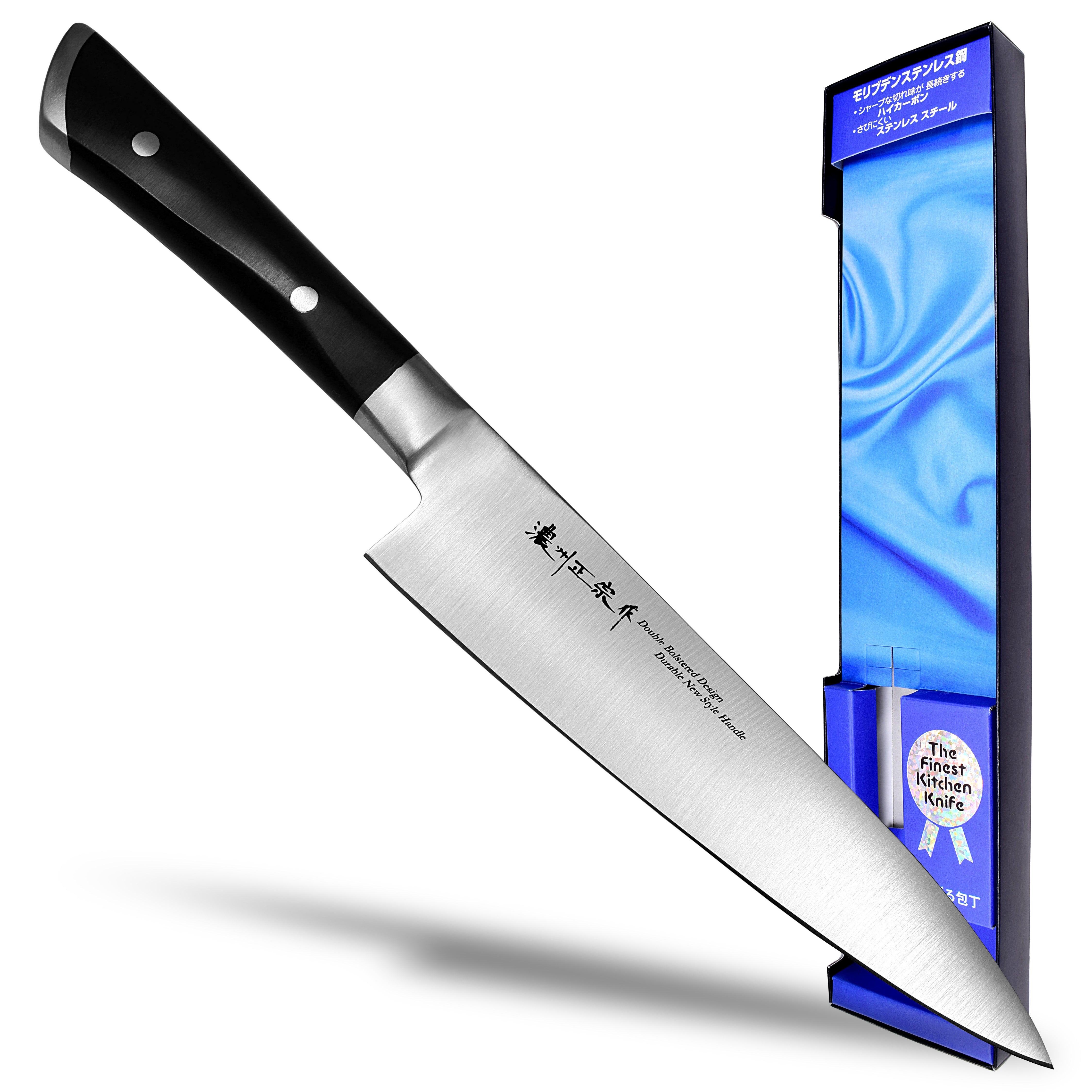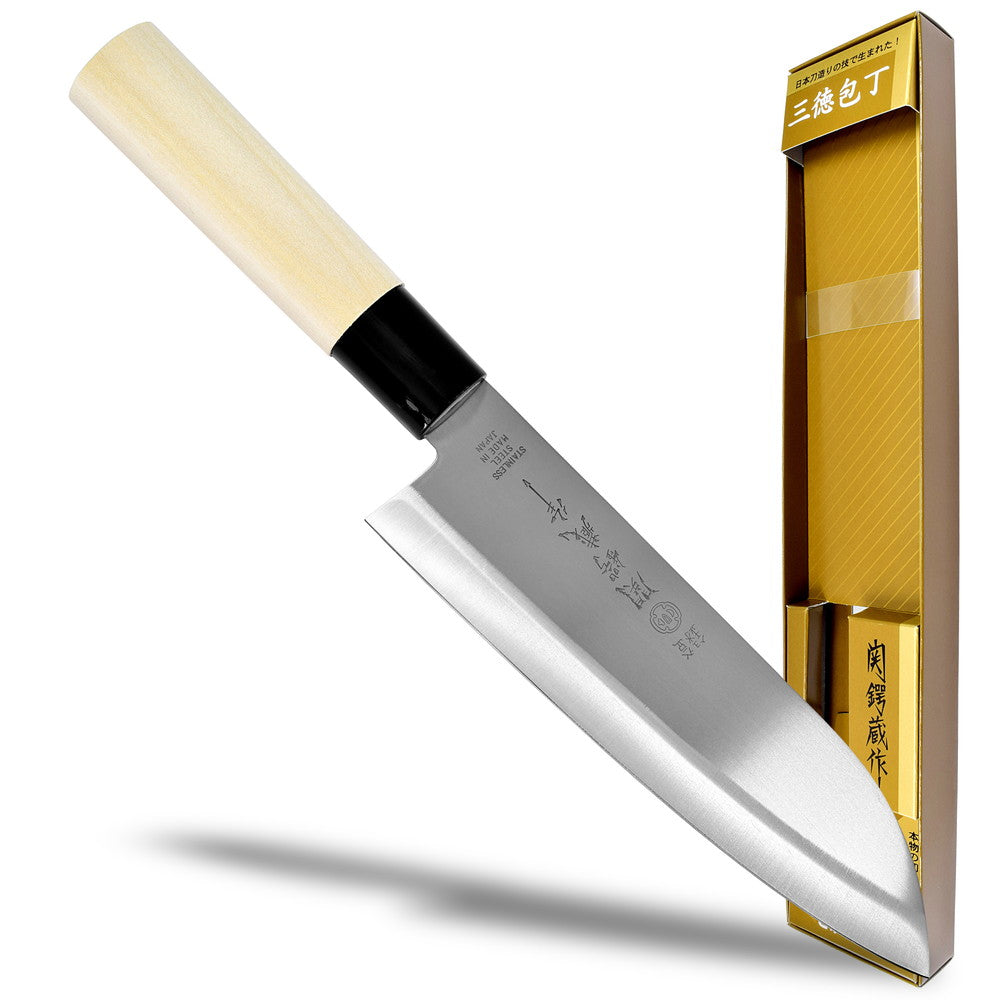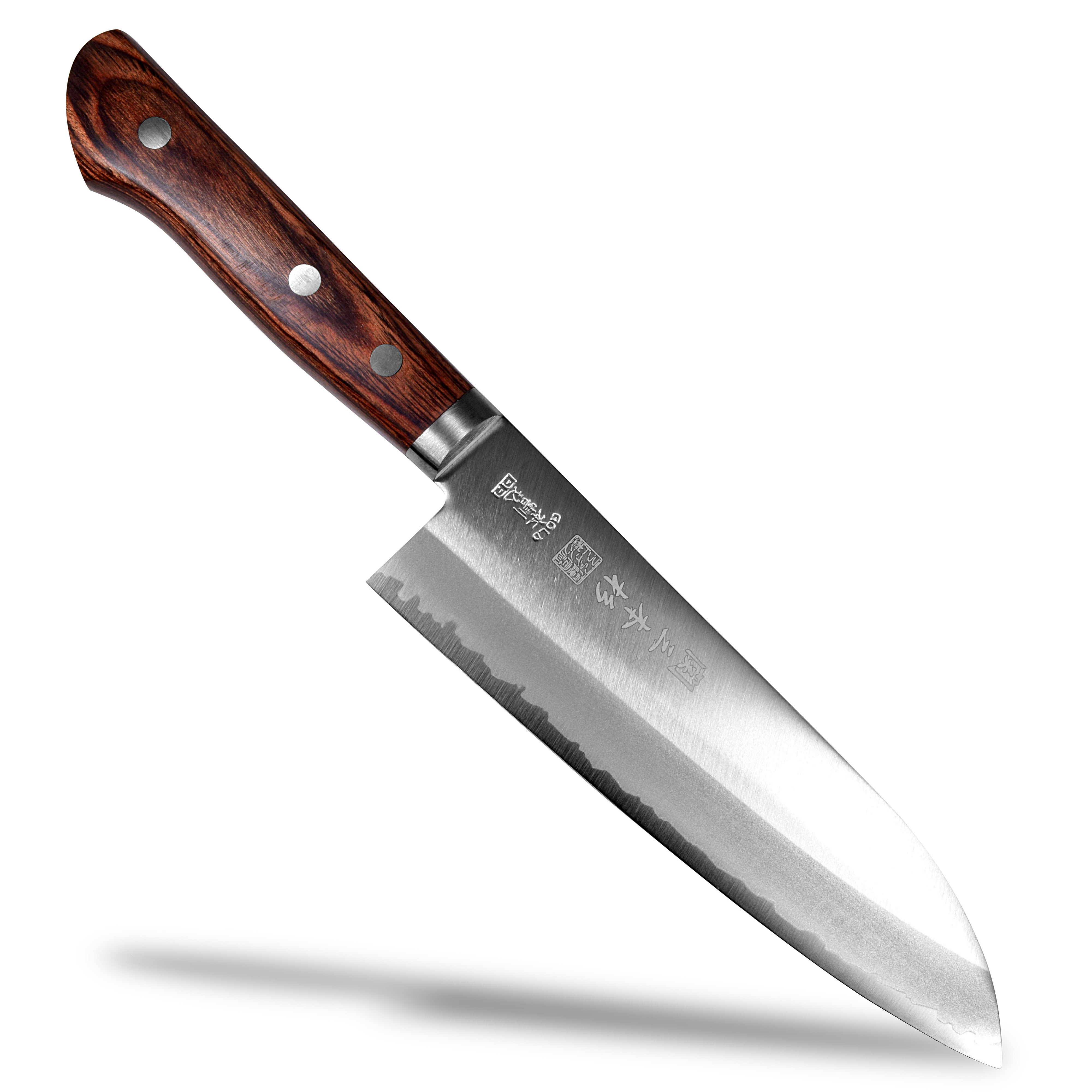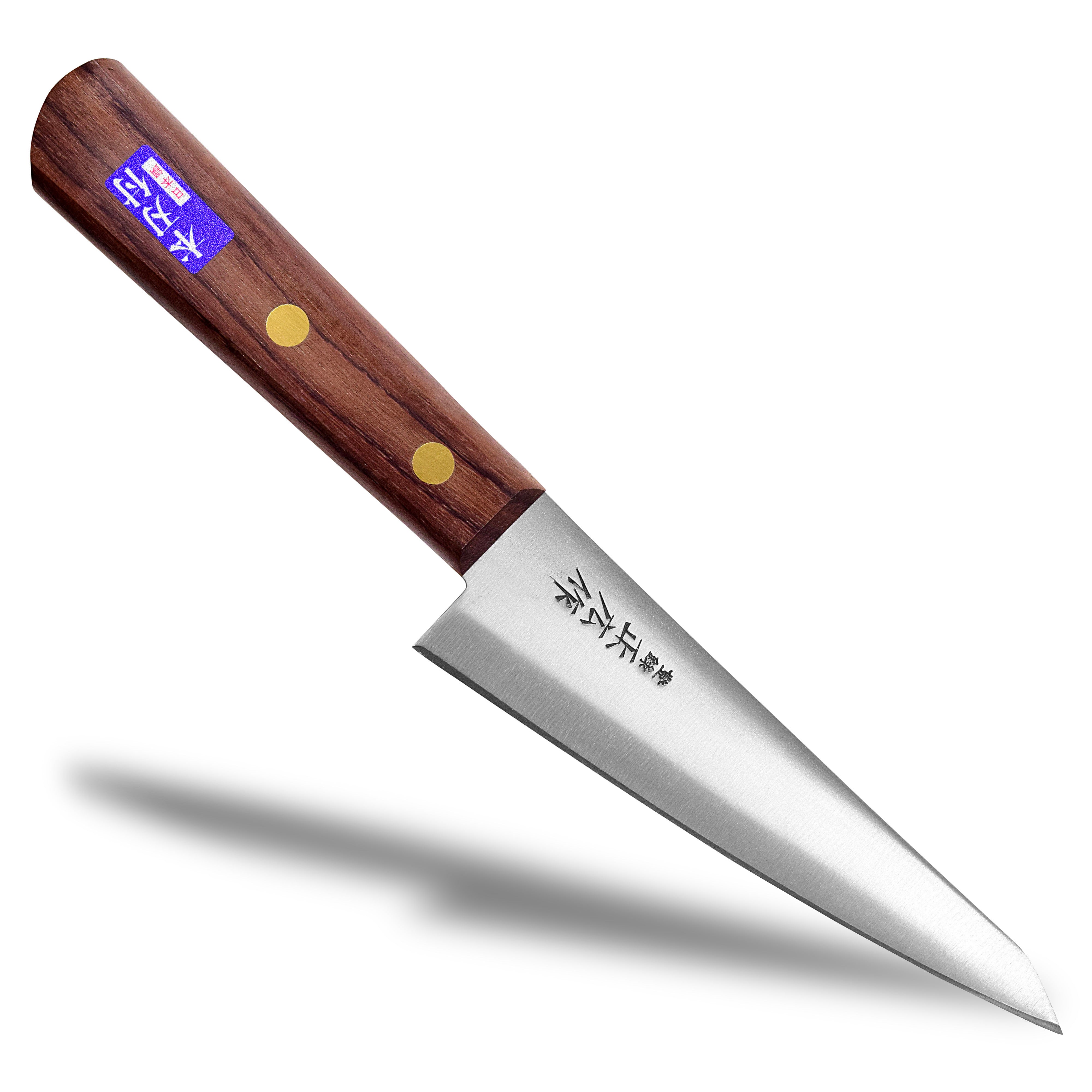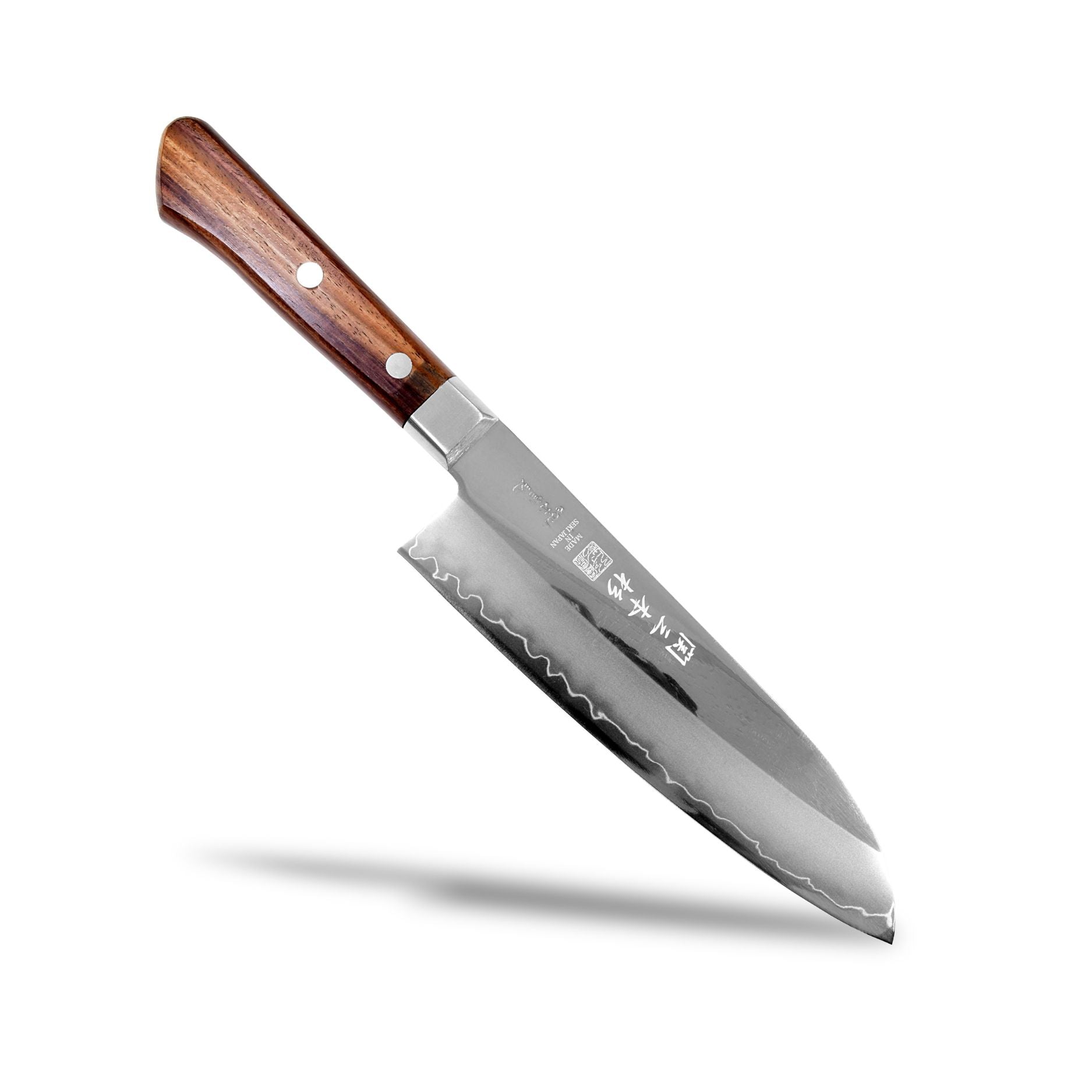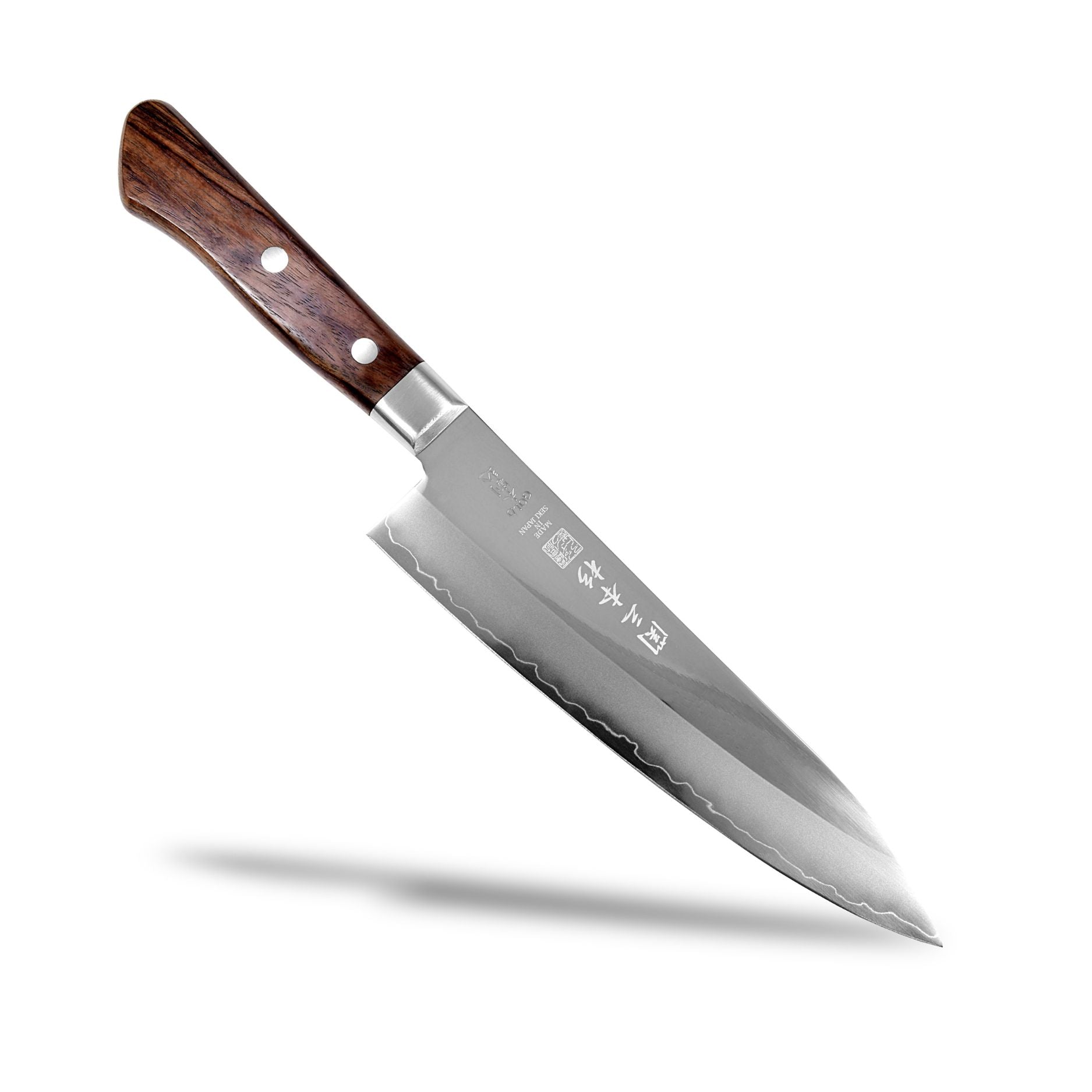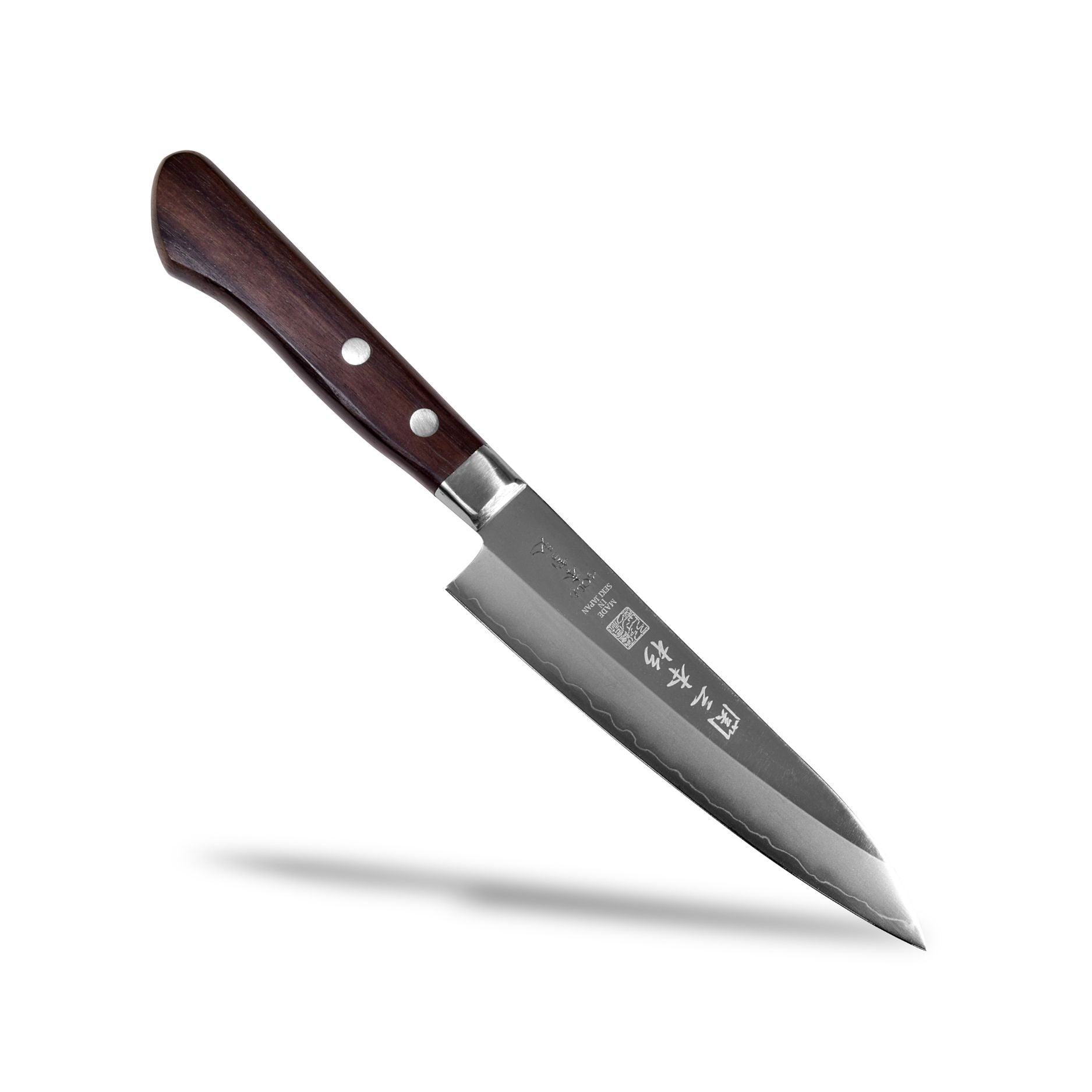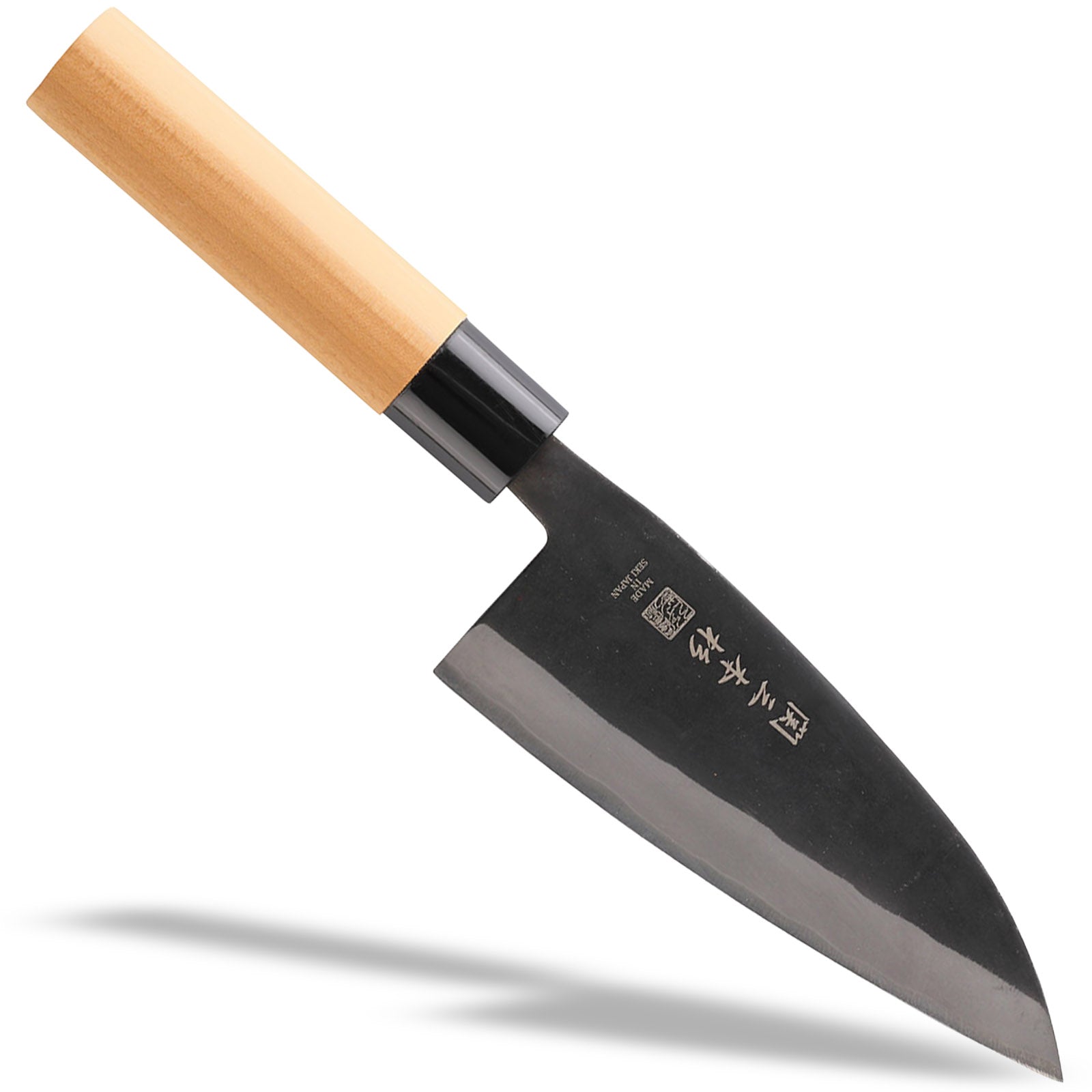

[Japanese Kitchen Knives: Steel Materials] A thorough comparison of Japanese kitchen knives and tool knives, focusing on usage and safety.
While both are "bladed tools," Japanese kitchen knives and utility knives differ significantly in steel type, hardness, rust resistance, and ease of sharpening. Therefore, it's crucial to choose one that suits your intended use and safety needs. In short, the steel used in Japanese kitchen knives, optimized for cooking, and the steel used in utility knives, designed for multi-purpose use such as outdoor work and crafting, have different design philosophies. Understanding these differences will help you choose the right knife and use them safely.
This article explains the differences between Japanese kitchen knives, steel materials, tool knives, and kitchen knives from the perspectives of use and safety.
In conclusion, the choice of steel, blade shape, and maintenance for Japanese kitchen knives and utility knives depends on "what and where you will be cutting." Japanese kitchen knives, which are specialized for cooking, prioritize sharpness and the finish of the food, while utility knives are designed to be tough and easy to handle, making them suitable for a wide range of uses such as crafting and outdoor activities.
[Key points of this article]
Today's review: 3 key points
- The steel used for Japanese kitchen knives is mainly carbon steel such as white steel and blue steel, or stainless steel, and the balance of sharpness, ease of sharpening, and rust resistance differs depending on the material.
- Tool knives are characterized by the use of stainless steel and special steels designed for outdoor use, prioritizing durability, corrosion resistance, and portability.
- By understanding the difference between kitchen knives and regular knives, and choosing the steel based on its intended use and safety, you can select a knife that will be comfortable to use for cooking and other tasks, and will last a long time.
Conclusion of this article
- In conclusion, Japanese kitchen knives prioritize "sharpness and the finish of ingredients specifically for cooking" when selecting steel, while tool knives prioritize "toughness for multi-purpose use and ease of handling" when selecting steel.
- In short, high-hardness steels such as white steel and blue steel are generally suited for Japanese kitchen knives, while stainless steel and alloy-based special steels are more suitable for tool knives.
- The most important thing is to understand the balance of "sharpness, edge retention, rust resistance, and ease of sharpening" for each type of steel, and choose a knife that suits your usage.
- Comparing kitchen knives based on their steel type reveals that the way you choose a tool changes depending on factors such as how often you maintain it at home and where you use it (indoors or outdoors).
What are the differences between the steel used in Japanese kitchen knives and that used in utility knives?
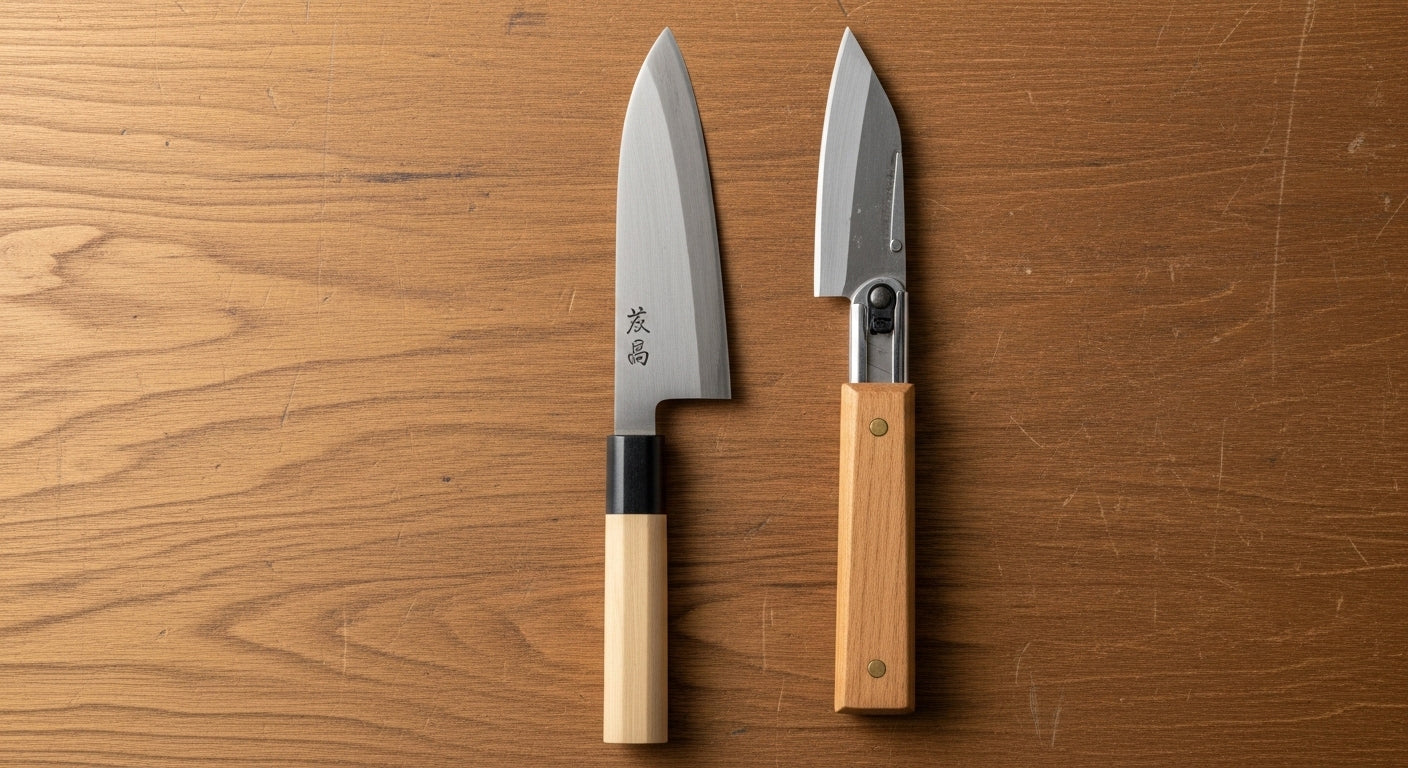
In conclusion, the steel used in Japanese kitchen knives and the steel used in utility knives differ significantly in their composition and performance balance because they are designed for different purposes, such as the materials they cut and the required durability. Most Japanese kitchen knives use carbon steel such as white steel or blue steel, or stainless steel, and prioritize cleanly cutting food with a thin, sharp blade. On the other hand, utility knives are designed for cutting various materials outdoors, such as rope, cardboard, wood, and plastic, and prioritize resistance to chipping, rusting, and strength by using stainless steel or special steels.
What are the characteristics of the steel commonly used in Japanese kitchen knives?
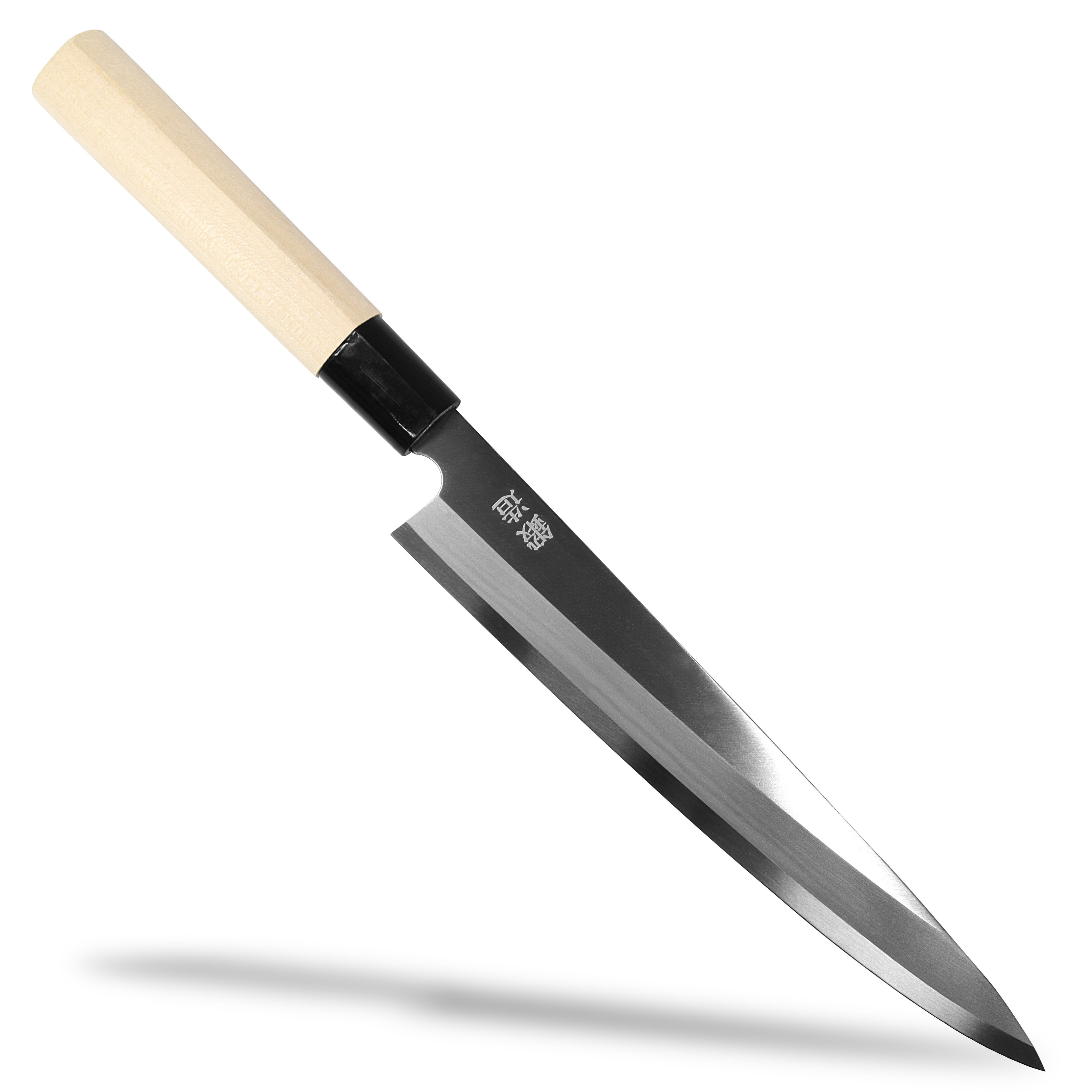
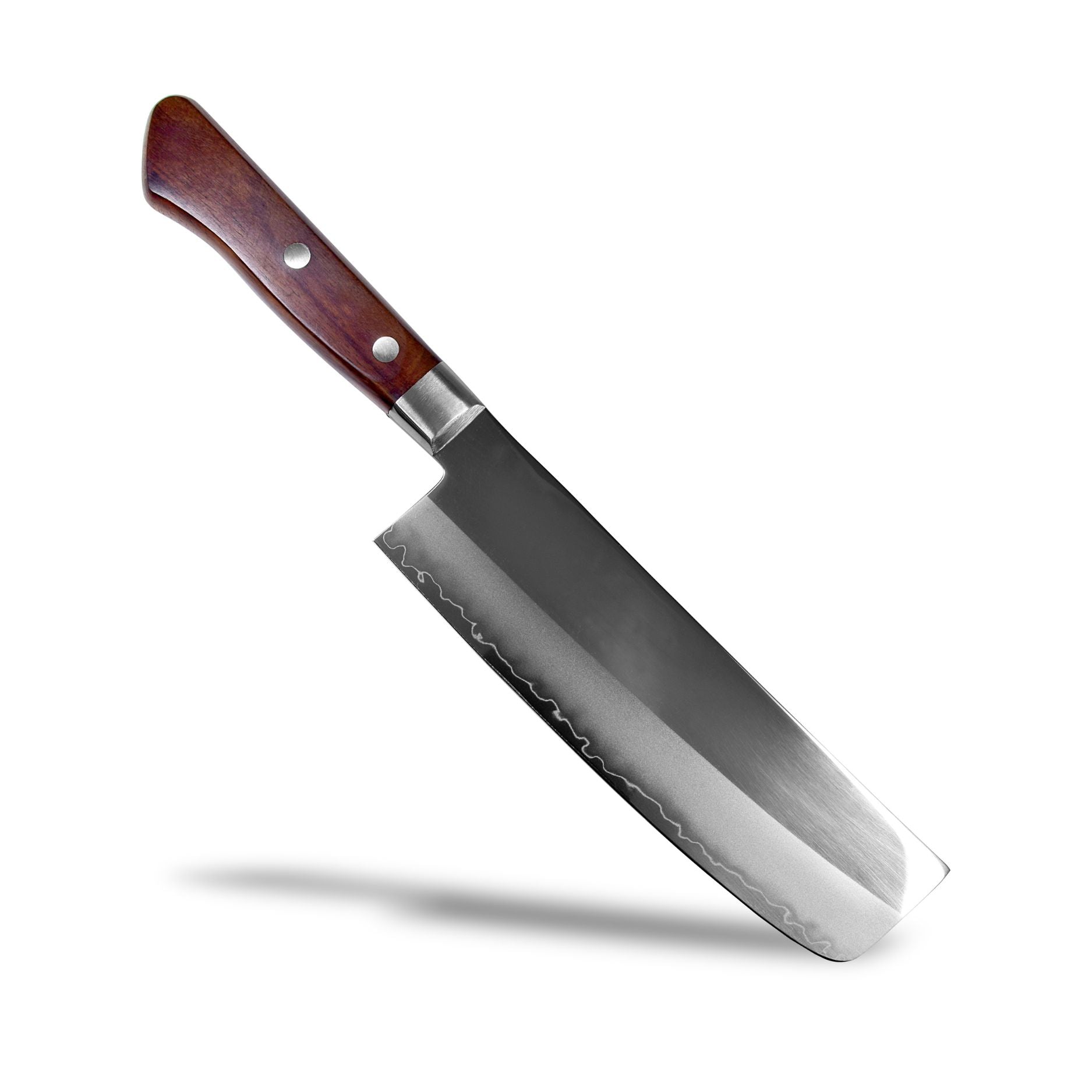
Japanese kitchen knives are made from two main types of steel: carbon steel and stainless steel. Among carbon steels, Yasugi steel, such as Shirogami and Aogami, is a representative example. Shirogami steel has fewer added elements, making it hard and easy to sharpen, resulting in superior cutting performance, but it is also prone to rust. Aogami steel is a high-grade steel based on Shirogami, with added chromium and tungsten to enhance sharpness retention and blade toughness. It is widely used in professional-grade Japanese kitchen knives.
What are the differences in the types of steel used in tool knives?
In tool knives, stainless steel and special steels are commonly used, with rust resistance and toughness being prioritized. For example, outdoor knives are exposed to rain, sweat, and dirt, so highly rust-resistant stainless steel or alloy steel that is resistant to impact and twisting are generally chosen. In short, many steels are designed to be "less prone to chipping even with somewhat rough use," prioritizing reliability for a wide range of uses over delicate cutting performance.
What are the differences in materials and structure between kitchen knives and regular knives?
Looking at the difference between a kitchen knife and a knife in terms of materials and structure, a kitchen knife is designed specifically for cooking, with a wide blade and the ability to use single-edged or double-edged blades to cut food straight. A knife has a narrower blade, is basically double-edged, and comes in a variety of blade shapes such as serrated or special shapes, making it suitable for multiple uses such as camping, crafting, and self-defense. Another major difference is that kitchen knives often use materials such as white steel, blue steel, or stainless steel, while knives use materials such as stainless steel, carbon steel, or titanium, reflecting their multi-purpose nature.
How does the type of steel used affect the sharpness and maintenance of Japanese kitchen knives?
In practical terms, when choosing steel for a Japanese kitchen knife, the key is how to balance four factors: sharpness, edge retention, rust resistance, and ease of sharpening. Carbon steel excels in sharpness and ease of sharpening but rusts easily, while stainless steel is rust-resistant and easy to handle, but tends to require some skill to achieve a sharp edge.
Who is a Japanese kitchen knife made of white steel suitable for?
White steel comes in different grades such as White Steel No. 1, No. 2, and No. 3, depending on the carbon content. White Steel No. 2, in particular, is known for its hardness, sharpness, and compatibility with whetstones, and is widely used in professional Japanese kitchen knives. In conclusion, Japanese kitchen knives made of white steel are suitable for those who want to enjoy the best possible sharpness while sharpening them themselves. They are ideal for those who regularly sharpen their knives at home or for professionals who want to "cultivate" their knives. However, because they are prone to rusting, it is essential to wash them immediately after use, wipe off any moisture, and allow them to dry completely.
Characteristics and selection of Aogami steel
Aogami steel is a low-alloy steel made by adding chromium and tungsten to white steel, and is characterized by its high hardness and excellent edge retention. Aogami Super, Aogami No. 1, and Aogami No. 2 all have high hardness and maintain their sharpness for a long time, making them suitable for workplaces that handle large quantities of food or situations where the knife will be heavily used as the main knife. On the other hand, because of its high hardness, it is difficult to sharpen and is prone to rusting, so it is a steel that is best suited for intermediate to advanced users who are familiar with using whetstones and do not mind frequent maintenance.
How about stainless steel or molybdenum steel knives?
Stainless steel and molybdenum steel are widely used in household knives, Western-style knives, and some Japanese-style knives due to their high rust resistance and ease of everyday use. Steel containing molybdenum and vanadium offers a good balance of corrosion resistance and long-lasting sharpness, meeting the need for knives that are "rust-resistant and require less frequent sharpening." What beginners should keep in mind is that while they may not be as sharp as carbon steel, they are easy to handle and reliable, making them suitable as a first knife, for dual-income households, or for use in both outdoor and outdoor settings.
When choosing steel for a tool knife, what differences should be considered compared to a kitchen knife?
In conclusion, when choosing steel for a tool knife, you need to consider "what and where you will be cutting" and "how roughly you will be handling it," using a different approach than you would for a kitchen knife. Kitchen knives are intended for cutting food in the kitchen, but tool knives are used for cutting ropes, wood, and other materials outdoors, such as at campsites, construction sites, and other outdoor locations, so rust resistance, toughness, and portability become even more important.
What materials are suitable for outdoor knives?
Outdoor knives often use stainless steel, which has excellent rust resistance, or carbon steel, which is tough. Because they are often exposed to rain, river water, and sweat, steels that are resistant to rust and can maintain their performance with simple maintenance are often chosen. In short, the steels used are mainly adjusted to be "less likely to break or chip even if handled a little roughly," and the characteristics required are quite different from those of delicate Japanese kitchen knives.
Key points regarding steel materials for crafting and cutting knives
Craft knives and small knives are often used for finely shaving wood, paper, leather, and other materials, requiring a balance of moderate hardness and ease of sharpening. For this reason, carbon steel with a slight degree of toughness or special steels that balance wear resistance and ease of sharpening are frequently chosen. One difference from kitchen knives is that they do not have extremely thin blades, and the blade angle is designed to be resistant to chipping, ensuring safety and ease of use for DIY and hobby purposes.
Is it dangerous to use a Japanese kitchen knife as a substitute for a regular utility knife?
Realistically speaking, it's not recommended to use a Japanese kitchen knife as a substitute for a utility knife. Japanese kitchen knives have thin, sharp blades designed for cutting food, so using them to pry wood or cardboard, or cut hard plastics, can easily cause chipping or bending. On the other hand, using a utility knife to cut food can easily result in a dull cut due to differences in blade thickness and angle, affecting hygiene and taste. Therefore, it's important to divide the roles between "kitchen knives for cooking" and "tools for general tasks" for both safety and quality.
FAQ
Q1. What is the biggest difference between a Japanese kitchen knife and a tool knife?
A1. The intended use and design philosophy differ; Japanese kitchen knives are exclusively for cooking, while tool knives are optimized for multi-purpose use such as crafting and outdoor activities, with optimized steel materials and blade shapes.
Q2. Which is better for Japanese kitchen knives, white steel or blue steel?
A2. If ease of sharpening is your priority, choose white steel; if edge retention and long-lasting sharpness are your priorities, choose blue steel. The key is to choose based on the user's sharpening skill and maintenance frequency.
Q3. What type of steel is best for a beginner to choose for their first knives?
A3. Stainless steel or molybdenum steel are practical choices as they are rust-resistant and easy to handle. You can start with these for everyday use and then upgrade to carbon steel as needed to minimize the risk of failure.
Q4. Is carbon steel, used in kitchen knives, prone to rusting?
A4. Carbon steel rusts more easily than stainless steel, and requires washing, wiping, and drying after use, but it offers superior sharpness and ease of sharpening.
Q5. Is it okay to cut food with a utility knife?
A5. While it can physically cut, the difference in blade thickness and angle makes the cut surface prone to becoming blunt, and it is inferior to a dedicated knife in terms of hygiene and taste, so it is not recommended for everyday use.
Q6. Are Japanese kitchen knives suitable for use while camping?
A6. It's fine for cooking, but it's not suitable for splitting firewood or prying, and if it's made of carbon steel, rust prevention is also necessary, so it's safer to have a separate outdoor knife.
Q7. Does the type of steel used affect the taste and finish of the food?
A7. The sharper the steel, the less it crushes the cells of the food, resulting in cleaner cuts of sashimi and vegetables, and making a difference in texture and appearance.
Q8. Which type of steel is best suited if ease of sharpening is the priority?
A8. Carbon steel such as White Steel No. 2 works well with whetstones and makes it easy to achieve a sharp edge in a short time, making it suitable for those who enjoy sharpening their knives.
Q9. What if I want to minimize maintenance?
A9. Choosing highly rust-resistant steel materials such as stainless steel or molybdenum steel makes them less prone to rusting even with rough handling, making them suitable for busy households and dual-income families.
Q10. Is there a single all-purpose knife that can be used as both a kitchen knife and a regular knife?
A10. While theoretically possible, cooking and other tasks require different performance characteristics, so from a hygiene and safety perspective, it's more practical to carry separate kitchen knives and utility knives.
summary
- The steel used for Japanese kitchen knives is mainly carbon steel such as white steel and blue steel, as well as stainless steel, and the balance of "sharpness, edge retention, rust resistance, and ease of sharpening" differs depending on the type of steel.
- Tool knives are designed for a variety of uses, including outdoor activities and crafting, and are often made of stainless steel or special steels that prioritize rust resistance and toughness. This is a major difference from kitchen knives in terms of their intended use.
- In conclusion, the best way to choose a knife is to base your selection on "what you cut, where you cut it, and how often," assigning specific roles to your Japanese kitchen knife and your tool knife, and choosing one that suits your maintenance style.