
[Sharpening Methods and Sharpening Stones] How to efficiently organize the grit sizes, types, and sharpening procedures for Japanese knives
Understanding sharpening techniques and whetstones correctly allows you to efficiently restore the sharpness of your Japanese kitchen knives by quickly organizing the roles and selection of each grit size and the sharpening procedure. In conclusion, by following the progression of grit sizes and sharpening techniques—coarse (#80 to #600) → medium (#800 to #2000) → finishing (#3000 to #8000)—you can maintain consistent sharpness and a beautiful finish even at home.
This article provides a comprehensive explanation of the basics of sharpening Japanese knives, including sharpening techniques, whetstones, grit sizes, and types, for efficient sharpening.
In conclusion, the quickest way to master sharpening Japanese knives is to understand both the role of each grit size of whetstone and the correct sharpening procedure. The grit size (bante) is a number that indicates the coarseness of the whetstone's surface; the smaller the number, the coarser the grit, and the larger the number, the finer the grit. Whetstones are categorized into coarse, medium, and finishing stones. Being able to determine which grit to start with and how far to finish the knife, based on its condition and the desired level of sharpness, is the first step to becoming a skilled sharpener.
[Key points of this article]
Today's review: 3 key points
- Sharpening stones are divided into "coarse stones," "medium stones," and "finishing stones" according to their grit size, and the basics of sharpening Japanese knives involve understanding the role of these three types of stones.
- Medium grit whetstones (around #800 to #1500) are the standard grit for everyday sharpening, and for home use, it's most efficient to start with just one medium grit whetstone.
- By using a coarse whetstone, then a medium whetstone, and finally a finishing whetstone in increasing grit size, you can efficiently repair chipped blades and achieve a sharp edge.
Conclusion of this article
- In conclusion, the most important thing when sharpening a Japanese kitchen knife is to understand the division of roles of the whetstone grits: "coarse whetstone = straightening the shape," "medium whetstone = preparing the blade for cutting," and "finishing whetstone = enhancing sharpness and smoothness."
- In short, for home maintenance of Japanese kitchen knives, it's practical to start with a medium grit whetstone (around #1000) and add a coarse and finishing whetstone as needed.
- The most important thing is to avoid wasting time and damaging the blade by following the sharpening method of "starting with coarser grits and gradually increasing the grit size" instead of using only high-grit sharpeners from the beginning.
- The first thing beginners should keep in mind is that if you're only buying one whetstone, go for a medium grit; if you're buying two, go for a medium grit plus a finishing grit; and if you want to do things like repairing chips yourself, go for a three-stone setup including a coarse grit.
How do you choose the right whetstone and grit size when sharpening a Japanese kitchen knife?
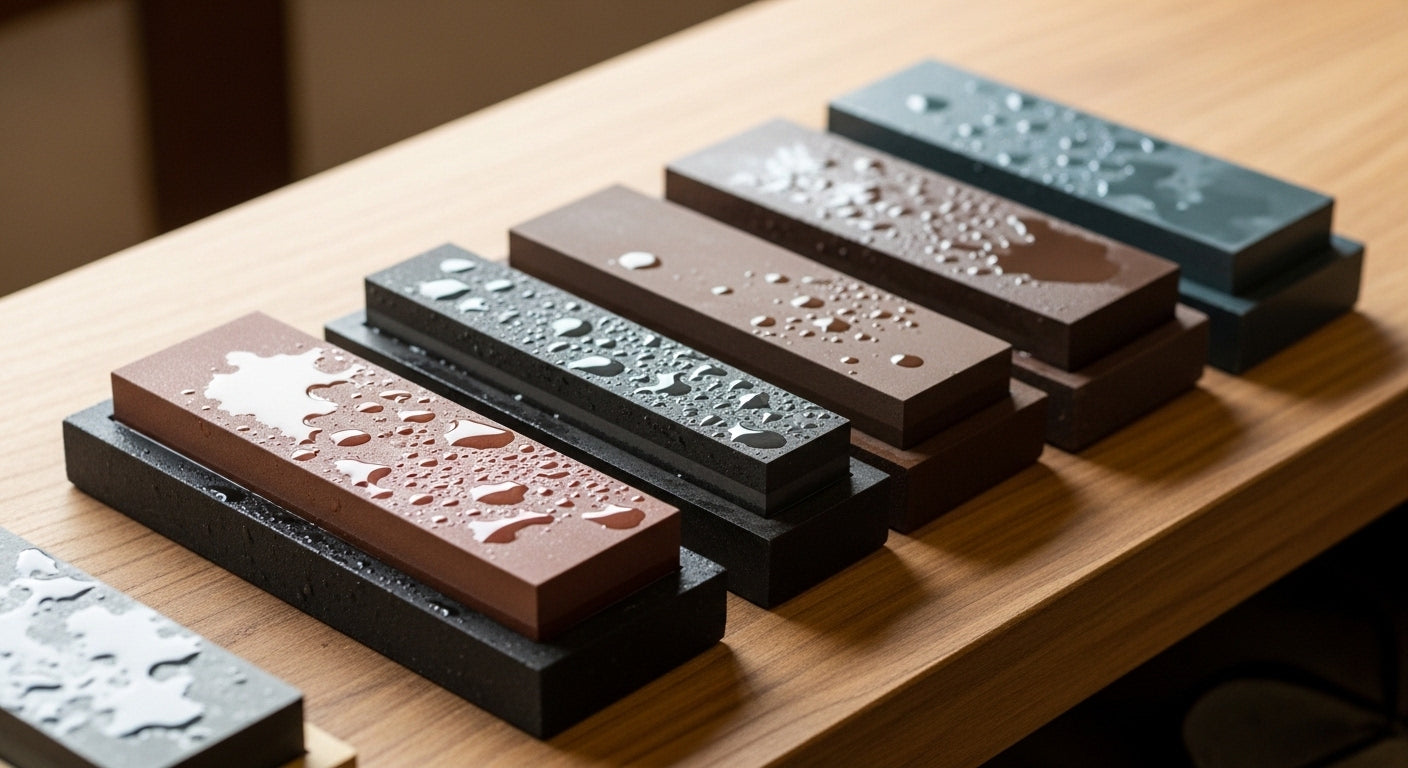
In conclusion, the grit number of a whetstone is a criterion that determines "how much to remove" and "how fine to finish," and it is the foundation that should be understood first when considering how to sharpen a Japanese kitchen knife. The smaller the grit number, the coarser the stone, and the larger the number, the finer it is. Generally, whetstones are divided into coarse (#80 to #600), medium (#800 to #2000), and finishing (#3000 to #8000 and above). By properly understanding the process that each whetstone is responsible for, you will be able to sharpen your knife according to its condition without wasting time. When you are unsure which whetstone to choose, it is efficient to first check "the current condition of the blade" and then work backward to choose the necessary grit number.
Coarse whetstone (#80 to #600): Grit used for chipping and reshaping blades.
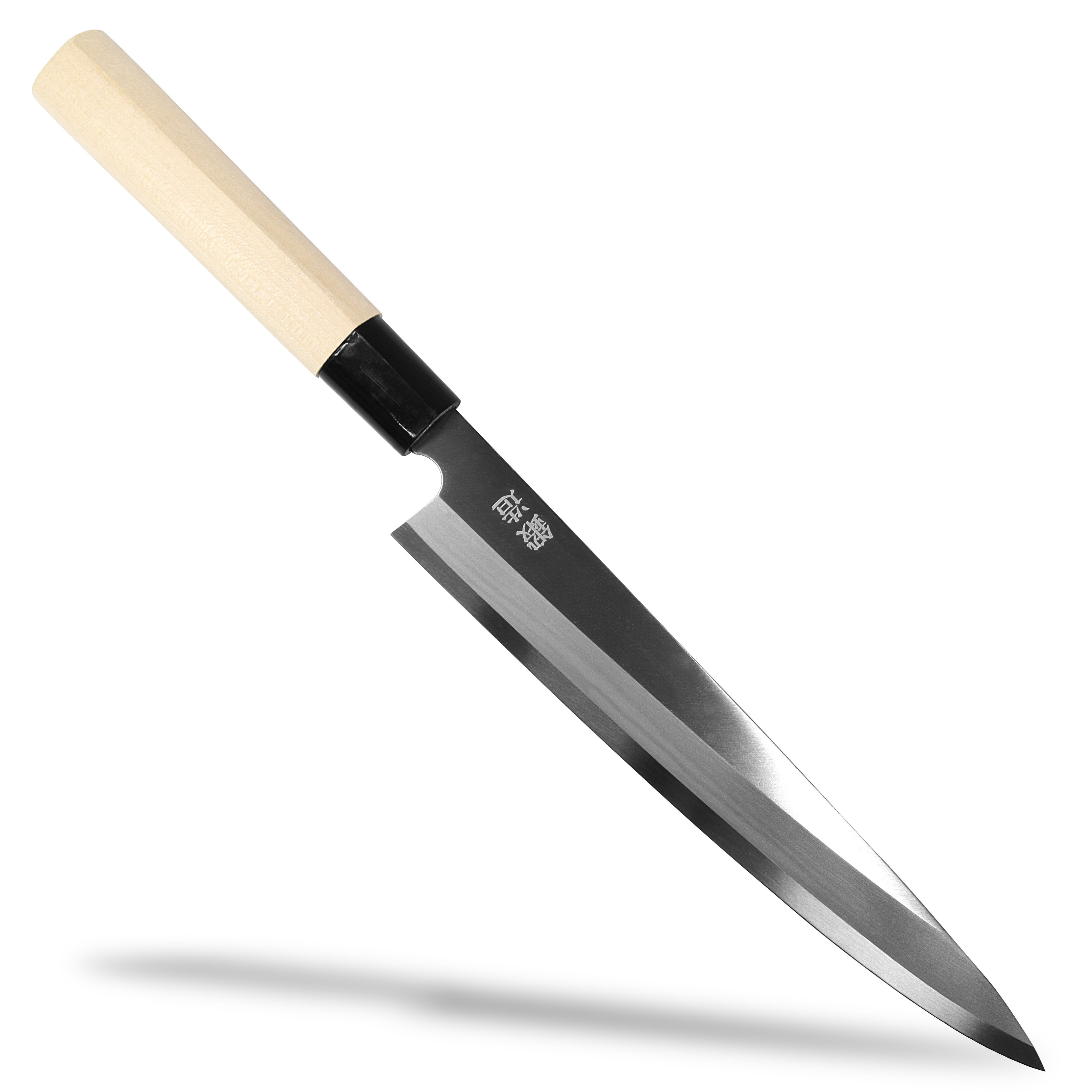
Coarse whetstones are used for "removing a large amount of material in a short time," and are used to correct the blade of a Japanese kitchen knife when it has become significantly rounded or chipped. In short, coarse whetstones are used to shape the blade, and if you try to finish the blade using only coarse whetstones, it will become jagged, prone to rusting, and have a rough cut. For example, if you want to thin the tip of a deba knife that hasn't been sharpened in many years, or if you want to repair a yanagiba knife that has chipped after hitting bone, it is efficient to start with a coarse whetstone of around #220 to #400 grit. It is best to think of using a coarse whetstone not as an everyday task, but "only when there is significant deformation or chipping," as this will help conserve the whetstone. Also, after sharpening with a coarse whetstone, it is essential to follow up with a medium grit or higher whetstone to ensure a stable finish.
Medium grit whetstone (#800 to #2000): The basic grit size for everyday sharpening.
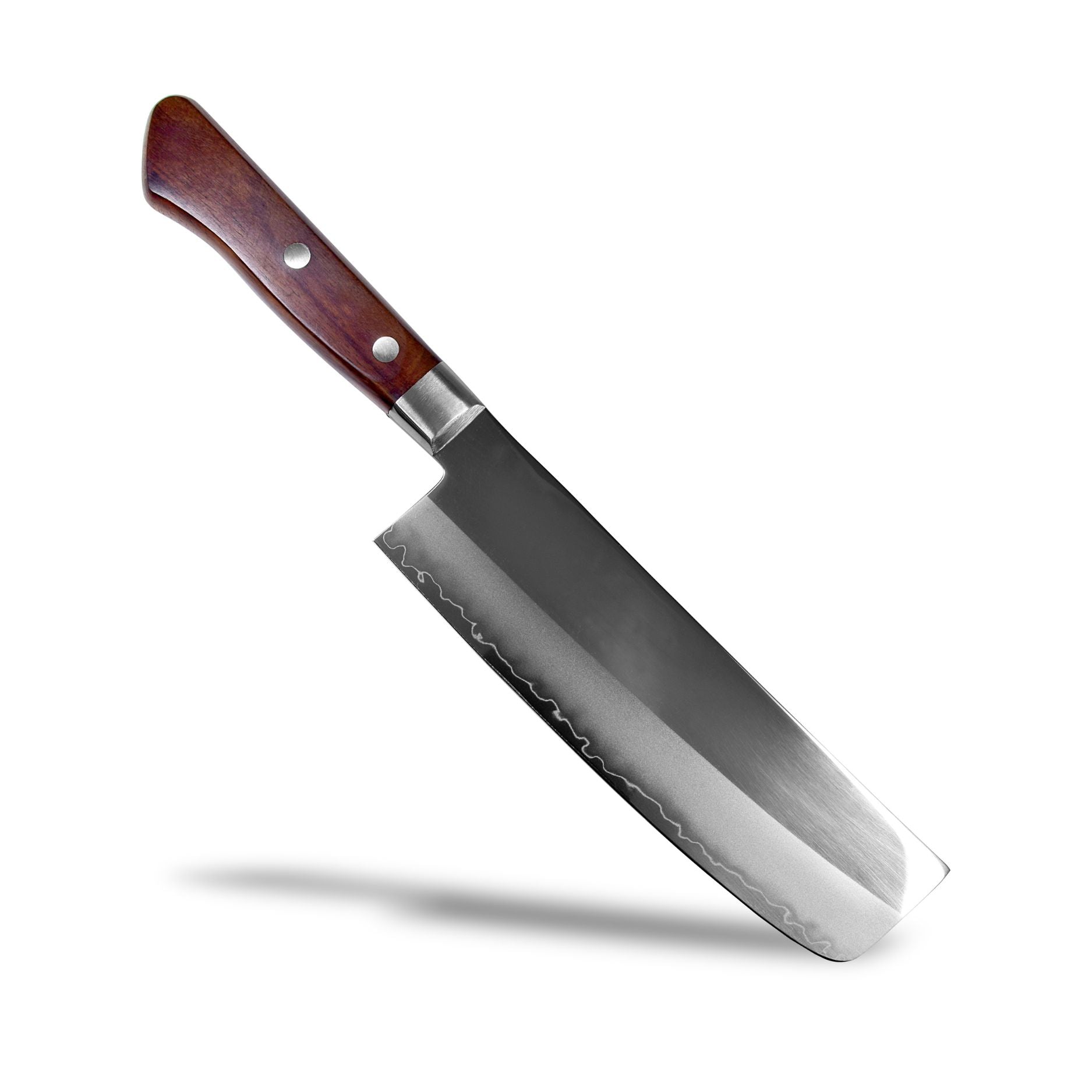
Medium-grit whetstones are used to "create a sharp edge" and are the most frequently used grit size for both home and professional use. Using a medium grit stone of around #800 to #1500 will smooth the edge that has been sharpened with a coarse whetstone while providing sufficient sharpness for everyday cooking. In the field of Japanese knife sharpening, many people say that "for home use, one medium-grit stone is sufficient," and it is common to maintain santoku knives and petty knives with only a medium grit stone of around #1000. Medium-grit whetstones are generally easy to handle and do not easily damage the surface, making them especially suitable as a first whetstone purchase. As you sharpen, check that "sharpening marks are evenly distributed across the entire blade" to maintain a uniform finish. Choosing whether to use a medium grit stone of #1000 or #1500 depending on the intended use and frequency of use of the knife is also an important point for long-term use.
Finishing whetstones (#3000 to #8000): Grit levels that enhance sharpness and finish.
A finishing whetstone is used to "further refine the blade edge, improving sharpness and the beauty of the cut." #3000 to #6000 grit stones are used for everyday finishing, while #8000 grit and above are used for ultra-fine finishing stones, such as yanagiba (sashimi knife) and planes, where the blade edge is particularly important. For sashimi knives and yanagiba knives used in Japanese restaurants, using a finishing stone results in a smoother sashimi cross-section, significantly improving the texture and visual quality. Even for home use, adding a finishing stone makes slicing vegetables and processing raw fish much easier, and you'll notice a difference in the overall quality of your cooking. Natural whetstones vary in grit and particle properties depending on their origin, and have a unique feel that differs from artificial whetstones, but an artificial finishing stone is sufficient to start with.
What are the steps for sharpening a Japanese kitchen knife, and what is the correct combination of whetstone and grit size?
In practical terms, the key to sharpening a Japanese kitchen knife is to "gradually increase the grit size of the whetstone." Trying to sharpen with only high-grit whetstones from the start will take a long time and won't result in a well-shaped blade. Here, we will explain the basic sharpening method using coarse, medium, and finishing whetstones, as well as patterns for omitting grit sizes depending on the time and purpose. In all cases, the most important point for achieving consistent sharpness is to "maintain a consistent blade angle."
Basic Sharpening Method: 6 Steps (Mainly Medium Grit)
The basic steps for sharpening a Japanese kitchen knife are: ① prepare the whetstone, ② determine the blade angle, ③ sharpen the front, ④ sharpen the back, ⑤ remove burrs, and ⑥ wash and dry. After soaking a medium-grit whetstone (around #1000) in water, hold the knife at approximately a 45-degree angle to the whetstone, slightly lift the spine, and move it back and forth at a constant angle to sharpen the entire blade evenly. Then, sharpen the back in the same way, and finally, lightly touch the edge to the whetstone or newspaper to remove burrs (shavings), wash with water, and dry thoroughly to restore sufficient sharpness for everyday use. Whetstones can dry out during sharpening, so adding water frequently will help maintain consistent sharpening power. If using a finishing whetstone, after shaping with the medium-grit whetstone, lightly wash with water, change whetstones, and perform several finishing sharpenings at the same angle and with the same force to create a smoother edge.
Examples of club combinations: How do they differ between home and professional use?
Realistically, for home-use Japanese knives, a two-stage sharpening process using either "medium grit only" or "medium grit + finishing grit" is the basic setup, with a coarse grit only used when chipping occurs. On the other hand, professional chefs and Japanese restaurants often use a full course of sharpening: "coarse grit (#220-#400) → medium grit (#1000-#2000) → finishing grit (#4000-#8000 + natural grit)," meticulously pursuing the shape, sharpness, and beauty of the cut. The first thing beginners should understand is that the number of grits needed varies depending on "how much finish they want," and it's important to choose based on the time and maintenance required each day. Once you're comfortable with sharpening at home, adding a finishing grit can often significantly improve the durability of the sharpness, so it's recommended to gradually step up your approach.
Common mistakes and solutions when choosing club number
This shows that common mistakes in sharpening Japanese knives include using only high-grit whetstones from the start or finishing with only coarse whetstones. Finishing with only coarse whetstones results in a jagged edge that rusts easily, while trying to shape the blade with only high-grit whetstones is time-consuming and distorts the blade's line. Understanding the role of each grit size and progressing step-by-step from coarse to medium to finishing whetstones is key to achieving consistent results in a short time. Also, if the whetstone surface becomes concave, it's important to use a flattening stone to restore it to a level surface. Maintaining the flatness of the whetstone leads to a uniform sharpening finish. This kind of maintenance of the whetstone itself is an essential habit for maintaining long-lasting, consistent sharpness.
FAQ
Q1. Is it okay to use only a medium-grit whetstone?
A1. For everyday sharpness maintenance, a medium grit stone (#800 to #1500) is sufficient. Adding a coarse or fine grit stone is efficient when chipping occurs or when a more thorough finishing is needed.
Q2. What grit size whetstone should I have for Japanese kitchen knives?
A2. The basic approach is to use a medium-grit whetstone (around #1000), combined with a coarse whetstone (#220 to #400) for repairing chips and a fine-grit whetstone (#3000 to #6000) for finishing. This combination offers high versatility.
Q3. Is it true that a higher grit number on a whetstone is better?
A3. The higher the number, the finer the finish, but this also requires more sharpening time and skill, so it's more practical to stop at a grit size that suits your intended use.
Q4. Can ceramic knives be sharpened with the same whetstone?
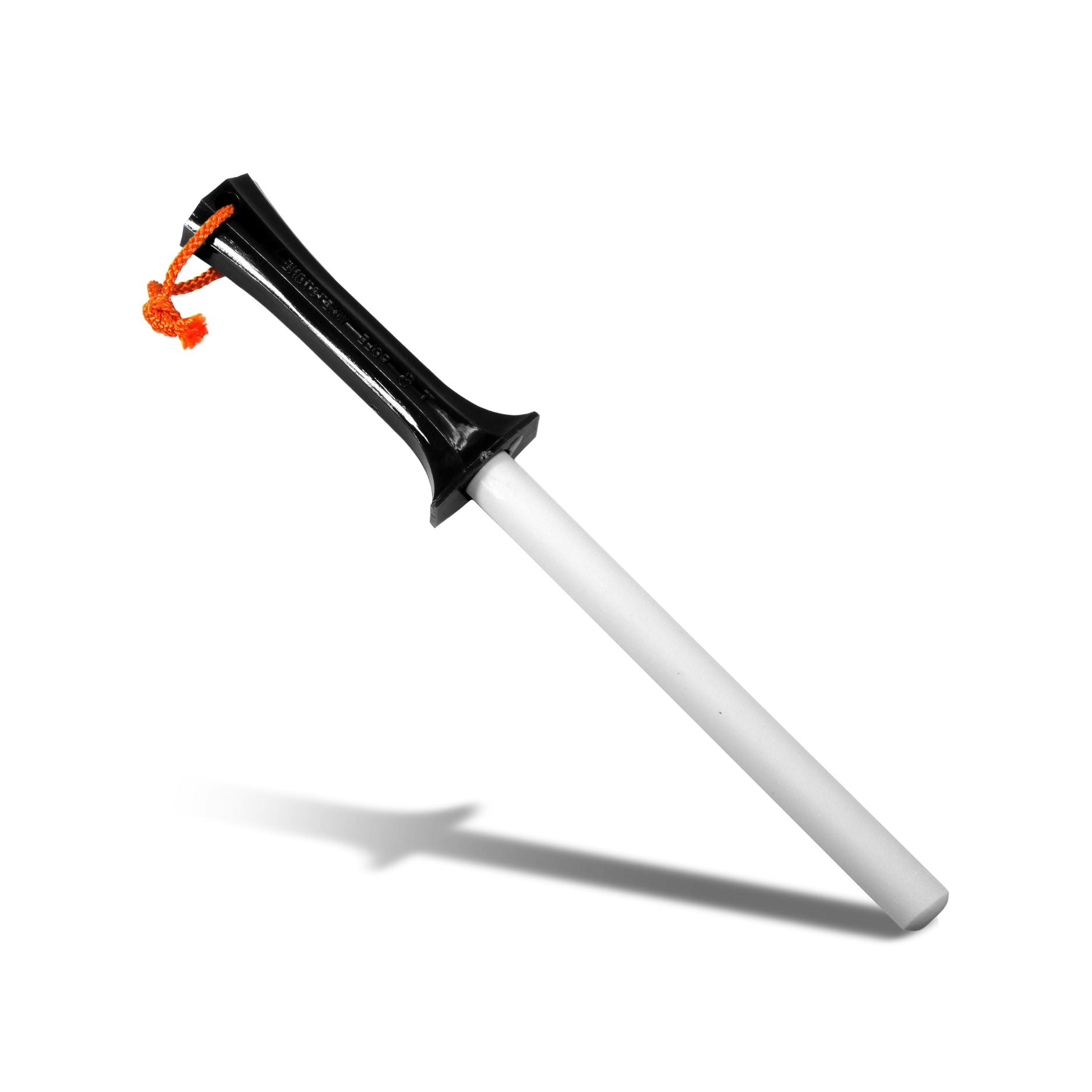
A4. Ceramic knives are extremely hard, making them difficult to sharpen with regular whetstones. If you plan to sharpen them at home, you will need a special whetstone such as a diamond whetstone.
Q5. Does the choice of whetstone grit differ between Japanese and Western-style knives?
A5. The basic principles are the same, but delicate Japanese knives such as yanagiba often require the use of a finishing whetstone, while Western-style knives such as santoku are often perfectly adequate with a medium-grit whetstone.
Q6. How often should I sharpen my knives?
A6. Depending on how often you use them, for home use, a good guideline is to lightly sharpen them with a medium grit whetstone once every 1-2 months, and only use a coarse grit whetstone when the sharpness has significantly decreased to minimize stress on the blade.
Q7. Is it better to sharpen your knives yourself or have a professional sharpen them?
A7. Sharpening your knives yourself allows you to keep costs down and create your preferred blade shape, while having them professionally done will result in a quick and consistent finish. Therefore, it's best to choose based on the amount of time you have and the level of perfection you want.
Q8. How should I choose the size and type (artificial or natural) of whetstone?
A8. For home use, a standard-sized artificial whetstone from a hardware store is sufficient. Professionals and those who are particular about quality can add larger whetstones or natural whetstones to achieve more stable sharpening of long blades.
Q9. Which grit size is better for a medium-grit whetstone, #1000 or #2000?
A9. #1000 is fast and versatile for sharpening, while #2000 is more suited to finishing and tends to produce a smoother edge. Which one to use as your "base" depends on your preference and the type of knife you are using.
Q10. Are there any tips for sharpening knives that are less likely to cause mistakes for beginners?
A10. It is important to maintain a consistent angle to the whetstone and to sharpen the entire blade evenly with the same number of strokes and the same force. Starting with a medium grit whetstone makes it less likely to make mistakes.
summary
- The basics of sharpening Japanese knives involve understanding the roles of different grit sizes of whetstones: "coarse grit = shaping," "medium grit = achieving a sharp edge," and "finishing grit = sharpness and finishing," and using them in stages accordingly.
- For home use, it's practical to start with a medium grit (#800 to #1500) and add a coarse and finishing grit as needed, choosing the grit size according to your maintenance time and desired level of sharpness.
- In conclusion, by organizing the grit and type of whetstones into a list and establishing a framework for deciding "which grit to start with for what condition of blade," you can efficiently sharpen Japanese knives and enjoy everyday cooking without stress.