
[How to Sharpen a Santoku Knife] How to Use a Sharpening Stone to Prioritize Sharpness and its Effects on Cooking
To sharpen a santoku knife with a focus on sharpness, the most effective method is to "maintain the correct sharpening angle for double-edged knives, carefully create the edge using a medium-grit whetstone, and then meticulously remove the burr at the end." In conclusion, mastering this sharpening technique will not only allow you to easily slice tomatoes and onions, preventing ingredients from crumbling, but you will also experience the benefits of sharpness in terms of cooking speed, safety, and the final result on a daily basis.
This article explains how to sharpen a santoku knife, how to use a whetstone, and the effects of improved sharpness, all of which can reduce stress while cooking.
In conclusion, if you prioritize the sharpness of your santoku knife, you can achieve near-professional sharpness even at home by mastering the "double-edged sharpening method using a medium grit stone" and "finishing with the burr." The santoku is a versatile double-edged knife for meat, fish, and vegetables, so the key is to sharpen it evenly at the same angle on both sides, while taking advantage of its lightness and sharpness as a Japanese knife. Simply reconsidering your reliance on sharpeners and making sharpening with a whetstone a habit will significantly change your daily cooking experience.
[Key points of this article]
Today's review: 3 key points
- When sharpening a Santoku knife, the basics of improving sharpness are to use a medium grit stone (#800 to #1500), sharpen both sides of the blade at the same angle, and be sure to feel the burr clearly.
- By restoring sharpness, you can cut tomatoes and sashimi without crushing them, shorten preparation time, and increase safety by reducing slippage in your hands, significantly reducing stress in the kitchen.
- The first thing beginners should focus on is making it a routine to follow these three steps every time: "maintain a sharpening angle of 10-15 degrees," "sharpen from the base to the tip of the blade with the same number of strokes," and "finally remove the burr using newspaper or something similar."
Conclusion of this article
- In conclusion, if you want to achieve a sharp finish when sharpening a santoku knife, the shortest route is to thoroughly follow these three steps: create a secondary bevel with a medium-grit whetstone, adjust the angle slightly to smooth the entire blade, and finally remove the burr.
- In short, the experience of realizing that "you can make a santoku knife this sharp just by using one medium-grit whetstone and maintaining the same angle and number of strokes" will greatly change your motivation and efficiency in daily cooking.
- The most important thing is that switching from "just using a sharpener" to "a sharpening method that understands the grit size of the whetstone and the structure of the double-edged blade" will clearly change how long the sharpness lasts and how consistently it feels to use.
- The benefits of sharpness are evident in four areas: appearance, texture, flavor, and shelf life. In particular, maintaining a clean cut surface for vegetables and fish elevates the quality of home cooking.
How can I sharpen a Santoku knife to restore its sharpness?
In conclusion, a santoku knife with dull blades can be efficiently restored to its sharpness by following these steps: "sharpen the rounded edge with a medium-grit whetstone → recreate the double-edged blade at the same angle on both sides → remove the burr and finish." A double-edged santoku knife is easier to handle than a single-edged yanagiba knife, and as long as you maintain a consistent angle, it's easy to create a stable blade even at home. Sharpening it as soon as you notice it's getting dull will reduce the amount of correction needed and lessen the strain on the whetstone.
The basic structure and sharpening techniques of a Santoku knife
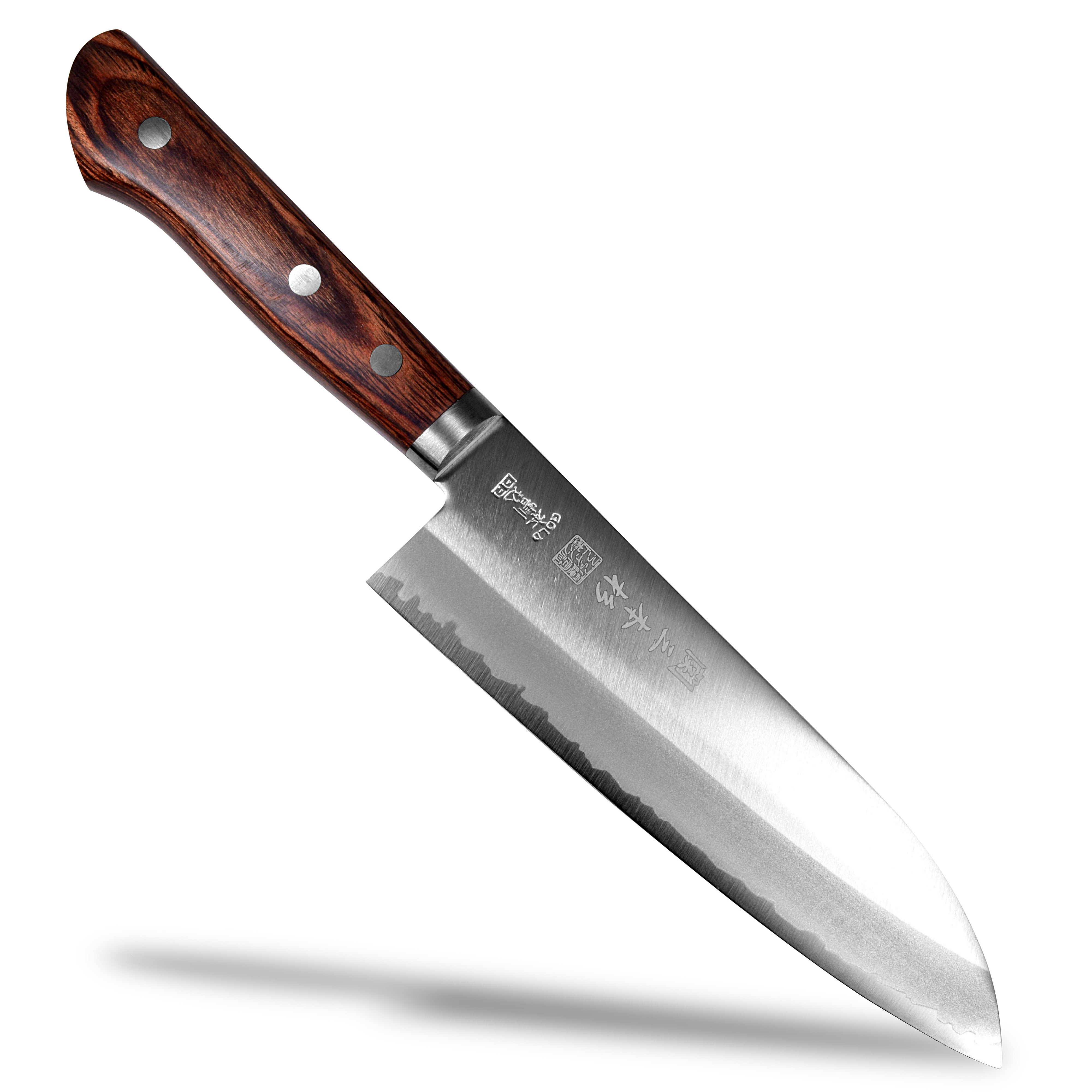
Santoku knives have a double-edged structure, designed so that the blade tip is centered when sharpened from both sides at roughly the same angle. In short, "balance between left and right is key," and if you sharpen only one side too hard, the blade tip will be uneven, and you won't be able to cut straight across the cutting board. The same principle applies to Japanese-style santoku knives: "sharpening the right and left sides at the same angle and the same number of times" leads to sharpness and a straight cut. Understanding this basic principle will also serve as a standard when checking the finish of your sharpened knife. If the blade drifts to one side when you pull it straight after sharpening, it's a sign that the balance between the left and right sides is off.
Sharpening method prioritizing sharpness, starting with just one medium-grit whetstone.
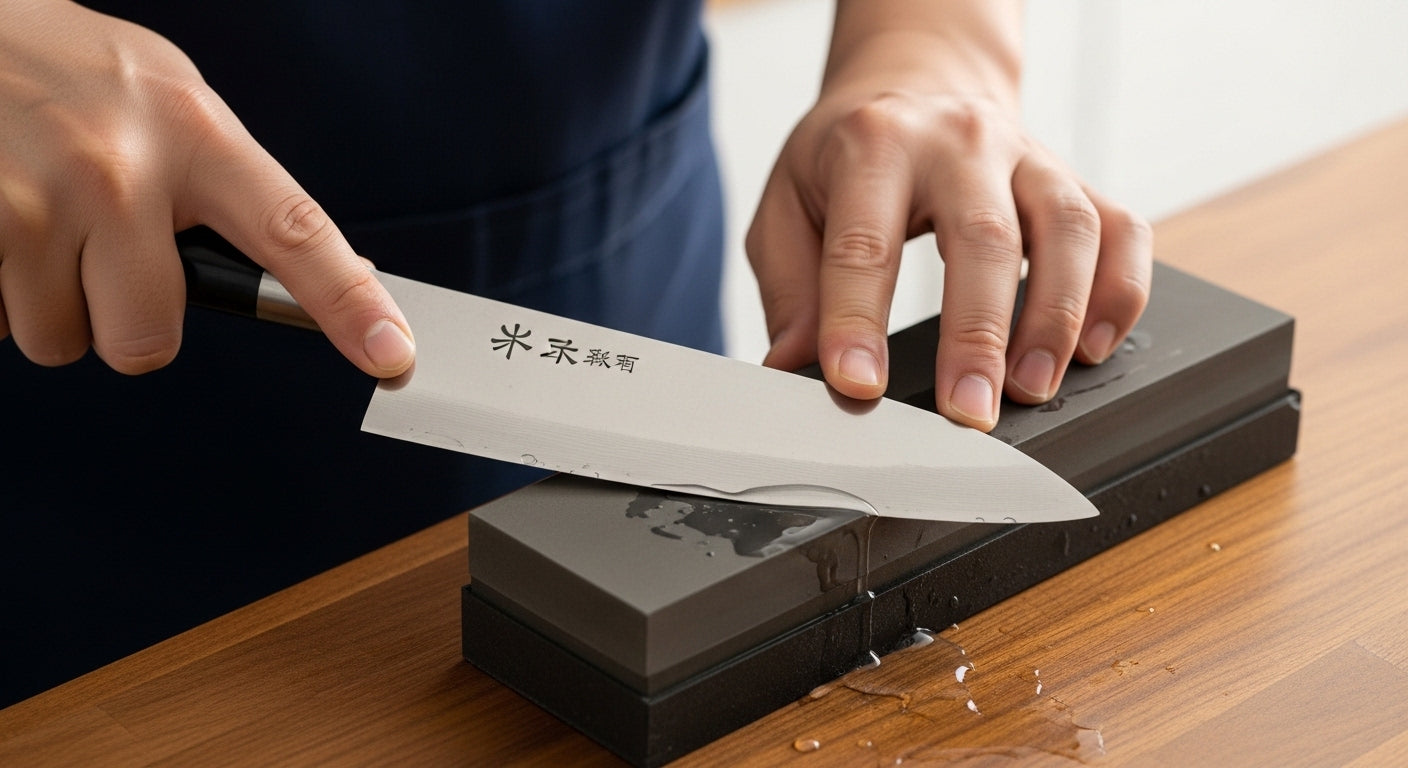
For sharpening a household santoku knife, it's practical to use one medium-grit whetstone, around #800 to #1500. First, soak the whetstone in water, place the knife at approximately a 45-degree angle to the whetstone (blade direction), and slightly lift the spine of the blade so that the blade angle is 10-15 degrees relative to the whetstone. From there, move the blade back and forth with consistent force in the order of base → middle → tip, sharpening each section the same number of times to evenly sharpen the entire blade. Even with just one medium-grit whetstone, you can achieve a sharpness far superior to a sharpener by following the procedure and angles, so mastering this one stone should be your top priority. Add water as needed when the whetstone starts to dry out to stabilize the grinding power.
The small bevel provides both sharpness and durability.
When sharpening a Santoku knife with a medium-grit whetstone, it's effective to first hold the blade at a slight angle to create a secondary bevel (double bevel) at the tip, and then slightly reduce the angle to widen the entire blade surface. Creating a secondary bevel makes the position of the blade tip clearer, serves as a guide as you sharpen, and reduces the risk of the blade becoming too thin and chipping. Thanks to this two-stage structure, the balance between "sharpness" and "edge retention" is improved, and you'll likely experience better results than with a sharpener when using it at home. If you sharpen while being mindful of keeping the width of the secondary bevel uniform, it will be easier to check the finished appearance and identify any sharpening habits.
What is the correct sharpening procedure to maximize the sharpness of a Santoku knife?
In practical terms, even when prioritizing sharpness when sharpening a santoku knife, following standardized steps yields more consistent results than using complex techniques. Here, we'll organize the sharpening method for santoku knives using a medium-grit base, focusing on aspects that directly contribute to sharpness. With the awareness of "maintaining a consistent angle," "sharpening the same number of times," and "checking as you go," even beginners can achieve a consistent finish.
Steps 1-3: Preparing the whetstone and sharpening the right side (front)
Soak the whetstone (medium grit) in water for 10-15 minutes, and wait until no more bubbles appear on the surface.
Place the knife on the whetstone with the right side facing up, and fix it at an angle (10-15 degrees) so that the entire blade, from the base to the tip, makes even contact with the whetstone.
Treat the base, middle, and tip of the blade as separate blocks, and sharpen each section the same number of times (e.g., 10-15 times) in a back-and-forth motion, continuing until you feel a slight burr across the entire edge.
At this stage, the right-hand blade, which forms the base of the sharpness, will be shaped, and you'll feel the blade sink into the tomato skin just by touching it. If you stop before you feel the burr, the blade won't be sharp enough, so proceed slowly, checking each section as you go.
Steps 4-6: Sharpening the left side (back) and removing the burr.
Turn the knife over and sharpen the left side at the same angle, in the same sections, and with the same number of strokes, until the burr has moved to the right side.
If burrs appear on both sides of the blade, lightly rub the blade against a whetstone, newspaper, or cloth about five times to remove the burrs.
Rinse with water, wipe thoroughly and dry, then lightly sharpen it a few times as needed while test-cutting paper or tomatoes to make minor adjustments.
Even this simple procedure is highly effective in restoring sharpness, quickly bringing a dull blade back to a usable, stress-free level. If you have a finishing whetstone, a light touch afterward will result in an even smoother edge.
The effect of improved sharpness after sharpening.
A sharpened Santoku knife prevents vegetables from falling apart, allowing you to easily slice tomatoes and eggplants, and reduce the amount of moisture released when mincing onions. Fish and meat can also be cut without crushing the fibers, resulting in a better texture and more even cooking. Furthermore, the need to forcefully push a slippery knife is eliminated, reducing strain on the arms and wrists and lowering the risk of injury—a significant safety benefit. Not only does it make daily cooking more comfortable, but it also increases your motivation to cook itself, which is a major by-effect of properly sharpening your knife with a whetstone.
FAQ
Q1. How often should I sharpen my santoku knife to maintain its sharpness?
A1. If you use it daily at home, sharpening it with a medium-grit whetstone about once every 1-2 months will help maintain a good balance between sharpness and edge retention.
Q2. When using a double-edged santoku knife, is it better to use different angles on the left and right sides?
A2. Generally, the same angle (10-15 degrees) is recommended for both sides, and sharpening in a balanced manner will result in a straight cut and consistent sharpness.
Q3. Why does the sharpness of a knife quickly deteriorate even after sharpening?
A3. The angle and grit size need to be reviewed because the blade tip is too thin, the burr hasn't been removed sufficiently, or the whetstone is too coarse.
Q4. Is it better to use a finishing whetstone (#3000 or higher) even with a Santoku knife?
A4. It is effective if you want a smoother cut and longer-lasting sharpness, but it is essential to first properly shape the blade and create a burr with a medium-grit whetstone before using it.
Q5. What is the difference between how a professional sharpens a santoku knife and how a home cook sharpens one?
A5. Professionals use whetstones in stages, from coarse to fine-tuning, to fine-tune the blade edge and achieve a perfect finish. However, at home, the focus is on practicality, primarily using medium-grit whetstones to quickly restore the blade to a "sufficiently sharp" state.
Q6. What positive effects does a sharp knife have on cooking?
A6. The appearance, texture, flavor, and shelf life are improved, making cooking more enjoyable and encouraging an increase in the variety and quantity of vegetables used, thus positively impacting the entire dining experience.
Q7. What is the difference in sharpness between a sharpener and a whetstone?
A7. Sharpeners are convenient, but they don't significantly alter the blade's shape. While whetstones take time, they allow you to adjust the sharpness to your liking while shaping the blade edge, and they also last longer.
Q8. Can I use the same sharpening method for a stainless steel santoku knife?
A8. The basic procedure is the same, but since it can be harder and more difficult to sharpen than carbon steel, it's best to adjust the grit size of the medium whetstone and the sharpening time while checking the finish.
summary
- To achieve a sharp edge when sharpening a santoku knife, it's essential to follow three steps: sharpen both edges at the same angle using a medium-grit whetstone, and carefully remove any burrs.
- By restoring sharpness, you can cut tomatoes and sashimi without crushing them, shorten cooking time, and increase safety by reducing slippage in your hand, significantly reducing the stress of everyday cooking.
- In conclusion, a santoku knife properly sharpened with a whetstone offers a completely different user experience compared to a knife sharpened solely with a sharpener, making it the most cost-effective kitchen investment that will enhance your daily cooking experience.