

[Blue Steel Characteristics] Features of Blue Steel as a steel material for Japanese kitchen knives, differences between grades, and how to choose the right one.
In conclusion, Aogami steel is a high-grade steel based on Shirogami steel with added alloying elements to enhance edge retention and durability. While it maintains a sharp edge for a long time, it is a steel that requires attention due to its susceptibility to rust and difficulty in sharpening. In short, it is a steel that is more suited to professionals and shows its true value when used by someone experienced in sharpening. By understanding the characteristics and features of Aogami steel and choosing it accordingly, you can significantly improve the quality of your cooking and your work efficiency.
This article explains the characteristics and features of Aogami steel, a type of Japanese kitchen knife steel known for its sharp cutting edge.
In conclusion, Aogami steel is a high-carbon alloy steel made by adding chromium and tungsten to Shirogami steel, and is a steel material suitable for Japanese kitchen knives, excelling in "long-lasting sharpness," "wear resistance (resistance to wear)," and "toughness (resistance to chipping)." On the other hand, it has the characteristic of being prone to rusting like carbon steel and "somewhat difficult to sharpen" due to its high hardness, so it is important to choose it with an understanding of daily maintenance and sharpening techniques.
[Key points of this article]
Today's review: 3 key points
- Aogami steel is a high-grade Japanese kitchen knife steel made by adding chromium, tungsten, and other elements to white steel to improve edge retention and wear resistance.
- The characteristics of Aogami steel can be summarized as follows: "long-lasting sharpness," "toughness that makes it resistant to chipping," and "however, it rusts easily and is somewhat difficult to sharpen."
- Each grade of Aogami steel, such as Aogami Super, Aogami No. 1, and Aogami No. 2, has different characteristics, so it's important to choose one that matches your desired sharpness and ease of maintenance.
Conclusion of this article
- In conclusion, Aogami steel, the steel used in Japanese kitchen knives, is a high-carbon alloy steel designed with the primary goal of "maintaining its sharpness longer than Shirogami steel and withstanding prolonged use by professionals."
- In short, while white steel prioritizes "ultimate sharpness and ease of sharpening," blue steel prioritizes "long-lasting sharpness and durability."
- Most importantly, since Aogami steel knives rust easily and are somewhat difficult to sharpen, it's crucial to understand their suitability for those who are experienced in sharpening or who handle large quantities of food.
- Aogami Super, Aogami No. 1, and Aogami No. 2 are all highly hard and maintain their sharpness for a long time, but Aogami Super has the best edge retention and hardness, and consequently, it is more difficult to sharpen and handle.
What kind of Japanese kitchen knife steel is Aogami steel? Basic characteristics and features
In conclusion, Aogami steel is a type of Yasugi steel from Hitachi Metals, a high-grade cutlery steel based on Shirogami steel with added chromium, tungsten, and other elements to enhance wear resistance and long-lasting sharpness. It is mainly used for Japanese kitchen knives and carpentry tools, where sharpness and durability are required, and is favored by professionals such as chefs and craftsmen.
What are the basic characteristics of Aogami steel?
The defining characteristics of Aogami steel lie in its combination of high hardness, excellent edge retention, and tough, resilient properties. By improving upon the critical heat treatment requirements of Shirogami steel and enhancing wear resistance through the addition of tungsten and chromium, it has become a steel that maintains its sharpness even after prolonged use. Its greatest feature is its excellent edge retention, allowing it to be used continuously without sharpening, even in situations like sushi restaurants where slicing sashimi is done all day long.
Difference from white steel
Both white steel and blue steel are high-carbon steels with sharp edges, but they have different characteristics. White steel has fewer impurities, a hardness of around HRC60, is easy to sharpen, and is suitable for chefs who want to achieve the best possible edge by sharpening it each time. Blue steel can be easily hardened to around HRC62-64, and excels in edge retention and wear resistance, but it is a "steel that is strong for long preparation times" as it requires time and skill to resharpen.
Types of Japanese kitchen knives that commonly use Aogami steel
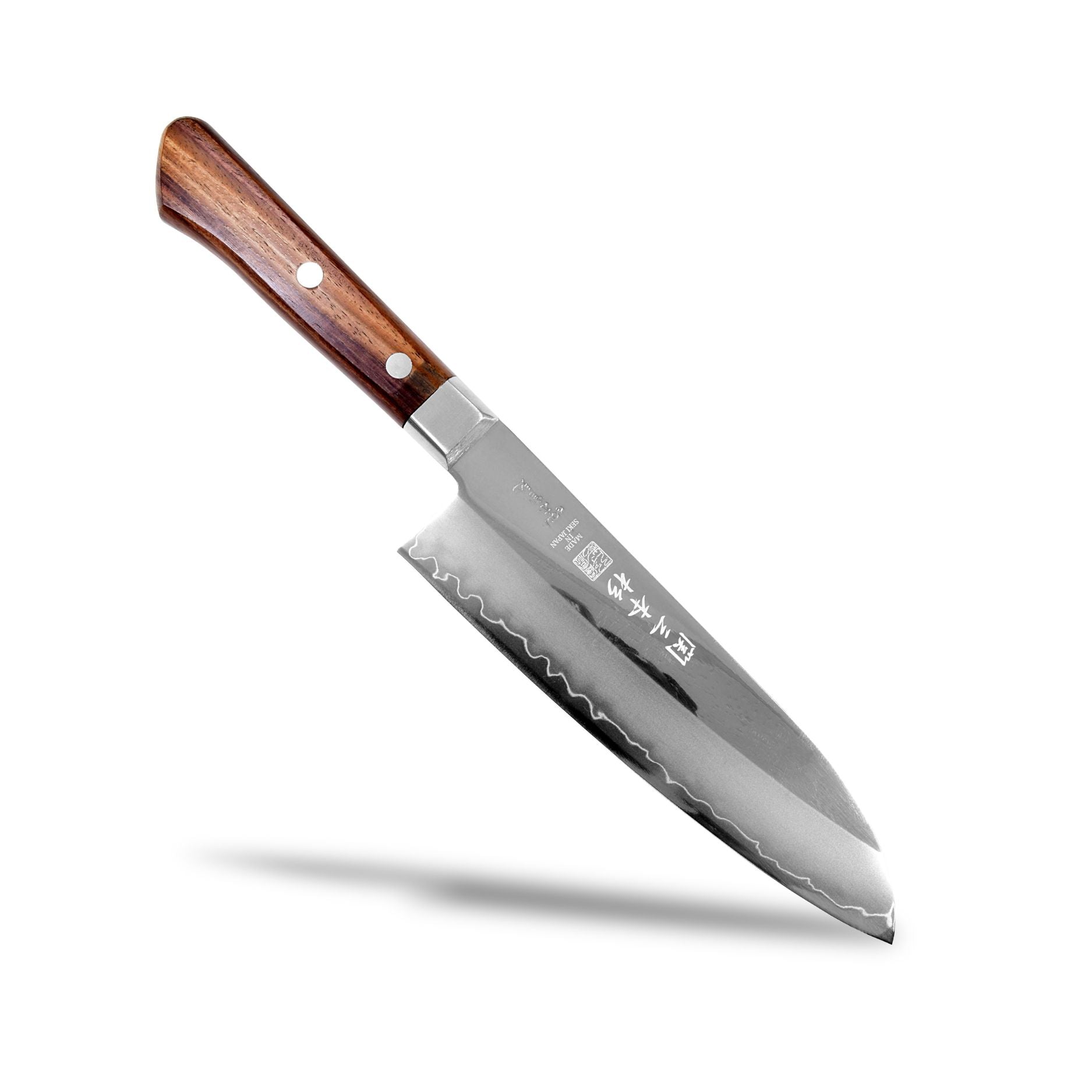
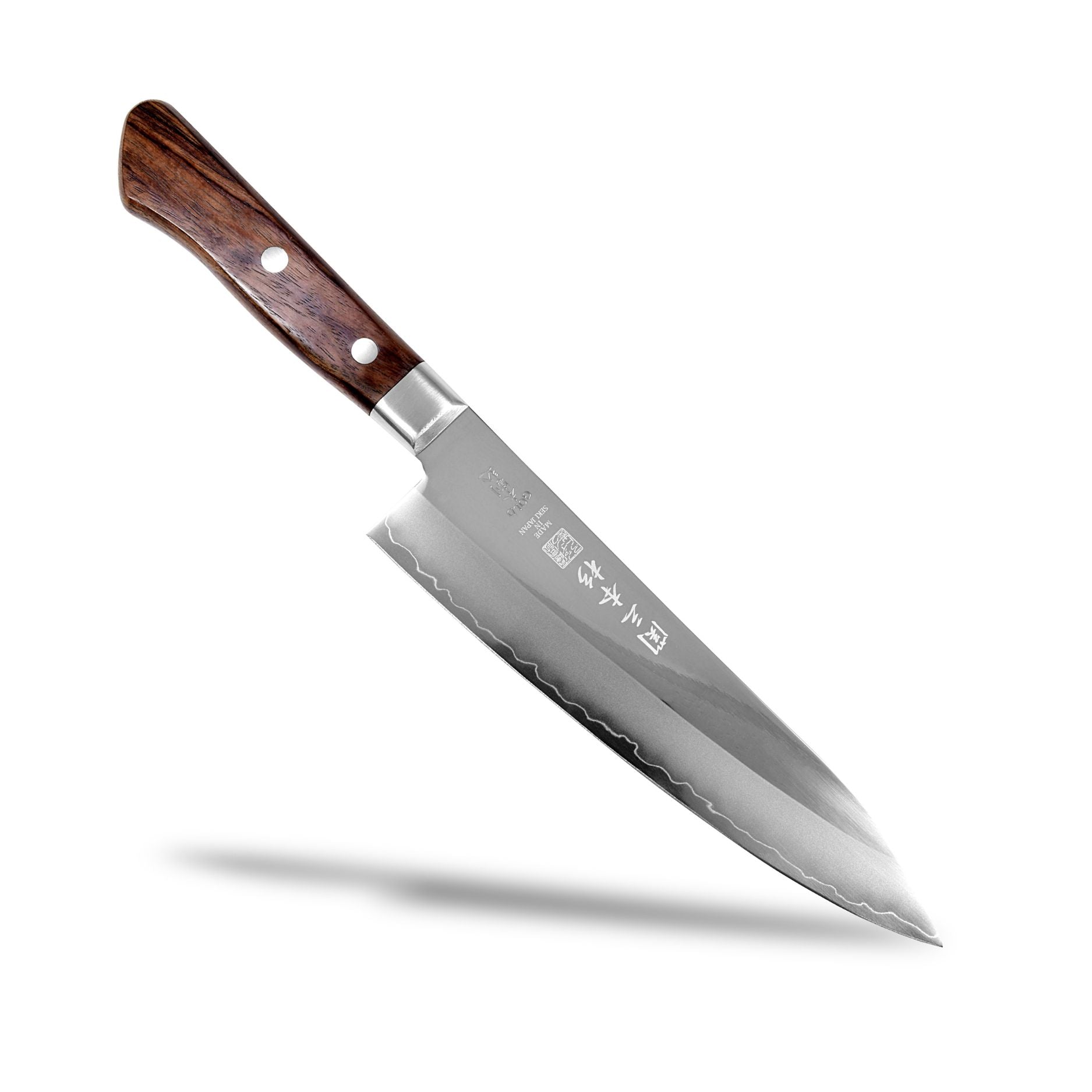
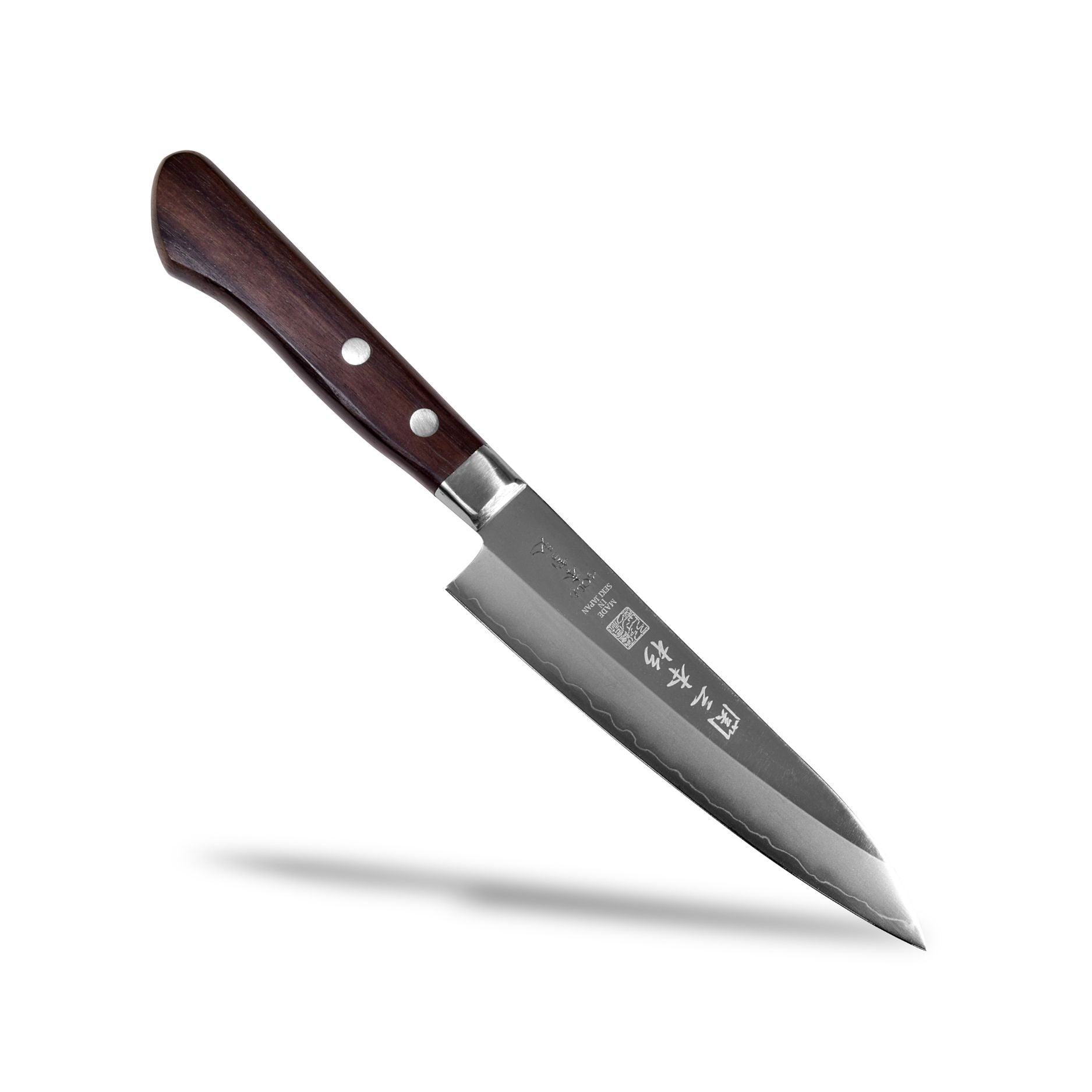
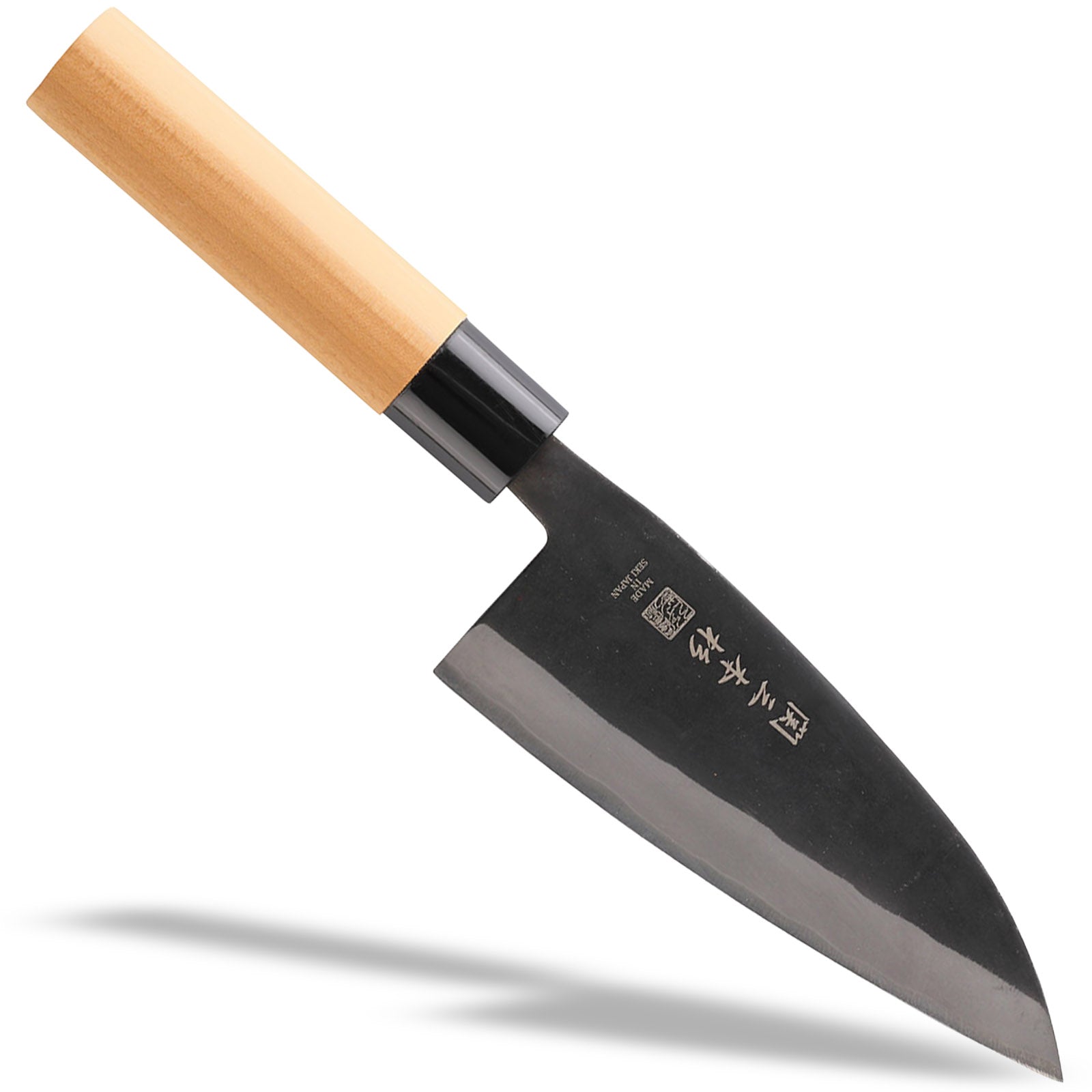
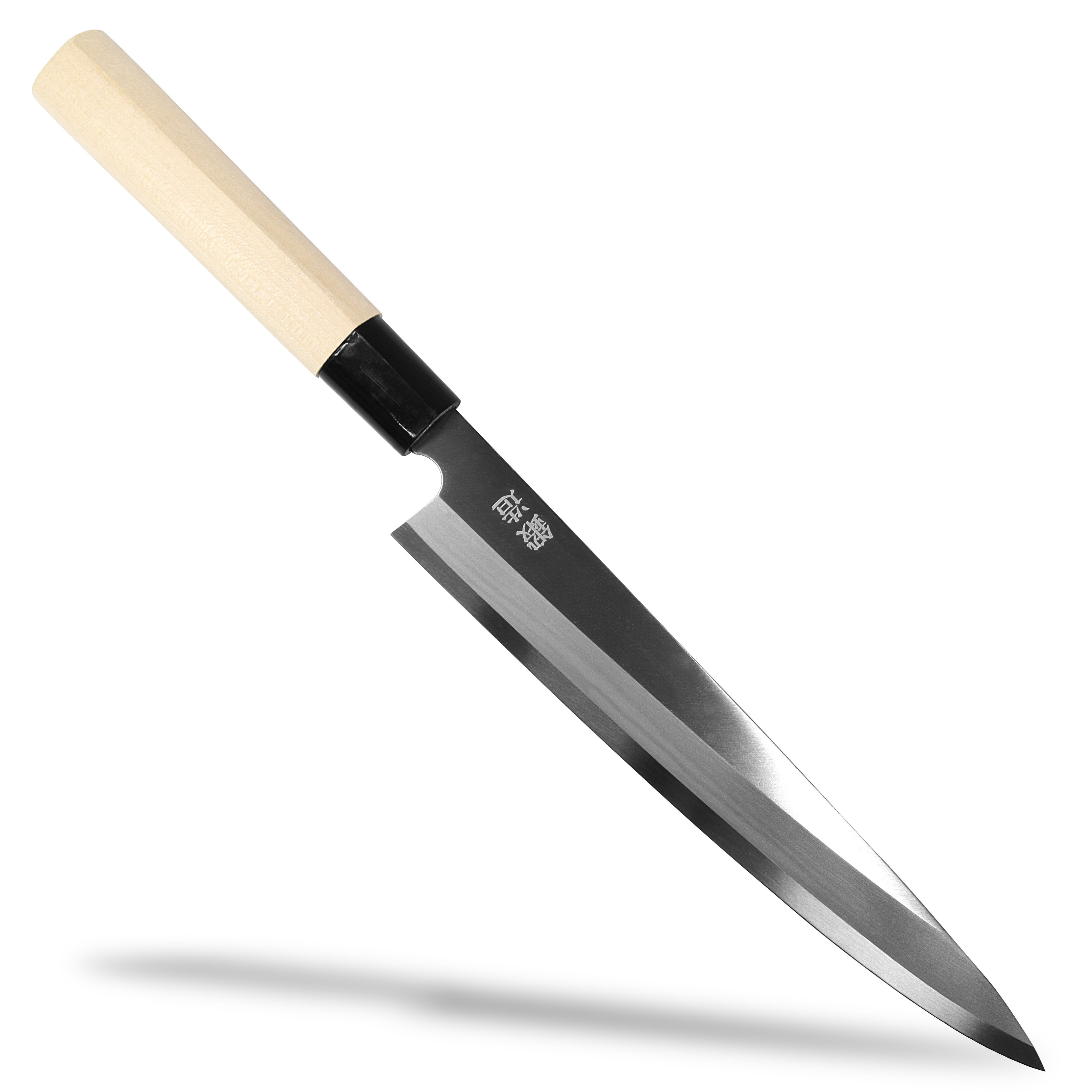
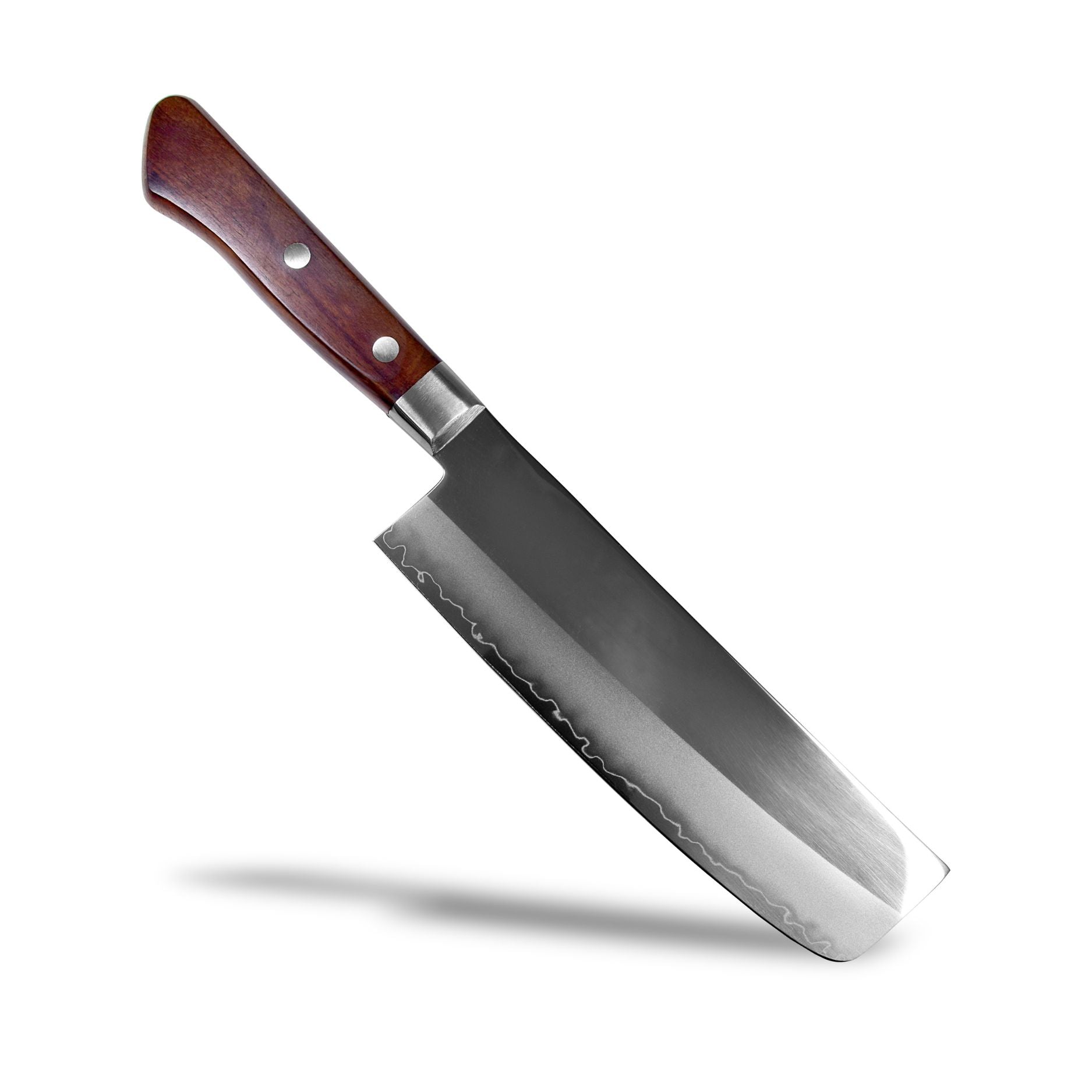
Aogami steel is often used in knives where long-lasting sharpness is required, such as yanagiba, deba, mioro, and gyuto. For example, with a yanagiba knife for sashimi, Aogami steel helps maintain the shine and beauty of the sashimi's cross-section even after prolonged plating. For deba and bone-related work, its tough hardness makes it less prone to chipping. It is a steel that mainly targets home cooks who are accustomed to sharpening, as well as professional-minded users.
What are the differences between Aogami Super, No. 1, and No. 2, and how do you choose between them?
In practical terms, even though we refer to it collectively as "Aogami steel," its properties vary depending on the grade, such as Aogami Super, Aogami No. 1, and Aogami No. 2. Understanding these differences will make it easier to choose the Aogami steel that best suits your needs.
Blue Paper No. 2: A well-balanced and highly versatile type.
Aogami No. 2 is considered the best-balanced steel in the Aogami series, offering the best balance of sharpness, durability, and ease of sharpening. With a carbon content of approximately 1.05-1.15%, it is harder and retains its sharpness longer than Shirogami, but it is not as extremely hard as Aogami No. 1 or Super, making it relatively easy to sharpen. In short, it is a suitable grade for those new to Aogami steel, and is ideal for those using an Aogami steel knife for the first time or those who want a knife that can be used for a wide range of purposes.
Blue Steel No. 1: For professionals who prioritize long-lasting sharpness.
Aogami No. 1 steel has a higher carbon content (approximately 1.25-1.35%) than Aogami No. 2 steel, resulting in increased hardness and edge retention. It is strong for long preparation times and continuous work, and is particularly suitable for professional situations where "you don't want the sharpness to diminish midway through." However, sharpening is more difficult than with Aogami No. 2 steel, and it is a choice for intermediate to advanced users who require sharpening skills such as matching the whetstone and controlling the angle.
Blue Paper Super: The highest class of blue paper series.
Aogami Super is a steel material considered the "pinnacle of the Aogami series," an improved version of Aogami No. 1 and No. 2. With a high carbon content of approximately 1.40-1.50%, and increased amounts of tungsten, chromium, molybdenum, and vanadium, it exhibits the highest hardness and longest-lasting sharpness among the Aogami series. As a result, the frequency of sharpening is greatly reduced, but it also has the disadvantages of being "difficult to sharpen" and "prone to chipping if made too thin" due to its extreme hardness and low grindability.
What are the advantages and disadvantages of using Aogami steel, and who is it suitable for?
Considering these conditions, the characteristics and features of Aogami steel can be described as "performance geared towards professionals," and it is important to understand its advantages and disadvantages before making a choice.
Advantages of Aogami steel
The greatest advantage of Aogami steel is its sustained sharpness and wear resistance. Even during long preparation times for sashimi or when handling large quantities of meat and fish, the need for frequent sharpening is reduced, leading to improved work efficiency and consistent quality. Furthermore, Aogami steel is more tough and durable than Shirogami steel, and with proper heat treatment, it is less prone to chipping, making it highly valued by professionals.
Disadvantages of Aogami Steel
On the other hand, because Aogami steel is a carbon steel, it rusts more easily than stainless steel, and daily maintenance such as washing and wiping off moisture immediately after use is essential. Furthermore, because it contains many components that prolong the sharpness, its grindability is reduced, and many users feel that it is "difficult to sharpen" and "takes a long time to sharpen with a whetstone." In particular, Aogami Super and Aogami No. 1 have high hardness, so choosing the right whetstone and managing the sharpening angle are important, making it a somewhat challenging steel for beginners.
Who is Blue Steel suitable for and who is not?
Realistically speaking, Aogami steel is best suited for those who are "used to sharpening," "used to handling carbon steel," and "often do long preparations or continuous work." Conversely, for those who "don't want to spend time on rust prevention or sharpening" or "only use knives occasionally," stainless steel or white steel may be easier to handle. The first thing beginners should keep in mind is that "to make the most of Aogami steel's performance, one criterion for deciding whether to use it is whether you enjoy sharpening with a whetstone and preventing rust."
FAQ
Q1. What kind of steel is Aogami steel?
A1. This is a high-grade cutlery steel from the Yasugi Steel series, made by adding chromium, tungsten, and other elements to high-carbon white steel to enhance edge retention and wear resistance.
Q2. What is the biggest difference between blue steel and white steel?
A2. The main difference between Aogami steel and Shirogami steel is that Aogami steel excels in maintaining sharpness and wear resistance, while Shirogami steel is easier to sharpen and achieves peak sharpness more easily.
Q3. What are the differences between Aogami No. 2, Aogami No. 1, and Aogami Super?
A3. As the carbon content and alloying element content increase in order, Aogami Super offers the best hardness and long-lasting sharpness, but it is also more difficult to sharpen and handle.
Q4. Are knives made of Aogami steel prone to rusting?
A4. As it is a type of carbon steel, it is more prone to rusting than stainless steel, so washing with water, wiping completely dry, and drying after use are essential.
Q5. Why is Aogami steel said to be difficult to sharpen?
A5. Because it contains many alloying elements that help maintain sharpness for a long time and has high hardness, it takes a long time to grind down with a whetstone, requiring time and skill to sharpen.
Q6. What uses are Aogami steel knives suitable for?
A6. This knife is suitable for applications requiring long-lasting sharpness and durability, such as preparing sashimi over long periods, thinly slicing and peeling meat in Japanese cuisine, and handling large quantities of meat and fish.
Q7. Is it okay to choose a kitchen knife made of blue steel for home use?
A7. This is suitable for those who enjoy sharpening and rust prevention, but if you want to avoid the hassle of maintenance, stainless steel or white steel blades are easier to handle.
Q8. Which will last longer to cut: Aogami steel or stainless steel?
A8. Depending on the conditions, for the same class of finish, blue steel often has better edge retention, while stainless steel has the advantage of being rust-resistant and easy to handle.
Q9. What whetstone grit size is recommended for sharpening Aogami steel?
A9. The general method involves shaping the blade with a medium-grit whetstone (around #1000) and then refining it with a finishing whetstone (#3000 to #6000) as needed. Since the whetstone is hard, a high-quality whetstone is desirable.
Q10. Are Aogami steel knives difficult for beginners to use?
A10. This may be somewhat difficult for beginners who are not familiar with sharpening and rust prevention. It is recommended to start by getting used to sharpening with white paper or stainless steel before moving on to more advanced materials.
summary
- The defining characteristics of Aogami steel are its combination of high hardness, excellent and long-lasting sharpness, and tough durability, making it a high-grade steel geared towards professionals.
- Each grade of Aogami steel, such as Aogami Super, Aogami No. 1, and Aogami No. 2, has a different balance of edge retention and ease of sharpening. Users who spend long hours preparing knives or performing continuous work will find the advantages of Aogami steel more apparent.
- In conclusion, Aogami steel knives are best suited for those who understand their susceptibility to rust and the difficulty of sharpening, and who enjoy sharpening and maintaining their tools. This allows them to maximize the long-lasting sharpness of the blade.