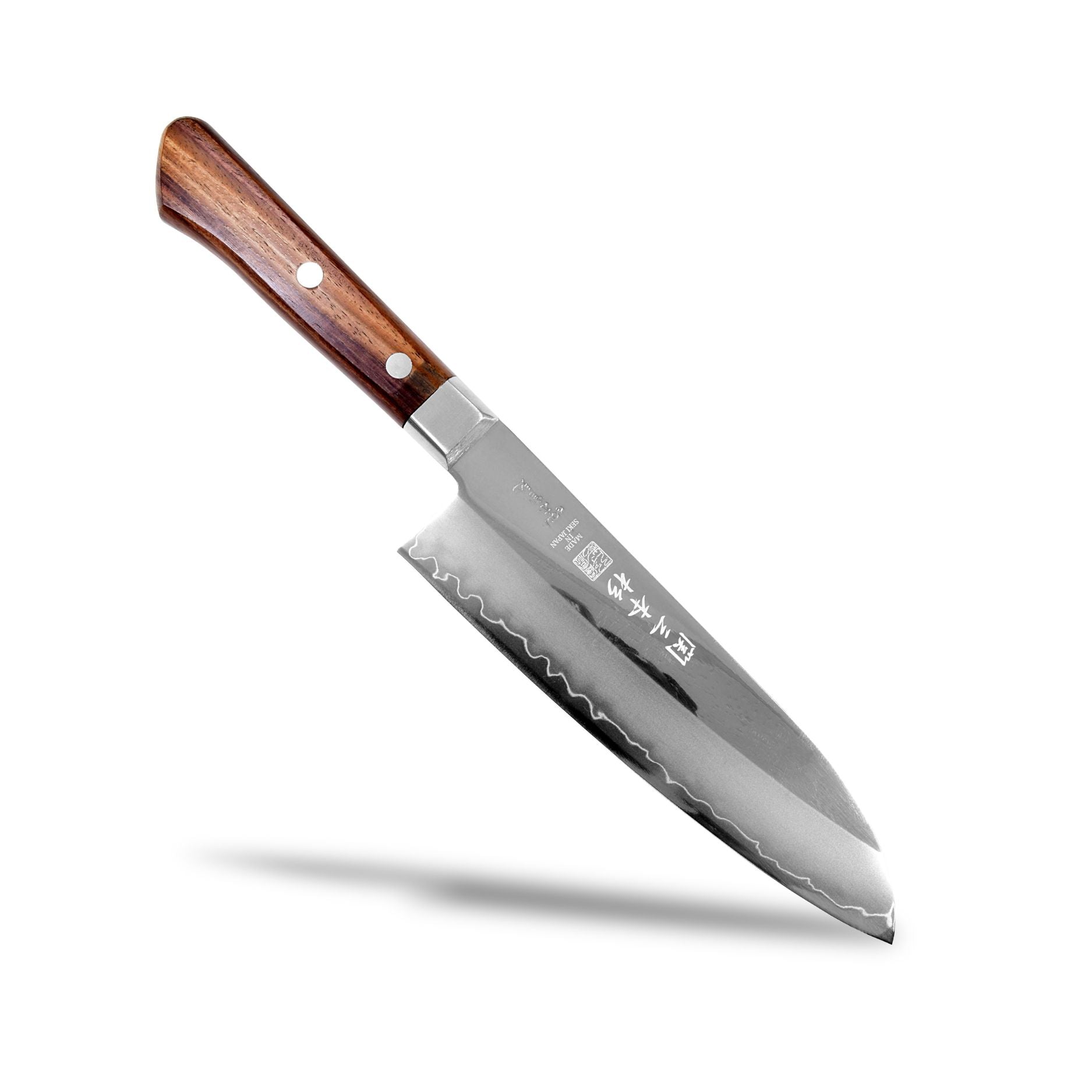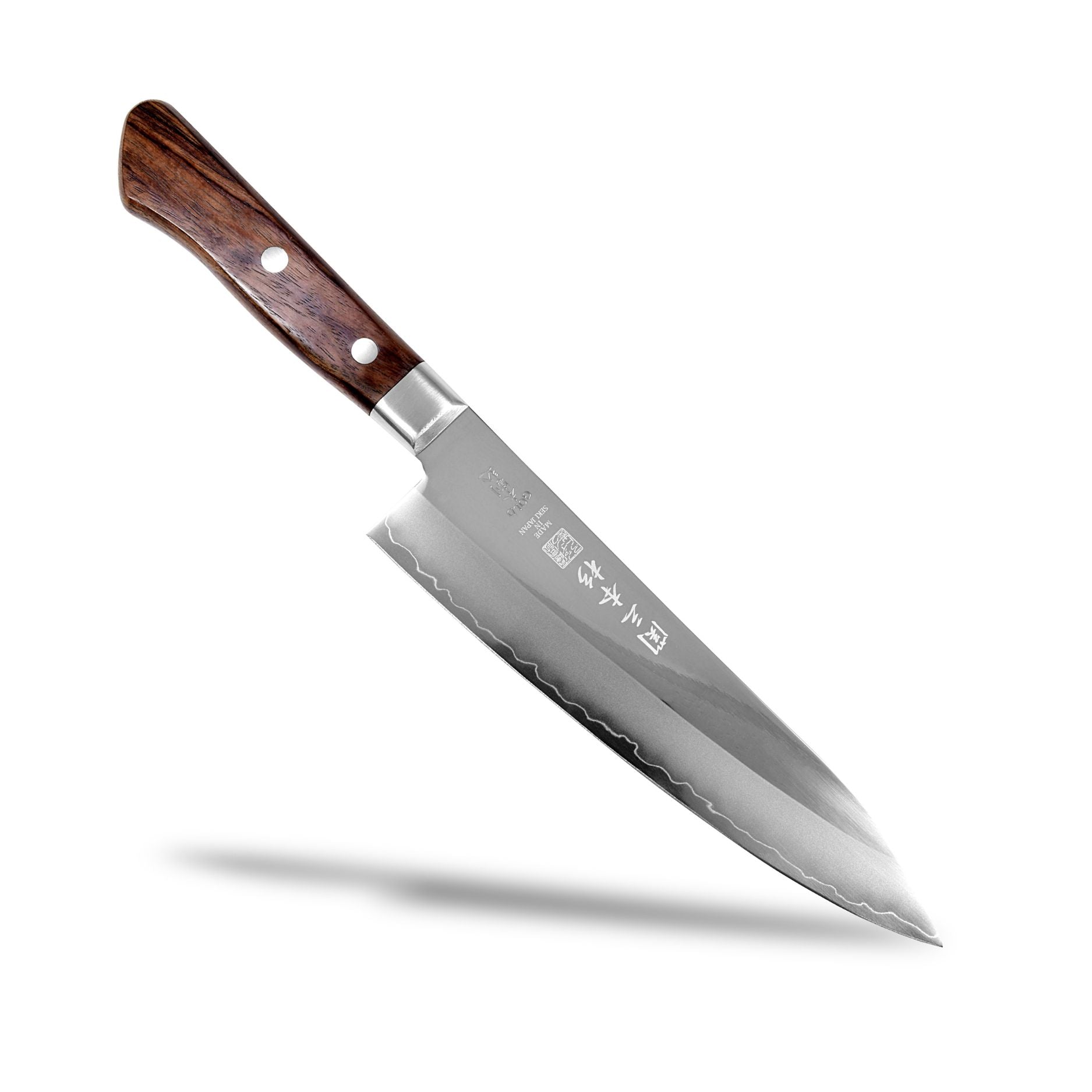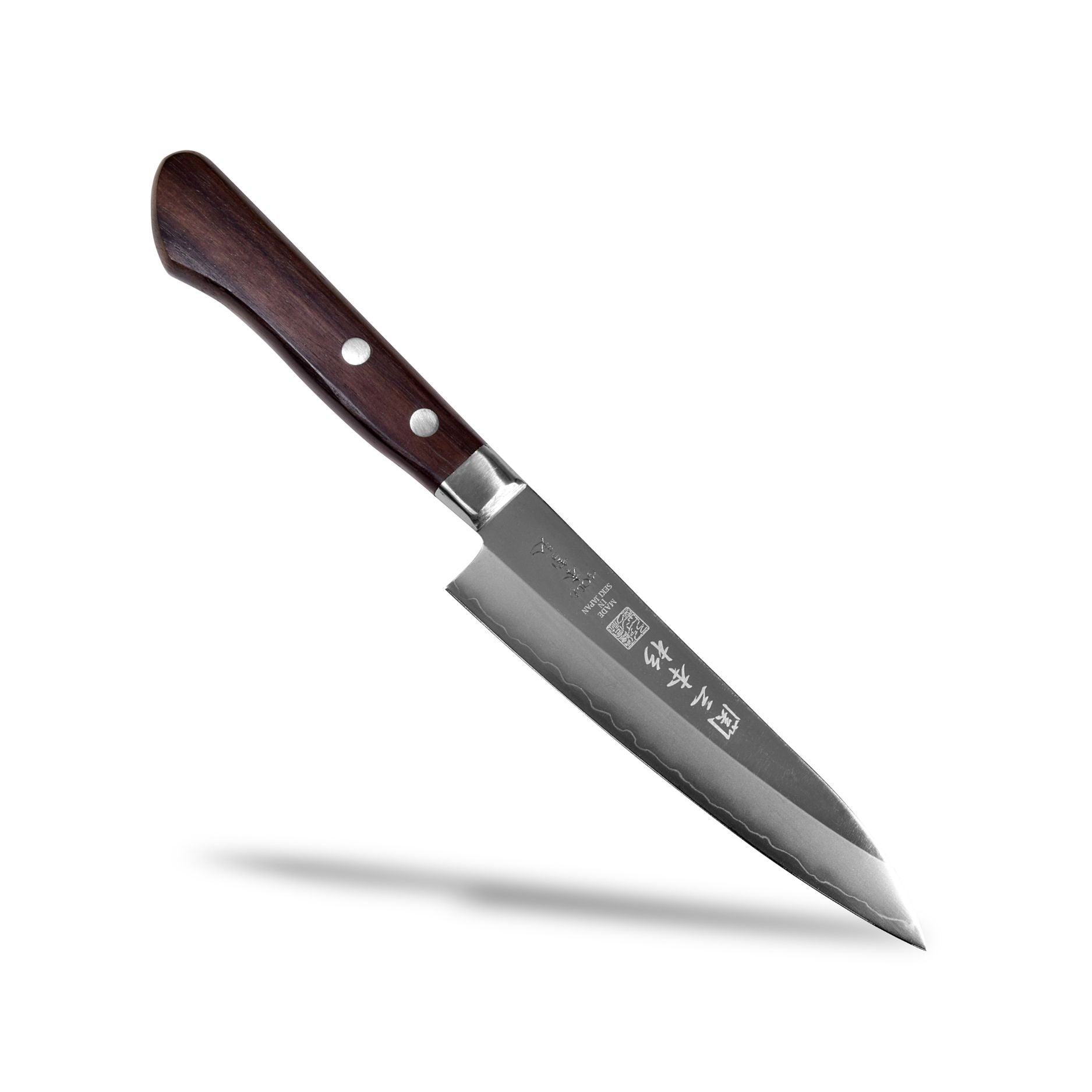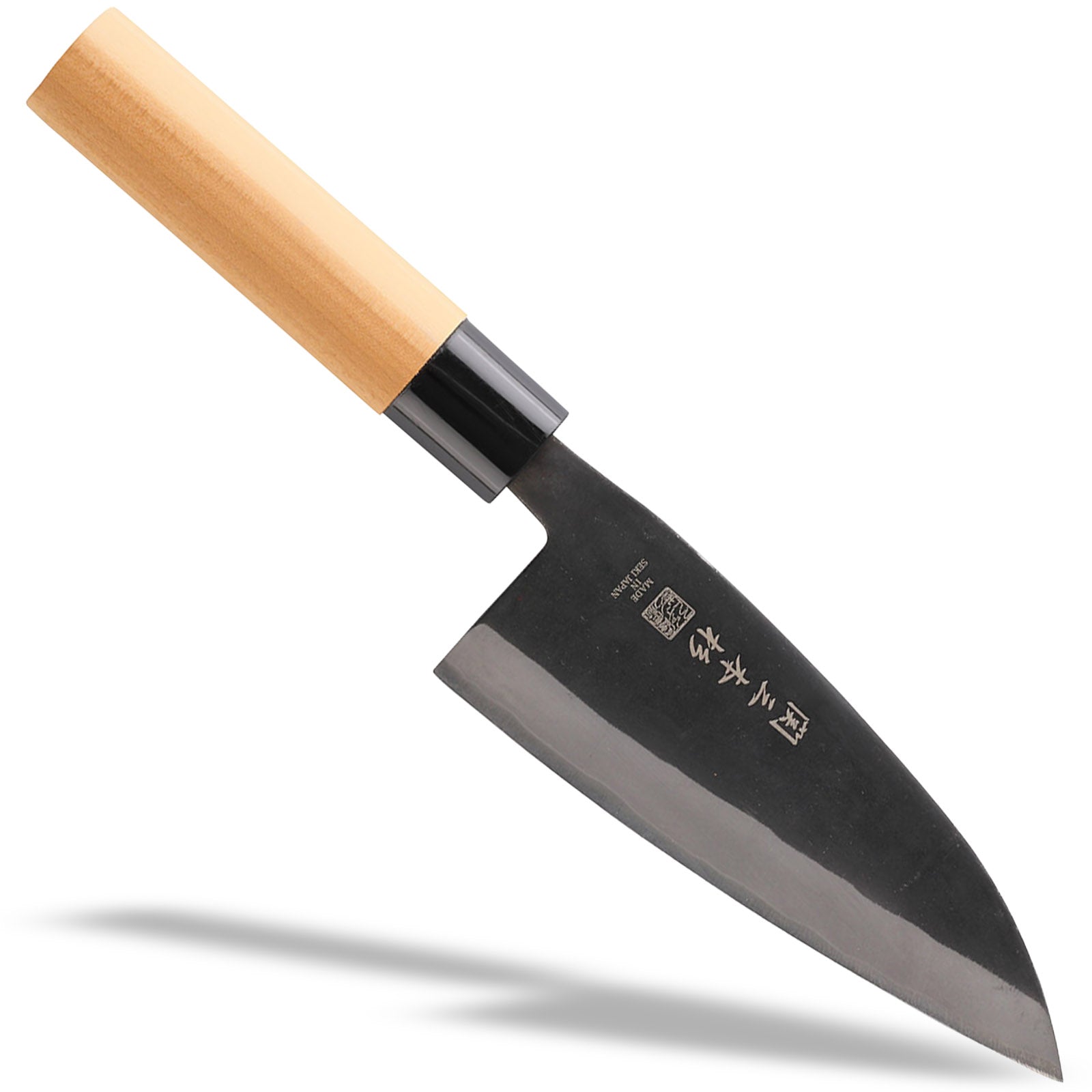

[Japanese Kitchen Knife Sharpening Method: Blue Steel] Sharpening techniques and maintenance to bring out the sharpness and benefits.
The conclusion regarding the sharpening method and effectiveness of Aogami steel Japanese knives is that "by carefully sharpening Aogami steel Japanese knives, which are excellent in hardness and edge retention, primarily using a medium-grit whetstone, you can bring out professional-level sharpness and long-lasting edge retention." In short, Aogami steel is a material that rewards sharpening, offering the "joy of nurturing" its performance.
Japanese kitchen knives made from Aogami steel are popular for their satisfying sharpening properties. The conclusion regarding the sharpening method, effectiveness, and benefits of Aogami steel is that "the shortest route to making the most of Aogami steel's high hardness and long-lasting sharpness is to sharpen it in stages, from coarse to medium to fine whetstones, carefully adjusting the angle and blade line."
[Key points of this article]
Blue steel is a high-carbon steel made by adding chromium, tungsten, and other elements to white steel. It excels in maintaining sharpness and wear resistance, but it is a steel that takes a long time to sharpen.
The basic method for sharpening a Japanese kitchen knife made of Aogami steel involves three steps: "Create the shape with a coarse whetstone, refine the cutting edge with a medium whetstone, and then create an extremely thin edge with a finishing whetstone."
The sharpness and effectiveness of Aogami steel are due to its hardness and resistance to wear, which allows you to maintain the sharpened edge for a long time with careful sharpening.
Today's review: 3 key points
Blue steel is a type of steel that "maintains its sharpness for a long time, but is somewhat difficult to sharpen," making it more suitable for professionals.
When sharpening a Japanese kitchen knife made of Aogami steel, you can use the same method as for regular steel, but because of its higher hardness, it is important to spend sufficient time on the coarse and medium grit whetstones.
By performing daily care to prevent rust and chipping, you can maximize the sharpness and effectiveness of Aogami steel.
Conclusion of this article
In conclusion, the most efficient way to sharpen a Japanese kitchen knife made of Aogami steel is to "use its hardness to your advantage and sharpen it slowly using a medium-grit whetstone as the base."
"Blue steel is a type of steel that holds its edge well for a long time but is difficult to sharpen," so if you use the correct grit size and follow the correct procedure, you can maintain professional-grade sharpness for a long time.
To bring out the sharpness and effectiveness of Aogami steel, it is important to pay attention to three points: the grit size of the sharpening stones (coarse to medium to fine), the angle of the blade edge, and rust prevention.
What kind of steel is Aogami steel?
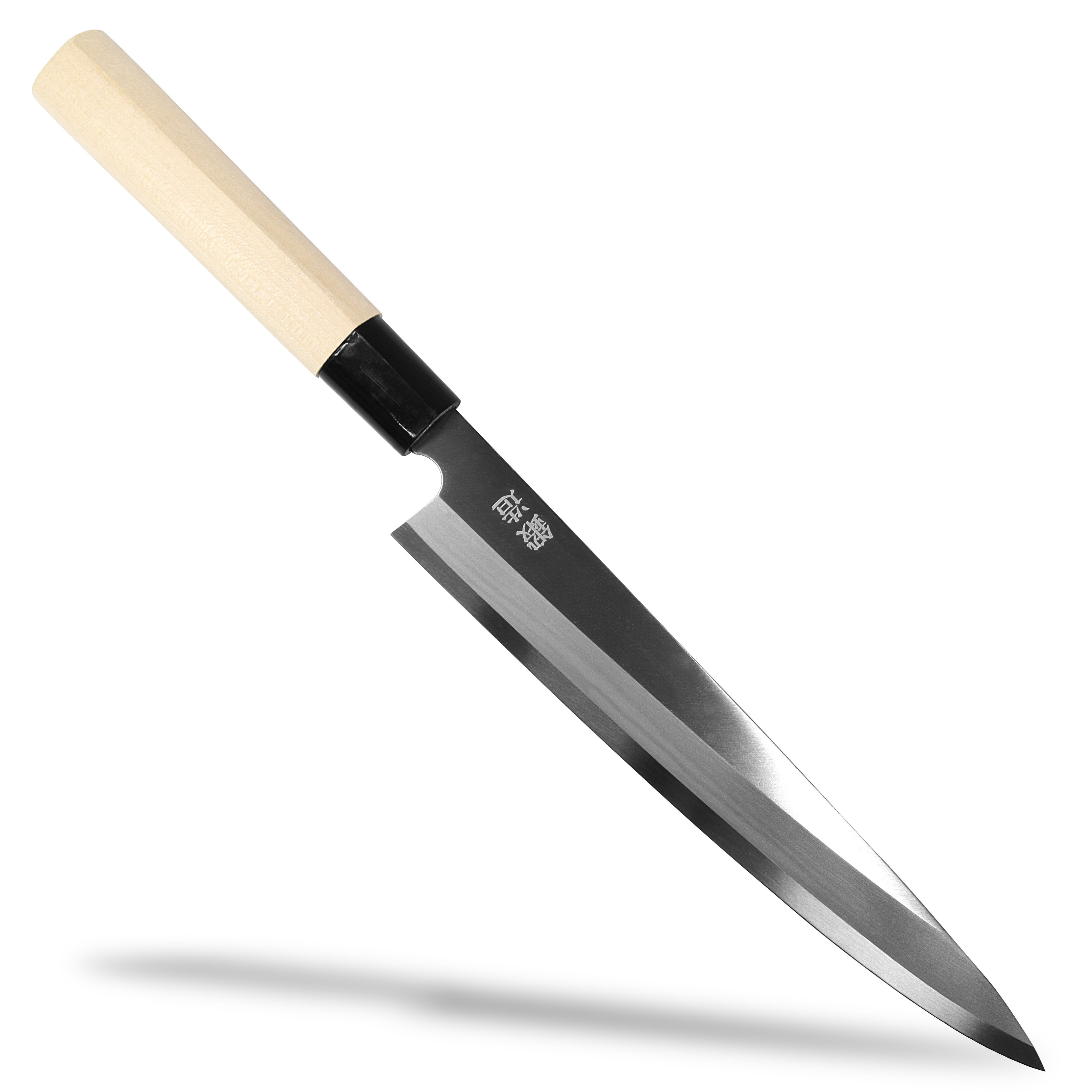
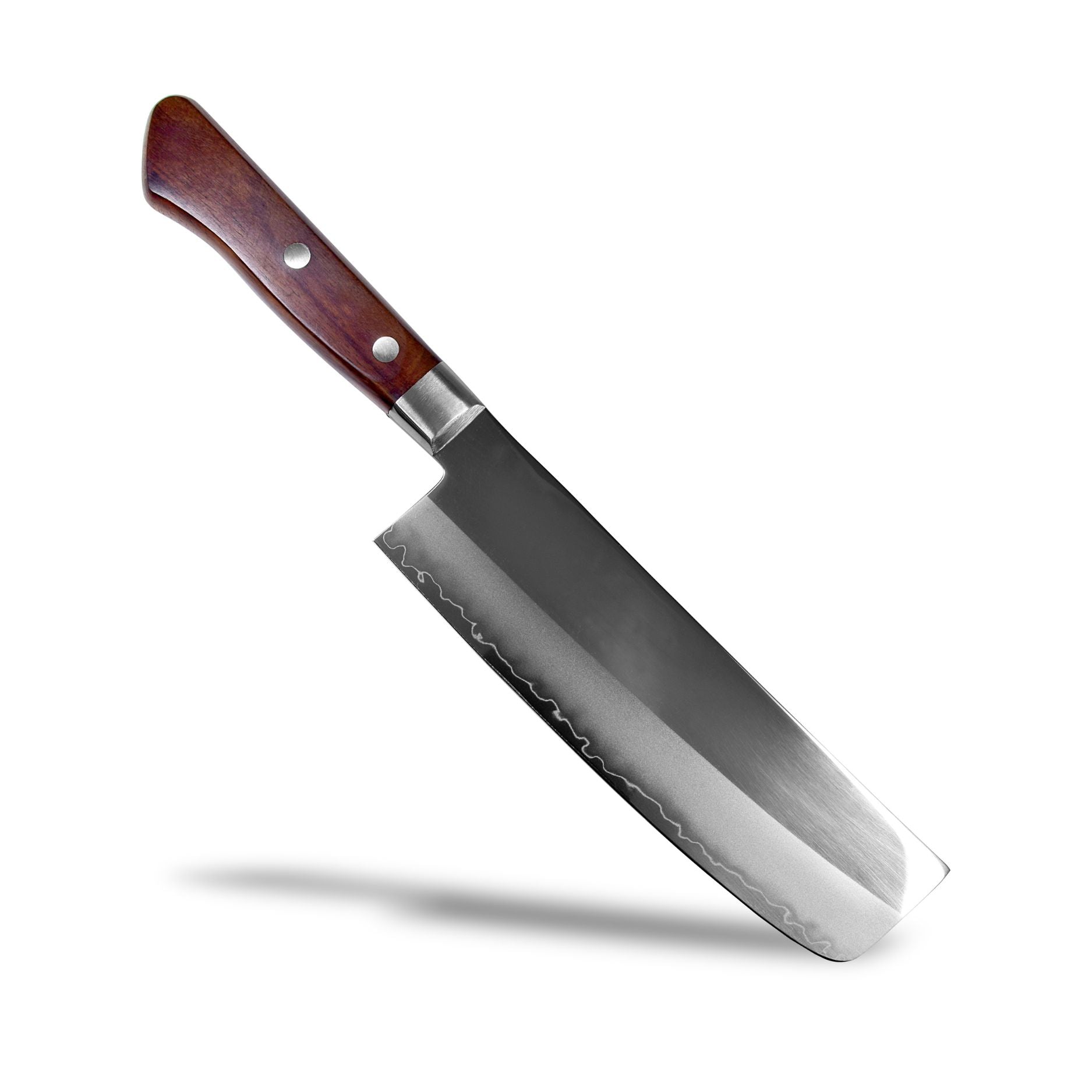
In short, Aogami steel is a "professional-grade high-carbon steel that maintains its sharpness even after long hours of preparation." It is a steel made by adding chromium and tungsten to white steel to enhance wear resistance and long-lasting sharpness. The blade edge is less prone to wear and retains its edge well, but because of its high hardness, sharpening requires time and skill. When used in Japanese kitchen knives, it is characterized by its significant sharpness effect and benefits, such as maintaining a glossy cut surface until the very end, even in the workplace of a sushi chef who is slicing sashimi all day long.
Basic specifications of Aogami steel and differences from Shirogami steel
"Blue Paper Steel" is a type of steel that prioritizes toughness and long-lasting sharpness over white paper steel. Blue paper steel is a high-carbon steel that has been enhanced in wear resistance and long-lasting sharpness by adding alloying elements such as chromium and tungsten to white paper steel. There are several grades, including Blue Paper No. 1, No. 2, and Blue Paper Super. While white paper steel is "easy to sharpen and has a sharp edge," blue paper steel is "difficult to sharpen but lasts a long time," and is introduced as a steel suitable for professional work environments where cutting is done for long periods of time.
The sharpness of Aogami steel: Effects/Benefits
The most significant benefit is its "long-lasting sharpness." It is said that even if sushi chefs or Japanese cuisine cooks slice sashimi all day long, the sheen of the sashimi will remain largely unchanged from the first to the last slice. Aogami steel is described as a material that exhibits minimal wear on the blade edge and maintains a stable sharpness. Furthermore, Aogami No. 1 and Aogami Super have a good balance of hardness and toughness, making them resistant to chipping and creating durable blades, and are highly regarded as "ideal steel for professional kitchen knives."
Disadvantages of Aogami Steel and the type of user it is best suited for
The main disadvantages are its susceptibility to rust, difficulty in sharpening, and price. Aogami steel is a type of Japanese steel that rusts easily when exposed to moisture and salt, and does not offer the same corrosion resistance as stainless steel, so it is essential to wash and wipe it dry immediately after use. Furthermore, due to its high hardness, sharpening it with a whetstone requires time and skill, making it a steel best suited for users who enjoy sharpening and for professional to advanced users of Japanese knives.
Japanese kitchen knife sharpening method: Basic procedure for Aogami steel
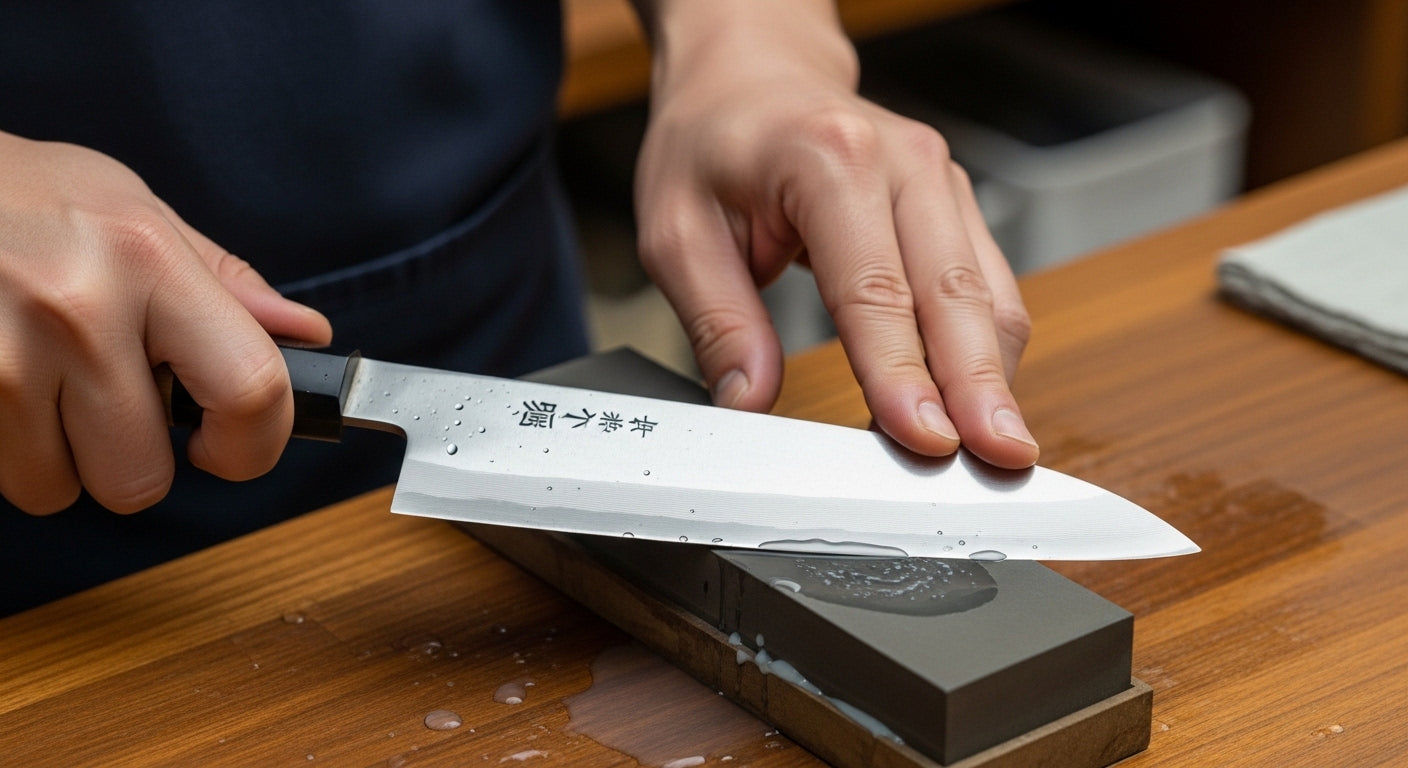
In conclusion, the basic sharpening method for Aogami steel Japanese knives is the same as for regular steel, but the most important thing is to "spend more time because it's harder." The basic method involves three stages: using a coarse whetstone to smooth out the bevel and any nicks, using a medium whetstone to even out the cutting edge, and using a finishing whetstone to fine-tune the blade edge. In particular, creating a proper blade shape in the coarse to medium stages is considered the key to maximizing the sharpness and effectiveness of Aogami steel.
Step 1: Use a coarse whetstone to sharpen the bevel and remove any nicks.
"The coarse whetstone is the step that creates the framework of the blade." Even in explanations of deba knives, it is recommended to "first check the secondary bevel and sharpen it thoroughly with the coarse whetstone until it disappears," explaining that if there are inconsistencies in the sharpening at this stage, the subsequent medium whetstone will not make proper contact, affecting the final sharpness. Steels such as Aogami Super Steel are particularly hard, and it is said that it takes a considerable amount of time to create the blade edge structure with the coarse whetstone, so it is important to be patient and make sure to apply the whetstone evenly across the entire blade.
Step 2: Align the cutting edge with a medium-grit whetstone and remove the burr.
The sharpness of Aogami steel depends on "how carefully you can even out the burr with a medium-grit stone." With a medium-grit stone, it is important to use the blade created with the coarse-grit stone as a reference and evenly apply pressure to the entire cutting edge, sharpening until a continuous burr appears on the edge. Because Aogami steel is resistant to wear, it takes longer to grind than ordinary steel, but once the edge is shaped, it is easy to maintain for a long time, and it is said that the key is to "shape rather than just grind" as experienced users describe it.
Step 3: Fine-tune the blade edge with a finishing whetstone and smooth the back bevel.
The finishing stage is where the biggest difference in the final result is made. With high-hardness steels like Aogami steel, it is explained that by lightly raising the edge with a finishing whetstone and sharpening only the edge, it is possible to create a slightly rounded edge, like a clam shell, which makes it easier to achieve both chip resistance and a smooth cutting edge. Furthermore, it is recommended to flatten the back of the blade against the whetstone and then sharpen the entire surface uniformly with a horizontal whetstone, as this treatment of the back greatly affects the cutting release and straightness.
Tips for sharpening and maintaining Aogami steel knives to keep them sharp for longer.
In conclusion, the best way to maximize the sharpness and effectiveness of Aogami steel is not to reduce the frequency of sharpening, but to perform each sharpening carefully. While its high wear resistance ensures long-lasting sharpness, sharpening requires effort. Therefore, for everyday use, developing the habit of shaping the blade with light sharpening will reduce the frequency of heavy, rough sharpening. Here, we will summarize the specific maintenance points.
Sharpening frequency and the feeling of "shaping"
"It's easier if you sharpen it little by little, frequently." In an account of "battling" with Aogami No. 1 steel, it is said that because of its hardness, trying to sharpen it all at once will wear down both your arm and your willpower, and it is said that "the awareness of sharpening it while making fine adjustments to the angle, blade line, and left-right balance" is important. Rather than relying on rough sharpening after the sharpness has clearly deteriorated, it is better to restore the edge with light sharpening using a medium-grit and finishing stone at an early stage, which will ultimately make both the knife and the whetstone last longer.
combinations of whetstone grits and types of whetstones suitable for blue steel.
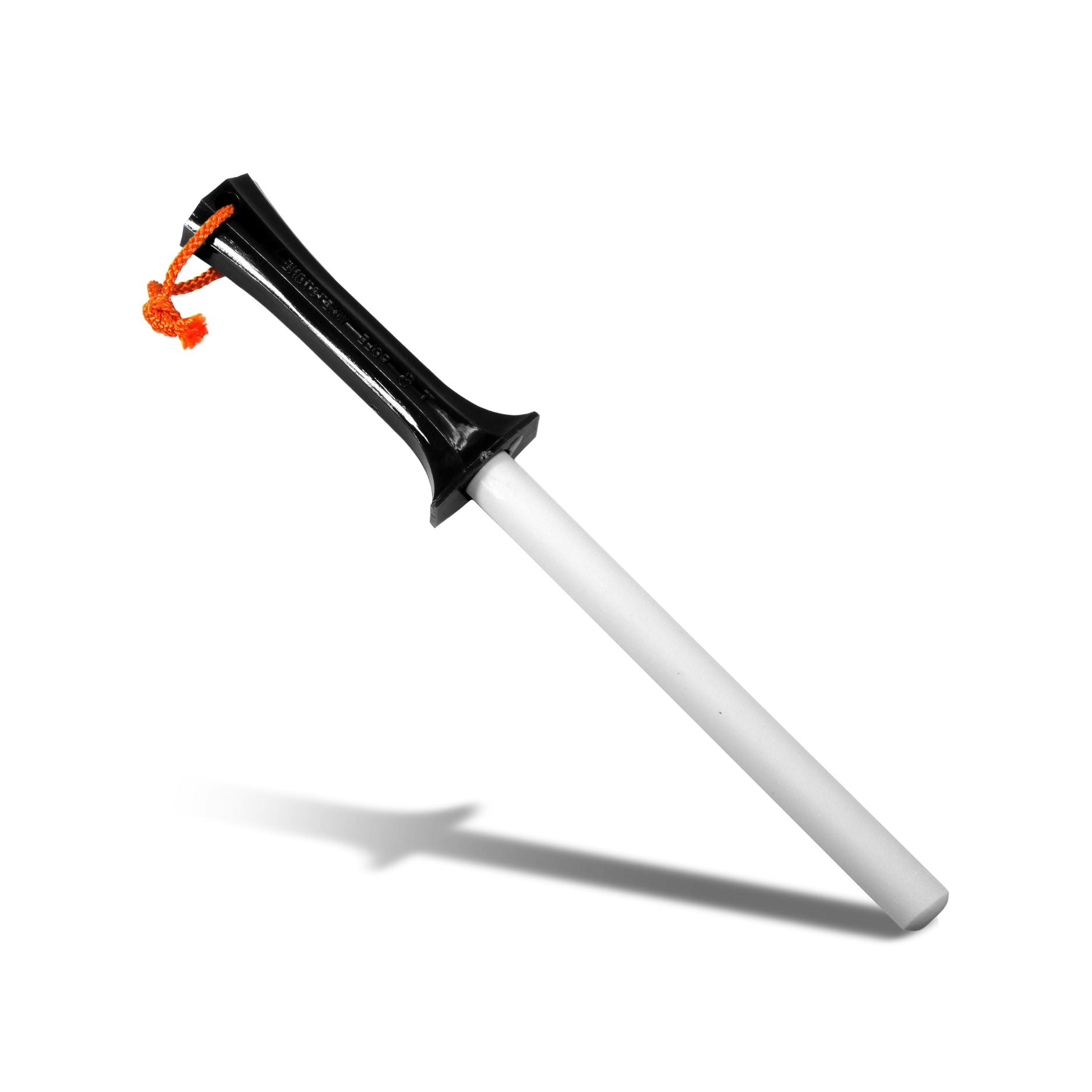
The most important thing is to "choose a whetstone that has the abrasive power to match that of Aogami steel." For high-hardness materials such as Aogami Super Steel, it is said to be more efficient to use a combination of coarse (#220 to #400) or medium (around #1000) ceramic whetstones, which have higher grinding power than general synthetic whetstones, and it is explained that it takes time to create a delicate blade with a flat whetstone. For the finishing whetstone, aim for around #3000 to #8000, and by choosing according to the intended use and desired sharpness, it becomes easier to create a "tough, ultra-thin blade" on Aogami steel.
Daily care and storage methods to prevent rust and chipping.
Protecting Aogami steel knives from moisture and impact is essential care. Aogami steel is a type of Japanese steel with a high carbon content, making it prone to rusting. Therefore, it is recommended to clean off any dirt with a neutral detergent after use, wipe off any moisture immediately, and allow it to dry completely. Also, thin, single-edged Aogami knives are susceptible to impact and chipping. By limiting their use to specific tasks such as cutting bones, frozen foods, or hard pumpkins, and using a thicker knife or a blade made of a different material, you can enjoy the long-lasting sharpness that Aogami steel is known for.
FAQ
Q1. Why are Japanese kitchen knives made of Aogami steel so sharp and durable?
A1. Because it contains high carbon content as well as chromium and tungsten, it has high hardness and wear resistance, so the blade edge does not wear down easily and can maintain a sharp edge for a long time.
Q2. Does Aogami steel require a different sharpening method than other types of steel?
A2. The basic sharpening method is the same, but because it is hard and difficult to sharpen, you need to take plenty of time to shape the blade using a coarse to medium whetstone.
Q3. Is it true that Aogami steel is difficult to sharpen?
A3. Yes, while it offers excellent sharpness and long-lasting edge retention, it is also extremely hard and resistant to wear, so sharpening it with a whetstone requires time and skill.
Q4. What are the disadvantages of Aogami Super Steel?
A4. Its drawbacks include its extremely high hardness, making it difficult to sharpen; its susceptibility to impact, making thin blades prone to chipping; its tendency to rust; and its relatively high price.
Q5. What whetstone grit is recommended for Japanese kitchen knives made of Aogami steel?
A5. Combining a coarse whetstone (#220-#400) for shaping, a medium whetstone (around #1000), and a finishing whetstone (around #3000-#8000) makes it easier to create a blade that retains its hardness and maintains its sharpness for a long time.
Q6. How often should I sharpen a blade made of Aogami steel?
A6. Depending on how often you use it, the longer the sharpness lasts, the longer you can extend the time between sharpenings. However, ideally, you should sharpen it with a medium-grit whetstone as soon as you notice a decrease in sharpness.
Q7. Would you recommend a blue steel knife to a beginner?
A7. Because sharpening and rust prevention are essential, it is considered more suitable for intermediate users and above who want to learn sharpening, or for professionals, and is best suited for people who can dedicate time to maintenance.
Q8. Which is more difficult to sharpen, Aogami steel or Shirogami steel?
A8. Generally speaking, white steel is easy to sharpen, while blue steel, due to its high hardness and wear resistance, takes more time to sharpen and is considered more difficult.
Q9. What are some specific ways to prevent rust on Aogami steel?
A9. After use, wash immediately, wipe off any moisture, and allow to dry completely before storing. If necessary, applying a thin layer of oil can be effective in protecting it from moisture and salt.
summary
The conclusion regarding the sharpening method of Japanese kitchen knives, specifically those made of Aogami steel, is that "by understanding the characteristics of Aogami steel—its hardness and long-lasting sharpness—and taking the time to shape the blade using a coarse, medium, and finishing whetstone, you can maintain professional-level sharpness for a long period of time."
While Aogami steel is difficult to sharpen and prone to rusting, it is a steel with excellent wear resistance and long-lasting sharpness. Its potential can be maximized by performing regular sharpening, rust prevention, and determining the appropriate application.
Choosing a Japanese kitchen knife made of Aogami steel, a material that is rewarding to sharpen, and nurturing the blade while working with a whetstone, allows you to simultaneously experience the joy of "nurturing a tool" and the reassurance of "consistent sharpness."