
[Japanese Kitchen Knives: White Steel] A Thorough Comparison of Purity Characteristics and Differences from Blue Steel
In conclusion, the key characteristics of white steel used in Japanese kitchen knives lie in its balance: "It is a high-purity carbon steel with impurities kept to a minimum, making it easy to sharpen and producing an extremely sharp edge, but its edge retention is slightly inferior to blue steel." In short, white steel is a steel suited for those who prioritize sharpness and want to enjoy the best possible sharpening result.
For those who prioritize sharpness, Japanese kitchen knives are popular. The conclusion regarding the steel materials, purity, and characteristics is that "white steel is a high-purity carbon steel with few impurities, making it easy to sharpen and excellent for creating a sharp edge, while blue steel is designed for long-lasting sharpness."
[Key points of this article]
White steel is a high-purity carbon steel with impurities kept to a minimum. Its fine carbides make it easy to sharpen and give it a sharp cutting edge.
Blue steel is an alloy steel made by adding chromium and tungsten to white steel. While it is difficult to sharpen, it has excellent wear resistance and long-lasting sharpness.
The difference is that "white steel = easy to sharpen and instantly sharp" and "blue steel = stable sharpness over a long period of time".
Today's review: 3 key points
Japanese kitchen knives, made from white steel, are characterized by their high purity and homogeneity, resulting in a sharp edge when sharpened, but they do not retain their edge as well as blue steel.
White Steel No. 2 offers a good balance of sharpness, ease of sharpening, and durability, making it popular with a wide range of users, from professionals to home cooks.
Both white steel and blue steel are prone to rusting, so removing moisture after use and regular sharpening are essential.
Conclusion of this article
In conclusion, Shirogami steel is a high-purity carbon steel that is easy to sharpen and produces a sharp edge, making it ideal for Japanese kitchen knives where cutting performance is paramount.
"Blue steel that maintains its sharpness for a long time" and "white steel that allows you to enjoy the best sharpening results" are sibling steels that have different balances of edge retention and ease of sharpening.
To make the most of the characteristics of a Japanese kitchen knife, especially one made of white steel with high purity, it's important to choose one that allows you to enjoy sharpening and that is resistant to rust and chipping.
What are the characteristics of Japanese kitchen knife steel, specifically white steel, including its purity?
In short, Shirogami steel is a representative grade of Yasugi steel, described as "high-purity carbon steel with impurities kept to a minimum, resulting in superior sharpness and ease of sharpening." Among Yasugi steels, Shirogami steel is explained as having a fine and uniform structure when made into a blade, due to the homogenization of the steel by suppressing alloying elements and impurities, making it easy to create a sharp edge. This "high purity" is said to support the sharpness of delicate Japanese knives used for thin slicing and katsura-muki (thinly peeling vegetables).
In the world of cutlery, the term "purity" refers to the uniformity and low impurity content of steel. White steel stands out from other steels in this respect; it responds readily to sharpening and honestly reflects the sharpening technique. This is why chefs often describe it as "a steel that tests one's skills." When choosing a Japanese kitchen knife with sharpness as the priority, understanding the characteristics of white steel is essential prerequisite knowledge for long-term satisfaction.
What is white steel? High-purity carbon steel with few impurities.
"White paper steel = a straightforward steel that is almost entirely carbon steel." White paper steel and yellow paper steel are considered to be pure carbon steel with almost no impurities, and white paper steel in particular is introduced as a high-purity grade among Yasugi steel. It is explained that the sharpness and durability of the blade are improved by thoroughly removing gas components and other impurities from the molten steel and homogenizing the steel, and white paper steel is a classic example of the idea that "the higher the purity, the better the blade."
White steel comes in grades such as "White Steel No. 1" and "White Steel No. 2," which differ in carbon content. White Steel No. 1 has a high carbon content and high hardness, resulting in a sharper edge, but requires skill to sharpen. White Steel No. 2 has a slightly lower carbon content, striking a balance with ease of sharpening, and is a practical grade that is used daily even in professional settings. If you are choosing a Japanese kitchen knife made of white steel for the first time, starting with White Steel No. 2 will make it easier to understand the characteristics of the steel.
Characteristics of the sharpness of white steel
Its most notable features are its ease of sharpening and the sharpness it produces after sharpening. White steel has a fine carbide structure and makes smooth contact with the whetstone, making it a steel that can easily achieve a sharp edge with fewer sharpening strokes. It is described as being suitable for "people who enjoy sharpening," whether professionals or home users. In fact, White Steel No. 2 is praised for its good balance of sharpness retention and ease of sharpening, making it easy to produce a smooth cut surface in tasks requiring a delicate blade edge, such as thin slicing and peeling.
A blade sharpened with white steel emits a unique shine depending on how the light hits it. This "beauty of the finished sharpened blade" is one of the reasons why white steel has so many fans. It works particularly well with finishing whetstones, and the finer the whetstone used, the more delicate the blade becomes, providing exceptional satisfaction for those who enjoy sharpening as a hobby. The more your sharpening skills improve, the more readily the progress you make will be reflected in the blade's finish, which is one of the charms of white steel.
The advantages and disadvantages of the purity of white steel.
"High purity is the source of sharpness and ease of sharpening, but at the same time, it is also a factor that carries the risk of chipping and rusting." While it is easy to create a sharp edge due to the low level of impurities, its wear resistance is not as high as that of Aogami steel, so the edge retention is somewhat inferior, and it is said to be suitable for those who maintain performance by sharpening frequently. Also, as it is carbon steel, it rusts easily and is weak against moisture, salt and acid, so it is essential to wash it with water, wipe it dry immediately after use, and dry it, and it is characterized by the fact that it is a steel that "responds the more care you give it."
The tendency to rust, which is often cited as a drawback, can be easily controlled with proper daily care. The basic rule is to immediately wash off any dirt with a neutral detergent after cooking, wipe off all moisture completely, and then allow it to dry. Storing it in a knife block or wooden sheath helps maintain ventilation and makes it easier to prevent rust. If you will not be using it for a long period of time, applying a thin layer of vegetable oil before storing it will be even more effective. By making this care a habit, you can maintain the original sharpness of the white steel for a long time.
What is the difference between white steel and blue steel?
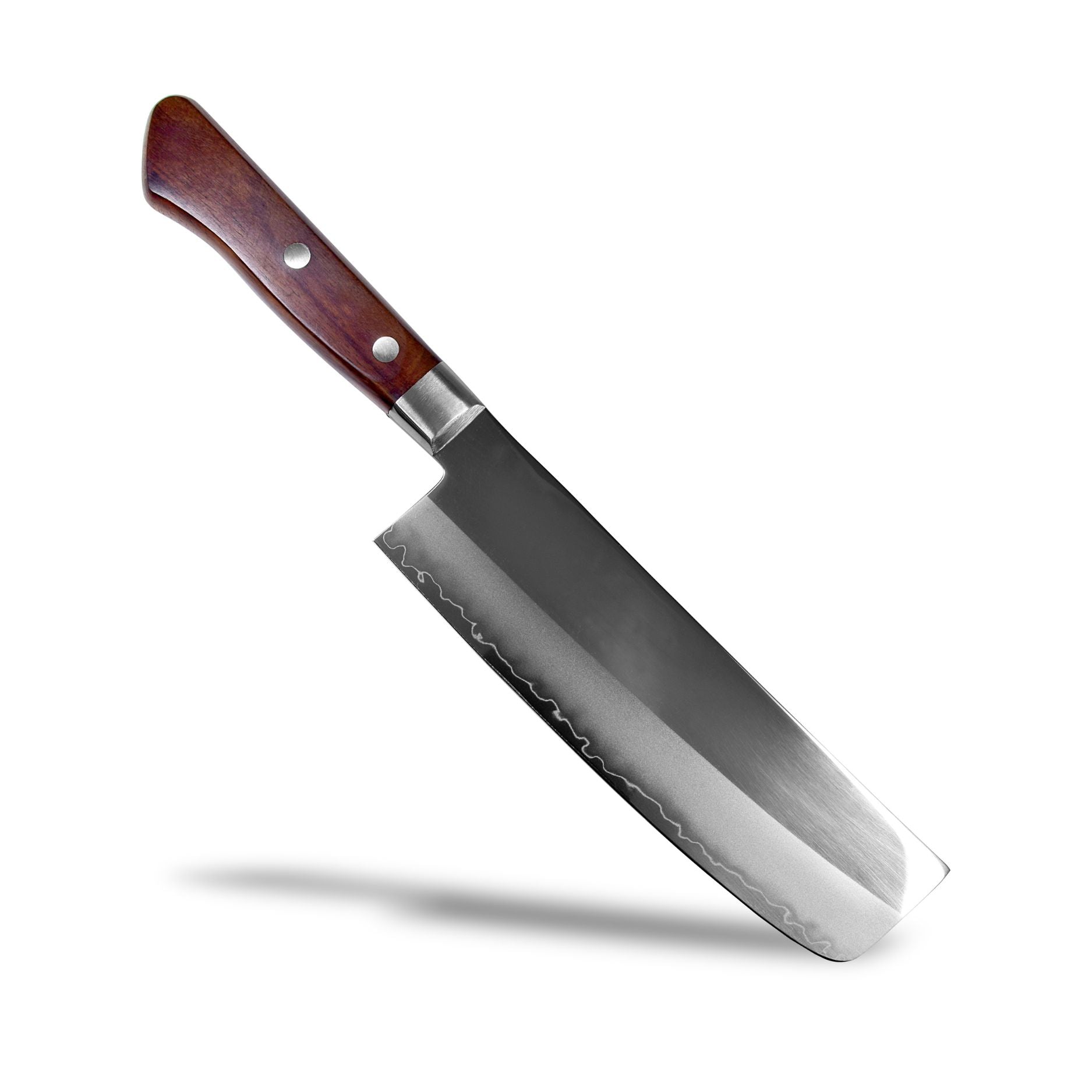
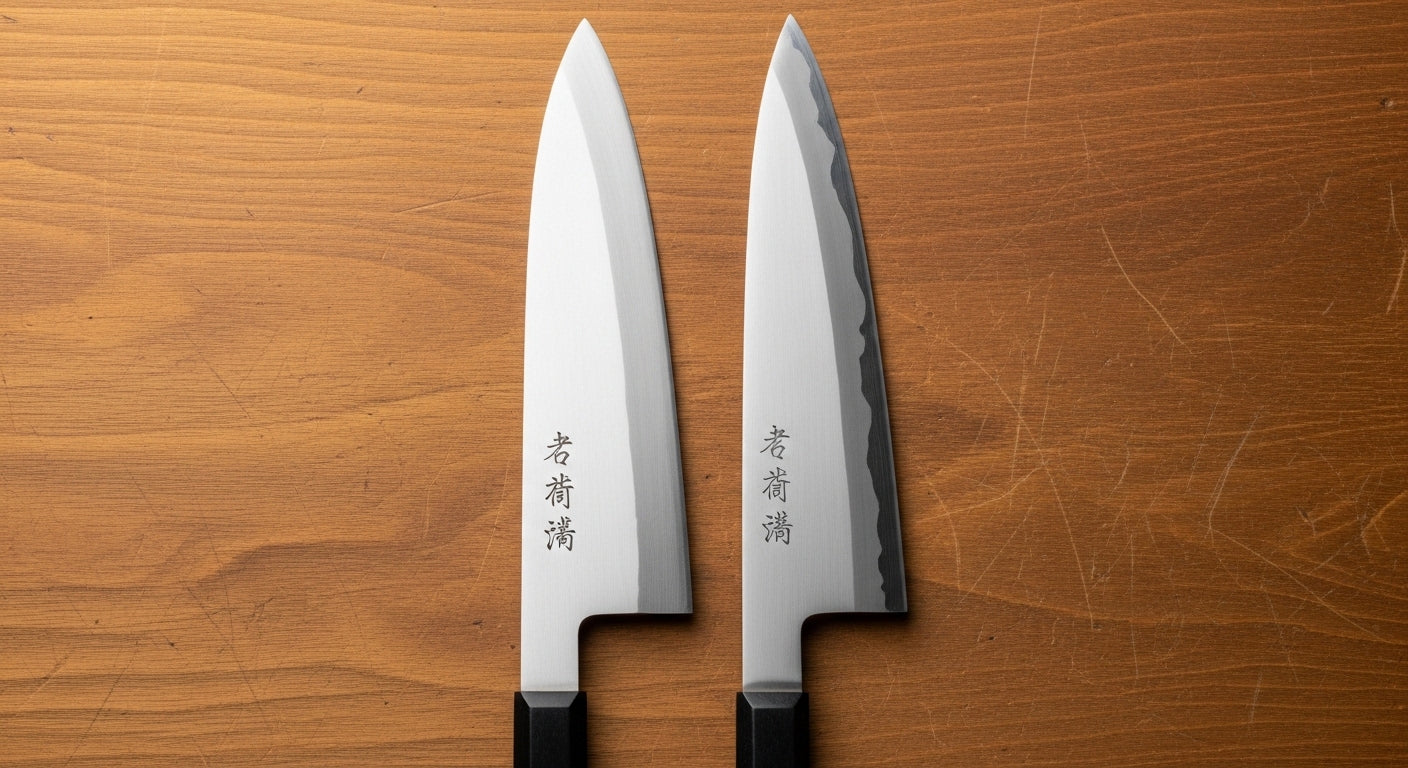
The contrasting relationship between white steel and blue steel is that white steel is easy to sharpen and has a sharp edge, but its edge retention is moderate, while blue steel is difficult to sharpen but its edge lasts a long time. Both are "high-carbon steels," but blue steel has chromium and tungsten added to white steel to improve wear resistance and edge retention, resulting in differences in sharpening feel, edge retention, and the beauty of the cross-section. Here, we will summarize the points that Japanese kitchen knife users often find confusing.
Sharpness and edge retention
The first thing beginners should understand is the difference between the "quality" and "duration" of sharpness. White steel easily produces a sharp edge immediately after sharpening, resulting in a fine and smooth cut surface, but its edge retention is inferior to blue steel, and it is said to be suitable for "people who want to sharpen frequently and always enjoy the best sharpness." Blue steel, with its increased hardness and wear resistance, does not lose its sharpness easily even during long preparation times, and is said to be suitable for "chefs who do not have time to sharpen all day."
The best choice between the two depends on how often and how you cook. If you use your knife daily and have time to sharpen it between cooking sessions, you can always take advantage of the sharpness of white steel. On the other hand, if you cook in bulk on weekends or in a workplace where preparation takes a long time, the edge retention of blue steel becomes a significant advantage. Neither is inherently superior; the important thing is to choose the one that suits your cooking style.
Ease of sharpening and maintenance
"Sharpening effort is less for white steel than for blue steel." Blue steel is said to have better edge retention but is more difficult to sharpen, while white steel is positioned as a steel that can maintain a high level of sharpness with fewer sharpenings. User experiences also confirm this theory, with comments such as "white steel is slightly easier to sharpen" and "blue steel requires several more strokes to produce a burr." On the other hand, both are carbon steels that are prone to rust, so the deciding factor will be whether you can continue "sharpening + rust prevention care" together.
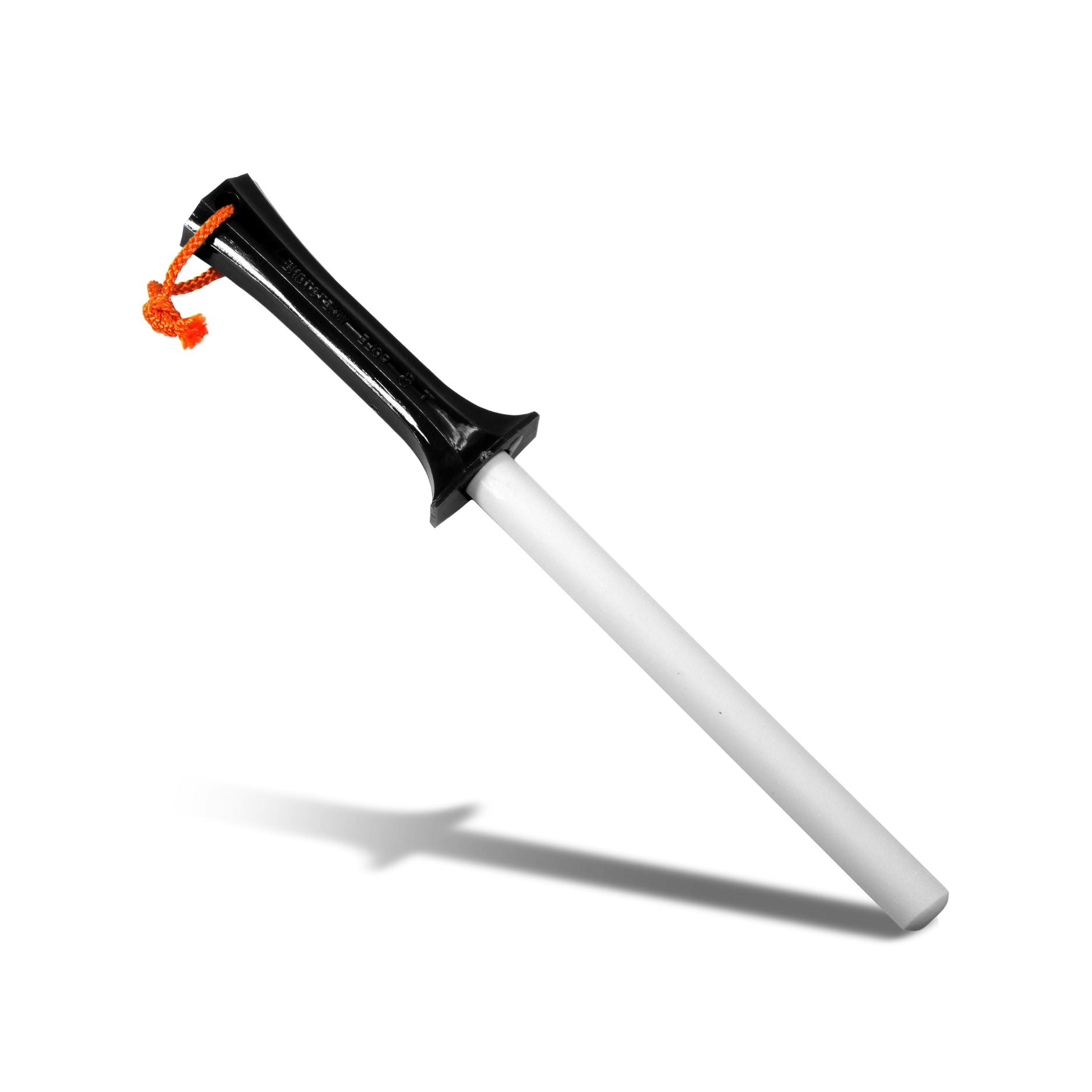
The ease of sharpening is also influenced by the grit size of the whetstone. White steel can be sharpened easily even with a medium-grit whetstone (around #1000), so you don't need to have a wide variety of whetstones to achieve sufficient sharpness. Blue steel, on the other hand, is harder, so it's more efficient to use a whetstone with strong grinding power. Choosing white steel as a first Japanese kitchen knife for a beginner is a sensible choice in terms of ease of use.
By application: Who is white steel suitable for?
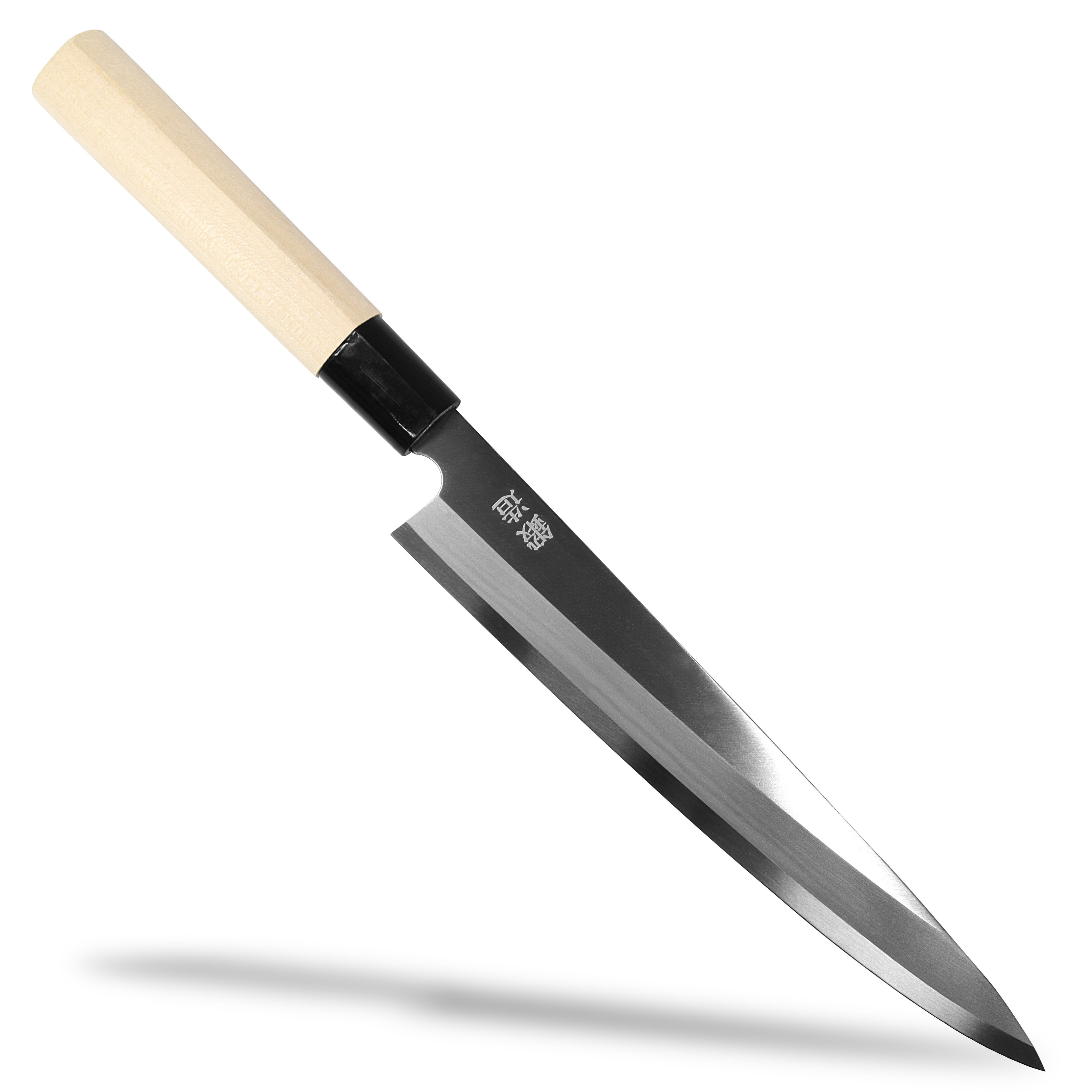
For Japanese knife users who enjoy sharpening their knives, white steel is a good choice. White steel No. 2 is considered suitable for knives used for delicate tasks such as thin slicing, katsura-muki (thinly sliced meat), and deba (fish filleting). It is easy to sharpen and repair from chips, making it a user-friendly steel even in workplaces where filleting fish and bone processing are common. White steel knives are also recommended for home use by those who want to sharpen their knives themselves and enjoy the best possible sharpness with each use, and those who value the enjoyment of "nurturing" their knives.
From a usage perspective, the sharp edge of white steel is best suited for delicate tasks such as sashimi, thinly sliced fish, and katsura-muki (thinly sliced sushi). Even when used for filleting fish or as a deba knife, the ease of sharpening and repairing chips caused by hitting bones makes white steel a valuable tool. For those who value the time spent with their knives and whetstones in their daily cooking, white steel is an excellent partner that will last for years.
FAQ
Q1. What kind of steel is white steel?
A1. Made from high-purity carbon steel with impurities kept to a minimum, it is easy to sharpen and produces a very sharp cutting edge.
Q2. What is the biggest difference between white steel and blue steel?
A2. The biggest difference between white steel and blue steel is that white steel is easy to sharpen and has a sharp edge, while blue steel is superior in wear resistance and the longevity of its edge.
Q3. What are the characteristics of Blank Paper No. 2?
A3. White Steel No. 2 offers a good balance between sharpness retention and ease of sharpening, making it a user-friendly steel for both professionals and home users.
Q4. Are knives made of white steel prone to rusting?
A4. Yes, since it is made of carbon steel, it is prone to rusting, so it is essential to clean, wipe, and dry it immediately after use.
Q5. If sharpness is the priority, which is better, white steel or blue steel?
A5. If you prioritize the sharpness of a freshly sharpened blade, white steel is recommended; if you prioritize maintaining sharpness for a long time, blue steel is recommended.
Q6. Can beginners handle white steel?
A6. If you are willing to put in the effort for sharpening and rust prevention, there is no problem, but since it is a steel that requires maintenance, it is best suited for users who are proactive about sharpening.
Q7. What uses are Japanese kitchen knives made of white steel suitable for?
A7. This knife is suitable for delicate Japanese cooking tasks such as thin slicing and katsura-muki (thinly sliced slicing), as well as for knives that require frequent sharpening, such as deba knives and fish filleting knives.
Q8. Which is more expensive, white steel or blue steel?
A8. Generally, blue steel containing alloying elements tends to be more expensive, while white steel, although used for high-quality cutlery, tends to be somewhat more affordable.
Q9. How is the purity of white steel increased?
A9. High purity is achieved by removing impurities such as gaseous components from molten steel and homogenizing the steel.
summary
The conclusion regarding the characteristics of Japanese kitchen knives, specifically the white steel (Shirogami) variety, is that it is a high-purity carbon steel with minimal impurities, making it easy to sharpen and producing an extremely sharp edge, but its edge retention is less pronounced than that of blue steel (Aogami).
White steel is ideal for delicate Japanese cooking tasks such as thin slicing and katsura-muki (thinly sliced slicing), and for users who enjoy sharpening their knives and always seek the best possible sharpness.
By understanding the differences between Aogami steel and other types of steel, and choosing the steel that best suits your cooking style, you can maximize the potential of your Japanese kitchen knife.