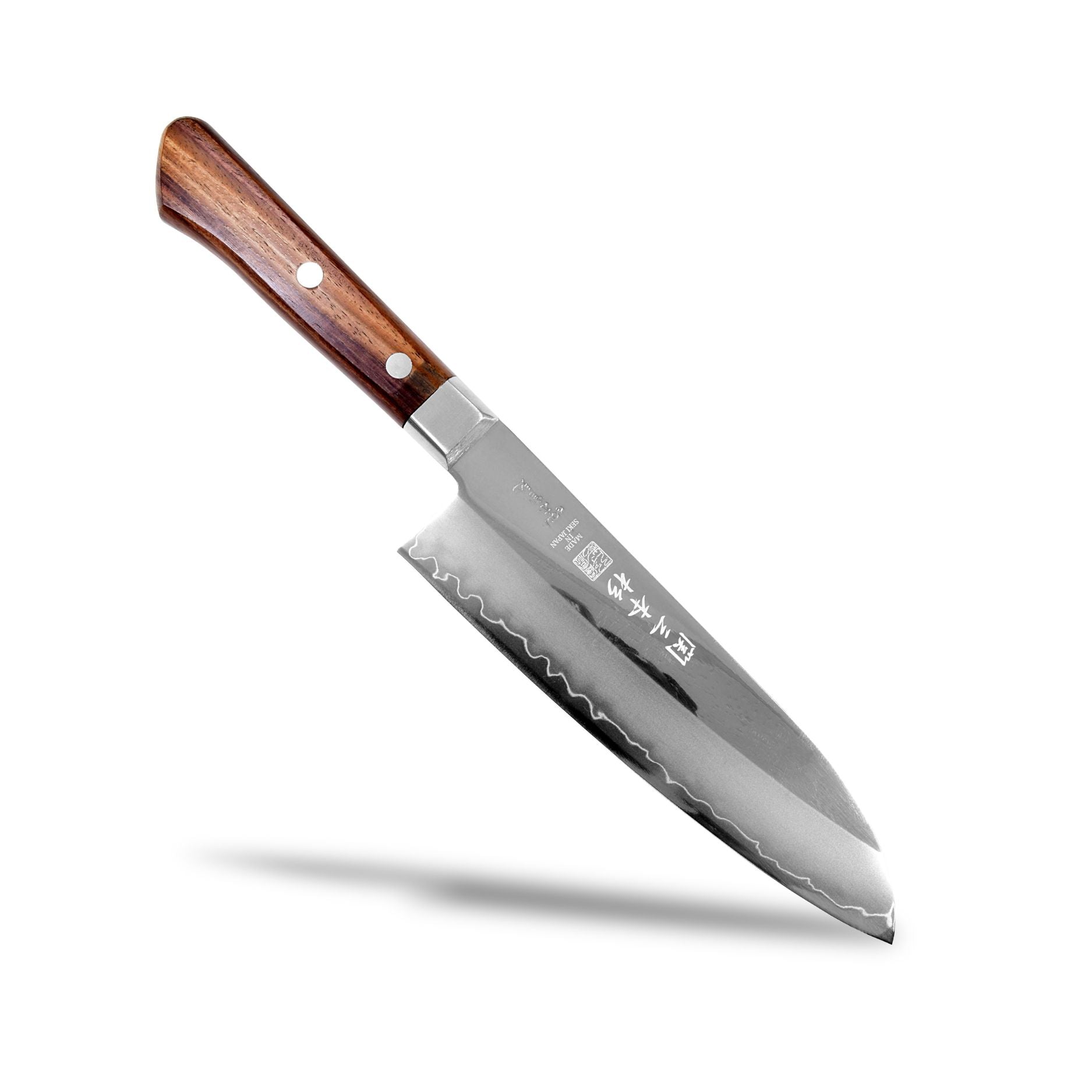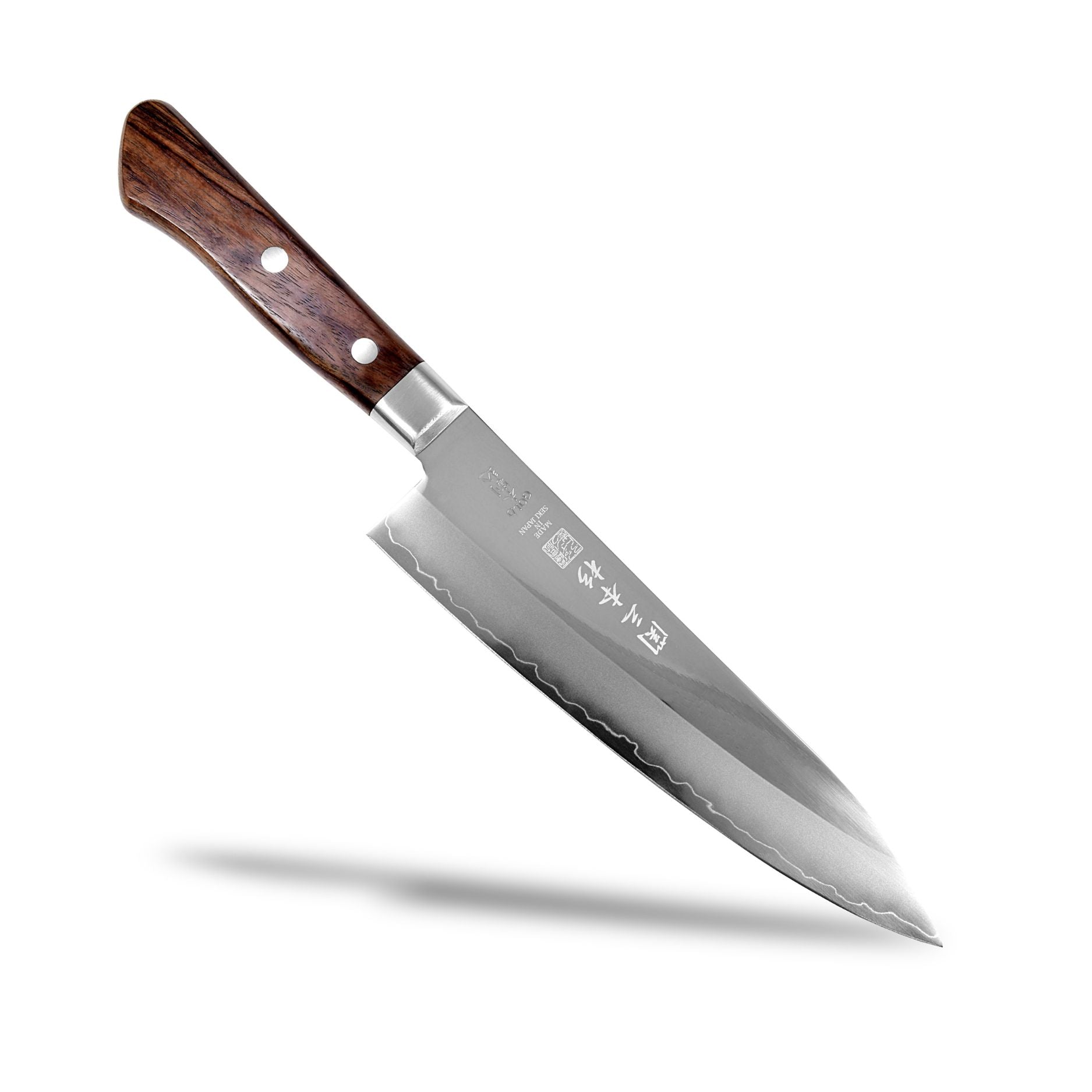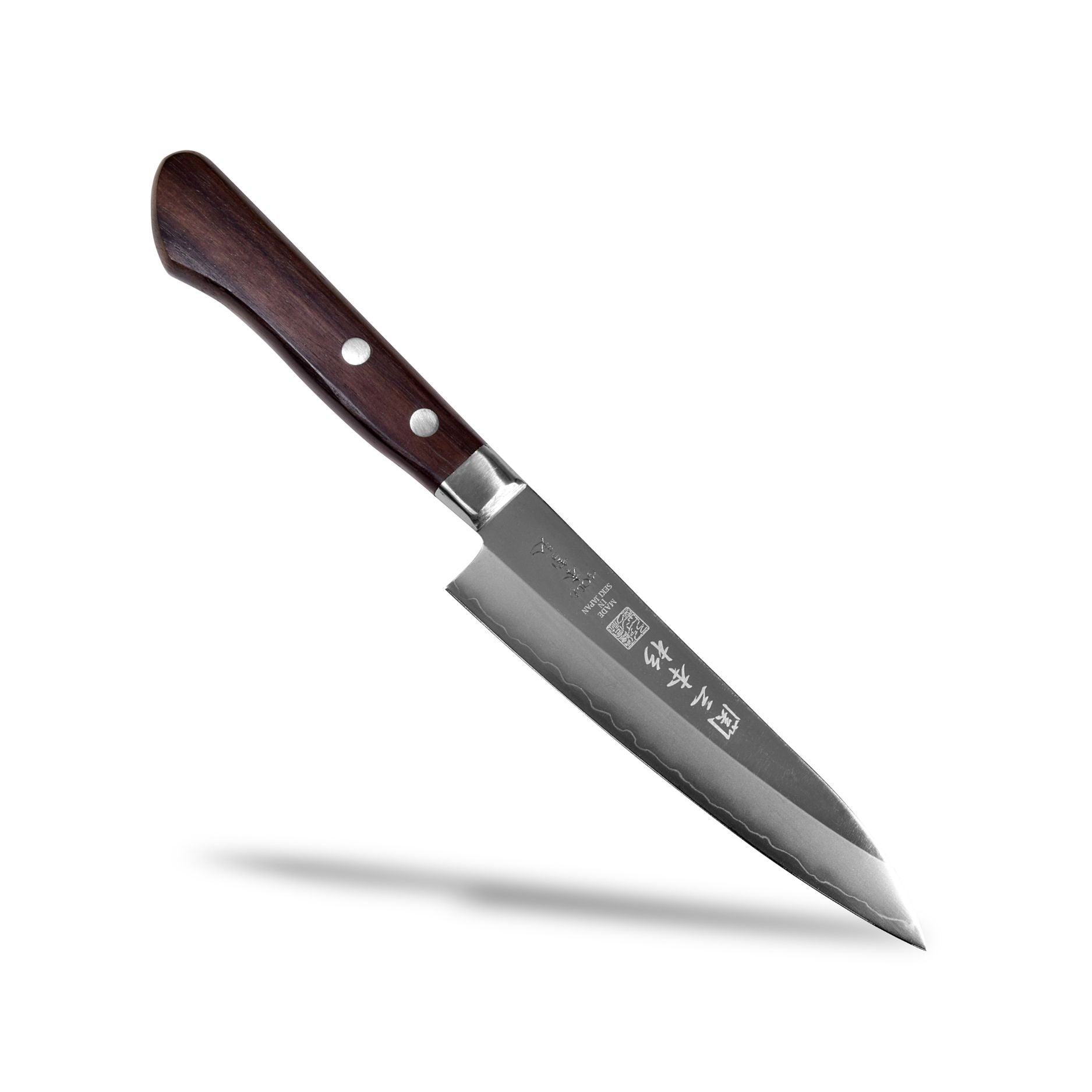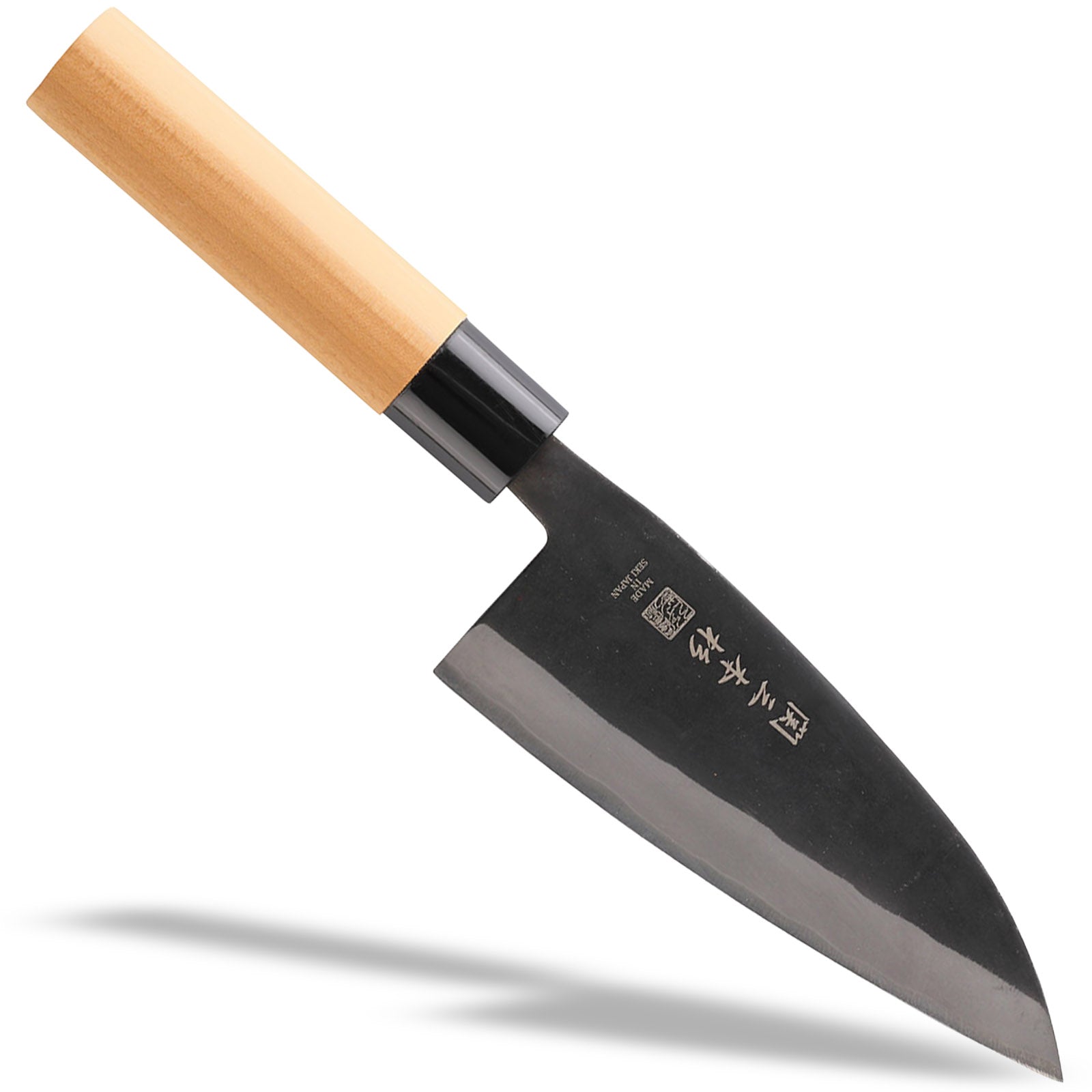


[How to Sharpen White Steel Knives] A thorough explanation of the ease of sharpening and the advantages of sharpness in Japanese kitchen knives.
In conclusion, white steel knives are made from a steel that is exceptionally good at both "ease of sharpening" and "sharpness after sharpening." The biggest advantage is that, with the right sharpening technique, you can consistently achieve professional-level sharpness even at home. In short, white steel is a high-purity carbon steel with few impurities, so it responds readily to whetstones, making it a "steel that makes sharpening enjoyable" as it easily produces a crisp edge and a smooth cross-section with fewer strokes.
This article explains how to sharpen Japanese kitchen knives made of white steel, known for its ease of sharpening, and discusses its advantages.
In conclusion, Japanese kitchen knives made from white steel are easier to sharpen than other types of steel such as blue steel, and with a whetstone, it's easy to restore their sharpness in a short amount of time, even at home. White steel has extremely few impurities compared to other carbon steels, so it has good adhesion to whetstones and is easy to finish with a thin, sharp edge.
[Key points of this article]
Today's review: 3 key points
- White Steel is a high-purity carbon steel from Yasugi steel, and is a steel material suitable for Japanese kitchen knives, offering an excellent balance of sharpness and ease of sharpening.
- When sharpening white steel, focusing on a medium-grit whetstone, you can achieve a sharp edge in a short time by following the steps of "sharpening the cutting edge properly → creating a secondary bevel at the tip of the blade → removing burrs."
- The advantages of sharpening include: "making the blade sharper with fewer sharpening sessions," "creating a delicate cut surface," and "restoring performance repeatedly through resharpening."
Conclusion of this article
- In conclusion: White steel Japanese knives are made of a high-grade carbon steel that is easy to sharpen, as it cuts smoothly against a whetstone and allows for the creation of a sharp edge with fewer strokes. It is an ideal steel for those who want to take up sharpening.
- In short, "White Steel is a steel that gives a clear sense of how well it sharpens, and the more you sharpen it, the better it responds." It is easier to sharpen than Blue Steel, but the edge retention is slightly less.
- Most importantly, to take advantage of the benefits of sharpening white steel (ease of sharpening, sharpness, and delicate cross-section), you need to choose the appropriate grit of whetstone and follow the basic steps of "cutting edge, secondary bevel, and deburring."
- With White Steel #1, #2, and #3, the smaller the number, the harder and longer-lasting the edge, while the larger the number, the easier it is to sharpen. White Steel #2, in particular, is well-regarded for its balance of sharpness, ease of sharpening, and ease of handling.
What is Shirogami steel? Characteristics of steel suitable for Japanese kitchen knives and the benefits of sharpening.
In conclusion, Shirogami steel is a high-carbon steel with very few impurities within the Yasugi steel series, and because it combines "sharp cutting edge" and "ease of sharpening," it is widely used as a steel material for Japanese kitchen knives. In particular, Shirogami No. 2 and Shirogami No. 1 are often used in representative lineups of Japanese kitchen knives such as yanagiba, deba, and usuba, and are widely supported by both professionals and home users.
What are the basic properties of white steel?
White steel is a highly pure carbon steel with extremely low levels of impurities such as phosphorus and sulfur. By increasing the carbon content, it achieves both hardness and sharpness. This high purity allows the blade edge to be finely sharpened with a whetstone, resulting in a crisp, sharp cut and a smooth cutting surface. On the other hand, because it is carbon steel, it rusts more easily than stainless steel, so moisture management and simple maintenance after use are essential.
The difference between White Paper No. 1, White Paper No. 2, and White Paper No. 3
White paper steel is divided into grades such as No. 1, No. 2, and No. 3, with differences in carbon content and hardness.
- White Steel No. 1: This high-grade steel has a high carbon content, making it easy to achieve the highest hardness and sharpest edge, ideal for professionals seeking a delicate cutting edge.
- White Steel #2: A versatile steel with a good balance of carbon content, hardness, and ease of sharpening, resulting in high overall scores for sharpness, edge retention, and ease of handling.
- White Paper No. 3: With a slightly lower carbon content and slightly lower hardness, it offers superior toughness and ease of handling, making it suitable for beginners to practical use.
When comparing it to Aogami (blue steel), it's helpful to think of it this way: "Aogami = long-lasting sharpness" and "Shirogami (white steel) = emphasis on ease of sharpening and sharpness."
Why white steel is chosen for Japanese kitchen knives
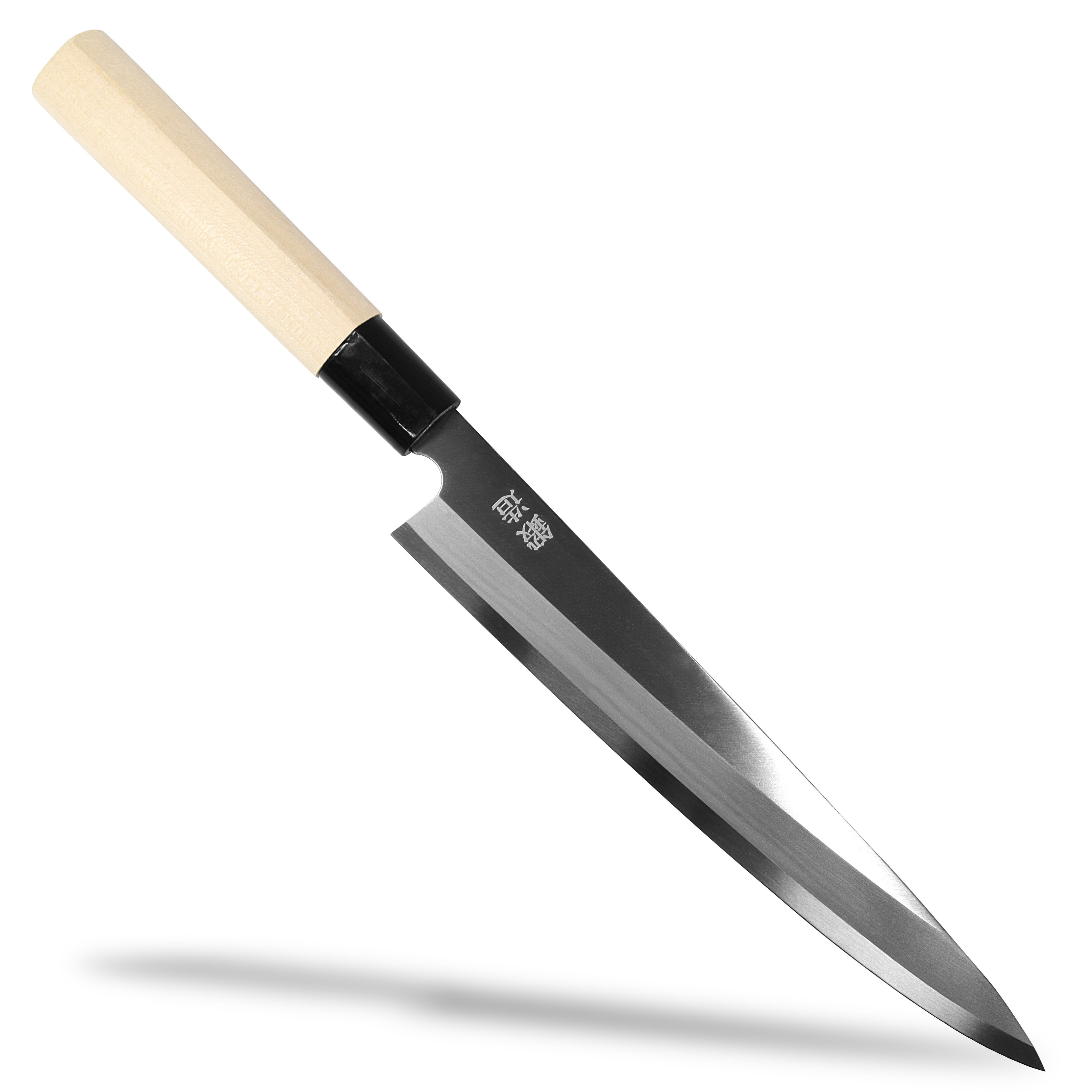
White steel is a material that allows for easy control of the blade's condition through sharpening, making it a good match for users who want to "break in their own knives." In situations requiring delicate cuts, such as slicing sashimi with a yanagiba knife or peeling katsura with a usuba knife, the sharpness and ease of sharpening of white steel are invaluable. Even in professional settings, it is well-suited to the style of "maintaining the best condition at all times by sharpening it a little bit every day," and in that sense, it is a material where the benefits of sharpening are directly linked to practical work.
What are the basic steps to sharpening a Japanese kitchen knife made of white steel to bring out its full potential?
In practical terms, when sharpening white steel, the key to maximizing the benefits of sharpening is to use mainly medium grit whetstones and adhere to the basics of "creating a proper cutting edge → adding a secondary bevel to the edge → removing burrs."
Step 1: Straighten the cutting edge with a medium whetstone.
Although white steel is easy to sharpen, you first need to shape the entire blade (the cutting edge). Soak a medium-grit whetstone (around #1000) in water, place the knife at approximately a 45-degree angle to the whetstone, and maintain the blade angle at about 15-20 degrees relative to the whetstone. Divide the blade into three sections: the base, the middle, and the tip. Sharpen each section back and forth with the same number of strokes and the same force until a continuous burr (edge curve) appears on the back of the blade.
Step 2: Add a secondary bevel to the blade tip to achieve both sharpness and durability.
Once the cutting edge is shaped, the next step is to create a "secondary bevel" at the tip. A secondary bevel is a technique that creates a very narrow second bevel at the tip of the blade, balancing sharpness and edge retention. By slightly raising the blade angle (imagine raising the spine by the thickness of a business card) and lightly sharpening it a few times at an angle where only the tip of the blade touches the whetstone, a secondary bevel with a fine, even streak of light is created. White steel responds well to this secondary beveling technique, and the advantage of sharpening is that a clear edge can be created with few strokes.
Step 3: Remove burrs and smooth the back to finish.
After sharpening, a burr will remain on either the front or back of the blade, preventing it from achieving its true sharpness. Gently slide the blade across a whetstone, old newspaper, or cloth, alternating between left and right several times to remove the burr. Finally, sharpen the back side (the back edge) by stroking it a few times with the blade almost touching the whetstone, check again to make sure no burrs remain, then rinse with water, wipe completely dry, and let it air dry. This process will bring out the outstanding sharpness of the white steel.
What are the advantages of sharpening with white steel, and how does it differ from other steels such as blue steel?
Based on this sharpening method, the advantages of sharpening white steel are that "it's easy to achieve a sharp edge with fewer strokes" and "it's easy to control the delicate edge." Here, we will clarify the positioning of white steel by comparing it with other steels such as blue steel.
Ease of sharpening: White steel can be sharpened smoothly on a whetstone.
White steel contains few impurities and almost no alloying elements, resulting in a straightforward grinding action. Because it contains fewer alloys to enhance wear resistance, unlike blue steel, the blade "bites" more easily into the whetstone, and the metal grinds smoothly even at medium grit levels. For this reason, even with the same whetstone and the same amount of time, white steel sharpens faster and is less likely to cause the problem of the blade becoming dull even after sharpening.
The balance between sharpness and edge retention: The strengths of White Steel No. 2
White Steel No. 2 is highly regarded among white steels for its good balance of "endurance of sharpness" and "ease of sharpening." While it doesn't maintain its sharpness as long as Blue Steel No. 2, its strength lies in its ability to maintain optimal sharpness at all times by sharpening frequently, especially when resharpening is a given. In professional settings, the style of "sharpening as soon as the blade becomes dull" is common, so a steel like White Steel No. 2, which can easily regain its sharpness in a short time, is a great asset.
Differences in who they are suitable for and their intended use
From a practical standpoint, white steel is suitable for those who "enjoy sharpening," "are particular about the sharpness of the blade," and "use their knives with the understanding that they will be sharpened almost every time." Blue steel is suitable for those who "want to reduce the frequency of sharpening" and "don't want to lose sharpness during long preparation times," while stainless steel is suitable for those who "don't want to spend a lot of time on maintenance." Among these, white steel has a strong tendency to "respond the more you sharpen it," making it a steel that is easily recommended for users who enjoy proactively maintaining their knives with whetstones.
FAQ
Q1. Is white steel really easy to sharpen?
A1. Because it is a high-purity carbon steel with few impurities, it grinds smoothly on a whetstone, making it easy to create a sharp edge with fewer sharpening strokes.
Q2. What is the difference in sharpness between white steel and blue steel?
A2. White steel is designed for ease of sharpening, while blue steel is designed for edge retention. Blue steel, with its higher alloy content, tends to be harder and more difficult to sharpen.
Q3. Which is easier to handle, blank paper No. 1 or blank paper No. 2?
A3. White Steel #2 offers a good balance of sharpness, hardness, and ease of sharpening, while White Steel #1 is harder and sharper, making it more suitable for intermediate to advanced users.
Q4. What uses are Japanese kitchen knives made of white steel suitable for?
A4. Suitable for delicate tasks such as slicing sashimi and peeling vegetables, and ideal for professionals and home cooks who want to maintain the best possible sharpness by sharpening the knife daily.
Q5. Is white steel prone to rusting?
A5. Compared to stainless steel, it rusts more easily, and immediate washing, wiping, and drying after use are essential, but in return, it offers superior sharpness and ease of sharpening.
Q6. What grit whetstone is needed for sharpening white steel?
A6. The general procedure involves shaping the blade with a medium-grit whetstone (around #1000) and then refining it with a finishing whetstone (#3000 to #6000) as needed. A coarse whetstone is used when the blade is chipped.
Q7. Can beginners handle white steel knives?
A7. It's suitable for beginners who want to try sharpening, but it's prone to rusting, so it's essential to develop good maintenance habits (washing, wiping, and drying).
Q8. What are some tips for maximizing the benefits of sharpening?
A8. It is effective to establish four rules: keep the whetstone flat, maintain a consistent angle and number of strokes, aim to create a secondary bevel, and ensure that burrs are removed completely.
Q9. Which is more suitable for home use, white steel or stainless steel?
A9. If maintenance is your priority, choose stainless steel; if you want to enjoy sharpness and the process of sharpening, choose white steel. It's practical to choose according to your lifestyle.
Q10. If I were to own multiple knives made of white steel, which type would you recommend?
A10. A popular approach is to start with a Santoku or Yanagiba knife made of White Steel No. 2, and then, once you're comfortable with sharpening, add knives that require a more delicate blade, such as a Yanagiba or Deba knife made of White Steel No. 1.
summary
- The core of the sharpening method and benefits of Japanese kitchen knives made of white steel lies in the fact that "white steel is easy to sharpen and responds well to maintenance with a whetstone," and if you master the correct sharpening technique, it is easy to maintain professional-level sharpness even at home.
- Among the three grades of White Steel (Shirogami No. 1, Shirogami No. 2, and Shirogami No. 3), Shirogami No. 2 offers a particularly excellent balance of sharpness, edge retention, and ease of sharpening, making it ideal for users who want to maintain their knives in top condition by sharpening them a little bit each day.
- In conclusion, white steel Japanese knives are the ideal steel for those who want to enjoy the sharpening process and are particular about the sharpness and finish of the blade, allowing them to fully experience the benefits of sharpening.