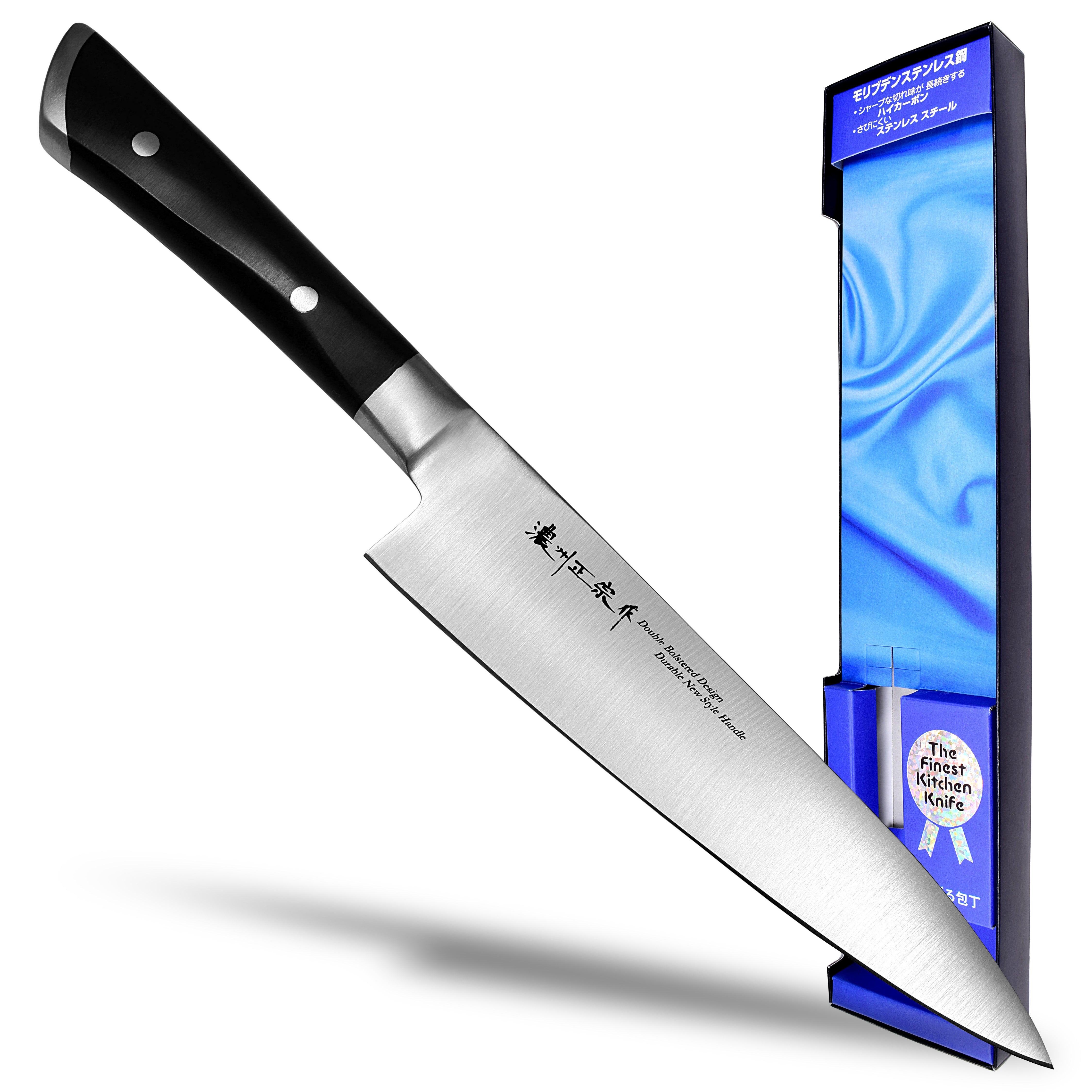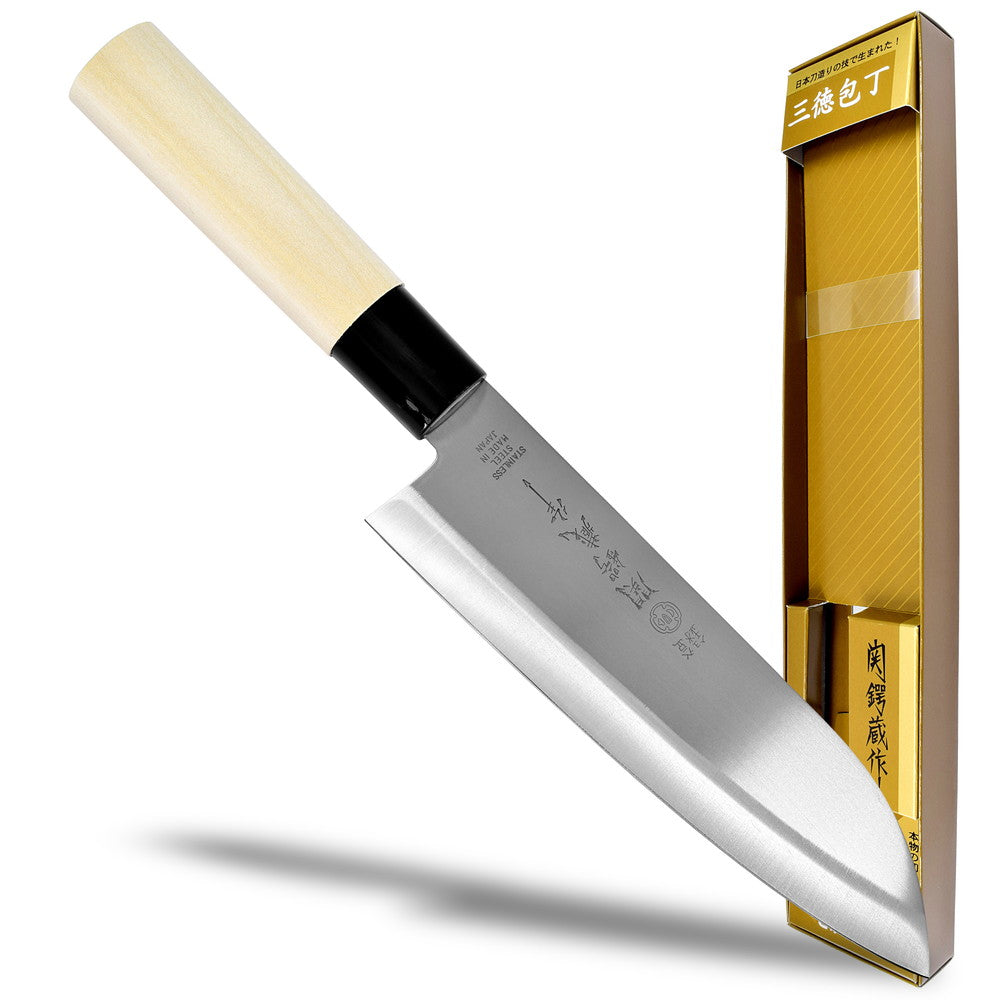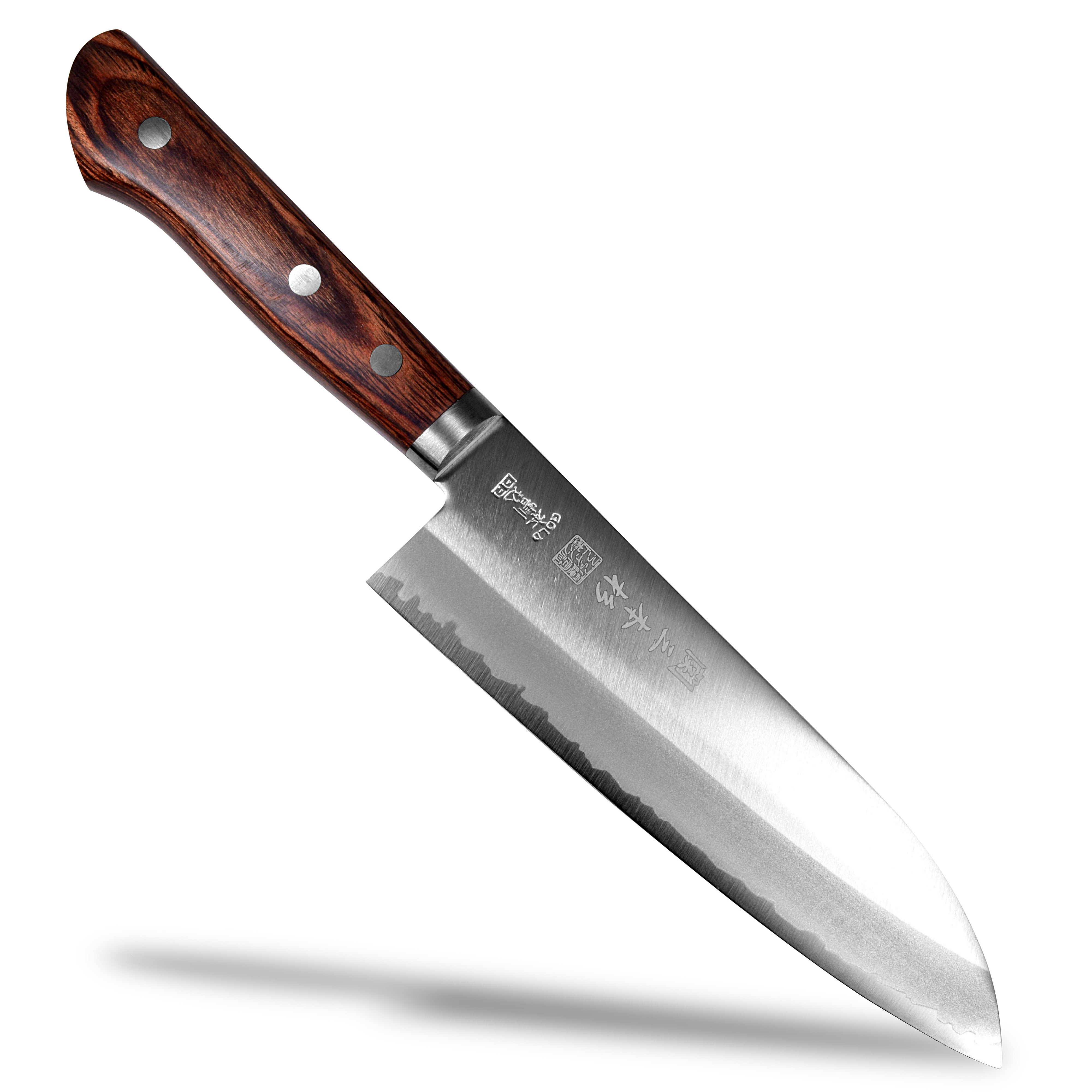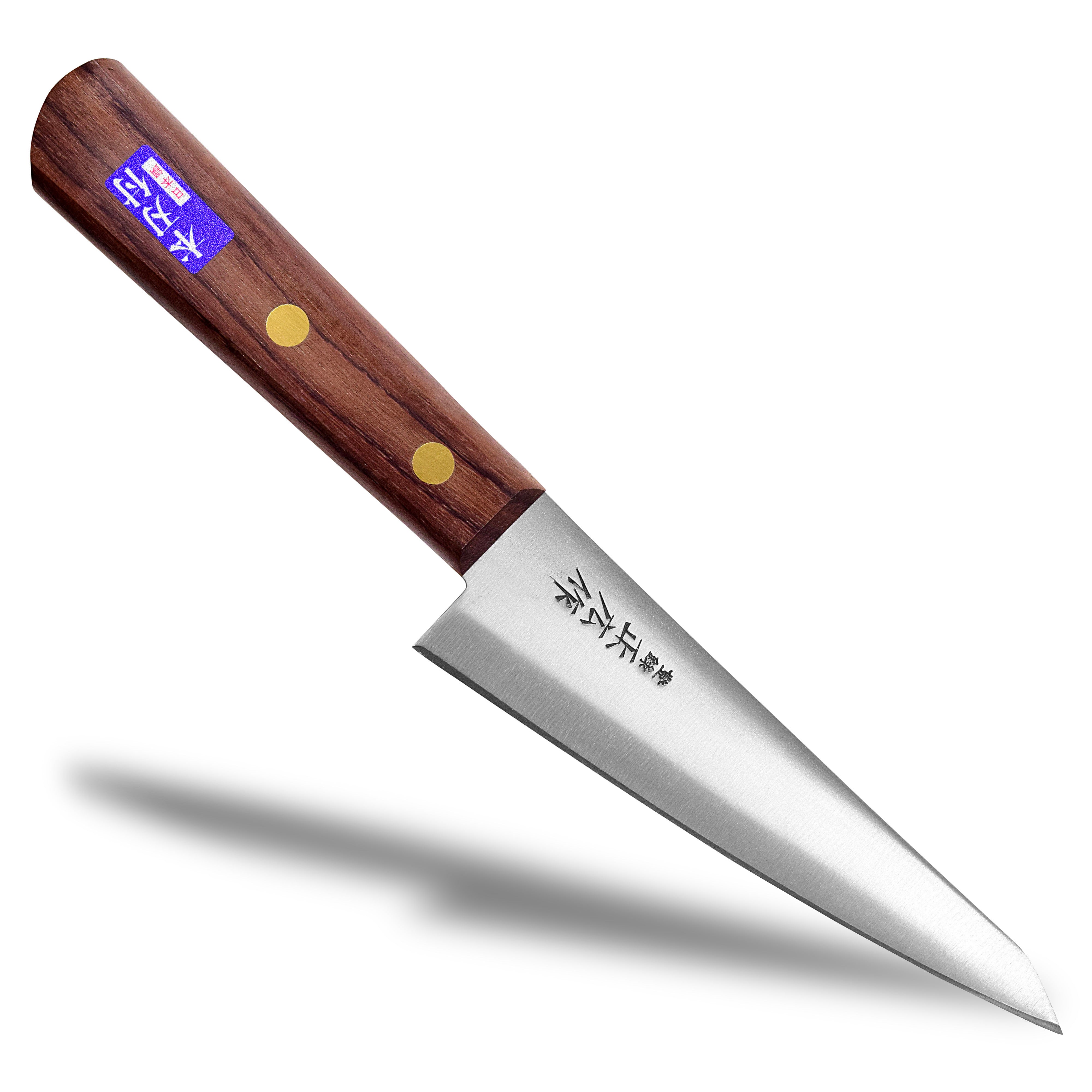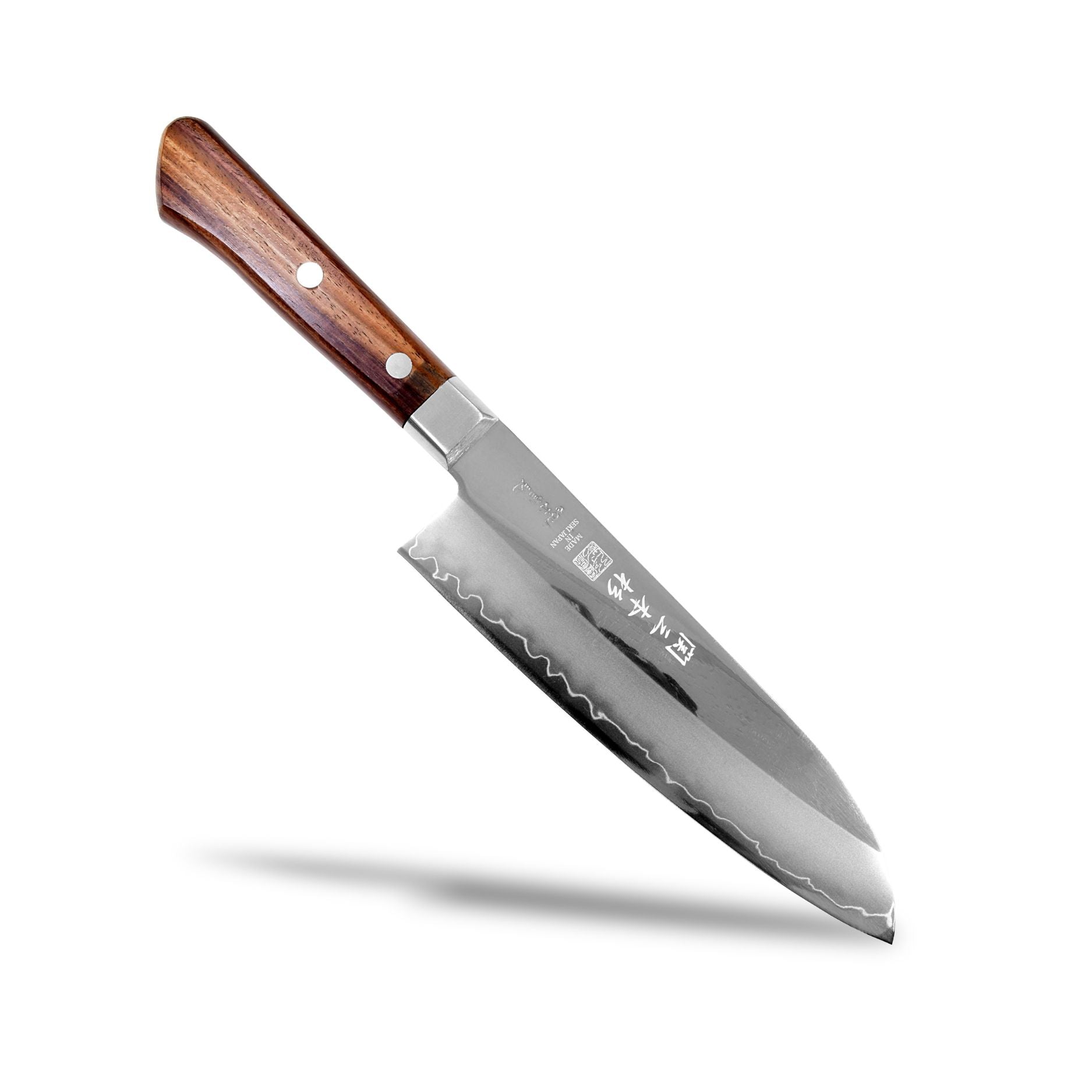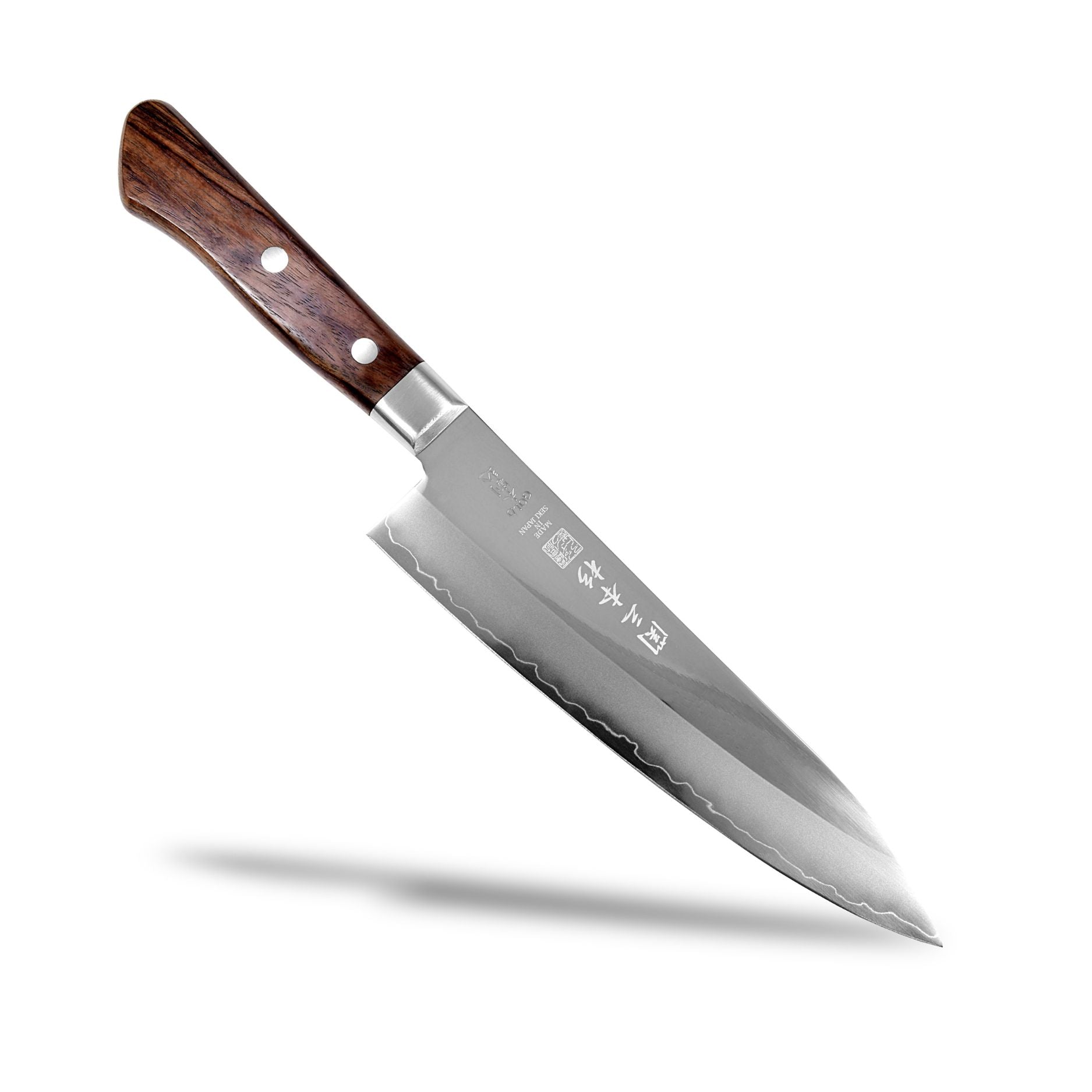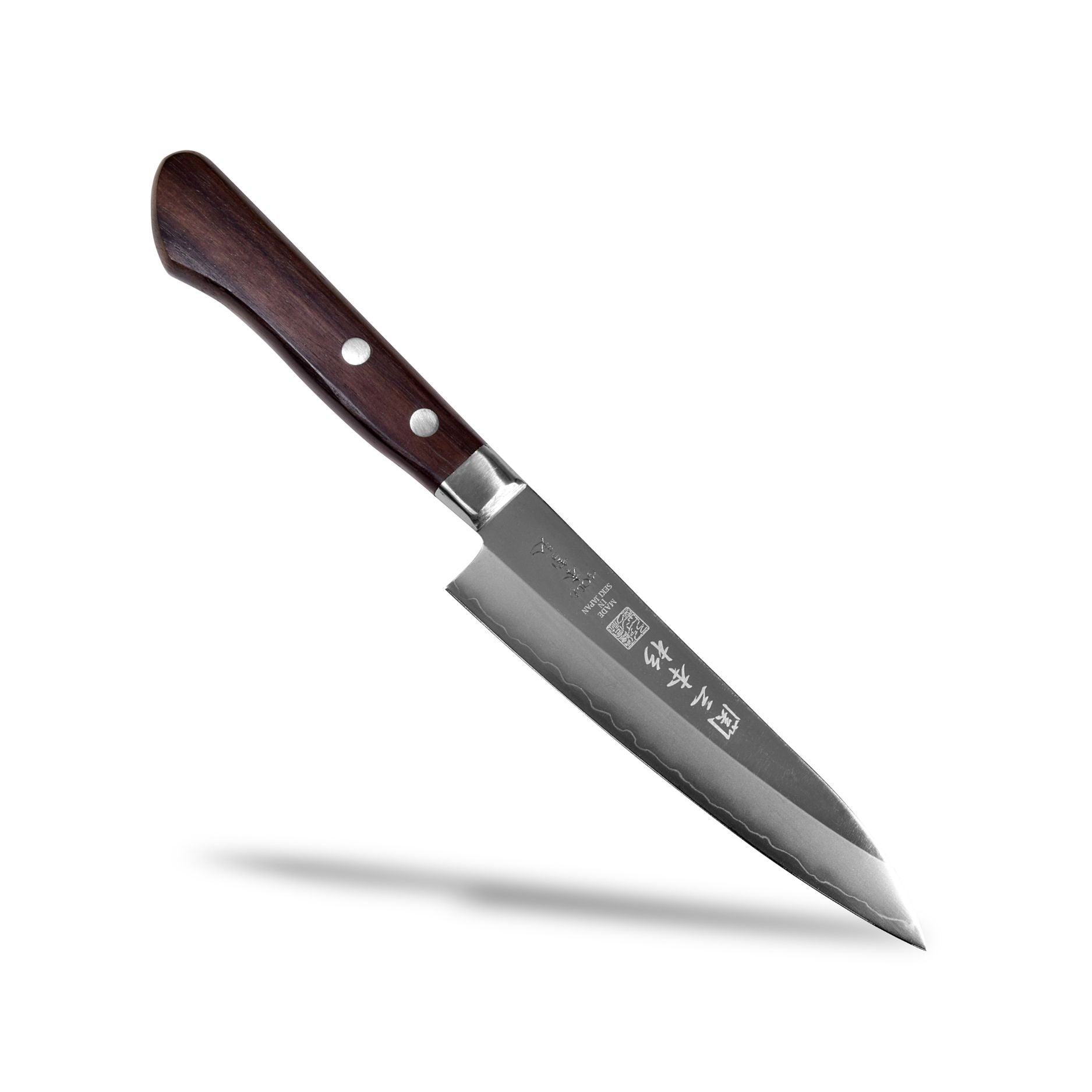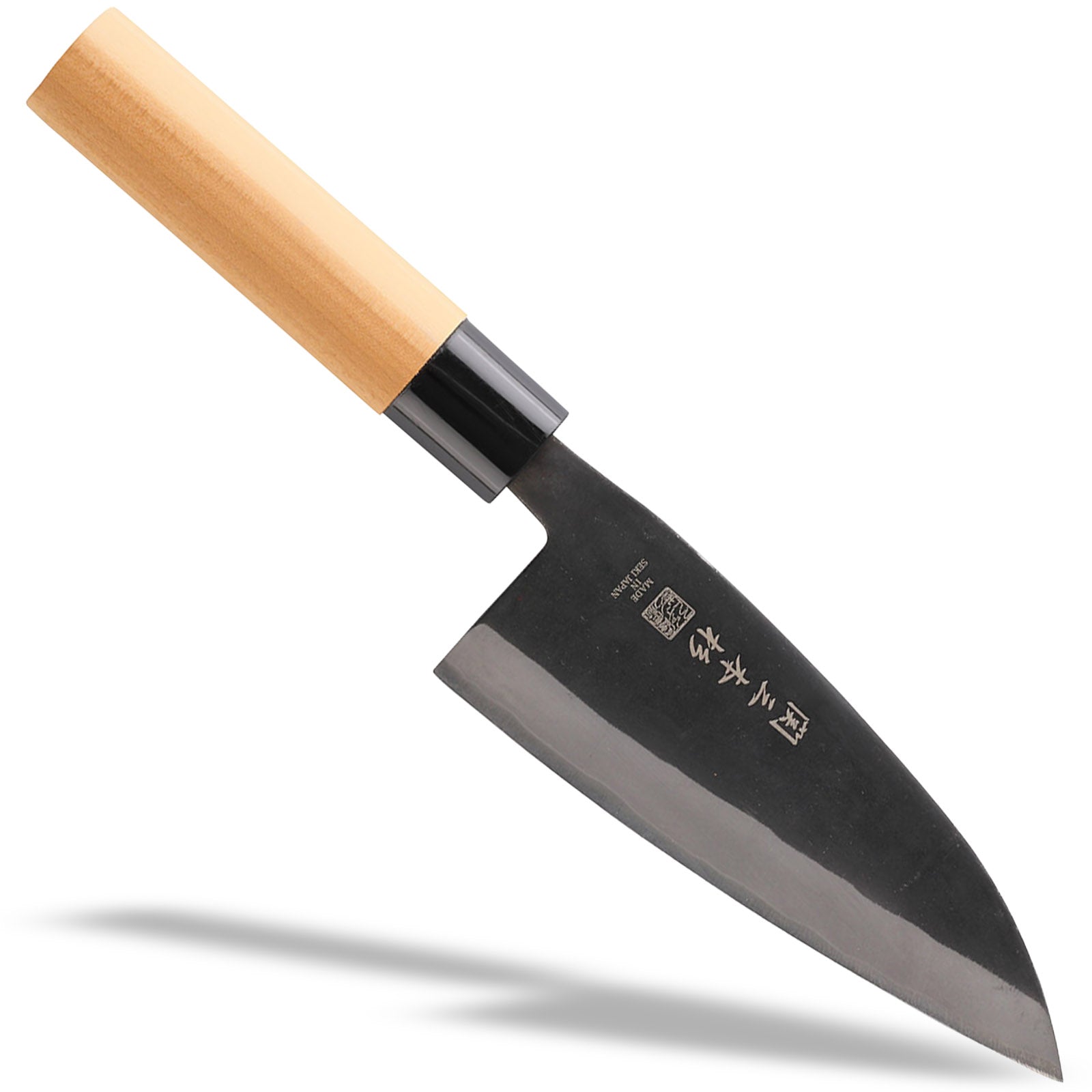

[Recommended Japanese Kitchen Knives: White Steel] A thorough explanation of the differences between professional-grade knives and blue steel knives.
In conclusion, the key to understanding the differences between recommended Japanese kitchen knives made of white steel for professional use lies in understanding "what professional and advanced users, particularly those seeking delicate sharpness and ease of sharpening, choose for which purpose." In short, white steel is "a steel material for chefs who want to sharpen their knives daily and always achieve the best possible sharpness."
The conclusion regarding the differences between recommended Japanese kitchen knives chosen by advanced users and those made of white steel for professional use is that "white steel, especially white steel No. 2, is easy to sharpen and produces a sharp edge, making it the most well-balanced steel for professional use where you need to 'craft the blade,' such as for thin slicing, katsura-muki (thinly sliced slicing), and deba (fish filleting).
[Key points of this article]
White steel is a high-purity carbon steel with extremely low levels of impurities such as phosphorus and sulfur, making it easy to sharpen and allowing for the creation of extremely sharp blades.
For professional use, White Steel No. 2 is often used for knives that require a delicate blade and frequent sharpening, such as those used for thin slicing, katsura-muki (thinly sliced slicing), deba (fish filleting), and yanagiba (sashimi knife).
White steel offers instantaneous sharpness, while blue steel offers sustained sharpness; the choice depends on the amount of blade used and the sharpening style.
Today's review: 3 key points
Recommended Japanese kitchen knives made of white steel for professional use: The key difference is that "White Steel No. 2 = the steel most used by professionals due to its balance of sharpness and ease of sharpening."
White steel is recommended for knives that require frequent sharpening, such as those used for thin slicing, katsura-muki (thinly sliced sushi), and deba (fish filleting), while blue steel is suitable for long preparation times.
It's important to understand the differences in professional use and choose the steel that best suits your own preparation volume, sharpening frequency, and maintenance approach.
Conclusion of this article
In conclusion, white steel is "easy to sharpen and produces a sharp edge, making it a recommended steel for professional use in delicate Japanese cuisine."
For chefs who want to sharpen their knives daily to maintain peak sharpness, White Steel No. 2 is suitable. For chefs who prioritize long-lasting sharpness and want to reduce the frequency of sharpening, Blue Steel is recommended.
To understand the differences between recommended Japanese kitchen knives made of white steel (Shirogami), especially for professional use, it's crucial to understand the characteristics of Shirogami No. 1 and No. 2, and how to use them in conjunction with Aogami (Blue Steel).
Recommended Japanese kitchen knives: What kind of steel is white steel?
In short, Shirogami steel is a high-purity carbon steel with few impurities, specializing in ease of sharpening and a sharp edge, and is the most basic type of steel used in professional-grade Japanese knives. Yasugi steel's Shirogami steel is designed to minimize impurities such as phosphorus and sulfur, and increase the carbon content to enable the formation of a fine and uniform blade edge, and is often used for delicate tasks such as sashimi knives and usuba knives. As a result, it is supported by both knife makers and chefs as a "straightforward steel that always responds to sharpening."
If you were to describe the defining characteristic of Shirogami steel in one word, it would be "straightforwardness." Because it contains no unnecessary alloying elements, it works well with whetstones, and it's a steel that gives you a strong sense of responsiveness to sharpening, with the sharpness improving proportionally to the amount you sharpen it. Professional chefs have come to view the act of "sharpening knives" not merely as maintenance, but as an integral part of cooking, precisely because they can truly feel the responsiveness to sharpening and the resulting change in sharpness with Shirogami steel. This accumulation of experiences is one of the reasons why Shirogami steel has continued to be chosen in professional settings for so many years.
Basic specifications and meaning of purity for white steel
"White paper steel" is pure carbon steel. White paper steel has an extremely high purity of carbon and iron, and impurities such as gas components have been thoroughly removed. As a result, it is said to have good hardenability and allow for the formation of fine edges. In explanations by cutlery manufacturers, white paper steel is introduced as a typical example of steel-type materials, stating that "the fewer impurities there are, the sharper and easier it is to sharpen," showing that its high purity directly translates to sharpness and ease of sharpening.
"High purity" means that no unwanted components are incorporated into the steel. The fewer unwanted components there are, the more homogeneous the steel's structure becomes, making it easier to create a uniform edge when sharpened with a whetstone. This homogeneity creates a balance between "ease of sharpening" and "sharpness of the edge," leading to the beautiful finish unique to white steel. The reason why knife makers choose white steel for their prized knives is precisely because this purity and integrity of the material is directly reflected in the finished product.
Differences between White Paper No. 1, No. 2, and No. 3 and their professional uses
For professional use, the star is Shirogami No. 2 steel. Shirogami No. 1 steel has a carbon content of around 1.25-1.35% and is a steel that pursues even greater hardness and sharpness, Shirogami No. 2 steel has a carbon content of 1.05-1.15% and is said to have an excellent balance of sharpness, hardness, toughness, and ease of sharpening, while Shirogami No. 3 is a grade that has a lower carbon content to increase durability. Shirogami No. 2 is often used in professional kitchen knives and is highly regarded for its hardness, sharpness, and ease of resharpening, so it is clear that "Shirogami No. 2 is the most popular choice among professionals."
White Steel No. 1 is for advanced users seeking the highest hardness, and its sharpness is unparalleled, but its extreme hardness also makes it prone to chipping. White Steel No. 3 has high toughness and is resistant to chipping, so it is sometimes used for deba knives, which are frequently struck against bone. White Steel No. 2 is considered ideal for everyday professional use due to its good balance, and it is an easy choice for a chef who is used to sharpening their knives to buy their first one, and it is a steel that can be used for a long time.
Why white steel is considered "for advanced users"
"Because it's a steel that requires maintenance." White steel is a carbon steel, so it rusts easily, and its wear resistance is not as high as blue steel, so its edge retention is somewhat shorter. On the other hand, it requires less time to sharpen each time, and the sharpness is restored quickly after sharpening, making it an easy-to-handle steel for those who have the habit of "quickly sharpening before use," like in professional settings. Because it is a steel that is chosen with the assumption that time will be spent on sharpening and rust prevention, it is said to be suitable for advanced users and professional use.
The phrase "for advanced users" doesn't mean it's a difficult steel to work with; rather, it's closer to meaning that "the more you know how to use it, the better you can bring out its qualities." While there is a higher risk of rust compared to stainless steel knives, it can be handled perfectly well if you thoroughly wipe it down after use and store it in a dry place. Owning a white steel knife naturally increases your awareness of knife maintenance, and it also refines your overall attitude towards cooking, which involves taking good care of your tools.
Recommended Japanese kitchen knives: White Steel - Professional Grade - What are the differences?
In conclusion, the basic rule is to choose between white steel for immediate cutting power and blue steel for long-term stability during preparation. Jikko Cutlery explicitly states that "blue steel No. 2 is best for long-lasting sharpness and reduced sharpening frequency, while white steel No. 2 is best for easy sharpening and achieving a sharp edge," clearly outlining the selection criteria for professional use. Here, we will summarize how white steel is recommended for specific professional applications.
Recommended uses of white steel in professional settings
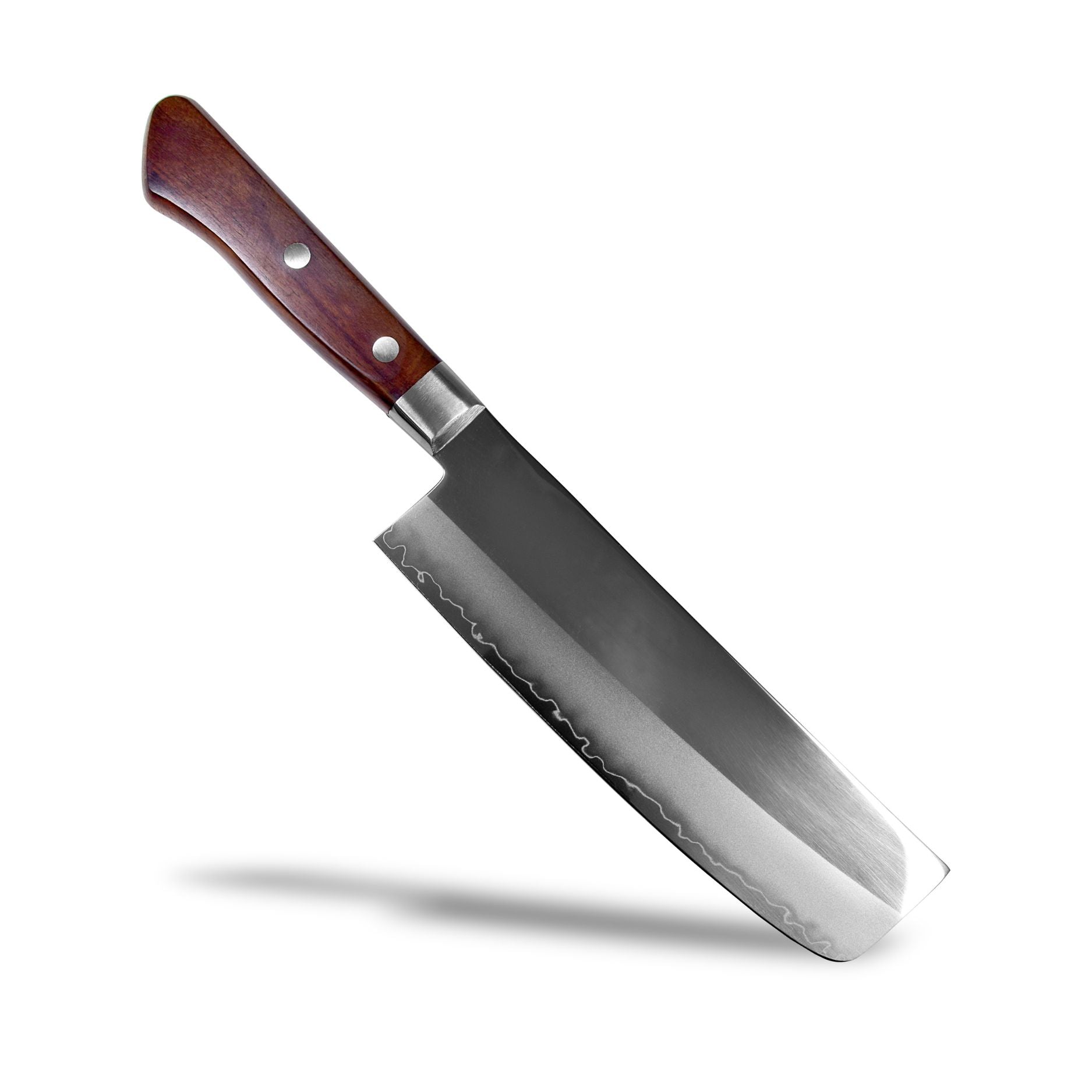
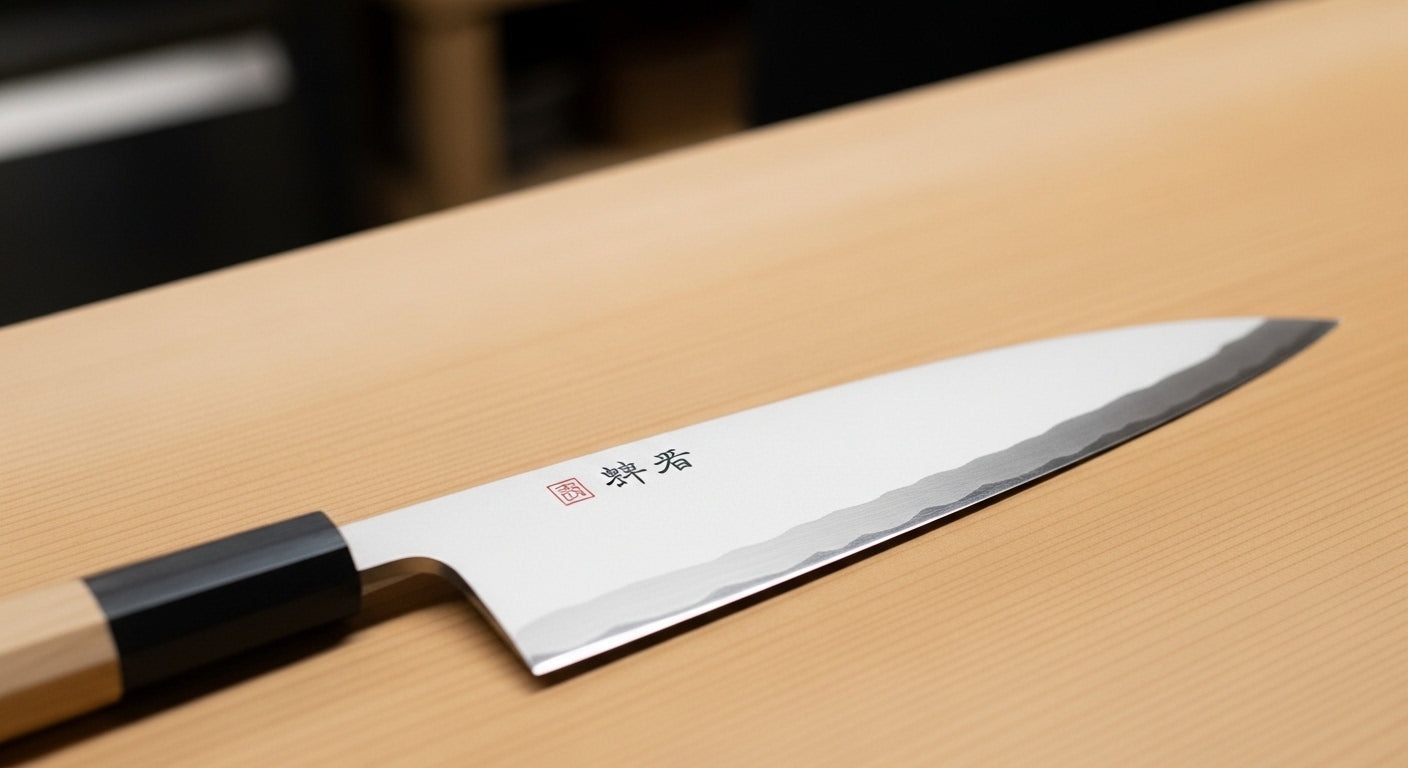
White Steel No. 2 excels at knives that require a delicate blade edge and those that need frequent sharpening. Recommended uses for White Steel No. 2 knives include kama-usuba knives for thin slicing, usuba knives for peeling vegetables, and deba knives for filleting fish. These are applications where a consistently sharp edge is required, and the blade edge is prone to chipping or becoming rounded. However, White Steel No. 2 is easy to sharpen and repair after chipping, making it a suitable steel for professional use where daily sharpening is expected.
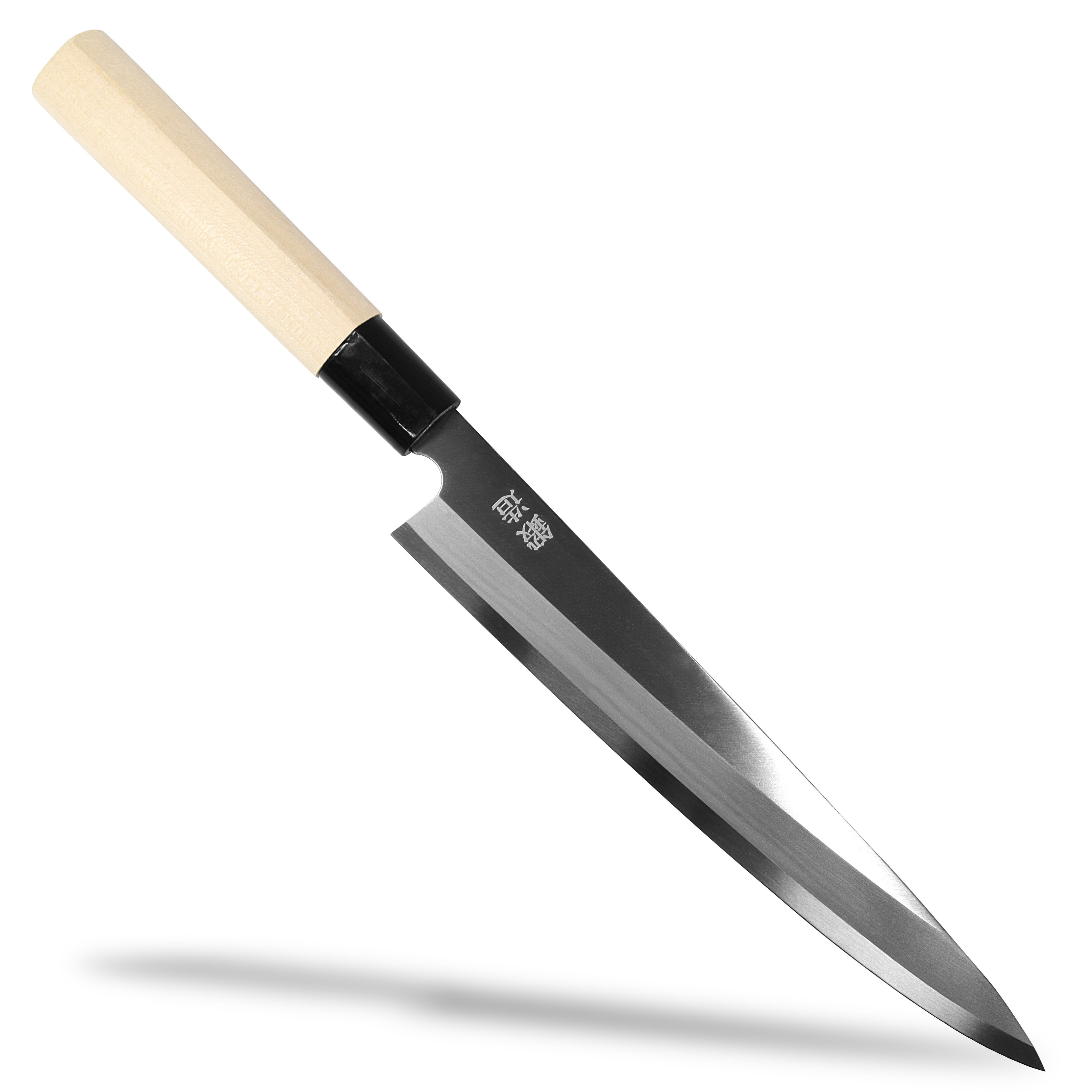
White steel is highly regarded even for yanagiba knives used to slice sashimi. The beauty of the sashimi's cross-section is directly related to the sharpness of the knife, and for craftsmen who use the knife delicately, adjusting the sharpening angle each time depending on the type and thickness of the fish, white steel, which responds smoothly to sharpening, is the best partner. The "joy of creating" the desired sharpness each time you sharpen it is a major reason why white steel has been chosen in professional settings for so many years.
White Steel vs. Blue Steel: Differences and Usage in Professional Applications
The most important factors are "the amount of preparation and the time that can be dedicated to sharpening." White steel excels in sharpness after sharpening and quick resharpening, but if you cut a large amount of food in a day, the sharpness will decrease midway through, so it is suitable for workplaces where sharpening is expected each time. On the other hand, blue steel has high wear resistance and is suitable for long preparation times, and is said to be suitable for workplaces where "you want to sharpen in the morning and maintain the sharpness until night." Even for sashimi knives and usuba knives, blue steel is recommended for chefs who want to reduce the number of times they sharpen. In other words, the difference in professional use can be rephrased as "sharpening style."
One way to differentiate between white steel and blue steel is that in situations where you want to sharpen your knife first thing in the morning and always serve it in the best condition, the quick-release power of white steel is advantageous. On the other hand, in situations where you need to keep cutting for a long time after sharpening, such as for banquets or preparing food for large groups, the endurance of blue steel shines. Many professionals have multiple knives of both types for different purposes, and they practice the practice of using white steel for thin slicing and blue steel for long preparation sessions. Reflecting on how you work in your own kitchen is the starting point for choosing the optimal steel.
Key points for home use to semi-professionals when choosing white steel.
"Even for home use, if you're willing to sharpen your knives, white steel is definitely recommended." Steel knives, such as deba knives for filleting whole fish and yanagiba knives for sashimi, are described as being suitable for cooking enthusiasts who demand a sharp edge, and white steel Japanese knife series are offered by several manufacturers. Even for home users, if you enjoy sharpening your knives with a whetstone, frequently fillet fish, or are particular about the finished look of your dishes, owning a Japanese knife based on white steel No. 2 is well worth it.
For semi-professionals and cooking enthusiasts who enjoy cooking as a hobby, owning a Japanese kitchen knife made of white steel can elevate the entire cooking experience. If you have a habit of preparing fish and serving sashimi to your family every weekend, adding a white steel yanagiba (sashimi knife) to your collection will make a noticeable difference in the beauty of the cross-section and the flavor of the ingredients. Developing the habit of sharpening your knife will deepen your relationship with it, and your approach to cooking will naturally change.
FAQ
Q1. Which grade of white steel rod would you recommend for professional use?
A1. White Steel No. 2 is the most popular steel among professionals because it offers a good balance of sharpness, ease of sharpening, and price.
Q2. Which is recommended for professional use, white steel or blue steel?
A2. If you prioritize the sharpness of a freshly sharpened blade and ease of sharpening, white steel is recommended. If you want to reduce the number of sharpenings by allowing for a long preparation time, blue steel is recommended.
Q3. Why is white steel considered "for professionals and advanced players"?
A3. Because it is made of carbon steel, it rusts easily and does not retain its edge as well as Aogami steel, so frequent sharpening and rust prevention care are essential.
Q4. Can white steel knives be used for home cooking?
A4. If you're willing to sharpen your knives yourself with a whetstone, a kitchen knife made with White Steel No. 2 is a good option for home use, as it offers a sharp edge.
Q5. What types of knives are suitable for professional use with white steel?
A5. Suitable for knives that require a delicate blade and frequent sharpening, such as thin-bladed slicing knives, katsura-muki knives, deba knives, and fish filleting knives.
Q6. How often should white steel knives be sharpened?
A6. In professional settings where a large volume of cutting is done daily, it is common practice to sharpen the blades frequently as they become dull, and the "sharpen a little bit each day" style is assumed.
Q7. Is it difficult to prevent rust on white steel knives?
A7. Immediate washing, wiping, and complete drying after use are essential, but this extra step will help maintain the product in good condition for a long time.
Q8. White steel or stainless steel: which should you choose for professional use?
A8. If sharpness is the top priority, steel such as white steel is chosen, while if ease of maintenance and rust resistance are important, high-grade stainless steel is selected.
Q9. Is the grade of white steel higher than that of blue steel?
A9. White steel is superior in sharpness, while blue steel is superior in edge retention, so it's impossible to say definitively which is better; the choice depends on the intended use and personal preference.
summary
The conclusion regarding the differences between recommended Japanese kitchen knives made of white steel for professional use is that "white steel, especially White Steel No. 2, is easy to sharpen and produces a sharp edge, making it ideal for delicate professional use such as thin slicing, katsura-muki (thinly sliced slicing), and deba (fish filleting)."
The difference between white steel and blue steel is that white steel offers "instantaneous sharpness," while blue steel offers "long-lasting stamina." It's important to choose the right one based on the amount of material you're preparing, the time you can dedicate to sharpening, and your maintenance policy.
By choosing a Japanese kitchen knife made of white steel, with sharpening and rust prevention care in mind, and nurturing a knife suited to its intended use, you can enjoy the sharpness and culinary results that only professionals and advanced cooks can achieve for a long time.