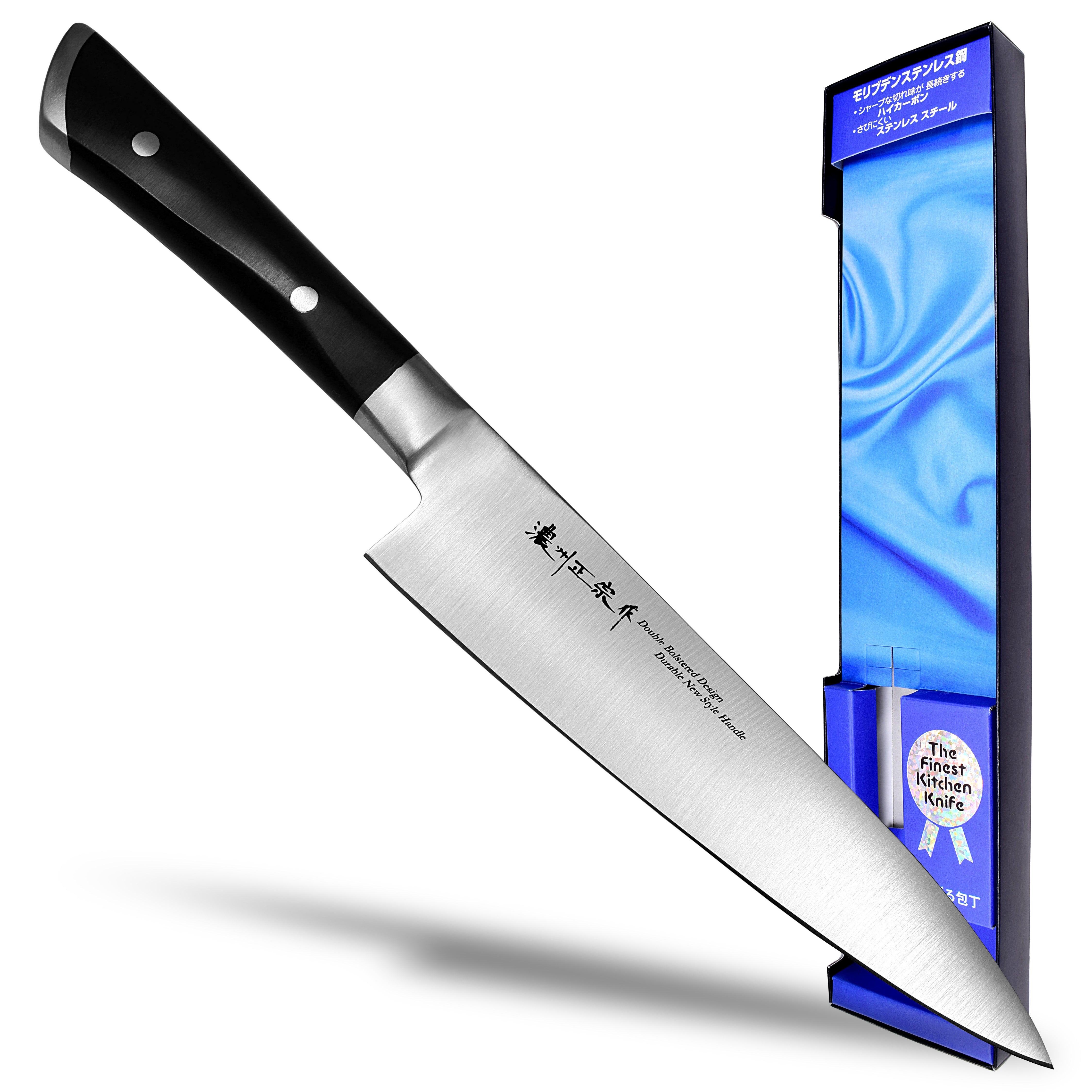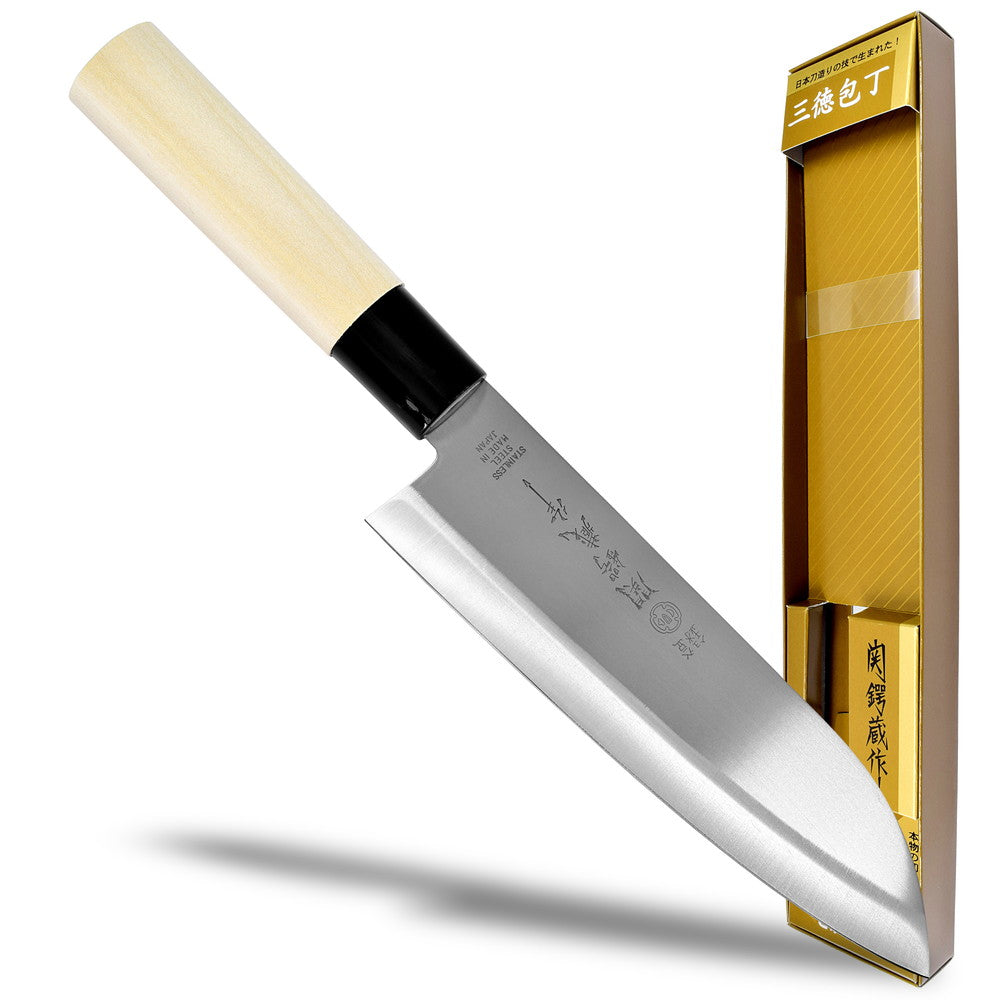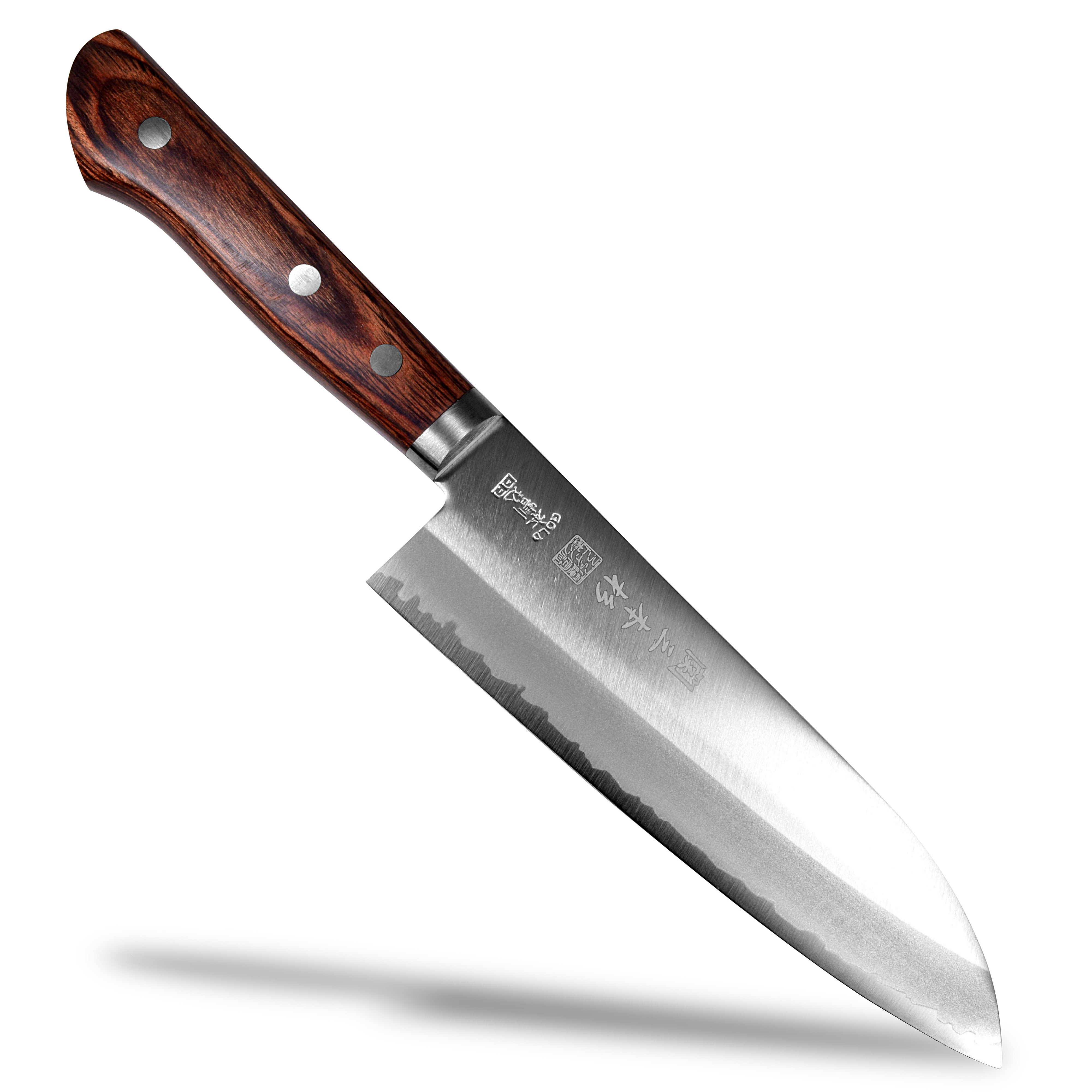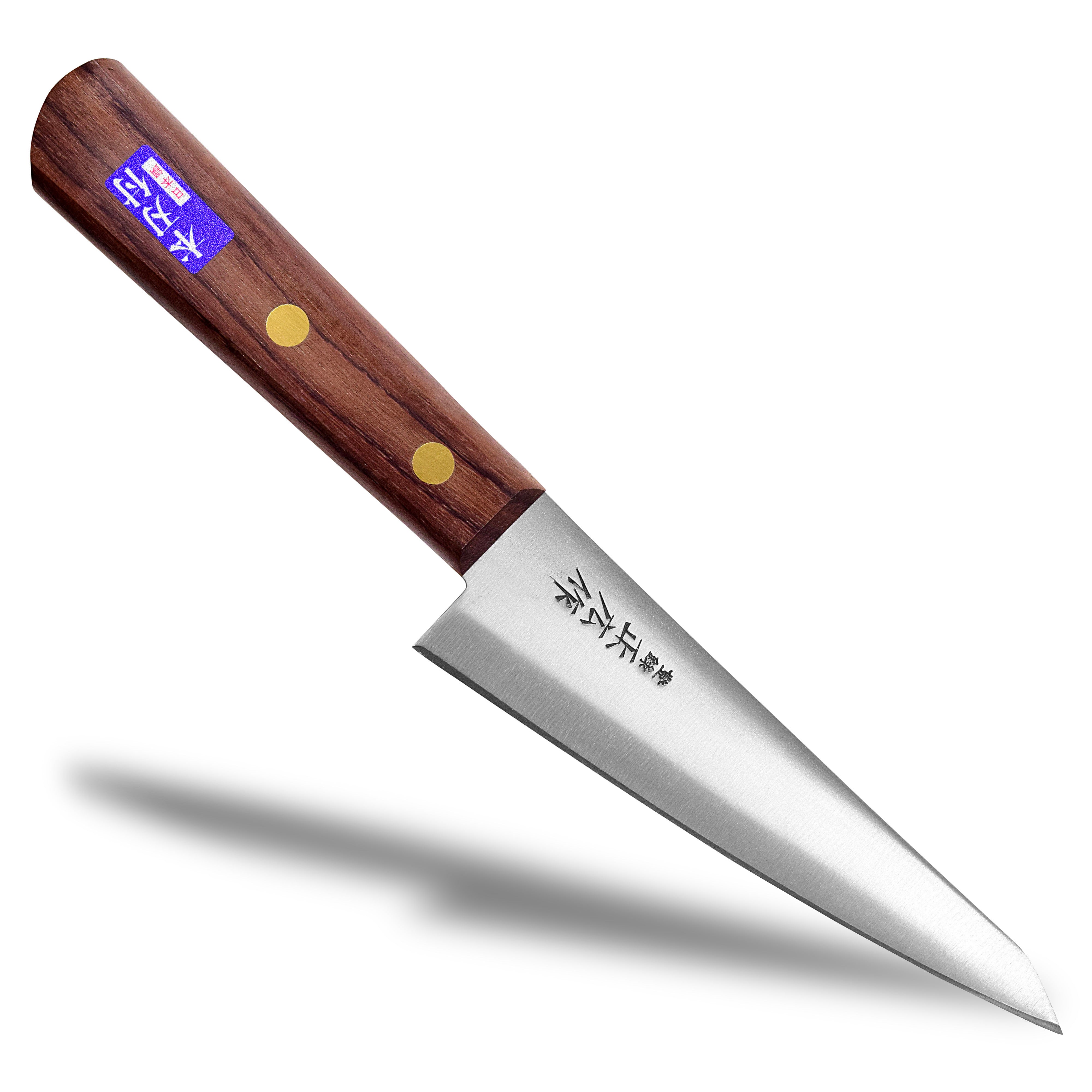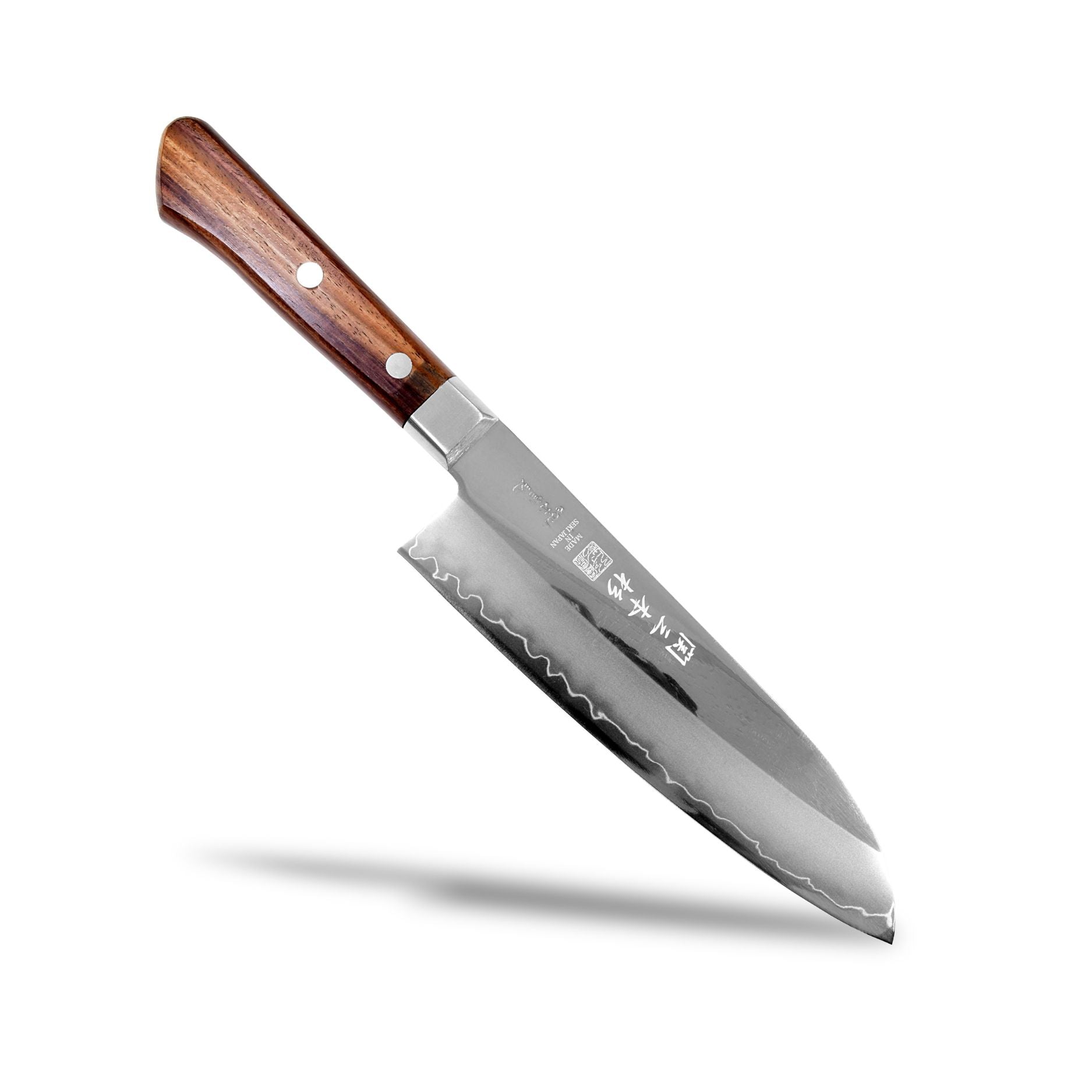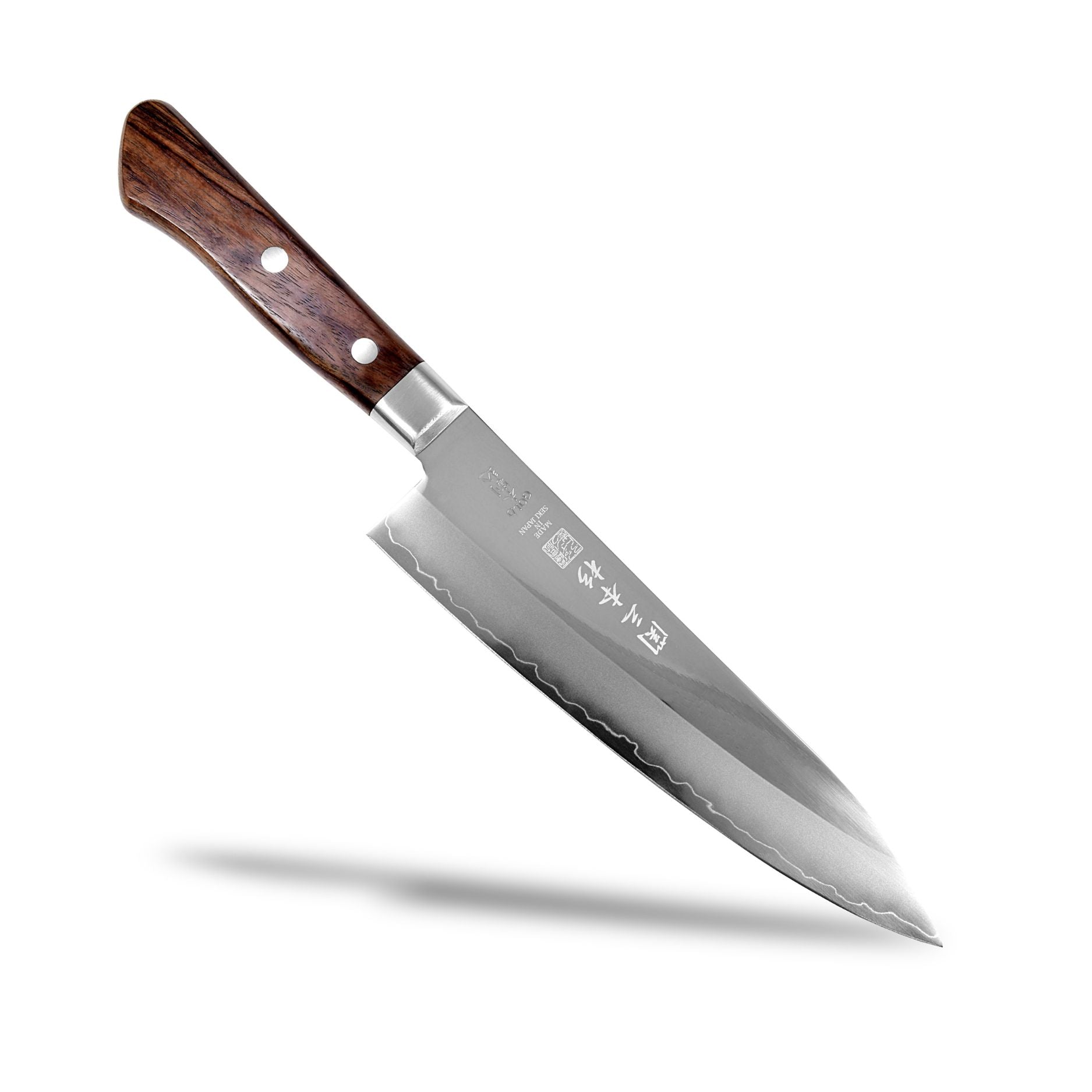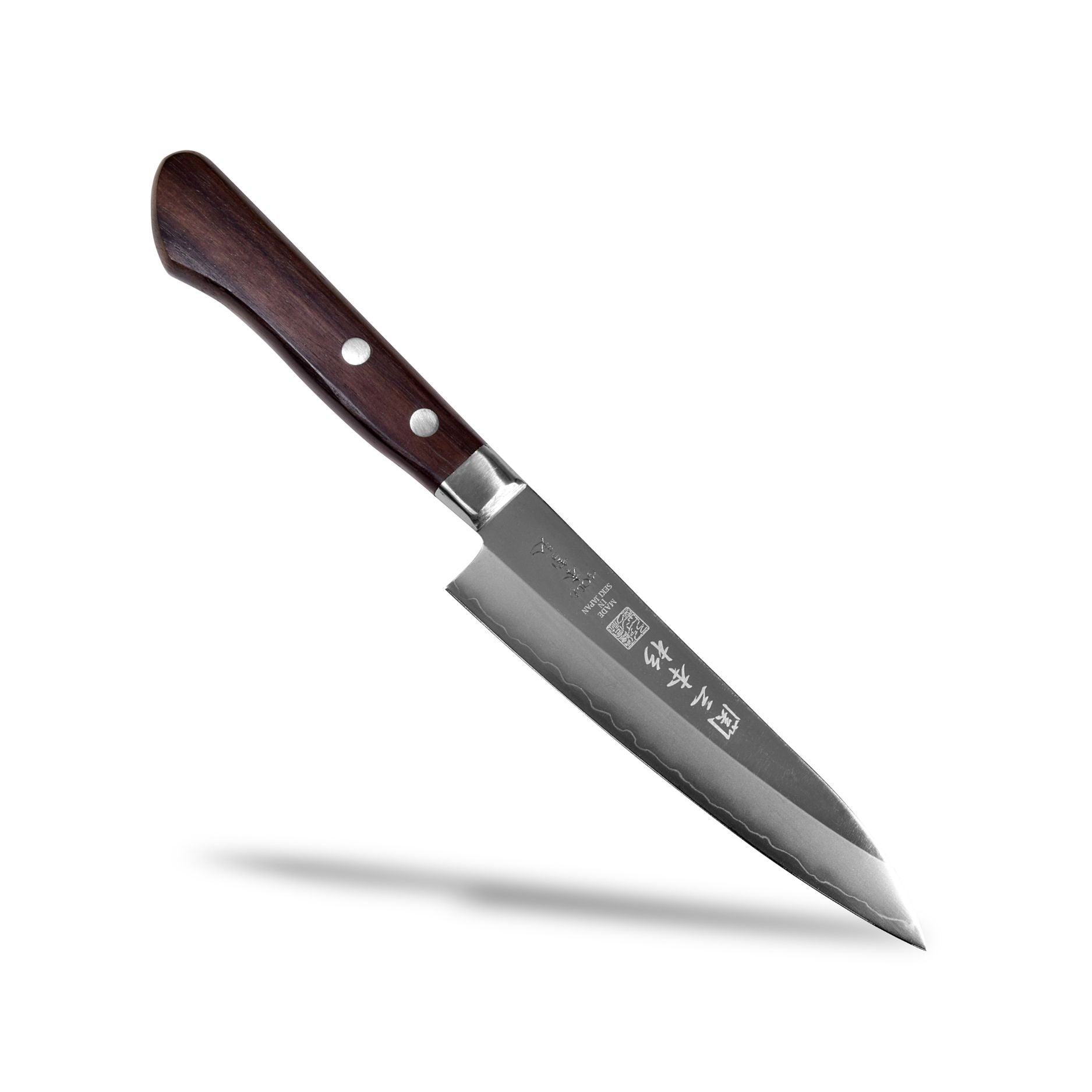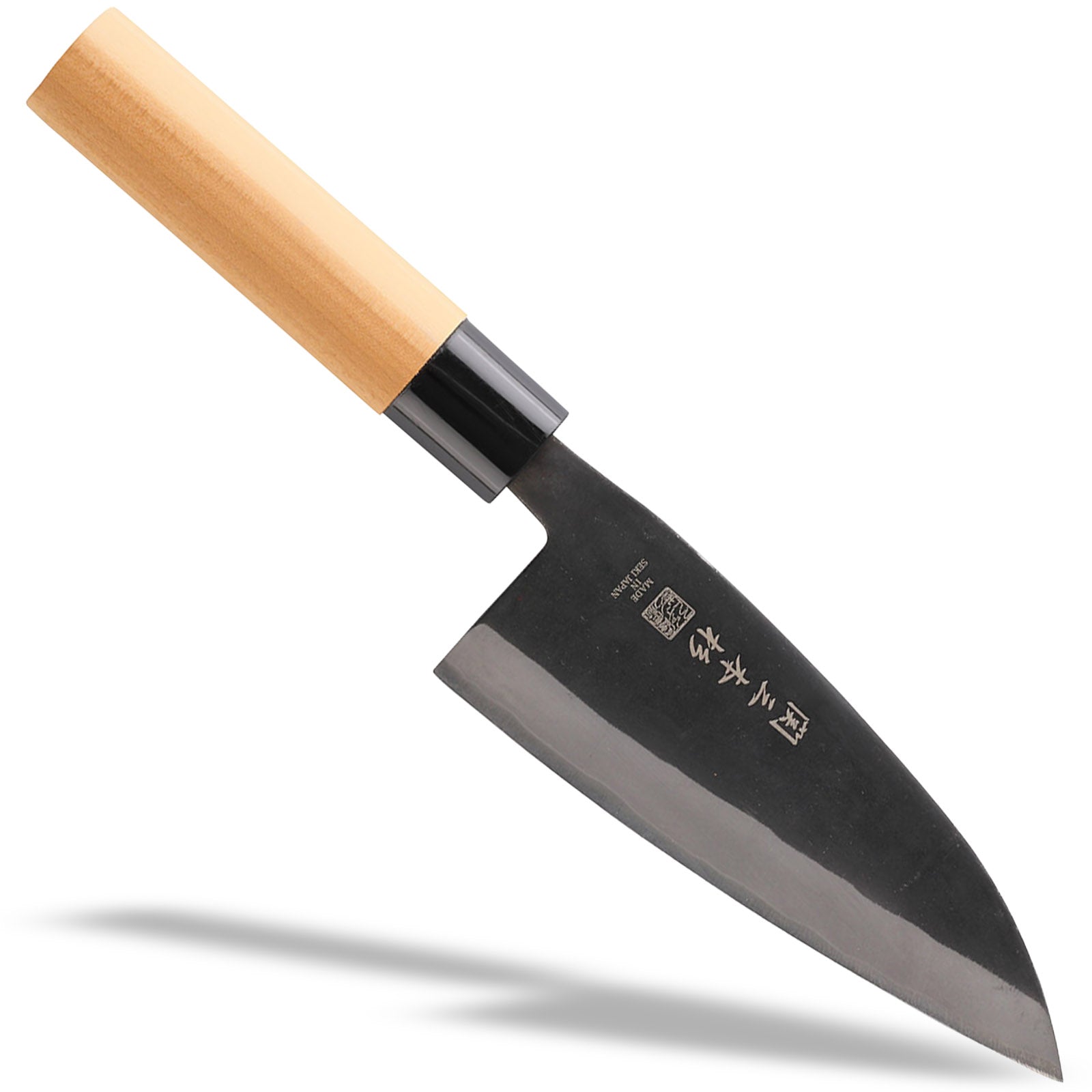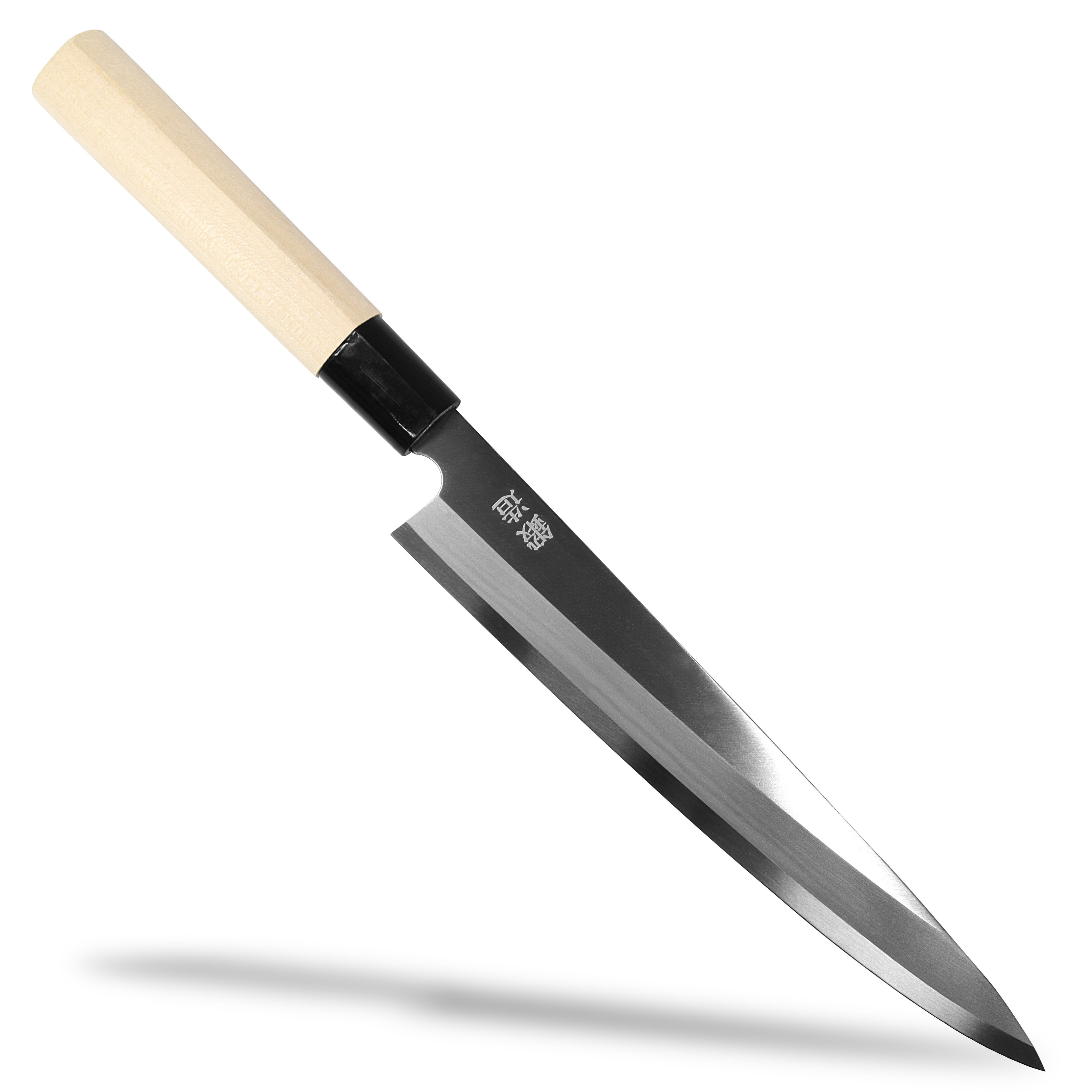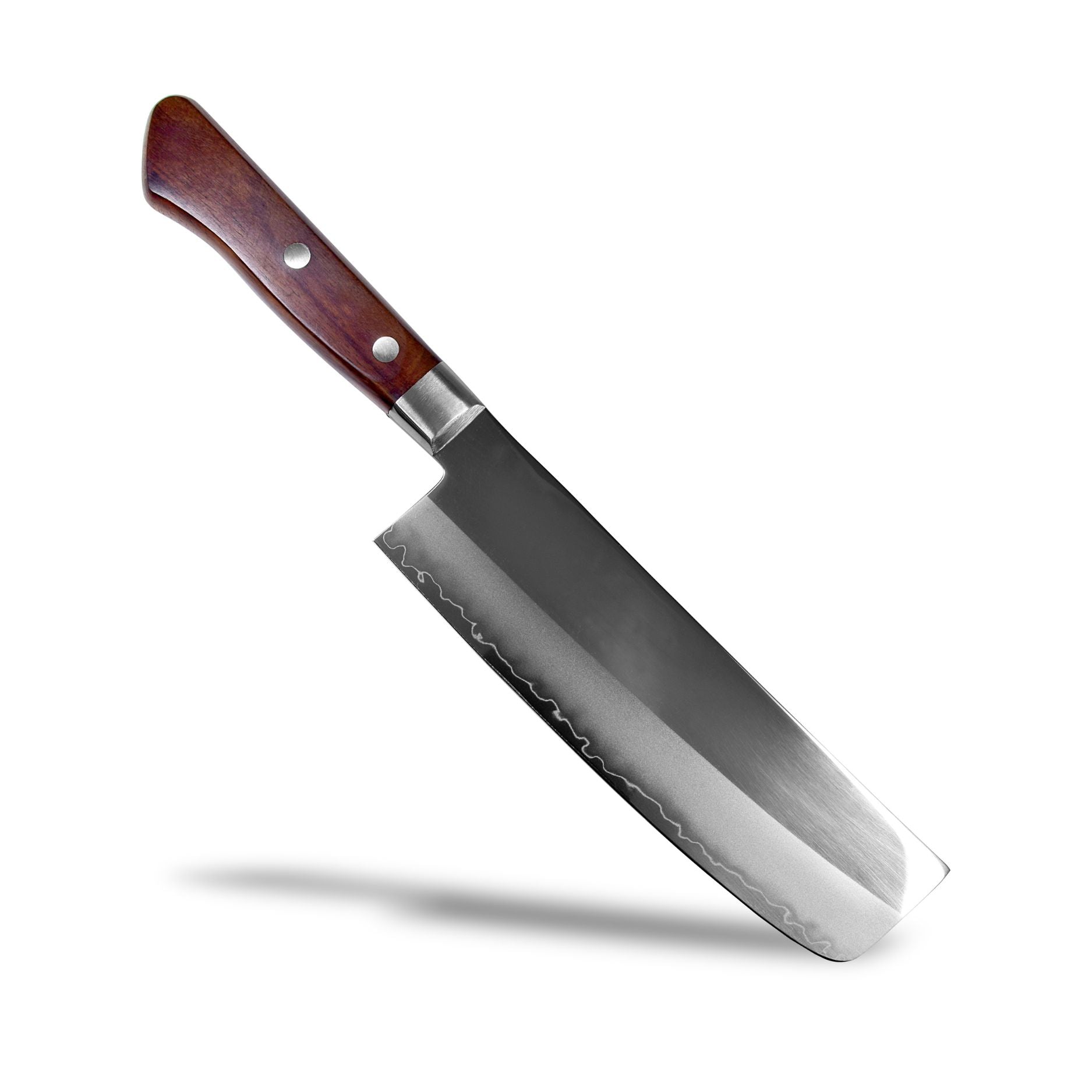

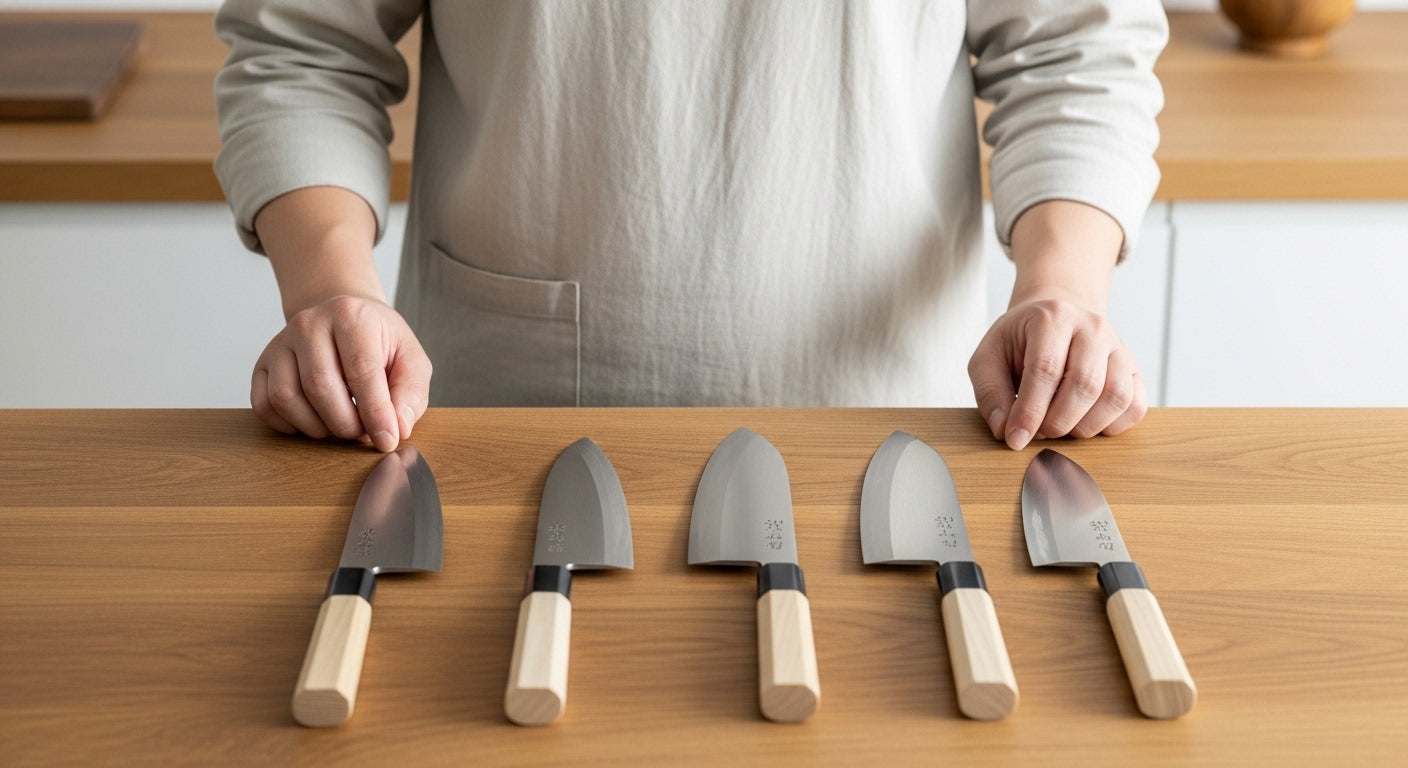
[Japanese Kitchen Knife Steel Selection] Use this comparison chart to find the perfect knife for you.
In conclusion, the most rational approach to choosing a Japanese kitchen knife is to compare the characteristics of different types of steel used, such as "carbon steel (white paper, blue paper, etc.)" and "stainless steel (silver-3, V-gold 10, etc.)," using a comparison chart, and then select one that suits your skill level and usage environment.
[Key points of this article]
The characteristics of Japanese kitchen knives are determined by their carbon content and alloy composition, which greatly affect their sharpness, susceptibility to rust, and ease of sharpening.
The comparison chart provides a clear overview of the hardness, sharpness, rust resistance, and ease of sharpening of representative steel materials such as Shirogami, Aogami, Gin-san, and VG10, making selection easier for everyone from beginners to professionals.
The most important thing is to choose steel materials from a zone that suits your skill level and the environment in which you will be using them.
Today's review: 3 key points
The characteristics of Japanese kitchen knives are determined by their carbon content and alloy composition, which greatly affect their sharpness, susceptibility to rust, and ease of sharpening.
The comparison chart provides a clear overview of the hardness, sharpness, rust resistance, and ease of sharpening of representative steel materials such as Shirogami, Aogami, Gin-san, and VG10, making selection easier for everyone from beginners to professionals.
The most important thing is to choose steel materials from a zone that suits your skill level and the environment in which you will be using them.
Conclusion of this article
In conclusion, the selection of steel for a Japanese kitchen knife depends on whether it's carbon steel or stainless steel, and how to combine different grades such as Shirogami, Aogami, Gin-san, and VG10.
Using a steel comparison chart, you can intuitively compare the balance of sharpness, edge retention, rust resistance, and ease of sharpening using numbers and symbols, making it easier to choose the perfect knife for you.
For beginners, it's best to choose from recommended steels based on skill level, such as White Steel No. 3, AUS series, or Silver Steel No. 3, while for those aiming to become professionals, White Steel No. 2, Blue Steel No. 2, or VG10.
The first thing beginners should understand is that "you can read the characteristics of steel by looking at its carbon content and composition."
How should I read a comparison chart for selecting Japanese kitchen knife steel?
In conclusion, if you use a steel comparison chart with "vertical axis = type of steel, horizontal axis = sharpness, durability, rust resistance, ease of sharpening, and intended use," the confusion when selecting a Japanese kitchen knife will be greatly reduced.
In explanations from knife manufacturers, a table is used to compare carbon steels such as white steel and blue steel with stainless steels such as molybdenum vanadium steel and VG10, using symbols like ○◎△ to indicate hardness, sharpness, durability, rust resistance, and ease of sharpening.
The key factors in the steel used for Japanese kitchen knives are the "carbon content" and "alloy composition." Increasing the carbon content improves hardness and sharpness, but also makes the steel more prone to rusting and chipping. Conversely, increasing the alloy composition (chromium, molybdenum, vanadium, etc.) improves rust resistance and wear resistance. Japanese kitchen knife steel is broadly divided into "carbon steel (such as white steel, blue steel, and Japanese steel)" and "stainless steel (such as silver steel, V-Gold 10, and molybdenum vanadium steel)," and each of these has multiple grades.
According to an explanation from a Japanese kitchen knife specialty shop, "the only two points to scientifically understand about Japanese kitchen knives are the carbon content and composition," and it is explained that if you understand these two points, you won't get confused when looking at a list of steel types.
The most important thing is not the name or brand of the steel, but "reading the performance balance required for your specific use from the comparison chart."
Japanese knife steel material selection comparison table: Carbon steel zone
What are the differences between representative carbon steel materials?
In conclusion, white steel is positioned as "prioritizing pure sharpness," while blue steel is positioned as "a professional-grade blade with enhanced durability and wear resistance due to alloy additions."
In the explanation of carbon steel, White Steel No. 1, No. 2, and No. 3, and Blue Steel No. 1 and No. 2 are listed as representative steel materials. White Steel is described as carbon steel with impurities removed as much as possible, while Blue Steel is alloy steel with alloying elements such as tungsten added to improve wear resistance. In the comparison table, it is shown that the roles tend to differ depending on whether the focus is on the immediate sharpness or the duration of sharpness, such as "White Steel No. 1 = Sharpness ◎, Durability ○, Rust ×" and "Blue Steel No. 1 = Sharpness ○, Durability ◎, Rust ×".
According to Jikko Cutlery's materials, "White Steel No. 1 is the steel with the best sharpness" and "Blue Steel No. 1 is the steel with the best retention of sharpness," and it is explained that by using different steels for single-edged Japanese knives (such as yanagiba and deba), they are able to bring out the maximum performance. In comparison charts from other manufacturers, carbon steel often has a hardness of around HRC60 or higher, and is given "excellent level sharpness" and "excellent to good retention," but is often rated as "fair to poor rust resistance" and "excellent for resharpening."
The first thing beginners should understand is the characteristics of the carbon steel zone: "White steel = specialized for sharpness, Blue steel = specialized for durability and toughness, both are prone to rust but easy to sharpen."
Recommended zones for carbon steel vary from apprentice to expert.
In conclusion, it is realistic to progress through carbon steel in stages: "Apprentice = White Steel No. 3", "Intermediate = White Steel No. 2 and Blue Steel No. 2", and "Expert = White Steel No. 1 and Blue Steel No. 1".
An article explaining how to choose the right steel for Japanese kitchen knives divides chefs into three classes: apprentice, intermediate, and expert. It suggests that apprentices should use White Steel No. 3, intermediate chefs should use White Steel No. 2 and Blue Steel No. 2, and experts should use White Steel No. 1 and Blue Steel No. 1. The article indicates that as one's skill level increases, they should move towards higher carbon and harder steels, and that higher grades should be chosen once one has established "skill and maintenance habits."
As a concrete example, apprentices learn both ease of sharpening and handling with White Steel No. 3 + AUS steel (stainless steel), intermediate workers improve their sharpness and rust resistance in the field with White Steel No. 2, Blue Steel No. 2 + Silver Steel No. 3, and VG10, and skilled workers challenge themselves with White Steel No. 1, Blue Steel No. 1 + Silver Steel No. 3, and VG10 to gain confidence in their sharpening and maintenance skills.
The most important thing is not to jump straight to the top-of-the-line White Paper No. 1 or Blue Paper No. 1, but to gradually step up from the carbon steel zone that matches your skill level.
Comparison table of carbon steel zones
In conclusion, the carbon steel zone is characterized by "excellent sharpness and ease of sharpening, but moderate rust resistance," making it a suitable material group for professional-grade Japanese knives.
| steel material | sharpness | Durability | Chorus | Ease of sharpening | direction |
|---|---|---|---|---|---|
| Blank paper No. 3 | ○ | ○ | × | ◎ | A comprehensive introduction to apprenticeship and home-based care. |
| Blank paper No. 2 | ◎ | ○ | × | ◎ | Used frequently by mid-level chefs, including single-edged knives such as yanagiba. |
| Blank paper No. 1 | ◎ | ○ | × | ○ | Designed for experienced users, prioritizing superior sharpness. |
| Aogami No. 2 | ○ | ◎ | × | ○ | For intermediate to experienced professionals, balanced professional use. |
| Aogami No. 1 | ○ | ◎ | × | △ | For experienced professionals, durability is paramount. |
Based on a comparison chart like this, the first step in selecting a Japanese kitchen knife is to decide "which part of the carbon steel zone to target."
Japanese Kitchen Knife Steel Selection Comparison Chart: Stainless Steel Zone
What are some representative types of stainless steel?
In conclusion, the pillars of the stainless steel zone are "molybdenum vanadium steel," "silver-3 steel," and "VG10," each with its own strengths.
According to the manufacturer's explanation, molybdenum vanadium steel is a material that enhances wear resistance and toughness by adding molybdenum and vanadium to stainless steel blades, and is used in a wide range of knives from household to professional use. In the same table, molybdenum vanadium steel is rated as "Hardness ○, Sharpness ○, Durability ◎, Rust Resistance ○, Sharpening △", and with a hardness of approximately HRC56±1, it is positioned as a balanced type suitable for both professional and household use.
On the other hand, VG10 is a high-grade stainless steel blade made from high-purity iron plus various rare metals. It is described as having very few impurities, being hard and highly wear-resistant due to the addition of cobalt, and having elasticity due to the addition of molybdenum. In the comparison table, VG10 is rated as having "Hardness ◎, Sharpness ◎, Durability ○, Rust △, Resharpening ◎," with an estimated HRC of around 58±1. It is described as "the optimal material" for both Japanese and Western knives, for both professional and home use.
While Gin-san steel is slightly inferior to VG10 in terms of hardness and wear resistance, it is easy to resharpen, and its cutting edge is said to be extremely sharp, comparable to carbon steel. It is introduced as a steel material favored by chefs.
Comparison table of stainless steel zones
In conclusion, the stainless steel zone shows considerable variation in characteristics depending on the grade, with "rust resistance △ to ○, sharpness ○ to ◎, and ease of sharpening △ to ◎".
| steel material | sharpness | Durability | Chorus | Ease of sharpening | HRC hardness | direction |
|---|---|---|---|---|---|---|
| Molybdenum vanadium steel | ○ | ◎ | ○ | △ | 56±1 | Standard items for commercial and home use |
| Ginsanko | ◎ | ○ | △ | ○ | High hardness class | Professional-grade, easy-to-sharpen stainless steel. |
| V Gold No. 10 | ◎ | ○ | △ | ◎ | 58±1 | High-grade stainless steel, ideal for commercial and home use. |
The VG10 santoku knife is described as "easy to maintain, rust-resistant, and has professional-grade sharpness. If you want even sharper blades, we recommend moving on to Aogami steel." It is also promoted as a bridge between stainless steel and carbon steel.
For beginners, molybdenum-based or silver-plated blades are suitable, while for professionals or those prioritizing long-lasting sharpness, VG10 is a good choice. Within the stainless steel category, using a comparison chart to select blades in stages is effective.
Carbon steel vs. stainless steel: How to read the comparison table
In conclusion, it's important to understand from the comparison table that "carbon steel has a high peak performance, while stainless steel has a high average performance."
| shaft | carbon steel | stainless steel |
|---|---|---|
| sharpness | ◎ (e.g., blank 1 and 2) | ○〜◎ (Gin-san, VG10, etc.) |
| Blade retention | ○~◎ (Blue paper type is strong) | ○〜◎ (Molybdenum VG10 has long-lasting sharpness) |
| Chorus | △~× (Prone to rusting) | ○ to △ (relatively resistant to rust) |
| Ease of sharpening | ◎〜○ (Good compatibility with whetstones) | ◎ to △ (There is a big difference depending on the material) |
| Suitable people | Professional-grade design prioritizing sharpness and sharpening. | For those seeking easy maintenance and high performance. |
The most important thing is to decide on your priorities (sharpness, rust resistance, ease of sharpening, price) and then use this comparison chart like a mapping diagram to narrow down your choices of steel.
FAQ
Q1. What type of steel should I learn about first when it comes to Japanese kitchen knives?
A1. First, you need to decide whether it's carbon steel or stainless steel, and then it's sufficient to know about representative steel materials such as Shirogami, Aogami, Gin-san, and VG10.
Q2. Which type of steel is recommended for beginners?
A2. Beginner-friendly steels that are easy to sharpen and reasonably resistant to rust are recommended, such as White Steel No. 3, AUS steel, and Silver Steel No. 3.
Q3. Which steel material should I choose if I'm aiming to be a professional?
A3. Steel materials suitable for intermediate to skilled craftsmen are selected, such as White Paper No. 2, Blue Paper No. 2, White Paper No. 1, Blue Paper No. 1, Silver Steel No. 3, and VG10.
Q4. Which is superior, V-Gold No. 10 or Silver No. 3 steel?
A4. VG10 has high hardness and wear resistance, while Gin-san is easy to sharpen, so it is common to use them interchangeably depending on the desired balance.
Q5. What is the biggest difference between carbon steel and stainless steel?
A5. Carbon steel excels in sharpness and ease of sharpening, but is prone to rust. Stainless steel is rust-resistant and easy to maintain, but tends to have slightly inferior sharpness compared to other materials of the same rank.
Q6. What does HRC (Hardness Celsius) in the comparison table mean?
A6. HRC is an index of Rockwell hardness; the higher the number, the harder the blade, resulting in better sharpness and edge retention, but also making it more prone to chipping and harder to sharpen.
Q7. If you were choosing a steel material for home use that would last a lifetime, which type would you recommend?
A7. If you're confident in your maintenance skills, White Steel No. 2 or Blue Steel No. 2 are good choices for a "realistic lifelong" sword. If ease of use is your priority, VG10 or Gin-san steel are good options.
Q8. Is it sufficient to choose a kitchen knife by only looking at the steel material?
A8. While the steel material is important, the blade shape, size, and the manufacturer's heat treatment technology also greatly affect the sharpness, so it's necessary to consider all factors together.
Q9. What are some tips for choosing a Japanese kitchen knife from the list?
A9. First, decide on the main use (sashimi, meat, or vegetables), then decide whether to use carbon steel or stainless steel, and finally narrow down the steel grade using a comparison table. This will help you avoid making a mistake.
Q10. How much price difference can there be depending on the type of steel used?
A10. Even with the same shape, there is often a difference of several thousand to tens of thousands of yen in price, in the order of general-purpose stainless steel → molybdenum-based → silver-3/VG10 → white steel/blue steel.
summary
This Japanese kitchen knife steel comparison chart is a convenient tool that allows you to visually understand which type of steel suits you best by organizing "carbon steel (such as white paper and blue paper)" and "stainless steel (such as silver, VG10, and molybdenum-based steels)" along axes of sharpness, durability, rust resistance, ease of sharpening, and hardness.
For beginners, it is recommended to choose steels such as White Steel No. 3, AUS, or Silver Steel No. 3, while intermediate to skilled players can gradually move up to high-performance stainless steels such as White Steel No. 2, Blue Steel No. 2, White Steel No. 1, Blue Steel No. 1, and then VG10 or Silver Steel No. 3.
In conclusion, the most important thing is to articulate your own skill level and usage environment, and then narrow down the steel material zones that suit those conditions using a comparison chart. This is the quickest way to find "the one for you" without hesitation.