
[Recommended Japanese Kitchen Knives for Beginners] A clear explanation of how to choose your first knife and a ranking of recommended knives.
In conclusion, the safest approach for beginners choosing their first Japanese kitchen knife is to "start with a santoku knife, and choose one with an easy-to-handle steel and that suits your cooking style."
[Key points of this article]
For beginners, we recommend a combination of a "Santoku 18cm" or "Gyuto 21cm" knife with an easy-to-handle steel (entry-level carbon steel or high-quality stainless steel).
Most importantly, choosing a material that suits your level of maintenance and cooking frequency will determine the balance between sharpness and ease of use.
This guide presents a ranking of "Japanese kitchen knives that are less likely to cause problems," and provides a comprehensive understanding of how to choose the right knife for beginners, the differences between steel types, and essential maintenance points.
Today's review: 3 key points
For beginners, we recommend a combination of a "Santoku 18cm" or "Gyuto 21cm" knife with an easy-to-handle steel (entry-level carbon steel or high-quality stainless steel).
Most importantly, choosing a material that suits your level of maintenance and cooking frequency will determine the balance between sharpness and ease of use.
This guide presents a ranking of "Japanese kitchen knives that are less likely to cause problems," and provides a comprehensive understanding of how to choose the right knife for beginners, the differences between steel types, and essential maintenance points.
Conclusion of this article
In conclusion, for your first Japanese kitchen knife, the best options are either a "18cm Santoku knife with rust-resistant stainless steel" or an "entry-level carbon steel knife with easy maintenance."
A realistic ranking for beginners would consist of a "Santoku knife (all-purpose)," a "Gyuto knife (more suited for meat and Western-style cooking)," and a "Petty knife (for secondary use)."
Choosing steel materials becomes easier if you consider them along the lines of "carbon steel = emphasis on sharpness and ease of sharpening" and "stainless steel = emphasis on rust resistance and convenience."
The first thing beginners should keep in mind is to focus on a versatile, easy-to-handle steel for their first knives.
Recommended Japanese kitchen knives for beginners: Ranking
The "Ranking of Recommended Japanese Kitchen Knives for Beginners" is determined by three factors: versatility, ease of use, and ease of maintenance.
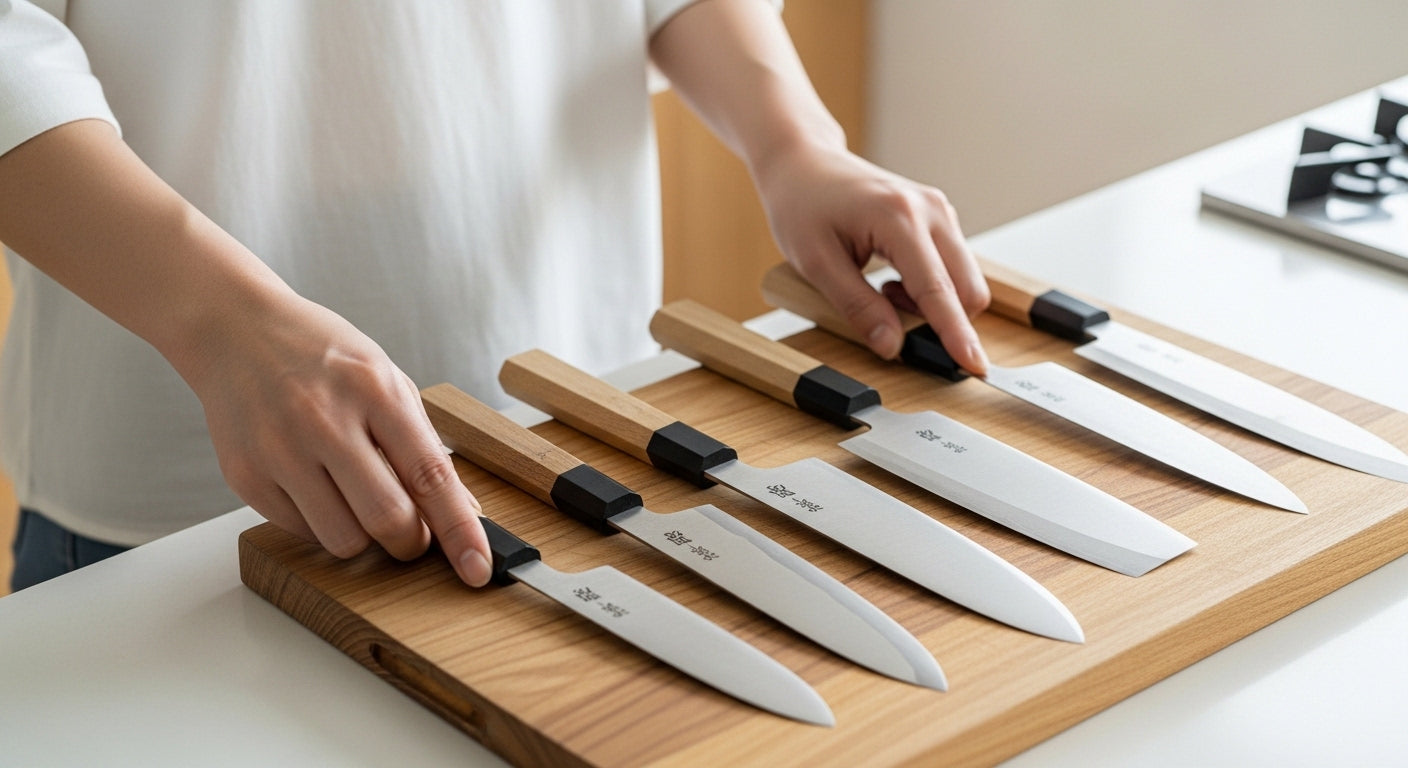
In various comparison articles and explanations from specialty stores, the basic setup for home use is generally considered to be a santoku knife for your first knife, a chef's knife if you prefer a Western-style knife, and a petty knife as a secondary knife. Here, instead of listing specific product names, we will organize a beginner-friendly ranking based on the combination of type and steel, clarifying the criteria for choosing a knife.
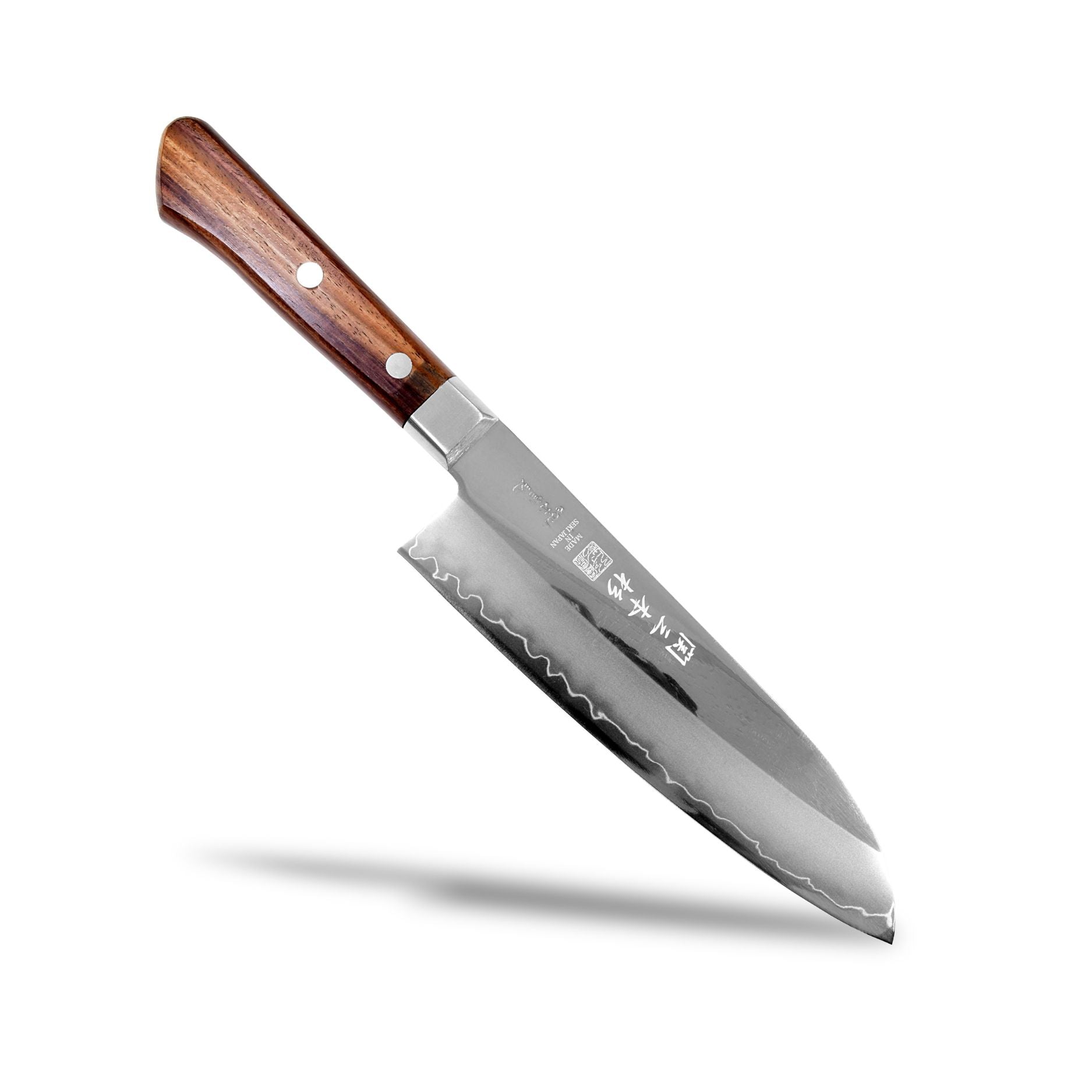
1st Place: Santoku Knife 18cm × Stainless Steel
In conclusion, the combination that is least likely to fail is the "18cm Santoku knife + stainless steel" combination.
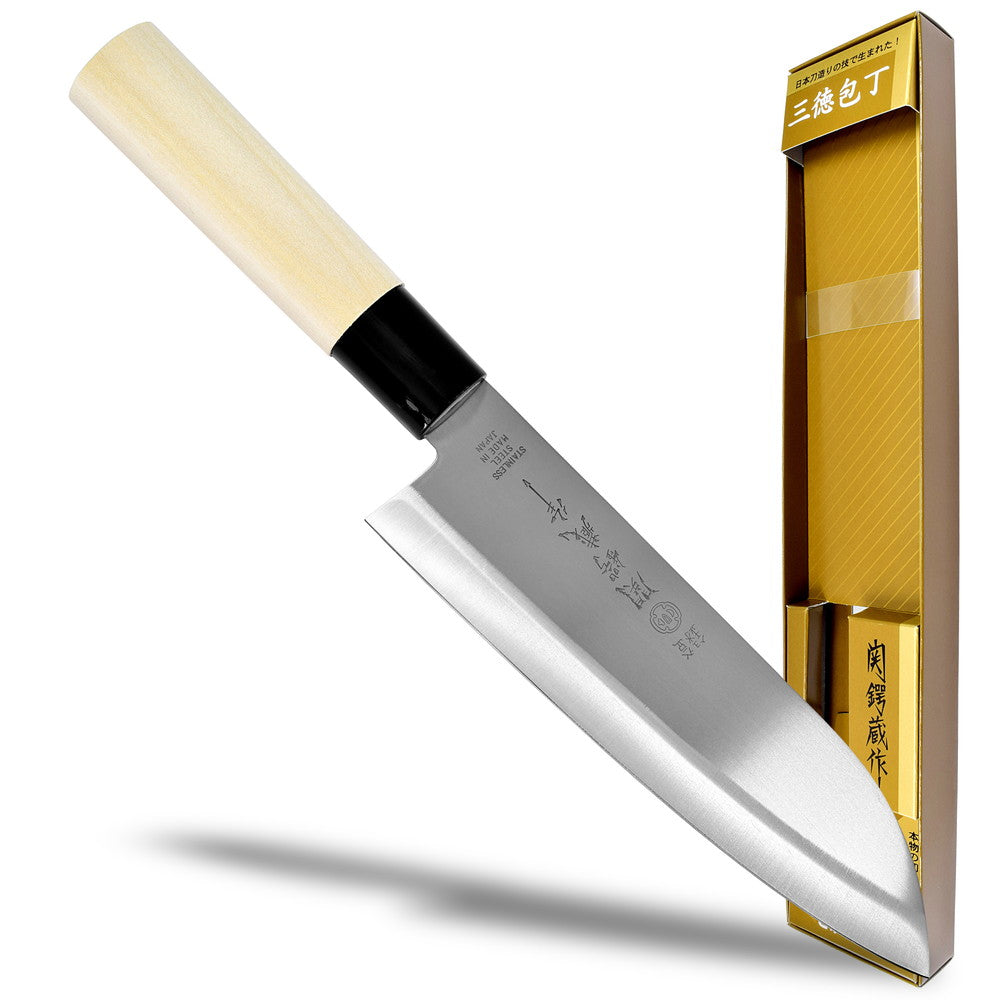
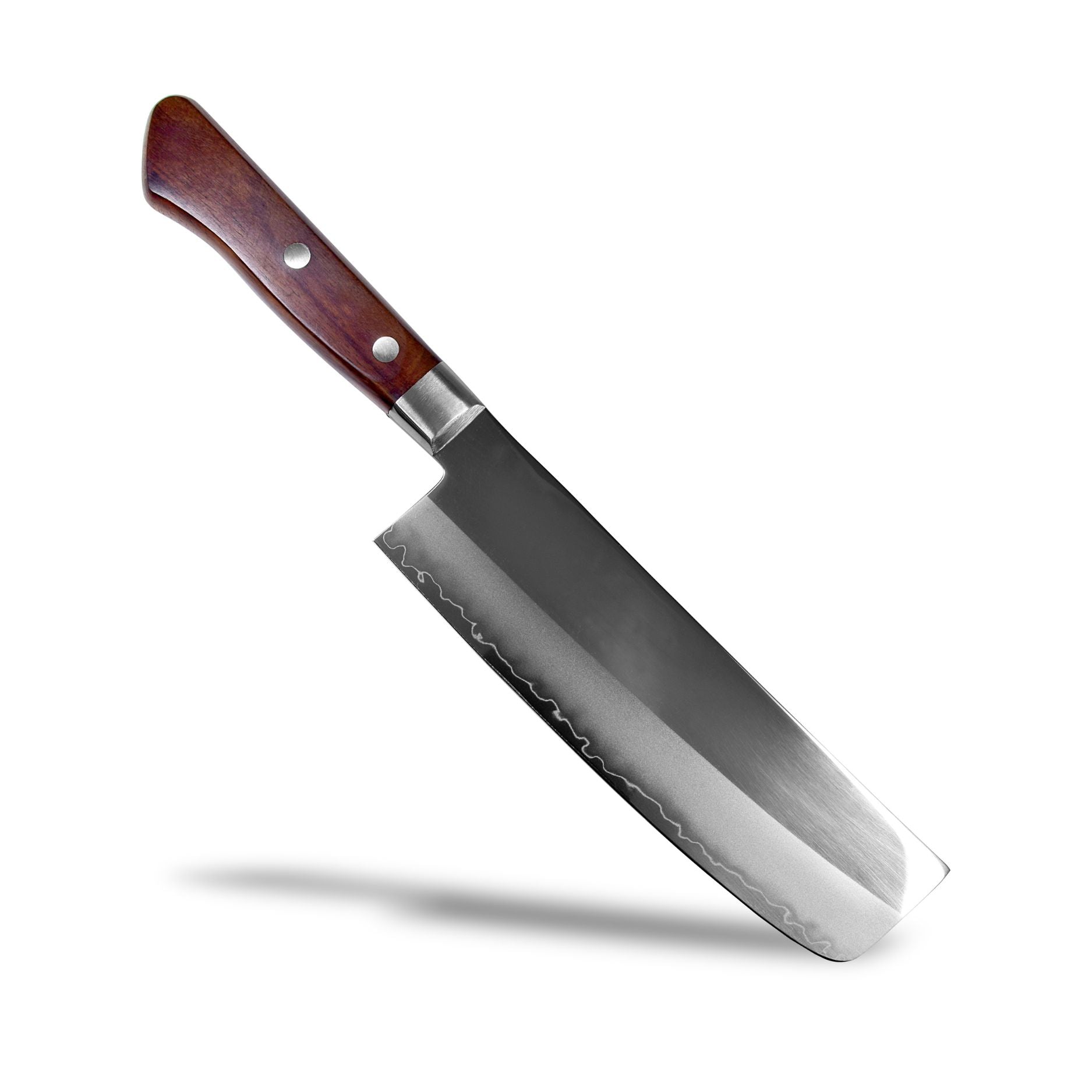
The Santoku knife derives its name from its "three virtues" of meat, fish, and vegetables, and has become a staple all-purpose knife capable of handling almost all aspects of home cooking, regardless of whether it's Japanese, Western, or Chinese cuisine. As for the steel material, molybdenum vanadium stainless steel and V-gold stainless steel are often recommended as suitable choices for beginners due to their good balance of rust resistance, sharpness, and durability.
In households where knives are usually left in the sink or dishwasher is used, or for people who don't cook every day but are stressed by dull knives, or for people who want to gradually learn how to sharpen knives but are hesitant to start with carbon steel, there are many reports that simply having a stainless steel santoku knife can make everyday cooking much more comfortable.
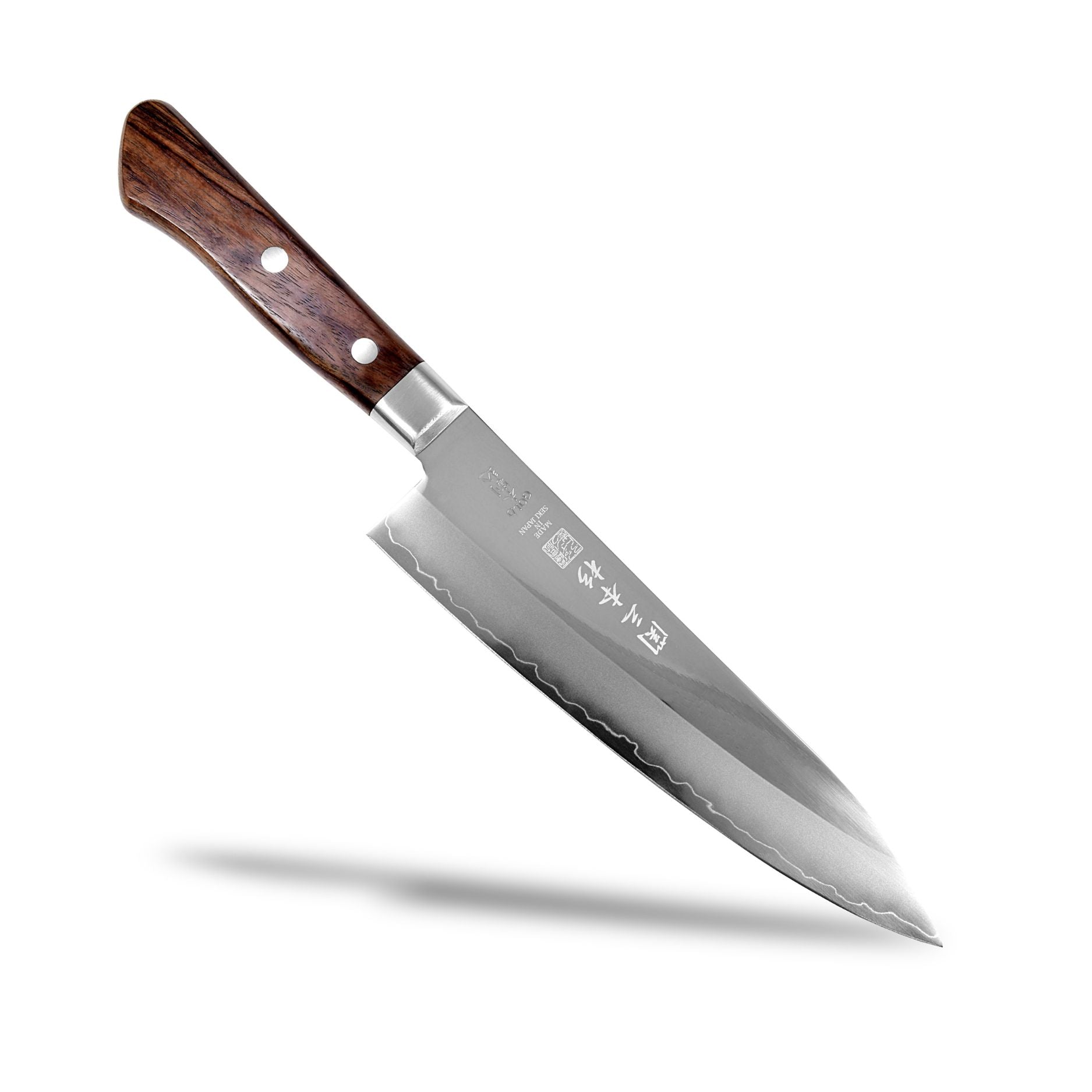
2nd Place: 21cm Chef's Knife × Stainless Steel
In conclusion, for households that frequently eat meat and Western food, or those that often use large ingredients, a 21cm chef's knife is a better fit than a santoku knife.
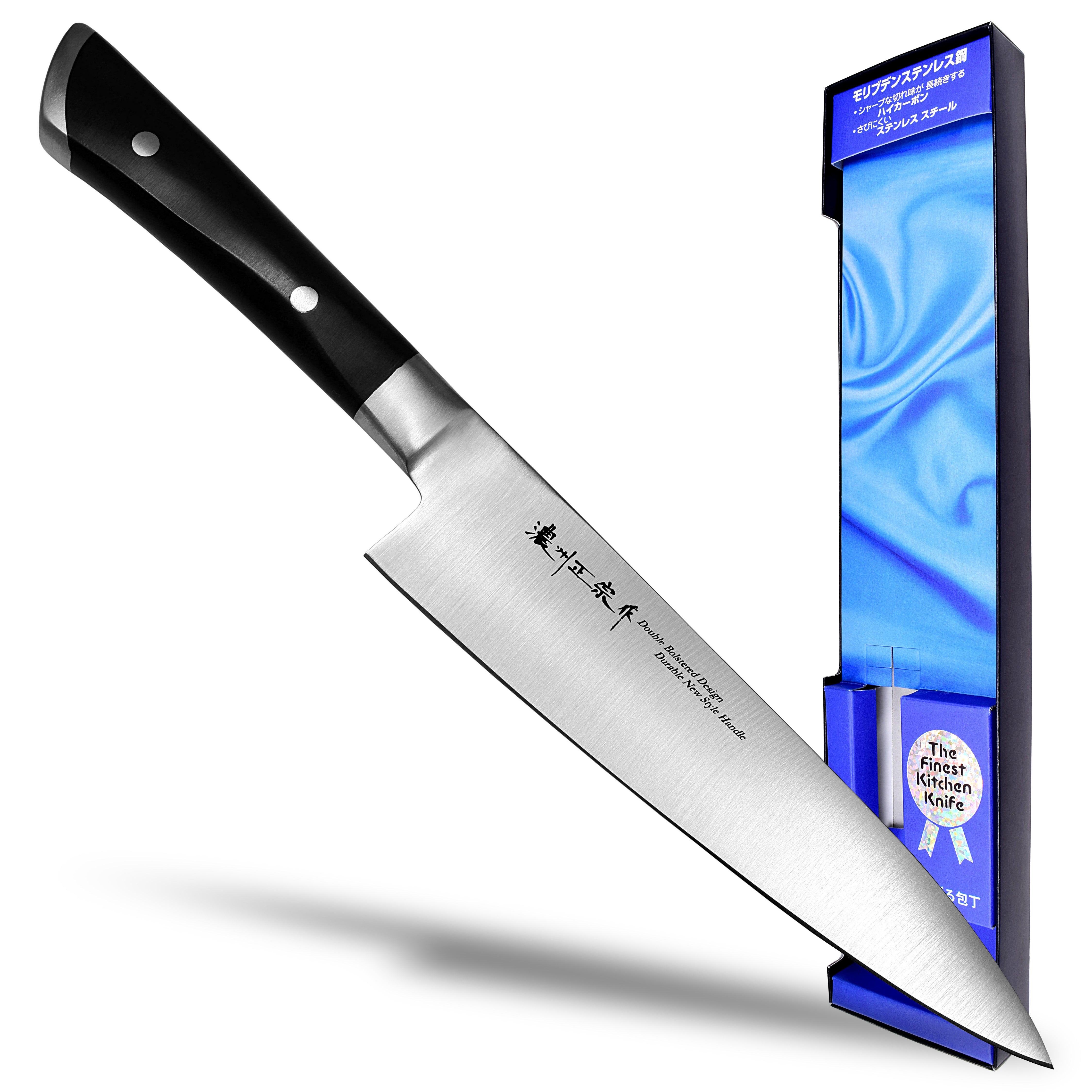
While the chef's knife is originally a Western-style knife, more and more Japanese knife manufacturers and specialty stores are recommending it as the "main knife for home use," and it is said to be easier to handle than a santoku knife, especially for large cuts of meat or large cabbages. If you choose a steel material like molybdenum-based or V-Gold stainless steel, just like with a santoku knife, it will be rust-resistant, require less frequent sharpening, and maintain sufficient sharpness for a long period of time.
For households that frequently handle steaks, roast beef, or large cuts of meat for BBQ, want to quickly chop bread or large vegetables, and have ample cutting board and kitchen space, choosing a 21cm chef's knife as your first knife and adding a santoku or paring knife later as needed is a good stepping stone from beginner to intermediate level.
3rd Place: Santoku 18cm × Beginner's Carbon Steel
For beginners who also want to enjoy the maintenance process, a 18cm Santoku knife with an entry-level carbon steel blade is a recommended choice.
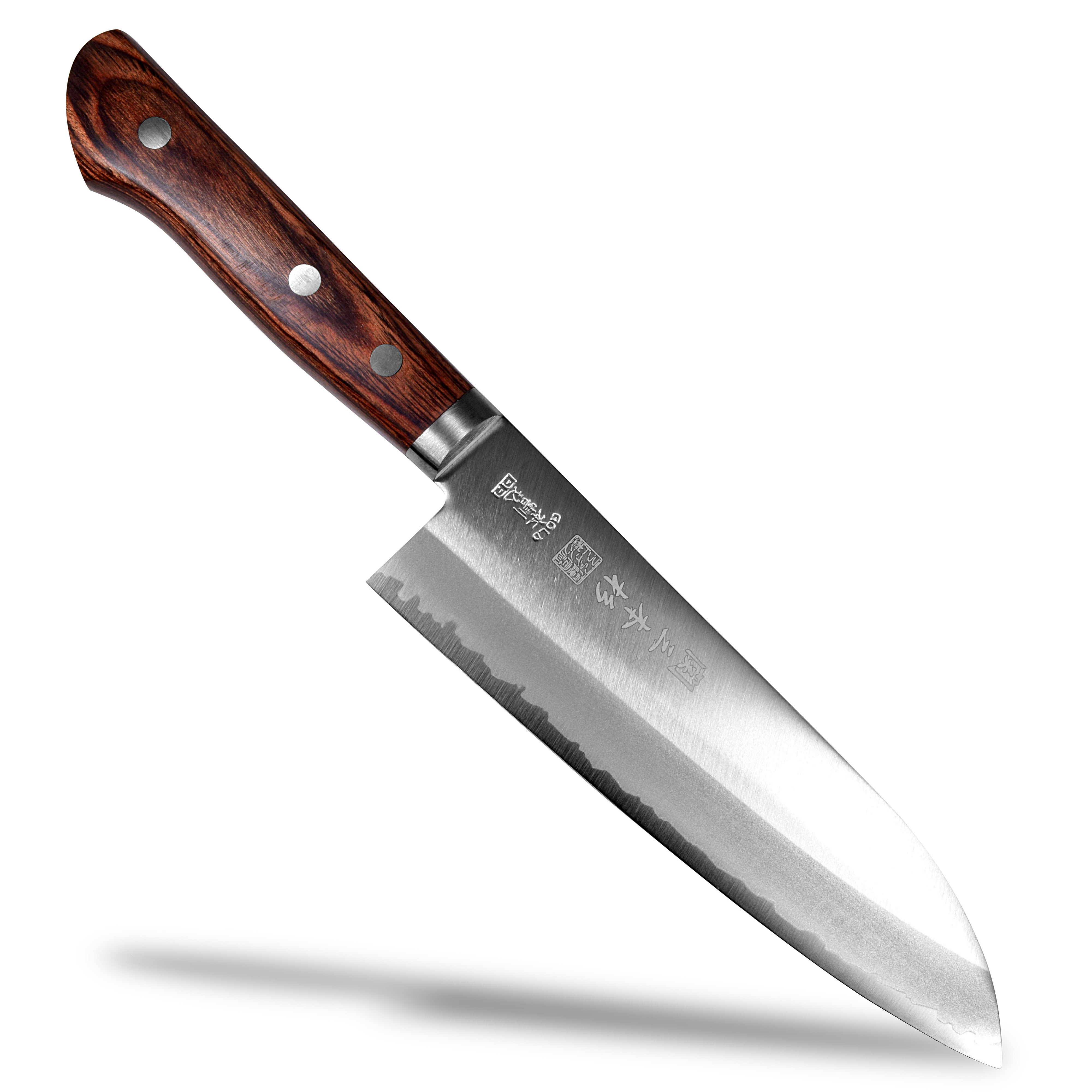
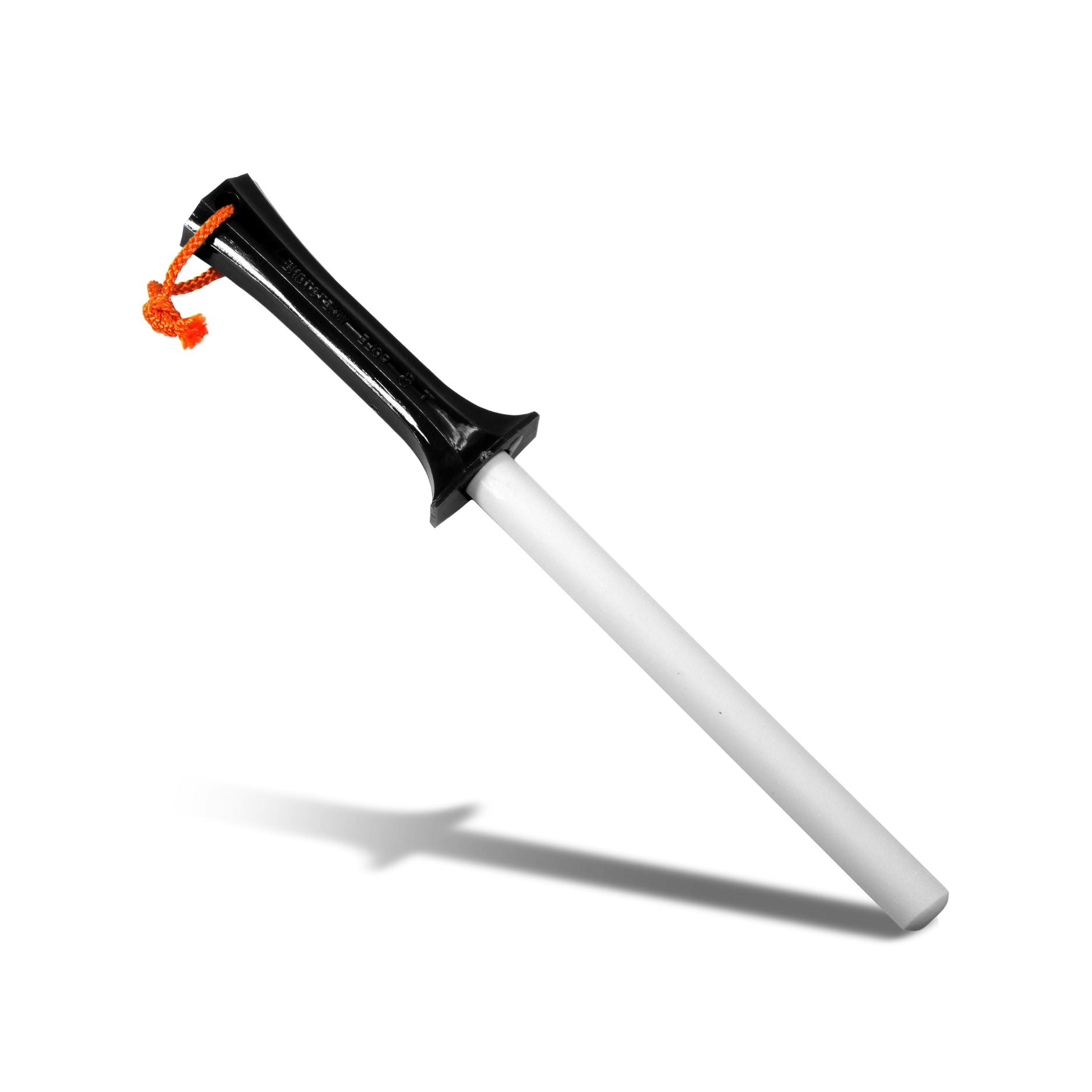
While carbon steel is more prone to rusting than stainless steel, it excels in sharpness and ease of sharpening, and is considered a good material for those who want to learn how to sharpen because it provides a clear "feel" of the blade catching on the whetstone. Entry-level carbon steels such as White Steel No. 3 and Japanese Steel SK series are easier to handle and more affordable than high-grade steels like White Steel No. 1 and Blue Steel No. 1, making them a popular choice for those new to carbon steel.
For those who love cooking and enjoy the feeling of nurturing their tools, are interested in sharpening and intend to acquire a whetstone, and are willing to continue washing and wiping their knives after each use to prevent rust, a carbon steel santoku knife will be a great companion that will teach you about both "sharpness" and "the joy of sharpening."
Recommended Japanese kitchen knives for beginners: Key points for choosing your first one.
What type of Japanese kitchen knife should a beginner choose?
In conclusion, the general rule for beginners is to choose either a "santoku" or a "gyuto" as their main knife.
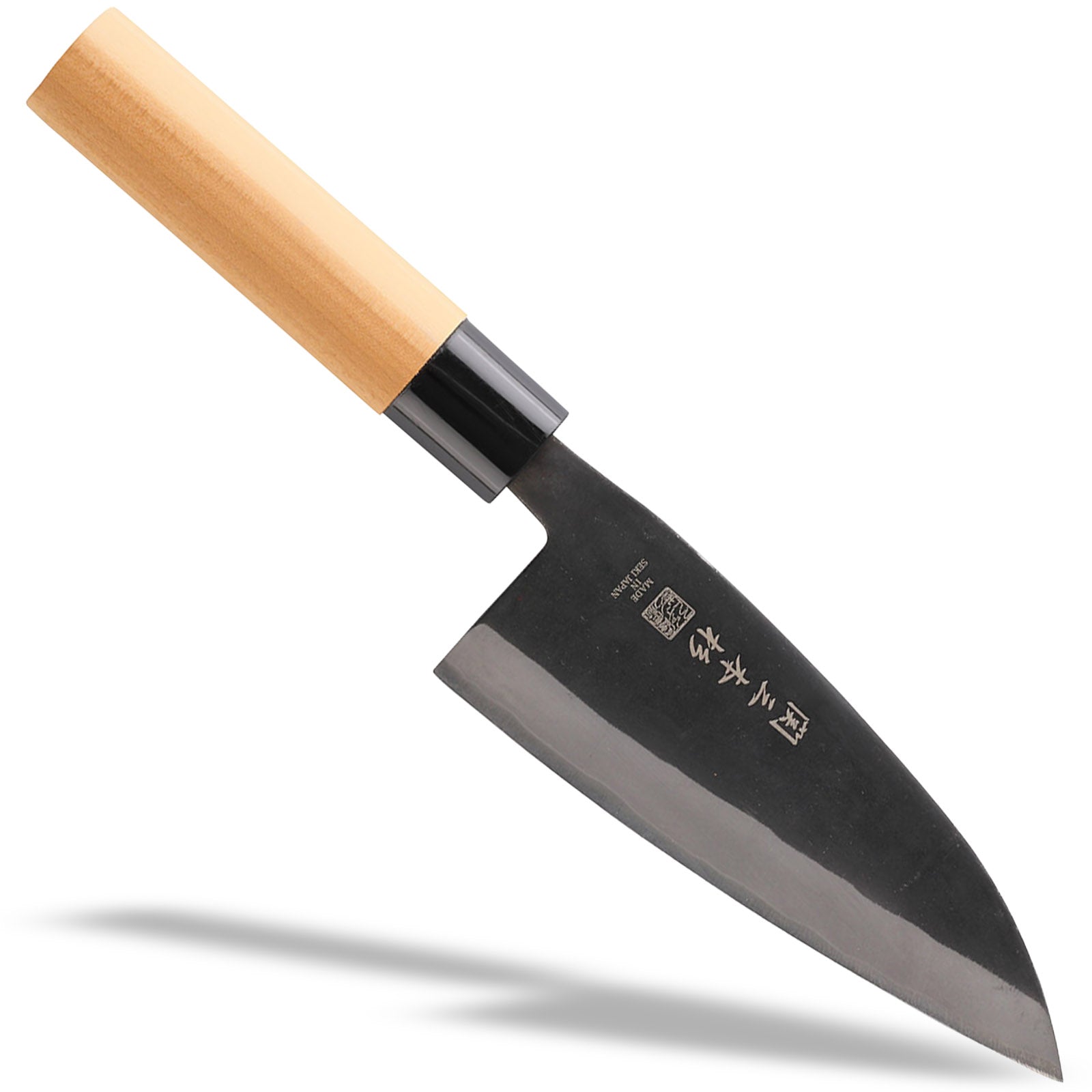
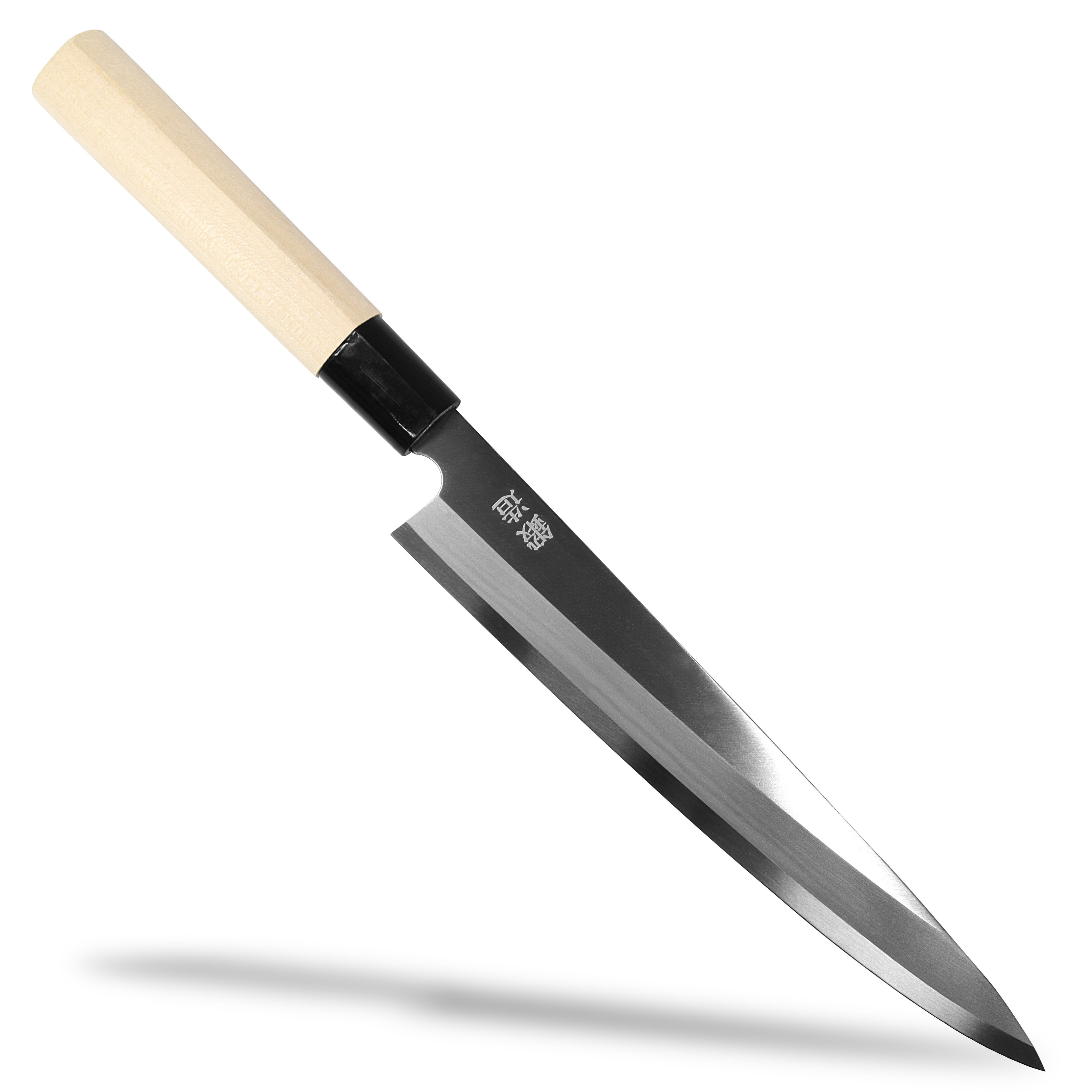
In guides for restaurants and for home use, the first knives you should acquire are listed as "santoku, gyuto, and petty," with the 18cm santoku being recommended as the first one. Traditional Japanese knives such as yanagiba, deba, and usuba are specialized for sashimi, fish, and vegetables, and are more realistically added as a second or third knife.
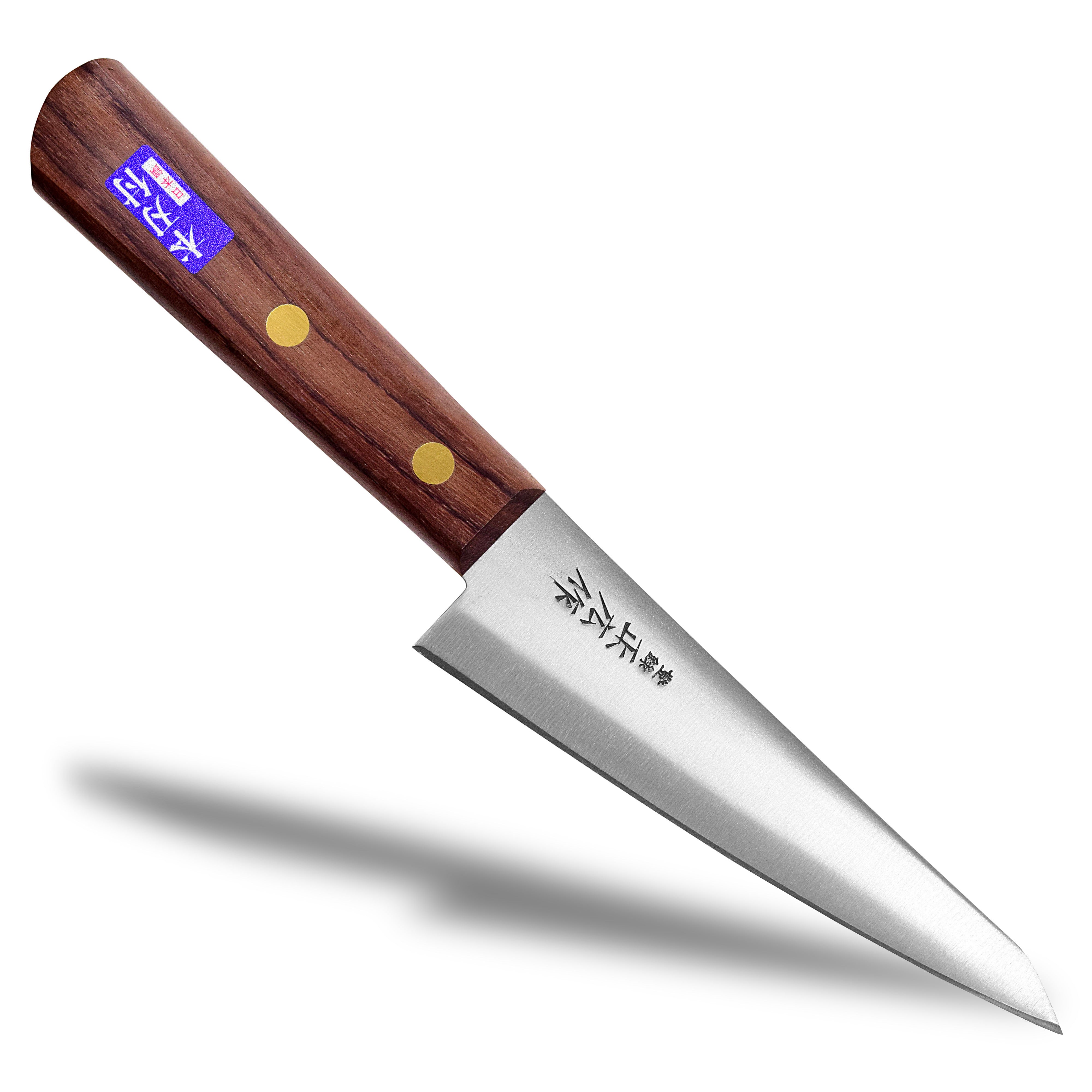
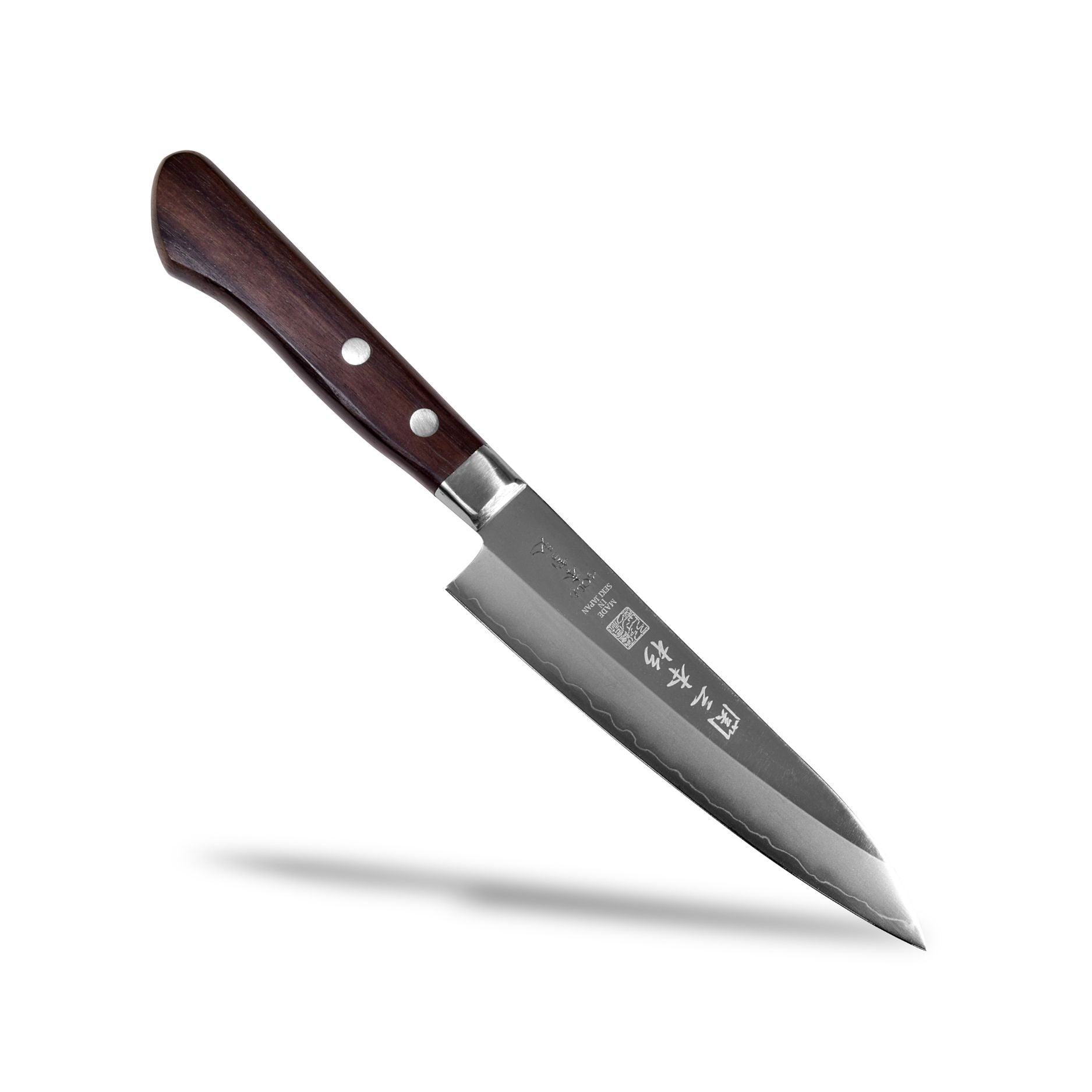
The first thing beginners should understand is the division of roles between knives: the santoku is versatile for Japanese, Western, and Chinese cuisine and suitable for home cooking; the gyuto is mainly for meat and Western dishes and larger ingredients; and the petty knife is a secondary knife for fruits and detailed work. They should decide on "the one knife they will use most often" first, and then build their lineup from there.
What type of steel is recommended for beginners?
In conclusion, the best steel materials for beginners are either "rust-resistant stainless steel" or "easy-to-handle entry-level carbon steel."
Stainless steel blades (such as general stainless steel and molybdenum vanadium steel) have a hardness of around HRC 52-56 and are considered the standard material for household use because they are rust-resistant and easy to maintain. On the other hand, carbon steel such as White Steel No. 3 is hard, with a hardness of around HRC 58, and while it excels in sharpness and ease of sharpening, it is prone to rust, so care must be taken when wiping it down after use and when storing it.
The first thing beginners should understand is that they should consider a broad range of options: stainless steel for easy maintenance, and carbon steel for sharpness and ease of sharpening. After that, they should choose a specific type of steel (such as molybdenum steel, V-Gold steel, or White Steel No. 3).
The most important thing is to determine your own level of care.
"The most important thing is to honestly assess your own level of care."
Material descriptions and advice from specialists repeatedly emphasize that "when choosing between steel and stainless steel, prioritize how well you can maintain it over sharpness." Ignoring this and choosing high-carbon steel when you're not good at rust prevention, or ultra-hard professional-grade steel when you don't have time to sharpen it, often results in wasted potential.
Many explanatory articles and specialty shop blogs feature case studies tailored to different personalities and environments, such as: for busy dual-income families, a stainless steel santoku knife plus a carbon steel one added later if needed; for those who love cooking and tools, starting with a carbon steel santoku knife and using stainless steel for work or other purposes; and for those preparing to open a restaurant, using a steel Japanese knife and a stainless steel chef's knife together, taking into account ease of maintenance on-site.
Recommended Japanese kitchen knives for beginners: Steps to choose
What are the selection steps that beginners should focus on first?
In conclusion, choosing your first Japanese kitchen knife can be made easier by following these "6 steps."
First, determine how often you cook (daily or a few times a week), then decide on your main ingredients (meat, fish, or vegetables), and choose the style of your main knife (santoku, gyuto, or chef's knife). Next, assess your maintenance level and choose between stainless steel or carbon steel, determine your budget (e.g., 5,000 to 15,000 yen), and then narrow down your final choices based on weight, grip, and design within the same criteria.
Following this process will allow you to logically narrow down your choices to candidates that meet your criteria, rather than blindly accepting rankings. What beginners should do is "narrow down the criteria step by step," not search by brand name.
What are the conditions that make it "less likely to fail" and suitable for beginners?
In conclusion, the ideal Japanese kitchen knife for beginners should be "not too light or too heavy, with a blade length of 18-21cm, rust-resistant, and easy to sharpen."
Common stainless steel blades (HRC52±1) and molybdenum vanadium steel (HRC56±1) are described as having a "hardness that balances ease of handling and sharpness." Furthermore, a santoku knife with a blade length of around 18cm is considered "the most manageable size for Japanese home kitchens" and is recommended for its balanced design, making it easy for women to handle.
The three main points a beginner should check are: whether the blade length is around 18cm (santoku) or 21cm (gyuto), whether the weight is comfortable to hold for extended periods, and whether the grip is made of a material and shape that prevents slipping even with wet hands. If you can try holding the knife in a physical store, checking these three points alone will significantly reduce the risk of making a bad choice.
Let's take a look at the recommended zones for beginners in stages.
The "recommended zone for beginners" is the "mid-range class" that strikes a good balance between performance and ease of use. When organized by level, Level 1 is general stainless steel santoku (around HRC52), Level 2 is molybdenum-based stainless steel santoku and gyuto (around HRC56), Level 3 is V-Gold and Gin-san stainless steel santoku and gyuto (around HRC58), and Level 4 is Shirogami No. 3 santoku and Nippon Steel.
Level 1 knives are inexpensive and easy to use, but their sharpness and durability are moderate. Level 2 knives offer a good balance, suitable for home and professional use. Level 3 knives have high sharpness and long-lasting edge, but require some practice to maintain. Level 4 knives have excellent sharpness and are easy to sharpen, but they rust easily, so maintenance is essential. For beginners, it's practical to focus on levels 2-3, and then consider level 4 if you're interested in sharpening and maintenance.
FAQ
Q1. Which is better for a first Japanese kitchen knife: a santoku or a gyuto?
A1. If you want a versatile knife that can be used for Japanese, Western, and Chinese cuisine, a Santoku knife is recommended. If you mainly cook meat or Western food, a Gyuto knife is recommended.
Q2. Which should a beginner choose: carbon steel or stainless steel?
A2. If you want something easy to maintain, choose stainless steel; if you want to enjoy sharpness and the process of sharpening, choose carbon steel.
Q3. What blade length is suitable for beginners?
A3. For a Santoku knife, 18cm is a standard, easy-to-handle size, and for a Gyuto knife, around 21cm is a standard size.
Q4. If I were to buy only one Japanese kitchen knife, which one would you recommend?
A4. A 18cm Santoku knife made of stainless steel is the easiest choice for beginners to use without making mistakes.
Q5. Is it okay to choose a Japanese-style kitchen knife made of carbon steel even if I'm not confident in my sharpening skills?
A5. It's fine if you can maintain the habit of washing and wiping it immediately after use, but if you're worried, it's safer to start with stainless steel.
Q6. What types of steel should beginners avoid?
A6. Because very hard, high-grade carbon steel (such as Aogami Super) is difficult to sharpen, we recommend starting with entry-level carbon steel or stainless steel.
Q7. What price range should I aim for?
A7. For your first bottle, a mid-range price of around 5,000 to 15,000 yen offers a good balance of quality and cost-effectiveness.
Q8. What are some things to keep in mind when buying a Japanese kitchen knife online?
A8. Always check the blade length, weight, steel type (material name), and return policy. When reading reviews, keep in mind whether the reviewer is a beginner or not; this will be helpful.
Q9. Which is better for beginners, a Japanese kitchen knife or a Western kitchen knife?
A9. If you're unsure of the intended use, a hybrid Japanese-Western style knife, such as a santoku knife, is suitable for beginners.
Q10. Is it better to buy the set from the beginning?
A10. It's less likely to go wrong if you start with just one knife and add other knives like a petty knife or yanagiba knife as you use it and feel you need more.
summary
For beginners buying their first Japanese kitchen knife, the safest and most recommended route is to choose a 18cm santoku or 21cm chef's knife, primarily made of rust-resistant stainless steel.
When choosing a steel blade, stainless steel (molybdenum-based or V-Gold-based) is best if ease of maintenance is a priority, while entry-level carbon steel (White Steel No. 3 or Japanese steel-based) is better if sharpness and sharpening are important. It's crucial to choose a blade that suits your maintenance level and how often you cook.
In conclusion, the most important thing is to honestly assess your own usage and maintenance habits, and then choose a knife from the "all-around type x easy-to-handle steel" category. That is the shortest route to a successful introduction to Japanese kitchen knives.