
[Recommended Japanese Kitchen Knives for Home Use] How to Choose a Model Suitable for Everyday Use and its Benefits
In conclusion, for everyday use at home, the best and most balanced recommendation for a Japanese kitchen knife is to choose one primarily from the Santoku series, made from rust-resistant stainless steel (such as VG10, AUS-10, or molybdenum steel).
In short, you can't go wrong if you use it based on the criteria of "whether you can use it every day without stress," and then evaluate the overall score based on three factors: sharpness, maintenance, and price.
[Key points of this article]
For everyday use, the Santoku type, which can handle meat, fish, and vegetables with a single knife, is the basic choice for home use and is recommended as both a replacement and a first knife.
Choosing stainless steel materials (such as VG10, AUS-10, or molybdenum steel) that are rust-resistant and easy to handle will make daily maintenance less of a burden, even for busy households.
By organizing the "timing of replacement" and "points for further improvement" in an FAQ format, you can clearly define the requirements for a Japanese kitchen knife that suits your needs.
Today's review: 3 key points
- For home use, a santoku knife is the core of the set, with a paring knife or chef's knife added as needed – this is a practical best practice for everyday use.
- For everyday use, comparing the following four points will help you understand the advantages of each model: rust resistance, longevity of sharpness, ease of grip and weight, and price.
- The most important thing is to choose a Japanese kitchen knife that suits your lifestyle and is easy to use in your daily kitchen, rather than one with excessive specifications.
Conclusion of this article
In conclusion, for everyday use at home, choosing a Japanese kitchen knife made of stainless steel, especially a santoku knife, offers an excellent balance of sharpness and ease of use.
In short, the safest and most recommended way to choose a knife for everyday use is to select a santoku knife that is rust-resistant, easy to sharpen, and neither too light nor too heavy.
Stainless steels such as VG10, AUS-10, and molybdenum steel offer a significant advantage for everyday use: they combine sharpness comparable to steel with corrosion resistance that makes them easy to handle at home.
When deciding whether to replace your knives, look for signs such as "the blade quickly loses its sharpness even after sharpening," "there are more chips and rust on the blade," or "the handle is damaged."
The first thing beginners should focus on is organizing their thoughts in the following order: "purpose → shape (type) → steel material → size and budget," before comparing specific recommended models.
What kind of Japanese kitchen knife is best suited for everyday use in a home kitchen?
In conclusion, the best choice for a first or replacement knife for everyday home use is a santoku knife, which retains a traditional Japanese aesthetic while being versatile enough for all-around use.
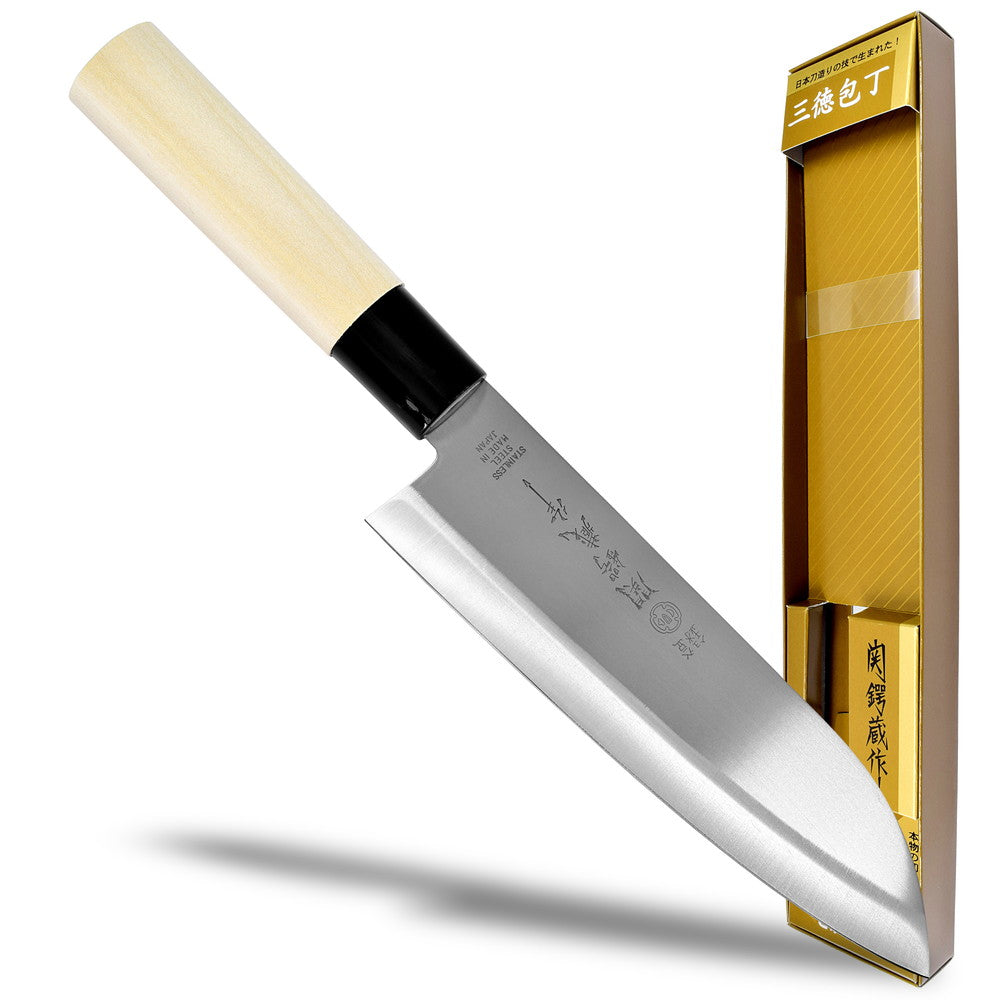
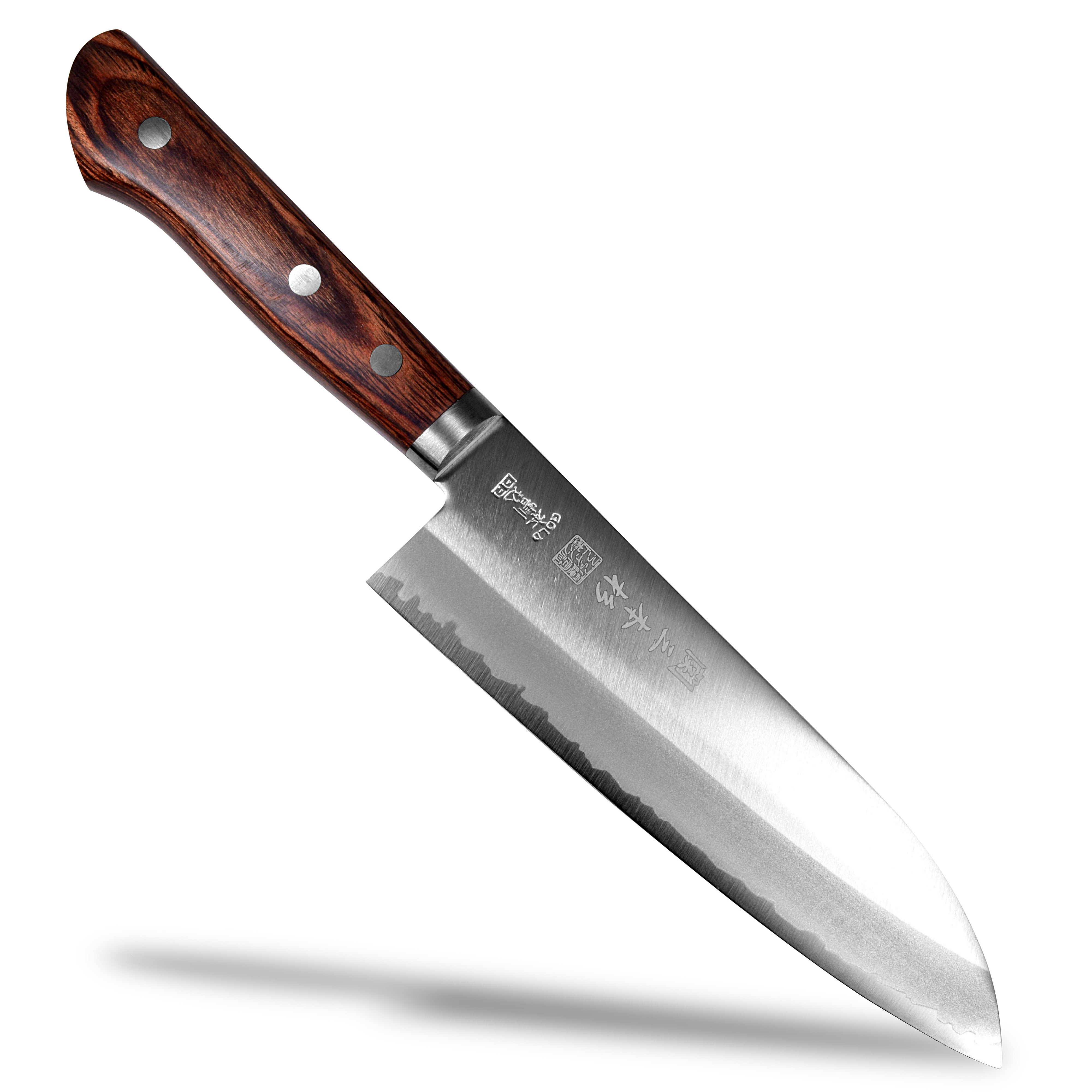
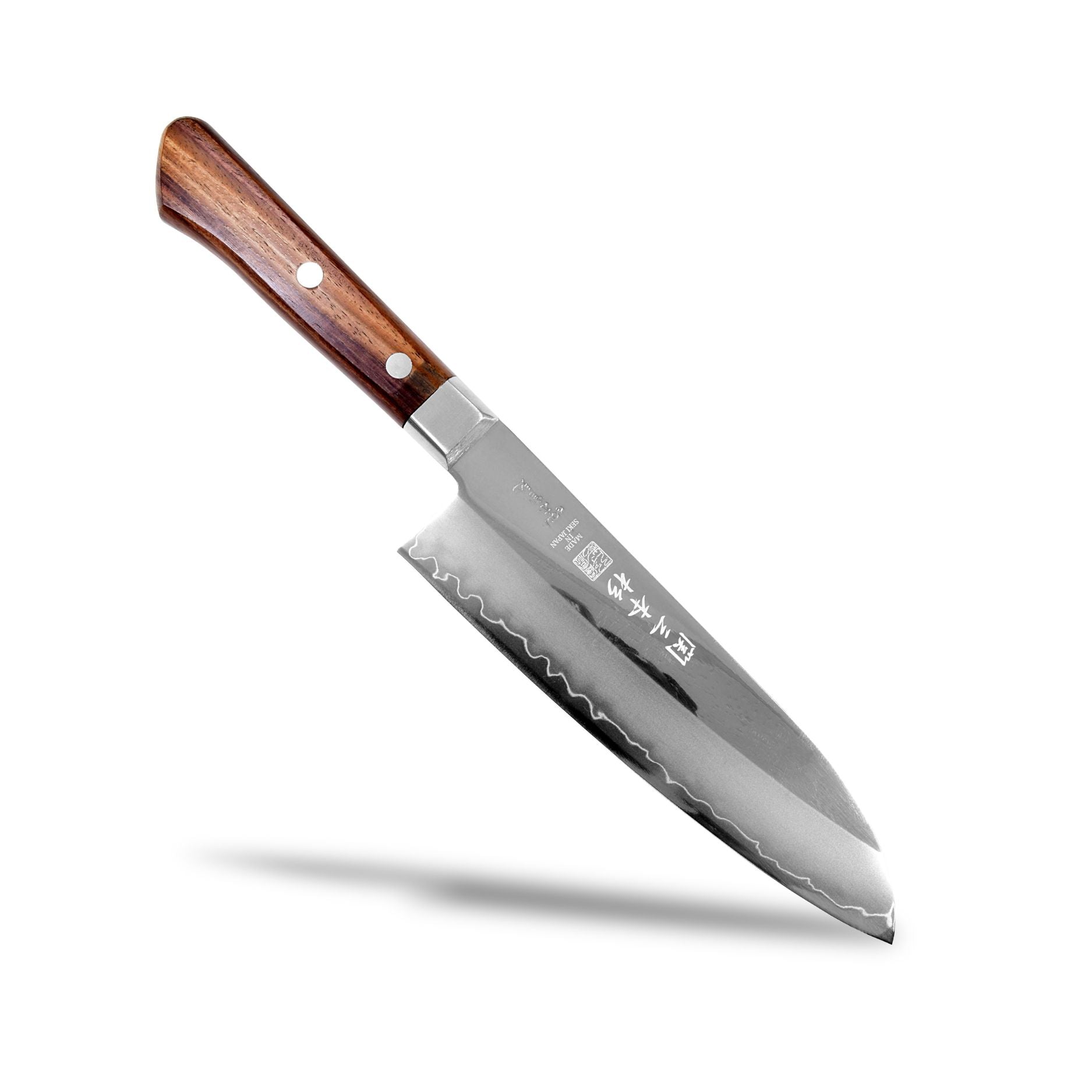
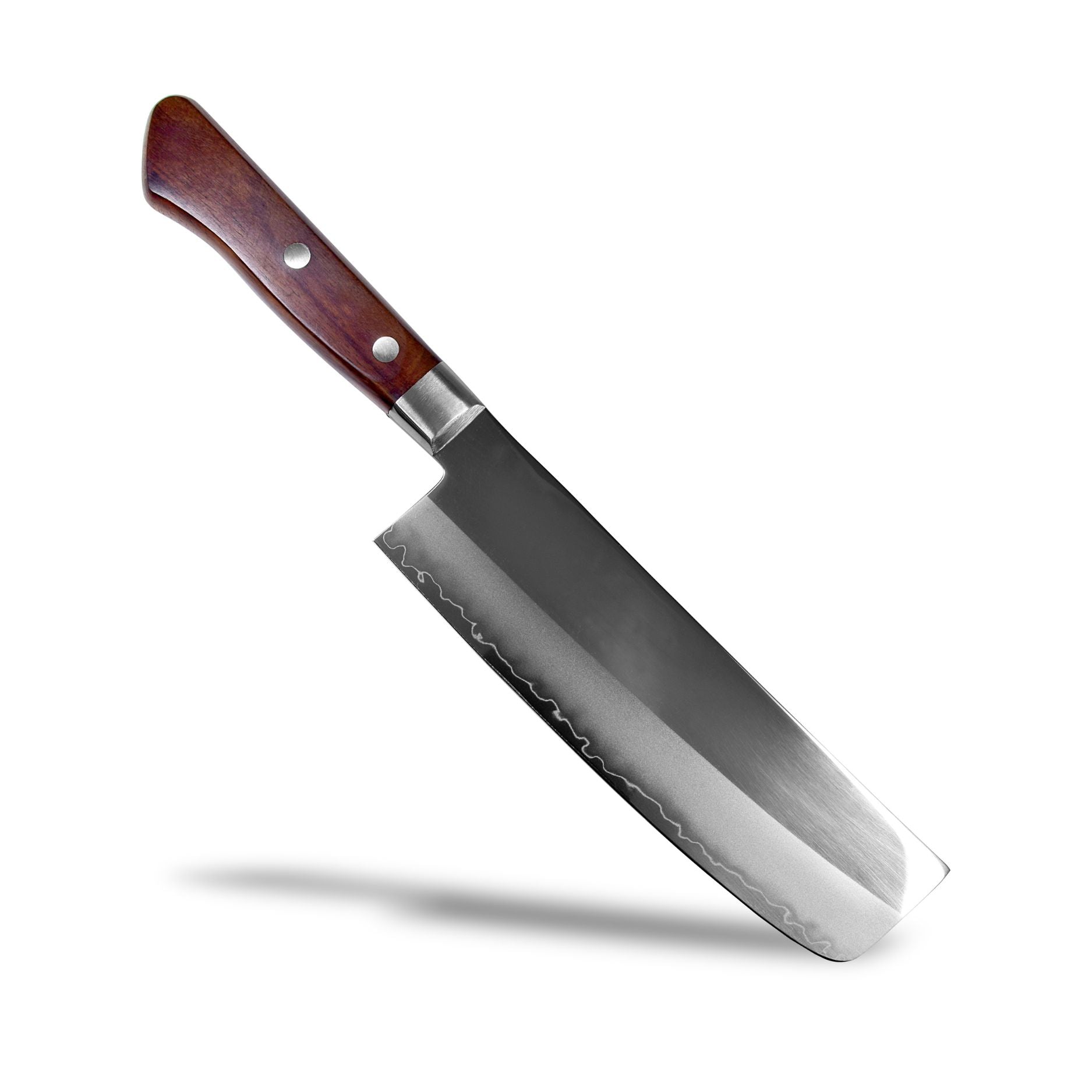
The Santoku knife gets its name from its ability to broadly cover three uses: meat, fish, and vegetables. With a blade length of 16-18 cm, it has just the right length and balance for everyday cooking.
Specifically, choosing a knife with a design closer to traditional Japanese knives, such as a Wasantoku knife, will allow you to experience a lighter cutting feel and easier release of ingredients, providing a cooking experience closer to that of a professional, even at home.
How do you choose between a santoku knife, a chef's knife, and a paring knife for home use?
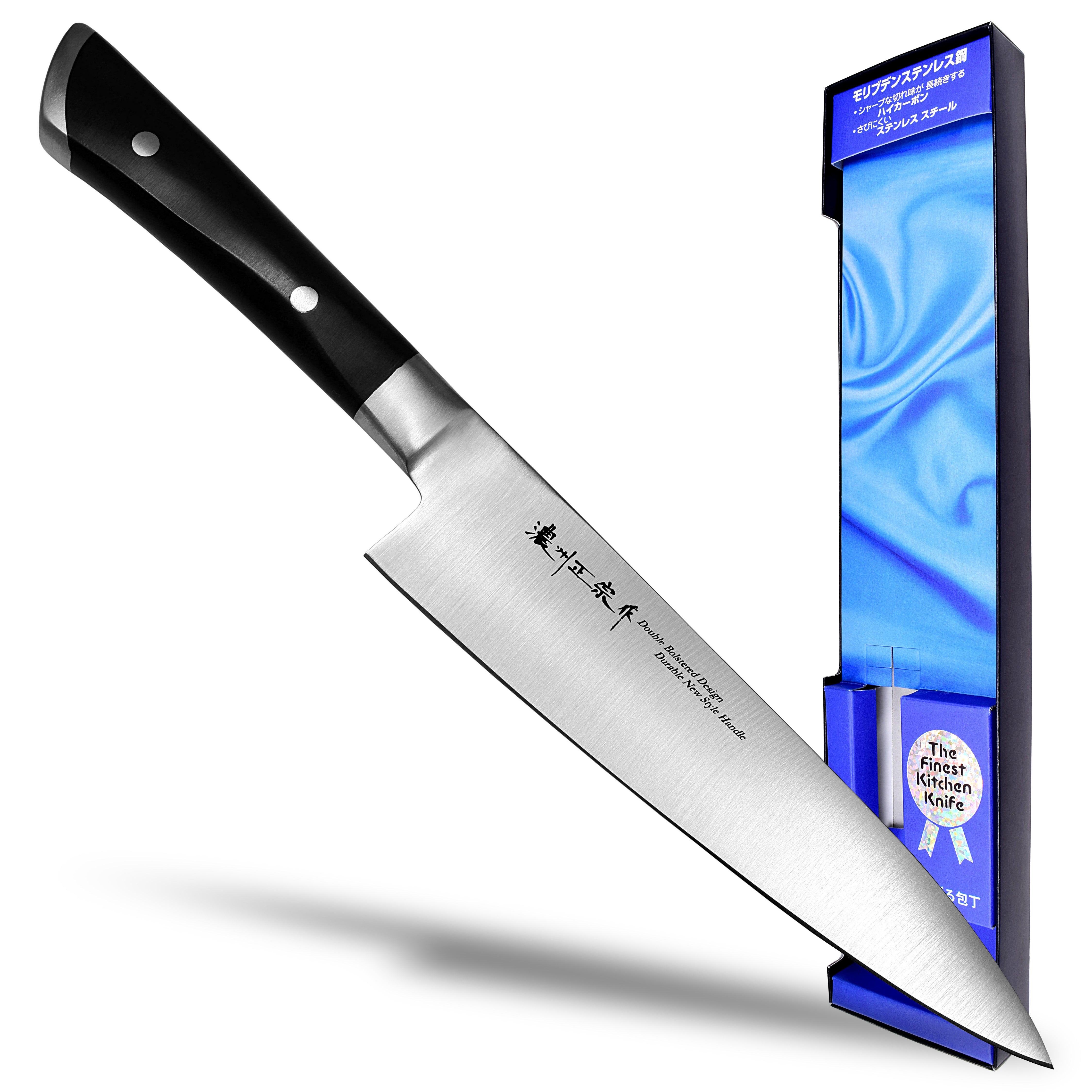
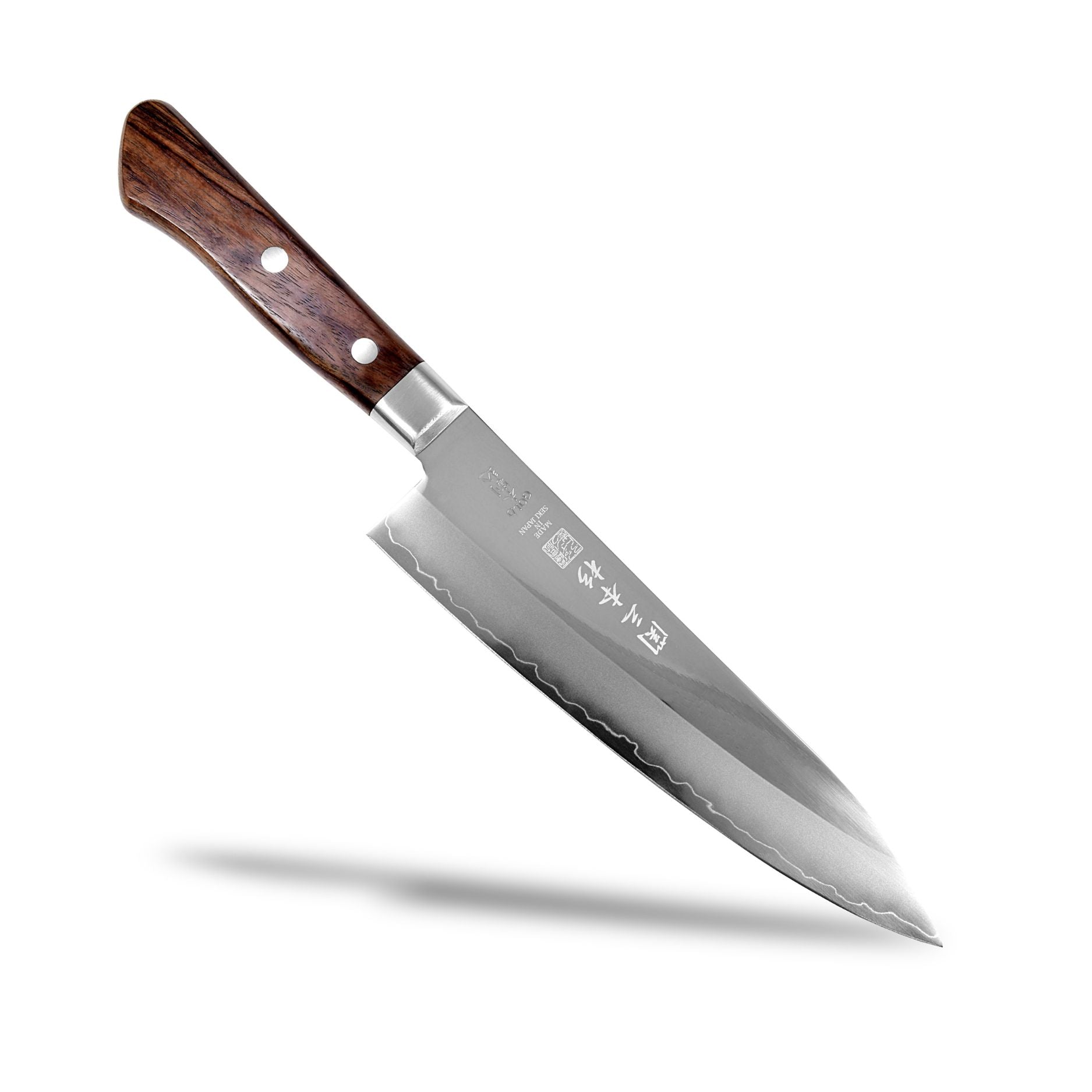
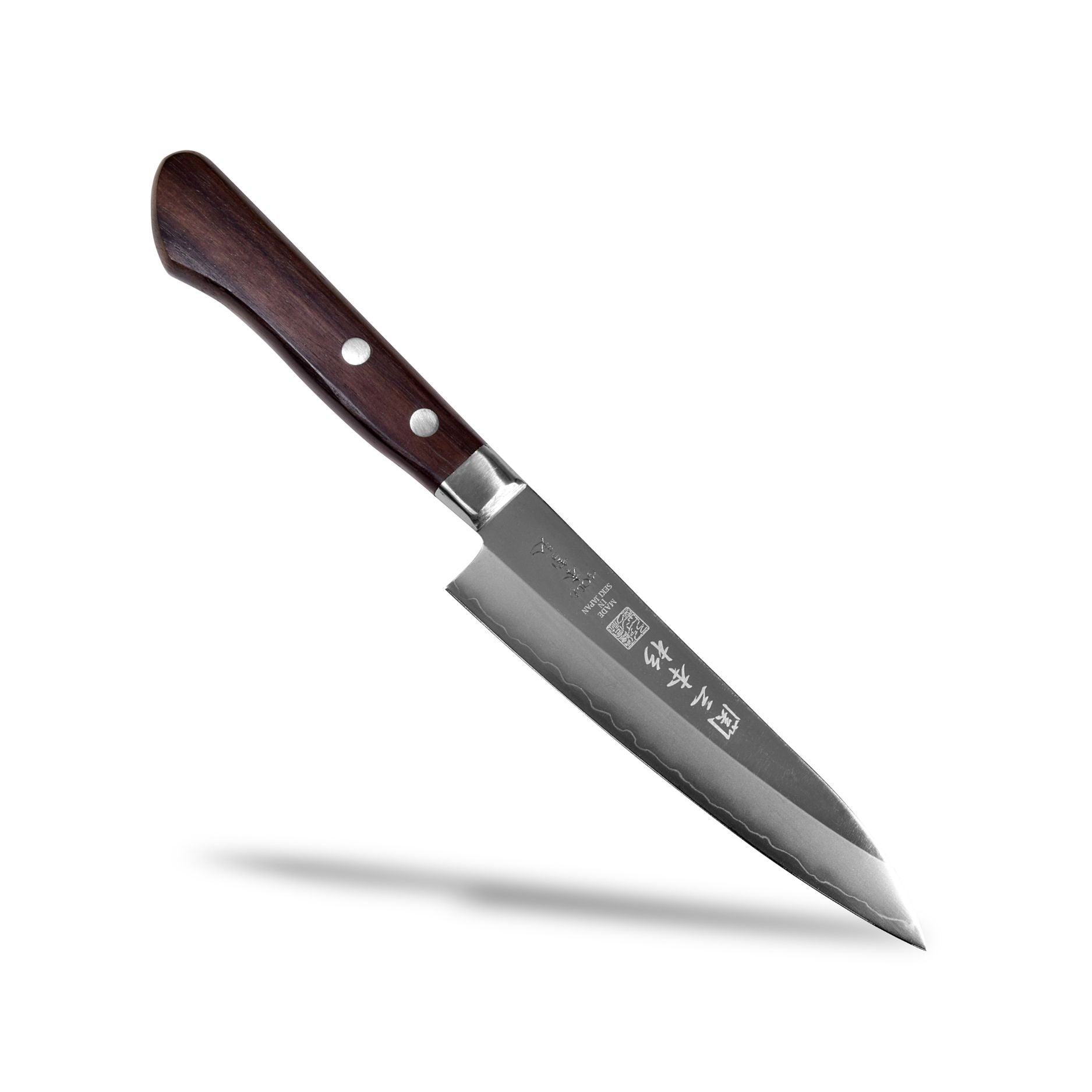
In short, the basic division of roles is: "Main knife = Santoku," "Large item = Gyuto," and "Detailed work = Petty knife."
A santoku knife can handle almost all everyday ingredients, while a chef's knife excels in situations where you need a long stroke, such as cutting large cuts of meat or whole cabbages.
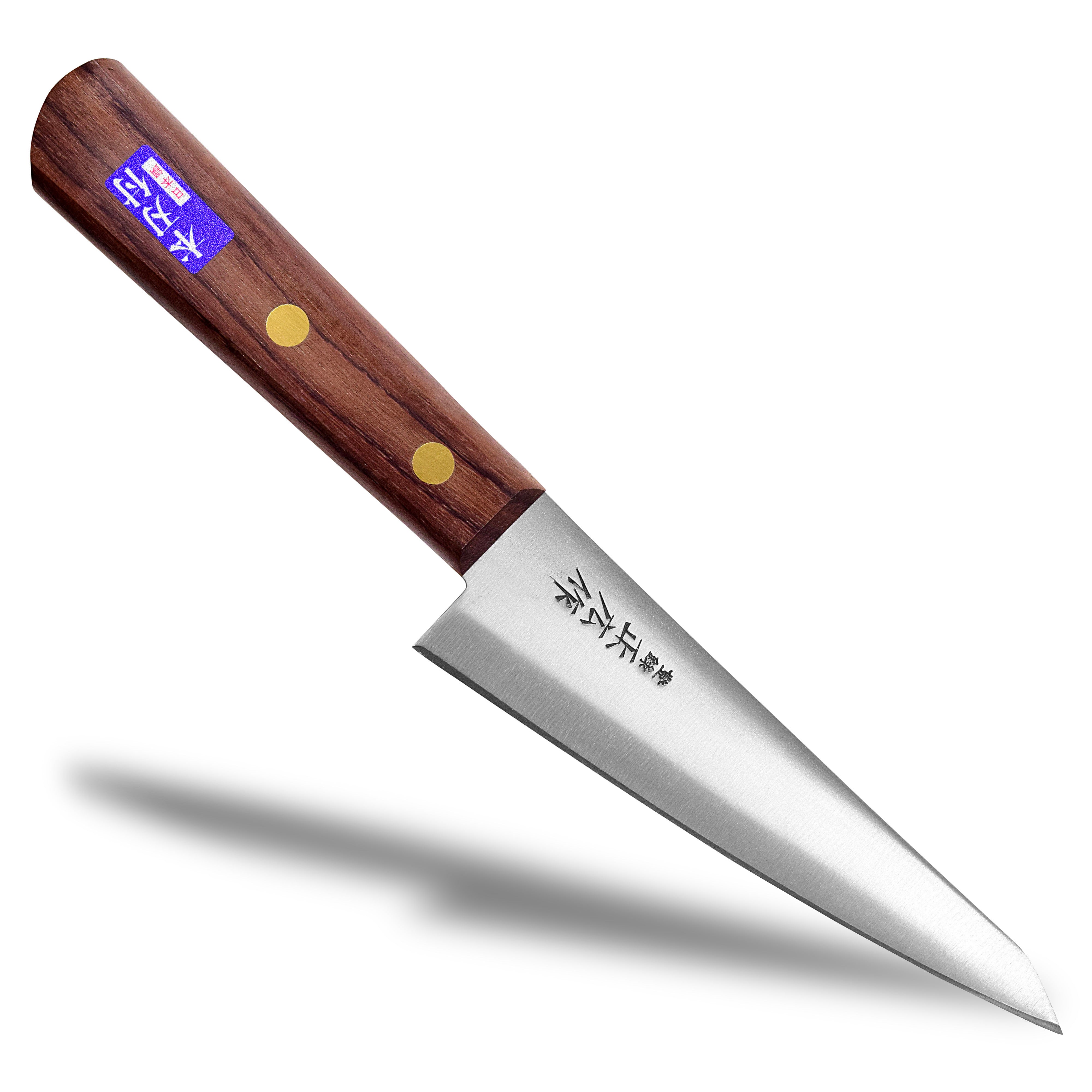
A paring knife is convenient for small tasks such as peeling fruit, garnishing, and decorative cutting. The combination of a santoku knife and a paring knife is a standard set for a wide range of households, from single people to families.
What are the advantages of using a "Wa-Santoku" knife for everyday use?
In conclusion, the Wasan-toku knife is a shape that is suitable for everyday use, as it combines lightness, ease of cutting, and ease of handling.
Many Japanese Santoku knives have a slightly thinner blade, which allows them to easily cut through soft ingredients like tomatoes and eggplants without crushing the skin, resulting in neater-looking cuts.
Some models of the Wasantoku knives from Jikko Cutlery and the Sakai brand feature octagonal handles or original designs, prioritizing ease of grip and operability even for home use, contributing to everyday comfort.
Things to check when replacing your old one: weight, balance, and grip comfort.
The most important thing is that "it doesn't feel awkward the moment you pick it up."
A knife that's too light will require too much force in your arm when cutting hard vegetables, while a knife that's too heavy will strain your wrist during daily cooking. When choosing a knife in a store, be sure to actually hold it, move it up and down lightly on a cutting board, and check if it feels like an extension of your hand.
When it's time to replace your utensils, reviewing any issues you've had, such as the handle being too thin or too thick, can significantly reduce everyday stress and make it easier to appreciate the benefit of "less fatigue even when cooking the same dishes."
Common steel materials used in recommended home models and their benefits for everyday use.
In conclusion, the steel materials most commonly used in recommended home knives are stainless steels such as "molybdenum steel," "VG10," and "AUS-10," which offer significant advantages for everyday use due to their resistance to rust and long-lasting sharpness.
Stainless steel materials have enhanced wear resistance and corrosion resistance due to the addition of elements such as chromium, molybdenum, and vanadium, and are characterized by their ease of cleaning with simple care such as "wash and wipe after use."
In short, the most practical approach is to choose a stainless steel knife for everyday use at home, and a steel knife for subsequent knives where you can enjoy the process of "breaking in" your knives.
Characteristics and suitable uses of molybdenum steel, VG10, and AUS-10.
These are the three types of steel that beginners should focus on first.
Molybdenum steel has higher wear resistance and corrosion resistance compared to ordinary stainless steel, and is often used in household knives as an "entry-level material that is rust-resistant and maintains its sharpness for a long time."
VG10 is a high-performance stainless steel containing cobalt and vanadium, offering the advantage of effortless cutting of meat, fish, and vegetables, as well as a long interval between sharpenings.
AUS-10 is slightly softer than VG10, making it easier to sharpen and less prone to chipping, making it suitable for household knives such as "Japanese santoku knives shared by the family."
Advantages of steel for home use and precautions for everyday use
In conclusion, while steel knives are appealing for their superior sharpness and ease of sharpening, the effort required for sharpening them can be a drawback in modern households.
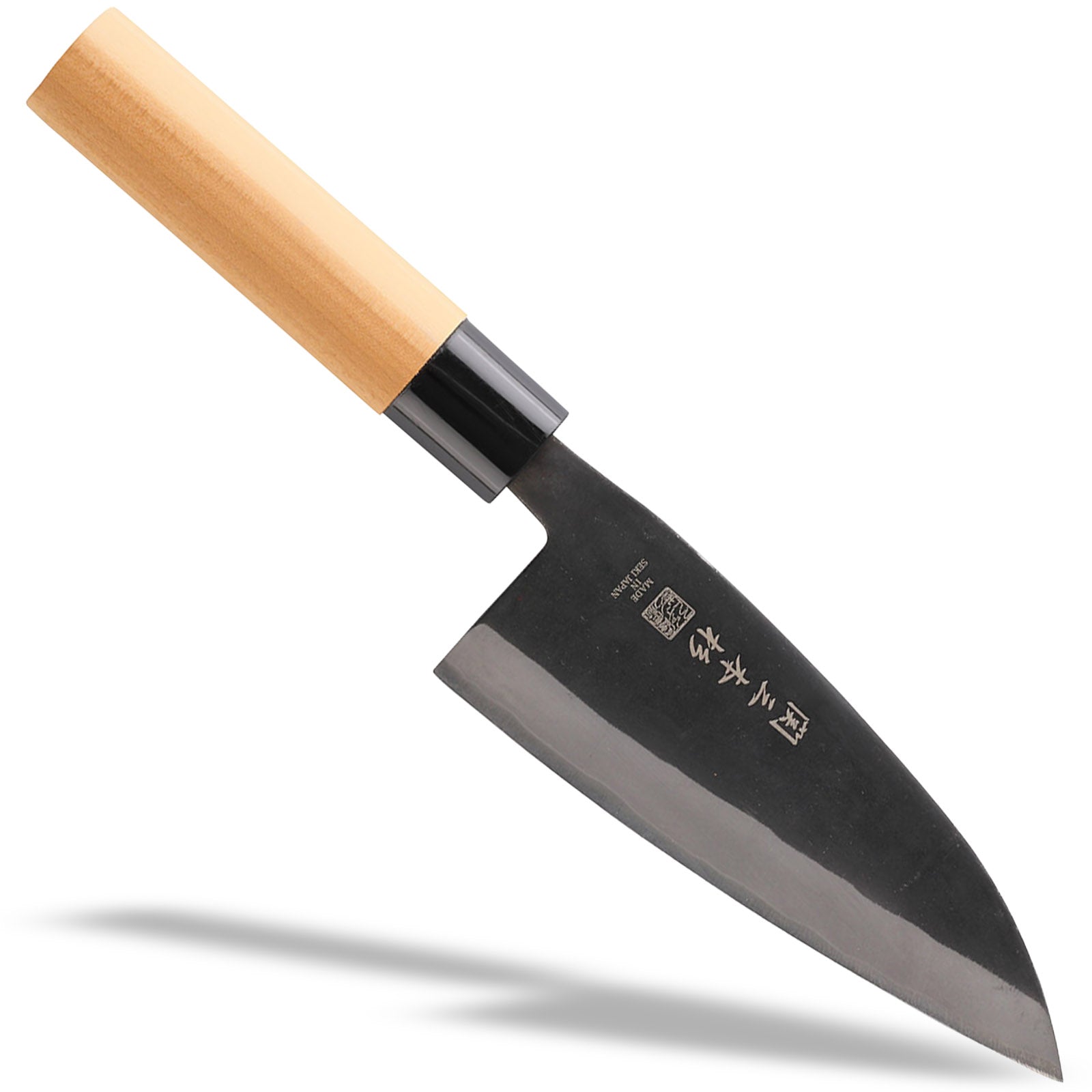
Steel rusts more easily than stainless steel, and if left wet, it will quickly develop red rust or black tarnish, so it is essential to wash, wipe, and dry it immediately after use.
On the other hand, since the blade can be sharpened relatively easily with the right whetstone, there's also the advantage for cooking enthusiasts who like to take their time maintaining their tools on weekends, as they can enjoy "spending time with their tools."
What is the best combination of stainless steel and steel materials for comfortable home use?
The most important thing is the division of roles: "Everyday use = stainless steel" and "Special occasion cooking = steel."
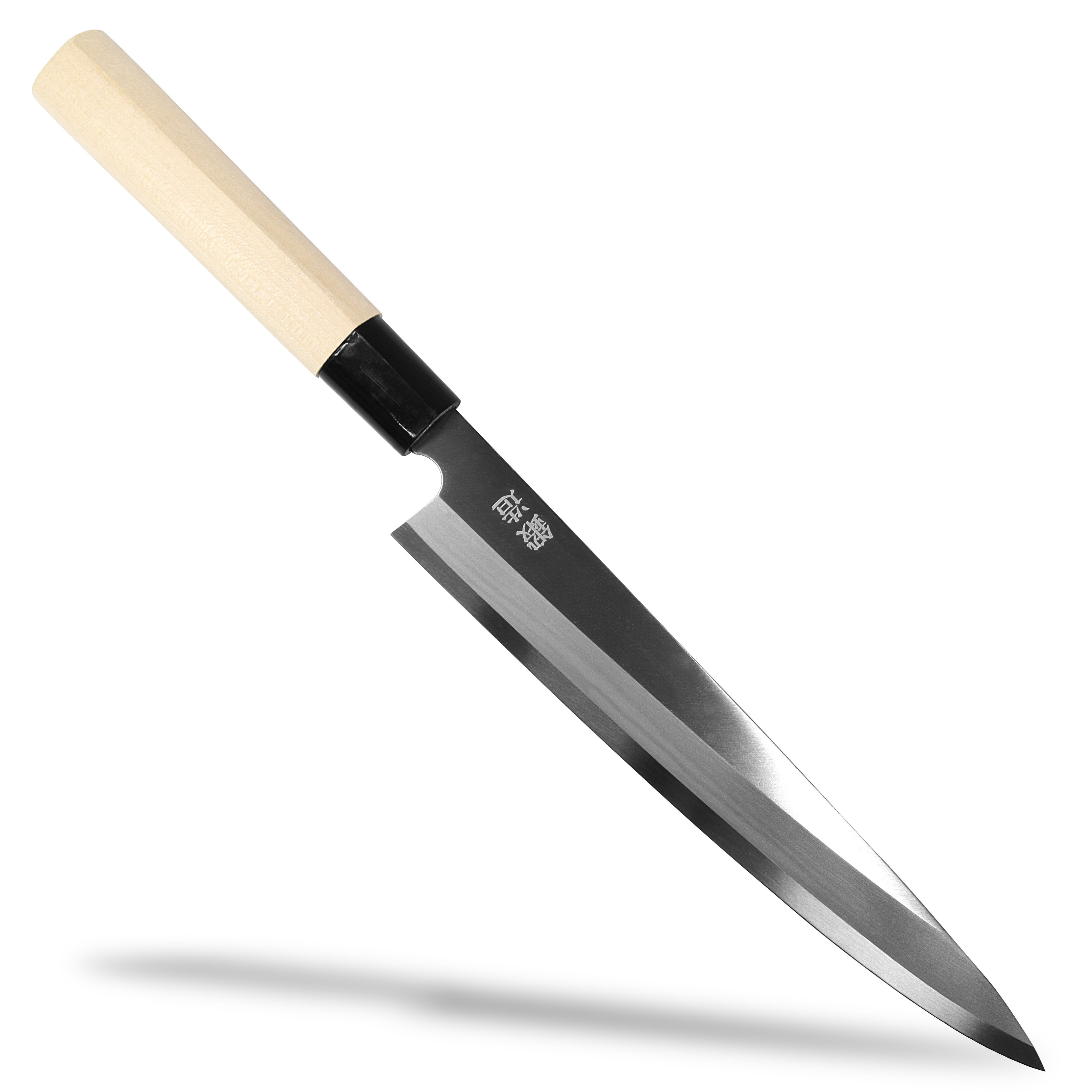
For example, if you use a molybdenum steel or AUS-10 Japanese santoku knife for everyday cooking, and only bring out a blue steel yanagiba knife for sashimi or fish dishes on weekends, you can enjoy the appeal of steel without increasing the burden of maintenance too much.
By adopting this two-pronged approach, you can bring two advantages into your home kitchen: "a bottle you can easily use every day" and "a special bottle that lifts your spirits."
FAQ
Q1. What is the best style of Japanese kitchen knife for home use?
A1. For everyday use, the Japanese-style santoku knife, which can cut meat, fish, and vegetables in a balanced way, is the most recommended.
Q2. How should I decide when to replace my appliance?
A2. Signs that it's time to replace your knives include the blade quickly losing its sharpness even after sharpening, deep chips or increased rust, and a loose handle.
Q3. Which is more suitable for home use, VG10 or AUS-10?
A3. If you prioritize long-lasting sharpness and high performance, VG10 is a good choice. If you prioritize chip resistance and ease of sharpening, AUS-10 is easier to handle for home use.
Q4. Molybdenum steel knives have a reputation for being cheap; are they okay?
A4. Molybdenum steel is a practical material with excellent wear resistance and corrosion resistance, and offers sufficient performance for entry-level to mid-range household use.
Q5. Is it okay to choose a Japanese steel kitchen knife for everyday use?
A5. If you make a habit of washing and wiping it thoroughly every time, there won't be a problem, but in environments where it's often left unattended, rust and discoloration can easily become a source of stress.
Q6. What is the standard blade length for a household santoku knife?
A6. Generally, 16-18cm is the standard size, and many recommended models for home use also use this size.
Q7. If I were to buy a second bottle for everyday use, what should I add?
A7. Adding a paring knife for detailed work or a chef's knife for larger items will allow you to handle almost all types of cooking when combined with a santoku knife.
Q8. Are ceramic blades suitable for Japanese kitchen knives used in home cooking?
A8. While ceramic is lightweight and does not rust, it is prone to chipping and difficult to sharpen yourself, making it more suitable for secondary use than primary use.
Q9. What is one important point to consider when using it for everyday purposes?
A9. Since it's a tool you'll be using every day, it's crucial to prioritize checking the "fit and weight balance when you hold it."
Q10. What are some things to keep in mind when choosing a Japanese kitchen knife for home use through online shopping?
A10. Always check the blade length, weight, type of steel, and whether it's suitable for both left- and right-handed users. Referring to reviews that mention "weight" and "ease of handling" will help you avoid making a mistake.
summary
- In conclusion, for everyday use at home, the Santoku knife, especially the Japanese-style Santoku type, is the most recommended, as it can handle meat, fish, and vegetables well with just one knife.
- By choosing stainless steel materials such as molybdenum steel, VG10, or AUS-10, you can enjoy everyday benefits such as rust resistance, long-lasting sharpness, and ease of maintenance.
- The most important thing is to choose a knife that suits your cooking frequency and the time you can dedicate to maintenance, and then gradually add a paring knife, chef's knife, or a special steel knife as needed.